Compare commits
5
Commits
| Author | SHA1 | Date | |
|---|---|---|---|
 Nicolò Boschi Nicolò Boschi
|
b899e5598f | ||
|
Nicolò Boschi
|
d9837e2ffb | ||
|
Nicolò Boschi
|
3c1c76cb94 | ||
|
Nicolò Boschi
|
c1d37d115a | ||
|
Nicolò Boschi
|
fc5b4998f7 |
@@ -2,83 +2,14 @@
|
||||
# Copy this file to .env and fill in your values
|
||||
|
||||
# LLM Configuration (Required)
|
||||
# Supported providers: openai, groq, ollama, gemini, anthropic, lmstudio, vertexai, minimax
|
||||
HINDSIGHT_API_LLM_PROVIDER=openai
|
||||
HINDSIGHT_API_LLM_API_KEY=your-api-key-here
|
||||
HINDSIGHT_API_LLM_MODEL=gpt-4o-mini
|
||||
HINDSIGHT_API_LLM_BASE_URL=https://api.openai.com/v1
|
||||
|
||||
# Example: Anthropic Claude configuration
|
||||
# HINDSIGHT_API_LLM_PROVIDER=anthropic
|
||||
# HINDSIGHT_API_LLM_API_KEY=your-anthropic-api-key
|
||||
# HINDSIGHT_API_LLM_MODEL=claude-sonnet-4-20250514
|
||||
|
||||
# Example: Google Vertex AI configuration
|
||||
# HINDSIGHT_API_LLM_PROVIDER=vertexai
|
||||
# HINDSIGHT_API_LLM_MODEL=google/gemini-2.0-flash-001
|
||||
# HINDSIGHT_API_LLM_VERTEXAI_PROJECT_ID=your-gcp-project-id
|
||||
# HINDSIGHT_API_LLM_VERTEXAI_REGION=us-central1
|
||||
# HINDSIGHT_API_LLM_VERTEXAI_SERVICE_ACCOUNT_KEY=/path/to/service-account-key.json # Optional, uses ADC if not set
|
||||
|
||||
# Example: MiniMax configuration (1M context window)
|
||||
# HINDSIGHT_API_LLM_PROVIDER=minimax
|
||||
# HINDSIGHT_API_LLM_API_KEY=your-minimax-api-key
|
||||
# HINDSIGHT_API_LLM_MODEL=MiniMax-M2.7
|
||||
|
||||
# Example: LM Studio local configuration (Qwen 2.5 32B recommended)
|
||||
# HINDSIGHT_API_LLM_PROVIDER=lmstudio
|
||||
# HINDSIGHT_API_LLM_API_KEY=lmstudio
|
||||
# HINDSIGHT_API_LLM_BASE_URL=http://localhost:1234/v1
|
||||
# HINDSIGHT_API_LLM_MODEL=qwen2.5-32b-instruct
|
||||
|
||||
# API Configuration (Optional)
|
||||
HINDSIGHT_API_HOST=0.0.0.0
|
||||
HINDSIGHT_API_PORT=8888
|
||||
HINDSIGHT_API_LOG_LEVEL=info
|
||||
|
||||
# Base Path / Reverse Proxy Support (Optional)
|
||||
# Set these when deploying behind a reverse proxy with path-based routing
|
||||
# Example: To deploy at example.com/hindsight/, set both to "/hindsight"
|
||||
# HINDSIGHT_API_BASE_PATH=/hindsight
|
||||
# NEXT_PUBLIC_BASE_PATH=/hindsight
|
||||
|
||||
# Database (Optional - uses embedded pg0 by default)
|
||||
# HINDSIGHT_API_DATABASE_URL=postgresql://user:pass@host:5432/db
|
||||
# HINDSIGHT_API_DATABASE_SCHEMA=public # PostgreSQL schema name (default: public)
|
||||
|
||||
# Vector Extension (Optional - uses pgvector by default)
|
||||
# Options: "pgvector" (default), "vchord", "pgvectorscale" (DiskANN)
|
||||
# HINDSIGHT_API_VECTOR_EXTENSION=pgvector
|
||||
# For Azure PostgreSQL with DiskANN:
|
||||
# HINDSIGHT_API_VECTOR_EXTENSION=pgvectorscale # Auto-detects pg_diskann on Azure
|
||||
|
||||
# Embeddings Configuration (Optional - uses local by default)
|
||||
# Provider: "local" (default) or "tei" (HuggingFace Text Embeddings Inference)
|
||||
# HINDSIGHT_API_EMBEDDINGS_PROVIDER=local
|
||||
# For local provider:
|
||||
# HINDSIGHT_API_EMBEDDINGS_LOCAL_MODEL=BAAI/bge-small-en-v1.5
|
||||
# For TEI provider:
|
||||
# HINDSIGHT_API_EMBEDDINGS_TEI_URL=http://localhost:8080
|
||||
|
||||
# Reranker Configuration (Optional - uses local by default)
|
||||
# Provider: "local" (default) or "tei" (HuggingFace Text Embeddings Inference)
|
||||
# HINDSIGHT_API_RERANKER_PROVIDER=local
|
||||
# For local provider:
|
||||
# HINDSIGHT_API_RERANKER_LOCAL_MODEL=cross-encoder/ms-marco-MiniLM-L-6-v2
|
||||
# For TEI provider:
|
||||
# HINDSIGHT_API_RERANKER_TEI_URL=http://localhost:8081
|
||||
|
||||
# Observability & Tracing (Optional - disabled by default)
|
||||
# Enable OpenTelemetry tracing for LLM calls (GenAI semantic conventions)
|
||||
# HINDSIGHT_API_OTEL_TRACES_ENABLED=true
|
||||
#
|
||||
# Local development with Grafana LGTM stack (recommended - see scripts/dev/grafana/README.md)
|
||||
# HINDSIGHT_API_OTEL_EXPORTER_OTLP_ENDPOINT=http://localhost:4318
|
||||
#
|
||||
# Cloud backends (Grafana Cloud, Langfuse, DataDog, etc.)
|
||||
# HINDSIGHT_API_OTEL_EXPORTER_OTLP_ENDPOINT=https://your-backend-url
|
||||
# HINDSIGHT_API_OTEL_EXPORTER_OTLP_HEADERS="Authorization=Bearer your-token"
|
||||
#
|
||||
# Custom service name and environment (optional, defaults: hindsight-api, development)
|
||||
# HINDSIGHT_API_OTEL_SERVICE_NAME=hindsight-production
|
||||
# HINDSIGHT_API_OTEL_DEPLOYMENT_ENVIRONMENT=production
|
||||
|
||||
@@ -1,27 +0,0 @@
|
||||
#!/bin/bash
|
||||
# Pre-commit hook - runs all scripts in scripts/hooks/
|
||||
|
||||
set -e
|
||||
|
||||
REPO_ROOT="$(git rev-parse --show-toplevel)"
|
||||
HOOKS_DIR="$REPO_ROOT/scripts/hooks"
|
||||
|
||||
if [ ! -d "$HOOKS_DIR" ]; then
|
||||
exit 0
|
||||
fi
|
||||
|
||||
echo ""
|
||||
echo "=== Running pre-commit hooks ==="
|
||||
echo ""
|
||||
|
||||
# Run all executable scripts in hooks directory
|
||||
for hook in "$HOOKS_DIR"/*.sh; do
|
||||
if [ -x "$hook" ]; then
|
||||
echo "[hook] $(basename "$hook")"
|
||||
(cd "$REPO_ROOT" && "$hook")
|
||||
fi
|
||||
done
|
||||
|
||||
echo ""
|
||||
echo "=== Pre-commit hooks completed ==="
|
||||
echo ""
|
||||
@@ -1,71 +0,0 @@
|
||||
name: Bug Report
|
||||
description: Report a bug or unexpected behavior
|
||||
labels: ["bug", "triage"]
|
||||
body:
|
||||
- type: markdown
|
||||
attributes:
|
||||
value: |
|
||||
Thanks for taking the time to report a bug! Please fill out the sections below.
|
||||
|
||||
- type: textarea
|
||||
id: description
|
||||
attributes:
|
||||
label: Bug Description
|
||||
description: A clear and concise description of the bug
|
||||
placeholder: What happened?
|
||||
validations:
|
||||
required: true
|
||||
|
||||
- type: textarea
|
||||
id: reproduction
|
||||
attributes:
|
||||
label: Steps to Reproduce
|
||||
description: Steps to reproduce the behavior
|
||||
placeholder: |
|
||||
1. Configure '...'
|
||||
2. Call '...'
|
||||
3. See error
|
||||
validations:
|
||||
required: true
|
||||
|
||||
- type: textarea
|
||||
id: expected
|
||||
attributes:
|
||||
label: Expected Behavior
|
||||
description: What did you expect to happen?
|
||||
validations:
|
||||
required: true
|
||||
|
||||
- type: textarea
|
||||
id: actual
|
||||
attributes:
|
||||
label: Actual Behavior
|
||||
description: What actually happened?
|
||||
validations:
|
||||
required: true
|
||||
|
||||
- type: input
|
||||
id: version
|
||||
attributes:
|
||||
label: Version
|
||||
description: What version are you using?
|
||||
placeholder: e.g., 0.1.0 or commit hash
|
||||
validations:
|
||||
required: false
|
||||
|
||||
- type: dropdown
|
||||
id: llm-provider
|
||||
attributes:
|
||||
label: LLM Provider
|
||||
description: Which LLM provider are you using?
|
||||
options:
|
||||
- OpenAI
|
||||
- Anthropic
|
||||
- Gemini
|
||||
- Groq
|
||||
- Ollama
|
||||
- LM Studio
|
||||
- Other
|
||||
validations:
|
||||
required: false
|
||||
|
||||
@@ -1,8 +0,0 @@
|
||||
blank_issues_enabled: false
|
||||
contact_links:
|
||||
- name: Questions & Help
|
||||
url: https://github.com/vectorize-io/hindsight/discussions/categories/q-a
|
||||
about: Please ask questions and get help in Discussions instead of opening an issue.
|
||||
- name: Ideas & Feedback
|
||||
url: https://github.com/vectorize-io/hindsight/discussions/categories/ideas
|
||||
about: Share ideas or give feedback in Discussions.
|
||||
@@ -1,82 +0,0 @@
|
||||
name: Feature Request
|
||||
description: Suggest a new feature or enhancement
|
||||
labels: ["enhancement", "triage"]
|
||||
body:
|
||||
- type: markdown
|
||||
attributes:
|
||||
value: |
|
||||
Thanks for suggesting a feature! Please describe what you'd like to see added.
|
||||
|
||||
- type: textarea
|
||||
id: use-case
|
||||
attributes:
|
||||
label: Use Case
|
||||
description: Describe your specific use case. What are you building? What's your goal?
|
||||
placeholder: |
|
||||
I'm building an AI agent that needs to...
|
||||
My application handles...
|
||||
validations:
|
||||
required: true
|
||||
|
||||
- type: textarea
|
||||
id: problem
|
||||
attributes:
|
||||
label: Problem Statement
|
||||
description: What problem are you facing? What's missing or difficult today?
|
||||
placeholder: Currently I have to... which causes...
|
||||
validations:
|
||||
required: true
|
||||
|
||||
- type: textarea
|
||||
id: benefit
|
||||
attributes:
|
||||
label: How This Feature Would Help
|
||||
description: Explain how this feature would improve your workflow or solve your problem
|
||||
placeholder: With this feature, I would be able to...
|
||||
validations:
|
||||
required: true
|
||||
|
||||
- type: textarea
|
||||
id: solution
|
||||
attributes:
|
||||
label: Proposed Solution
|
||||
description: Describe your ideal solution (optional - we may have ideas too!)
|
||||
placeholder: It would be great if Hindsight could...
|
||||
validations:
|
||||
required: false
|
||||
|
||||
- type: textarea
|
||||
id: alternatives
|
||||
attributes:
|
||||
label: Alternatives Considered
|
||||
description: Have you considered any alternative solutions or workarounds?
|
||||
validations:
|
||||
required: false
|
||||
|
||||
- type: dropdown
|
||||
id: priority
|
||||
attributes:
|
||||
label: Priority
|
||||
description: How important is this feature to you?
|
||||
options:
|
||||
- Nice to have
|
||||
- Important - affects my workflow
|
||||
- Critical - blocking my use case
|
||||
validations:
|
||||
required: true
|
||||
|
||||
- type: textarea
|
||||
id: additional
|
||||
attributes:
|
||||
label: Additional Context
|
||||
description: Any other context, mockups, or examples?
|
||||
validations:
|
||||
required: false
|
||||
|
||||
- type: checkboxes
|
||||
id: checklist
|
||||
attributes:
|
||||
label: Checklist
|
||||
options:
|
||||
- label: I would be willing to contribute this feature
|
||||
required: false
|
||||
@@ -1,6 +0,0 @@
|
||||
version: 2
|
||||
updates:
|
||||
- package-ecosystem: "github-actions"
|
||||
directory: "/"
|
||||
schedule:
|
||||
interval: "weekly"
|
||||
@@ -20,21 +20,19 @@ concurrency:
|
||||
jobs:
|
||||
build:
|
||||
runs-on: ubuntu-latest
|
||||
defaults:
|
||||
run:
|
||||
working-directory: hindsight-docs
|
||||
steps:
|
||||
- uses: actions/checkout@v6
|
||||
- uses: actions/setup-node@v6
|
||||
- uses: actions/checkout@v4
|
||||
- uses: actions/setup-node@v4
|
||||
with:
|
||||
node-version: 20
|
||||
cache: npm
|
||||
cache-dependency-path: package-lock.json
|
||||
- uses: astral-sh/setup-uv@v7
|
||||
- run: npm ci --workspace=hindsight-docs
|
||||
- run: uv run generate-llms-full
|
||||
- run: npm run build --workspace=hindsight-docs
|
||||
env:
|
||||
UMAMI_URL: https://analytics.hindsight.vectorize.io
|
||||
UMAMI_WEBSITE_ID: ${{ secrets.UMAMI_WEBSITE_ID }}
|
||||
- uses: actions/upload-pages-artifact@v4
|
||||
cache-dependency-path: hindsight-docs/package-lock.json
|
||||
- run: npm ci
|
||||
- run: npm run build
|
||||
- uses: actions/upload-pages-artifact@v3
|
||||
with:
|
||||
path: hindsight-docs/build
|
||||
deploy:
|
||||
|
||||
@@ -1,99 +0,0 @@
|
||||
name: Release Integration
|
||||
|
||||
on:
|
||||
push:
|
||||
tags:
|
||||
- 'integrations/**'
|
||||
|
||||
jobs:
|
||||
publish:
|
||||
runs-on: ubuntu-latest
|
||||
permissions:
|
||||
id-token: write # for PyPI trusted publishing
|
||||
|
||||
steps:
|
||||
- uses: actions/checkout@v6
|
||||
|
||||
- name: Extract integration info
|
||||
id: info
|
||||
run: |
|
||||
# refs/tags/integrations/litellm/v0.1.0 → integration=litellm, version=0.1.0
|
||||
TAG="${GITHUB_REF#refs/tags/}"
|
||||
INTEGRATION=$(echo "$TAG" | cut -d'/' -f2)
|
||||
VERSION=$(echo "$TAG" | cut -d'/' -f3 | sed 's/^v//')
|
||||
echo "integration=$INTEGRATION" >> $GITHUB_OUTPUT
|
||||
echo "version=$VERSION" >> $GITHUB_OUTPUT
|
||||
echo "tag=$TAG" >> $GITHUB_OUTPUT
|
||||
echo "Integration: $INTEGRATION, Version: $VERSION"
|
||||
|
||||
- name: Detect integration type
|
||||
id: type
|
||||
run: |
|
||||
if [ -f "hindsight-integrations/${{ steps.info.outputs.integration }}/pyproject.toml" ]; then
|
||||
echo "type=python" >> $GITHUB_OUTPUT
|
||||
else
|
||||
echo "type=typescript" >> $GITHUB_OUTPUT
|
||||
fi
|
||||
|
||||
# ── Python integrations (litellm, pydantic-ai, crewai) ──────────────────
|
||||
|
||||
- name: Install uv
|
||||
if: steps.type.outputs.type == 'python'
|
||||
uses: astral-sh/setup-uv@v7
|
||||
with:
|
||||
enable-cache: true
|
||||
|
||||
- name: Set up Python
|
||||
if: steps.type.outputs.type == 'python'
|
||||
uses: actions/setup-python@v5
|
||||
with:
|
||||
python-version-file: ".python-version"
|
||||
|
||||
- name: Build Python package
|
||||
if: steps.type.outputs.type == 'python'
|
||||
working-directory: ./hindsight-integrations/${{ steps.info.outputs.integration }}
|
||||
run: uv build --out-dir dist
|
||||
|
||||
- name: Publish Python package to PyPI
|
||||
if: steps.type.outputs.type == 'python'
|
||||
uses: pypa/gh-action-pypi-publish@release/v1
|
||||
with:
|
||||
packages-dir: ./hindsight-integrations/${{ steps.info.outputs.integration }}/dist
|
||||
skip-existing: true
|
||||
|
||||
# ── TypeScript integrations (ai-sdk, chat, openclaw) ────────────────────
|
||||
|
||||
- name: Set up Node.js
|
||||
if: steps.type.outputs.type == 'typescript'
|
||||
uses: actions/setup-node@v6
|
||||
with:
|
||||
node-version: '22'
|
||||
registry-url: 'https://registry.npmjs.org'
|
||||
|
||||
- name: Install dependencies
|
||||
if: steps.type.outputs.type == 'typescript'
|
||||
working-directory: ./hindsight-integrations/${{ steps.info.outputs.integration }}
|
||||
run: npm ci
|
||||
|
||||
- name: Build TypeScript package
|
||||
if: steps.type.outputs.type == 'typescript'
|
||||
working-directory: ./hindsight-integrations/${{ steps.info.outputs.integration }}
|
||||
run: npm run build
|
||||
|
||||
- name: Publish TypeScript package to npm
|
||||
if: steps.type.outputs.type == 'typescript'
|
||||
working-directory: ./hindsight-integrations/${{ steps.info.outputs.integration }}
|
||||
run: |
|
||||
set +e
|
||||
OUTPUT=$(npm publish --access public 2>&1)
|
||||
EXIT_CODE=$?
|
||||
echo "$OUTPUT"
|
||||
if [ $EXIT_CODE -ne 0 ]; then
|
||||
if echo "$OUTPUT" | grep -q "cannot publish over"; then
|
||||
echo "Package version already published, skipping..."
|
||||
exit 0
|
||||
fi
|
||||
exit $EXIT_CODE
|
||||
fi
|
||||
env:
|
||||
NODE_AUTH_TOKEN: ${{ secrets.NPM_TOKEN }}
|
||||
+82
-214
@@ -13,15 +13,15 @@ jobs:
|
||||
id-token: write
|
||||
|
||||
steps:
|
||||
- uses: actions/checkout@v6
|
||||
- uses: actions/checkout@v4
|
||||
|
||||
- name: Install uv
|
||||
uses: astral-sh/setup-uv@v7
|
||||
uses: astral-sh/setup-uv@v5
|
||||
with:
|
||||
enable-cache: true
|
||||
|
||||
- name: Set up Python
|
||||
uses: actions/setup-python@v6
|
||||
uses: actions/setup-python@v5
|
||||
with:
|
||||
python-version-file: ".python-version"
|
||||
|
||||
@@ -30,39 +30,21 @@ jobs:
|
||||
working-directory: ./hindsight-clients/python
|
||||
run: uv build --out-dir dist
|
||||
|
||||
- name: Build hindsight-api-slim
|
||||
working-directory: ./hindsight-api-slim
|
||||
run: uv build --out-dir dist
|
||||
|
||||
- name: Build hindsight-api
|
||||
working-directory: ./hindsight-api
|
||||
run: uv build --out-dir dist
|
||||
|
||||
- name: Build hindsight-all
|
||||
working-directory: ./hindsight-all
|
||||
working-directory: ./hindsight
|
||||
run: uv build --out-dir dist
|
||||
|
||||
- name: Build hindsight-all-slim
|
||||
working-directory: ./hindsight-all-slim
|
||||
run: uv build --out-dir dist
|
||||
|
||||
- name: Build hindsight-embed
|
||||
working-directory: ./hindsight-embed
|
||||
run: uv build --out-dir dist
|
||||
|
||||
# Publish in order (client and api-slim first, then api/all wrappers which depend on them)
|
||||
# Publish in order (client and api first, then hindsight-all which depends on them)
|
||||
- name: Publish hindsight-client to PyPI
|
||||
uses: pypa/gh-action-pypi-publish@release/v1
|
||||
with:
|
||||
packages-dir: ./hindsight-clients/python/dist
|
||||
skip-existing: true
|
||||
|
||||
- name: Publish hindsight-api-slim to PyPI
|
||||
uses: pypa/gh-action-pypi-publish@release/v1
|
||||
with:
|
||||
packages-dir: ./hindsight-api-slim/dist
|
||||
skip-existing: true
|
||||
|
||||
- name: Publish hindsight-api to PyPI
|
||||
uses: pypa/gh-action-pypi-publish@release/v1
|
||||
with:
|
||||
@@ -72,33 +54,18 @@ jobs:
|
||||
- name: Publish hindsight-all to PyPI
|
||||
uses: pypa/gh-action-pypi-publish@release/v1
|
||||
with:
|
||||
packages-dir: ./hindsight-all/dist
|
||||
skip-existing: true
|
||||
|
||||
- name: Publish hindsight-all-slim to PyPI
|
||||
uses: pypa/gh-action-pypi-publish@release/v1
|
||||
with:
|
||||
packages-dir: ./hindsight-all-slim/dist
|
||||
skip-existing: true
|
||||
|
||||
- name: Publish hindsight-embed to PyPI
|
||||
uses: pypa/gh-action-pypi-publish@release/v1
|
||||
with:
|
||||
packages-dir: ./hindsight-embed/dist
|
||||
packages-dir: ./hindsight/dist
|
||||
skip-existing: true
|
||||
|
||||
# Upload artifacts for GitHub release
|
||||
- name: Upload artifacts
|
||||
uses: actions/upload-artifact@v7
|
||||
uses: actions/upload-artifact@v4
|
||||
with:
|
||||
name: python-packages
|
||||
path: |
|
||||
hindsight-clients/python/dist/*
|
||||
hindsight-api-slim/dist/*
|
||||
hindsight-api/dist/*
|
||||
hindsight-all/dist/*
|
||||
hindsight-all-slim/dist/*
|
||||
hindsight-embed/dist/*
|
||||
hindsight/dist/*
|
||||
retention-days: 1
|
||||
|
||||
release-typescript-client:
|
||||
@@ -106,36 +73,25 @@ jobs:
|
||||
environment: npm
|
||||
|
||||
steps:
|
||||
- uses: actions/checkout@v6
|
||||
- uses: actions/checkout@v4
|
||||
|
||||
- name: Set up Node.js
|
||||
uses: actions/setup-node@v6
|
||||
uses: actions/setup-node@v4
|
||||
with:
|
||||
node-version: '20'
|
||||
registry-url: 'https://registry.npmjs.org'
|
||||
cache: 'npm'
|
||||
cache-dependency-path: package-lock.json
|
||||
|
||||
- name: Install dependencies
|
||||
run: npm ci --workspace=hindsight-clients/typescript
|
||||
working-directory: ./hindsight-clients/typescript
|
||||
run: npm ci
|
||||
|
||||
- name: Build
|
||||
run: npm run build --workspace=hindsight-clients/typescript
|
||||
working-directory: ./hindsight-clients/typescript
|
||||
run: npm run build
|
||||
|
||||
- name: Publish to npm
|
||||
working-directory: ./hindsight-clients/typescript
|
||||
run: |
|
||||
set +e
|
||||
OUTPUT=$(npm publish --access public 2>&1)
|
||||
EXIT_CODE=$?
|
||||
echo "$OUTPUT"
|
||||
if [ $EXIT_CODE -ne 0 ]; then
|
||||
if echo "$OUTPUT" | grep -q "cannot publish over"; then
|
||||
echo "Package version already published, skipping..."
|
||||
exit 0
|
||||
fi
|
||||
exit $EXIT_CODE
|
||||
fi
|
||||
run: npm publish --access public
|
||||
env:
|
||||
NODE_AUTH_TOKEN: ${{ secrets.NPM_TOKEN }}
|
||||
|
||||
@@ -144,74 +100,12 @@ jobs:
|
||||
run: npm pack
|
||||
|
||||
- name: Upload artifacts
|
||||
uses: actions/upload-artifact@v7
|
||||
uses: actions/upload-artifact@v4
|
||||
with:
|
||||
name: typescript-client
|
||||
path: hindsight-clients/typescript/*.tgz
|
||||
retention-days: 1
|
||||
|
||||
release-control-plane:
|
||||
runs-on: ubuntu-latest
|
||||
environment: npm
|
||||
|
||||
steps:
|
||||
- uses: actions/checkout@v6
|
||||
|
||||
- name: Set up Node.js
|
||||
uses: actions/setup-node@v6
|
||||
with:
|
||||
node-version: '20'
|
||||
registry-url: 'https://registry.npmjs.org'
|
||||
cache: 'npm'
|
||||
cache-dependency-path: package-lock.json
|
||||
|
||||
- name: Install dependencies
|
||||
run: npm ci
|
||||
|
||||
- name: Build TypeScript client (dependency)
|
||||
run: npm run build --workspace=hindsight-clients/typescript
|
||||
|
||||
- name: Fix platform-specific native modules
|
||||
run: |
|
||||
# npm ci installs from lockfile which may have wrong platform binaries
|
||||
# Delete hoisted native modules and reinstall for current platform
|
||||
rm -rf node_modules/lightningcss node_modules/@tailwindcss
|
||||
npm install lightningcss @tailwindcss/postcss @tailwindcss/node
|
||||
|
||||
- name: Build
|
||||
run: npm run build --workspace=hindsight-control-plane
|
||||
|
||||
- name: Verify standalone build
|
||||
run: test -f hindsight-control-plane/standalone/server.js || (echo 'standalone/server.js missing - build failed' && exit 1)
|
||||
|
||||
- name: Publish to npm
|
||||
working-directory: ./hindsight-control-plane
|
||||
run: |
|
||||
set +e
|
||||
OUTPUT=$(npm publish --access public --ignore-scripts 2>&1)
|
||||
EXIT_CODE=$?
|
||||
echo "$OUTPUT"
|
||||
if [ $EXIT_CODE -ne 0 ]; then
|
||||
if echo "$OUTPUT" | grep -q "cannot publish over"; then
|
||||
echo "Package version already published, skipping..."
|
||||
exit 0
|
||||
fi
|
||||
exit $EXIT_CODE
|
||||
fi
|
||||
env:
|
||||
NODE_AUTH_TOKEN: ${{ secrets.NPM_TOKEN }}
|
||||
|
||||
- name: Pack for GitHub release
|
||||
working-directory: ./hindsight-control-plane
|
||||
run: npm pack
|
||||
|
||||
- name: Upload artifacts
|
||||
uses: actions/upload-artifact@v7
|
||||
with:
|
||||
name: control-plane
|
||||
path: hindsight-control-plane/*.tgz
|
||||
retention-days: 1
|
||||
|
||||
release-rust-cli:
|
||||
runs-on: ${{ matrix.os }}
|
||||
strategy:
|
||||
@@ -229,13 +123,9 @@ jobs:
|
||||
target: aarch64-apple-darwin
|
||||
artifact_name: hindsight
|
||||
asset_name: hindsight-darwin-arm64
|
||||
- os: ubuntu-24.04-arm
|
||||
target: aarch64-unknown-linux-gnu
|
||||
artifact_name: hindsight
|
||||
asset_name: hindsight-linux-arm64
|
||||
|
||||
steps:
|
||||
- uses: actions/checkout@v6
|
||||
- uses: actions/checkout@v4
|
||||
|
||||
- name: Install Rust
|
||||
uses: dtolnay/rust-toolchain@stable
|
||||
@@ -253,14 +143,13 @@ jobs:
|
||||
chmod +x artifacts/${{ matrix.asset_name }}
|
||||
|
||||
- name: Upload artifacts
|
||||
uses: actions/upload-artifact@v7
|
||||
uses: actions/upload-artifact@v4
|
||||
with:
|
||||
name: rust-cli-${{ matrix.asset_name }}
|
||||
path: artifacts/${{ matrix.asset_name }}
|
||||
retention-days: 1
|
||||
|
||||
release-docker-images:
|
||||
name: Release Docker (${{ matrix.image_name }}${{ matrix.tag_suffix }})
|
||||
runs-on: ubuntu-latest
|
||||
permissions:
|
||||
contents: read
|
||||
@@ -270,36 +159,18 @@ jobs:
|
||||
include:
|
||||
- target: api-only
|
||||
image_name: hindsight-api
|
||||
tag_suffix: ""
|
||||
build_args: ""
|
||||
- target: api-only
|
||||
image_name: hindsight-api
|
||||
tag_suffix: "-slim"
|
||||
build_args: |
|
||||
INCLUDE_LOCAL_MODELS=false
|
||||
PRELOAD_ML_MODELS=false
|
||||
- target: cp-only
|
||||
image_name: hindsight-control-plane
|
||||
tag_suffix: ""
|
||||
build_args: ""
|
||||
- target: standalone
|
||||
image_name: hindsight
|
||||
tag_suffix: ""
|
||||
build_args: ""
|
||||
- target: standalone
|
||||
image_name: hindsight
|
||||
tag_suffix: "-slim"
|
||||
build_args: |
|
||||
INCLUDE_LOCAL_MODELS=false
|
||||
PRELOAD_ML_MODELS=false
|
||||
|
||||
steps:
|
||||
- uses: actions/checkout@v6
|
||||
- uses: actions/checkout@v4
|
||||
|
||||
- name: Free Disk Space
|
||||
uses: jlumbroso/free-disk-space@main
|
||||
with:
|
||||
tool-cache: true
|
||||
tool-cache: false
|
||||
android: true
|
||||
dotnet: true
|
||||
haskell: true
|
||||
@@ -308,13 +179,13 @@ jobs:
|
||||
swap-storage: true
|
||||
|
||||
- name: Set up QEMU
|
||||
uses: docker/setup-qemu-action@v4
|
||||
uses: docker/setup-qemu-action@v3
|
||||
|
||||
- name: Set up Docker Buildx
|
||||
uses: docker/setup-buildx-action@v4
|
||||
uses: docker/setup-buildx-action@v3
|
||||
|
||||
- name: Log in to GitHub Container Registry
|
||||
uses: docker/login-action@v4
|
||||
uses: docker/login-action@v3
|
||||
with:
|
||||
registry: ghcr.io
|
||||
username: ${{ github.actor }}
|
||||
@@ -324,49 +195,23 @@ jobs:
|
||||
id: get_version
|
||||
run: echo "VERSION=${GITHUB_REF#refs/tags/v}" >> $GITHUB_OUTPUT
|
||||
|
||||
- name: Extract metadata for release tags
|
||||
- name: Extract metadata
|
||||
id: meta
|
||||
uses: docker/metadata-action@v6
|
||||
uses: docker/metadata-action@v5
|
||||
with:
|
||||
images: ghcr.io/${{ github.repository_owner }}/${{ matrix.image_name }}
|
||||
flavor: |
|
||||
latest=auto
|
||||
suffix=${{ matrix.tag_suffix }}
|
||||
tags: |
|
||||
type=semver,pattern={{version}},value=${{ steps.get_version.outputs.VERSION }}
|
||||
type=semver,pattern={{major}}.{{minor}},value=${{ steps.get_version.outputs.VERSION }}
|
||||
type=semver,pattern={{major}},value=${{ steps.get_version.outputs.VERSION }}
|
||||
type=raw,value=latest
|
||||
|
||||
# TODO: Re-enable smoke test when disk space issue is resolved
|
||||
# # Step 1: Build for local testing (single platform, no push)
|
||||
# # This creates an identical image to what will be released, just for one platform
|
||||
# - name: Build image for testing
|
||||
# uses: docker/build-push-action@v7
|
||||
# with:
|
||||
# context: .
|
||||
# file: docker/standalone/Dockerfile
|
||||
# target: ${{ matrix.target }}
|
||||
# push: false
|
||||
# load: true
|
||||
# tags: ${{ matrix.image_name }}:test
|
||||
# cache-from: type=gha
|
||||
# cache-to: type=gha,mode=max
|
||||
|
||||
# # Step 2: Test the image before pushing anything
|
||||
# - name: Smoke test - verify container starts
|
||||
# env:
|
||||
# GROQ_API_KEY: ${{ secrets.GROQ_API_KEY }}
|
||||
# run: ./docker/test-image.sh "${{ matrix.image_name }}:test" "${{ matrix.target }}"
|
||||
|
||||
# Build multi-platform and push to release tags
|
||||
- name: Build and push release images
|
||||
uses: docker/build-push-action@v7
|
||||
- name: Build and push
|
||||
uses: docker/build-push-action@v6
|
||||
with:
|
||||
context: .
|
||||
file: docker/standalone/Dockerfile
|
||||
target: ${{ matrix.target }}
|
||||
build-args: ${{ matrix.build_args }}
|
||||
push: true
|
||||
platforms: linux/amd64,linux/arm64
|
||||
tags: ${{ steps.meta.outputs.tags }}
|
||||
@@ -374,32 +219,23 @@ jobs:
|
||||
|
||||
release-helm-chart:
|
||||
runs-on: ubuntu-latest
|
||||
permissions:
|
||||
contents: read
|
||||
packages: write
|
||||
|
||||
steps:
|
||||
- uses: actions/checkout@v6
|
||||
- uses: actions/checkout@v4
|
||||
|
||||
- name: Install Helm
|
||||
uses: azure/setup-helm@v4
|
||||
with:
|
||||
version: 'latest'
|
||||
|
||||
- name: Log in to GHCR
|
||||
run: echo "${{ secrets.GITHUB_TOKEN }}" | helm registry login ghcr.io -u ${{ github.actor }} --password-stdin
|
||||
|
||||
- name: Lint Helm chart
|
||||
run: helm lint helm/hindsight
|
||||
|
||||
- name: Package Helm chart
|
||||
run: helm package helm/hindsight --destination ./helm-packages
|
||||
|
||||
- name: Push to GHCR OCI
|
||||
run: helm push helm-packages/*.tgz oci://ghcr.io/${{ github.repository_owner }}/charts
|
||||
|
||||
- name: Upload artifacts
|
||||
uses: actions/upload-artifact@v7
|
||||
uses: actions/upload-artifact@v4
|
||||
with:
|
||||
name: helm-chart
|
||||
path: helm-packages/*.tgz
|
||||
@@ -407,55 +243,49 @@ jobs:
|
||||
|
||||
create-github-release:
|
||||
runs-on: ubuntu-latest
|
||||
needs: [release-python-packages, release-typescript-client, release-control-plane, release-rust-cli, release-docker-images, release-helm-chart]
|
||||
needs: [release-python-packages, release-typescript-client, release-rust-cli, release-docker-images, release-helm-chart]
|
||||
permissions:
|
||||
contents: write
|
||||
|
||||
steps:
|
||||
- uses: actions/checkout@v6
|
||||
- uses: actions/checkout@v4
|
||||
|
||||
- name: Extract version from tag
|
||||
id: get_version
|
||||
run: echo "VERSION=${GITHUB_REF#refs/tags/v}" >> $GITHUB_OUTPUT
|
||||
|
||||
- name: Download Python packages
|
||||
uses: actions/download-artifact@v8
|
||||
uses: actions/download-artifact@v4
|
||||
with:
|
||||
name: python-packages
|
||||
path: ./artifacts/python-packages
|
||||
|
||||
- name: Download TypeScript client
|
||||
uses: actions/download-artifact@v8
|
||||
uses: actions/download-artifact@v4
|
||||
with:
|
||||
name: typescript-client
|
||||
path: ./artifacts/typescript-client
|
||||
|
||||
- name: Download Control Plane
|
||||
uses: actions/download-artifact@v8
|
||||
with:
|
||||
name: control-plane
|
||||
path: ./artifacts/control-plane
|
||||
|
||||
- name: Download Rust CLI (Linux)
|
||||
uses: actions/download-artifact@v8
|
||||
uses: actions/download-artifact@v4
|
||||
with:
|
||||
name: rust-cli-hindsight-linux-amd64
|
||||
path: ./artifacts/rust-cli-linux
|
||||
|
||||
- name: Download Rust CLI (macOS Intel)
|
||||
uses: actions/download-artifact@v8
|
||||
uses: actions/download-artifact@v4
|
||||
with:
|
||||
name: rust-cli-hindsight-darwin-amd64
|
||||
path: ./artifacts/rust-cli-darwin-amd64
|
||||
|
||||
- name: Download Rust CLI (macOS ARM)
|
||||
uses: actions/download-artifact@v8
|
||||
uses: actions/download-artifact@v4
|
||||
with:
|
||||
name: rust-cli-hindsight-darwin-arm64
|
||||
path: ./artifacts/rust-cli-darwin-arm64
|
||||
|
||||
- name: Download Helm chart
|
||||
uses: actions/download-artifact@v8
|
||||
uses: actions/download-artifact@v4
|
||||
with:
|
||||
name: helm-chart
|
||||
path: ./artifacts/helm-chart
|
||||
@@ -465,15 +295,10 @@ jobs:
|
||||
mkdir -p release-assets
|
||||
# Python packages
|
||||
cp artifacts/python-packages/hindsight-clients/python/dist/* release-assets/ || true
|
||||
cp artifacts/python-packages/hindsight-api-slim/dist/* release-assets/ || true
|
||||
cp artifacts/python-packages/hindsight-api/dist/* release-assets/ || true
|
||||
cp artifacts/python-packages/hindsight-all/dist/* release-assets/ || true
|
||||
cp artifacts/python-packages/hindsight-all-slim/dist/* release-assets/ || true
|
||||
cp artifacts/python-packages/hindsight-embed/dist/* release-assets/ || true
|
||||
cp artifacts/python-packages/hindsight/dist/* release-assets/ || true
|
||||
# TypeScript client
|
||||
cp artifacts/typescript-client/*.tgz release-assets/ || true
|
||||
# Control Plane
|
||||
cp artifacts/control-plane/*.tgz release-assets/ || true
|
||||
# Rust CLI binaries
|
||||
cp artifacts/rust-cli-linux/hindsight-linux-amd64 release-assets/ || true
|
||||
cp artifacts/rust-cli-darwin-amd64/hindsight-darwin-amd64 release-assets/ || true
|
||||
@@ -482,11 +307,54 @@ jobs:
|
||||
cp artifacts/helm-chart/*.tgz release-assets/ || true
|
||||
ls -la release-assets/
|
||||
|
||||
- name: Generate release notes
|
||||
run: |
|
||||
cat << 'EOF' > release-notes.md
|
||||
## Quick Start
|
||||
|
||||
```bash
|
||||
# Install the CLI
|
||||
curl -fsSL https://raw.githubusercontent.com/vectorize-io/hindsight/refs/heads/main/hindsight-cli/install.sh | bash
|
||||
|
||||
# Start the server
|
||||
docker run -p 8888:8888 -p 9999:9999 \
|
||||
-e HINDSIGHT_API_LLM_PROVIDER=openai \
|
||||
-e HINDSIGHT_API_LLM_API_KEY=$OPENAI_API_KEY \
|
||||
-e HINDSIGHT_API_LLM_MODEL=gpt-4o-mini \
|
||||
ghcr.io/${{ github.repository_owner }}/hindsight:${{ steps.get_version.outputs.VERSION }}
|
||||
```
|
||||
|
||||
## Docker Images
|
||||
- `ghcr.io/${{ github.repository_owner }}/hindsight:${{ steps.get_version.outputs.VERSION }}` - Standalone (recommended)
|
||||
- `ghcr.io/${{ github.repository_owner }}/hindsight-api:${{ steps.get_version.outputs.VERSION }}` - API only
|
||||
- `ghcr.io/${{ github.repository_owner }}/hindsight-control-plane:${{ steps.get_version.outputs.VERSION }}` - Web UI only
|
||||
|
||||
## CLI
|
||||
```bash
|
||||
curl -fsSL https://raw.githubusercontent.com/vectorize-io/hindsight/refs/heads/main/hindsight-cli/install.sh | bash
|
||||
```
|
||||
|
||||
## Python
|
||||
```bash
|
||||
pip install hindsight-all # or hindsight-api, hindsight-client
|
||||
```
|
||||
|
||||
## TypeScript/JavaScript
|
||||
```bash
|
||||
npm install @vectorize-io/hindsight-client
|
||||
```
|
||||
|
||||
## Helm
|
||||
```bash
|
||||
helm install hindsight oci://ghcr.io/${{ github.repository_owner }}/charts/hindsight --version ${{ steps.get_version.outputs.VERSION }}
|
||||
```
|
||||
EOF
|
||||
|
||||
- name: Create GitHub Release
|
||||
uses: softprops/action-gh-release@v2
|
||||
with:
|
||||
files: release-assets/*
|
||||
generate_release_notes: true
|
||||
body_path: release-notes.md
|
||||
draft: false
|
||||
prerelease: false
|
||||
env:
|
||||
|
||||
+45
-1712
File diff suppressed because it is too large
Load Diff
+3
-28
@@ -5,18 +5,12 @@ build/
|
||||
dist/
|
||||
wheels/
|
||||
*.egg-info
|
||||
.mcp.json
|
||||
.osgrep
|
||||
|
||||
# Virtual environments
|
||||
.venv
|
||||
|
||||
# Node
|
||||
node_modules/
|
||||
|
||||
# Environment variables and local config
|
||||
# Environment variables
|
||||
.env
|
||||
docker-compose.yml
|
||||
docker-compose.override.yml
|
||||
|
||||
# IDE
|
||||
.idea/
|
||||
@@ -27,10 +21,6 @@ docker-compose.override.yml
|
||||
# NLTK data (will be downloaded automatically)
|
||||
nltk_data/
|
||||
|
||||
# Monitoring stack (Prometheus/Grafana binaries and data)
|
||||
.monitoring/
|
||||
.pgbouncer/
|
||||
|
||||
# Large benchmark datasets (will be downloaded automatically)
|
||||
**/longmemeval_s_cleaned.json
|
||||
|
||||
@@ -39,21 +29,6 @@ logs/
|
||||
|
||||
.DS_Store
|
||||
|
||||
# Generated docs files
|
||||
hindsight-docs/static/llms-full.txt
|
||||
|
||||
|
||||
hindsight-dev/benchmarks/locomo/results/
|
||||
hindsight-dev/benchmarks/longmemeval/results/
|
||||
hindsight-dev/benchmarks/consolidation/results/
|
||||
hindsight-dev/benchmarks/perf/results/
|
||||
benchmarks/results/
|
||||
hindsight-cli/target
|
||||
hindsight-clients/rust/target
|
||||
.claude
|
||||
whats-next.md
|
||||
TASK.md
|
||||
# Changelog is now tracked in hindsight-docs/src/pages/changelog.md
|
||||
# CHANGELOG.md
|
||||
|
||||
blog-post*
|
||||
hindsight-dev/benchmarks/longmemeval/results/
|
||||
@@ -1,3 +0,0 @@
|
||||
# AGENTS.md
|
||||
|
||||
See [CLAUDE.md](./CLAUDE.md) for project documentation and coding conventions.
|
||||
@@ -1,326 +0,0 @@
|
||||
# CLAUDE.md
|
||||
|
||||
This file provides guidance to Claude Code (claude.ai/code) when working with code in this repository.
|
||||
|
||||
## Project Overview
|
||||
|
||||
Hindsight is an agent memory system that provides long-term memory for AI agents using biomimetic data structures. Memories are organized as:
|
||||
- **World facts**: General knowledge ("The sky is blue")
|
||||
- **Experience facts**: Personal experiences ("I visited Paris in 2023")
|
||||
- **Mental models**: Consolidated knowledge synthesized from facts ("User prefers functional programming patterns")
|
||||
|
||||
## Development Commands
|
||||
|
||||
### API Server (Python/FastAPI)
|
||||
```bash
|
||||
# Start API server (loads .env automatically)
|
||||
./scripts/dev/start-api.sh
|
||||
|
||||
# Run all tests (parallelized with pytest-xdist)
|
||||
cd hindsight-api-slim && uv run pytest tests/
|
||||
|
||||
# Run specific test file
|
||||
cd hindsight-api-slim && uv run pytest tests/test_http_api_integration.py -v
|
||||
|
||||
# Run single test function
|
||||
cd hindsight-api-slim && uv run pytest tests/test_retain.py::test_retain_simple -v
|
||||
|
||||
# Lint and format
|
||||
cd hindsight-api-slim && uv run ruff check .
|
||||
cd hindsight-api-slim && uv run ruff format .
|
||||
|
||||
# Type checking (uses ty - extremely fast type checker from Astral)
|
||||
cd hindsight-api-slim && uv run ty check hindsight_api/
|
||||
```
|
||||
|
||||
### Control Plane (Next.js)
|
||||
```bash
|
||||
./scripts/dev/start-control-plane.sh
|
||||
# Or manually:
|
||||
cd hindsight-control-plane && npm run dev
|
||||
```
|
||||
|
||||
### Documentation Site (Docusaurus)
|
||||
```bash
|
||||
./scripts/dev/start-docs.sh
|
||||
```
|
||||
|
||||
|
||||
### Generating Clients/OpenAPI
|
||||
```bash
|
||||
# Regenerate OpenAPI spec after API changes (REQUIRED after changing endpoints)
|
||||
./scripts/generate-openapi.sh
|
||||
|
||||
# Regenerate all client SDKs (Python, TypeScript, Rust)
|
||||
./scripts/generate-clients.sh
|
||||
```
|
||||
|
||||
### Benchmarks
|
||||
```bash
|
||||
# Accuracy benchmarks
|
||||
./scripts/benchmarks/run-longmemeval.sh
|
||||
./scripts/benchmarks/run-locomo.sh
|
||||
|
||||
# Performance benchmarks
|
||||
./scripts/benchmarks/run-consolidation.sh
|
||||
./scripts/benchmarks/run-retain-perf.sh --document <path> # Requires API server running
|
||||
|
||||
# Results viewer
|
||||
./scripts/benchmarks/start-visualizer.sh # View results at localhost:8001
|
||||
```
|
||||
|
||||
## Architecture
|
||||
|
||||
### Monorepo Structure
|
||||
- **hindsight-api-slim/**: Core FastAPI server with memory engine (Python, uv)
|
||||
- **hindsight/**: Embedded Python bundle (hindsight-all package)
|
||||
- **hindsight-control-plane/**: Admin UI (Next.js, npm)
|
||||
- **hindsight-cli/**: CLI tool (Rust, cargo, uses progenitor for API client)
|
||||
- **hindsight-clients/**: Generated SDK clients (Python, TypeScript, Rust)
|
||||
- **hindsight-docs/**: Docusaurus documentation site
|
||||
- **hindsight-integrations/**: Framework integrations (LiteLLM, OpenAI)
|
||||
- **hindsight-dev/**: Development tools and benchmarks
|
||||
|
||||
### Core Engine (hindsight-api-slim/hindsight_api/engine/)
|
||||
- `memory_engine.py`: Main orchestrator (~170KB) for retain/recall/reflect operations
|
||||
- `llm_wrapper.py`: LLM abstraction supporting OpenAI, Anthropic, Gemini, Groq, MiniMax, Ollama, LM Studio
|
||||
- `embeddings.py`: Embedding generation (local sentence-transformers or TEI)
|
||||
- `cross_encoder.py`: Reranking (local or TEI)
|
||||
- `entity_resolver.py`: Entity extraction and normalization
|
||||
- `query_analyzer.py`: Query intent analysis
|
||||
|
||||
**retain/**: Memory ingestion pipeline
|
||||
- `orchestrator.py`: Coordinates the retain flow
|
||||
- `fact_extraction.py`: LLM-based fact extraction from content
|
||||
- `link_utils.py`: Entity link creation and management
|
||||
|
||||
**search/**: Multi-strategy retrieval
|
||||
- `retrieval.py`: Main retrieval orchestrator
|
||||
- `graph_retrieval.py`: Entity/relationship graph traversal
|
||||
- `mpfp_retrieval.py`: Multi-Path Fact Propagation retrieval
|
||||
- `fusion.py`: Reciprocal rank fusion for combining results
|
||||
- `reranking.py`: Cross-encoder reranking
|
||||
|
||||
### API Layer (hindsight-api-slim/hindsight_api/api/)
|
||||
- `http.py`: FastAPI HTTP routers (~80KB) for all REST endpoints
|
||||
- `mcp.py`: Model Context Protocol server implementation
|
||||
|
||||
Main operations:
|
||||
- **Retain**: Store memories, extracts facts/entities/relationships
|
||||
- **Recall**: Retrieve memories via 4 parallel strategies (semantic, BM25, graph, temporal) + reranking
|
||||
- **Reflect**: Disposition-aware reasoning using memories and mental models.
|
||||
|
||||
### Database
|
||||
PostgreSQL with pgvector. Schema managed via Alembic migrations in `hindsight-api-slim/hindsight_api/alembic/`. Migrations run automatically on API startup.
|
||||
|
||||
Key tables: `banks`, `memory_units`, `documents`, `entities`, `entity_links`
|
||||
|
||||
### Adding Database Migrations
|
||||
|
||||
1. **Create a new migration file** in `hindsight-api-slim/hindsight_api/alembic/versions/`:
|
||||
- File name format: `<revision_id>_<description>.py` (e.g., `f1a2b3c4d5e6_add_new_index.py`)
|
||||
- Use a unique hex revision ID (12 chars)
|
||||
- Set `down_revision` to the previous migration's revision ID
|
||||
|
||||
2. **Migration template**:
|
||||
```python
|
||||
"""Description of the migration
|
||||
|
||||
Revision ID: f1a2b3c4d5e6
|
||||
Revises: <previous_revision_id>
|
||||
Create Date: YYYY-MM-DD
|
||||
"""
|
||||
from collections.abc import Sequence
|
||||
from alembic import context, op
|
||||
|
||||
revision: str = "f1a2b3c4d5e6"
|
||||
down_revision: str | Sequence[str] | None = "<previous_revision_id>"
|
||||
branch_labels: str | Sequence[str] | None = None
|
||||
depends_on: str | Sequence[str] | None = None
|
||||
|
||||
def _get_schema_prefix() -> str:
|
||||
"""Get schema prefix for table names (required for multi-tenant support)."""
|
||||
schema = context.config.get_main_option("target_schema")
|
||||
return f'"{schema}".' if schema else ""
|
||||
|
||||
def upgrade() -> None:
|
||||
schema = _get_schema_prefix()
|
||||
op.execute(f"CREATE INDEX ... ON {schema}table_name(...)")
|
||||
|
||||
def downgrade() -> None:
|
||||
schema = _get_schema_prefix()
|
||||
op.execute(f"DROP INDEX IF EXISTS {schema}index_name")
|
||||
```
|
||||
|
||||
3. **Run migrations locally**:
|
||||
```bash
|
||||
# Set database URL and run migrations for the base schema plus all tenants
|
||||
uv run hindsight-admin run-db-migration
|
||||
|
||||
# Run on a specific tenant schema
|
||||
uv run hindsight-admin run-db-migration --schema tenant_xyz
|
||||
```
|
||||
|
||||
## Key Conventions
|
||||
|
||||
### Code Quality
|
||||
**Always run the lint script after making Python or TypeScript/Node changes:**
|
||||
```bash
|
||||
./scripts/hooks/lint.sh
|
||||
```
|
||||
This runs the same checks as the pre-commit hook (Ruff for Python, ESLint/Prettier for TypeScript).
|
||||
|
||||
### Memory Banks
|
||||
- Each bank is an isolated memory store (like a "brain" for one user/agent)
|
||||
- Banks have dispositions (skepticism, literalism, empathy traits 1-5) affecting reflect
|
||||
- Banks can have background context
|
||||
- Bank isolation is strict - no cross-bank data leakage
|
||||
|
||||
### API Design
|
||||
- All endpoints operate on a single bank per request
|
||||
- Multi-bank queries are client responsibility to orchestrate
|
||||
- Disposition traits only affect reflect, not recall
|
||||
|
||||
### Control Plane API Routes
|
||||
|
||||
When adding or modifying parameters in the dataplane API (hindsight-api), you must also update the control plane routes that proxy to it:
|
||||
|
||||
1. **API Routes** (`hindsight-control-plane/src/app/api/`):
|
||||
- `recall/route.ts` - proxies to `/v1/default/banks/{bank_id}/memories/recall`
|
||||
- `reflect/route.ts` - proxies to `/v1/default/banks/{bank_id}/reflect`
|
||||
- `memories/retain/route.ts` - proxies to `/v1/default/banks/{bank_id}/memories/retain`
|
||||
- Other routes follow the same pattern
|
||||
|
||||
2. **Client types** (`hindsight-control-plane/src/lib/api.ts`):
|
||||
- Update the TypeScript type definitions for `recall()`, `reflect()`, `retain()` etc.
|
||||
|
||||
3. **Checklist when adding new API parameters**:
|
||||
- Add parameter extraction in the route handler (destructure from `body`)
|
||||
- Pass the parameter to the SDK call
|
||||
- Update the client type definition in `lib/api.ts`
|
||||
- Update any UI components that need to use the new parameter
|
||||
|
||||
### Python Style
|
||||
- Python 3.11+, type hints required
|
||||
- Async throughout (asyncpg, async FastAPI)
|
||||
- Pydantic models for request/response
|
||||
- Ruff for linting (line-length 120)
|
||||
- No Python files at project root - maintain clean directory structure
|
||||
- **Never use multi-item tuple return values** - prefer dataclass or Pydantic model for structured returns
|
||||
|
||||
### Type Safety with Pydantic Models
|
||||
**NEVER use raw `dict` types for structured data.** Always use Pydantic models:
|
||||
- Use Pydantic `BaseModel` for all data structures passed between functions
|
||||
- Add `@field_validator` for type coercion (e.g., ensuring datetimes are timezone-aware)
|
||||
- Avoid `dict.get()` patterns - use typed model attributes instead
|
||||
- Parse external data (JSON, API responses) into Pydantic models at the boundary
|
||||
- This catches type errors at parse time, not deep in business logic
|
||||
|
||||
```python
|
||||
# BAD - error-prone dict access
|
||||
def process(data: dict) -> str:
|
||||
return data.get("name", "") # No validation, silent failures
|
||||
|
||||
# GOOD - typed and validated
|
||||
class UserData(BaseModel):
|
||||
name: str
|
||||
created_at: datetime
|
||||
|
||||
@field_validator("created_at", mode="before")
|
||||
@classmethod
|
||||
def ensure_tz_aware(cls, v):
|
||||
if isinstance(v, str):
|
||||
v = datetime.fromisoformat(v.replace("Z", "+00:00"))
|
||||
if v.tzinfo is None:
|
||||
return v.replace(tzinfo=timezone.utc)
|
||||
return v
|
||||
|
||||
def process(data: UserData) -> str:
|
||||
return data.name # Type-safe, validated at construction
|
||||
```
|
||||
|
||||
### TypeScript Style
|
||||
- Next.js App Router for control plane
|
||||
- Tailwind CSS with shadcn/ui components
|
||||
|
||||
### Adding New API Configuration Flags
|
||||
|
||||
Configuration follows a hierarchical system: **Global (env vars) → Tenant (via extension) → Bank (database)**.
|
||||
|
||||
Fields must be categorized as either **hierarchical** (can be overridden per-tenant/bank) or **static** (server-level only).
|
||||
|
||||
#### Adding a New Configuration Field
|
||||
|
||||
1. **config.py** (`hindsight-api-slim/hindsight_api/config.py`):
|
||||
- Add `ENV_*` constant for the environment variable name (e.g., `ENV_MY_SETTING = "HINDSIGHT_API_MY_SETTING"`)
|
||||
- Add `DEFAULT_*` constant for the default value
|
||||
- Add field to `HindsightConfig` dataclass with type annotation
|
||||
- **Mark as hierarchical or static** by adding to `_HIERARCHICAL_FIELDS` set (hierarchical) or leaving it out (static)
|
||||
- Add initialization in `from_env()` method
|
||||
|
||||
```python
|
||||
# Hierarchical field (can be overridden per-bank)
|
||||
_HIERARCHICAL_FIELDS = {
|
||||
...,
|
||||
"my_setting", # Add here for hierarchical
|
||||
}
|
||||
|
||||
# Static field - just don't add to _HIERARCHICAL_FIELDS
|
||||
```
|
||||
|
||||
2. **main.py** (`hindsight-api-slim/hindsight_api/main.py`):
|
||||
- Add field to the manual `HindsightConfig()` constructor call (search for "CLI override")
|
||||
|
||||
3. **Use hierarchical config in MemoryEngine**:
|
||||
```python
|
||||
# Config is resolved automatically per bank via ConfigResolver
|
||||
config_dict = await self._config_resolver.get_bank_config(bank_id, context)
|
||||
value = config_dict["my_setting"]
|
||||
```
|
||||
|
||||
4. **Use static config** (non-hierarchical):
|
||||
```python
|
||||
from ...config import get_config
|
||||
config = get_config()
|
||||
value = config.my_static_field
|
||||
```
|
||||
|
||||
5. **Documentation** (`hindsight-docs/docs/developer/configuration.md`):
|
||||
- Add to appropriate section table with Variable, Description, Default
|
||||
- Mark if it's hierarchical (can be overridden per-bank)
|
||||
|
||||
#### Hierarchical vs Static Guidelines
|
||||
|
||||
**Hierarchical** (per-bank overridable):
|
||||
- LLM settings (provider, model, API key, base URL)
|
||||
- Operation-specific settings (retain mode, chunk size, etc.)
|
||||
- Feature flags that vary by customer/bank
|
||||
|
||||
**Static** (server-level only):
|
||||
- Infrastructure settings (database URL, port, host)
|
||||
- Global limits (max concurrent operations)
|
||||
- System-wide feature flags
|
||||
|
||||
## Environment Setup
|
||||
|
||||
```bash
|
||||
cp .env.example .env
|
||||
# Edit .env with LLM API key
|
||||
|
||||
# Python deps
|
||||
uv sync --directory hindsight-api-slim/
|
||||
|
||||
# Node deps (uses npm workspaces)
|
||||
npm install
|
||||
```
|
||||
|
||||
Required env vars:
|
||||
- `HINDSIGHT_API_LLM_PROVIDER`: openai, anthropic, gemini, groq, minimax, ollama, lmstudio
|
||||
- `HINDSIGHT_API_LLM_API_KEY`: Your API key
|
||||
- `HINDSIGHT_API_LLM_MODEL`: Model name (e.g., gpt-4o-mini, claude-sonnet-4-20250514)
|
||||
|
||||
Optional (uses local models by default):
|
||||
- `HINDSIGHT_API_EMBEDDINGS_PROVIDER`: local (default) or tei
|
||||
- `HINDSIGHT_API_RERANKER_PROVIDER`: local (default) or tei
|
||||
- `HINDSIGHT_API_DATABASE_URL`: External PostgreSQL (uses embedded pg0 by default)
|
||||
- `HINDSIGHT_API_ENABLE_BANK_CONFIG_API`: Enable per-bank config API (default: true)
|
||||
+5
-72
@@ -5,23 +5,13 @@ Thanks for your interest in contributing to Hindsight!
|
||||
## Getting Started
|
||||
|
||||
1. Fork and clone the repository
|
||||
2. Install dependencies:
|
||||
```bash
|
||||
git clone [email protected]:vectorize-io/hindsight.git
|
||||
cd hindsight
|
||||
cd hindsight-api && uv sync
|
||||
```
|
||||
2. Set up your environment:
|
||||
3. Set up your environment:
|
||||
```bash
|
||||
cp .env.example .env
|
||||
```
|
||||
Edit the .env to add LLM API key and config as required
|
||||
|
||||
3. Install dependencies:
|
||||
```bash
|
||||
# Python dependencies
|
||||
uv sync --directory hindsight-api/
|
||||
|
||||
# Node dependencies (uses npm workspaces)
|
||||
npm install
|
||||
export OPENAI_API_KEY=your-key
|
||||
```
|
||||
|
||||
## Development
|
||||
@@ -51,36 +41,7 @@ cd hindsight-api
|
||||
uv run pytest tests/
|
||||
```
|
||||
|
||||
### Code Style
|
||||
|
||||
We use [Ruff](https://docs.astral.sh/ruff/) for Python linting and formatting, and ESLint/Prettier for TypeScript.
|
||||
|
||||
#### Setting up git hooks (recommended)
|
||||
|
||||
Set up git hooks to automatically lint and format code before each commit:
|
||||
|
||||
```bash
|
||||
./scripts/setup-hooks.sh
|
||||
```
|
||||
|
||||
This configures git to use the hooks in `.githooks/`, which run all scripts in `scripts/hooks/` on commit. The lint hook runs in parallel:
|
||||
- **Python**: `ruff check --fix`, `ruff format`, `ty check`
|
||||
- **TypeScript**: `eslint --fix`, `prettier`
|
||||
|
||||
#### Manual linting and formatting
|
||||
|
||||
```bash
|
||||
# Run all lints (same as pre-commit)
|
||||
./scripts/hooks/lint.sh
|
||||
|
||||
# Or run individually for Python:
|
||||
cd hindsight-api
|
||||
uv run ruff check --fix . # Lint and auto-fix
|
||||
uv run ruff format . # Format code
|
||||
uv run ty check hindsight_api # Type check
|
||||
```
|
||||
|
||||
#### Style guidelines
|
||||
### Code style
|
||||
|
||||
- Use Python type hints
|
||||
- Follow existing code patterns
|
||||
@@ -93,34 +54,6 @@ uv run ty check hindsight_api # Type check
|
||||
3. Run tests to ensure nothing breaks
|
||||
4. Submit a PR with a clear description of changes
|
||||
|
||||
## Release Process
|
||||
|
||||
The project uses `scripts/release.sh` for creating releases. This script automates the entire release workflow:
|
||||
|
||||
1. Bumps version in all components (API, clients, CLI, control plane, Helm)
|
||||
2. **Regenerates OpenAPI spec and client SDKs** (Python, TypeScript, Rust)
|
||||
3. Updates documentation versioning
|
||||
4. Creates a commit and git tag
|
||||
5. Pushes to GitHub (triggers CI/CD to publish packages)
|
||||
|
||||
### Usage
|
||||
|
||||
```bash
|
||||
./scripts/release.sh <version>
|
||||
```
|
||||
|
||||
**Example:**
|
||||
```bash
|
||||
./scripts/release.sh 0.5.0
|
||||
```
|
||||
|
||||
### Important for Developers
|
||||
|
||||
- During development, version bumps in `__init__.py` do NOT require client regeneration
|
||||
- Clients are only regenerated during releases
|
||||
- Do not manually run `./scripts/generate-clients.sh` unless testing generation changes
|
||||
- Client version comments will reflect the API version from the latest release
|
||||
|
||||
## Reporting Issues
|
||||
|
||||
Open an issue on GitHub with:
|
||||
|
||||
@@ -0,0 +1,933 @@
|
||||
# Hindsight: A Unified Memory System for AI Agents with Temporal Retrieval and Personality-Driven Reasoning
|
||||
|
||||
## Abstract
|
||||
|
||||
We present **Hindsight**, a comprehensive memory architecture for conversational AI agents that combines multi-strategy retrieval with personality-driven reasoning to enable both high-recall factual search and consistent, trait-based opinion formation. The system consists of two integrated components: **TEMPR (Temporal Entity Memory Priming Retrieval)** for memory recall, and **CARA (Coherent Adaptive Reasoning Agents)** for personality-aware reflection. TEMPR achieves strong retrieval performance through four parallel search strategies—semantic vector search, BM25 keyword matching, graph-based spreading activation incorporating multiple link types (entity, semantic, temporal, causal), and temporal-aware graph traversal—achieving 73.50% on LoComo and 80.60% on LongMemEval benchmarks, with particularly strong performance on multi-hop reasoning (+15.8% over baseline). CARA builds on TEMPR's four-network architecture (world facts, bank experiences, opinions, and observations) to enable personality-driven reasoning using the Big Five model, allowing agents to form and evolve opinions influenced by configurable traits while maintaining epistemic clarity between objective information and subjective beliefs. A novel observation paradigm automatically synthesizes entity-level summaries from multiple facts, creating structured mental models of people, organizations, and concepts without personality influence. The combination enables AI agents with long-term memory that can both retrieve information accurately and reason consistently with stable character traits.
|
||||
|
||||
---
|
||||
|
||||
# Part I: Recall - TEMPR (Temporal Entity Memory Priming Retrieval)
|
||||
|
||||
## 1. Introduction to Recall
|
||||
|
||||
Conversational AI agents face a fundamental challenge: maintaining coherent, context-aware memories across extended interactions. Traditional search systems are optimized for human users with top-k ranking and relevance feedback, but AI agents have fundamentally different requirements: they need to retrieve variable amounts of information based on reasoning complexity while respecting LLM context windows. Existing approaches rely either on vector similarity search, which captures semantic relationships but misses entity-level connections, or on keyword matching, which provides precision but lacks conceptual understanding. Neither approach adequately handles the temporal aspects of memory or entity-based reasoning that enable multi-hop information discovery.
|
||||
|
||||
We propose TEMPR, a memory retrieval architecture designed specifically for AI agents that combines established information retrieval techniques—semantic vector search, BM25 keyword matching, spreading activation graph traversal (Anderson 1983), and neural reranking—into a unified system optimized for agent workflows. The key architectural choices are:
|
||||
|
||||
1. **Agent-Optimized Interface**: budget and max_tokens parameters instead of traditional top-k ranking
|
||||
2. **Comprehensive Narrative Fact Extraction with Temporal Ranges**: LLM-powered extraction that creates self-contained narrative facts preserving full conversational context, extracting temporal ranges (occurred_start/end) to distinguish point events from periods
|
||||
3. **Entity-Aware Graph Structure with Multiple Link Types**: LLM-based entity resolution and linking that connects memories through shared identities, along with temporal, semantic, and causal link types
|
||||
4. **Four-Way Parallel Retrieval**: Semantic, keyword, graph-based (spreading activation), and temporal range retrieval strategies executed in parallel and fused using RRF (Cormack et al. 2009)
|
||||
5. **Neural Cross-Encoder Reranking**: Learned query-document relevance with temporal awareness and token budget filtering
|
||||
|
||||
This combination of techniques enables agents to discover indirectly related information through graph traversal while maintaining temporal awareness, achieving strong performance on multi-hop reasoning tasks.
|
||||
|
||||
### 1.1 Contributions
|
||||
|
||||
Our key contributions for the recall system are:
|
||||
|
||||
1. **Agent-Optimized Retrieval Interface**: Unlike traditional top-k search optimized for human users, we introduce budget and max_tokens parameters that allow AI agents to dynamically trade off latency for recall based on reasoning complexity and context window constraints
|
||||
|
||||
2. **Four-Way Parallel Retrieval**: We combine semantic vector search, BM25 keyword matching, graph-based spreading activation (Anderson 1983), and temporal-aware graph traversal into a unified parallel retrieval pipeline using Reciprocal Rank Fusion (Cormack et al. 2009) and neural cross-encoder reranking. The graph traversal incorporates multiple link types (entity, semantic, temporal, causal) with configurable weighting during activation spreading.
|
||||
|
||||
3. **LLM-Based Knowledge Graph Construction with Temporal Ranges**: We leverage open-source LLMs for comprehensive narrative fact extraction, entity recognition, and entity disambiguation. The system extracts temporal ranges (occurred_start, occurred_end) to represent both point events and extended periods, distinguishing when facts occurred from when they were mentioned.
|
||||
|
||||
4. **Strong Performance on Multi-Hop Reasoning**: 73.50% on LoComo and 80.60% on LongMemEval, with particularly strong performance on multi-hop queries (+15.8% over Mem0), demonstrating the effectiveness of combining these techniques for discovering indirectly related information in conversational contexts
|
||||
|
||||
## 2. Memory Organization
|
||||
|
||||
### 2.1 Four Memory Networks
|
||||
|
||||
TEMPR organizes memories into four distinct networks for epistemic clarity:
|
||||
|
||||
**World Network** (fact_type='world'): Objective information about the world
|
||||
- Example: "Alice works at Google in Mountain View on the AI team"
|
||||
- Stores facts received from external sources
|
||||
- No confidence scores (facts are information received, not beliefs)
|
||||
|
||||
**Bank Network** (fact_type='bank'): Biographical information about the agent itself
|
||||
- Example: "I recommended Yosemite National Park to Alice for hiking"
|
||||
- Stores the agent's own actions and experiences
|
||||
- Uses first-person perspective ("I recommended..." not "The agent recommended...")
|
||||
|
||||
**Opinion Network** (fact_type='opinion'): Subjective beliefs formed by the agent
|
||||
- Example: "Python is better for data science because of libraries like pandas (confidence: 0.85)"
|
||||
- Stores judgments and opinions with confidence scores
|
||||
- Evolved through opinion reinforcement when new evidence arrives
|
||||
- Influenced by personality traits (see Part II: Reflect)
|
||||
|
||||
**Observation Network** (fact_type='observation'): Synthesized entity summaries
|
||||
- Example: "Alice is a software engineer at Google specializing in machine learning"
|
||||
- Objective syntheses from multiple facts about an entity
|
||||
- Generated WITHOUT personality influence (unlike opinions)
|
||||
- Automatically created and updated in background processes
|
||||
- Provides structured "mental models" of entities
|
||||
|
||||
This separation provides:
|
||||
- **Epistemic Clarity**: Facts represent information encountered; opinions represent personality-driven judgments; observations represent objective syntheses
|
||||
- **Traceability**: Opinion reinforcement traces facts; observations trace entity-related facts
|
||||
- **Debugging**: Developers can separately inspect factual knowledge, formed beliefs, and entity models
|
||||
- **Confidence Semantics**: Facts and observations lack confidence scores; opinions have confidence scores representing conviction strength
|
||||
- **Personality Independence**: Observations remain objective while opinions reflect personality
|
||||
|
||||
### 2.2 Memory Unit Structure
|
||||
|
||||
Each memory is represented as a self-contained node with:
|
||||
|
||||
- id: Unique UUID
|
||||
- bank_id: Identifier for the memory bank this memory belongs to
|
||||
- text: Self-contained comprehensive narrative fact
|
||||
- embedding: 384-dimensional vector (BAAI/bge-small-en-v1.5)
|
||||
- event_date: Timestamp when the fact became true (maintained for backward compatibility)
|
||||
- occurred_start: Timestamp when the fact/event started (temporal range support)
|
||||
- occurred_end: Timestamp when the fact/event ended (temporal range support)
|
||||
- mentioned_at: Timestamp when the fact was mentioned/learned
|
||||
- context: Optional contextual metadata
|
||||
- fact_type: One of 'world', 'bank', 'opinion'
|
||||
- confidence_score: For opinions only, strength of conviction (0.0-1.0)
|
||||
- access_count: Frequency-based importance signal
|
||||
- search_vector: Full-text search tsvector for BM25 ranking
|
||||
|
||||
### 2.3 LLM-Powered Comprehensive Narrative Fact Extraction
|
||||
|
||||
TEMPR employs **LLM-powered comprehensive narrative fact extraction** using open-source models. This approach provides more context-aware extraction compared to traditional rule-based NLP pipelines, though at higher computational cost.
|
||||
|
||||
#### 2.3.1 Extraction Principles
|
||||
|
||||
**Chunking Strategy**: TEMPR uses a coarse-grained chunking approach, extracting 2-5 comprehensive facts per conversation rather than dozens of atomic fragments. This is a deliberate tradeoff: larger chunks preserve more context and narrative flow, at the cost of reduced precision when only a small portion of the chunk is relevant.
|
||||
|
||||
Each fact should:
|
||||
1. **Capture entire conversations or exchanges** - Include the full back-and-forth discussion
|
||||
2. **Be narrative and comprehensive** - Tell the complete story with all context
|
||||
3. **Be self-contained** - Readable without the original text
|
||||
4. **Include all participants** - WHO said/did WHAT, with their reasoning
|
||||
5. **Preserve the flow** - Keep related exchanges together in one fact
|
||||
|
||||
**Example Comparison**:
|
||||
|
||||
❌ **Fragmented Approach** (traditional):
|
||||
- "Bob suggested Summer Vibes"
|
||||
- "Alice wanted something unique"
|
||||
- "They considered Sunset Sessions"
|
||||
- "Alice likes Beach Beats"
|
||||
- "They chose Beach Beats"
|
||||
|
||||
✅ **Comprehensive Approach** (TEMPR):
|
||||
- "Alice and Bob discussed naming their summer party playlist. Bob suggested 'Summer Vibes' because it's catchy and seasonal, but Alice wanted something more unique. Bob then proposed 'Sunset Sessions' and 'Beach Beats', with Alice favoring 'Beach Beats' for its playful and fun tone. They ultimately decided on 'Beach Beats' as the final name."
|
||||
|
||||
#### 2.3.2 Open-Source LLM Extraction Pipeline
|
||||
|
||||
The extraction process leverages open-source LLMs with structured output (Pydantic schemas). This follows the established practice of using LLMs for information extraction, which has been shown to improve context understanding compared to rule-based NLP pipelines, particularly for:
|
||||
- Coreference resolution in conversational text
|
||||
- Domain-specific entity recognition
|
||||
- Maintaining narrative coherence across multi-turn exchanges
|
||||
|
||||
**LLM Extraction Steps**:
|
||||
1. **Pronoun Resolution**: "She loves hiking" → "Alice loves hiking"
|
||||
2. **Temporal Normalization**: "last year" → "in 2023" (absolute dates)
|
||||
3. **Temporal Range Extraction**: Identify when facts occurred vs. when mentioned
|
||||
- Point events: "on July 14" → occurred_start = occurred_end = 2023-07-14
|
||||
- Period events: "in February 2023" → occurred_start = 2023-02-01, occurred_end = 2023-02-28
|
||||
- Vague periods: "lately" → estimated range based on context
|
||||
- mentioned_at = conversation date (when fact was learned)
|
||||
4. **Participant Attribution**: Preserve WHO said/did WHAT
|
||||
5. **Reasoning Preservation**: Include WHY decisions were made
|
||||
6. **Fact Type Classification**: Determine fact categories (world, bank, opinion)
|
||||
7. **Entity Extraction**: Identify all entities (PERSON, ORG, LOCATION, PRODUCT, CONCEPT)
|
||||
|
||||
**Temporal Augmentation**: Before embedding, facts are augmented with readable temporal information:
|
||||
- Original: "Alice started working at Google"
|
||||
- Augmented for embedding: "Alice started working at Google (happened in November 2023)"
|
||||
|
||||
This augmentation helps semantic search understand temporal relevance without modifying the stored fact text.
|
||||
|
||||
### 2.4 Entity Resolution and Linking
|
||||
|
||||
Entity resolution creates strong connections between memories that share common entities, solving the problem where semantically dissimilar facts are related through shared identities.
|
||||
|
||||
#### 2.4.1 LLM-Based Entity Recognition
|
||||
|
||||
TEMPR uses the same open-source LLM that performs fact extraction to also identify and extract entities during the narrative fact creation process. This unified approach eliminates the brittleness of traditional NER pipelines that struggle with domain-specific entities, novel names, and context-dependent disambiguation.
|
||||
|
||||
**Entity Types**:
|
||||
- PERSON: "Alice", "Bob Chen"
|
||||
- ORGANIZATION: "Google", "Stanford University"
|
||||
- LOCATION: "Yosemite National Park", "California"
|
||||
- PRODUCT: "Python", "pandas library"
|
||||
- CONCEPT: "machine learning", "remote work"
|
||||
- OTHER: Miscellaneous proper nouns
|
||||
|
||||
#### 2.4.2 LLM-Based Entity Disambiguation
|
||||
|
||||
Multiple mentions of entities (e.g., "Alice", "Alice Chen", "Alice C.") must be resolved to a single canonical entity. TEMPR uses the LLM to perform entity disambiguation, analyzing the surrounding context to determine if two entity mentions refer to the same entity. This handles complex cases like:
|
||||
- Nicknames and formal names ("Bob" vs. "Robert Chen")
|
||||
- Partial mentions ("Alice" vs. "Alice Chen")
|
||||
- Context-dependent disambiguation ("Apple the company" vs. "apple the fruit")
|
||||
|
||||
The LLM considers multiple signals:
|
||||
- **Name Similarity**: String similarity using Levenshtein distance
|
||||
- **Co-occurrence Patterns**: Entities mentioned together frequently are likely distinct
|
||||
- **Temporal Proximity**: Recent mentions are more likely to refer to the same entity
|
||||
|
||||
#### 2.4.3 Entity Link Structure
|
||||
|
||||
Each entity creates a link_type='entity' edge between all memories mentioning it:
|
||||
|
||||
**Properties**:
|
||||
- weight=1.0 (constant, no temporal decay)
|
||||
- entity_id: Reference to resolved canonical entity
|
||||
- Bidirectional connections between all mentioning memories
|
||||
|
||||
**Impact on Retrieval**: Entity links enable graph traversal to discover indirectly related facts:
|
||||
|
||||
**Example Query**: "What does Alice do?"
|
||||
1. **Semantic Match**: "Alice works at Google in Mountain View..." (direct match)
|
||||
2. **Entity Traversal**: Follow entity links for "Alice" →
|
||||
- "Alice loves hiking in Yosemite..." (different semantic space)
|
||||
- "I recommended technical books to Alice" (Bank Network, via "Alice")
|
||||
3. **Chained Traversal**: Follow "Google" entity →
|
||||
- "Google's office in Mountain View has excellent amenities"
|
||||
|
||||
### 2.5 Link Types and Graph Structure
|
||||
|
||||
The memory graph contains four types of edges connecting memory units:
|
||||
|
||||
#### 2.5.1 Temporal Links
|
||||
|
||||
Temporal links connect memories close in time, enabling temporal reasoning:
|
||||
|
||||
**Creation Logic**:
|
||||
|
||||
**Properties**:
|
||||
- Decays linearly with time distance
|
||||
- Minimum weight 0.3 to maintain some connectivity
|
||||
- Enables "What happened around the same time?" queries
|
||||
|
||||
#### 2.5.2 Semantic Links
|
||||
|
||||
Semantic links connect memories with similar meanings:
|
||||
|
||||
**Creation Logic**:
|
||||
|
||||
**Properties**:
|
||||
- Uses pgvector HNSW index for efficient nearest-neighbor search
|
||||
- Higher threshold (0.7) than retrieval (0.3) to avoid over-connection
|
||||
- Weight equals cosine similarity score
|
||||
|
||||
#### 2.5.3 Entity Links
|
||||
|
||||
Entity links (described in Section 2.4.3) create the strongest connections:
|
||||
|
||||
**Properties**:
|
||||
- weight=1.0 (constant, never decays)
|
||||
- Connects all memories mentioning the same resolved entity
|
||||
- Most reliable traversal path during graph search
|
||||
|
||||
#### 2.5.4 Causal Links
|
||||
|
||||
Causal links represent identified cause-effect relationships between facts. During fact extraction, the LLM attempts to identify causal relationships between facts extracted from the same conversation. These links are incorporated as one component of the graph retrieval system.
|
||||
|
||||
**Causal Relationship Types**:
|
||||
- causes: This fact directly causes the target fact
|
||||
- caused_by: This fact was caused by the target fact (inverse of causes)
|
||||
- enables: This fact enables or allows the target fact to happen
|
||||
- prevents: This fact prevents or blocks the target fact
|
||||
|
||||
**Properties**:
|
||||
- weight: Strength of causal relationship ∈ [0.0, 1.0] (default 1.0)
|
||||
- Directional edges (from cause to effect)
|
||||
- Prioritized during graph traversal with 2x activation boost
|
||||
|
||||
**Role in Retrieval**: Causal links provide an additional signal during graph-based retrieval. When present, they allow the system to traverse explanatory relationships in addition to semantic, temporal, and entity-based connections.
|
||||
|
||||
**Example**: For a query "Why does Alice spend time in the garden?", the system may find both direct semantic matches ("Alice spends time in the garden to find comfort") and traverse causal links to related facts ("Alice lost her friend Karlie in February 2023").
|
||||
|
||||
**Graph Density**: Each memory unit typically has:
|
||||
- 5-10 temporal links (to nearby memories)
|
||||
- 3-5 semantic links (to similar content)
|
||||
- Variable entity links (depending on entity mention frequency)
|
||||
- 0-3 causal links (when causal relationships are identified)
|
||||
|
||||
### 2.6 The Observation Paradigm
|
||||
|
||||
A critical challenge in long-term memory systems is maintaining structured, high-level understanding of entities (people, organizations, places, concepts) without re-reading all individual facts each time. Traditional approaches either retrieve all entity-related facts (expensive, noisy) or maintain no entity-level state (losing structured understanding). Hindsight introduces **observations**—automatically synthesized entity summaries that provide structured "mental models" without personality influence.
|
||||
|
||||
#### 2.6.1 Motivation and Design
|
||||
|
||||
**The Problem**: When a system accumulates dozens of facts about an entity like "Alice," queries about Alice must either:
|
||||
1. Retrieve all 50+ individual facts (expensive, overwhelming)
|
||||
2. Rely only on top-k semantic matches (may miss key attributes)
|
||||
3. Manually maintain entity profiles (doesn't scale, requires human curation)
|
||||
|
||||
**The Solution**: Observations provide a fourth fact type that synthesizes multiple facts into coherent, objective entity summaries, automatically maintained as new information arrives.
|
||||
|
||||
**Key Properties**:
|
||||
- **Objective Synthesis**: Generated WITHOUT personality influence (unlike opinions)
|
||||
- **Entity-Scoped**: Each observation is about a single entity
|
||||
- **Automatic Maintenance**: Generated in background after fact ingestion
|
||||
- **Multi-Fact Fusion**: Combines information scattered across multiple facts
|
||||
- **Response Augmentation**: NOT used for retrieval/search, but returned alongside results when include_entities=True to provide entity context
|
||||
|
||||
#### 2.6.2 Observation Generation
|
||||
|
||||
Observations are generated through an LLM-powered synthesis process:
|
||||
|
||||
**Trigger**: When new facts mentioning an entity are ingested via retain(), a background task is queued to regenerate observations for that entity.
|
||||
|
||||
**Process**:
|
||||
|
||||
**LLM Prompt Structure**:
|
||||
|
||||
**Example Transformation**:
|
||||
|
||||
**Input Facts**:
|
||||
- "Alice works at Google"
|
||||
- "Alice is a software engineer"
|
||||
- "Alice specializes in ML and deep learning"
|
||||
- "Alice joined Google in 2023"
|
||||
- "Alice is detail-oriented and methodical"
|
||||
|
||||
**Generated Observations**:
|
||||
- "Alice is a software engineer at Google specializing in machine learning and deep learning"
|
||||
- "Alice joined Google in 2023"
|
||||
- "Alice is detail-oriented and methodical in her approach"
|
||||
|
||||
#### 2.6.3 Storage and Retrieval
|
||||
|
||||
**Storage**: Observations are stored as regular memory_units with fact_type='observation':
|
||||
|
||||
|
||||
**Entity Links**: Observations are linked to their entity via the entity_links table, enabling efficient lookup of all observations for an entity.
|
||||
|
||||
**Important**: Observations are NOT used during the retrieval/search process itself. They do not participate in the 4-way parallel search (semantic, keyword, graph, temporal). Instead, they are **response augmentations**—additional context returned alongside search results.
|
||||
|
||||
**Response Augmentation**: When calling recall() with include_entities=True:
|
||||
|
||||
|
||||
**Response Structure**:
|
||||
|
||||
#### 2.6.4 Observations vs. Opinions
|
||||
|
||||
A critical distinction separates observations from opinions:
|
||||
|
||||
| Dimension | Observations | Opinions |
|
||||
|-----------|-------------|----------|
|
||||
| **Influence** | No personality influence | Influenced by Big Five traits |
|
||||
| **Purpose** | Objective entity summaries | Subjective beliefs and judgments |
|
||||
| **Confidence** | No confidence score | Confidence score (0.0-1.0) |
|
||||
| **Generation** | Background synthesis from facts | Formed during reflect() reasoning |
|
||||
| **Update Mechanism** | Regenerated when entity facts change | Updated via opinion reinforcement |
|
||||
| **Example** | "Alice is a software engineer at Google" | "Alice is an excellent engineer" |
|
||||
|
||||
**Why Both?**: Observations provide factual entity understanding for retrieval contexts, while opinions represent the memory bank's personality-driven beliefs for reasoning contexts. A memory bank can have objective observations about Alice (she works at Google, specializes in ML) AND personality-influenced opinions about Alice (she's a talented engineer, she'd be great for project X).
|
||||
|
||||
#### 2.6.5 Background Processing
|
||||
|
||||
Observation generation is asynchronous to avoid blocking retain() operations:
|
||||
|
||||
**Flow**:
|
||||
|
||||
This design ensures low-latency writes while maintaining fresh entity summaries.
|
||||
|
||||
#### 2.6.6 Benefits and Use Cases
|
||||
|
||||
**Benefits**:
|
||||
|
||||
1. **Contextual Entity Summaries**: After retrieving facts that mention entities, observations provide synthesized context about those entities without requiring separate queries
|
||||
2. **Structured Entity Understanding**: Provides coherent mental models of entities as response augmentation
|
||||
3. **Token Efficiency**: 3-5 observations provide more structured context than retrieving all entity-related facts
|
||||
4. **Objective Grounding**: When reflecting with personality, observations provide objective entity context
|
||||
5. **Scalability**: Automatically maintained as facts accumulate, always fresh when needed
|
||||
6. **Separation of Concerns**: Search focuses on relevant facts through semantic similarity, keyword matching, and graph traversal; observations provide entity context post-retrieval
|
||||
|
||||
**Note on Observation Stability**: While observations are regenerated when entity facts change, the core retrieval mechanism remains grounded in the original facts. The four-way parallel search (semantic, keyword, graph, temporal) retrieves facts based on query relevance, semantic co-occurrence, and entity relationships—not based on observations. This ensures that the most relevant factual information is surfaced regardless of how observations may evolve over time.
|
||||
|
||||
**Use Cases**:
|
||||
|
||||
**Multi-Agent Conversations**: When retrieving facts that mention people, observations provide shared, objective entity context:
|
||||
|
||||
**Entity-Centric Queries**: "Tell me about Alice" retrieves facts about Alice, and observations provide synthesized entity summary in the response.
|
||||
|
||||
**Contextual Reasoning**: When forming opinions during reflect(), observations provide factual entity grounding alongside retrieved facts.
|
||||
|
||||
**Knowledge Graph Interfaces**: Observations can be exposed as structured entity profiles in UIs or APIs via dedicated entity endpoints.
|
||||
|
||||
## 3. Retrieval Architecture
|
||||
|
||||
Our retrieval pipeline addresses the fundamental challenge of long-term memory: achieving both **high recall** (finding all relevant information) and **high precision** (ranking the most relevant items first).
|
||||
|
||||
### 3.1 Four-Way Parallel Retrieval
|
||||
|
||||
We execute four complementary retrieval strategies in parallel, each capturing different aspects of relevance:
|
||||
|
||||
#### 3.1.1 Semantic Retrieval (Vector Similarity)
|
||||
|
||||
**Method**: Cosine similarity between query embedding and memory embeddings
|
||||
**Index**: pgvector HNSW (Hierarchical Navigable Small World)
|
||||
**Threshold**: ≥ 0.3 similarity
|
||||
|
||||
**Implementation**:
|
||||
|
||||
**Advantages**:
|
||||
- Captures conceptual similarity
|
||||
- Handles synonyms and paraphrasing
|
||||
- Language-model understanding of meaning
|
||||
|
||||
**Limitations**:
|
||||
- Misses exact proper nouns if not in training data
|
||||
- Cannot reason about temporal relationships
|
||||
- Weak at entity disambiguation
|
||||
|
||||
#### 3.1.2 Keyword Retrieval (BM25 Full-Text Search)
|
||||
|
||||
**Method**: PostgreSQL full-text search with BM25 ranking (ts_rank_cd)
|
||||
**Index**: GIN index on to_tsvector('english', text)
|
||||
|
||||
**Advantages**:
|
||||
- High precision for proper nouns and technical terms
|
||||
- Exact phrase matching
|
||||
- Fast execution with GIN index
|
||||
|
||||
**Limitations**:
|
||||
- No semantic understanding
|
||||
- Requires exact or stemmed matches
|
||||
|
||||
**Complementarity**: Semantic + Keyword achieves >90% recall: vector search catches concepts, BM25 catches exact names.
|
||||
|
||||
#### 3.1.3 Graph Retrieval (Spreading Activation)
|
||||
|
||||
**Method**: Activation spreading from semantic entry points through the memory graph, following the spreading activation model of memory (Anderson 1983).
|
||||
|
||||
**Algorithm**:
|
||||
|
||||
**Decay Mechanism**: Activation decays by 0.8 per hop, limiting spread to ~4-5 hops.
|
||||
|
||||
**Link Weighting with Causal Boosting**:
|
||||
- **Causal links**: Base weight × 2.0 boost (causes/caused_by) or × 1.5 boost (enables/prevents)
|
||||
- **Entity links**: weight 1.0 (no boost, already strong signal)
|
||||
- **Semantic links**: weight ∈ [0.7, 1.0] (cosine similarity, no boost)
|
||||
- **Temporal links**: weight ∈ [0.3, 1.0] (time-based decay, no boost)
|
||||
|
||||
**Advantages**:
|
||||
- Discovers indirectly related facts through graph connectivity
|
||||
- Leverages entity links to traverse knowledge graph
|
||||
- Finds context-adjacent memories via temporal links
|
||||
- Prioritizes explanatory relationships through causal boosting
|
||||
|
||||
#### 3.1.4 Temporal Graph Retrieval (Time-Constrained + Spreading)
|
||||
|
||||
**Activation Condition**: Only triggered when temporal constraint detected in query
|
||||
|
||||
**Temporal Parsing**: Uses google/flan-t5-small (80M parameters) to extract temporal constraints from natural language queries:
|
||||
- "last spring" → 2024-03-01 to 2024-05-31
|
||||
- "in June" → 2024-06-01 to 2024-06-30
|
||||
- "last year" → 2024-01-01 to 2024-12-31
|
||||
- "between March and May" → 2025-03-01 to 2025-05-31
|
||||
|
||||
**Temporal Range Matching**: Facts are matched against time constraints using their temporal range (occurred_start, occurred_end):
|
||||
|
||||
|
||||
**Algorithm**:
|
||||
|
||||
### 3.2 Reciprocal Rank Fusion (RRF)
|
||||
|
||||
After parallel retrieval, we merge 3-4 ranked lists using Reciprocal Rank Fusion (Cormack et al. 2009):
|
||||
|
||||
**Algorithm**:
|
||||
|
||||
**Advantages over Score-Based Fusion**:
|
||||
- **Rank-based**: Position matters more than absolute scores
|
||||
- **Robust to missing items**: Missing from a list contributes 0, not a penalty
|
||||
- **Multi-evidence weighting**: Items appearing in multiple lists rank higher
|
||||
|
||||
### 3.3 Neural Cross-Encoder Reranking
|
||||
|
||||
After RRF fusion, TEMPR applies neural cross-encoder reranking to refine precision:
|
||||
|
||||
**Model**: cross-encoder/ms-marco-MiniLM-L-6-v2 (pretrained on MS MARCO passage ranking)
|
||||
|
||||
**Algorithm**:
|
||||
|
||||
**Advantages**:
|
||||
- Learns query-document relevance patterns from supervised data
|
||||
- Considers full query-document interaction
|
||||
- Temporal awareness through formatted date context
|
||||
|
||||
### 3.4 Token Budget Filtering
|
||||
|
||||
Final stage applies token budget filtering to limit context window usage:
|
||||
|
||||
**Algorithm**:
|
||||
|
||||
**Purpose**: Ensures retrieved facts fit within LLM context windows while maximizing information density.
|
||||
|
||||
### 3.5 Complete Retrieval Pipeline
|
||||
|
||||
**End-to-End Flow**:
|
||||
|
||||
## 4. Evaluation
|
||||
|
||||
We evaluate TEMPR on two established long-term memory benchmarks: LoComo (Long-term Conversation Memory) and LongMemEval.
|
||||
|
||||
### 4.1 LoComo Benchmark
|
||||
|
||||
LoComo evaluates conversational memory systems across four dimensions: single-hop queries, multi-hop queries, open-domain queries, and temporal queries.
|
||||
|
||||
**Results**:
|
||||
|
||||
| Method | Single Hop J ↑ | Multi-Hop J ↑ | Open Domain J ↑ | Temporal J ↑ | Overall |
|
||||
|--------|---------------|---------------|-----------------|--------------|---------|
|
||||
| A-Mem* | 39.79 | 18.85 | 54.05 | 31.08 | 48.38 |
|
||||
| LangMem | 62.23 | 47.92 | 71.12 | 23.43 | 58.10 |
|
||||
| Zep (Mem0 paper) | 61.70 | 41.35 | 76.60 | 49.31 | 65.99 |
|
||||
| OpenAI | 63.79 | 42.92 | 62.29 | 21.71 | 52.90 |
|
||||
| Mem0 | 67.13 | 51.15 | 72.93 | 55.51 | 66.88 |
|
||||
| Mem0 w/ Graph | 65.71 | 47.19 | 75.71 | 58.13 | 68.44 |
|
||||
| **TEMPR** | **73.20** | **66.90** | **78.60** | **56.30** | **73.50** |
|
||||
|
||||
**Analysis**: TEMPR achieves strong performance across all query types:
|
||||
- **Single-Hop (+6.1% vs Mem0)**: Superior performance due to comprehensive narrative facts and BM25 keyword matching
|
||||
- **Multi-Hop (+15.8% vs Mem0)**: Largest improvement, demonstrating effectiveness of graph-based spreading activation
|
||||
- **Open Domain (+2.9% vs Mem0)**: Strong performance through multi-strategy parallel retrieval
|
||||
- **Temporal (-1.8% vs Mem0 w/ Graph)**: Competitive temporal reasoning
|
||||
|
||||
### 4.2 LongMemEval Benchmark
|
||||
|
||||
LongMemEval assesses memory systems across six dimensions:
|
||||
|
||||
**Results**:
|
||||
|
||||
| Method | Single-Session Preference | Single-Session Assistant | Temporal Reasoning | Multi-Session | Knowledge Update | Single-Session User | Overall |
|
||||
|--------|--------------------------|-------------------------|-------------------|---------------|-----------------|-------------------|---------|
|
||||
| Zep gpt-4o-mini | 53.30% | 75.00% | 54.10% | 47.40% | 74.40% | 92.90% | 63.80% |
|
||||
| Zep gpt-4o | 56.70% | 80.40% | 62.40% | 57.90% | 83.30% | 92.90% | 71.00% |
|
||||
| **TEMPR** | **83.30%** | **80.40%** | **75.90%** | **75.20%** | **85.90%** | **92.90%** | **80.60%** |
|
||||
| Mastra gpt-4o | 46.70% | 100.00% | 75.20% | 76.70% | 84.60% | 97.10% | 80.05% |
|
||||
|
||||
**Analysis**: TEMPR achieves competitive performance:
|
||||
- **Single-Session Preference (+26.6% vs Zep gpt-4o)**: Dramatic improvement enabled by comprehensive narrative facts
|
||||
- **Temporal Reasoning (+13.5% vs Zep gpt-4o)**: Strong performance through dedicated temporal graph retrieval
|
||||
- **Multi-Session (+17.3% vs Zep gpt-4o)**: Entity-aware graph linking maintains consistency
|
||||
|
||||
The 80.60% overall score represents a 9.6 percentage point improvement over Zep gpt-4o (71.00%).
|
||||
|
||||
---
|
||||
|
||||
# Part II: Reflect - CARA (Coherent Adaptive Reasoning Agents)
|
||||
|
||||
## 5. Introduction to Reflect
|
||||
|
||||
Conversational AI agents increasingly need to maintain consistent perspectives and form judgments that reflect stable character traits. Current systems either provide purely objective information retrieval without perspective, or generate responses that lack consistency across interactions. Human conversation partners expect agents to have stable viewpoints, preferences, and reasoning styles—characteristics that emerge from personality.
|
||||
|
||||
We propose CARA (Coherent Adaptive Reasoning Agents), a personality framework that addresses these limitations through:
|
||||
|
||||
1. **Big Five Personality Integration**: Configurable traits (OCEAN model) that influence how agents interpret facts and form opinions
|
||||
2. **TEMPR Memory Integration**: Leverages TEMPR's three-network architecture (world facts, bank experiences, opinions) for sophisticated memory access
|
||||
3. **Opinion Reinforcement**: Dynamic belief updating when new evidence reinforces, weakens, or contradicts existing opinions
|
||||
4. **Personality Bias Control**: Adjustable influence strength allowing agents to range from objective to strongly personality-driven
|
||||
5. **Background Merging**: LLM-powered integration of biographical information with intelligent conflict resolution
|
||||
|
||||
This architecture enables agents to maintain consistent identities while allowing beliefs to evolve naturally with new information.
|
||||
|
||||
### 5.1 Motivation
|
||||
|
||||
Consider an agent discussing remote work. With high openness (0.9) and low conscientiousness (0.2), the agent might form the opinion: "Remote work enables creative flexibility and spontaneous innovation." The same facts presented to an agent with low openness (0.2) and high conscientiousness (0.9) might yield: "Remote work lacks the structure and accountability needed for consistent performance."
|
||||
|
||||
Both agents access identical factual information, but personality traits bias how they weight different aspects (flexibility vs. structure) and what conclusions they draw. This mirrors human reasoning—our personalities influence what we attend to and how we integrate information into our worldview.
|
||||
|
||||
### 5.2 Contributions
|
||||
|
||||
Our key contributions for the reflect system are:
|
||||
|
||||
1. **Personality-Aware Reasoning**: A prompt engineering framework that injects Big Five traits into LLM reasoning, demonstrating how personality consistently biases opinion formation
|
||||
|
||||
2. **TEMPR-Based Three-Network Architecture**: Integration with TEMPR to manage three distinct networks (world facts, bank experiences, opinions), enabling architectural separation between objective information and subjective beliefs with epistemic clarity and traceability
|
||||
|
||||
3. **Opinion Reinforcement Mechanism**: An automatic belief update system that adjusts confidence scores when new evidence arrives, creating dynamic belief systems that evolve with information
|
||||
|
||||
4. **Background Merging with Conflict Resolution**: An LLM-powered method for maintaining coherent agent identities when new biographical information contradicts existing background
|
||||
|
||||
5. **Bias Strength Control**: A meta-parameter that allows tuning personality influence from objective (0.0) to strongly subjective (1.0), enabling task-appropriate personality expression
|
||||
|
||||
## 6. Personality Model
|
||||
|
||||
### 6.1 Big Five Framework
|
||||
|
||||
We adopt the **Big Five** personality model (OCEAN), which is empirically validated across cultures and provides continuous trait dimensions:
|
||||
|
||||
**Trait Dimensions** (each 0.0-1.0):
|
||||
|
||||
1. **Openness (O)**: Receptiveness to new ideas, creativity, abstract thinking
|
||||
- High: "I embrace novel approaches", "innovation over tradition"
|
||||
- Low: "I prefer proven methods", "tradition over experimentation"
|
||||
|
||||
2. **Conscientiousness (C)**: Organization, goal-directed behavior, dependability
|
||||
- High: "I plan systematically", "evidence-based decisions"
|
||||
- Low: "I work flexibly", "intuition-based decisions"
|
||||
|
||||
3. **Extraversion (E)**: Sociability, assertiveness, energy from interaction
|
||||
- High: "I seek collaboration", "enthusiastic communication"
|
||||
- Low: "I prefer solitude", "measured communication"
|
||||
|
||||
4. **Agreeableness (A)**: Cooperation, empathy, conflict avoidance
|
||||
- High: "I seek consensus", "consider social harmony"
|
||||
- Low: "I express dissent", "prioritize accuracy over harmony"
|
||||
|
||||
5. **Neuroticism (N)**: Emotional sensitivity, anxiety, stress response
|
||||
- High: "I consider risks carefully", "emotionally engaged"
|
||||
- Low: "I remain calm under uncertainty", "emotionally detached"
|
||||
|
||||
**Bias Strength** (0.0-1.0): Meta-parameter controlling how much personality influences opinions
|
||||
- 0.0: Neutral, fact-based reasoning (no personality bias)
|
||||
- 0.5: Moderate personality influence, balanced with objective analysis
|
||||
- 1.0: Strong personality influence, facts filtered through trait lens
|
||||
|
||||
### 6.2 Psychological Basis
|
||||
|
||||
The Big Five model has several advantages for AI agents:
|
||||
|
||||
1. **Empirical Validation**: Decades of psychological research demonstrate cross-cultural stability and predictive validity
|
||||
2. **Continuous Dimensions**: Unlike categorical types, continuous scales allow fine-grained personality tuning
|
||||
3. **Behavioral Prediction**: Traits predict information processing styles, decision-making approaches, and communication preferences
|
||||
4. **Interpretability**: Well-understood trait meanings enable users to anticipate agent behavior
|
||||
|
||||
**Trait Influence on Reasoning**:
|
||||
- **High Openness**: Favors novel solutions, abstract thinking, considers unconventional perspectives
|
||||
- **High Conscientiousness**: Emphasizes systematic analysis, evidence quality, long-term consequences
|
||||
- **High Extraversion**: Considers social aspects, collaborative solutions, enthusiastic expression
|
||||
- **High Agreeableness**: Weights harmony, considers multiple viewpoints, seeks consensus
|
||||
- **High Neuroticism**: Attends to risks, emotional implications, uncertainty
|
||||
|
||||
## 7. Bank Profile Structure
|
||||
|
||||
### 7.1 Profile Schema
|
||||
|
||||
Each memory bank has an associated profile containing identity information:
|
||||
|
||||
|
||||
**Name Field**: Memory bank's name used in prompts and self-reference ("Your name: Marcus")
|
||||
|
||||
**Personality Field**: JSONB containing six continuous values (five traits + bias strength)
|
||||
|
||||
**Background Field**: First-person narrative describing the agent's biographical context:
|
||||
- "I am a software engineer with 10 years of startup experience"
|
||||
- "I was born in Texas and value innovation over tradition"
|
||||
- "I am a creative artist interested in digital media"
|
||||
|
||||
### 7.2 Trait Description Generation
|
||||
|
||||
Personality traits are translated into natural language descriptions for LLM prompts:
|
||||
|
||||
|
||||
**Example Output** (openness=0.9, conscientiousness=0.2, extraversion=0.7, agreeableness=0.3, neuroticism=0.5):
|
||||
|
||||
This verbalization makes traits interpretable to the LLM, enabling personality-biased reasoning.
|
||||
|
||||
## 8. Opinion Network and Opinion Formation
|
||||
|
||||
### 8.1 Opinion Structure
|
||||
|
||||
Opinions are stored as memory units in the dedicated opinion network (fact_type='opinion'):
|
||||
|
||||
**Core Attributes**:
|
||||
- text: The opinion statement with explicit reasoning
|
||||
- confidence_score: Opinion strength and resistance to change (0.0-1.0)
|
||||
- event_date: When the opinion was formed
|
||||
- bank_id: Which memory bank holds this opinion
|
||||
- entities: Mentioned entities (for reinforcement triggering)
|
||||
|
||||
**Example Opinion**:
|
||||
|
||||
**Fact vs. Opinion Separation**:
|
||||
|
||||
A critical architectural distinction separates **facts** (objective information stored in world/bank networks) from **opinions** (subjective beliefs stored in the opinion network). This separation provides:
|
||||
|
||||
1. **Epistemic Clarity**: Facts represent information encountered; opinions represent judgments formed
|
||||
2. **Traceability**: Opinion reinforcement can trace which facts influenced belief updates
|
||||
3. **Debugging**: Developers can separately inspect factual knowledge vs. formed beliefs
|
||||
4. **Confidence Semantics**: Facts lack confidence scores; opinions have confidence scores
|
||||
|
||||
### 8.2 Opinion Formation
|
||||
|
||||
Opinions are generated during "reflect" operations—when the agent is asked to reason about a topic and form a judgment.
|
||||
|
||||
**Formation Process**:
|
||||
1. Retrieve relevant facts from all memory networks (world, bank, existing opinions) using TEMPR
|
||||
2. Inject bank profile (name, personality, background) into LLM prompt
|
||||
3. Generate reasoning with personality bias applied
|
||||
4. Extract new opinions from response using structured output
|
||||
5. Store opinions with confidence scores in opinion network
|
||||
|
||||
**Prompt Structure** (bias_strength=0.8):
|
||||
|
||||
### 8.3 System Message Adaptation
|
||||
|
||||
The system message adjusts based on bias strength to control personality influence:
|
||||
|
||||
**High bias (≥0.7)**:
|
||||
|
||||
**Moderate bias (0.4-0.7)**:
|
||||
|
||||
**Low bias (<0.4)**:
|
||||
|
||||
### 8.4 Confidence Score Semantics
|
||||
|
||||
Confidence scores represent opinion strength—how firmly the agent holds the belief:
|
||||
|
||||
- **0.9-1.0**: Very strong conviction, deeply held belief
|
||||
- **0.7-0.9**: Strong conviction, firmly held opinion
|
||||
- **0.5-0.7**: Moderate conviction, open to revision
|
||||
- **0.3-0.5**: Weak conviction, easily influenced
|
||||
- **0.0-0.3**: Very weak conviction, highly malleable
|
||||
|
||||
**LLM Generation**: Confidence scores are extracted using structured output (Pydantic schema):
|
||||
|
||||
|
||||
## 9. Opinion Reinforcement
|
||||
|
||||
### 9.1 Motivation
|
||||
|
||||
Human beliefs evolve as we encounter new information. Supporting evidence strengthens beliefs, contradictory evidence weakens them, and sufficient contradiction causes belief revision. Opinion reinforcement implements this dynamic belief updating.
|
||||
|
||||
### 9.2 Reinforcement Mechanism
|
||||
|
||||
When new facts are ingested (via retain), the system:
|
||||
|
||||
1. **Identify Related Opinions**: Find existing opinions that mention entities in the new facts
|
||||
2. **Evaluate Evidence Relationship**: Use LLM to determine if new facts:
|
||||
- **Reinforce**: Support the existing opinion (increase confidence)
|
||||
- **Weaken**: Contradict the existing opinion (decrease confidence)
|
||||
- **Contradict**: Strongly contradict, requiring opinion revision
|
||||
- **Neutral**: Unrelated or no clear relationship
|
||||
3. **Update Opinions**: Adjust confidence scores or revise opinion text based on evaluation
|
||||
|
||||
**Example Reinforcement**:
|
||||
|
||||
**Existing Opinion** (confidence: 0.7):
|
||||
|
||||
**New Fact**:
|
||||
|
||||
**LLM Evaluation**: "This evidence REINFORCES the opinion with strong quantitative support."
|
||||
|
||||
**Updated Opinion** (confidence: 0.85):
|
||||
|
||||
### 9.3 Reinforcement Algorithm
|
||||
|
||||
|
||||
### 9.4 Reinforcement Guarantees
|
||||
|
||||
**Consistency**: Opinions are only updated when new facts genuinely relate to existing beliefs
|
||||
|
||||
**Personality Coherence**: Reinforcement evaluation incorporates bank personality, ensuring updates align with trait-driven reasoning
|
||||
|
||||
**Transparency**: Each update records the triggering facts and reasoning, providing an audit trail
|
||||
|
||||
**Bounded Updates**: Confidence changes are bounded (±0.1-0.15 per update) to prevent extreme swings
|
||||
|
||||
## 10. Background Merging
|
||||
|
||||
### 10.1 Challenge
|
||||
|
||||
Memory bank backgrounds accumulate biographical information over time. New information may:
|
||||
- **Complement**: Add new facts without contradiction
|
||||
- **Conflict**: Contradict existing facts ("born in Texas" vs. "born in Colorado")
|
||||
- **Refine**: Provide more specific versions of existing facts
|
||||
|
||||
Naive concatenation creates incoherent backgrounds with contradictions. We need intelligent merging.
|
||||
|
||||
### 10.2 LLM-Powered Merging
|
||||
|
||||
We use an LLM to merge backgrounds with conflict resolution:
|
||||
|
||||
**Merge Rules**:
|
||||
1. **New overwrites old** when contradictory
|
||||
2. **Add non-conflicting** information
|
||||
3. **Maintain first-person** perspective ("I..." not "You...")
|
||||
4. **Keep concise** (under 500 characters)
|
||||
|
||||
**Prompt Template**:
|
||||
|
||||
**Example Merges**:
|
||||
|
||||
**Conflict Resolution**:
|
||||
- Current: "I was born in Colorado"
|
||||
- New: "You were born in Texas"
|
||||
- Result: "I was born in Texas"
|
||||
|
||||
**Addition**:
|
||||
- Current: "I was born in Texas"
|
||||
- New: "I have 10 years of startup experience"
|
||||
- Result: "I was born in Texas. I have 10 years of startup experience."
|
||||
|
||||
### 10.3 First-Person Normalization
|
||||
|
||||
Users may provide background in second person ("You are..."), but internal storage maintains first person for consistency in prompts.
|
||||
|
||||
**Normalization**: LLM automatically converts:
|
||||
- "You are a creative engineer" → "I am a creative engineer"
|
||||
- "You were born in 1990" → "I was born in 1990"
|
||||
- "You value innovation" → "I value innovation"
|
||||
|
||||
## 11. Personality-Driven Reasoning Examples
|
||||
|
||||
### 11.1 Example: Remote Work Discussion
|
||||
|
||||
**Scenario**: Two memory banks with opposite personalities discuss remote work given identical facts.
|
||||
|
||||
**Facts** (both banks receive):
|
||||
- "Remote work eliminates commute time (average 1 hour/day saved)"
|
||||
- "Office work provides spontaneous collaboration and mentorship"
|
||||
- "Studies show 65% of remote workers report higher productivity"
|
||||
- "Some managers report difficulty monitoring remote employee performance"
|
||||
|
||||
**Bank A** (High Openness=0.9, Low Conscientiousness=0.2, bias=0.8):
|
||||
|
||||
**Bank B** (Low Openness=0.2, High Conscientiousness=0.9, bias=0.8):
|
||||
|
||||
**Analysis**: Both banks accessed identical facts but formed opposite conclusions based on personality:
|
||||
- Bank A (high openness) weighted autonomy, flexibility, innovation
|
||||
- Bank B (high conscientiousness) weighted structure, monitoring, discipline
|
||||
|
||||
### 11.2 Example: Opinion Evolution
|
||||
|
||||
**Scenario**: Bank forms initial opinion, then encounters reinforcing and contradictory evidence.
|
||||
|
||||
**Initial State** (t=0):
|
||||
|
||||
**Reinforcement** (t=1):
|
||||
- New Fact: "Python dominates AI/ML with 75% market share; TensorFlow and PyTorch are Python-first"
|
||||
- Update: Confidence → 0.85, text adds "Python's dominance in AI/ML frameworks..."
|
||||
|
||||
**Partial Contradiction** (t=2):
|
||||
- New Fact: "Julia offers 10x faster numerical computation; increasingly adopted in research"
|
||||
- Update: Confidence → 0.75, text revised to include nuance about specialized languages
|
||||
|
||||
**Strong Contradiction** (t=3):
|
||||
- New Fact: "Major tech companies migrating data pipelines to Rust for performance"
|
||||
- Update: Confidence → 0.55, text revised to acknowledge Python's shifting role
|
||||
|
||||
**Trajectory**: The opinion evolved from strong conviction (0.7 → 0.85) to weaker, more malleable belief (0.55) as evidence accumulated.
|
||||
|
||||
# Part III: Unified Hindsight Architecture
|
||||
|
||||
## 13. Integration: TEMPR + CARA
|
||||
|
||||
The Hindsight system integrates TEMPR (recall) and CARA (reflect) into a unified architecture:
|
||||
|
||||
### 13.1 Three Core Operations
|
||||
|
||||
**1. Retain** (retain()): Store information into memory banks
|
||||
- LLM-powered fact extraction with temporal ranges
|
||||
- Entity recognition and resolution
|
||||
- Graph link construction (temporal, semantic, entity, causal)
|
||||
- Automatic opinion reinforcement for existing beliefs
|
||||
|
||||
**2. Recall** (recall()): Retrieve memories using multi-strategy search
|
||||
- Four-way parallel retrieval (semantic, keyword, graph, temporal)
|
||||
- Reciprocal Rank Fusion
|
||||
- Neural cross-encoder reranking
|
||||
- Token budget filtering
|
||||
|
||||
**3. Reflect** (reflect()): Generate personality-aware responses
|
||||
- Retrieves relevant memories from all networks using TEMPR
|
||||
- Loads bank personality and background
|
||||
- Generates response influenced by Big Five traits
|
||||
- Forms new opinions with confidence scores
|
||||
- Stores opinions for future retrieval
|
||||
|
||||
### 13.2 Unified Data Flow
|
||||
|
||||
|
||||
### 13.3 PostgreSQL Schema
|
||||
|
||||
The system uses PostgreSQL with pgvector for storage:
|
||||
|
||||
|
||||
## 14. System Properties
|
||||
|
||||
### 14.1 Epistemic Clarity
|
||||
|
||||
The three-network architecture provides clear separation:
|
||||
- **World**: What the bank knows about the world
|
||||
- **Bank**: What the bank has done
|
||||
- **Opinion**: What the bank believes
|
||||
|
||||
This enables:
|
||||
- Transparent reasoning (trace opinions back to facts)
|
||||
- Debugging (identify missing facts vs. flawed reasoning)
|
||||
- Confidence calibration (opinions have confidence, facts don't)
|
||||
|
||||
### 14.2 Temporal Awareness
|
||||
|
||||
Multi-dimensional temporal representation:
|
||||
- occurred_start / occurred_end: When events actually happened
|
||||
- mentioned_at: When the bank learned about it
|
||||
- event_date: Backward compatibility
|
||||
|
||||
Enables:
|
||||
- Precise historical queries ("What happened in June?")
|
||||
- Recency-aware ranking (newer mentions prioritized)
|
||||
- Period matching (events spanning weeks or months)
|
||||
|
||||
### 14.3 Entity-Aware Reasoning
|
||||
|
||||
LLM-based entity resolution creates knowledge graph:
|
||||
- Connects semantically distant facts through shared entities
|
||||
- Enables multi-hop discovery ("Alice's manager's team")
|
||||
- Disambiguates mentions ("Alice" vs. "Alice Chen")
|
||||
|
||||
### 14.4 Multiple Link Types
|
||||
|
||||
The graph incorporates multiple relationship types:
|
||||
- Entity links connect memories mentioning the same entities
|
||||
- Semantic links connect conceptually similar memories
|
||||
- Temporal links connect temporally proximate memories
|
||||
- Causal links represent identified cause-effect relationships
|
||||
- Links are weighted differently during graph traversal
|
||||
|
||||
### 14.5 Personality Consistency
|
||||
|
||||
Big Five traits ensure stable reasoning style:
|
||||
- Configurable bias strength (objective to subjective)
|
||||
- Trait-appropriate opinion formation
|
||||
- Consistent voice across interactions
|
||||
|
||||
### 14.6 Dynamic Belief Systems
|
||||
|
||||
Opinion reinforcement enables belief evolution:
|
||||
- Confidence increases with supporting evidence
|
||||
- Confidence decreases with contradictory evidence
|
||||
- Opinion text revised when strongly contradicted
|
||||
- Audit trail of belief changes
|
||||
|
||||
## 15. Conclusion
|
||||
|
||||
We present Hindsight, a unified memory architecture for AI agents that combines TEMPR's multi-strategy retrieval with CARA's personality-driven reasoning. The system achieves strong performance on established benchmarks (73.50% on LoComo, 80.60% on LongMemEval) while enabling personality-consistent opinion formation through the Big Five model.
|
||||
|
||||
The integration of four parallel search strategies (semantic, keyword, graph with multiple link types, temporal) with three-network architecture (world, bank, opinion) and opinion reinforcement creates a comprehensive memory system that:
|
||||
- Retrieves information with high recall and precision
|
||||
- Maintains epistemic clarity between facts and beliefs
|
||||
- Enables personality-driven reasoning with stable traits
|
||||
- Supports dynamic belief evolution with evidence
|
||||
|
||||
Real-world deployment in sports content generation demonstrates the system's ability to maintain consistent yet adaptive perspectives across extended interactions. Future work will explore personality evolution, multi-agent belief systems, and richer personality models incorporating values and cultural factors.
|
||||
|
||||
By combining temporal-aware retrieval with personality-driven reasoning, Hindsight moves toward conversational agents that exhibit not just memory and intelligence, but character—stable traits and evolving beliefs that enable more natural, trustworthy human-AI interaction.
|
||||
|
||||
## References
|
||||
|
||||
1. Anderson, J. R. (1983). A spreading activation theory of memory. *Journal of Verbal Learning and Verbal Behavior*, 22(3), 261-295.
|
||||
|
||||
2. Cormack, G. V., Clarke, C. L., & Buettcher, S. (2009). Reciprocal rank fusion outperforms condorcet and individual rank learning methods. In *SIGIR'09* (pp. 758-759).
|
||||
|
||||
3. McCrae, R. R., & Costa, P. T. (1997). Personality trait structure as a human universal. *American Psychologist*, 52(5), 509.
|
||||
|
||||
4. Goldberg, L. R. (1993). The structure of phenotypic personality traits. *American Psychologist*, 48(1), 26.
|
||||
|
||||
5. Malkov, Y. A., & Yashunin, D. A. (2018). Efficient and robust approximate nearest neighbor search using hierarchical navigable small world graphs. *IEEE Transactions on Pattern Analysis and Machine Intelligence*, 42(4), 824-836.
|
||||
|
||||
6. Robertson, S., & Zaragoza, H. (2009). The probabilistic relevance framework: BM25 and beyond. *Foundations and Trends in Information Retrieval*, 3(4), 333-489.
|
||||
|
||||
7. Brown, T. B., Mann, B., Ryder, N., Subbiah, M., Kaplan, J., Dhariwal, P., ... & Amodei, D. (2020). Language models are few-shot learners. *Advances in Neural Information Processing Systems*, 33, 1877-1901.
|
||||
|
||||
8. Petroni, F., Rocktäschel, T., Riedel, S., Lewis, P., Bakhtin, A., Wu, Y., & Miller, A. (2019). Language models as knowledge bases?. In *Proceedings of EMNLP-IJCNLP* (pp. 2463-2473).
|
||||
@@ -1,312 +1,105 @@
|
||||
<div align="center">
|
||||
# Hindsight
|
||||
|
||||

|
||||
|
||||
[Documentation](https://hindsight.vectorize.io) • [Paper](https://arxiv.org/abs/2512.12818) • [Cookbook](https://hindsight.vectorize.io/cookbook) • [Hindsight Cloud](https://ui.hindsight.vectorize.io/signup)
|
||||
|
||||
[](https://github.com/vectorize-io/hindsight/actions/workflows/release.yml)
|
||||
[](https://join.slack.com/t/hindsight-space/shared_invite/zt-3nhbm4w29-LeSJ5Ixi6j8PdiYOCPlOgg)
|
||||
[](https://github.com/vectorize-io/hindsight/actions/workflows/test.yml)
|
||||
[](https://opensource.org/licenses/MIT)
|
||||

|
||||

|
||||
<br/>
|
||||
[](https://pypi.org/project/hindsight-client/)
|
||||
[](https://pypi.org/project/hindsight-api/)
|
||||
[](https://pypi.org/project/hindsight-all/)
|
||||
[](https://www.npmjs.com/package/@vectorize-io/hindsight-client)
|
||||
|
||||
<a href="https://trendshift.io/repositories/15603" target="_blank"><img src="https://trendshift.io/api/badge/repositories/15603" alt="vectorize-io%2Fhindsight | Trendshift" style="width: 250px; height: 55px;" width="250" height="55"/></a>
|
||||
</div>
|
||||
**Long-term memory for AI agents.**
|
||||
|
||||
---
|
||||
## Why Hindsight?
|
||||
|
||||
## What is Hindsight?
|
||||
AI assistants forget everything between sessions. Every conversation starts from zero—no context about who you are, what you've discussed, or what the memory bank has learned. This isn't just inconvenient; it fundamentally limits what AI memory banks can do.
|
||||
|
||||
Hindsight™ is an agent memory system built to create smarter agents that learn over time. Most agent memory systems focus on recalling conversation history. Hindsight is focused on making agents that learn, not just remember.
|
||||
**The problem is harder than it looks:**
|
||||
|
||||
- **Simple vector search isn't enough** — "What did Alice do last spring?" requires temporal reasoning, not just semantic similarity
|
||||
- **Facts get disconnected** — Knowing "Alice works at Google" and "Google is in Mountain View" should let you answer "Where does Alice work?" even if you never stored that directly
|
||||
- **Memory banks need opinions** — A coding assistant that remembers "the user prefers functional programming" should weigh that when making recommendations
|
||||
- **Context matters** — The same information means different things to different memory banks with different personalities
|
||||
|
||||
<video src="https://github.com/user-attachments/assets/923b798d-3581-4897-bb62-9cfa5a931682" controls></video>
|
||||
|
||||
It eliminates the shortcomings of alternative techniques such as RAG and knowledge graph and delivers state-of-the-art performance on long term memory tasks.
|
||||
|
||||
## Memory Performance & Accuracy
|
||||
|
||||
Hindsight is the most accurate agent memory system ever tested according to benchmark performance. It has achieved state-of-the-art performance on the LongMemEval benchmark, widely used to assess memory system performance across a variety of conversational AI scenarios. The current reported performance of Hindsight and other agent memory solutions as of January 2026 is shown here:
|
||||
|
||||

|
||||
|
||||
The benchmark performance data for Hindsight has been independently reproduced by research collaborators at the Virginia Tech [Sanghani Center for Artificial Intelligence and Data Analytics](https://sanghani.cs.vt.edu/) and The Washington Post. Other scores are self-reported by software vendors.
|
||||
|
||||
Hindsight is being used in production at Fortune 500 enterprises and by a growing number of AI startups.
|
||||
|
||||
## Adding Hindsight to Your AI Agents
|
||||
|
||||
The easiest way to use Hindsight with an existing agent is with the LLM Wrapper. You can add memory to your agent with 2 lines of code. That will swap your current LLM client out with the Hindsight wrapper. After that, memories will be stored and retrieved automatically as you make LLM calls.
|
||||
|
||||
If you need more control over how and when your agent stores and recalls memories, there's also a simple API you can integrate with using the SDKs or directly via HTTP.
|
||||
|
||||

|
||||
|
||||
---
|
||||
|
||||
> 🤖 **Using a coding agent?** Install the Hindsight documentation skill for instant access to docs while you code:
|
||||
> ```bash
|
||||
> npx skills add https://github.com/vectorize-io/hindsight --skill hindsight-docs
|
||||
> ```
|
||||
> Works with Claude Code, Cursor, and other AI coding assistants.
|
||||
|
||||
---
|
||||
Hindsight solves these problems with a memory system designed specifically for AI memory banks.
|
||||
|
||||
|
||||
## Quick Start
|
||||
|
||||
### Docker (recommended)
|
||||
### Option 1: Docker (recommended)
|
||||
|
||||
Get the full experience with the API and Control Plane UI:
|
||||
|
||||
```bash
|
||||
export OPENAI_API_KEY=sk-xxx
|
||||
|
||||
docker run --rm -it --pull always -p 8888:8888 -p 9999:9999 \
|
||||
export OPENAI_API_KEY=your-key
|
||||
docker run -p 8888:8888 -p 9999:9999 \
|
||||
-e HINDSIGHT_API_LLM_PROVIDER=openai \
|
||||
-e HINDSIGHT_API_LLM_API_KEY=$OPENAI_API_KEY \
|
||||
-v $HOME/.hindsight-docker:/home/hindsight/.pg0 \
|
||||
ghcr.io/vectorize-io/hindsight:latest
|
||||
-e HINDSIGHT_API_LLM_MODEL=gpt-4o-mini \
|
||||
ghcr.io/vectorize-io/hindsight
|
||||
```
|
||||
|
||||
>API: http://localhost:8888
|
||||
>UI: http://localhost:9999
|
||||
- **API**: http://localhost:8888
|
||||
- **Control Plane UI**: http://localhost:9999
|
||||
|
||||
You can modify the LLM provider by setting `HINDSIGHT_API_LLM_PROVIDER`. Valid options are `openai`, `anthropic`, `gemini`, `groq`, `ollama`, `lmstudio`, and `minimax`. The documentation provides more details on [supported models](https://hindsight.vectorize.io/developer/models).
|
||||
|
||||
|
||||
|
||||
### Docker (external PostgreSQL)
|
||||
Then use the Python client:
|
||||
|
||||
```bash
|
||||
export OPENAI_API_KEY=sk-xxx
|
||||
export HINDSIGHT_DB_PASSWORD=choose-a-password
|
||||
cd docker/docker-compose
|
||||
docker compose up
|
||||
pip install hindsight-client
|
||||
```
|
||||
|
||||
|
||||
>API: http://localhost:8888
|
||||
>UI: http://localhost:9999
|
||||
|
||||
### Client
|
||||
|
||||
```bash
|
||||
pip install hindsight-client -U
|
||||
# or
|
||||
npm install @vectorize-io/hindsight-client
|
||||
```
|
||||
|
||||
#### Python
|
||||
|
||||
```python
|
||||
from hindsight_client import Hindsight
|
||||
from hindsight import HindsightClient
|
||||
|
||||
client = Hindsight(base_url="http://localhost:8888")
|
||||
client = HindsightClient(base_url="http://localhost:8888")
|
||||
|
||||
# Retain: Store information
|
||||
client.retain(bank_id="my-bank", content="Alice works at Google as a software engineer")
|
||||
# Store memories
|
||||
client.retain(bank_id="my-agent", content="Alice works at Google as a software engineer")
|
||||
client.retain(bank_id="my-agent", content="Alice mentioned she loves hiking in the mountains")
|
||||
|
||||
# Recall: Search memories
|
||||
client.recall(bank_id="my-bank", query="What does Alice do?")
|
||||
# Query with temporal reasoning
|
||||
results = client.recall(bank_id="my-agent", query="What does Alice do for work?")
|
||||
|
||||
# Reflect: Generate disposition-aware response
|
||||
client.reflect(bank_id="my-bank", query="Tell me about Alice")
|
||||
# Get a synthesized perspective
|
||||
response = client.reflect(bank_id="my-agent", query="Tell me about Alice")
|
||||
print(response.text)
|
||||
```
|
||||
|
||||
#### Node.js / TypeScript
|
||||
### Option 2: Embedded (no docker/server required)
|
||||
|
||||
For quick prototyping, run everything in-process:
|
||||
|
||||
```bash
|
||||
npm install @vectorize-io/hindsight-client
|
||||
```
|
||||
|
||||
```javascript
|
||||
const { HindsightClient } = require('@vectorize-io/hindsight-client');
|
||||
|
||||
const main = async () => {
|
||||
const client = new HindsightClient({ baseUrl: 'http://localhost:8888' });
|
||||
|
||||
await client.retain('my-bank', 'Alice loves hiking in Yosemite');
|
||||
|
||||
const results = await client.recall('my-bank', 'What does Alice like?');
|
||||
console.log(results);
|
||||
}
|
||||
|
||||
main();
|
||||
```
|
||||
|
||||
|
||||
### Python Embedded (no server required)
|
||||
|
||||
```bash
|
||||
pip install hindsight-all -U
|
||||
pip install hindsight-all
|
||||
export OPENAI_API_KEY=your-key
|
||||
```
|
||||
|
||||
```python
|
||||
import os
|
||||
from hindsight import HindsightServer, HindsightClient
|
||||
|
||||
with HindsightServer(
|
||||
llm_provider="openai",
|
||||
llm_model="gpt-5-mini",
|
||||
llm_api_key=os.environ["OPENAI_API_KEY"]
|
||||
) as server:
|
||||
with HindsightServer(llm_provider="openai", llm_model="gpt-4o-mini", llm_api_key=os.environ["OPENAI_API_KEY"]) as server:
|
||||
client = HindsightClient(base_url=server.url)
|
||||
client.retain(bank_id="my-bank", content="Alice works at Google")
|
||||
results = client.recall(bank_id="my-bank", query="Where does Alice work?")
|
||||
|
||||
client.retain(bank_id="my-user", content="User prefers functional programming")
|
||||
response = client.reflect(bank_id="my-user", query="What coding style should I use?")
|
||||
print(response.text)
|
||||
```
|
||||
|
||||
|
||||
---
|
||||
|
||||
## Use Cases
|
||||
## Documentation
|
||||
|
||||
Full documentation: [vectorize-io.github.io/hindsight](https://vectorize-io.github.io/hindsight)
|
||||
|
||||
Hindsight is built to support conversational AI agents as well as agents that are intended to perform tasks autonomously. The ideal use case for Hindsight are agents that require a blend of these features such as AI employees that need to handle open-ended tasks, change behavior based on user feedback, and learn to perform complex tasks to automate work at a level that approximates a human work. Hindsight can be used with simple AI workflows like those built with n8n and other similar tools, but may be overkill for such applications.
|
||||
|
||||
### Per-User Memories and Chat History
|
||||
|
||||
One of the simpler use cases you can use Hindsight for is to personalize AI chatbots and other conversational agents by storing and recalling memories associated with individual users.
|
||||
|
||||
The requirements for this use case usually look something like this:
|
||||
|
||||

|
||||
|
||||
<video src="https://github.com/user-attachments/assets/4805e8e1-e7d1-47c6-a4f8-2344a5ec8906" controls></video>
|
||||
|
||||
Satisfying these requirements in Hindsight is straightforward. When new user inputs and tool calls are ingested into Hindsight using the retain operation, custom metadata can be used to enrich the new memories. Metadata provides a convenient way to isolate memories that need to be restricted to a given user. Once these are fed into the retain operation, any raw memories and mental models that get created can be filtered when retrieving relevant memories.
|
||||
|
||||

|
||||
|
||||
---
|
||||
|
||||
## Architecture & Operations
|
||||
|
||||

|
||||
|
||||
Most agent memory implementations rely on basic vector search or sometimes use a knowledge graph. Hindsight uses biomimetic data structures to organize agent memories in a way that is more like how human memory works:
|
||||
|
||||
- **World:** Facts about the world ("The stove gets hot")
|
||||
- **Experiences:** Agent's own experiences ("I touched the stove and it really hurt")
|
||||
- **Mental Models:** Learned understanding of the agent's world formed by reflecting on raw memories and experiences.
|
||||
|
||||
Memories in Hindsight are stored in banks (i.e. memory banks). When memories are added to Hindsight, they are pushed into either the world facts or experiences memory pathway. They are then represented as a combination of entities, relationships, and time series with sparse/dense vector representations to aid in later recall.
|
||||
|
||||
Hindsight provides three simple methods to interact with the system:
|
||||
|
||||
- **Retain:** Provide information to Hindsight that you want it to remember
|
||||
- **Recall:** Retrieve memories from Hindsight
|
||||
- **Reflect:** Reflect on memories and experiences to generate new observations and insights from existing memories.
|
||||
|
||||
### Retain
|
||||
|
||||
The `retain` operation is used to push new memories into Hindsight. It tells Hindsight to _retain_ the information you pass in as an input.
|
||||
|
||||
```python
|
||||
from hindsight_client import Hindsight
|
||||
|
||||
client = Hindsight(base_url="http://localhost:8888")
|
||||
|
||||
# Simple
|
||||
client.retain(
|
||||
bank_id="my-bank",
|
||||
content="Alice works at Google as a software engineer"
|
||||
)
|
||||
|
||||
# With context and timestamp
|
||||
client.retain(
|
||||
bank_id="my-bank",
|
||||
content="Alice got promoted to senior engineer",
|
||||
context="career update",
|
||||
timestamp="2025-06-15T10:00:00Z"
|
||||
)
|
||||
```
|
||||
|
||||
Behind the scenes, the retain operation uses an LLM to extract key facts, temporal data, entities, and relationships. It passes these through a normalization process to transform extracted data into canonical entities, time series, and search indexes along with metadata. These representations create the pathways for accurate memory retrieval in the recall and reflect operations.
|
||||
|
||||

|
||||
|
||||
### Recall
|
||||
|
||||
The recall operation is used to retrieve memories. These memories can come from any of the memory types (world, experiences, etc.)
|
||||
|
||||
```python
|
||||
from hindsight_client import Hindsight
|
||||
|
||||
client = Hindsight(base_url="http://localhost:8888")
|
||||
|
||||
# Simple
|
||||
client.recall(bank_id="my-bank", query="What does Alice do?")
|
||||
|
||||
# Temporal
|
||||
client.recall(bank_id="my-bank", query="What happened in June?")
|
||||
```
|
||||
|
||||
Recall performs 4 retrieval strategies in parallel:
|
||||
- Semantic: Vector similarity
|
||||
- Keyword: BM25 exact matching
|
||||
- Graph: Entity/temporal/causal links
|
||||
- Temporal: Time range filtering
|
||||
|
||||

|
||||
|
||||
The individual results from the retrievals are merged, then ordered by relevance using reciprocal rank fusion and a cross-encoder reranking model.
|
||||
|
||||
The final output is trimmed as needed to fit within the token limit.
|
||||
|
||||
### Reflect
|
||||
|
||||
The reflect operation is used to perform a more thorough analysis of existing memories. This allows the agent to form new connections between memories and build a more thorough understanding of its world.
|
||||
|
||||
For example, the `reflect` operation can be used to support use cases such as:
|
||||
|
||||
- An **AI Project Manager** reflecting on what risks need to be mitigated on a project.
|
||||
- A **Sales Agent** reflecting on why certain outreach messages have gotten responses while others haven't.
|
||||
- A **Support Agent** reflecting on opportunities where customers have questions not answered by current product documentation.
|
||||
|
||||
The `reflect` operation can also be used to handle on-demand question answering or analysis which require more deep thinking.
|
||||
|
||||
```python
|
||||
from hindsight_client import Hindsight
|
||||
|
||||
client = Hindsight(base_url="http://localhost:8888")
|
||||
|
||||
client.reflect(bank_id="my-bank", query="What should I know about Alice?")
|
||||
```
|
||||
|
||||

|
||||
|
||||
---
|
||||
|
||||
## Resources
|
||||
|
||||
**Documentation:**
|
||||
- [https://hindsight.vectorize.io](https://hindsight.vectorize.io)
|
||||
|
||||
**Clients:**
|
||||
- [Python](http://hindsight.vectorize.io/sdks/python)
|
||||
- [Node.js](http://hindsight.vectorize.io/sdks/nodejs)
|
||||
- [REST API](https://hindsight.vectorize.io/api-reference)
|
||||
- [CLI](https://hindsight.vectorize.io/sdks/cli)
|
||||
|
||||
**Community:**
|
||||
- [Slack](https://join.slack.com/t/hindsight-space/shared_invite/zt-3nhbm4w29-LeSJ5Ixi6j8PdiYOCPlOgg)
|
||||
- [GitHub Issues](https://github.com/vectorize-io/hindsight/issues)
|
||||
|
||||
---
|
||||
## Star History
|
||||
|
||||
[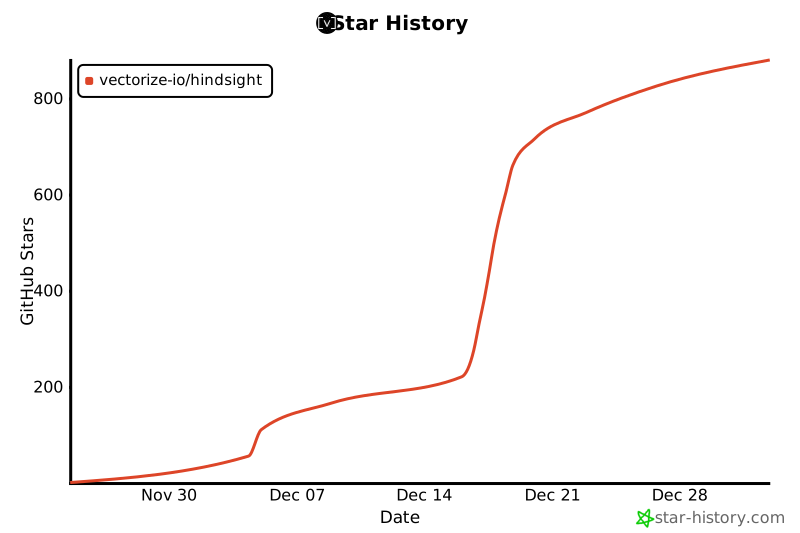](https://www.star-history.com/#vectorize-io/hindsight&type=date&legend=top-left)
|
||||
---
|
||||
- [Architecture](https://vectorize-io.github.io/hindsight/#what-hindsight-does) — How ingestion, storage, and retrieval work
|
||||
- [Python Client](https://vectorize-io.github.io/hindsight/sdks/python) — Full API reference
|
||||
- [API Reference](https://vectorize-io.github.io/hindsight/api-reference) — REST API endpoints
|
||||
- [Personality](https://vectorize-io.github.io/hindsight/developer/personality) — Big Five traits and opinion formation
|
||||
|
||||
## Contributing
|
||||
|
||||
See [CONTRIBUTING.md](./CONTRIBUTING.md).
|
||||
We welcome contributions! See [CONTRIBUTING.md](./CONTRIBUTING.md) for guidelines.
|
||||
|
||||
## License
|
||||
|
||||
MIT — see [LICENSE](./LICENSE)
|
||||
|
||||
---
|
||||
|
||||
Built by [Vectorize.io](https://vectorize.io)
|
||||
|
||||
<img src="https://umami-pixel.chris-latimer.workers.dev/?id=a8b043e6-6964-454d-80df-69b69d3f0d50&host=github.com&url=/vectorize-io/hindsight" width="1" height="1" alt="" />
|
||||
MIT
|
||||
|
||||
@@ -1,139 +0,0 @@
|
||||
{
|
||||
"version": "5",
|
||||
"specifiers": {
|
||||
"jsr:@std/assert@^1.0.17": "1.0.19",
|
||||
"jsr:@std/assert@^1.0.19": "1.0.19",
|
||||
"jsr:@std/expect@*": "1.0.18",
|
||||
"jsr:@std/internal@^1.0.12": "1.0.12",
|
||||
"jsr:@std/path@^1.1.4": "1.1.4",
|
||||
"jsr:@std/testing@*": "1.0.17"
|
||||
},
|
||||
"jsr": {
|
||||
"@std/[email protected]": {
|
||||
"integrity": "eaada96ee120cb980bc47e040f82814d786fe8162ecc53c91d8df60b8755991e",
|
||||
"dependencies": [
|
||||
"jsr:@std/internal"
|
||||
]
|
||||
},
|
||||
"@std/[email protected]": {
|
||||
"integrity": "8566eab35200466f8609eb7e7aed062ed0db314e9a258d5d201b1b8997ce801a",
|
||||
"dependencies": [
|
||||
"jsr:@std/assert@^1.0.19",
|
||||
"jsr:@std/internal",
|
||||
"jsr:@std/path"
|
||||
]
|
||||
},
|
||||
"@std/[email protected]": {
|
||||
"integrity": "972a634fd5bc34b242024402972cd5143eac68d8dffaca5eaa4dba30ce17b027"
|
||||
},
|
||||
"@std/[email protected]": {
|
||||
"integrity": "1d2d43f39efb1b42f0b1882a25486647cb851481862dc7313390b2bb044314b5",
|
||||
"dependencies": [
|
||||
"jsr:@std/internal"
|
||||
]
|
||||
},
|
||||
"@std/[email protected]": {
|
||||
"integrity": "87bdc2700fa98249d48a17cd72413352d3d3680dcfbdb64947fd0982d6bbf681",
|
||||
"dependencies": [
|
||||
"jsr:@std/assert@^1.0.17",
|
||||
"jsr:@std/internal"
|
||||
]
|
||||
}
|
||||
},
|
||||
"workspace": {
|
||||
"members": {
|
||||
"hindsight-clients/typescript": {
|
||||
"packageJson": {
|
||||
"dependencies": [
|
||||
"npm:@hey-api/[email protected]",
|
||||
"npm:@types/jest@29",
|
||||
"npm:@types/node@20",
|
||||
"npm:jest@29",
|
||||
"npm:ts-jest@29",
|
||||
"npm:tsup@^8.5.1",
|
||||
"npm:typescript@5"
|
||||
]
|
||||
}
|
||||
},
|
||||
"hindsight-control-plane": {
|
||||
"packageJson": {
|
||||
"dependencies": [
|
||||
"npm:@eslint/eslintrc@^3.3.3",
|
||||
"npm:@eslint/js@^9.39.2",
|
||||
"npm:@radix-ui/react-alert-dialog@^1.1.15",
|
||||
"npm:@radix-ui/react-checkbox@^1.3.3",
|
||||
"npm:@radix-ui/react-dialog@^1.1.15",
|
||||
"npm:@radix-ui/react-dropdown-menu@^2.1.16",
|
||||
"npm:@radix-ui/react-label@^2.1.8",
|
||||
"npm:@radix-ui/react-popover@^1.1.15",
|
||||
"npm:@radix-ui/react-radio-group@^1.3.8",
|
||||
"npm:@radix-ui/react-select@^2.2.6",
|
||||
"npm:@radix-ui/react-slider@^1.3.6",
|
||||
"npm:@radix-ui/react-slot@^1.2.4",
|
||||
"npm:@radix-ui/react-switch@^1.2.6",
|
||||
"npm:@radix-ui/react-tabs@^1.1.13",
|
||||
"npm:@radix-ui/react-tooltip@^1.2.8",
|
||||
"npm:@tailwindcss/postcss@^4.1.17",
|
||||
"npm:@tailwindcss/typography@~0.5.19",
|
||||
"npm:@types/cytoscape@^3.21.9",
|
||||
"npm:@types/node@^24.10.0",
|
||||
"npm:@types/react-dom@^19.2.2",
|
||||
"npm:@types/react@^19.2.2",
|
||||
"npm:autoprefixer@^10.4.21",
|
||||
"npm:class-variance-authority@~0.7.1",
|
||||
"npm:clsx@^2.1.1",
|
||||
"npm:cmdk@^1.1.1",
|
||||
"npm:cytoscape-fcose@^2.2.0",
|
||||
"npm:cytoscape@^3.33.1",
|
||||
"npm:eslint-config-next@^16.0.1",
|
||||
"npm:eslint-plugin-react-hooks@^7.0.1",
|
||||
"npm:eslint-plugin-react@^7.37.5",
|
||||
"npm:eslint@^9.39.1",
|
||||
"npm:[email protected]",
|
||||
"npm:next-themes@~0.4.6",
|
||||
"npm:next@^16.1.6",
|
||||
"npm:postcss@^8.5.6",
|
||||
"npm:prettier@^3.7.4",
|
||||
"npm:react-chrono@^2.9.1",
|
||||
"npm:react-dom@^19.2.0",
|
||||
"npm:react-markdown@^10.1.0",
|
||||
"npm:react18-json-view@~0.2.9",
|
||||
"npm:react@^19.2.0",
|
||||
"npm:recharts@^3.5.1",
|
||||
"npm:remark-gfm@^4.0.1",
|
||||
"npm:sonner@^2.0.7",
|
||||
"npm:tailwind-merge@^3.4.0",
|
||||
"npm:tailwindcss-animate@^1.0.7",
|
||||
"npm:tailwindcss@^4.1.17",
|
||||
"npm:[email protected]",
|
||||
"npm:typescript-eslint@^8.50.0",
|
||||
"npm:typescript@^5.9.3"
|
||||
]
|
||||
}
|
||||
},
|
||||
"hindsight-docs": {
|
||||
"packageJson": {
|
||||
"dependencies": [
|
||||
"npm:@docusaurus/[email protected]",
|
||||
"npm:@docusaurus/[email protected]",
|
||||
"npm:@docusaurus/[email protected]",
|
||||
"npm:@docusaurus/theme-common@^3.9.2",
|
||||
"npm:@docusaurus/theme-mermaid@^3.9.2",
|
||||
"npm:@docusaurus/[email protected]",
|
||||
"npm:@docusaurus/[email protected]",
|
||||
"npm:@easyops-cn/docusaurus-search-local@~0.52.2",
|
||||
"npm:@mdx-js/react@3",
|
||||
"npm:clsx@2",
|
||||
"npm:prism-react-renderer@^2.3.0",
|
||||
"npm:raw-loader@^4.0.2",
|
||||
"npm:react-dom@19",
|
||||
"npm:react-icons@^5.6.0",
|
||||
"npm:react@19",
|
||||
"npm:redocusaurus@^2.5.0",
|
||||
"npm:typescript@~5.6.2"
|
||||
]
|
||||
}
|
||||
}
|
||||
}
|
||||
}
|
||||
}
|
||||
@@ -1,54 +0,0 @@
|
||||
# Docker Compose file for Hindsight with PostgreSQL and pgvector
|
||||
#
|
||||
# Make sure to set the required environment variables before running:
|
||||
# - HINDSIGHT_DB_PASSWORD: Password for the PostgreSQL user
|
||||
# - Configure LLM provider variables as needed (see below in the hindsight service)
|
||||
#
|
||||
# Usage:
|
||||
# docker compose up -d
|
||||
#
|
||||
# Optional environment variables with defaults:
|
||||
# - HINDSIGHT_VERSION: Hindsight application version (default: latest)
|
||||
# - HINDSIGHT_DB_USER: PostgreSQL user (default: hindsight_user)
|
||||
# - HINDSIGHT_DB_NAME: PostgreSQL database name (default: hindsight_db)
|
||||
# - HINDSIGHT_DB_VERSION: PostgreSQL version (default: 18)
|
||||
|
||||
services:
|
||||
db:
|
||||
# Use a PostgreSQL-Image with pgvector extension pre-installed
|
||||
# see https://hub.docker.com/r/pgvector/pgvector
|
||||
image: pgvector/pgvector:pg${HINDSIGHT_DB_VERSION:-18}
|
||||
container_name: hindsight-db
|
||||
restart: always
|
||||
# Expose PostgreSQL port
|
||||
# ports:
|
||||
# - "5432:5432"
|
||||
environment:
|
||||
POSTGRES_USER: ${HINDSIGHT_DB_USER:-hindsight_user}
|
||||
POSTGRES_PASSWORD: ${HINDSIGHT_DB_PASSWORD:?Please set the HINDSIGHT_DB_PASSWORD env variable}
|
||||
POSTGRES_DB: ${HINDSIGHT_DB_NAME:-hindsight_db}
|
||||
volumes:
|
||||
- pg_data:/var/lib/postgresql/${HINDSIGHT_DB_VERSION:-18}/docker
|
||||
networks:
|
||||
- hindsight-net
|
||||
|
||||
hindsight:
|
||||
image: ghcr.io/vectorize-io/hindsight:${HINDSIGHT_VERSION:-latest}
|
||||
container_name: hindsight-app
|
||||
ports:
|
||||
- "8888:8888"
|
||||
- "9999:9999"
|
||||
environment:
|
||||
- HINDSIGHT_API_LLM_API_KEY=${OPENAI_API_KEY?Please set the OPENAI_API_KEY env variable}
|
||||
- HINDSIGHT_API_DATABASE_URL=postgresql://${HINDSIGHT_DB_USER:-hindsight_user}:${HINDSIGHT_DB_PASSWORD:?Please set the HINDSIGHT_DB_PASSWORD env variable}@db:5432/${HINDSIGHT_DB_NAME:-hindsight_db}
|
||||
depends_on:
|
||||
- db
|
||||
networks:
|
||||
- hindsight-net
|
||||
|
||||
networks:
|
||||
hindsight-net:
|
||||
driver: bridge
|
||||
|
||||
volumes:
|
||||
pg_data:
|
||||
@@ -1,96 +0,0 @@
|
||||
# Nginx Reverse Proxy with Custom Base Path
|
||||
|
||||
Deploy Hindsight API under `/hindsight` (or any custom path) using Nginx reverse proxy.
|
||||
|
||||
## Quick Start (Published Image - API Only)
|
||||
|
||||
```bash
|
||||
docker-compose up
|
||||
```
|
||||
|
||||
- **API:** http://localhost:8080/hindsight/docs
|
||||
- **Control Plane:** http://localhost:9999 (direct access, not proxied)
|
||||
|
||||
## Full Stack with Custom Base Path (Requires Build)
|
||||
|
||||
**Important:** You cannot rebuild from the published image with build args. You must build from source.
|
||||
|
||||
### Build from Source with Custom Base Path
|
||||
|
||||
1. **Clone the repository** (if you haven't):
|
||||
```bash
|
||||
git clone https://github.com/vectorize-io/hindsight.git
|
||||
cd hindsight
|
||||
```
|
||||
|
||||
2. **Build with base path**:
|
||||
```bash
|
||||
docker build \
|
||||
--build-arg NEXT_PUBLIC_BASE_PATH=/hindsight \
|
||||
-f docker/standalone/Dockerfile \
|
||||
-t hindsight:custom \
|
||||
.
|
||||
```
|
||||
|
||||
3. **Update docker-compose.yml** to use your built image:
|
||||
```yaml
|
||||
services:
|
||||
hindsight:
|
||||
image: hindsight:custom # ← Change this
|
||||
environment:
|
||||
HINDSIGHT_API_BASE_PATH: /hindsight
|
||||
NEXT_PUBLIC_BASE_PATH: /hindsight
|
||||
```
|
||||
|
||||
4. **Update nginx.conf** to handle Control Plane routes (see below)
|
||||
|
||||
5. **Run**:
|
||||
```bash
|
||||
docker-compose up
|
||||
```
|
||||
|
||||
### Required nginx.conf for Full Stack
|
||||
|
||||
Replace the current `nginx.conf` with this to proxy both API and Control Plane:
|
||||
|
||||
```nginx
|
||||
events { worker_connections 1024; }
|
||||
|
||||
http {
|
||||
include /etc/nginx/mime.types;
|
||||
default_type application/octet-stream;
|
||||
|
||||
upstream hindsight_api { server hindsight:8888; }
|
||||
upstream hindsight_cp { server hindsight:9999; }
|
||||
|
||||
server {
|
||||
listen 80;
|
||||
|
||||
# API
|
||||
location ~ ^/hindsight/(docs|openapi\.json|health|metrics|v1|mcp) {
|
||||
proxy_pass http://hindsight_api;
|
||||
proxy_set_header Host $http_host;
|
||||
}
|
||||
|
||||
# Control Plane static files
|
||||
location ~ ^/hindsight/_next/ {
|
||||
proxy_pass http://hindsight_cp;
|
||||
proxy_set_header Host $http_host;
|
||||
}
|
||||
|
||||
# Control Plane UI
|
||||
location /hindsight {
|
||||
proxy_pass http://hindsight_cp;
|
||||
proxy_set_header Host $http_host;
|
||||
}
|
||||
|
||||
location = / { return 301 /hindsight; }
|
||||
}
|
||||
}
|
||||
```
|
||||
|
||||
### Why Build is Required
|
||||
|
||||
Next.js requires `basePath` at **build time**. The published image was built without a custom base path, so you must rebuild from source with the `NEXT_PUBLIC_BASE_PATH` build arg to deploy the Control Plane under a subpath.
|
||||
|
||||
The API works without rebuild because `HINDSIGHT_API_BASE_PATH` is a runtime environment variable.
|
||||
@@ -1,88 +0,0 @@
|
||||
# Hindsight API deployment with Nginx reverse proxy (API-only)
|
||||
#
|
||||
# This example deploys Hindsight API under the path /hindsight with:
|
||||
# - Hindsight standalone image (API + Control Plane + embedded pg0)
|
||||
# - Nginx reverse proxy (API only)
|
||||
#
|
||||
# Quick Start:
|
||||
# docker-compose -f docker/docker-compose/nginx/docker-compose.yml up
|
||||
#
|
||||
# Access:
|
||||
# API (via nginx): http://localhost:8080/hindsight/docs
|
||||
# Control Plane (direct): http://localhost:9999
|
||||
#
|
||||
# For full stack deployment (API + Control Plane both under /hindsight):
|
||||
# See README.md in this directory for instructions on building with basePath.
|
||||
#
|
||||
# Note: This configuration uses the published image (no build required).
|
||||
# Control Plane is served directly because Next.js basePath requires
|
||||
# build-time configuration. See README.md for the full stack option.
|
||||
|
||||
services:
|
||||
# Hindsight (API + Control Plane + embedded pg0)
|
||||
hindsight:
|
||||
image: ghcr.io/vectorize-io/hindsight:latest
|
||||
ports:
|
||||
- "9999:9999" # Control Plane (direct access, not proxied)
|
||||
environment:
|
||||
# API base path for reverse proxy
|
||||
HINDSIGHT_API_BASE_PATH: /hindsight
|
||||
|
||||
# LLM configuration
|
||||
# Using mock provider for testing (no API key needed)
|
||||
# For production, set OPENAI_API_KEY or ANTHROPIC_API_KEY and use a real provider
|
||||
HINDSIGHT_API_LLM_PROVIDER: ${HINDSIGHT_API_LLM_PROVIDER:-mock}
|
||||
HINDSIGHT_API_LLM_API_KEY: ${OPENAI_API_KEY:-not-needed-for-mock}
|
||||
HINDSIGHT_API_LLM_MODEL: ${HINDSIGHT_API_LLM_MODEL:-mock-model}
|
||||
|
||||
# Production examples (uncomment and set appropriate API key):
|
||||
# HINDSIGHT_API_LLM_PROVIDER: openai
|
||||
# HINDSIGHT_API_LLM_API_KEY: ${OPENAI_API_KEY}
|
||||
# HINDSIGHT_API_LLM_MODEL: gpt-4o-mini
|
||||
|
||||
# HINDSIGHT_API_LLM_PROVIDER: anthropic
|
||||
# HINDSIGHT_API_LLM_API_KEY: ${ANTHROPIC_API_KEY}
|
||||
# HINDSIGHT_API_LLM_MODEL: claude-sonnet-4-20250514
|
||||
|
||||
# Server config
|
||||
HINDSIGHT_API_HOST: 0.0.0.0
|
||||
HINDSIGHT_API_PORT: 8888
|
||||
HINDSIGHT_API_LOG_LEVEL: info
|
||||
|
||||
# Control Plane config
|
||||
HINDSIGHT_CP_DATAPLANE_API_URL: http://localhost:8888
|
||||
volumes:
|
||||
# Persist embedded pg0 database
|
||||
- hindsight_data:/app/data
|
||||
# Note: Ports not exposed - access via Nginx at localhost:8080/hindsight/
|
||||
# To debug directly, uncomment these ports:
|
||||
# ports:
|
||||
# - "8888:8888" # API
|
||||
# - "9999:9999" # Control Plane
|
||||
healthcheck:
|
||||
test: ["CMD", "curl", "-f", "http://localhost:8888/hindsight/health"]
|
||||
interval: 10s
|
||||
timeout: 5s
|
||||
retries: 3
|
||||
start_period: 30s
|
||||
networks:
|
||||
- hindsight
|
||||
|
||||
# Nginx reverse proxy
|
||||
nginx:
|
||||
image: nginx:alpine
|
||||
ports:
|
||||
- "8080:80"
|
||||
volumes:
|
||||
- ./nginx.conf:/etc/nginx/nginx.conf:ro
|
||||
depends_on:
|
||||
hindsight:
|
||||
condition: service_healthy
|
||||
networks:
|
||||
- hindsight
|
||||
|
||||
volumes:
|
||||
hindsight_data:
|
||||
|
||||
networks:
|
||||
hindsight:
|
||||
@@ -1,40 +0,0 @@
|
||||
# Nginx configuration for API-only reverse proxy
|
||||
# Control Plane accessed directly (not through nginx)
|
||||
|
||||
events {
|
||||
worker_connections 1024;
|
||||
}
|
||||
|
||||
http {
|
||||
include /etc/nginx/mime.types;
|
||||
default_type application/octet-stream;
|
||||
|
||||
# Logging
|
||||
access_log /var/log/nginx/access.log;
|
||||
error_log /var/log/nginx/error.log;
|
||||
|
||||
# Upstream - Hindsight API
|
||||
upstream hindsight_api {
|
||||
server hindsight:8888;
|
||||
}
|
||||
|
||||
server {
|
||||
listen 80;
|
||||
server_name _;
|
||||
|
||||
# API endpoints - forward with /hindsight prefix
|
||||
location /hindsight/ {
|
||||
proxy_pass http://hindsight_api;
|
||||
|
||||
proxy_set_header Host $http_host;
|
||||
proxy_set_header X-Real-IP $remote_addr;
|
||||
proxy_set_header X-Forwarded-For $proxy_add_x_forwarded_for;
|
||||
proxy_set_header X-Forwarded-Proto $scheme;
|
||||
}
|
||||
|
||||
# Redirect root to API docs
|
||||
location = / {
|
||||
return 301 /hindsight/docs;
|
||||
}
|
||||
}
|
||||
}
|
||||
@@ -1,32 +0,0 @@
|
||||
# PostgreSQL with pgvector and pg_textsearch extensions
|
||||
# Note: pg_textsearch requires PostgreSQL 17+
|
||||
FROM postgres:17
|
||||
|
||||
# Install build dependencies
|
||||
RUN apt-get update && apt-get install -y \
|
||||
build-essential \
|
||||
git \
|
||||
postgresql-server-dev-17 \
|
||||
libpq-dev \
|
||||
&& rm -rf /var/lib/apt/lists/*
|
||||
|
||||
# Install pgvector
|
||||
RUN cd /tmp && \
|
||||
git clone --branch v0.8.0 https://github.com/pgvector/pgvector.git && \
|
||||
cd pgvector && \
|
||||
make && \
|
||||
make install
|
||||
|
||||
# Install pg_textsearch
|
||||
RUN cd /tmp && \
|
||||
git clone https://github.com/timescale/pg_textsearch.git && \
|
||||
cd pg_textsearch && \
|
||||
make && \
|
||||
make install
|
||||
|
||||
# Clean up source files and build dependencies
|
||||
RUN rm -rf /tmp/pgvector /tmp/pg_textsearch && \
|
||||
apt-get purge -y --auto-remove build-essential git postgresql-server-dev-17
|
||||
|
||||
# Ensure extensions are preloaded
|
||||
RUN echo "shared_preload_libraries = 'pg_textsearch'" >> /usr/share/postgresql/postgresql.conf.sample
|
||||
@@ -1,91 +0,0 @@
|
||||
name: hindsight
|
||||
# Docker Compose file for Hindsight with PostgreSQL and Timescale pg_textsearch
|
||||
# docker compose -f docker/docker-compose/pg_textsearch/docker-compose.yaml down && sleep 2 && docker compose -f docker/docker-compose/pg_textsearch/docker-compose.yaml up -d
|
||||
# Make sure to set the required environment variables before running:
|
||||
# - HINDSIGHT_DB_PASSWORD: Password for the PostgreSQL user
|
||||
# - Configure LLM provider variables as needed (see below in the hindsight service)
|
||||
#
|
||||
# Usage:
|
||||
# docker compose up -d
|
||||
#
|
||||
# Optional environment variables with defaults:
|
||||
# - HINDSIGHT_VERSION: Hindsight application version (default: latest)
|
||||
# - HINDSIGHT_DB_USER: PostgreSQL user (default: hindsight_user)
|
||||
# - HINDSIGHT_DB_NAME: PostgreSQL database name (default: hindsight_db)
|
||||
|
||||
services:
|
||||
db:
|
||||
# Use custom PostgreSQL image with pgvector and pg_textsearch extensions
|
||||
build:
|
||||
context: .
|
||||
dockerfile: Dockerfile
|
||||
container_name: hindsight-db
|
||||
restart: always
|
||||
# Expose PostgreSQL port
|
||||
ports:
|
||||
- "5437:5432"
|
||||
environment:
|
||||
POSTGRES_USER: ${HINDSIGHT_DB_USER:-hindsight_user}
|
||||
POSTGRES_PASSWORD: ${HINDSIGHT_DB_PASSWORD:-hindsight_password}
|
||||
POSTGRES_DB: ${HINDSIGHT_DB_NAME:-hindsight_db}
|
||||
volumes:
|
||||
- pg_data:/var/lib/postgresql/data
|
||||
networks:
|
||||
- hindsight-net
|
||||
|
||||
pg-textsearch-init:
|
||||
build:
|
||||
context: .
|
||||
dockerfile: Dockerfile
|
||||
depends_on:
|
||||
- db
|
||||
environment:
|
||||
- PGPASSWORD=${HINDSIGHT_DB_PASSWORD:-hindsight_password}
|
||||
command: >
|
||||
bash -c "
|
||||
echo 'Waiting for PostgreSQL to be ready...';
|
||||
until pg_isready -h hindsight-db -p 5432 -U hindsight_user; do
|
||||
echo 'PostgreSQL is unavailable - sleeping';
|
||||
sleep 2;
|
||||
done;
|
||||
echo 'PostgreSQL is ready - creating hindsight_db database';
|
||||
psql -h hindsight-db -p 5432 -U hindsight_user -c 'CREATE DATABASE hindsight_db;' 2>/dev/null || echo 'Database already exists';
|
||||
echo 'Creating extensions in hindsight_db database';
|
||||
psql -h hindsight-db -p 5432 -U hindsight_user -d hindsight_db -c 'CREATE EXTENSION IF NOT EXISTS vector CASCADE;';
|
||||
psql -h hindsight-db -p 5432 -U hindsight_user -d hindsight_db -c 'CREATE EXTENSION IF NOT EXISTS pg_textsearch CASCADE;';
|
||||
echo 'Database and extensions created successfully';
|
||||
"
|
||||
restart: "no"
|
||||
networks:
|
||||
- hindsight-net
|
||||
|
||||
hindsight:
|
||||
image: ghcr.io/vectorize-io/hindsight:${HINDSIGHT_VERSION:-latest}
|
||||
container_name: hindsight-app
|
||||
ports:
|
||||
- "8888:8888"
|
||||
- "9999:9999"
|
||||
environment:
|
||||
# LLM Configuration
|
||||
HINDSIGHT_API_LLM_PROVIDER: ${HINDSIGHT_API_LLM_PROVIDER:-openai}
|
||||
HINDSIGHT_API_LLM_API_KEY: ${OPENAI_API_KEY:-your-api-key}
|
||||
|
||||
# Database Configuration
|
||||
HINDSIGHT_API_DATABASE_URL: postgresql://${HINDSIGHT_DB_USER:-hindsight_user}:${HINDSIGHT_DB_PASSWORD:-hindsight_password}@db:5432/${HINDSIGHT_DB_NAME:-hindsight_db}
|
||||
|
||||
# Vector and Text Search Extensions
|
||||
HINDSIGHT_API_VECTOR_EXTENSION: pgvector
|
||||
HINDSIGHT_API_TEXT_SEARCH_EXTENSION: pg_textsearch
|
||||
|
||||
depends_on:
|
||||
- db
|
||||
networks:
|
||||
- hindsight-net
|
||||
|
||||
|
||||
networks:
|
||||
hindsight-net:
|
||||
driver: bridge
|
||||
|
||||
volumes:
|
||||
pg_data:
|
||||
@@ -1,83 +0,0 @@
|
||||
# Docker Compose file for Hindsight with S3 file storage (SeaweedFS)
|
||||
#
|
||||
# SeaweedFS (Apache 2.0) provides an S3-compatible object storage backend
|
||||
# for storing uploaded files instead of PostgreSQL BYTEA storage.
|
||||
#
|
||||
# Make sure to set the required environment variables before running:
|
||||
# - HINDSIGHT_DB_PASSWORD: Password for the PostgreSQL user
|
||||
# - Configure LLM provider variables as needed (see below in the hindsight service)
|
||||
#
|
||||
# Usage:
|
||||
# docker compose up -d
|
||||
#
|
||||
# Optional environment variables with defaults:
|
||||
# - HINDSIGHT_VERSION: Hindsight application version (default: latest)
|
||||
# - HINDSIGHT_DB_USER: PostgreSQL user (default: hindsight_user)
|
||||
# - HINDSIGHT_DB_NAME: PostgreSQL database name (default: hindsight_db)
|
||||
# - HINDSIGHT_DB_VERSION: PostgreSQL version (default: 18)
|
||||
# - SEAWEEDFS_S3_ACCESS_KEY: S3 access key (default: hindsight_s3_key)
|
||||
# - SEAWEEDFS_S3_SECRET_KEY: S3 secret key (default: hindsight_s3_secret)
|
||||
|
||||
services:
|
||||
db:
|
||||
image: pgvector/pgvector:pg${HINDSIGHT_DB_VERSION:-18}
|
||||
container_name: hindsight-db
|
||||
restart: always
|
||||
environment:
|
||||
POSTGRES_USER: ${HINDSIGHT_DB_USER:-hindsight_user}
|
||||
POSTGRES_PASSWORD: ${HINDSIGHT_DB_PASSWORD:?Please set the HINDSIGHT_DB_PASSWORD env variable}
|
||||
POSTGRES_DB: ${HINDSIGHT_DB_NAME:-hindsight_db}
|
||||
volumes:
|
||||
- pg_data:/var/lib/postgresql/${HINDSIGHT_DB_VERSION:-18}/docker
|
||||
networks:
|
||||
- hindsight-net
|
||||
|
||||
seaweedfs:
|
||||
image: chrislusf/seaweedfs:latest
|
||||
container_name: hindsight-seaweedfs
|
||||
restart: always
|
||||
# Single-node mode: master + volume + filer + S3 gateway all in one process
|
||||
command: >
|
||||
server
|
||||
-s3
|
||||
-s3.port=8333
|
||||
-s3.config=/etc/seaweedfs/s3.json
|
||||
-ip.bind=0.0.0.0
|
||||
volumes:
|
||||
- seaweedfs_data:/data
|
||||
- ./s3.json:/etc/seaweedfs/s3.json:ro
|
||||
# Expose S3 API port (uncomment to access from host)
|
||||
# ports:
|
||||
# - "8333:8333"
|
||||
networks:
|
||||
- hindsight-net
|
||||
|
||||
hindsight:
|
||||
image: ghcr.io/vectorize-io/hindsight:${HINDSIGHT_VERSION:-latest}
|
||||
container_name: hindsight-app
|
||||
ports:
|
||||
- "8888:8888"
|
||||
- "9999:9999"
|
||||
environment:
|
||||
- HINDSIGHT_API_LLM_API_KEY=${OPENAI_API_KEY?Please set the OPENAI_API_KEY env variable}
|
||||
- HINDSIGHT_API_DATABASE_URL=postgresql://${HINDSIGHT_DB_USER:-hindsight_user}:${HINDSIGHT_DB_PASSWORD:?Please set the HINDSIGHT_DB_PASSWORD env variable}@db:5432/${HINDSIGHT_DB_NAME:-hindsight_db}
|
||||
# S3 file storage configuration (SeaweedFS)
|
||||
- HINDSIGHT_API_FILE_STORAGE_TYPE=s3
|
||||
- HINDSIGHT_API_FILE_STORAGE_S3_BUCKET=hindsight
|
||||
- HINDSIGHT_API_FILE_STORAGE_S3_ENDPOINT=http://seaweedfs:8333
|
||||
- HINDSIGHT_API_FILE_STORAGE_S3_REGION=us-east-1
|
||||
- HINDSIGHT_API_FILE_STORAGE_S3_ACCESS_KEY_ID=${SEAWEEDFS_S3_ACCESS_KEY:-hindsight_s3_key}
|
||||
- HINDSIGHT_API_FILE_STORAGE_S3_SECRET_ACCESS_KEY=${SEAWEEDFS_S3_SECRET_KEY:-hindsight_s3_secret}
|
||||
depends_on:
|
||||
- db
|
||||
- seaweedfs
|
||||
networks:
|
||||
- hindsight-net
|
||||
|
||||
networks:
|
||||
hindsight-net:
|
||||
driver: bridge
|
||||
|
||||
volumes:
|
||||
pg_data:
|
||||
seaweedfs_data:
|
||||
@@ -1,19 +0,0 @@
|
||||
{
|
||||
"identities": [
|
||||
{
|
||||
"name": "hindsight",
|
||||
"credentials": [
|
||||
{
|
||||
"accessKey": "hindsight_s3_key",
|
||||
"secretKey": "hindsight_s3_secret"
|
||||
}
|
||||
],
|
||||
"actions": [
|
||||
"Admin",
|
||||
"Read",
|
||||
"Write",
|
||||
"List"
|
||||
]
|
||||
}
|
||||
]
|
||||
}
|
||||
@@ -1,16 +0,0 @@
|
||||
# Git
|
||||
.git
|
||||
.gitignore
|
||||
.gitattributes
|
||||
|
||||
# Docker
|
||||
docker-compose.yaml
|
||||
.dockerignore
|
||||
|
||||
# Documentation
|
||||
README.md
|
||||
*.md
|
||||
|
||||
# Environment
|
||||
.env
|
||||
.env.example
|
||||
@@ -1,25 +0,0 @@
|
||||
# PostgreSQL Configuration
|
||||
HINDSIGHT_DB_USER=hindsight_user
|
||||
HINDSIGHT_DB_PASSWORD=change-me-to-secure-password
|
||||
HINDSIGHT_DB_NAME=hindsight_db
|
||||
|
||||
# Hindsight Version
|
||||
HINDSIGHT_VERSION=latest
|
||||
|
||||
# LLM Configuration
|
||||
HINDSIGHT_API_LLM_PROVIDER=openai
|
||||
OPENAI_API_KEY=your-openai-api-key-here
|
||||
|
||||
# Alternative LLM providers (uncomment and configure as needed):
|
||||
# HINDSIGHT_API_LLM_PROVIDER=anthropic
|
||||
# ANTHROPIC_API_KEY=your-anthropic-api-key
|
||||
|
||||
# HINDSIGHT_API_LLM_PROVIDER=gemini
|
||||
# GEMINI_API_KEY=your-gemini-api-key
|
||||
|
||||
# HINDSIGHT_API_LLM_PROVIDER=groq
|
||||
# GROQ_API_KEY=your-groq-api-key
|
||||
|
||||
# Vector and Text Search (already configured in docker-compose.yaml)
|
||||
# HINDSIGHT_API_VECTOR_EXTENSION=pgvectorscale
|
||||
# HINDSIGHT_API_TEXT_SEARCH_EXTENSION=pg_textsearch
|
||||
@@ -1,55 +0,0 @@
|
||||
# PostgreSQL with pgvector, pgvectorscale, and pg_textsearch extensions
|
||||
# All three extensions from Timescale/pgvector for high-performance vector and text search
|
||||
# Note: Requires PostgreSQL 16+
|
||||
FROM postgres:17
|
||||
|
||||
# Install build dependencies and Rust toolchain
|
||||
RUN apt-get update && apt-get install -y \
|
||||
build-essential \
|
||||
git \
|
||||
postgresql-server-dev-17 \
|
||||
libpq-dev \
|
||||
cmake \
|
||||
curl \
|
||||
pkg-config \
|
||||
libssl-dev \
|
||||
&& rm -rf /var/lib/apt/lists/*
|
||||
|
||||
# Install Rust toolchain (required for pgvectorscale)
|
||||
RUN curl --proto '=https' --tlsv1.2 -sSf https://sh.rustup.rs | sh -s -- -y
|
||||
ENV PATH="/root/.cargo/bin:${PATH}"
|
||||
|
||||
# Install pgvector (required by pgvectorscale)
|
||||
RUN cd /tmp && \
|
||||
git clone --branch v0.8.0 https://github.com/pgvector/pgvector.git && \
|
||||
cd pgvector && \
|
||||
make && \
|
||||
make install && \
|
||||
rm -rf /tmp/pgvector
|
||||
|
||||
# Install cargo-pgrx (PostgreSQL extension framework for Rust)
|
||||
RUN cargo install cargo-pgrx --version 0.12.5 --locked && \
|
||||
cargo pgrx init --pg17 /usr/bin/pg_config
|
||||
|
||||
# Install pgvectorscale (DiskANN index support)
|
||||
RUN cd /tmp && \
|
||||
git clone --branch 0.5.1 https://github.com/timescale/pgvectorscale.git && \
|
||||
cd pgvectorscale/pgvectorscale && \
|
||||
cargo pgrx install --release && \
|
||||
rm -rf /tmp/pgvectorscale
|
||||
|
||||
# Install pg_textsearch (BM25 text search)
|
||||
RUN cd /tmp && \
|
||||
git clone https://github.com/timescale/pg_textsearch.git && \
|
||||
cd pg_textsearch && \
|
||||
make && \
|
||||
make install && \
|
||||
rm -rf /tmp/pg_textsearch
|
||||
|
||||
# Clean up build dependencies (keep runtime dependencies)
|
||||
RUN apt-get purge -y --auto-remove git cmake curl && \
|
||||
rm -rf /root/.cargo/registry /root/.cargo/git
|
||||
|
||||
# Ensure extensions are preloaded (pg_textsearch requires preloading)
|
||||
RUN echo "shared_preload_libraries = 'pg_textsearch'" >> /usr/share/postgresql/postgresql.conf.sample
|
||||
|
||||
@@ -1,101 +0,0 @@
|
||||
# Hindsight with Timescale Extensions
|
||||
|
||||
This Docker Compose setup provides a complete Hindsight deployment with **Timescale extensions**:
|
||||
- **pgvectorscale** - DiskANN algorithm for disk-based scalable vector search
|
||||
- **pg_textsearch** - High-performance BM25 text search
|
||||
|
||||
Both extensions are from [Timescale](https://github.com/timescale) and provide production-grade performance.
|
||||
|
||||
## Prerequisites
|
||||
|
||||
- Docker and Docker Compose installed
|
||||
- OpenAI API key (or another LLM provider)
|
||||
|
||||
## Quick Start
|
||||
|
||||
```bash
|
||||
# Set environment variables
|
||||
export HINDSIGHT_DB_PASSWORD="your-secure-password"
|
||||
export OPENAI_API_KEY="your-openai-api-key"
|
||||
|
||||
# Build and start
|
||||
docker compose -f docker/docker-compose/timescale/docker-compose.yaml up -d --build
|
||||
|
||||
# Check logs
|
||||
|
||||
docker compose -f docker/docker-compose/timescale/docker-compose.yaml logs -f
|
||||
```
|
||||
|
||||
**Access:**
|
||||
- API: http://localhost:8888
|
||||
- Control Plane: http://localhost:9999
|
||||
|
||||
## Stop and Clean Up
|
||||
|
||||
```bash
|
||||
# Stop services
|
||||
docker compose -f docker/docker-compose/timescale/docker-compose.yaml down
|
||||
|
||||
# Remove volumes (deletes all data)
|
||||
docker compose -f docker/docker-compose/timescale/docker-compose.yaml down -v
|
||||
```
|
||||
|
||||
## Configuration
|
||||
|
||||
### Environment Variables
|
||||
|
||||
| Variable | Description | Default |
|
||||
|----------|-------------|---------|
|
||||
| `HINDSIGHT_DB_PASSWORD` | PostgreSQL password | `hindsight_password` |
|
||||
| `HINDSIGHT_DB_USER` | PostgreSQL username | `hindsight_user` |
|
||||
| `HINDSIGHT_DB_NAME` | Database name | `hindsight_db` |
|
||||
| `HINDSIGHT_VERSION` | Hindsight Docker image version | `latest` |
|
||||
| `OPENAI_API_KEY` | OpenAI API key | (required) |
|
||||
| `HINDSIGHT_API_LLM_PROVIDER` | LLM provider | `openai` |
|
||||
|
||||
### Why Timescale Extensions?
|
||||
|
||||
**pgvectorscale (DiskANN):**
|
||||
- 28x lower p95 latency vs dedicated vector databases
|
||||
- 16x higher query throughput at 99% recall
|
||||
- 60-75% cost reduction (disk is cheaper than RAM)
|
||||
- Best for large datasets (10M+ vectors)
|
||||
|
||||
**pg_textsearch (BM25):**
|
||||
- High-performance keyword retrieval
|
||||
- Native BM25 ranking algorithm
|
||||
- Optimized for full-text search
|
||||
|
||||
## Troubleshooting
|
||||
|
||||
### Extensions not installed
|
||||
|
||||
Check if extensions are available:
|
||||
|
||||
```bash
|
||||
docker exec -it hindsight-db-timescale psql -U hindsight_user -d hindsight_db -c "\dx"
|
||||
```
|
||||
|
||||
You should see:
|
||||
- `vector` (pgvector)
|
||||
- `vectorscale` (pgvectorscale/DiskANN)
|
||||
- `pg_textsearch` (BM25 search)
|
||||
|
||||
### Build fails
|
||||
|
||||
If the Docker build fails during pgvectorscale compilation:
|
||||
|
||||
1. Ensure you have sufficient memory (recommended: 4GB+)
|
||||
2. Check Docker build logs for Rust compilation errors
|
||||
3. Try building with more resources: `docker compose build --no-cache --memory 4g`
|
||||
|
||||
### Port conflicts
|
||||
|
||||
If port 5438 is already in use, modify the `ports` section in docker-compose.yaml.
|
||||
|
||||
## Learn More
|
||||
|
||||
- [pgvectorscale GitHub](https://github.com/timescale/pgvectorscale)
|
||||
- [pg_textsearch GitHub](https://github.com/timescale/pg_textsearch)
|
||||
- [HNSW vs DiskANN](https://www.tigerdata.com/learn/hnsw-vs-diskann)
|
||||
- [Hindsight Documentation](https://hindsight.dev)
|
||||
@@ -1,108 +0,0 @@
|
||||
name: hindsight
|
||||
# Docker Compose file for Hindsight with Timescale extensions
|
||||
# - pgvectorscale: DiskANN vector search (disk-based, scalable)
|
||||
# - pg_textsearch: BM25 text search (high-performance keyword retrieval)
|
||||
#
|
||||
# Quick start:
|
||||
# docker compose -f docker/docker-compose/timescale/docker-compose.yaml up -d --build
|
||||
#
|
||||
# Required environment variables:
|
||||
# - HINDSIGHT_DB_PASSWORD: Password for the PostgreSQL user
|
||||
# - OPENAI_API_KEY (or configure another LLM provider)
|
||||
#
|
||||
# Optional environment variables with defaults:
|
||||
# - HINDSIGHT_VERSION: Hindsight application version (default: latest)
|
||||
# - HINDSIGHT_DB_USER: PostgreSQL user (default: hindsight_user)
|
||||
# - HINDSIGHT_DB_NAME: PostgreSQL database name (default: hindsight_db)
|
||||
|
||||
services:
|
||||
db:
|
||||
# Custom PostgreSQL image with Timescale extensions (pgvectorscale + pg_textsearch)
|
||||
build:
|
||||
context: .
|
||||
dockerfile: Dockerfile
|
||||
container_name: hindsight-db-timescale
|
||||
restart: always
|
||||
# Expose PostgreSQL port (using 5438 to avoid conflicts with other setups)
|
||||
ports:
|
||||
- "5438:5432"
|
||||
environment:
|
||||
POSTGRES_USER: ${HINDSIGHT_DB_USER:-hindsight_user}
|
||||
POSTGRES_PASSWORD: ${HINDSIGHT_DB_PASSWORD:-hindsight_password}
|
||||
POSTGRES_DB: ${HINDSIGHT_DB_NAME:-hindsight_db}
|
||||
volumes:
|
||||
- pg_data:/var/lib/postgresql/data
|
||||
networks:
|
||||
- hindsight-net
|
||||
# Health check to ensure database is ready
|
||||
healthcheck:
|
||||
test: ["CMD-SHELL", "pg_isready -U hindsight_user"]
|
||||
interval: 5s
|
||||
timeout: 5s
|
||||
retries: 5
|
||||
|
||||
timescale-init:
|
||||
build:
|
||||
context: .
|
||||
dockerfile: Dockerfile
|
||||
depends_on:
|
||||
db:
|
||||
condition: service_healthy
|
||||
environment:
|
||||
- PGPASSWORD=${HINDSIGHT_DB_PASSWORD:-hindsight_password}
|
||||
command: >
|
||||
bash -c "
|
||||
echo 'PostgreSQL is ready - creating hindsight_db database';
|
||||
psql -h hindsight-db-timescale -p 5432 -U hindsight_user -c 'CREATE DATABASE hindsight_db;' 2>/dev/null || echo 'Database already exists';
|
||||
echo 'Installing Timescale extensions...';
|
||||
echo '1/3: Installing pgvector (required by pgvectorscale)...';
|
||||
psql -h hindsight-db-timescale -p 5432 -U hindsight_user -d hindsight_db -c 'CREATE EXTENSION IF NOT EXISTS vector CASCADE;';
|
||||
echo '2/3: Installing pgvectorscale (DiskANN vector search)...';
|
||||
psql -h hindsight-db-timescale -p 5432 -U hindsight_user -d hindsight_db -c 'CREATE EXTENSION IF NOT EXISTS vectorscale CASCADE;';
|
||||
echo '3/3: Installing pg_textsearch (BM25 text search)...';
|
||||
psql -h hindsight-db-timescale -p 5432 -U hindsight_user -d hindsight_db -c 'CREATE EXTENSION IF NOT EXISTS pg_textsearch CASCADE;';
|
||||
echo '';
|
||||
echo '✅ Timescale extensions installed successfully';
|
||||
echo '';
|
||||
echo 'Installed extensions:';
|
||||
psql -h hindsight-db-timescale -p 5432 -U hindsight_user -d hindsight_db -c \"\\dx\" | grep -E '(vector|vectorscale|pg_textsearch)';
|
||||
"
|
||||
restart: "no"
|
||||
networks:
|
||||
- hindsight-net
|
||||
|
||||
hindsight:
|
||||
image: ghcr.io/vectorize-io/hindsight:${HINDSIGHT_VERSION:-latest}
|
||||
container_name: hindsight-app-timescale
|
||||
ports:
|
||||
- "8888:8888"
|
||||
- "9999:9999"
|
||||
environment:
|
||||
# LLM Configuration
|
||||
HINDSIGHT_API_LLM_PROVIDER: ${HINDSIGHT_API_LLM_PROVIDER:-openai}
|
||||
HINDSIGHT_API_LLM_API_KEY: ${OPENAI_API_KEY:-your-api-key}
|
||||
|
||||
# Database Configuration
|
||||
HINDSIGHT_API_DATABASE_URL: postgresql://${HINDSIGHT_DB_USER:-hindsight_user}:${HINDSIGHT_DB_PASSWORD:-hindsight_password}@db:5432/${HINDSIGHT_DB_NAME:-hindsight_db}
|
||||
|
||||
# Timescale Extensions
|
||||
# pgvectorscale: DiskANN algorithm for disk-based scalable vector search
|
||||
HINDSIGHT_API_VECTOR_EXTENSION: pgvectorscale
|
||||
# pg_textsearch: High-performance BM25 text search
|
||||
HINDSIGHT_API_TEXT_SEARCH_EXTENSION: pg_textsearch
|
||||
|
||||
depends_on:
|
||||
db:
|
||||
condition: service_healthy
|
||||
timescale-init:
|
||||
condition: service_completed_successfully
|
||||
networks:
|
||||
- hindsight-net
|
||||
|
||||
|
||||
networks:
|
||||
hindsight-net:
|
||||
driver: bridge
|
||||
|
||||
volumes:
|
||||
pg_data:
|
||||
@@ -1,93 +0,0 @@
|
||||
name: hindsight
|
||||
# Docker Compose file for Hindsight with PostgreSQL and vectorchord
|
||||
# docker compose -f docker/docker-compose/docker-compose.yaml down && sleep 2 && docker compose -f docker/docker-compose/docker-compose.yaml up -d
|
||||
# Make sure to set the required environment variables before running:
|
||||
# - HINDSIGHT_DB_PASSWORD: Password for the PostgreSQL user
|
||||
# - Configure LLM provider variables as needed (see below in the hindsight service)
|
||||
#
|
||||
# Usage:
|
||||
# docker compose up -d
|
||||
#
|
||||
# Optional environment variables with defaults:
|
||||
# - HINDSIGHT_VERSION: Hindsight application version (default: latest)
|
||||
# - HINDSIGHT_DB_USER: PostgreSQL user (default: hindsight_user)
|
||||
# - HINDSIGHT_DB_NAME: PostgreSQL database name (default: hindsight_db)
|
||||
# - HINDSIGHT_DB_VERSION: PostgreSQL version (default: 18)
|
||||
|
||||
services:
|
||||
db:
|
||||
# Use a PostgreSQL-Image with vectorchord extension pre-installed
|
||||
image: tensorchord/vchord-suite:pg${HINDSIGHT_DB_VERSION:-18-latest}
|
||||
container_name: hindsight-db
|
||||
restart: always
|
||||
# Expose PostgreSQL port
|
||||
ports:
|
||||
- "5436:5432"
|
||||
environment:
|
||||
POSTGRES_USER: ${HINDSIGHT_DB_USER:-hindsight_user}
|
||||
POSTGRES_PASSWORD: ${HINDSIGHT_DB_PASSWORD:-hindsight_password}
|
||||
POSTGRES_DB: ${HINDSIGHT_DB_NAME:-hindsight_db}
|
||||
volumes:
|
||||
- pg_data:/var/lib/postgresql/${HINDSIGHT_DB_VERSION:-18}/docker
|
||||
networks:
|
||||
- hindsight-net
|
||||
|
||||
vectorchord-init:
|
||||
image: tensorchord/vchord-suite:pg18-latest
|
||||
#container_name: vectorchord-init
|
||||
depends_on:
|
||||
- db
|
||||
environment:
|
||||
- PGPASSWORD=${HINDSIGHT_DB_PASSWORD:-hindsight_password}
|
||||
command: >
|
||||
bash -c "
|
||||
echo 'Waiting for PostgreSQL to be ready...';
|
||||
until pg_isready -h hindsight-db -p 5432 -U hindsight_user; do
|
||||
echo 'PostgreSQL is unavailable - sleeping';
|
||||
sleep 2;
|
||||
done;
|
||||
echo 'PostgreSQL is ready - creating hindsight_db database';
|
||||
psql -h hindsight-db -p 5432 -U hindsight_user -c 'CREATE DATABASE hindsight_db;' 2>/dev/null || echo 'Database already exists';
|
||||
echo 'Creating extensions in hindsight_db database';
|
||||
psql -h hindsight-db -p 5432 -U hindsight_user -d hindsight_db -c 'CREATE EXTENSION IF NOT EXISTS vchord CASCADE;';
|
||||
psql -h hindsight-db -p 5432 -U hindsight_user -d hindsight_db -c 'CREATE EXTENSION IF NOT EXISTS pg_tokenizer CASCADE;';
|
||||
psql -h hindsight-db -p 5432 -U hindsight_user -d hindsight_db -c 'CREATE EXTENSION IF NOT EXISTS vchord_bm25 CASCADE;';
|
||||
echo 'Creating llmlingua2 tokenizer';
|
||||
psql -h hindsight-db -p 5432 -U hindsight_user -d hindsight_db -c \"SELECT create_tokenizer('llmlingua2', \\$\\$ model = \\\"llmlingua2\\\" \\$\\$);\" 2>/dev/null || echo 'Tokenizer already exists or creation skipped';
|
||||
echo 'Database and extensions created successfully';
|
||||
"
|
||||
restart: "no"
|
||||
networks:
|
||||
- hindsight-net
|
||||
|
||||
hindsight:
|
||||
image: ghcr.io/vectorize-io/hindsight:${HINDSIGHT_VERSION:-latest}
|
||||
container_name: hindsight-app
|
||||
ports:
|
||||
- "8888:8888"
|
||||
- "9999:9999"
|
||||
environment:
|
||||
# LLM Configuration (uses OpenAI for testing vchord)
|
||||
# LLM configuration
|
||||
HINDSIGHT_API_LLM_PROVIDER: ${HINDSIGHT_API_LLM_PROVIDER:-openai}
|
||||
HINDSIGHT_API_LLM_API_KEY: ${OPENAI_API_KEY:-your-api-key}
|
||||
|
||||
# Database Configuration
|
||||
HINDSIGHT_API_DATABASE_URL: postgresql://${HINDSIGHT_DB_USER:-hindsight_user}:${HINDSIGHT_DB_PASSWORD:-hindsight_password}@db:5432/${HINDSIGHT_DB_NAME:-hindsight_db}
|
||||
|
||||
# Vector and Text Search Extensions
|
||||
HINDSIGHT_API_VECTOR_EXTENSION: vchord
|
||||
HINDSIGHT_API_TEXT_SEARCH_EXTENSION: vchord
|
||||
|
||||
depends_on:
|
||||
- db
|
||||
networks:
|
||||
- hindsight-net
|
||||
|
||||
|
||||
networks:
|
||||
hindsight-net:
|
||||
driver: bridge
|
||||
|
||||
volumes:
|
||||
pg_data:
|
||||
+112
-201
@@ -2,25 +2,16 @@
|
||||
# Supports building API-only, Control Plane-only, or both
|
||||
#
|
||||
# Build args:
|
||||
# INCLUDE_API=true/false - Include API (default: true)
|
||||
# INCLUDE_CP=true/false - Include Control Plane (default: true)
|
||||
# INCLUDE_LOCAL_MODELS=true/false - Include local ML models for embeddings/reranking (default: true)
|
||||
# Set to false when using external providers (TEI, OpenAI, Cohere)
|
||||
# PRELOAD_ML_MODELS=true/false - Pre-download ML models during build (default: true)
|
||||
# Only effective when INCLUDE_LOCAL_MODELS=true
|
||||
# NOTE: tiktoken encodings are ALWAYS preloaded (required for air-gapped deployments)
|
||||
# INCLUDE_API=true/false - Include API (default: true)
|
||||
# INCLUDE_CP=true/false - Include Control Plane (default: true)
|
||||
#
|
||||
# Examples:
|
||||
# docker build -t hindsight . # Both (standalone)
|
||||
# docker build -t hindsight-api --build-arg INCLUDE_CP=false . # API only
|
||||
# docker build -t hindsight-cp --build-arg INCLUDE_API=false . # Control Plane only
|
||||
# docker build -t hindsight --build-arg PRELOAD_ML_MODELS=false . # Skip ML model preload
|
||||
# docker build -t hindsight --build-arg INCLUDE_LOCAL_MODELS=false . # Skip local ML deps (for external providers)
|
||||
# docker build -t hindsight . # Both (standalone)
|
||||
# docker build -t hindsight-api --build-arg INCLUDE_CP=false . # API only
|
||||
# docker build -t hindsight-cp --build-arg INCLUDE_API=false . # Control Plane only
|
||||
|
||||
ARG INCLUDE_API=true
|
||||
ARG INCLUDE_CP=true
|
||||
ARG PRELOAD_ML_MODELS=true
|
||||
ARG INCLUDE_LOCAL_MODELS=true
|
||||
|
||||
# =============================================================================
|
||||
# Stage: API Builder
|
||||
@@ -28,7 +19,6 @@ ARG INCLUDE_LOCAL_MODELS=true
|
||||
FROM python:3.11-slim AS api-builder
|
||||
|
||||
ARG INCLUDE_API
|
||||
ARG INCLUDE_LOCAL_MODELS
|
||||
RUN if [ "$INCLUDE_API" != "true" ]; then echo "Skipping API build" && exit 0; fi
|
||||
|
||||
WORKDIR /app
|
||||
@@ -42,25 +32,17 @@ RUN apt-get update && apt-get install -y \
|
||||
&& pip install --no-cache-dir uv
|
||||
|
||||
# Copy dependency files and README (required by pyproject.toml)
|
||||
COPY hindsight-api-slim/pyproject.toml ./api/
|
||||
COPY hindsight-api-slim/README.md ./api/
|
||||
COPY hindsight-api/pyproject.toml ./api/
|
||||
COPY hindsight-api/README.md ./api/
|
||||
|
||||
WORKDIR /app/api
|
||||
|
||||
# Sync dependencies using appropriate extras based on INCLUDE_LOCAL_MODELS
|
||||
# local-ml: torch, sentence-transformers, transformers, einops, flashrank, mlx (optional)
|
||||
# embedded-db: pg0-embedded (always included for embedded PostgreSQL support)
|
||||
RUN if [ "$INCLUDE_LOCAL_MODELS" = "true" ]; then \
|
||||
uv sync --extra local-ml --extra embedded-db; \
|
||||
else \
|
||||
uv sync --extra embedded-db; \
|
||||
fi
|
||||
# Sync dependencies (will create lock file if needed)
|
||||
RUN uv sync
|
||||
|
||||
# Copy source code (alembic migrations are inside hindsight_api/)
|
||||
COPY hindsight-api-slim/hindsight_api ./hindsight_api
|
||||
|
||||
# Install the local package (uv sync only installed dependencies, not the package itself)
|
||||
RUN uv pip install -e .
|
||||
# Copy source code and alembic migrations
|
||||
COPY hindsight-api/hindsight_api ./hindsight_api
|
||||
COPY hindsight-api/alembic ./alembic
|
||||
|
||||
# =============================================================================
|
||||
# Stage: SDK Builder (needed for Control Plane)
|
||||
@@ -70,15 +52,13 @@ FROM node:20-slim AS sdk-builder
|
||||
ARG INCLUDE_CP
|
||||
RUN if [ "$INCLUDE_CP" != "true" ]; then echo "Skipping SDK build" && exit 0; fi
|
||||
|
||||
WORKDIR /app
|
||||
WORKDIR /app/sdk
|
||||
|
||||
# Copy root package files for npm workspaces
|
||||
COPY package.json package-lock.json ./
|
||||
COPY hindsight-clients/typescript/ ./hindsight-clients/typescript/
|
||||
COPY hindsight-clients/typescript/package*.json ./
|
||||
RUN npm ci
|
||||
|
||||
# Install and build SDK using workspace (--ignore-scripts skips git hooks setup)
|
||||
RUN npm ci --ignore-scripts -w @vectorize-io/hindsight-client
|
||||
RUN npm run build -w @vectorize-io/hindsight-client
|
||||
COPY hindsight-clients/typescript/ ./
|
||||
RUN npm run build
|
||||
|
||||
# =============================================================================
|
||||
# Stage: Control Plane Builder
|
||||
@@ -88,52 +68,30 @@ FROM node:20-slim AS cp-builder
|
||||
ARG INCLUDE_CP
|
||||
RUN if [ "$INCLUDE_CP" != "true" ]; then echo "Skipping CP build" && exit 0; fi
|
||||
|
||||
# Create directory structure matching the monorepo layout
|
||||
# This is required because build:standalone script expects .next/standalone/memory-poc/hindsight-control-plane
|
||||
WORKDIR /app/memory-poc/hindsight-control-plane
|
||||
WORKDIR /app
|
||||
|
||||
# Copy built SDK
|
||||
COPY --from=sdk-builder /app/sdk /app/sdk
|
||||
|
||||
# Install Control Plane dependencies
|
||||
# Only copy package.json (not package-lock.json) to ensure npm installs
|
||||
# correct platform-specific native bindings for lightningcss/tailwindcss
|
||||
COPY hindsight-control-plane/package.json ./
|
||||
# Remove the file: dependency on SDK (we'll copy it directly later)
|
||||
RUN sed -i '/"@vectorize-io\/hindsight-client":/d' package.json
|
||||
RUN npm install
|
||||
|
||||
# Copy Control Plane source (excluding node_modules via .dockerignore)
|
||||
COPY hindsight-control-plane/ ./
|
||||
# Remove package-lock.json to avoid conflicts with installed native bindings
|
||||
# Also remove the file: dependency from package.json (restored by COPY above)
|
||||
RUN rm -f package-lock.json && sed -i '/"@vectorize-io\/hindsight-client":/d' package.json
|
||||
RUN rm -f package-lock.json
|
||||
|
||||
# Copy built SDK directly into node_modules (more reliable than npm link in Docker)
|
||||
COPY --from=sdk-builder /app/hindsight-clients/typescript ./node_modules/@vectorize-io/hindsight-client
|
||||
# Link SDK (temporary for build)
|
||||
RUN cd /app/sdk && npm link && cd /app && npm link @vectorize-io/hindsight-client
|
||||
|
||||
# Accept base path as build argument for reverse proxy deployments
|
||||
# Usage: docker build --build-arg NEXT_PUBLIC_BASE_PATH=/hindsight ...
|
||||
ARG NEXT_PUBLIC_BASE_PATH=""
|
||||
# Build Control Plane
|
||||
RUN npm run build
|
||||
|
||||
# Build Control Plane - run next build first, then custom standalone copy
|
||||
# (The build:standalone script expects a specific path structure that differs in Docker)
|
||||
RUN npm exec -- next build
|
||||
|
||||
# Create standalone directory structure manually
|
||||
# Note: Must exclude node_modules from find to avoid wrong server.js from next/dist/experimental/testmode/
|
||||
# Note: Must explicitly copy .next since glob * doesn't match hidden directories
|
||||
RUN STANDALONE_ROOT=$(find .next/standalone -path '*/node_modules' -prune -o -name 'server.js' -print | head -1 | xargs dirname) && \
|
||||
mkdir -p standalone && \
|
||||
cp -r "$STANDALONE_ROOT"/* standalone/ && \
|
||||
cp -r "$STANDALONE_ROOT"/.next standalone/.next && \
|
||||
# Copy node_modules if separate from app dir (monorepo structure)
|
||||
if [ -d ".next/standalone/node_modules" ] && [ "$STANDALONE_ROOT" != ".next/standalone" ]; then \
|
||||
cp -r .next/standalone/node_modules standalone/node_modules; \
|
||||
fi && \
|
||||
cp -r .next/static standalone/.next/static && \
|
||||
mkdir -p standalone/public && \
|
||||
cp -r public/* standalone/public/ 2>/dev/null || true && \
|
||||
# Verify required files exist
|
||||
test -f standalone/server.js || (echo "ERROR: server.js missing!" && exit 1) && \
|
||||
test -f standalone/.next/BUILD_ID || (echo "ERROR: BUILD_ID missing!" && exit 1)
|
||||
# Create public directory if it doesn't exist
|
||||
RUN mkdir -p public
|
||||
|
||||
# =============================================================================
|
||||
# Stage: Final Image - API Only
|
||||
@@ -142,18 +100,18 @@ FROM python:3.11-slim AS api-only
|
||||
|
||||
WORKDIR /app
|
||||
|
||||
# Note: libicu version varies by Debian version - try common versions in order
|
||||
# Install pg0 dependencies
|
||||
RUN apt-get update && apt-get install -y \
|
||||
curl \
|
||||
procps \
|
||||
libxml2 \
|
||||
libssl3 \
|
||||
libgssapi-krb5-2 \
|
||||
libossp-uuid16 \
|
||||
&& (apt-get install -y libicu72 2>/dev/null || apt-get install -y libicu74 2>/dev/null || apt-get install -y libicu76 2>/dev/null || true) \
|
||||
&& apt-get install -y libicu72 || apt-get install -y libicu74 || apt-get install -y libicu* \
|
||||
&& rm -rf /var/lib/apt/lists/* \
|
||||
&& pip install --no-cache-dir uv
|
||||
|
||||
# Create non-root user (PostgreSQL cannot run as root)
|
||||
RUN useradd -m -s /bin/bash hindsight
|
||||
|
||||
# Copy API with virtual environment from builder
|
||||
@@ -163,70 +121,52 @@ COPY --from=api-builder /app/api /app/api
|
||||
COPY docker/standalone/start-all.sh /app/start-all.sh
|
||||
RUN chmod +x /app/start-all.sh
|
||||
|
||||
RUN chown -R hindsight:hindsight /app
|
||||
# Create data directory for pg0 and set ownership
|
||||
RUN mkdir -p /app/data && chown -R hindsight:hindsight /app
|
||||
|
||||
# Switch to non-root user
|
||||
USER hindsight
|
||||
|
||||
# Create pg0 data directory as hindsight user so that Docker seeds new named
|
||||
# volumes with correct ownership (UID 1000) on first use, avoiding the
|
||||
# "Permission denied" error when mounting a fresh root-owned volume.
|
||||
RUN mkdir -p /home/hindsight/.pg0
|
||||
# Set PATH for hindsight user
|
||||
ENV PATH="/home/hindsight/.hindsight/bin:/app/api/.venv/bin:${PATH}"
|
||||
|
||||
ENV PATH="/app/api/.venv/bin:${PATH}"
|
||||
# Install pg0 binary
|
||||
RUN mkdir -p /home/hindsight/.hindsight/bin && \
|
||||
ARCH=$(uname -m) && \
|
||||
if [ "$ARCH" = "aarch64" ] || [ "$ARCH" = "arm64" ]; then \
|
||||
PG0_BINARY="pg0-linux-aarch64-gnu"; \
|
||||
elif [ "$ARCH" = "x86_64" ]; then \
|
||||
PG0_BINARY="pg0-linux-x86_64-gnu"; \
|
||||
else \
|
||||
echo "Unsupported architecture: $ARCH" && exit 1; \
|
||||
fi && \
|
||||
echo "Installing pg0 binary: $PG0_BINARY" && \
|
||||
for i in 1 2 3 4 5; do \
|
||||
curl -fsSL -o /home/hindsight/.hindsight/bin/pg0 \
|
||||
"https://github.com/vectorize-io/pg0/releases/latest/download/$PG0_BINARY" && \
|
||||
chmod +x /home/hindsight/.hindsight/bin/pg0 && \
|
||||
break || (echo "Retry $i failed, waiting..." && sleep 10); \
|
||||
done && \
|
||||
/home/hindsight/.hindsight/bin/pg0 --version
|
||||
|
||||
# Pre-download tiktoken encoding (ALWAYS - required for token counting even in air-gapped envs)
|
||||
# Tiktoken is a core runtime dependency, not an optional ML model
|
||||
RUN MAX_RETRIES=3; \
|
||||
RETRY_DELAY=5; \
|
||||
for i in $(seq 1 $MAX_RETRIES); do \
|
||||
echo "Attempt $i/$MAX_RETRIES: Downloading tiktoken encoding..."; \
|
||||
/app/api/.venv/bin/python -c "\
|
||||
import tiktoken; \
|
||||
print('Downloading cl100k_base encoding...'); \
|
||||
tiktoken.get_encoding('cl100k_base'); \
|
||||
print('Tiktoken encoding cached successfully')" && break; \
|
||||
if [ $i -lt $MAX_RETRIES ]; then \
|
||||
echo "Attempt $i failed, retrying in ${RETRY_DELAY}s..."; \
|
||||
sleep $RETRY_DELAY; \
|
||||
RETRY_DELAY=$((RETRY_DELAY * 2)); \
|
||||
fi; \
|
||||
done; \
|
||||
if [ $i -eq $MAX_RETRIES ]; then \
|
||||
echo "ERROR: Failed to download tiktoken encoding after $MAX_RETRIES attempts"; \
|
||||
exit 1; \
|
||||
fi
|
||||
# Pre-download PostgreSQL binaries
|
||||
ENV PG0_HOME=/home/hindsight/.pg0-cache
|
||||
RUN pg0 start --help && \
|
||||
(pg0 start --name hindsight --port 5555 --username hindsight --password hindsight --database hindsight && \
|
||||
sleep 2 && \
|
||||
pg0 stop --name hindsight && \
|
||||
echo "PostgreSQL pre-cached to $PG0_HOME") || echo "Pre-download skipped"
|
||||
|
||||
# Pre-download ML models to avoid runtime download (conditional)
|
||||
# Only runs if both PRELOAD_ML_MODELS=true AND INCLUDE_LOCAL_MODELS=true
|
||||
# Includes retry logic with exponential backoff for transient network failures
|
||||
ARG PRELOAD_ML_MODELS
|
||||
ARG INCLUDE_LOCAL_MODELS
|
||||
ENV HF_HUB_DOWNLOAD_TIMEOUT=600
|
||||
RUN if [ "$PRELOAD_ML_MODELS" = "true" ] && [ "$INCLUDE_LOCAL_MODELS" = "true" ]; then \
|
||||
MAX_RETRIES=3; \
|
||||
RETRY_DELAY=10; \
|
||||
for i in $(seq 1 $MAX_RETRIES); do \
|
||||
echo "Attempt $i/$MAX_RETRIES: Downloading ML models..."; \
|
||||
/app/api/.venv/bin/python -c "\
|
||||
import os; os.environ['HF_HUB_DOWNLOAD_TIMEOUT'] = '600'; \
|
||||
ENV PG0_HOME=/home/hindsight/.pg0
|
||||
|
||||
# Pre-download ML models to avoid runtime download
|
||||
RUN /app/api/.venv/bin/python -c "\
|
||||
from sentence_transformers import SentenceTransformer, CrossEncoder; \
|
||||
print('Downloading embedding model...'); \
|
||||
SentenceTransformer('BAAI/bge-small-en-v1.5'); \
|
||||
print('Downloading cross-encoder model...'); \
|
||||
CrossEncoder('cross-encoder/ms-marco-MiniLM-L-6-v2'); \
|
||||
print('Models cached successfully')" && break; \
|
||||
if [ $i -lt $MAX_RETRIES ]; then \
|
||||
echo "Attempt $i failed, retrying in ${RETRY_DELAY}s..."; \
|
||||
sleep $RETRY_DELAY; \
|
||||
RETRY_DELAY=$((RETRY_DELAY * 2)); \
|
||||
fi; \
|
||||
done; \
|
||||
if [ $i -eq $MAX_RETRIES ] && ! /app/api/.venv/bin/python -c "from sentence_transformers import SentenceTransformer; SentenceTransformer('BAAI/bge-small-en-v1.5')" 2>/dev/null; then \
|
||||
echo "ERROR: Failed to download models after $MAX_RETRIES attempts"; \
|
||||
exit 1; \
|
||||
fi; \
|
||||
elif [ "$INCLUDE_LOCAL_MODELS" != "true" ]; then echo "Skipping ML model preload (local-models not included)"; \
|
||||
else echo "Skipping ML model preload"; fi
|
||||
print('Models cached successfully')"
|
||||
|
||||
EXPOSE 8888
|
||||
|
||||
@@ -235,11 +175,6 @@ ENV HINDSIGHT_API_PORT=8888
|
||||
ENV HINDSIGHT_API_LOG_LEVEL=info
|
||||
ENV HINDSIGHT_ENABLE_API=true
|
||||
ENV HINDSIGHT_ENABLE_CP=false
|
||||
ENV PYTHONUNBUFFERED=1
|
||||
# Suppress verbose transformers/HuggingFace model loading warnings
|
||||
ENV TRANSFORMERS_VERBOSITY=error
|
||||
ENV HF_HUB_VERBOSITY=error
|
||||
ENV TOKENIZERS_PARALLELISM=false
|
||||
|
||||
CMD ["/app/start-all.sh"]
|
||||
|
||||
@@ -251,13 +186,13 @@ FROM node:20-alpine AS cp-only
|
||||
WORKDIR /app
|
||||
|
||||
# Copy built SDK
|
||||
COPY --from=sdk-builder /app/hindsight-clients/typescript /app/sdk
|
||||
COPY --from=sdk-builder /app/sdk /app/sdk
|
||||
|
||||
# Copy Control Plane standalone build
|
||||
WORKDIR /app/control-plane
|
||||
COPY --from=cp-builder /app/memory-poc/hindsight-control-plane/standalone ./
|
||||
COPY --from=cp-builder /app/memory-poc/hindsight-control-plane/.next/static ./.next/static
|
||||
COPY --from=cp-builder /app/memory-poc/hindsight-control-plane/public ./public
|
||||
COPY --from=cp-builder /app/.next/standalone ./
|
||||
COPY --from=cp-builder /app/.next/static ./.next/static
|
||||
COPY --from=cp-builder /app/public ./public
|
||||
|
||||
WORKDIR /app
|
||||
|
||||
@@ -284,34 +219,33 @@ FROM python:3.11-slim AS standalone
|
||||
|
||||
WORKDIR /app
|
||||
|
||||
# Install Node.js, curl, uv, and system dependencies
|
||||
# Note: libicu version varies by Debian version - try common versions in order
|
||||
# Install Node.js, curl, uv, and pg0 dependencies
|
||||
RUN apt-get update && apt-get install -y \
|
||||
curl \
|
||||
procps \
|
||||
libxml2 \
|
||||
libssl3 \
|
||||
libgssapi-krb5-2 \
|
||||
libossp-uuid16 \
|
||||
&& (apt-get install -y libicu72 2>/dev/null || apt-get install -y libicu74 2>/dev/null || apt-get install -y libicu76 2>/dev/null || true) \
|
||||
&& apt-get install -y libicu72 || apt-get install -y libicu74 || apt-get install -y libicu* \
|
||||
&& curl -fsSL https://deb.nodesource.com/setup_20.x | bash - \
|
||||
&& apt-get install -y nodejs \
|
||||
&& rm -rf /var/lib/apt/lists/* \
|
||||
&& pip install --no-cache-dir uv
|
||||
|
||||
# Create non-root user (PostgreSQL cannot run as root)
|
||||
RUN useradd -m -s /bin/bash hindsight
|
||||
|
||||
# Copy API with virtual environment from builder
|
||||
COPY --from=api-builder /app/api /app/api
|
||||
|
||||
# Copy built SDK
|
||||
COPY --from=sdk-builder /app/hindsight-clients/typescript /app/sdk
|
||||
COPY --from=sdk-builder /app/sdk /app/sdk
|
||||
|
||||
# Copy Control Plane standalone build
|
||||
WORKDIR /app/control-plane
|
||||
COPY --from=cp-builder /app/memory-poc/hindsight-control-plane/standalone ./
|
||||
COPY --from=cp-builder /app/memory-poc/hindsight-control-plane/.next/static ./.next/static
|
||||
COPY --from=cp-builder /app/memory-poc/hindsight-control-plane/public ./public
|
||||
COPY --from=cp-builder /app/.next/standalone ./
|
||||
COPY --from=cp-builder /app/.next/static ./.next/static
|
||||
COPY --from=cp-builder /app/public ./public
|
||||
|
||||
WORKDIR /app
|
||||
|
||||
@@ -319,70 +253,52 @@ WORKDIR /app
|
||||
COPY docker/standalone/start-all.sh /app/start-all.sh
|
||||
RUN chmod +x /app/start-all.sh
|
||||
|
||||
RUN chown -R hindsight:hindsight /app
|
||||
# Create data directory for pg0 and set ownership
|
||||
RUN mkdir -p /app/data && chown -R hindsight:hindsight /app
|
||||
|
||||
# Switch to non-root user
|
||||
USER hindsight
|
||||
|
||||
# Create pg0 data directory as hindsight user so that Docker seeds new named
|
||||
# volumes with correct ownership (UID 1000) on first use, avoiding the
|
||||
# "Permission denied" error when mounting a fresh root-owned volume.
|
||||
RUN mkdir -p /home/hindsight/.pg0
|
||||
# Set PATH for hindsight user
|
||||
ENV PATH="/home/hindsight/.hindsight/bin:/app/api/.venv/bin:${PATH}"
|
||||
|
||||
ENV PATH="/app/api/.venv/bin:${PATH}"
|
||||
# Install pg0 binary
|
||||
RUN mkdir -p /home/hindsight/.hindsight/bin && \
|
||||
ARCH=$(uname -m) && \
|
||||
if [ "$ARCH" = "aarch64" ] || [ "$ARCH" = "arm64" ]; then \
|
||||
PG0_BINARY="pg0-linux-aarch64-gnu"; \
|
||||
elif [ "$ARCH" = "x86_64" ]; then \
|
||||
PG0_BINARY="pg0-linux-x86_64-gnu"; \
|
||||
else \
|
||||
echo "Unsupported architecture: $ARCH" && exit 1; \
|
||||
fi && \
|
||||
echo "Installing pg0 binary: $PG0_BINARY" && \
|
||||
for i in 1 2 3 4 5; do \
|
||||
curl -fsSL -o /home/hindsight/.hindsight/bin/pg0 \
|
||||
"https://github.com/vectorize-io/pg0/releases/latest/download/$PG0_BINARY" && \
|
||||
chmod +x /home/hindsight/.hindsight/bin/pg0 && \
|
||||
break || (echo "Retry $i failed, waiting..." && sleep 10); \
|
||||
done && \
|
||||
/home/hindsight/.hindsight/bin/pg0 --version
|
||||
|
||||
# Pre-download tiktoken encoding (ALWAYS - required for token counting even in air-gapped envs)
|
||||
# Tiktoken is a core runtime dependency, not an optional ML model
|
||||
RUN MAX_RETRIES=3; \
|
||||
RETRY_DELAY=5; \
|
||||
for i in $(seq 1 $MAX_RETRIES); do \
|
||||
echo "Attempt $i/$MAX_RETRIES: Downloading tiktoken encoding..."; \
|
||||
/app/api/.venv/bin/python -c "\
|
||||
import tiktoken; \
|
||||
print('Downloading cl100k_base encoding...'); \
|
||||
tiktoken.get_encoding('cl100k_base'); \
|
||||
print('Tiktoken encoding cached successfully')" && break; \
|
||||
if [ $i -lt $MAX_RETRIES ]; then \
|
||||
echo "Attempt $i failed, retrying in ${RETRY_DELAY}s..."; \
|
||||
sleep $RETRY_DELAY; \
|
||||
RETRY_DELAY=$((RETRY_DELAY * 2)); \
|
||||
fi; \
|
||||
done; \
|
||||
if [ $i -eq $MAX_RETRIES ]; then \
|
||||
echo "ERROR: Failed to download tiktoken encoding after $MAX_RETRIES attempts"; \
|
||||
exit 1; \
|
||||
fi
|
||||
# Pre-download PostgreSQL binaries
|
||||
ENV PG0_HOME=/home/hindsight/.pg0-cache
|
||||
RUN pg0 start --help && \
|
||||
(pg0 start --name hindsight --port 5555 --username hindsight --password hindsight --database hindsight && \
|
||||
sleep 2 && \
|
||||
pg0 stop --name hindsight && \
|
||||
echo "PostgreSQL pre-cached to $PG0_HOME") || echo "Pre-download skipped"
|
||||
|
||||
# Pre-download ML models to avoid runtime download (conditional)
|
||||
# Only runs if both PRELOAD_ML_MODELS=true AND INCLUDE_LOCAL_MODELS=true
|
||||
# Includes retry logic with exponential backoff for transient network failures
|
||||
ARG PRELOAD_ML_MODELS
|
||||
ARG INCLUDE_LOCAL_MODELS
|
||||
ENV HF_HUB_DOWNLOAD_TIMEOUT=600
|
||||
RUN if [ "$PRELOAD_ML_MODELS" = "true" ] && [ "$INCLUDE_LOCAL_MODELS" = "true" ]; then \
|
||||
MAX_RETRIES=3; \
|
||||
RETRY_DELAY=10; \
|
||||
for i in $(seq 1 $MAX_RETRIES); do \
|
||||
echo "Attempt $i/$MAX_RETRIES: Downloading ML models..."; \
|
||||
/app/api/.venv/bin/python -c "\
|
||||
import os; os.environ['HF_HUB_DOWNLOAD_TIMEOUT'] = '600'; \
|
||||
ENV PG0_HOME=/home/hindsight/.pg0
|
||||
|
||||
# Pre-download ML models to avoid runtime download
|
||||
RUN /app/api/.venv/bin/python -c "\
|
||||
from sentence_transformers import SentenceTransformer, CrossEncoder; \
|
||||
print('Downloading embedding model...'); \
|
||||
SentenceTransformer('BAAI/bge-small-en-v1.5'); \
|
||||
print('Downloading cross-encoder model...'); \
|
||||
CrossEncoder('cross-encoder/ms-marco-MiniLM-L-6-v2'); \
|
||||
print('Models cached successfully')" && break; \
|
||||
if [ $i -lt $MAX_RETRIES ]; then \
|
||||
echo "Attempt $i failed, retrying in ${RETRY_DELAY}s..."; \
|
||||
sleep $RETRY_DELAY; \
|
||||
RETRY_DELAY=$((RETRY_DELAY * 2)); \
|
||||
fi; \
|
||||
done; \
|
||||
if [ $i -eq $MAX_RETRIES ] && ! /app/api/.venv/bin/python -c "from sentence_transformers import SentenceTransformer; SentenceTransformer('BAAI/bge-small-en-v1.5')" 2>/dev/null; then \
|
||||
echo "ERROR: Failed to download models after $MAX_RETRIES attempts"; \
|
||||
exit 1; \
|
||||
fi; \
|
||||
elif [ "$INCLUDE_LOCAL_MODELS" != "true" ]; then echo "Skipping ML model preload (local-models not included)"; \
|
||||
else echo "Skipping ML model preload"; fi
|
||||
print('Models cached successfully')"
|
||||
|
||||
EXPOSE 8888 9999
|
||||
|
||||
@@ -393,11 +309,6 @@ ENV NODE_ENV=production
|
||||
ENV HINDSIGHT_CP_DATAPLANE_API_URL=http://localhost:8888
|
||||
ENV HINDSIGHT_ENABLE_API=true
|
||||
ENV HINDSIGHT_ENABLE_CP=true
|
||||
ENV PYTHONUNBUFFERED=1
|
||||
# Suppress verbose transformers/HuggingFace model loading warnings
|
||||
ENV TRANSFORMERS_VERBOSITY=error
|
||||
ENV HF_HUB_VERBOSITY=error
|
||||
ENV TOKENIZERS_PARALLELISM=false
|
||||
|
||||
CMD ["/app/start-all.sh"]
|
||||
|
||||
|
||||
@@ -1,74 +1,23 @@
|
||||
#!/bin/bash
|
||||
set -e
|
||||
|
||||
echo "🚀 Starting Hindsight..."
|
||||
echo ""
|
||||
|
||||
# Service flags (default to true if not set)
|
||||
ENABLE_API="${HINDSIGHT_ENABLE_API:-true}"
|
||||
ENABLE_CP="${HINDSIGHT_ENABLE_CP:-true}"
|
||||
|
||||
# =============================================================================
|
||||
# Dependency waiting (opt-in via HINDSIGHT_WAIT_FOR_DEPS=true)
|
||||
#
|
||||
# Problem: When running with LM Studio, the LLM may take time to load models.
|
||||
# If Hindsight starts before LM Studio is ready, it fails on LLM verification.
|
||||
# This wait loop ensures dependencies are ready before starting.
|
||||
# =============================================================================
|
||||
if [ "${HINDSIGHT_WAIT_FOR_DEPS:-false}" = "true" ]; then
|
||||
LLM_BASE_URL="${HINDSIGHT_API_LLM_BASE_URL:-http://host.docker.internal:1234/v1}"
|
||||
MAX_RETRIES="${HINDSIGHT_RETRY_MAX:-0}" # 0 = infinite
|
||||
RETRY_INTERVAL="${HINDSIGHT_RETRY_INTERVAL:-10}"
|
||||
|
||||
# Check if external database is configured (skip check for embedded pg0)
|
||||
SKIP_DB_CHECK=false
|
||||
if [ -z "${HINDSIGHT_API_DATABASE_URL}" ]; then
|
||||
SKIP_DB_CHECK=true
|
||||
else
|
||||
DB_CHECK_HOST=$(echo "$HINDSIGHT_API_DATABASE_URL" | sed -E 's|.*@([^:/]+):([0-9]+)/.*|\1 \2|')
|
||||
# Copy pre-cached PostgreSQL data if runtime directory is empty (first run with volume)
|
||||
if [ "$ENABLE_API" = "true" ]; then
|
||||
PG0_CACHE="/home/hindsight/.pg0-cache"
|
||||
PG0_HOME="/home/hindsight/.pg0"
|
||||
if [ -d "$PG0_CACHE" ] && [ "$(ls -A $PG0_CACHE 2>/dev/null)" ]; then
|
||||
if [ ! "$(ls -A $PG0_HOME 2>/dev/null)" ]; then
|
||||
echo "📦 Copying pre-cached PostgreSQL data..."
|
||||
cp -r "$PG0_CACHE"/* "$PG0_HOME"/ 2>/dev/null || true
|
||||
fi
|
||||
fi
|
||||
|
||||
check_db() {
|
||||
if $SKIP_DB_CHECK; then
|
||||
return 0
|
||||
fi
|
||||
if command -v pg_isready &> /dev/null; then
|
||||
pg_isready -h $(echo $DB_CHECK_HOST | cut -d' ' -f1) -p $(echo $DB_CHECK_HOST | cut -d' ' -f2) &>/dev/null
|
||||
else
|
||||
python3 -c "import socket; s=socket.socket(); s.settimeout(5); exit(0 if s.connect_ex(('$(echo $DB_CHECK_HOST | cut -d' ' -f1)', $(echo $DB_CHECK_HOST | cut -d' ' -f2))) == 0 else 1)" 2>/dev/null
|
||||
fi
|
||||
}
|
||||
|
||||
check_llm() {
|
||||
curl -sf "${LLM_BASE_URL}/models" --connect-timeout 5 &>/dev/null
|
||||
}
|
||||
|
||||
echo "⏳ Waiting for dependencies to be ready..."
|
||||
attempt=1
|
||||
|
||||
while true; do
|
||||
db_ok=false
|
||||
llm_ok=false
|
||||
|
||||
if check_db; then
|
||||
db_ok=true
|
||||
fi
|
||||
|
||||
if check_llm; then
|
||||
llm_ok=true
|
||||
fi
|
||||
|
||||
if $db_ok && $llm_ok; then
|
||||
echo "✅ Dependencies ready!"
|
||||
break
|
||||
fi
|
||||
|
||||
if [ "$MAX_RETRIES" -ne 0 ] && [ "$attempt" -ge "$MAX_RETRIES" ]; then
|
||||
echo "❌ Max retries ($MAX_RETRIES) reached. Dependencies not available."
|
||||
exit 1
|
||||
fi
|
||||
|
||||
echo " Attempt $attempt: DB=$( $db_ok && echo 'ok' || echo 'waiting' ), LLM=$( $llm_ok && echo 'ok' || echo 'waiting' )"
|
||||
sleep "$RETRY_INTERVAL"
|
||||
((attempt++))
|
||||
done
|
||||
fi
|
||||
|
||||
# Track PIDs for wait
|
||||
@@ -77,46 +26,32 @@ PIDS=()
|
||||
# Start API if enabled
|
||||
if [ "$ENABLE_API" = "true" ]; then
|
||||
cd /app/api
|
||||
API_HEALTH_URL="${HINDSIGHT_API_HEALTH_URL:-http://localhost:8888/health}"
|
||||
API_STARTUP_WAIT_SECONDS="${HINDSIGHT_API_STARTUP_WAIT_SECONDS:-300}"
|
||||
|
||||
# Run API directly - Python's PYTHONUNBUFFERED=1 handles output buffering
|
||||
hindsight-api &
|
||||
python -m hindsight_api.web.server 2>&1 | sed -u 's/^/[api] /' &
|
||||
API_PID=$!
|
||||
PIDS+=($API_PID)
|
||||
|
||||
# Wait for API to be ready
|
||||
api_ready=false
|
||||
for ((i=1; i<=API_STARTUP_WAIT_SECONDS; i++)); do
|
||||
if ! kill -0 "$API_PID" 2>/dev/null; then
|
||||
wait "$API_PID"
|
||||
exit $?
|
||||
fi
|
||||
if curl -sf "$API_HEALTH_URL" &>/dev/null; then
|
||||
api_ready=true
|
||||
echo "⏳ Waiting for API..."
|
||||
for i in {1..60}; do
|
||||
if curl -sf http://localhost:8888/health &>/dev/null; then
|
||||
echo "✅ API is ready"
|
||||
break
|
||||
fi
|
||||
sleep 1
|
||||
done
|
||||
|
||||
if [ "$api_ready" != "true" ]; then
|
||||
echo "❌ API did not become healthy within ${API_STARTUP_WAIT_SECONDS}s"
|
||||
exit 1
|
||||
fi
|
||||
else
|
||||
echo "API disabled (HINDSIGHT_ENABLE_API=false)"
|
||||
echo "⏭️ API disabled (HINDSIGHT_ENABLE_API=false)"
|
||||
fi
|
||||
|
||||
# Start Control Plane if enabled
|
||||
if [ "$ENABLE_CP" = "true" ]; then
|
||||
echo "🎛️ Starting Control Plane..."
|
||||
cd /app/control-plane
|
||||
export HOSTNAME="${HINDSIGHT_CP_HOSTNAME:-0.0.0.0}"
|
||||
PORT="${HINDSIGHT_CP_PORT:-9999}" node server.js &
|
||||
PORT=9999 node server.js 2>&1 | grep -v -E "^[[:space:]]*(▲|✓|-|$)" | sed -u 's/^/[control-plane] /' &
|
||||
CP_PID=$!
|
||||
PIDS+=($CP_PID)
|
||||
else
|
||||
echo "Control Plane disabled (HINDSIGHT_ENABLE_CP=false)"
|
||||
echo "⏭️ Control Plane disabled (HINDSIGHT_ENABLE_CP=false)"
|
||||
fi
|
||||
|
||||
# Print status
|
||||
@@ -125,7 +60,7 @@ echo "✅ Hindsight is running!"
|
||||
echo ""
|
||||
echo "📍 Access:"
|
||||
if [ "$ENABLE_CP" = "true" ]; then
|
||||
echo " Control Plane: http://localhost:${HINDSIGHT_CP_PORT:-9999}"
|
||||
echo " Control Plane: http://localhost:9999"
|
||||
fi
|
||||
if [ "$ENABLE_API" = "true" ]; then
|
||||
echo " API: http://localhost:8888"
|
||||
|
||||
@@ -1,235 +0,0 @@
|
||||
#!/bin/bash
|
||||
#
|
||||
# Docker Smoke Test Script
|
||||
#
|
||||
# Tests that a Hindsight Docker image starts correctly and becomes healthy.
|
||||
# Can be run locally or in CI pipelines.
|
||||
#
|
||||
# Usage:
|
||||
# ./docker/test-image.sh <image> [target]
|
||||
#
|
||||
# Arguments:
|
||||
# image - Docker image to test (e.g., hindsight-api:test, ghcr.io/vectorize-io/hindsight:latest)
|
||||
# target - Optional: 'cp-only' for control plane, otherwise assumes API image (default: api)
|
||||
#
|
||||
# Environment variables:
|
||||
# HINDSIGHT_API_LLM_API_KEY - Required for API/standalone images (LLM verification)
|
||||
# HINDSIGHT_API_LLM_PROVIDER - LLM provider (default: openai)
|
||||
# HINDSIGHT_API_LLM_MODEL - LLM model (default: gpt-4o-mini)
|
||||
# HINDSIGHT_API_EMBEDDINGS_PROVIDER - Embeddings provider (optional, for slim images: openai, cohere, tei)
|
||||
# HINDSIGHT_API_EMBEDDINGS_OPENAI_API_KEY - OpenAI API key for embeddings (optional)
|
||||
# HINDSIGHT_API_RERANKER_PROVIDER - Reranker provider (optional, for slim images: cohere, tei)
|
||||
# HINDSIGHT_API_COHERE_API_KEY - Cohere API key for reranking (optional)
|
||||
# SMOKE_TEST_TIMEOUT - Timeout in seconds (default: 120)
|
||||
# SMOKE_TEST_CONTAINER_NAME - Container name (default: hindsight-smoke-test)
|
||||
#
|
||||
# Examples:
|
||||
# # Test a locally built full image
|
||||
# ./docker/test-image.sh hindsight-api:test
|
||||
#
|
||||
# # Test a released image
|
||||
# ./docker/test-image.sh ghcr.io/vectorize-io/hindsight:latest
|
||||
#
|
||||
# # Test control plane image
|
||||
# ./docker/test-image.sh hindsight-control-plane:test cp-only
|
||||
#
|
||||
# # Test slim image with external providers
|
||||
# export HINDSIGHT_API_LLM_API_KEY=sk_xxx
|
||||
# export HINDSIGHT_API_EMBEDDINGS_PROVIDER=openai
|
||||
# export HINDSIGHT_API_EMBEDDINGS_OPENAI_API_KEY=sk-xxx
|
||||
# export HINDSIGHT_API_RERANKER_PROVIDER=cohere
|
||||
# export HINDSIGHT_API_COHERE_API_KEY=xxx
|
||||
# ./docker/test-image.sh hindsight-slim:test
|
||||
#
|
||||
# Exit codes:
|
||||
# 0 - Success (container healthy)
|
||||
# 1 - Failure (container not healthy within timeout)
|
||||
# 2 - Invalid arguments
|
||||
#
|
||||
|
||||
set -euo pipefail
|
||||
|
||||
SCRIPT_DIR="$(cd "$(dirname "${BASH_SOURCE[0]}")" && pwd)"
|
||||
REPO_ROOT="$(dirname "$SCRIPT_DIR")"
|
||||
|
||||
# Colors for output
|
||||
RED='\033[0;31m'
|
||||
GREEN='\033[0;32m'
|
||||
YELLOW='\033[0;33m'
|
||||
NC='\033[0m' # No Color
|
||||
|
||||
# Configuration
|
||||
IMAGE="${1:-}"
|
||||
TARGET="${2:-api}"
|
||||
TIMEOUT="${SMOKE_TEST_TIMEOUT:-120}"
|
||||
CONTAINER_NAME="${SMOKE_TEST_CONTAINER_NAME:-hindsight-smoke-test}"
|
||||
LLM_PROVIDER="${HINDSIGHT_API_LLM_PROVIDER:-openai}"
|
||||
LLM_MODEL="${HINDSIGHT_API_LLM_MODEL:-gpt-4o-mini}"
|
||||
|
||||
# Validate arguments
|
||||
if [ -z "$IMAGE" ]; then
|
||||
echo -e "${RED}Error: Image argument is required${NC}"
|
||||
echo ""
|
||||
echo "Usage: $0 <image> [target]"
|
||||
echo ""
|
||||
echo "Examples:"
|
||||
echo " $0 hindsight-api:test"
|
||||
echo " $0 ghcr.io/vectorize-io/hindsight:latest"
|
||||
echo " $0 hindsight-control-plane:test cp-only"
|
||||
exit 2
|
||||
fi
|
||||
|
||||
# Determine health endpoint based on target
|
||||
if [ "$TARGET" = "cp-only" ]; then
|
||||
HEALTH_PORT=9999
|
||||
HEALTH_PATH="/api/health"
|
||||
NEEDS_LLM=false
|
||||
else
|
||||
HEALTH_PORT=8888
|
||||
HEALTH_PATH="/health"
|
||||
NEEDS_LLM=true
|
||||
fi
|
||||
|
||||
# Check for required environment variables
|
||||
if [ "$NEEDS_LLM" = true ] && [ "$LLM_PROVIDER" != "vertexai" ] && [ -z "${HINDSIGHT_API_LLM_API_KEY:-}" ]; then
|
||||
echo -e "${RED}Error: HINDSIGHT_API_LLM_API_KEY environment variable is required for API/standalone images${NC}"
|
||||
echo "Set it with: export HINDSIGHT_API_LLM_API_KEY=your-api-key"
|
||||
exit 2
|
||||
fi
|
||||
|
||||
# Cleanup function
|
||||
cleanup() {
|
||||
echo "Cleaning up..."
|
||||
docker stop "$CONTAINER_NAME" 2>/dev/null || true
|
||||
docker rm "$CONTAINER_NAME" 2>/dev/null || true
|
||||
}
|
||||
|
||||
# Set trap to cleanup on exit
|
||||
trap cleanup EXIT
|
||||
|
||||
echo -e "${YELLOW}Starting smoke test for: ${IMAGE}${NC}"
|
||||
echo " Target: $TARGET"
|
||||
echo " Health endpoint: http://localhost:${HEALTH_PORT}${HEALTH_PATH}"
|
||||
echo " Timeout: ${TIMEOUT}s"
|
||||
echo ""
|
||||
|
||||
# Remove any existing container with the same name
|
||||
docker rm -f "$CONTAINER_NAME" 2>/dev/null || true
|
||||
|
||||
# Start container based on target type
|
||||
echo "Starting container..."
|
||||
if [ "$TARGET" = "cp-only" ]; then
|
||||
docker run -d --name "$CONTAINER_NAME" \
|
||||
-p "${HEALTH_PORT}:${HEALTH_PORT}" \
|
||||
"$IMAGE"
|
||||
else
|
||||
# Build docker run command with required and optional env vars
|
||||
DOCKER_CMD="docker run -d --name $CONTAINER_NAME"
|
||||
DOCKER_CMD="$DOCKER_CMD -e HINDSIGHT_API_LLM_PROVIDER=$LLM_PROVIDER"
|
||||
if [ -n "${HINDSIGHT_API_LLM_API_KEY:-}" ]; then
|
||||
DOCKER_CMD="$DOCKER_CMD -e HINDSIGHT_API_LLM_API_KEY=${HINDSIGHT_API_LLM_API_KEY}"
|
||||
fi
|
||||
DOCKER_CMD="$DOCKER_CMD -e HINDSIGHT_API_LLM_MODEL=$LLM_MODEL"
|
||||
|
||||
# Add Vertex AI config if provider is vertexai
|
||||
if [ "$LLM_PROVIDER" = "vertexai" ]; then
|
||||
if [ -n "${HINDSIGHT_API_LLM_VERTEXAI_SERVICE_ACCOUNT_KEY:-}" ]; then
|
||||
DOCKER_CMD="$DOCKER_CMD -v ${HINDSIGHT_API_LLM_VERTEXAI_SERVICE_ACCOUNT_KEY}:/tmp/gcp-credentials.json:ro"
|
||||
DOCKER_CMD="$DOCKER_CMD -e HINDSIGHT_API_LLM_VERTEXAI_SERVICE_ACCOUNT_KEY=/tmp/gcp-credentials.json"
|
||||
fi
|
||||
if [ -n "${HINDSIGHT_API_LLM_VERTEXAI_PROJECT_ID:-}" ]; then
|
||||
DOCKER_CMD="$DOCKER_CMD -e HINDSIGHT_API_LLM_VERTEXAI_PROJECT_ID=${HINDSIGHT_API_LLM_VERTEXAI_PROJECT_ID}"
|
||||
fi
|
||||
if [ -n "${HINDSIGHT_API_LLM_VERTEXAI_REGION:-}" ]; then
|
||||
DOCKER_CMD="$DOCKER_CMD -e HINDSIGHT_API_LLM_VERTEXAI_REGION=${HINDSIGHT_API_LLM_VERTEXAI_REGION}"
|
||||
fi
|
||||
fi
|
||||
|
||||
# Add optional embeddings provider config
|
||||
if [ -n "${HINDSIGHT_API_EMBEDDINGS_PROVIDER:-}" ]; then
|
||||
DOCKER_CMD="$DOCKER_CMD -e HINDSIGHT_API_EMBEDDINGS_PROVIDER=${HINDSIGHT_API_EMBEDDINGS_PROVIDER}"
|
||||
fi
|
||||
if [ -n "${HINDSIGHT_API_EMBEDDINGS_OPENAI_API_KEY:-}" ]; then
|
||||
DOCKER_CMD="$DOCKER_CMD -e HINDSIGHT_API_EMBEDDINGS_OPENAI_API_KEY=${HINDSIGHT_API_EMBEDDINGS_OPENAI_API_KEY}"
|
||||
fi
|
||||
|
||||
# Add optional reranker provider config
|
||||
if [ -n "${HINDSIGHT_API_RERANKER_PROVIDER:-}" ]; then
|
||||
DOCKER_CMD="$DOCKER_CMD -e HINDSIGHT_API_RERANKER_PROVIDER=${HINDSIGHT_API_RERANKER_PROVIDER}"
|
||||
fi
|
||||
if [ -n "${HINDSIGHT_API_COHERE_API_KEY:-}" ]; then
|
||||
DOCKER_CMD="$DOCKER_CMD -e HINDSIGHT_API_COHERE_API_KEY=${HINDSIGHT_API_COHERE_API_KEY}"
|
||||
fi
|
||||
|
||||
DOCKER_CMD="$DOCKER_CMD -p ${HEALTH_PORT}:${HEALTH_PORT}"
|
||||
DOCKER_CMD="$DOCKER_CMD $IMAGE"
|
||||
|
||||
eval $DOCKER_CMD
|
||||
fi
|
||||
|
||||
# Wait for health endpoint
|
||||
echo "Waiting for health endpoint at http://localhost:${HEALTH_PORT}${HEALTH_PATH}..."
|
||||
start_time=$(date +%s)
|
||||
|
||||
for i in $(seq 1 "$TIMEOUT"); do
|
||||
if curl -sf "http://localhost:${HEALTH_PORT}${HEALTH_PATH}" > /dev/null 2>&1; then
|
||||
end_time=$(date +%s)
|
||||
duration=$((end_time - start_time))
|
||||
echo ""
|
||||
echo -e "${GREEN}Container is healthy after ${duration}s${NC}"
|
||||
echo ""
|
||||
echo "=== Health Response ==="
|
||||
curl -s "http://localhost:${HEALTH_PORT}${HEALTH_PATH}" | python3 -m json.tool 2>/dev/null || curl -s "http://localhost:${HEALTH_PORT}${HEALTH_PATH}"
|
||||
echo ""
|
||||
|
||||
# Run retain/recall smoke test for API targets
|
||||
if [ "$TARGET" != "cp-only" ]; then
|
||||
echo ""
|
||||
echo "=== Retain/Recall Smoke Test ==="
|
||||
if ! "$REPO_ROOT/scripts/smoke-test-slim.sh" "http://localhost:${HEALTH_PORT}"; then
|
||||
echo ""
|
||||
echo "=== Container Logs (last 50 lines) ==="
|
||||
docker logs "$CONTAINER_NAME" 2>&1 | tail -50
|
||||
echo ""
|
||||
echo -e "${RED}Smoke test FAILED${NC}"
|
||||
exit 1
|
||||
fi
|
||||
fi
|
||||
|
||||
echo ""
|
||||
echo "=== Container Logs (last 50 lines) ==="
|
||||
docker logs "$CONTAINER_NAME" 2>&1 | tail -50
|
||||
echo ""
|
||||
echo -e "${GREEN}Smoke test PASSED${NC}"
|
||||
exit 0
|
||||
fi
|
||||
|
||||
# Show progress every 10 seconds
|
||||
if [ $((i % 10)) -eq 0 ]; then
|
||||
echo " Still waiting... (${i}s)"
|
||||
fi
|
||||
|
||||
# Check if container is still running
|
||||
if ! docker ps -q -f "name=$CONTAINER_NAME" | grep -q .; then
|
||||
echo ""
|
||||
echo -e "${RED}Container exited unexpectedly!${NC}"
|
||||
echo ""
|
||||
echo "=== Container Logs ==="
|
||||
docker logs "$CONTAINER_NAME" 2>&1
|
||||
echo ""
|
||||
echo -e "${RED}Smoke test FAILED${NC}"
|
||||
exit 1
|
||||
fi
|
||||
|
||||
sleep 1
|
||||
done
|
||||
|
||||
# Timeout reached
|
||||
echo ""
|
||||
echo -e "${RED}Container failed to become healthy after ${TIMEOUT}s${NC}"
|
||||
echo ""
|
||||
echo "=== Container Logs ==="
|
||||
docker logs "$CONTAINER_NAME" 2>&1
|
||||
echo ""
|
||||
echo -e "${RED}Smoke test FAILED${NC}"
|
||||
exit 1
|
||||
@@ -1,47 +0,0 @@
|
||||
#!/bin/bash
|
||||
#
|
||||
# Local Test Script for Slim Docker Images
|
||||
#
|
||||
# This script makes it easy to test slim images locally with external providers.
|
||||
# It expects API keys to be set in environment variables.
|
||||
#
|
||||
# Usage:
|
||||
# export OPENAI_API_KEY=sk-xxx
|
||||
# export COHERE_API_KEY=xxx
|
||||
# ./docker/test-slim-local.sh
|
||||
#
|
||||
# Or inline:
|
||||
# OPENAI_API_KEY=sk_xxx COHERE_API_KEY=xxx ./docker/test-slim-local.sh
|
||||
#
|
||||
|
||||
set -euo pipefail
|
||||
|
||||
# Check for required API keys
|
||||
if [ -z "${OPENAI_API_KEY:-}" ]; then
|
||||
echo "❌ Error: OPENAI_API_KEY environment variable is required"
|
||||
echo "Set it with: export OPENAI_API_KEY=sk-xxx"
|
||||
exit 1
|
||||
fi
|
||||
|
||||
if [ -z "${COHERE_API_KEY:-}" ]; then
|
||||
echo "❌ Error: COHERE_API_KEY environment variable is required"
|
||||
echo "Set it with: export COHERE_API_KEY=xxx"
|
||||
exit 1
|
||||
fi
|
||||
|
||||
# Configuration
|
||||
IMAGE="${1:-hindsight-slim:test}"
|
||||
echo "Testing image: $IMAGE"
|
||||
echo ""
|
||||
|
||||
# Set up LLM and external providers
|
||||
export HINDSIGHT_API_LLM_PROVIDER=openai
|
||||
export HINDSIGHT_API_LLM_API_KEY=$OPENAI_API_KEY
|
||||
export HINDSIGHT_API_LLM_MODEL=gpt-4o-mini
|
||||
export HINDSIGHT_API_EMBEDDINGS_PROVIDER=openai
|
||||
export HINDSIGHT_API_EMBEDDINGS_OPENAI_API_KEY=$OPENAI_API_KEY
|
||||
export HINDSIGHT_API_RERANKER_PROVIDER=cohere
|
||||
export HINDSIGHT_API_COHERE_API_KEY=$COHERE_API_KEY
|
||||
|
||||
# Run the test
|
||||
exec "$(dirname "$0")/test-image.sh" "$IMAGE" standalone
|
||||
@@ -0,0 +1,135 @@
|
||||
HINDSIGHT HELM CHART INSTALLATION GUIDE
|
||||
=====================================
|
||||
|
||||
PREREQUISITES
|
||||
-------------
|
||||
- Kubernetes cluster (1.19+)
|
||||
- kubectl configured
|
||||
- Helm 3.x installed
|
||||
- PostgreSQL database with pgvector extension (if not using bundled PostgreSQL)
|
||||
|
||||
BASIC INSTALLATION
|
||||
------------------
|
||||
|
||||
1. Install with default values (requires external PostgreSQL):
|
||||
|
||||
helm install hindsight ./hindsight \
|
||||
--set postgresql.external.host=your-postgres-host \
|
||||
--set postgresql.external.password=your-password \
|
||||
--set api.secrets.MEMORY_LLM_API_KEY=your-api-key
|
||||
|
||||
2. Install with custom values file:
|
||||
|
||||
helm install hindsight ./hindsight -f hindsight/values-production.yaml
|
||||
|
||||
3. Install in a specific namespace:
|
||||
|
||||
kubectl create namespace hindsight
|
||||
helm install hindsight ./hindsight -n hindsight
|
||||
|
||||
CONFIGURATION OPTIONS
|
||||
---------------------
|
||||
|
||||
Development setup (using values-development.yaml):
|
||||
helm install hindsight ./hindsight -f hindsight/values-development.yaml
|
||||
|
||||
Production setup (using values-production.yaml):
|
||||
helm install hindsight ./hindsight -f hindsight/values-production.yaml
|
||||
|
||||
Custom LLM provider:
|
||||
helm install hindsight ./hindsight \
|
||||
--set api.env.MEMORY_LLM_PROVIDER=openai \
|
||||
--set api.env.MEMORY_LLM_MODEL=gpt-4 \
|
||||
--set api.secrets.MEMORY_LLM_API_KEY=sk-your-key
|
||||
|
||||
Enable ingress:
|
||||
helm install hindsight ./hindsight \
|
||||
--set ingress.enabled=true \
|
||||
--set ingress.hosts[0].host=hindsight.example.com
|
||||
|
||||
Enable autoscaling:
|
||||
helm install hindsight ./hindsight \
|
||||
--set autoscaling.enabled=true \
|
||||
--set autoscaling.minReplicas=2 \
|
||||
--set autoscaling.maxReplicas=10
|
||||
|
||||
UPGRADE
|
||||
-------
|
||||
|
||||
Upgrade existing installation:
|
||||
helm upgrade hindsight ./hindsight
|
||||
|
||||
Upgrade with new values:
|
||||
helm upgrade hindsight ./hindsight -f hindsight/values-production.yaml
|
||||
|
||||
UNINSTALL
|
||||
---------
|
||||
|
||||
Remove the Helm release:
|
||||
helm uninstall hindsight
|
||||
|
||||
Remove with namespace:
|
||||
helm uninstall hindsight -n hindsight
|
||||
|
||||
TESTING
|
||||
-------
|
||||
|
||||
Test the installation with dry-run:
|
||||
helm install hindsight ./hindsight --dry-run --debug
|
||||
|
||||
Validate templates:
|
||||
helm template hindsight ./hindsight
|
||||
|
||||
Lint the chart:
|
||||
helm lint ./hindsight
|
||||
|
||||
ACCESSING THE SERVICES
|
||||
----------------------
|
||||
|
||||
Port-forward control plane:
|
||||
kubectl port-forward svc/hindsight-control-plane 3000:3000
|
||||
|
||||
Port-forward API:
|
||||
kubectl port-forward svc/hindsight-api 8888:8888
|
||||
|
||||
Get service URLs:
|
||||
helm status hindsight
|
||||
|
||||
DATABASE INITIALIZATION
|
||||
-----------------------
|
||||
|
||||
NOTE: Database migrations now run automatically when the API service starts.
|
||||
You typically don't need to run migrations manually.
|
||||
|
||||
If you want to pre-initialize the database before deploying (optional):
|
||||
kubectl run hindsight-init --rm -it --restart=Never \
|
||||
--image=hindsight/api:latest \
|
||||
--env="DATABASE_URL=postgresql://user:pass@host:5432/hindsight" \
|
||||
-- python -c "from hindsight.migrations import run_migrations; run_migrations()"
|
||||
|
||||
TROUBLESHOOTING
|
||||
---------------
|
||||
|
||||
Check pod status:
|
||||
kubectl get pods -l app.kubernetes.io/name=hindsight
|
||||
|
||||
View logs for API:
|
||||
kubectl logs -l app.kubernetes.io/component=api
|
||||
|
||||
View logs for control plane:
|
||||
kubectl logs -l app.kubernetes.io/component=control-plane
|
||||
|
||||
Describe a pod:
|
||||
kubectl describe pod <pod-name>
|
||||
|
||||
Check configuration:
|
||||
kubectl get configmap hindsight-config -o yaml
|
||||
kubectl get secret hindsight-secret -o yaml
|
||||
|
||||
NOTES
|
||||
-----
|
||||
- Make sure PostgreSQL has pgvector extension enabled
|
||||
- Run database migrations before first use
|
||||
- Configure proper resource limits for production
|
||||
- Use external secrets management for production
|
||||
- Enable TLS/SSL for production deployments
|
||||
@@ -1,6 +0,0 @@
|
||||
dependencies:
|
||||
- name: postgresql
|
||||
repository: https://charts.bitnami.com/bitnami
|
||||
version: 15.5.38
|
||||
digest: sha256:f67c7612736803ece8a669f8ca6b0555f3b78557bc0ecb732aa2e43f0df7750d
|
||||
generated: "2025-12-10T17:20:57.058794+01:00"
|
||||
@@ -1,9 +1,9 @@
|
||||
apiVersion: v2
|
||||
name: hindsight
|
||||
description: Hindsight helm chart
|
||||
description: A Helm chart for Hindsight - temporal-semantic-entity memory system for AI agents
|
||||
type: application
|
||||
version: 0.4.19
|
||||
appVersion: "0.4.19"
|
||||
version: 0.0.18
|
||||
appVersion: "0.0.18"
|
||||
keywords:
|
||||
- ai
|
||||
- memory
|
||||
|
||||
@@ -1,182 +0,0 @@
|
||||
# Hindsight Helm Chart
|
||||
|
||||
Helm chart for deploying Hindsight - a temporal-semantic-entity memory system for AI agents.
|
||||
|
||||
## Prerequisites
|
||||
|
||||
- Kubernetes 1.19+
|
||||
- Helm 3.0+
|
||||
- PostgreSQL database (external or bundled)
|
||||
|
||||
## Quick Start
|
||||
|
||||
```bash
|
||||
# Update dependencies first
|
||||
helm dependency update ./helm/hindsight
|
||||
|
||||
# Install (PostgreSQL included by default)
|
||||
export OPENAI_API_KEY="sk-your-openai-key"
|
||||
helm upgrade hindsight --install ./helm/hindsight -n hindsight --create-namespace \
|
||||
--set api.secrets.HINDSIGHT_API_LLM_API_KEY="$OPENAI_API_KEY"
|
||||
```
|
||||
|
||||
To use an external database instead:
|
||||
|
||||
```bash
|
||||
helm install hindsight ./helm/hindsight -n hindsight --create-namespace \
|
||||
--set api.secrets.HINDSIGHT_API_LLM_API_KEY="sk-your-openai-key" \
|
||||
--set postgresql.enabled=false \
|
||||
--set postgresql.external.host=my-postgres.example.com \
|
||||
--set postgresql.external.password=mypassword
|
||||
```
|
||||
|
||||
## Installation
|
||||
|
||||
### Add the repository (if published)
|
||||
|
||||
```bash
|
||||
helm repo add hindsight https://your-helm-repo.com
|
||||
helm repo update
|
||||
```
|
||||
|
||||
### Install with custom values file
|
||||
|
||||
Create a `values-override.yaml`:
|
||||
|
||||
```yaml
|
||||
api:
|
||||
secrets:
|
||||
HINDSIGHT_API_LLM_API_KEY: "sk-your-openai-key"
|
||||
|
||||
postgresql:
|
||||
external:
|
||||
host: "my-postgres.example.com"
|
||||
password: "mypassword"
|
||||
```
|
||||
|
||||
Then install:
|
||||
|
||||
```bash
|
||||
helm install hindsight ./helm/hindsight -n hindsight --create-namespace -f values-override.yaml
|
||||
```
|
||||
|
||||
## Configuration
|
||||
|
||||
### Key Values
|
||||
|
||||
| Parameter | Description | Default |
|
||||
|-----------|-------------|---------|
|
||||
| `version` | Default image tag for all components | `0.1.0` |
|
||||
| `api.enabled` | Enable the API component | `true` |
|
||||
| `api.image.repository` | API image repository | `hindsight/api` |
|
||||
| `api.image.tag` | API image tag (defaults to `version`) | - |
|
||||
| `api.service.port` | API service port | `8888` |
|
||||
| `controlPlane.enabled` | Enable the control plane | `true` |
|
||||
| `controlPlane.image.repository` | Control plane image repository | `hindsight/control-plane` |
|
||||
| `controlPlane.image.tag` | Control plane image tag (defaults to `version`) | - |
|
||||
| `controlPlane.service.port` | Control plane service port | `3000` |
|
||||
| `postgresql.enabled` | Deploy PostgreSQL as subchart | `true` |
|
||||
| `postgresql.external.host` | External PostgreSQL host | `postgresql` |
|
||||
| `postgresql.external.port` | External PostgreSQL port | `5432` |
|
||||
| `postgresql.external.database` | Database name | `hindsight` |
|
||||
| `postgresql.external.username` | Database username | `hindsight` |
|
||||
| `ingress.enabled` | Enable ingress | `false` |
|
||||
| `autoscaling.enabled` | Enable HPA | `false` |
|
||||
|
||||
### Environment Variables
|
||||
|
||||
All environment variables in `api.env` and `controlPlane.env` are automatically added to the respective pods. Sensitive values should go in `api.secrets` or `controlPlane.secrets`.
|
||||
|
||||
```yaml
|
||||
api:
|
||||
env:
|
||||
HINDSIGHT_API_LLM_PROVIDER: "openai"
|
||||
HINDSIGHT_API_LLM_MODEL: "gpt-4"
|
||||
secrets:
|
||||
HINDSIGHT_API_LLM_API_KEY: "your-api-key"
|
||||
HINDSIGHT_API_LLM_BASE_URL: "https://api.openai.com/v1"
|
||||
|
||||
controlPlane:
|
||||
env:
|
||||
NODE_ENV: "production"
|
||||
secrets: {}
|
||||
```
|
||||
|
||||
### External Database
|
||||
|
||||
To connect to an external PostgreSQL database:
|
||||
|
||||
```yaml
|
||||
postgresql:
|
||||
enabled: false
|
||||
external:
|
||||
host: "my-postgres.example.com"
|
||||
port: 5432
|
||||
database: "hindsight"
|
||||
username: "hindsight"
|
||||
password: "your-password"
|
||||
```
|
||||
|
||||
### Ingress
|
||||
|
||||
To expose the services via ingress:
|
||||
|
||||
```yaml
|
||||
ingress:
|
||||
enabled: true
|
||||
className: "nginx"
|
||||
annotations:
|
||||
cert-manager.io/cluster-issuer: "letsencrypt-prod"
|
||||
hosts:
|
||||
- host: hindsight.example.com
|
||||
paths:
|
||||
- path: /
|
||||
pathType: Prefix
|
||||
service: controlPlane
|
||||
- path: /api
|
||||
pathType: Prefix
|
||||
service: api
|
||||
tls:
|
||||
- secretName: hindsight-tls
|
||||
hosts:
|
||||
- hindsight.example.com
|
||||
```
|
||||
|
||||
## Upgrading
|
||||
|
||||
```bash
|
||||
helm upgrade hindsight ./helm/hindsight -n hindsight
|
||||
```
|
||||
|
||||
## Uninstalling
|
||||
|
||||
```bash
|
||||
helm uninstall hindsight -n hindsight
|
||||
```
|
||||
|
||||
## Components
|
||||
|
||||
The chart deploys:
|
||||
|
||||
- **API**: The main Hindsight API server for memory operations
|
||||
- **Control Plane**: Web UI for managing agents and viewing memories
|
||||
|
||||
## Development
|
||||
|
||||
### Lint the chart
|
||||
|
||||
```bash
|
||||
helm lint ./helm/hindsight
|
||||
```
|
||||
|
||||
### Template locally
|
||||
|
||||
```bash
|
||||
helm template hindsight ./helm/hindsight --debug
|
||||
```
|
||||
|
||||
### Dry run installation
|
||||
|
||||
```bash
|
||||
helm install hindsight ./helm/hindsight --dry-run --debug
|
||||
```
|
||||
@@ -1,2 +1,71 @@
|
||||
Hindsight installed. Access the control plane:
|
||||
kubectl port-forward -n {{ .Release.Namespace }} svc/{{ include "hindsight.fullname" . }}-control-plane 3000:3000
|
||||
Thank you for installing {{ .Chart.Name }}!
|
||||
|
||||
Your release is named {{ .Release.Name }}.
|
||||
|
||||
To learn more about the release, try:
|
||||
|
||||
$ helm status {{ .Release.Name }}
|
||||
$ helm get all {{ .Release.Name }}
|
||||
|
||||
{{- if .Values.ingress.enabled }}
|
||||
|
||||
The application is accessible via the following URL(s):
|
||||
{{- range .Values.ingress.hosts }}
|
||||
- http{{ if $.Values.ingress.tls }}s{{ end }}://{{ .host }}
|
||||
{{- end }}
|
||||
|
||||
{{- else }}
|
||||
|
||||
1. Get the Control Plane URL by running these commands:
|
||||
{{- if contains "NodePort" .Values.controlPlane.service.type }}
|
||||
export NODE_PORT=$(kubectl get --namespace {{ .Release.Namespace }} -o jsonpath="{.spec.ports[0].nodePort}" services {{ include "hindsight.fullname" . }}-control-plane)
|
||||
export NODE_IP=$(kubectl get nodes --namespace {{ .Release.Namespace }} -o jsonpath="{.items[0].status.addresses[0].address}")
|
||||
echo "Control Plane URL: http://$NODE_IP:$NODE_PORT"
|
||||
{{- else if contains "LoadBalancer" .Values.controlPlane.service.type }}
|
||||
NOTE: It may take a few minutes for the LoadBalancer IP to be available.
|
||||
You can watch the status by running 'kubectl get --namespace {{ .Release.Namespace }} svc -w {{ include "hindsight.fullname" . }}-control-plane'
|
||||
export SERVICE_IP=$(kubectl get svc --namespace {{ .Release.Namespace }} {{ include "hindsight.fullname" . }}-control-plane --template "{{"{{ range (index .status.loadBalancer.ingress 0) }}{{.}}{{ end }}"}}")
|
||||
echo "Control Plane URL: http://$SERVICE_IP:{{ .Values.controlPlane.service.port }}"
|
||||
{{- else if contains "ClusterIP" .Values.controlPlane.service.type }}
|
||||
export POD_NAME=$(kubectl get pods --namespace {{ .Release.Namespace }} -l "app.kubernetes.io/component=control-plane,app.kubernetes.io/instance={{ .Release.Name }}" -o jsonpath="{.items[0].metadata.name}")
|
||||
export CONTAINER_PORT=$(kubectl get pod --namespace {{ .Release.Namespace }} $POD_NAME -o jsonpath="{.spec.containers[0].ports[0].containerPort}")
|
||||
echo "Control Plane URL: http://127.0.0.1:3000"
|
||||
kubectl --namespace {{ .Release.Namespace }} port-forward $POD_NAME 3000:$CONTAINER_PORT
|
||||
{{- end }}
|
||||
|
||||
2. Get the API URL by running these commands:
|
||||
{{- if contains "NodePort" .Values.api.service.type }}
|
||||
export NODE_PORT=$(kubectl get --namespace {{ .Release.Namespace }} -o jsonpath="{.spec.ports[0].nodePort}" services {{ include "hindsight.fullname" . }}-api)
|
||||
export NODE_IP=$(kubectl get nodes --namespace {{ .Release.Namespace }} -o jsonpath="{.items[0].status.addresses[0].address}")
|
||||
echo "API URL: http://$NODE_IP:$NODE_PORT"
|
||||
{{- else if contains "LoadBalancer" .Values.api.service.type }}
|
||||
NOTE: It may take a few minutes for the LoadBalancer IP to be available.
|
||||
You can watch the status by running 'kubectl get --namespace {{ .Release.Namespace }} svc -w {{ include "hindsight.fullname" . }}-api'
|
||||
export SERVICE_IP=$(kubectl get svc --namespace {{ .Release.Namespace }} {{ include "hindsight.fullname" . }}-api --template "{{"{{ range (index .status.loadBalancer.ingress 0) }}{{.}}{{ end }}"}}")
|
||||
echo "API URL: http://$SERVICE_IP:{{ .Values.api.service.port }}"
|
||||
{{- else if contains "ClusterIP" .Values.api.service.type }}
|
||||
export POD_NAME=$(kubectl get pods --namespace {{ .Release.Namespace }} -l "app.kubernetes.io/component=api,app.kubernetes.io/instance={{ .Release.Name }}" -o jsonpath="{.items[0].metadata.name}")
|
||||
export CONTAINER_PORT=$(kubectl get pod --namespace {{ .Release.Namespace }} $POD_NAME -o jsonpath="{.spec.containers[0].ports[0].containerPort}")
|
||||
echo "API URL: http://127.0.0.1:8888"
|
||||
kubectl --namespace {{ .Release.Namespace }} port-forward $POD_NAME 8888:$CONTAINER_PORT
|
||||
{{- end }}
|
||||
|
||||
{{- end }}
|
||||
|
||||
{{- if not .Values.postgresql.enabled }}
|
||||
|
||||
NOTE: You are using an external PostgreSQL database.
|
||||
Please ensure that:
|
||||
1. The database is accessible from the cluster
|
||||
2. The pgvector extension is enabled
|
||||
|
||||
Database migrations run automatically when the API service starts.
|
||||
|
||||
If you want to pre-initialize the database before deploying (optional):
|
||||
kubectl run --namespace {{ .Release.Namespace }} hindsight-init --rm -it --restart=Never \
|
||||
--image={{ .Values.api.image.repository }}:{{ .Values.api.image.tag }} \
|
||||
--env="DATABASE_URL={{ include "hindsight.databaseUrl" . }}" \
|
||||
-- python -c "from hindsight.migrations import run_migrations; run_migrations()"
|
||||
{{- end }}
|
||||
|
||||
For more information, visit: https://github.com/yourusername/hindsight
|
||||
|
||||
@@ -80,22 +80,6 @@ Control plane selector labels
|
||||
app.kubernetes.io/component: control-plane
|
||||
{{- end }}
|
||||
|
||||
{{/*
|
||||
Worker labels
|
||||
*/}}
|
||||
{{- define "hindsight.worker.labels" -}}
|
||||
{{ include "hindsight.labels" . }}
|
||||
app.kubernetes.io/component: worker
|
||||
{{- end }}
|
||||
|
||||
{{/*
|
||||
Worker selector labels
|
||||
*/}}
|
||||
{{- define "hindsight.worker.selectorLabels" -}}
|
||||
{{ include "hindsight.selectorLabels" . }}
|
||||
app.kubernetes.io/component: worker
|
||||
{{- end }}
|
||||
|
||||
{{/*
|
||||
Create the name of the service account to use
|
||||
*/}}
|
||||
@@ -114,7 +98,7 @@ Generate database URL
|
||||
{{- if .Values.databaseUrl }}
|
||||
{{- .Values.databaseUrl }}
|
||||
{{- else if .Values.postgresql.enabled }}
|
||||
{{- printf "postgresql://%s:%s@%s-postgresql:%d/%s" .Values.postgresql.auth.username .Values.postgresql.auth.password (include "hindsight.fullname" .) (.Values.postgresql.service.port | int) .Values.postgresql.auth.database }}
|
||||
{{- printf "postgresql://%s:%s@%s-postgresql:%d/%s" .Values.postgresql.auth.username .Values.postgresql.auth.password (include "hindsight.fullname" .) (.Values.postgresql.primary.service.port | int) .Values.postgresql.auth.database }}
|
||||
{{- else }}
|
||||
{{- printf "postgresql://%s:$(POSTGRES_PASSWORD)@%s:%d/%s" .Values.postgresql.external.username .Values.postgresql.external.host (.Values.postgresql.external.port | int) .Values.postgresql.external.database }}
|
||||
{{- end }}
|
||||
@@ -126,46 +110,3 @@ API URL for control plane
|
||||
{{- define "hindsight.apiUrl" -}}
|
||||
{{- printf "http://%s-api:%d" (include "hindsight.fullname" .) (.Values.api.service.port | int) }}
|
||||
{{- end }}
|
||||
|
||||
{{/*
|
||||
TEI reranker labels
|
||||
*/}}
|
||||
{{- define "hindsight.tei.reranker.labels" -}}
|
||||
{{ include "hindsight.labels" . }}
|
||||
app.kubernetes.io/component: tei-reranker
|
||||
{{- end }}
|
||||
|
||||
{{/*
|
||||
TEI reranker selector labels
|
||||
*/}}
|
||||
{{- define "hindsight.tei.reranker.selectorLabels" -}}
|
||||
{{ include "hindsight.selectorLabels" . }}
|
||||
app.kubernetes.io/component: tei-reranker
|
||||
{{- end }}
|
||||
|
||||
{{/*
|
||||
TEI embedding labels
|
||||
*/}}
|
||||
{{- define "hindsight.tei.embedding.labels" -}}
|
||||
{{ include "hindsight.labels" . }}
|
||||
app.kubernetes.io/component: tei-embedding
|
||||
{{- end }}
|
||||
|
||||
{{/*
|
||||
TEI embedding selector labels
|
||||
*/}}
|
||||
{{- define "hindsight.tei.embedding.selectorLabels" -}}
|
||||
{{ include "hindsight.selectorLabels" . }}
|
||||
app.kubernetes.io/component: tei-embedding
|
||||
{{- end }}
|
||||
|
||||
{{/*
|
||||
Get the name of the secret to use
|
||||
*/}}
|
||||
{{- define "hindsight.secretName" -}}
|
||||
{{- if .Values.existingSecret }}
|
||||
{{- .Values.existingSecret }}
|
||||
{{- else }}
|
||||
{{- printf "%s-secret" (include "hindsight.fullname" .) }}
|
||||
{{- end }}
|
||||
{{- end }}
|
||||
|
||||
@@ -15,9 +15,8 @@ spec:
|
||||
template:
|
||||
metadata:
|
||||
annotations:
|
||||
{{- if not .Values.existingSecret }}
|
||||
checksum/config: {{ include (print $.Template.BasePath "/configmap.yaml") . | sha256sum }}
|
||||
checksum/secret: {{ include (print $.Template.BasePath "/secret.yaml") . | sha256sum }}
|
||||
{{- end }}
|
||||
{{- with .Values.podAnnotations }}
|
||||
{{- toYaml . | nindent 8 }}
|
||||
{{- end }}
|
||||
@@ -33,61 +32,45 @@ spec:
|
||||
- name: api
|
||||
securityContext:
|
||||
{{- toYaml .Values.securityContext | nindent 10 }}
|
||||
image: "{{ .Values.api.image.repository }}:{{ .Values.api.image.tag | default .Values.version | default .Chart.AppVersion }}"
|
||||
image: "{{ .Values.api.image.repository }}:{{ .Values.api.image.tag }}"
|
||||
imagePullPolicy: {{ .Values.api.image.pullPolicy }}
|
||||
ports:
|
||||
- name: http
|
||||
containerPort: {{ .Values.api.service.targetPort }}
|
||||
protocol: TCP
|
||||
{{- if .Values.existingSecret }}
|
||||
envFrom:
|
||||
- secretRef:
|
||||
name: {{ .Values.existingSecret }}
|
||||
{{- end }}
|
||||
env:
|
||||
{{- /* POSTGRES_PASSWORD must be defined before DATABASE_URL for $(VAR) interpolation */}}
|
||||
- name: HINDSIGHT_API_DATABASE_URL
|
||||
value: {{ include "hindsight.databaseUrl" . | quote }}
|
||||
{{- if not .Values.postgresql.enabled }}
|
||||
- name: POSTGRES_PASSWORD
|
||||
valueFrom:
|
||||
secretKeyRef:
|
||||
name: {{ include "hindsight.secretName" . }}
|
||||
name: {{ include "hindsight.fullname" . }}-secret
|
||||
key: postgres-password
|
||||
{{- end }}
|
||||
- name: HINDSIGHT_API_DATABASE_URL
|
||||
value: {{ include "hindsight.databaseUrl" . | quote }}
|
||||
{{- /* Disable internal worker when dedicated workers are enabled */}}
|
||||
{{- if .Values.worker.enabled }}
|
||||
- name: HINDSIGHT_API_WORKER_ENABLED
|
||||
value: "false"
|
||||
{{- end }}
|
||||
{{- /* Explicitly set port to override K8s service discovery env var (HINDSIGHT_API_PORT) */}}
|
||||
- name: HINDSIGHT_API_PORT
|
||||
value: {{ .Values.api.service.targetPort | quote }}
|
||||
{{- range $key, $value := .Values.api.env }}
|
||||
- name: {{ $key }}
|
||||
value: {{ $value | quote }}
|
||||
{{- end }}
|
||||
{{- if .Values.tei.reranker.enabled }}
|
||||
- name: HINDSIGHT_API_RERANKER_PROVIDER
|
||||
value: "tei"
|
||||
- name: HINDSIGHT_API_RERANKER_TEI_URL
|
||||
value: "http://{{ include "hindsight.fullname" . }}-tei-reranker:{{ .Values.tei.reranker.port }}"
|
||||
{{- end }}
|
||||
{{- if .Values.tei.embedding.enabled }}
|
||||
- name: HINDSIGHT_API_EMBEDDINGS_PROVIDER
|
||||
value: "tei"
|
||||
- name: HINDSIGHT_API_EMBEDDINGS_TEI_URL
|
||||
value: "http://{{ include "hindsight.fullname" . }}-tei-embedding:{{ .Values.tei.embedding.port }}"
|
||||
{{- end }}
|
||||
{{- /* Only use api.secrets when not using existingSecret (for chart-managed secrets) */}}
|
||||
{{- if not .Values.existingSecret }}
|
||||
{{- range $key, $value := .Values.api.secrets }}
|
||||
- name: {{ $key }}
|
||||
- name: HINDSIGHT_API_LLM_PROVIDER
|
||||
valueFrom:
|
||||
configMapKeyRef:
|
||||
name: {{ include "hindsight.fullname" . }}-config
|
||||
key: llm-provider
|
||||
- name: HINDSIGHT_API_LLM_MODEL
|
||||
valueFrom:
|
||||
configMapKeyRef:
|
||||
name: {{ include "hindsight.fullname" . }}-config
|
||||
key: llm-model
|
||||
{{- if and .Values.api.secrets (hasKey .Values.api.secrets "HINDSIGHT_API_LLM_API_KEY") }}
|
||||
- name: HINDSIGHT_API_LLM_API_KEY
|
||||
valueFrom:
|
||||
secretKeyRef:
|
||||
name: {{ include "hindsight.secretName" $ }}
|
||||
key: {{ $key }}
|
||||
name: {{ include "hindsight.fullname" . }}-secret
|
||||
key: llm-api-key
|
||||
{{- end }}
|
||||
{{- if and .Values.api.secrets (hasKey .Values.api.secrets "HINDSIGHT_API_LLM_BASE_URL") }}
|
||||
- name: HINDSIGHT_API_LLM_BASE_URL
|
||||
valueFrom:
|
||||
secretKeyRef:
|
||||
name: {{ include "hindsight.fullname" . }}-secret
|
||||
key: llm-base-url
|
||||
{{- end }}
|
||||
livenessProbe:
|
||||
{{- toYaml .Values.api.livenessProbe | nindent 10 }}
|
||||
@@ -99,7 +82,7 @@ spec:
|
||||
nodeSelector:
|
||||
{{- toYaml . | nindent 8 }}
|
||||
{{- end }}
|
||||
{{- with (.Values.api.affinity | default .Values.affinity) }}
|
||||
{{- with .Values.affinity }}
|
||||
affinity:
|
||||
{{- toYaml . | nindent 8 }}
|
||||
{{- end }}
|
||||
|
||||
@@ -0,0 +1,15 @@
|
||||
apiVersion: v1
|
||||
kind: ConfigMap
|
||||
metadata:
|
||||
name: {{ include "hindsight.fullname" . }}-config
|
||||
labels:
|
||||
{{- include "hindsight.labels" . | nindent 4 }}
|
||||
data:
|
||||
# API configuration
|
||||
llm-provider: {{ .Values.api.env.HINDSIGHT_API_LLM_PROVIDER | quote }}
|
||||
llm-model: {{ .Values.api.env.HINDSIGHT_API_LLM_MODEL | quote }}
|
||||
|
||||
# Control plane configuration
|
||||
node-env: {{ .Values.controlPlane.env.NODE_ENV | quote }}
|
||||
hostname: {{ .Values.controlPlane.env.HINDSIGHT_CP_HOSTNAME | quote }}
|
||||
control-plane-port: {{ .Values.controlPlane.env.HINDSIGHT_CP_PORT | quote }}
|
||||
@@ -15,9 +15,7 @@ spec:
|
||||
template:
|
||||
metadata:
|
||||
annotations:
|
||||
{{- if not .Values.existingSecret }}
|
||||
checksum/secret: {{ include (print $.Template.BasePath "/secret.yaml") . | sha256sum }}
|
||||
{{- end }}
|
||||
checksum/config: {{ include (print $.Template.BasePath "/configmap.yaml") . | sha256sum }}
|
||||
{{- with .Values.podAnnotations }}
|
||||
{{- toYaml . | nindent 8 }}
|
||||
{{- end }}
|
||||
@@ -33,34 +31,30 @@ spec:
|
||||
- name: control-plane
|
||||
securityContext:
|
||||
{{- toYaml .Values.securityContext | nindent 10 }}
|
||||
image: "{{ .Values.controlPlane.image.repository }}:{{ .Values.controlPlane.image.tag | default .Values.version | default .Chart.AppVersion }}"
|
||||
image: "{{ .Values.controlPlane.image.repository }}:{{ .Values.controlPlane.image.tag }}"
|
||||
imagePullPolicy: {{ .Values.controlPlane.image.pullPolicy }}
|
||||
ports:
|
||||
- name: http
|
||||
containerPort: {{ .Values.controlPlane.service.targetPort }}
|
||||
protocol: TCP
|
||||
{{- if .Values.existingSecret }}
|
||||
envFrom:
|
||||
- secretRef:
|
||||
name: {{ .Values.existingSecret }}
|
||||
{{- end }}
|
||||
env:
|
||||
- name: NODE_ENV
|
||||
valueFrom:
|
||||
configMapKeyRef:
|
||||
name: {{ include "hindsight.fullname" . }}-config
|
||||
key: node-env
|
||||
- name: HINDSIGHT_CP_HOSTNAME
|
||||
valueFrom:
|
||||
configMapKeyRef:
|
||||
name: {{ include "hindsight.fullname" . }}-config
|
||||
key: hostname
|
||||
- name: HINDSIGHT_CP_PORT
|
||||
valueFrom:
|
||||
configMapKeyRef:
|
||||
name: {{ include "hindsight.fullname" . }}-config
|
||||
key: control-plane-port
|
||||
- name: HINDSIGHT_CP_DATAPLANE_API_URL
|
||||
value: {{ include "hindsight.apiUrl" . | quote }}
|
||||
{{- range $key, $value := .Values.controlPlane.env }}
|
||||
- name: {{ $key }}
|
||||
value: {{ $value | quote }}
|
||||
{{- end }}
|
||||
{{- /* Only use controlPlane.secrets when not using existingSecret (for chart-managed secrets) */}}
|
||||
{{- if not .Values.existingSecret }}
|
||||
{{- range $key, $value := .Values.controlPlane.secrets }}
|
||||
- name: {{ $key }}
|
||||
valueFrom:
|
||||
secretKeyRef:
|
||||
name: {{ include "hindsight.secretName" $ }}
|
||||
key: {{ $key }}
|
||||
{{- end }}
|
||||
{{- end }}
|
||||
livenessProbe:
|
||||
{{- toYaml .Values.controlPlane.livenessProbe | nindent 10 }}
|
||||
readinessProbe:
|
||||
@@ -71,7 +65,7 @@ spec:
|
||||
nodeSelector:
|
||||
{{- toYaml . | nindent 8 }}
|
||||
{{- end }}
|
||||
{{- with (.Values.controlPlane.affinity | default .Values.affinity) }}
|
||||
{{- with .Values.affinity }}
|
||||
affinity:
|
||||
{{- toYaml . | nindent 8 }}
|
||||
{{- end }}
|
||||
|
||||
@@ -1,56 +0,0 @@
|
||||
{{- if and .Values.api.enabled .Values.api.podDisruptionBudget.enabled }}
|
||||
apiVersion: policy/v1
|
||||
kind: PodDisruptionBudget
|
||||
metadata:
|
||||
name: {{ include "hindsight.fullname" . }}-api
|
||||
labels:
|
||||
{{- include "hindsight.api.labels" . | nindent 4 }}
|
||||
spec:
|
||||
{{- if .Values.api.podDisruptionBudget.minAvailable }}
|
||||
minAvailable: {{ .Values.api.podDisruptionBudget.minAvailable }}
|
||||
{{- end }}
|
||||
{{- if .Values.api.podDisruptionBudget.maxUnavailable }}
|
||||
maxUnavailable: {{ .Values.api.podDisruptionBudget.maxUnavailable }}
|
||||
{{- end }}
|
||||
selector:
|
||||
matchLabels:
|
||||
{{- include "hindsight.api.selectorLabels" . | nindent 6 }}
|
||||
{{- end }}
|
||||
---
|
||||
{{- if and .Values.controlPlane.enabled .Values.controlPlane.podDisruptionBudget.enabled }}
|
||||
apiVersion: policy/v1
|
||||
kind: PodDisruptionBudget
|
||||
metadata:
|
||||
name: {{ include "hindsight.fullname" . }}-control-plane
|
||||
labels:
|
||||
{{- include "hindsight.controlPlane.labels" . | nindent 4 }}
|
||||
spec:
|
||||
{{- if .Values.controlPlane.podDisruptionBudget.minAvailable }}
|
||||
minAvailable: {{ .Values.controlPlane.podDisruptionBudget.minAvailable }}
|
||||
{{- end }}
|
||||
{{- if .Values.controlPlane.podDisruptionBudget.maxUnavailable }}
|
||||
maxUnavailable: {{ .Values.controlPlane.podDisruptionBudget.maxUnavailable }}
|
||||
{{- end }}
|
||||
selector:
|
||||
matchLabels:
|
||||
{{- include "hindsight.controlPlane.selectorLabels" . | nindent 6 }}
|
||||
{{- end }}
|
||||
---
|
||||
{{- if and .Values.worker.enabled .Values.worker.podDisruptionBudget.enabled }}
|
||||
apiVersion: policy/v1
|
||||
kind: PodDisruptionBudget
|
||||
metadata:
|
||||
name: {{ include "hindsight.fullname" . }}-worker
|
||||
labels:
|
||||
{{- include "hindsight.worker.labels" . | nindent 4 }}
|
||||
spec:
|
||||
{{- if .Values.worker.podDisruptionBudget.minAvailable }}
|
||||
minAvailable: {{ .Values.worker.podDisruptionBudget.minAvailable }}
|
||||
{{- end }}
|
||||
{{- if .Values.worker.podDisruptionBudget.maxUnavailable }}
|
||||
maxUnavailable: {{ .Values.worker.podDisruptionBudget.maxUnavailable }}
|
||||
{{- end }}
|
||||
selector:
|
||||
matchLabels:
|
||||
{{- include "hindsight.worker.selectorLabels" . | nindent 6 }}
|
||||
{{- end }}
|
||||
@@ -1,19 +0,0 @@
|
||||
{{- if .Values.postgresql.enabled }}
|
||||
apiVersion: v1
|
||||
kind: Service
|
||||
metadata:
|
||||
name: {{ include "hindsight.fullname" . }}-postgresql
|
||||
labels:
|
||||
{{- include "hindsight.labels" . | nindent 4 }}
|
||||
app.kubernetes.io/component: postgresql
|
||||
spec:
|
||||
type: ClusterIP
|
||||
ports:
|
||||
- port: {{ .Values.postgresql.service.port }}
|
||||
targetPort: postgresql
|
||||
protocol: TCP
|
||||
name: postgresql
|
||||
selector:
|
||||
{{- include "hindsight.selectorLabels" . | nindent 4 }}
|
||||
app.kubernetes.io/component: postgresql
|
||||
{{- end }}
|
||||
@@ -1,85 +0,0 @@
|
||||
{{- if .Values.postgresql.enabled }}
|
||||
apiVersion: apps/v1
|
||||
kind: StatefulSet
|
||||
metadata:
|
||||
name: {{ include "hindsight.fullname" . }}-postgresql
|
||||
labels:
|
||||
{{- include "hindsight.labels" . | nindent 4 }}
|
||||
app.kubernetes.io/component: postgresql
|
||||
spec:
|
||||
serviceName: {{ include "hindsight.fullname" . }}-postgresql
|
||||
replicas: 1
|
||||
selector:
|
||||
matchLabels:
|
||||
{{- include "hindsight.selectorLabels" . | nindent 6 }}
|
||||
app.kubernetes.io/component: postgresql
|
||||
template:
|
||||
metadata:
|
||||
labels:
|
||||
{{- include "hindsight.selectorLabels" . | nindent 8 }}
|
||||
app.kubernetes.io/component: postgresql
|
||||
spec:
|
||||
containers:
|
||||
- name: postgresql
|
||||
image: "{{ .Values.postgresql.image.repository }}:{{ .Values.postgresql.image.tag }}"
|
||||
imagePullPolicy: {{ .Values.postgresql.image.pullPolicy }}
|
||||
ports:
|
||||
- name: postgresql
|
||||
containerPort: 5432
|
||||
protocol: TCP
|
||||
env:
|
||||
- name: POSTGRES_USER
|
||||
value: {{ .Values.postgresql.auth.username | quote }}
|
||||
- name: POSTGRES_PASSWORD
|
||||
value: {{ .Values.postgresql.auth.password | quote }}
|
||||
- name: POSTGRES_DB
|
||||
value: {{ .Values.postgresql.auth.database | quote }}
|
||||
- name: PGDATA
|
||||
value: /var/lib/postgresql/data/pgdata
|
||||
livenessProbe:
|
||||
exec:
|
||||
command:
|
||||
- pg_isready
|
||||
- -U
|
||||
- {{ .Values.postgresql.auth.username }}
|
||||
- -d
|
||||
- {{ .Values.postgresql.auth.database }}
|
||||
initialDelaySeconds: 30
|
||||
periodSeconds: 10
|
||||
timeoutSeconds: 5
|
||||
failureThreshold: 3
|
||||
readinessProbe:
|
||||
exec:
|
||||
command:
|
||||
- pg_isready
|
||||
- -U
|
||||
- {{ .Values.postgresql.auth.username }}
|
||||
- -d
|
||||
- {{ .Values.postgresql.auth.database }}
|
||||
initialDelaySeconds: 5
|
||||
periodSeconds: 5
|
||||
timeoutSeconds: 3
|
||||
failureThreshold: 3
|
||||
resources:
|
||||
{{- toYaml .Values.postgresql.resources | nindent 10 }}
|
||||
volumeMounts:
|
||||
- name: data
|
||||
mountPath: /var/lib/postgresql/data
|
||||
{{- if .Values.postgresql.persistence.enabled }}
|
||||
volumeClaimTemplates:
|
||||
- metadata:
|
||||
name: data
|
||||
spec:
|
||||
accessModes: ["ReadWriteOnce"]
|
||||
{{- if .Values.postgresql.persistence.storageClass }}
|
||||
storageClassName: {{ .Values.postgresql.persistence.storageClass | quote }}
|
||||
{{- end }}
|
||||
resources:
|
||||
requests:
|
||||
storage: {{ .Values.postgresql.persistence.size }}
|
||||
{{- else }}
|
||||
volumes:
|
||||
- name: data
|
||||
emptyDir: {}
|
||||
{{- end }}
|
||||
{{- end }}
|
||||
@@ -1,19 +1,19 @@
|
||||
{{- if not .Values.existingSecret }}
|
||||
apiVersion: v1
|
||||
kind: Secret
|
||||
metadata:
|
||||
name: {{ include "hindsight.secretName" . }}
|
||||
name: {{ include "hindsight.fullname" . }}-secret
|
||||
labels:
|
||||
{{- include "hindsight.labels" . | nindent 4 }}
|
||||
type: Opaque
|
||||
data:
|
||||
{{- range $key, $value := .Values.api.secrets }}
|
||||
{{ $key }}: {{ $value | b64enc | quote }}
|
||||
{{- if and .Values.api.secrets (hasKey .Values.api.secrets "MEMORY_LLM_API_KEY") }}
|
||||
llm-api-key: {{ .Values.api.secrets.MEMORY_LLM_API_KEY | b64enc | quote }}
|
||||
{{- end }}
|
||||
{{- range $key, $value := .Values.controlPlane.secrets }}
|
||||
{{ $key }}: {{ $value | b64enc | quote }}
|
||||
{{- if and .Values.api.secrets (hasKey .Values.api.secrets "MEMORY_LLM_BASE_URL") }}
|
||||
llm-base-url: {{ .Values.api.secrets.MEMORY_LLM_BASE_URL | b64enc | quote }}
|
||||
{{- end }}
|
||||
{{- if and (not .Values.postgresql.enabled) .Values.postgresql.external.password }}
|
||||
{{- if not .Values.postgresql.enabled }}
|
||||
{{- if .Values.postgresql.external.password }}
|
||||
postgres-password: {{ .Values.postgresql.external.password | b64enc | quote }}
|
||||
{{- end }}
|
||||
{{- end }}
|
||||
{{- end }}
|
||||
|
||||
@@ -1,76 +0,0 @@
|
||||
{{- if .Values.tei.embedding.enabled }}
|
||||
apiVersion: apps/v1
|
||||
kind: Deployment
|
||||
metadata:
|
||||
name: {{ include "hindsight.fullname" . }}-tei-embedding
|
||||
labels:
|
||||
{{- include "hindsight.tei.embedding.labels" . | nindent 4 }}
|
||||
spec:
|
||||
replicas: {{ .Values.tei.embedding.replicaCount }}
|
||||
selector:
|
||||
matchLabels:
|
||||
{{- include "hindsight.tei.embedding.selectorLabels" . | nindent 6 }}
|
||||
template:
|
||||
metadata:
|
||||
{{- with .Values.podAnnotations }}
|
||||
annotations:
|
||||
{{- toYaml . | nindent 8 }}
|
||||
{{- end }}
|
||||
labels:
|
||||
{{- include "hindsight.tei.embedding.selectorLabels" . | nindent 8 }}
|
||||
spec:
|
||||
{{- if .Values.serviceAccount.create }}
|
||||
serviceAccountName: {{ include "hindsight.serviceAccountName" . }}
|
||||
{{- end }}
|
||||
securityContext:
|
||||
{{- toYaml .Values.podSecurityContext | nindent 8 }}
|
||||
containers:
|
||||
- name: tei-embedding
|
||||
securityContext:
|
||||
{{- toYaml .Values.securityContext | nindent 10 }}
|
||||
image: "{{ .Values.tei.embedding.image.repository }}:{{ .Values.tei.embedding.image.tag }}"
|
||||
imagePullPolicy: {{ .Values.tei.embedding.image.pullPolicy }}
|
||||
args:
|
||||
- "--model-id"
|
||||
- {{ .Values.tei.embedding.model | quote }}
|
||||
- "--hostname"
|
||||
- "0.0.0.0"
|
||||
{{- range .Values.tei.embedding.args }}
|
||||
- {{ . | quote }}
|
||||
{{- end }}
|
||||
ports:
|
||||
- name: http
|
||||
containerPort: {{ .Values.tei.embedding.port }}
|
||||
protocol: TCP
|
||||
env:
|
||||
- name: PORT
|
||||
value: {{ .Values.tei.embedding.port | quote }}
|
||||
{{- range $key, $value := .Values.tei.embedding.env }}
|
||||
- name: {{ $key }}
|
||||
value: {{ $value | quote }}
|
||||
{{- end }}
|
||||
livenessProbe:
|
||||
{{- toYaml .Values.tei.embedding.livenessProbe | nindent 10 }}
|
||||
readinessProbe:
|
||||
{{- toYaml .Values.tei.embedding.readinessProbe | nindent 10 }}
|
||||
resources:
|
||||
{{- toYaml .Values.tei.embedding.resources | nindent 10 }}
|
||||
volumeMounts:
|
||||
- name: model-cache
|
||||
mountPath: /data
|
||||
volumes:
|
||||
- name: model-cache
|
||||
emptyDir: {}
|
||||
{{- with .Values.nodeSelector }}
|
||||
nodeSelector:
|
||||
{{- toYaml . | nindent 8 }}
|
||||
{{- end }}
|
||||
{{- with .Values.affinity }}
|
||||
affinity:
|
||||
{{- toYaml . | nindent 8 }}
|
||||
{{- end }}
|
||||
{{- with .Values.tolerations }}
|
||||
tolerations:
|
||||
{{- toYaml . | nindent 8 }}
|
||||
{{- end }}
|
||||
{{- end }}
|
||||
@@ -1,17 +0,0 @@
|
||||
{{- if .Values.tei.embedding.enabled }}
|
||||
apiVersion: v1
|
||||
kind: Service
|
||||
metadata:
|
||||
name: {{ include "hindsight.fullname" . }}-tei-embedding
|
||||
labels:
|
||||
{{- include "hindsight.tei.embedding.labels" . | nindent 4 }}
|
||||
spec:
|
||||
type: ClusterIP
|
||||
ports:
|
||||
- port: {{ .Values.tei.embedding.port }}
|
||||
targetPort: http
|
||||
protocol: TCP
|
||||
name: http
|
||||
selector:
|
||||
{{- include "hindsight.tei.embedding.selectorLabels" . | nindent 4 }}
|
||||
{{- end }}
|
||||
@@ -1,76 +0,0 @@
|
||||
{{- if .Values.tei.reranker.enabled }}
|
||||
apiVersion: apps/v1
|
||||
kind: Deployment
|
||||
metadata:
|
||||
name: {{ include "hindsight.fullname" . }}-tei-reranker
|
||||
labels:
|
||||
{{- include "hindsight.tei.reranker.labels" . | nindent 4 }}
|
||||
spec:
|
||||
replicas: {{ .Values.tei.reranker.replicaCount }}
|
||||
selector:
|
||||
matchLabels:
|
||||
{{- include "hindsight.tei.reranker.selectorLabels" . | nindent 6 }}
|
||||
template:
|
||||
metadata:
|
||||
{{- with .Values.podAnnotations }}
|
||||
annotations:
|
||||
{{- toYaml . | nindent 8 }}
|
||||
{{- end }}
|
||||
labels:
|
||||
{{- include "hindsight.tei.reranker.selectorLabels" . | nindent 8 }}
|
||||
spec:
|
||||
{{- if .Values.serviceAccount.create }}
|
||||
serviceAccountName: {{ include "hindsight.serviceAccountName" . }}
|
||||
{{- end }}
|
||||
securityContext:
|
||||
{{- toYaml .Values.podSecurityContext | nindent 8 }}
|
||||
containers:
|
||||
- name: tei-reranker
|
||||
securityContext:
|
||||
{{- toYaml .Values.securityContext | nindent 10 }}
|
||||
image: "{{ .Values.tei.reranker.image.repository }}:{{ .Values.tei.reranker.image.tag }}"
|
||||
imagePullPolicy: {{ .Values.tei.reranker.image.pullPolicy }}
|
||||
args:
|
||||
- "--model-id"
|
||||
- {{ .Values.tei.reranker.model | quote }}
|
||||
- "--hostname"
|
||||
- "0.0.0.0"
|
||||
{{- range .Values.tei.reranker.args }}
|
||||
- {{ . | quote }}
|
||||
{{- end }}
|
||||
ports:
|
||||
- name: http
|
||||
containerPort: {{ .Values.tei.reranker.port }}
|
||||
protocol: TCP
|
||||
env:
|
||||
- name: PORT
|
||||
value: {{ .Values.tei.reranker.port | quote }}
|
||||
{{- range $key, $value := .Values.tei.reranker.env }}
|
||||
- name: {{ $key }}
|
||||
value: {{ $value | quote }}
|
||||
{{- end }}
|
||||
livenessProbe:
|
||||
{{- toYaml .Values.tei.reranker.livenessProbe | nindent 10 }}
|
||||
readinessProbe:
|
||||
{{- toYaml .Values.tei.reranker.readinessProbe | nindent 10 }}
|
||||
resources:
|
||||
{{- toYaml .Values.tei.reranker.resources | nindent 10 }}
|
||||
volumeMounts:
|
||||
- name: model-cache
|
||||
mountPath: /data
|
||||
volumes:
|
||||
- name: model-cache
|
||||
emptyDir: {}
|
||||
{{- with .Values.nodeSelector }}
|
||||
nodeSelector:
|
||||
{{- toYaml . | nindent 8 }}
|
||||
{{- end }}
|
||||
{{- with .Values.affinity }}
|
||||
affinity:
|
||||
{{- toYaml . | nindent 8 }}
|
||||
{{- end }}
|
||||
{{- with .Values.tolerations }}
|
||||
tolerations:
|
||||
{{- toYaml . | nindent 8 }}
|
||||
{{- end }}
|
||||
{{- end }}
|
||||
@@ -1,17 +0,0 @@
|
||||
{{- if .Values.tei.reranker.enabled }}
|
||||
apiVersion: v1
|
||||
kind: Service
|
||||
metadata:
|
||||
name: {{ include "hindsight.fullname" . }}-tei-reranker
|
||||
labels:
|
||||
{{- include "hindsight.tei.reranker.labels" . | nindent 4 }}
|
||||
spec:
|
||||
type: ClusterIP
|
||||
ports:
|
||||
- port: {{ .Values.tei.reranker.port }}
|
||||
targetPort: http
|
||||
protocol: TCP
|
||||
name: http
|
||||
selector:
|
||||
{{- include "hindsight.tei.reranker.selectorLabels" . | nindent 4 }}
|
||||
{{- end }}
|
||||
@@ -1,25 +0,0 @@
|
||||
{{- if .Values.worker.enabled }}
|
||||
apiVersion: v1
|
||||
kind: Service
|
||||
metadata:
|
||||
name: {{ include "hindsight.fullname" . }}-worker
|
||||
labels:
|
||||
{{- include "hindsight.worker.labels" . | nindent 4 }}
|
||||
{{- if .Values.podAnnotations }}
|
||||
annotations:
|
||||
{{- /* Common Prometheus annotations for metrics scraping */}}
|
||||
prometheus.io/scrape: "true"
|
||||
prometheus.io/port: {{ .Values.worker.service.port | quote }}
|
||||
prometheus.io/path: "/metrics"
|
||||
{{- end }}
|
||||
spec:
|
||||
# Headless service for StatefulSet (enables stable DNS names like worker-0.worker.namespace)
|
||||
clusterIP: None
|
||||
ports:
|
||||
- port: {{ .Values.worker.service.port }}
|
||||
targetPort: {{ .Values.worker.service.targetPort }}
|
||||
protocol: TCP
|
||||
name: http
|
||||
selector:
|
||||
{{- include "hindsight.worker.selectorLabels" . | nindent 4 }}
|
||||
{{- end }}
|
||||
@@ -1,110 +0,0 @@
|
||||
{{- if .Values.worker.enabled }}
|
||||
apiVersion: apps/v1
|
||||
kind: StatefulSet
|
||||
metadata:
|
||||
name: {{ include "hindsight.fullname" . }}-worker
|
||||
labels:
|
||||
{{- include "hindsight.worker.labels" . | nindent 4 }}
|
||||
spec:
|
||||
serviceName: {{ include "hindsight.fullname" . }}-worker
|
||||
replicas: {{ .Values.worker.replicaCount }}
|
||||
selector:
|
||||
matchLabels:
|
||||
{{- include "hindsight.worker.selectorLabels" . | nindent 6 }}
|
||||
template:
|
||||
metadata:
|
||||
annotations:
|
||||
{{- if not .Values.existingSecret }}
|
||||
checksum/secret: {{ include (print $.Template.BasePath "/secret.yaml") . | sha256sum }}
|
||||
{{- end }}
|
||||
{{- with .Values.podAnnotations }}
|
||||
{{- toYaml . | nindent 8 }}
|
||||
{{- end }}
|
||||
labels:
|
||||
{{- include "hindsight.worker.selectorLabels" . | nindent 8 }}
|
||||
spec:
|
||||
{{- if .Values.serviceAccount.create }}
|
||||
serviceAccountName: {{ include "hindsight.serviceAccountName" . }}
|
||||
{{- end }}
|
||||
securityContext:
|
||||
{{- toYaml .Values.podSecurityContext | nindent 8 }}
|
||||
containers:
|
||||
- name: worker
|
||||
securityContext:
|
||||
{{- toYaml .Values.securityContext | nindent 10 }}
|
||||
image: "{{ .Values.worker.image.repository }}:{{ .Values.worker.image.tag | default .Values.version | default .Chart.AppVersion }}"
|
||||
imagePullPolicy: {{ .Values.worker.image.pullPolicy }}
|
||||
command: ["hindsight-worker"]
|
||||
ports:
|
||||
- name: http
|
||||
containerPort: {{ .Values.worker.service.targetPort }}
|
||||
protocol: TCP
|
||||
{{- if .Values.existingSecret }}
|
||||
envFrom:
|
||||
- secretRef:
|
||||
name: {{ .Values.existingSecret }}
|
||||
{{- end }}
|
||||
env:
|
||||
{{- /* POSTGRES_PASSWORD must be defined before DATABASE_URL for $(VAR) interpolation */}}
|
||||
{{- if not .Values.postgresql.enabled }}
|
||||
- name: POSTGRES_PASSWORD
|
||||
valueFrom:
|
||||
secretKeyRef:
|
||||
name: {{ include "hindsight.secretName" . }}
|
||||
key: postgres-password
|
||||
{{- end }}
|
||||
- name: HINDSIGHT_API_DATABASE_URL
|
||||
value: {{ include "hindsight.databaseUrl" . | quote }}
|
||||
{{- /* Worker ID uses pod name (StatefulSet provides stable names like worker-0, worker-1) */}}
|
||||
- name: HINDSIGHT_API_WORKER_ID
|
||||
valueFrom:
|
||||
fieldRef:
|
||||
fieldPath: metadata.name
|
||||
{{- /* Inherit LLM config from api.env */}}
|
||||
{{- range $key, $value := .Values.api.env }}
|
||||
- name: {{ $key }}
|
||||
value: {{ $value | quote }}
|
||||
{{- end }}
|
||||
{{- /* Worker-specific env vars */}}
|
||||
{{- range $key, $value := .Values.worker.env }}
|
||||
- name: {{ $key }}
|
||||
value: {{ $value | quote }}
|
||||
{{- end }}
|
||||
{{- /* Only use secrets when not using existingSecret */}}
|
||||
{{- if not .Values.existingSecret }}
|
||||
{{- /* Inherit secrets from api.secrets */}}
|
||||
{{- range $key, $value := .Values.api.secrets }}
|
||||
- name: {{ $key }}
|
||||
valueFrom:
|
||||
secretKeyRef:
|
||||
name: {{ include "hindsight.secretName" $ }}
|
||||
key: {{ $key }}
|
||||
{{- end }}
|
||||
{{- /* Worker-specific secrets (can override api.secrets) */}}
|
||||
{{- range $key, $value := .Values.worker.secrets }}
|
||||
- name: {{ $key }}
|
||||
valueFrom:
|
||||
secretKeyRef:
|
||||
name: {{ include "hindsight.secretName" $ }}
|
||||
key: {{ $key }}
|
||||
{{- end }}
|
||||
{{- end }}
|
||||
livenessProbe:
|
||||
{{- toYaml .Values.worker.livenessProbe | nindent 10 }}
|
||||
readinessProbe:
|
||||
{{- toYaml .Values.worker.readinessProbe | nindent 10 }}
|
||||
resources:
|
||||
{{- toYaml .Values.worker.resources | nindent 10 }}
|
||||
{{- with .Values.nodeSelector }}
|
||||
nodeSelector:
|
||||
{{- toYaml . | nindent 8 }}
|
||||
{{- end }}
|
||||
{{- with (.Values.worker.affinity | default .Values.affinity) }}
|
||||
affinity:
|
||||
{{- toYaml . | nindent 8 }}
|
||||
{{- end }}
|
||||
{{- with .Values.tolerations }}
|
||||
tolerations:
|
||||
{{- toYaml . | nindent 8 }}
|
||||
{{- end }}
|
||||
{{- end }}
|
||||
+19
-214
@@ -1,18 +1,5 @@
|
||||
# Default values for hindsight
|
||||
|
||||
# Global version override - use this to set a consistent image tag across all components
|
||||
# If not set, defaults to Chart.appVersion from Chart.yaml
|
||||
# version: ""
|
||||
|
||||
# Use an existing secret instead of creating one from values
|
||||
# When set, all keys from this secret are injected as environment variables via envFrom
|
||||
# Required keys:
|
||||
# - postgres-password: PostgreSQL password (when postgresql.enabled=false)
|
||||
# Optional keys (any key becomes an env var):
|
||||
# - HINDSIGHT_API_LLM_API_KEY: API key for LLM provider
|
||||
# - Any other env vars you want to inject
|
||||
# existingSecret: "my-hindsight-secret"
|
||||
|
||||
# Global settings
|
||||
replicaCount: 1
|
||||
|
||||
@@ -21,9 +8,9 @@ api:
|
||||
enabled: true
|
||||
replicaCount: 1
|
||||
image:
|
||||
repository: ghcr.io/vectorize-io/hindsight-api
|
||||
repository: hindsight/api
|
||||
pullPolicy: IfNotPresent
|
||||
# tag defaults to .Values.version if not specified
|
||||
tag: "latest"
|
||||
|
||||
service:
|
||||
type: ClusterIP
|
||||
@@ -42,7 +29,7 @@ api:
|
||||
# Liveness and readiness probes
|
||||
livenessProbe:
|
||||
httpGet:
|
||||
path: /health
|
||||
path: /
|
||||
port: 8888
|
||||
initialDelaySeconds: 30
|
||||
periodSeconds: 10
|
||||
@@ -51,25 +38,16 @@ api:
|
||||
|
||||
readinessProbe:
|
||||
httpGet:
|
||||
path: /health
|
||||
path: /
|
||||
port: 8888
|
||||
initialDelaySeconds: 10
|
||||
periodSeconds: 5
|
||||
timeoutSeconds: 3
|
||||
failureThreshold: 3
|
||||
|
||||
# Pod disruption budget
|
||||
podDisruptionBudget:
|
||||
enabled: false
|
||||
minAvailable: 1
|
||||
# maxUnavailable: 1
|
||||
|
||||
# Pod affinity/anti-affinity (overrides global affinity for this component)
|
||||
# affinity: {}
|
||||
|
||||
# Environment variables
|
||||
env:
|
||||
#HINDSIGHT_API_LLM_PROVIDER: "groq"
|
||||
HINDSIGHT_API_LLM_PROVIDER: "groq"
|
||||
HINDSIGHT_API_LLM_MODEL: "openai/gpt-oss-120b"
|
||||
|
||||
# Secret environment variables
|
||||
@@ -77,80 +55,14 @@ api:
|
||||
# HINDSIGHT_API_LLM_API_KEY: "your-api-key"
|
||||
# HINDSIGHT_API_LLM_BASE_URL: "https://api.groq.com/openai/v1"
|
||||
|
||||
# Worker settings (distributed task processing)
|
||||
# When enabled, dedicated worker pods process tasks and the API's internal worker is disabled
|
||||
worker:
|
||||
enabled: false
|
||||
replicaCount: 2
|
||||
image:
|
||||
repository: ghcr.io/vectorize-io/hindsight-api
|
||||
pullPolicy: IfNotPresent
|
||||
# tag: "" # defaults to .Values.version, then Chart.appVersion if not specified
|
||||
|
||||
service:
|
||||
# Service for metrics scraping (headless for StatefulSet)
|
||||
port: 8889
|
||||
targetPort: 8889
|
||||
|
||||
# Resource limits and requests
|
||||
resources:
|
||||
limits:
|
||||
cpu: 2000m
|
||||
memory: 4Gi
|
||||
requests:
|
||||
cpu: 500m
|
||||
memory: 1Gi
|
||||
|
||||
# Liveness and readiness probes
|
||||
livenessProbe:
|
||||
httpGet:
|
||||
path: /health
|
||||
port: 8889
|
||||
initialDelaySeconds: 30
|
||||
periodSeconds: 10
|
||||
timeoutSeconds: 5
|
||||
failureThreshold: 3
|
||||
|
||||
readinessProbe:
|
||||
httpGet:
|
||||
path: /health
|
||||
port: 8889
|
||||
initialDelaySeconds: 10
|
||||
periodSeconds: 5
|
||||
timeoutSeconds: 3
|
||||
failureThreshold: 3
|
||||
|
||||
# Worker-specific environment variables
|
||||
env:
|
||||
# Poll interval in milliseconds (how often to check for new tasks)
|
||||
HINDSIGHT_API_WORKER_POLL_INTERVAL_MS: "500"
|
||||
# Number of tasks to claim per poll cycle
|
||||
HINDSIGHT_API_WORKER_BATCH_SIZE: "10"
|
||||
# Max retries before marking a task as failed
|
||||
HINDSIGHT_API_WORKER_MAX_RETRIES: "3"
|
||||
# HTTP port for metrics/health (matches service.targetPort)
|
||||
HINDSIGHT_API_WORKER_HTTP_PORT: "8889"
|
||||
|
||||
# Pod disruption budget
|
||||
podDisruptionBudget:
|
||||
enabled: false
|
||||
minAvailable: 1
|
||||
# maxUnavailable: 1
|
||||
|
||||
# Pod affinity/anti-affinity (overrides global affinity for this component)
|
||||
# affinity: {}
|
||||
|
||||
# Secret environment variables (inherited from api.secrets if not specified)
|
||||
secrets: {}
|
||||
|
||||
# Image settings for control plane
|
||||
controlPlane:
|
||||
enabled: true
|
||||
replicaCount: 1
|
||||
image:
|
||||
repository: ghcr.io/vectorize-io/hindsight-control-plane
|
||||
repository: hindsight/hindsight-control-plane
|
||||
pullPolicy: IfNotPresent
|
||||
# tag defaults to .Values.version if not specified
|
||||
tag: "latest"
|
||||
|
||||
service:
|
||||
type: ClusterIP
|
||||
@@ -166,9 +78,10 @@ controlPlane:
|
||||
cpu: 250m
|
||||
memory: 512Mi
|
||||
|
||||
# Liveness and readiness probes (TCP check)
|
||||
# Liveness and readiness probes
|
||||
livenessProbe:
|
||||
tcpSocket:
|
||||
httpGet:
|
||||
path: /
|
||||
port: 3000
|
||||
initialDelaySeconds: 30
|
||||
periodSeconds: 10
|
||||
@@ -176,22 +89,14 @@ controlPlane:
|
||||
failureThreshold: 3
|
||||
|
||||
readinessProbe:
|
||||
tcpSocket:
|
||||
httpGet:
|
||||
path: /
|
||||
port: 3000
|
||||
initialDelaySeconds: 10
|
||||
periodSeconds: 5
|
||||
timeoutSeconds: 3
|
||||
failureThreshold: 3
|
||||
|
||||
# Pod disruption budget
|
||||
podDisruptionBudget:
|
||||
enabled: false
|
||||
minAvailable: 1
|
||||
# maxUnavailable: 1
|
||||
|
||||
# Pod affinity/anti-affinity (overrides global affinity for this component)
|
||||
# affinity: {}
|
||||
|
||||
# Environment variables
|
||||
env:
|
||||
NODE_ENV: "production"
|
||||
@@ -201,43 +106,21 @@ controlPlane:
|
||||
# PostgreSQL configuration
|
||||
postgresql:
|
||||
# Set to true to deploy PostgreSQL as part of this chart
|
||||
enabled: true
|
||||
|
||||
image:
|
||||
repository: ankane/pgvector
|
||||
tag: latest
|
||||
pullPolicy: IfNotPresent
|
||||
|
||||
auth:
|
||||
username: "hindsight"
|
||||
password: "hindsight"
|
||||
database: "hindsight"
|
||||
|
||||
service:
|
||||
port: 5432
|
||||
|
||||
persistence:
|
||||
enabled: true
|
||||
size: 8Gi
|
||||
# storageClass: ""
|
||||
|
||||
resources:
|
||||
limits:
|
||||
cpu: 1000m
|
||||
memory: 1Gi
|
||||
requests:
|
||||
cpu: 250m
|
||||
memory: 256Mi
|
||||
enabled: false
|
||||
|
||||
# External PostgreSQL connection details
|
||||
# Only used if postgresql.enabled is false
|
||||
# If postgresql.enabled is false, provide external database details
|
||||
external:
|
||||
host: "postgresql"
|
||||
port: 5432
|
||||
database: "hindsight"
|
||||
username: "hindsight"
|
||||
# Password should be provided via secret
|
||||
# password: ""
|
||||
|
||||
# Database URL (auto-generated from postgresql config if not provided)
|
||||
# databaseUrl: "postgresql://user:pass@host:5432/database"
|
||||
|
||||
# Ingress configuration
|
||||
ingress:
|
||||
enabled: false
|
||||
@@ -290,87 +173,9 @@ nodeSelector: {}
|
||||
# Tolerations
|
||||
tolerations: []
|
||||
|
||||
# Affinity (applied to all components unless overridden per-component)
|
||||
# Affinity
|
||||
affinity: {}
|
||||
|
||||
# TEI (Text Embeddings Inference) - optional standalone deployments
|
||||
# for reranking and/or embedding models
|
||||
tei:
|
||||
reranker:
|
||||
enabled: false
|
||||
replicaCount: 1
|
||||
image:
|
||||
repository: ghcr.io/huggingface/text-embeddings-inference
|
||||
tag: cpu-1.8.3
|
||||
pullPolicy: IfNotPresent
|
||||
model: "cross-encoder/ms-marco-MiniLM-L-6-v2"
|
||||
port: 8090
|
||||
args:
|
||||
- "--auto-truncate"
|
||||
env:
|
||||
PAYLOAD_LIMIT: "10000000"
|
||||
MAX_CLIENT_BATCH_SIZE: "256"
|
||||
resources:
|
||||
limits:
|
||||
cpu: 2000m
|
||||
memory: 2Gi
|
||||
requests:
|
||||
cpu: 500m
|
||||
memory: 1Gi
|
||||
livenessProbe:
|
||||
httpGet:
|
||||
path: /health
|
||||
port: 8090
|
||||
initialDelaySeconds: 30
|
||||
periodSeconds: 10
|
||||
timeoutSeconds: 5
|
||||
failureThreshold: 6
|
||||
readinessProbe:
|
||||
httpGet:
|
||||
path: /health
|
||||
port: 8090
|
||||
initialDelaySeconds: 15
|
||||
periodSeconds: 5
|
||||
timeoutSeconds: 3
|
||||
failureThreshold: 3
|
||||
|
||||
embedding:
|
||||
enabled: false
|
||||
replicaCount: 1
|
||||
image:
|
||||
repository: ghcr.io/huggingface/text-embeddings-inference
|
||||
tag: cpu-1.8.3
|
||||
pullPolicy: IfNotPresent
|
||||
model: "sentence-transformers/all-MiniLM-L6-v2"
|
||||
port: 8091
|
||||
args: []
|
||||
env:
|
||||
PAYLOAD_LIMIT: "10000000"
|
||||
MAX_CLIENT_BATCH_SIZE: "256"
|
||||
resources:
|
||||
limits:
|
||||
cpu: 2000m
|
||||
memory: 2Gi
|
||||
requests:
|
||||
cpu: 500m
|
||||
memory: 1Gi
|
||||
livenessProbe:
|
||||
httpGet:
|
||||
path: /health
|
||||
port: 8091
|
||||
initialDelaySeconds: 30
|
||||
periodSeconds: 10
|
||||
timeoutSeconds: 5
|
||||
failureThreshold: 6
|
||||
readinessProbe:
|
||||
httpGet:
|
||||
path: /health
|
||||
port: 8091
|
||||
initialDelaySeconds: 15
|
||||
periodSeconds: 5
|
||||
timeoutSeconds: 3
|
||||
failureThreshold: 3
|
||||
|
||||
# Autoscaling
|
||||
autoscaling:
|
||||
enabled: false
|
||||
|
||||
@@ -1,48 +0,0 @@
|
||||
# hindsight-all
|
||||
|
||||
All-in-one package for Hindsight - Agent Memory That Works Like Human Memory
|
||||
|
||||
## Quick Start
|
||||
|
||||
```python
|
||||
from hindsight import start_server, HindsightClient
|
||||
|
||||
# Start server with embedded PostgreSQL
|
||||
server = start_server(
|
||||
llm_provider="groq",
|
||||
llm_api_key="your-api-key",
|
||||
llm_model="openai/gpt-oss-120b"
|
||||
)
|
||||
|
||||
# Create client
|
||||
client = HindsightClient(base_url=server.url)
|
||||
|
||||
# Store memories
|
||||
client.put(agent_id="assistant", content="User prefers Python for data analysis")
|
||||
|
||||
# Search memories
|
||||
results = client.search(agent_id="assistant", query="programming preferences")
|
||||
|
||||
# Generate contextual response
|
||||
response = client.think(agent_id="assistant", query="What languages should I recommend?")
|
||||
|
||||
# Stop server when done
|
||||
server.stop()
|
||||
```
|
||||
|
||||
## Using Context Manager
|
||||
|
||||
```python
|
||||
from hindsight import HindsightServer, HindsightClient
|
||||
|
||||
with HindsightServer(llm_provider="groq", llm_api_key="...") as server:
|
||||
client = HindsightClient(base_url=server.url)
|
||||
# ... use client ...
|
||||
# Server automatically stops
|
||||
```
|
||||
|
||||
## Installation
|
||||
|
||||
```bash
|
||||
pip install hindsight-all
|
||||
```
|
||||
@@ -1,33 +0,0 @@
|
||||
[build-system]
|
||||
requires = ["setuptools>=61"]
|
||||
build-backend = "setuptools.build_meta"
|
||||
|
||||
[project]
|
||||
name = "hindsight-all-slim"
|
||||
version = "0.4.19"
|
||||
description = "Hindsight: Agent Memory That Works Like Human Memory - Slim All-in-One Bundle"
|
||||
readme = "README.md"
|
||||
requires-python = ">=3.11"
|
||||
dependencies = [
|
||||
"hindsight-api-slim>=0.4.17",
|
||||
"hindsight-client>=0.0.7",
|
||||
"hindsight-embed>=0.1.0",
|
||||
]
|
||||
|
||||
[tool.uv.sources]
|
||||
hindsight-api-slim = { workspace = true }
|
||||
hindsight-client = { workspace = true }
|
||||
hindsight-embed = { workspace = true }
|
||||
|
||||
[project.optional-dependencies]
|
||||
test = [
|
||||
"pytest>=7.0.0",
|
||||
"pytest-asyncio>=0.21.0",
|
||||
]
|
||||
|
||||
[tool.setuptools]
|
||||
packages = []
|
||||
|
||||
[tool.pytest.ini_options]
|
||||
asyncio_mode = "auto"
|
||||
asyncio_default_fixture_loop_scope = "function"
|
||||
@@ -1,48 +0,0 @@
|
||||
# hindsight-all
|
||||
|
||||
All-in-one package for Hindsight - Agent Memory That Works Like Human Memory
|
||||
|
||||
## Quick Start
|
||||
|
||||
```python
|
||||
from hindsight import start_server, HindsightClient
|
||||
|
||||
# Start server with embedded PostgreSQL
|
||||
server = start_server(
|
||||
llm_provider="groq",
|
||||
llm_api_key="your-api-key",
|
||||
llm_model="openai/gpt-oss-120b"
|
||||
)
|
||||
|
||||
# Create client
|
||||
client = HindsightClient(base_url=server.url)
|
||||
|
||||
# Store memories
|
||||
client.put(agent_id="assistant", content="User prefers Python for data analysis")
|
||||
|
||||
# Search memories
|
||||
results = client.search(agent_id="assistant", query="programming preferences")
|
||||
|
||||
# Generate contextual response
|
||||
response = client.think(agent_id="assistant", query="What languages should I recommend?")
|
||||
|
||||
# Stop server when done
|
||||
server.stop()
|
||||
```
|
||||
|
||||
## Using Context Manager
|
||||
|
||||
```python
|
||||
from hindsight import HindsightServer, HindsightClient
|
||||
|
||||
with HindsightServer(llm_provider="groq", llm_api_key="...") as server:
|
||||
client = HindsightClient(base_url=server.url)
|
||||
# ... use client ...
|
||||
# Server automatically stops
|
||||
```
|
||||
|
||||
## Installation
|
||||
|
||||
```bash
|
||||
pip install hindsight-all
|
||||
```
|
||||
@@ -1,69 +0,0 @@
|
||||
"""
|
||||
Hindsight - All-in-one semantic memory system for AI agents.
|
||||
|
||||
This package provides a simple way to run Hindsight locally with embedded PostgreSQL.
|
||||
|
||||
Easiest way - Embedded client (recommended):
|
||||
```python
|
||||
from hindsight import HindsightEmbedded
|
||||
|
||||
# Server starts automatically on first use
|
||||
client = HindsightEmbedded(
|
||||
profile="myapp",
|
||||
llm_provider="groq",
|
||||
llm_api_key="your-api-key",
|
||||
)
|
||||
|
||||
# Use immediately - no manual server management needed
|
||||
client.retain(bank_id="alice", content="Alice loves AI")
|
||||
results = client.recall(bank_id="alice", query="What does Alice like?")
|
||||
```
|
||||
|
||||
Manual server management:
|
||||
```python
|
||||
from hindsight import start_server, HindsightClient
|
||||
|
||||
# Start server with embedded PostgreSQL (pg0)
|
||||
server = start_server(
|
||||
llm_provider="groq",
|
||||
llm_api_key="your-api-key",
|
||||
llm_model="openai/gpt-oss-120b"
|
||||
)
|
||||
|
||||
# Create client
|
||||
client = HindsightClient(base_url=server.url)
|
||||
|
||||
# Store memories
|
||||
client.retain(bank_id="assistant", content="User prefers Python for data analysis")
|
||||
|
||||
# Search memories
|
||||
results = client.recall(bank_id="assistant", query="programming preferences")
|
||||
|
||||
# Generate contextual response
|
||||
response = client.reflect(bank_id="assistant", query="What are my interests?")
|
||||
|
||||
# Stop server when done
|
||||
server.stop()
|
||||
```
|
||||
|
||||
Using context manager:
|
||||
```python
|
||||
from hindsight import HindsightServer, HindsightClient
|
||||
|
||||
with HindsightServer(llm_provider="groq", llm_api_key="...") as server:
|
||||
client = HindsightClient(base_url=server.url)
|
||||
# ... use client ...
|
||||
# Server automatically stops
|
||||
```
|
||||
"""
|
||||
|
||||
from .client_wrapper import HindsightClient
|
||||
from .embedded import HindsightEmbedded
|
||||
from .server import Server as HindsightServer, start_server
|
||||
|
||||
__all__ = [
|
||||
"HindsightServer",
|
||||
"start_server",
|
||||
"HindsightClient",
|
||||
"HindsightEmbedded",
|
||||
]
|
||||
@@ -1,193 +0,0 @@
|
||||
"""
|
||||
API namespace classes for organizing client methods.
|
||||
|
||||
These classes provide organized access to different parts of the Hindsight API
|
||||
while ensuring the daemon is running before each call.
|
||||
"""
|
||||
|
||||
from __future__ import annotations
|
||||
|
||||
from typing import TYPE_CHECKING, Any
|
||||
|
||||
if TYPE_CHECKING:
|
||||
from .embedded import HindsightEmbedded
|
||||
|
||||
|
||||
class BanksAPI:
|
||||
"""Namespace for bank-related operations."""
|
||||
|
||||
def __init__(self, embedded: "HindsightEmbedded"):
|
||||
self._embedded = embedded
|
||||
|
||||
def create(
|
||||
self,
|
||||
bank_id: str,
|
||||
name: str | None = None,
|
||||
mission: str | None = None,
|
||||
disposition: dict[str, Any] | None = None,
|
||||
):
|
||||
"""Create a new bank."""
|
||||
self._embedded._ensure_started()
|
||||
return self._embedded._client.create_bank(
|
||||
bank_id=bank_id,
|
||||
name=name,
|
||||
mission=mission,
|
||||
disposition=disposition,
|
||||
)
|
||||
|
||||
def delete(self, bank_id: str):
|
||||
"""Delete a bank."""
|
||||
self._embedded._ensure_started()
|
||||
return self._embedded._client.delete_bank(bank_id=bank_id)
|
||||
|
||||
def set_mission(self, bank_id: str, mission: str):
|
||||
"""Set or update the mission for a bank."""
|
||||
self._embedded._ensure_started()
|
||||
return self._embedded._client.set_mission(bank_id=bank_id, mission=mission)
|
||||
|
||||
def set_disposition(self, bank_id: str, disposition: dict[str, Any]):
|
||||
"""Set or update the disposition for a bank."""
|
||||
self._embedded._ensure_started()
|
||||
return self._embedded._client.set_disposition(bank_id=bank_id, disposition=disposition)
|
||||
|
||||
|
||||
class MentalModelsAPI:
|
||||
"""Namespace for mental model operations."""
|
||||
|
||||
def __init__(self, embedded: "HindsightEmbedded"):
|
||||
self._embedded = embedded
|
||||
|
||||
def create(
|
||||
self,
|
||||
bank_id: str,
|
||||
name: str,
|
||||
content: str,
|
||||
tags: list[str] | None = None,
|
||||
):
|
||||
"""Create a new mental model."""
|
||||
self._embedded._ensure_started()
|
||||
return self._embedded._client.create_mental_model(
|
||||
bank_id=bank_id,
|
||||
name=name,
|
||||
content=content,
|
||||
tags=tags,
|
||||
)
|
||||
|
||||
def list(self, bank_id: str, tags: list[str] | None = None):
|
||||
"""List all mental models for a bank."""
|
||||
self._embedded._ensure_started()
|
||||
return self._embedded._client.list_mental_models(bank_id=bank_id, tags=tags)
|
||||
|
||||
def get(self, bank_id: str, mental_model_id: str):
|
||||
"""Get a specific mental model."""
|
||||
self._embedded._ensure_started()
|
||||
return self._embedded._client.get_mental_model(bank_id=bank_id, mental_model_id=mental_model_id)
|
||||
|
||||
def refresh(self, bank_id: str, mental_model_id: str):
|
||||
"""Refresh a mental model."""
|
||||
self._embedded._ensure_started()
|
||||
return self._embedded._client.refresh_mental_model(bank_id=bank_id, mental_model_id=mental_model_id)
|
||||
|
||||
def update(
|
||||
self,
|
||||
bank_id: str,
|
||||
mental_model_id: str,
|
||||
name: str | None = None,
|
||||
content: str | None = None,
|
||||
tags: list[str] | None = None,
|
||||
):
|
||||
"""Update a mental model."""
|
||||
self._embedded._ensure_started()
|
||||
return self._embedded._client.update_mental_model(
|
||||
bank_id=bank_id,
|
||||
mental_model_id=mental_model_id,
|
||||
name=name,
|
||||
content=content,
|
||||
tags=tags,
|
||||
)
|
||||
|
||||
def delete(self, bank_id: str, mental_model_id: str):
|
||||
"""Delete a mental model."""
|
||||
self._embedded._ensure_started()
|
||||
return self._embedded._client.delete_mental_model(bank_id=bank_id, mental_model_id=mental_model_id)
|
||||
|
||||
|
||||
class DirectivesAPI:
|
||||
"""Namespace for directive operations."""
|
||||
|
||||
def __init__(self, embedded: "HindsightEmbedded"):
|
||||
self._embedded = embedded
|
||||
|
||||
def create(
|
||||
self,
|
||||
bank_id: str,
|
||||
name: str,
|
||||
content: str,
|
||||
tags: list[str] | None = None,
|
||||
):
|
||||
"""Create a new directive."""
|
||||
self._embedded._ensure_started()
|
||||
return self._embedded._client.create_directive(
|
||||
bank_id=bank_id,
|
||||
name=name,
|
||||
content=content,
|
||||
tags=tags,
|
||||
)
|
||||
|
||||
def list(self, bank_id: str, tags: list[str] | None = None):
|
||||
"""List all directives for a bank."""
|
||||
self._embedded._ensure_started()
|
||||
return self._embedded._client.list_directives(bank_id=bank_id, tags=tags)
|
||||
|
||||
def get(self, bank_id: str, directive_id: str):
|
||||
"""Get a specific directive."""
|
||||
self._embedded._ensure_started()
|
||||
return self._embedded._client.get_directive(bank_id=bank_id, directive_id=directive_id)
|
||||
|
||||
def update(
|
||||
self,
|
||||
bank_id: str,
|
||||
directive_id: str,
|
||||
name: str | None = None,
|
||||
content: str | None = None,
|
||||
tags: list[str] | None = None,
|
||||
):
|
||||
"""Update a directive."""
|
||||
self._embedded._ensure_started()
|
||||
return self._embedded._client.update_directive(
|
||||
bank_id=bank_id,
|
||||
directive_id=directive_id,
|
||||
name=name,
|
||||
content=content,
|
||||
tags=tags,
|
||||
)
|
||||
|
||||
def delete(self, bank_id: str, directive_id: str):
|
||||
"""Delete a directive."""
|
||||
self._embedded._ensure_started()
|
||||
return self._embedded._client.delete_directive(bank_id=bank_id, directive_id=directive_id)
|
||||
|
||||
|
||||
class MemoriesAPI:
|
||||
"""Namespace for memory operations."""
|
||||
|
||||
def __init__(self, embedded: "HindsightEmbedded"):
|
||||
self._embedded = embedded
|
||||
|
||||
def list(
|
||||
self,
|
||||
bank_id: str,
|
||||
type: str | None = None,
|
||||
search_query: str | None = None,
|
||||
limit: int = 100,
|
||||
offset: int = 0,
|
||||
):
|
||||
"""List memories in a bank."""
|
||||
self._embedded._ensure_started()
|
||||
return self._embedded._client.list_memories(
|
||||
bank_id=bank_id,
|
||||
type=type,
|
||||
search_query=search_query,
|
||||
limit=limit,
|
||||
offset=offset,
|
||||
)
|
||||
@@ -1,423 +0,0 @@
|
||||
"""
|
||||
Wrapper for Hindsight client that adds API namespaces.
|
||||
|
||||
Provides organized access to different parts of the Hindsight API through
|
||||
namespaces like .banks, .mental_models, etc.
|
||||
"""
|
||||
|
||||
from __future__ import annotations
|
||||
|
||||
from typing import Any
|
||||
|
||||
from hindsight_client import Hindsight
|
||||
|
||||
|
||||
class BanksAPI:
|
||||
"""Namespace for bank-related operations.
|
||||
|
||||
Provides methods to create, delete, and manage memory banks.
|
||||
"""
|
||||
|
||||
def __init__(self, client: Hindsight):
|
||||
self._client = client
|
||||
|
||||
def create(
|
||||
self,
|
||||
bank_id: str,
|
||||
name: str | None = None,
|
||||
mission: str | None = None,
|
||||
disposition: dict[str, Any] | None = None,
|
||||
) -> Any:
|
||||
"""Create a new bank.
|
||||
|
||||
Args:
|
||||
bank_id: Unique identifier for the bank.
|
||||
name: Optional display name for the bank.
|
||||
mission: Optional mission statement for the bank.
|
||||
disposition: Optional disposition configuration dict.
|
||||
|
||||
Returns:
|
||||
Bank creation response from the API.
|
||||
"""
|
||||
return self._client.create_bank(
|
||||
bank_id=bank_id,
|
||||
name=name,
|
||||
mission=mission,
|
||||
disposition=disposition,
|
||||
)
|
||||
|
||||
def delete(self, bank_id: str) -> Any:
|
||||
"""Delete a bank.
|
||||
|
||||
Args:
|
||||
bank_id: The ID of the bank to delete.
|
||||
|
||||
Returns:
|
||||
Deletion response from the API.
|
||||
"""
|
||||
return self._client.delete_bank(bank_id=bank_id)
|
||||
|
||||
def set_mission(self, bank_id: str, mission: str) -> Any:
|
||||
"""Set or update the mission for a bank.
|
||||
|
||||
Args:
|
||||
bank_id: The ID of the bank.
|
||||
mission: The mission statement to set.
|
||||
|
||||
Returns:
|
||||
API response confirming the update.
|
||||
"""
|
||||
return self._client.set_mission(bank_id=bank_id, mission=mission)
|
||||
|
||||
def set_disposition(self, bank_id: str, disposition: dict[str, Any]) -> Any:
|
||||
"""Set or update the disposition for a bank.
|
||||
|
||||
Args:
|
||||
bank_id: The ID of the bank.
|
||||
disposition: The disposition configuration dict.
|
||||
|
||||
Returns:
|
||||
API response confirming the update.
|
||||
"""
|
||||
return self._client.set_disposition(bank_id=bank_id, disposition=disposition)
|
||||
|
||||
def list(self) -> Any:
|
||||
"""List all banks.
|
||||
|
||||
Returns:
|
||||
List of banks from the API.
|
||||
"""
|
||||
from hindsight_client.hindsight_client import _run_async
|
||||
|
||||
return _run_async(self._client._banks_api.list_banks())
|
||||
|
||||
|
||||
class MentalModelsAPI:
|
||||
"""Namespace for mental model operations.
|
||||
|
||||
Mental models are reusable knowledge structures that guide agent behavior.
|
||||
"""
|
||||
|
||||
def __init__(self, client: Hindsight):
|
||||
self._client = client
|
||||
|
||||
def create(
|
||||
self,
|
||||
bank_id: str,
|
||||
name: str,
|
||||
content: str,
|
||||
tags: list[str] | None = None,
|
||||
) -> Any:
|
||||
"""Create a new mental model.
|
||||
|
||||
Args:
|
||||
bank_id: The ID of the bank to add the model to.
|
||||
name: Name for the mental model.
|
||||
content: The content/instructions for the mental model.
|
||||
tags: Optional list of tags for categorization.
|
||||
|
||||
Returns:
|
||||
Creation response from the API.
|
||||
"""
|
||||
return self._client.create_mental_model(
|
||||
bank_id=bank_id,
|
||||
name=name,
|
||||
content=content,
|
||||
tags=tags,
|
||||
)
|
||||
|
||||
def list(self, bank_id: str, tags: list[str] | None = None) -> Any:
|
||||
"""List all mental models for a bank.
|
||||
|
||||
Args:
|
||||
bank_id: The ID of the bank.
|
||||
tags: Optional filter by tags.
|
||||
|
||||
Returns:
|
||||
List of mental models.
|
||||
"""
|
||||
return self._client.list_mental_models(bank_id=bank_id, tags=tags)
|
||||
|
||||
def get(self, bank_id: str, mental_model_id: str) -> Any:
|
||||
"""Get a specific mental model.
|
||||
|
||||
Args:
|
||||
bank_id: The ID of the bank.
|
||||
mental_model_id: The ID of the mental model.
|
||||
|
||||
Returns:
|
||||
The mental model details.
|
||||
"""
|
||||
return self._client.get_mental_model(bank_id=bank_id, mental_model_id=mental_model_id)
|
||||
|
||||
def refresh(self, bank_id: str, mental_model_id: str) -> Any:
|
||||
"""Refresh a mental model.
|
||||
|
||||
Args:
|
||||
bank_id: The ID of the bank.
|
||||
mental_model_id: The ID of the mental model to refresh.
|
||||
|
||||
Returns:
|
||||
Refresh response from the API.
|
||||
"""
|
||||
return self._client.refresh_mental_model(bank_id=bank_id, mental_model_id=mental_model_id)
|
||||
|
||||
def update(
|
||||
self,
|
||||
bank_id: str,
|
||||
mental_model_id: str,
|
||||
name: str | None = None,
|
||||
content: str | None = None,
|
||||
tags: list[str] | None = None,
|
||||
) -> Any:
|
||||
"""Update a mental model.
|
||||
|
||||
Args:
|
||||
bank_id: The ID of the bank.
|
||||
mental_model_id: The ID of the mental model to update.
|
||||
name: Optional new name.
|
||||
content: Optional new content.
|
||||
tags: Optional new tags list.
|
||||
|
||||
Returns:
|
||||
Update response from the API.
|
||||
"""
|
||||
return self._client.update_mental_model(
|
||||
bank_id=bank_id,
|
||||
mental_model_id=mental_model_id,
|
||||
name=name,
|
||||
content=content,
|
||||
tags=tags,
|
||||
)
|
||||
|
||||
def delete(self, bank_id: str, mental_model_id: str) -> Any:
|
||||
"""Delete a mental model.
|
||||
|
||||
Args:
|
||||
bank_id: The ID of the bank.
|
||||
mental_model_id: The ID of the mental model to delete.
|
||||
|
||||
Returns:
|
||||
Deletion response from the API.
|
||||
"""
|
||||
return self._client.delete_mental_model(bank_id=bank_id, mental_model_id=mental_model_id)
|
||||
|
||||
|
||||
class DirectivesAPI:
|
||||
"""Namespace for directive operations.
|
||||
|
||||
Directives are explicit instructions that guide agent behavior.
|
||||
"""
|
||||
|
||||
def __init__(self, client: Hindsight):
|
||||
self._client = client
|
||||
|
||||
def create(
|
||||
self,
|
||||
bank_id: str,
|
||||
name: str,
|
||||
content: str,
|
||||
tags: list[str] | None = None,
|
||||
) -> Any:
|
||||
"""Create a new directive.
|
||||
|
||||
Args:
|
||||
bank_id: The ID of the bank to add the directive to.
|
||||
name: Name for the directive.
|
||||
content: The directive content/instructions.
|
||||
tags: Optional list of tags for categorization.
|
||||
|
||||
Returns:
|
||||
Creation response from the API.
|
||||
"""
|
||||
return self._client.create_directive(
|
||||
bank_id=bank_id,
|
||||
name=name,
|
||||
content=content,
|
||||
tags=tags,
|
||||
)
|
||||
|
||||
def list(self, bank_id: str, tags: list[str] | None = None) -> Any:
|
||||
"""List all directives for a bank.
|
||||
|
||||
Args:
|
||||
bank_id: The ID of the bank.
|
||||
tags: Optional filter by tags.
|
||||
|
||||
Returns:
|
||||
List of directives.
|
||||
"""
|
||||
return self._client.list_directives(bank_id=bank_id, tags=tags)
|
||||
|
||||
def get(self, bank_id: str, directive_id: str) -> Any:
|
||||
"""Get a specific directive.
|
||||
|
||||
Args:
|
||||
bank_id: The ID of the bank.
|
||||
directive_id: The ID of the directive.
|
||||
|
||||
Returns:
|
||||
The directive details.
|
||||
"""
|
||||
return self._client.get_directive(bank_id=bank_id, directive_id=directive_id)
|
||||
|
||||
def update(
|
||||
self,
|
||||
bank_id: str,
|
||||
directive_id: str,
|
||||
name: str | None = None,
|
||||
content: str | None = None,
|
||||
tags: list[str] | None = None,
|
||||
) -> Any:
|
||||
"""Update a directive.
|
||||
|
||||
Args:
|
||||
bank_id: The ID of the bank.
|
||||
directive_id: The ID of the directive to update.
|
||||
name: Optional new name.
|
||||
content: Optional new content.
|
||||
tags: Optional new tags list.
|
||||
|
||||
Returns:
|
||||
Update response from the API.
|
||||
"""
|
||||
return self._client.update_directive(
|
||||
bank_id=bank_id,
|
||||
directive_id=directive_id,
|
||||
name=name,
|
||||
content=content,
|
||||
tags=tags,
|
||||
)
|
||||
|
||||
def delete(self, bank_id: str, directive_id: str) -> Any:
|
||||
"""Delete a directive.
|
||||
|
||||
Args:
|
||||
bank_id: The ID of the bank.
|
||||
directive_id: The ID of the directive to delete.
|
||||
|
||||
Returns:
|
||||
Deletion response from the API.
|
||||
"""
|
||||
return self._client.delete_directive(bank_id=bank_id, directive_id=directive_id)
|
||||
|
||||
|
||||
class MemoriesAPI:
|
||||
"""Namespace for memory operations.
|
||||
|
||||
Provides methods to query and retrieve stored memories.
|
||||
"""
|
||||
|
||||
def __init__(self, client: Hindsight):
|
||||
self._client = client
|
||||
|
||||
def list(
|
||||
self,
|
||||
bank_id: str,
|
||||
type: str | None = None,
|
||||
search_query: str | None = None,
|
||||
limit: int = 100,
|
||||
offset: int = 0,
|
||||
) -> Any:
|
||||
"""List memories in a bank.
|
||||
|
||||
Args:
|
||||
bank_id: The ID of the bank to query.
|
||||
type: Optional filter by memory type.
|
||||
search_query: Optional search query for filtering.
|
||||
limit: Maximum number of results to return (default: 100).
|
||||
offset: Number of results to skip for pagination (default: 0).
|
||||
|
||||
Returns:
|
||||
List of memories matching the criteria.
|
||||
"""
|
||||
return self._client.list_memories(
|
||||
bank_id=bank_id,
|
||||
type=type,
|
||||
search_query=search_query,
|
||||
limit=limit,
|
||||
offset=offset,
|
||||
)
|
||||
|
||||
|
||||
class HindsightClient(Hindsight):
|
||||
"""
|
||||
Enhanced Hindsight client with organized API namespaces.
|
||||
|
||||
This wrapper extends the auto-generated Hindsight client with organized
|
||||
access to different parts of the API through namespaces.
|
||||
|
||||
Example:
|
||||
```python
|
||||
from hindsight import HindsightClient
|
||||
|
||||
client = HindsightClient(base_url="http://localhost:8888")
|
||||
|
||||
# Core operations (inherited from Hindsight)
|
||||
client.retain(bank_id="test", content="Hello")
|
||||
results = client.recall(bank_id="test", query="Hello")
|
||||
|
||||
# Organized API access through namespaces
|
||||
client.banks.create(bank_id="test", name="Test Bank")
|
||||
models = client.mental_models.list(bank_id="test")
|
||||
directives = client.directives.list(bank_id="test")
|
||||
memories = client.memories.list(bank_id="test")
|
||||
```
|
||||
|
||||
Attributes:
|
||||
banks: Namespace for bank management operations.
|
||||
mental_models: Namespace for mental model operations.
|
||||
directives: Namespace for directive operations.
|
||||
memories: Namespace for memory listing operations.
|
||||
"""
|
||||
|
||||
def __init__(self, *args: Any, **kwargs: Any) -> None:
|
||||
super().__init__(*args, **kwargs)
|
||||
self._banks_namespace: BanksAPI | None = None
|
||||
self._mental_models_namespace: MentalModelsAPI | None = None
|
||||
self._directives_namespace: DirectivesAPI | None = None
|
||||
self._memories_namespace: MemoriesAPI | None = None
|
||||
|
||||
@property
|
||||
def banks(self) -> BanksAPI:
|
||||
"""Access bank management operations.
|
||||
|
||||
Returns:
|
||||
BanksAPI instance for bank operations.
|
||||
"""
|
||||
if self._banks_namespace is None:
|
||||
self._banks_namespace = BanksAPI(self)
|
||||
return self._banks_namespace
|
||||
|
||||
@property
|
||||
def mental_models(self) -> MentalModelsAPI:
|
||||
"""Access mental model operations.
|
||||
|
||||
Returns:
|
||||
MentalModelsAPI instance for mental model operations.
|
||||
"""
|
||||
if self._mental_models_namespace is None:
|
||||
self._mental_models_namespace = MentalModelsAPI(self)
|
||||
return self._mental_models_namespace
|
||||
|
||||
@property
|
||||
def directives(self) -> DirectivesAPI:
|
||||
"""Access directive operations.
|
||||
|
||||
Returns:
|
||||
DirectivesAPI instance for directive operations.
|
||||
"""
|
||||
if self._directives_namespace is None:
|
||||
self._directives_namespace = DirectivesAPI(self)
|
||||
return self._directives_namespace
|
||||
|
||||
@property
|
||||
def memories(self) -> MemoriesAPI:
|
||||
"""Access memory listing operations.
|
||||
|
||||
Returns:
|
||||
MemoriesAPI instance for memory operations.
|
||||
"""
|
||||
if self._memories_namespace is None:
|
||||
self._memories_namespace = MemoriesAPI(self)
|
||||
return self._memories_namespace
|
||||
@@ -1,377 +0,0 @@
|
||||
"""
|
||||
Embedded Hindsight client with automatic daemon lifecycle management.
|
||||
|
||||
This module provides HindsightEmbedded, a client that uses the same daemon
|
||||
management interface as hindsight-embed CLI, ensuring full compatibility.
|
||||
|
||||
Example:
|
||||
```python
|
||||
from hindsight import HindsightEmbedded
|
||||
|
||||
# Daemon starts automatically on first use
|
||||
client = HindsightEmbedded(
|
||||
profile="myapp",
|
||||
llm_provider="groq",
|
||||
llm_api_key="your-api-key",
|
||||
)
|
||||
|
||||
# Use just like HindsightClient
|
||||
client.retain(bank_id="alice", content="Alice loves AI")
|
||||
results = client.recall(bank_id="alice", query="What does Alice like?")
|
||||
|
||||
# Optional cleanup
|
||||
client.close()
|
||||
```
|
||||
|
||||
Using context manager:
|
||||
```python
|
||||
from hindsight import HindsightEmbedded
|
||||
|
||||
with HindsightEmbedded(profile="myapp") as client:
|
||||
client.retain(bank_id="alice", content="Alice loves AI")
|
||||
# Daemon managed automatically
|
||||
```
|
||||
"""
|
||||
|
||||
import logging
|
||||
import os
|
||||
import threading
|
||||
from typing import Optional
|
||||
|
||||
from hindsight_client import Hindsight
|
||||
from hindsight_embed import get_embed_manager
|
||||
|
||||
from .api_namespaces import BanksAPI, DirectivesAPI, MemoriesAPI, MentalModelsAPI
|
||||
|
||||
logger = logging.getLogger(__name__)
|
||||
|
||||
|
||||
class HindsightEmbedded:
|
||||
"""
|
||||
Hindsight client with automatic daemon lifecycle management.
|
||||
|
||||
This client uses the same daemon management interface as hindsight-embed CLI,
|
||||
ensuring full compatibility and shared profiles. The daemon is started automatically
|
||||
on first use and manages profile-specific databases.
|
||||
|
||||
Profile data is stored in: ~/.pg0/instances/hindsight-embed-{profile}/
|
||||
|
||||
All methods from HindsightClient are available:
|
||||
- retain(), retain_batch()
|
||||
- recall()
|
||||
- reflect()
|
||||
- create_bank(), set_mission(), delete_bank()
|
||||
- create_mental_model(), list_mental_models(), etc.
|
||||
- create_directive(), list_directives(), etc.
|
||||
- And all async variants (aretain, arecall, areflect, etc.)
|
||||
|
||||
Args:
|
||||
profile: Profile name for data isolation (default: "default")
|
||||
llm_provider: LLM provider ("groq", "openai", "ollama", "gemini", "anthropic", "lmstudio")
|
||||
llm_api_key: API key for the LLM provider
|
||||
llm_model: Model name to use
|
||||
llm_base_url: Optional custom base URL for LLM API
|
||||
database_url: Optional database URL override (default: profile-specific pg0)
|
||||
idle_timeout: Seconds before daemon auto-exits when idle (default: 300)
|
||||
log_level: Daemon log level (default: "info")
|
||||
"""
|
||||
|
||||
def __init__(
|
||||
self,
|
||||
profile: str = "default",
|
||||
llm_provider: str = "groq",
|
||||
llm_api_key: str = "",
|
||||
llm_model: str = "openai/gpt-oss-120b",
|
||||
llm_base_url: Optional[str] = None,
|
||||
database_url: Optional[str] = None,
|
||||
idle_timeout: int = 300,
|
||||
log_level: str = "info",
|
||||
):
|
||||
"""
|
||||
Initialize the embedded client (daemon starts on first use).
|
||||
|
||||
Args:
|
||||
profile: Profile name for data isolation
|
||||
llm_provider: LLM provider
|
||||
llm_api_key: API key for the LLM provider
|
||||
llm_model: Model name to use
|
||||
llm_base_url: Optional custom base URL for LLM API
|
||||
database_url: Optional database URL override
|
||||
idle_timeout: Seconds before daemon auto-exits when idle
|
||||
log_level: Daemon log level
|
||||
"""
|
||||
self.profile = profile
|
||||
|
||||
# Build config dict for daemon (matches CLI format)
|
||||
self.config = {
|
||||
"HINDSIGHT_API_LLM_PROVIDER": llm_provider,
|
||||
"HINDSIGHT_API_LLM_API_KEY": llm_api_key,
|
||||
"HINDSIGHT_API_LLM_MODEL": llm_model,
|
||||
"HINDSIGHT_API_LOG_LEVEL": log_level,
|
||||
"HINDSIGHT_EMBED_DAEMON_IDLE_TIMEOUT": str(idle_timeout),
|
||||
}
|
||||
|
||||
if llm_base_url:
|
||||
self.config["HINDSIGHT_API_LLM_BASE_URL"] = llm_base_url
|
||||
|
||||
if database_url:
|
||||
self.config["HINDSIGHT_EMBED_API_DATABASE_URL"] = database_url
|
||||
|
||||
self._client: Optional[Hindsight] = None
|
||||
self._lock = threading.Lock()
|
||||
self._started = False
|
||||
self._closed = False
|
||||
self._manager = get_embed_manager()
|
||||
|
||||
# API namespaces (initialized once, lazily)
|
||||
self._banks_api: Optional[BanksAPI] = None
|
||||
self._mental_models_api: Optional[MentalModelsAPI] = None
|
||||
self._directives_api: Optional[DirectivesAPI] = None
|
||||
self._memories_api: Optional[MemoriesAPI] = None
|
||||
|
||||
def _ensure_started(self):
|
||||
"""Ensure daemon is running (thread-safe)."""
|
||||
if self._started and self._client is not None:
|
||||
return
|
||||
|
||||
with self._lock:
|
||||
# Double-check after acquiring lock
|
||||
if self._started and self._client is not None:
|
||||
return
|
||||
|
||||
if self._closed:
|
||||
raise RuntimeError("Cannot use HindsightEmbedded after it has been closed")
|
||||
|
||||
# Use embed manager interface for daemon management
|
||||
logger.info(f"Ensuring daemon is running for profile '{self.profile}'...")
|
||||
success = self._manager.ensure_running(self.config, self.profile)
|
||||
if not success:
|
||||
raise RuntimeError(f"Failed to start daemon for profile '{self.profile}'")
|
||||
|
||||
# Get daemon URL and create client
|
||||
daemon_url = self._manager.get_url(self.profile)
|
||||
self._client = Hindsight(base_url=daemon_url)
|
||||
self._started = True
|
||||
logger.info(f"Connected to daemon at {daemon_url}")
|
||||
|
||||
def _cleanup(self, stop_daemon_on_close: bool = False):
|
||||
"""
|
||||
Cleanup client resources (idempotent).
|
||||
|
||||
Args:
|
||||
stop_daemon_on_close: If True, stops the daemon. Otherwise, daemon continues
|
||||
running (it will auto-stop after idle timeout).
|
||||
"""
|
||||
if self._closed:
|
||||
return
|
||||
|
||||
with self._lock:
|
||||
if self._closed:
|
||||
return
|
||||
|
||||
if self._client is not None:
|
||||
self._client.close()
|
||||
self._client = None
|
||||
|
||||
# Optionally stop daemon (daemon has idle timeout, so not required)
|
||||
if stop_daemon_on_close and self._started:
|
||||
logger.info(f"Stopping daemon for profile '{self.profile}'...")
|
||||
self._manager.stop(self.profile)
|
||||
|
||||
self._closed = True
|
||||
|
||||
def close(self, stop_daemon: bool = False):
|
||||
"""
|
||||
Explicitly close the client.
|
||||
|
||||
Args:
|
||||
stop_daemon: If True, stops the daemon. Otherwise, daemon continues running
|
||||
and will auto-stop after idle timeout (default: False).
|
||||
|
||||
Note:
|
||||
The daemon may be shared with other clients or the CLI, so stopping it
|
||||
might affect other users. By default, we rely on the daemon's idle timeout.
|
||||
"""
|
||||
self._cleanup(stop_daemon_on_close=stop_daemon)
|
||||
|
||||
def __getattr__(self, name: str):
|
||||
"""
|
||||
Proxy all method calls to the underlying Hindsight client.
|
||||
|
||||
This allows HindsightEmbedded to expose all HindsightClient methods
|
||||
without manually wrapping each one.
|
||||
"""
|
||||
# Ensure server is started before proxying
|
||||
self._ensure_started()
|
||||
|
||||
# Get the attribute from the underlying client
|
||||
attr = getattr(self._client, name)
|
||||
|
||||
# If it's a callable, wrap it to ensure server is started
|
||||
# (shouldn't be needed since _ensure_started already called, but defensive)
|
||||
if callable(attr):
|
||||
|
||||
def wrapper(*args, **kwargs):
|
||||
self._ensure_started()
|
||||
return attr(*args, **kwargs)
|
||||
|
||||
return wrapper
|
||||
|
||||
return attr
|
||||
|
||||
def __enter__(self):
|
||||
"""Context manager entry - ensures server is started."""
|
||||
self._ensure_started()
|
||||
return self
|
||||
|
||||
def __exit__(self, exc_type, exc_val, exc_tb):
|
||||
"""Context manager exit - stops the server."""
|
||||
self.close()
|
||||
|
||||
def __del__(self):
|
||||
"""Cleanup on garbage collection."""
|
||||
self._cleanup()
|
||||
|
||||
@property
|
||||
def banks(self) -> BanksAPI:
|
||||
"""
|
||||
Access bank management operations.
|
||||
|
||||
Each method call ensures the daemon is running before executing.
|
||||
|
||||
Example:
|
||||
```python
|
||||
from hindsight import HindsightEmbedded
|
||||
|
||||
embedded = HindsightEmbedded(profile="myapp", ...)
|
||||
|
||||
# Create a bank
|
||||
embedded.banks.create(bank_id="test", name="Test Bank")
|
||||
|
||||
# Set mission
|
||||
embedded.banks.set_mission(bank_id="test", mission="Help users")
|
||||
```
|
||||
"""
|
||||
if self._banks_api is None:
|
||||
self._banks_api = BanksAPI(self)
|
||||
return self._banks_api
|
||||
|
||||
@property
|
||||
def mental_models(self) -> MentalModelsAPI:
|
||||
"""
|
||||
Access mental model operations.
|
||||
|
||||
Each method call ensures the daemon is running before executing.
|
||||
|
||||
Example:
|
||||
```python
|
||||
from hindsight import HindsightEmbedded
|
||||
|
||||
embedded = HindsightEmbedded(profile="myapp", ...)
|
||||
|
||||
# Create a mental model
|
||||
embedded.mental_models.create(
|
||||
bank_id="test",
|
||||
name="User Preferences",
|
||||
content="User prefers dark mode"
|
||||
)
|
||||
|
||||
# List mental models
|
||||
models = embedded.mental_models.list(bank_id="test")
|
||||
```
|
||||
"""
|
||||
if self._mental_models_api is None:
|
||||
self._mental_models_api = MentalModelsAPI(self)
|
||||
return self._mental_models_api
|
||||
|
||||
@property
|
||||
def directives(self) -> DirectivesAPI:
|
||||
"""
|
||||
Access directive operations.
|
||||
|
||||
Each method call ensures the daemon is running before executing.
|
||||
|
||||
Example:
|
||||
```python
|
||||
from hindsight import HindsightEmbedded
|
||||
|
||||
embedded = HindsightEmbedded(profile="myapp", ...)
|
||||
|
||||
# Create a directive
|
||||
embedded.directives.create(
|
||||
bank_id="test",
|
||||
name="Response Style",
|
||||
content="Always be concise and friendly"
|
||||
)
|
||||
|
||||
# List directives
|
||||
directives = embedded.directives.list(bank_id="test")
|
||||
```
|
||||
"""
|
||||
if self._directives_api is None:
|
||||
self._directives_api = DirectivesAPI(self)
|
||||
return self._directives_api
|
||||
|
||||
@property
|
||||
def memories(self) -> MemoriesAPI:
|
||||
"""
|
||||
Access memory listing operations.
|
||||
|
||||
Each method call ensures the daemon is running before executing.
|
||||
|
||||
Example:
|
||||
```python
|
||||
from hindsight import HindsightEmbedded
|
||||
|
||||
embedded = HindsightEmbedded(profile="myapp", ...)
|
||||
|
||||
# List memories
|
||||
memories = embedded.memories.list(
|
||||
bank_id="test",
|
||||
type="world",
|
||||
limit=50
|
||||
)
|
||||
```
|
||||
"""
|
||||
if self._memories_api is None:
|
||||
self._memories_api = MemoriesAPI(self)
|
||||
return self._memories_api
|
||||
|
||||
@property
|
||||
def client(self) -> Hindsight:
|
||||
"""
|
||||
Get the underlying Hindsight client for direct access.
|
||||
|
||||
WARNING: Using this property directly means daemon restarts won't be
|
||||
handled automatically. Prefer using the API namespaces (banks, mental_models,
|
||||
directives, memories) or direct method calls on HindsightEmbedded instead.
|
||||
|
||||
Ensures daemon is started before returning the client.
|
||||
|
||||
Returns:
|
||||
Hindsight: The underlying client instance
|
||||
|
||||
Example:
|
||||
```python
|
||||
from hindsight import HindsightEmbedded
|
||||
|
||||
embedded = HindsightEmbedded(profile="myapp", ...)
|
||||
|
||||
# Direct access (not recommended - daemon crashes won't be handled)
|
||||
client = embedded.client
|
||||
banks = client.list_banks() # If daemon crashes, this will fail
|
||||
```
|
||||
"""
|
||||
self._ensure_started()
|
||||
return self._client
|
||||
|
||||
@property
|
||||
def url(self) -> str:
|
||||
"""Get the daemon URL (starts daemon if needed)."""
|
||||
self._ensure_started()
|
||||
return self._manager.get_url(self.profile)
|
||||
|
||||
@property
|
||||
def is_running(self) -> bool:
|
||||
"""Check if the client is initialized."""
|
||||
return self._started and not self._closed and self._client is not None
|
||||
@@ -1,280 +0,0 @@
|
||||
"""
|
||||
Server module for running Hindsight in a background thread.
|
||||
|
||||
Provides a simple way to start and stop the Hindsight HTTP API server
|
||||
without blocking the main thread.
|
||||
"""
|
||||
import asyncio
|
||||
import logging
|
||||
import socket
|
||||
import threading
|
||||
import time
|
||||
from typing import Optional
|
||||
|
||||
import uvicorn
|
||||
from uvicorn import Config
|
||||
|
||||
from hindsight_api import MemoryEngine
|
||||
from hindsight_api.api import create_app
|
||||
|
||||
logger = logging.getLogger(__name__)
|
||||
|
||||
|
||||
def _find_free_port() -> int:
|
||||
"""Find a free port on localhost."""
|
||||
with socket.socket(socket.AF_INET, socket.SOCK_STREAM) as s:
|
||||
s.bind(("", 0))
|
||||
s.listen(1)
|
||||
port = s.getsockname()[1]
|
||||
return port
|
||||
|
||||
|
||||
class Server:
|
||||
"""
|
||||
Hindsight server that runs in a background thread.
|
||||
|
||||
Example:
|
||||
```python
|
||||
from hindsight import Server
|
||||
|
||||
server = Server(
|
||||
db_url="pg0",
|
||||
llm_provider="groq",
|
||||
llm_api_key="your-api-key",
|
||||
llm_model="openai/gpt-oss-120b"
|
||||
)
|
||||
server.start()
|
||||
|
||||
print(f"Server running at {server.url}")
|
||||
|
||||
# Use the server...
|
||||
|
||||
server.stop()
|
||||
```
|
||||
"""
|
||||
|
||||
def __init__(
|
||||
self,
|
||||
db_url: str = "pg0",
|
||||
llm_provider: str = "groq",
|
||||
llm_api_key: str = "",
|
||||
llm_model: str = "openai/gpt-oss-120b",
|
||||
llm_base_url: Optional[str] = None,
|
||||
host: str = "127.0.0.1",
|
||||
port: Optional[int] = None,
|
||||
mcp_enabled: bool = False,
|
||||
log_level: str = "info",
|
||||
):
|
||||
"""
|
||||
Initialize the Hindsight server.
|
||||
|
||||
Args:
|
||||
db_url: Database URL. Use "pg0" for embedded PostgreSQL.
|
||||
llm_provider: LLM provider ("groq", "openai", "ollama", "gemini", "anthropic", "lmstudio")
|
||||
llm_api_key: API key for the LLM provider
|
||||
llm_model: Model name to use
|
||||
llm_base_url: Optional custom base URL for LLM API
|
||||
host: Host to bind to (default: 127.0.0.1)
|
||||
port: Port to bind to (default: auto-select free port)
|
||||
mcp_enabled: Whether to enable MCP server
|
||||
log_level: Uvicorn log level (default: warning)
|
||||
"""
|
||||
self.db_url = db_url
|
||||
self.llm_provider = llm_provider
|
||||
self.llm_api_key = llm_api_key
|
||||
self.llm_model = llm_model
|
||||
self.llm_base_url = llm_base_url
|
||||
self.host = host
|
||||
self.port = port or _find_free_port()
|
||||
self.mcp_enabled = mcp_enabled
|
||||
self.log_level = log_level
|
||||
|
||||
self._memory: Optional[MemoryEngine] = None
|
||||
self._server: Optional[uvicorn.Server] = None
|
||||
self._thread: Optional[threading.Thread] = None
|
||||
self._started = threading.Event()
|
||||
self._stopped = threading.Event()
|
||||
|
||||
@property
|
||||
def url(self) -> str:
|
||||
"""Get the server URL."""
|
||||
return f"http://{self.host}:{self.port}"
|
||||
|
||||
def _run_server(self):
|
||||
"""Run the server in a background thread."""
|
||||
loop = asyncio.new_event_loop()
|
||||
asyncio.set_event_loop(loop)
|
||||
|
||||
try:
|
||||
# Create MemoryEngine
|
||||
self._memory = MemoryEngine(
|
||||
db_url=self.db_url,
|
||||
memory_llm_provider=self.llm_provider,
|
||||
memory_llm_api_key=self.llm_api_key,
|
||||
memory_llm_model=self.llm_model,
|
||||
memory_llm_base_url=self.llm_base_url,
|
||||
)
|
||||
|
||||
# Create FastAPI app
|
||||
app = create_app(
|
||||
memory=self._memory,
|
||||
mcp_api_enabled=self.mcp_enabled,
|
||||
initialize_memory=True,
|
||||
)
|
||||
|
||||
# Create uvicorn config and server
|
||||
config = Config(
|
||||
app=app,
|
||||
host=self.host,
|
||||
port=self.port,
|
||||
log_level=self.log_level,
|
||||
loop="asyncio",
|
||||
)
|
||||
self._server = uvicorn.Server(config)
|
||||
|
||||
# Signal that we're starting
|
||||
self._started.set()
|
||||
|
||||
# Run the server
|
||||
loop.run_until_complete(self._server.serve())
|
||||
|
||||
except Exception as e:
|
||||
logger.error(f"Server error: {e}")
|
||||
raise
|
||||
finally:
|
||||
# Cleanup
|
||||
if self._memory:
|
||||
loop.run_until_complete(self._memory.close())
|
||||
loop.close()
|
||||
self._stopped.set()
|
||||
|
||||
def start(self, timeout: float = 30.0) -> "Server":
|
||||
"""
|
||||
Start the server in a background thread.
|
||||
|
||||
Args:
|
||||
timeout: Maximum time to wait for server to start (seconds)
|
||||
|
||||
Returns:
|
||||
self (for chaining)
|
||||
|
||||
Raises:
|
||||
RuntimeError: If server fails to start within timeout
|
||||
"""
|
||||
if self._thread is not None and self._thread.is_alive():
|
||||
raise RuntimeError("Server is already running")
|
||||
|
||||
self._started.clear()
|
||||
self._stopped.clear()
|
||||
|
||||
self._thread = threading.Thread(target=self._run_server, daemon=True)
|
||||
self._thread.start()
|
||||
|
||||
# Wait for server to start
|
||||
self._started.wait(timeout=timeout)
|
||||
|
||||
# Give uvicorn a moment to actually bind to the port
|
||||
start_time = time.time()
|
||||
while time.time() - start_time < timeout:
|
||||
try:
|
||||
with socket.create_connection((self.host, self.port), timeout=1):
|
||||
logger.info(f"Hindsight server started at {self.url}")
|
||||
return self
|
||||
except (ConnectionRefusedError, socket.timeout, OSError):
|
||||
time.sleep(0.1)
|
||||
|
||||
raise RuntimeError(f"Server failed to start within {timeout} seconds")
|
||||
|
||||
def stop(self, timeout: float = 10.0) -> None:
|
||||
"""
|
||||
Stop the server.
|
||||
|
||||
Args:
|
||||
timeout: Maximum time to wait for server to stop (seconds)
|
||||
"""
|
||||
if self._server is None:
|
||||
return
|
||||
|
||||
# Signal uvicorn to shutdown
|
||||
self._server.should_exit = True
|
||||
|
||||
# Wait for thread to finish
|
||||
if self._thread is not None:
|
||||
self._thread.join(timeout=timeout)
|
||||
if self._thread.is_alive():
|
||||
logger.warning("Server thread did not stop cleanly")
|
||||
|
||||
self._server = None
|
||||
self._thread = None
|
||||
logger.info("Hindsight server stopped")
|
||||
|
||||
def __enter__(self) -> "Server":
|
||||
"""Context manager entry."""
|
||||
return self.start()
|
||||
|
||||
def __exit__(self, exc_type, exc_val, exc_tb) -> None:
|
||||
"""Context manager exit."""
|
||||
self.stop()
|
||||
|
||||
|
||||
def start_server(
|
||||
db_url: str = "pg0",
|
||||
llm_provider: str = "groq",
|
||||
llm_api_key: str = "",
|
||||
llm_model: str = "openai/gpt-oss-120b",
|
||||
llm_base_url: Optional[str] = None,
|
||||
host: str = "127.0.0.1",
|
||||
port: Optional[int] = None,
|
||||
mcp_enabled: bool = False,
|
||||
log_level: str = "warning",
|
||||
timeout: float = 30.0,
|
||||
) -> Server:
|
||||
"""
|
||||
Start a Hindsight server in a background thread.
|
||||
|
||||
This is a convenience function that creates and starts a Server instance.
|
||||
|
||||
Args:
|
||||
db_url: Database URL. Use "pg0" for embedded PostgreSQL.
|
||||
llm_provider: LLM provider ("groq", "openai", "ollama", "gemini", "anthropic", "lmstudio")
|
||||
llm_api_key: API key for the LLM provider
|
||||
llm_model: Model name to use
|
||||
llm_base_url: Optional custom base URL for LLM API
|
||||
host: Host to bind to (default: 127.0.0.1)
|
||||
port: Port to bind to (default: auto-select free port)
|
||||
mcp_enabled: Whether to enable MCP server
|
||||
log_level: Uvicorn log level (default: warning)
|
||||
timeout: Maximum time to wait for server to start (seconds)
|
||||
|
||||
Returns:
|
||||
Running Server instance
|
||||
|
||||
Example:
|
||||
```python
|
||||
from hindsight import start_server, Client
|
||||
|
||||
server = start_server(
|
||||
db_url="pg0",
|
||||
llm_provider="groq",
|
||||
llm_api_key="your-api-key",
|
||||
llm_model="openai/gpt-oss-120b"
|
||||
)
|
||||
|
||||
client = Client(base_url=server.url)
|
||||
client.put(agent_id="assistant", content="User likes Python")
|
||||
|
||||
server.stop()
|
||||
```
|
||||
"""
|
||||
server = Server(
|
||||
db_url=db_url,
|
||||
llm_provider=llm_provider,
|
||||
llm_api_key=llm_api_key,
|
||||
llm_model=llm_model,
|
||||
llm_base_url=llm_base_url,
|
||||
host=host,
|
||||
port=port,
|
||||
mcp_enabled=mcp_enabled,
|
||||
log_level=log_level,
|
||||
)
|
||||
return server.start(timeout=timeout)
|
||||
@@ -1,33 +0,0 @@
|
||||
[build-system]
|
||||
requires = ["hatchling"]
|
||||
build-backend = "hatchling.build"
|
||||
|
||||
[project]
|
||||
name = "hindsight-all"
|
||||
version = "0.4.19"
|
||||
description = "Hindsight: Agent Memory That Works Like Human Memory - All-in-One Bundle"
|
||||
readme = "README.md"
|
||||
requires-python = ">=3.11"
|
||||
dependencies = [
|
||||
"hindsight-api-slim[all]>=0.4.17",
|
||||
"hindsight-client>=0.0.7",
|
||||
"hindsight-embed>=0.1.0",
|
||||
]
|
||||
|
||||
[tool.uv.sources]
|
||||
hindsight-api-slim = { workspace = true }
|
||||
hindsight-client = { workspace = true }
|
||||
hindsight-embed = { workspace = true }
|
||||
|
||||
[project.optional-dependencies]
|
||||
test = [
|
||||
"pytest>=7.0.0",
|
||||
"pytest-asyncio>=0.21.0",
|
||||
]
|
||||
|
||||
[tool.hatch.build.targets.wheel]
|
||||
packages = ["hindsight"]
|
||||
|
||||
[tool.pytest.ini_options]
|
||||
asyncio_mode = "auto"
|
||||
asyncio_default_fixture_loop_scope = "function"
|
||||
@@ -1,338 +0,0 @@
|
||||
"""
|
||||
Integration tests for HindsightEmbedded client.
|
||||
|
||||
Tests the embedded client with automatic server lifecycle management:
|
||||
1. Lazy server startup on first use
|
||||
2. Server reuse across multiple operations
|
||||
3. Context manager support
|
||||
4. Method proxying to underlying HindsightClient
|
||||
5. Proper cleanup
|
||||
|
||||
Note: Each test uses random bank_ids to avoid conflicts and allow safe parallel execution.
|
||||
"""
|
||||
|
||||
import os
|
||||
import uuid
|
||||
|
||||
import pytest
|
||||
|
||||
from hindsight import HindsightEmbedded
|
||||
|
||||
|
||||
@pytest.fixture(scope="session")
|
||||
def llm_config():
|
||||
"""Get LLM configuration from environment (session-scoped)."""
|
||||
# Try both naming conventions
|
||||
provider = os.getenv("HINDSIGHT_API_LLM_PROVIDER") or os.getenv("HINDSIGHT_LLM_PROVIDER", "groq")
|
||||
api_key = os.getenv("HINDSIGHT_API_LLM_API_KEY") or os.getenv("HINDSIGHT_LLM_API_KEY", "")
|
||||
model = os.getenv("HINDSIGHT_API_LLM_MODEL") or os.getenv("HINDSIGHT_LLM_MODEL", "openai/gpt-oss-120b")
|
||||
|
||||
if not api_key:
|
||||
pytest.skip("LLM API key not configured. Set HINDSIGHT_API_LLM_API_KEY or HINDSIGHT_LLM_API_KEY.")
|
||||
|
||||
return {
|
||||
"llm_provider": provider,
|
||||
"llm_api_key": api_key,
|
||||
"llm_model": model,
|
||||
}
|
||||
|
||||
|
||||
def test_embedded_lazy_start(llm_config):
|
||||
"""
|
||||
Test that HindsightEmbedded starts server lazily on first use.
|
||||
"""
|
||||
profile = f"test_lazy_{uuid.uuid4().hex[:8]}"
|
||||
bank_id = f"bank_{uuid.uuid4().hex[:8]}"
|
||||
|
||||
# Create client - should NOT start server yet
|
||||
client = HindsightEmbedded(profile=profile, log_level="info", **llm_config)
|
||||
assert not client.is_running, "Server should not be running after initialization"
|
||||
|
||||
# First call should start server
|
||||
result = client.retain(bank_id=bank_id, content="Test content for lazy start")
|
||||
|
||||
# Verify server is now running
|
||||
assert client.is_running, "Server should be running after first call"
|
||||
assert result.success, "Retain should succeed"
|
||||
assert result.items_count >= 1, "Should have stored at least 1 item"
|
||||
|
||||
# Cleanup
|
||||
client.close()
|
||||
assert not client.is_running, "Server should stop after close()"
|
||||
|
||||
|
||||
def test_embedded_context_manager(llm_config):
|
||||
"""
|
||||
Test HindsightEmbedded with context manager.
|
||||
"""
|
||||
profile = f"test_ctx_{uuid.uuid4().hex[:8]}"
|
||||
bank_id = f"bank_{uuid.uuid4().hex[:8]}"
|
||||
|
||||
# Use context manager
|
||||
with HindsightEmbedded(profile=profile, log_level="info", **llm_config) as client:
|
||||
assert client.is_running, "Server should be running inside context"
|
||||
|
||||
# Store memory
|
||||
result = client.retain(bank_id=bank_id, content="Testing context manager")
|
||||
assert result.success, "Retain should succeed"
|
||||
|
||||
# Recall memory
|
||||
recall_results = client.recall(bank_id=bank_id, query="context")
|
||||
assert isinstance(recall_results.results, list), "Recall should return results list"
|
||||
|
||||
# Server should be stopped after context exit
|
||||
# Note: We can't check client.is_running here as client is out of scope
|
||||
|
||||
|
||||
def test_embedded_complete_workflow(llm_config):
|
||||
"""
|
||||
Test complete workflow with HindsightEmbedded.
|
||||
|
||||
This test:
|
||||
1. Creates a client with lazy start
|
||||
2. Creates a memory bank
|
||||
3. Stores multiple memories
|
||||
4. Recalls memories
|
||||
5. Reflects on memories
|
||||
6. Tests cleanup
|
||||
"""
|
||||
profile = f"test_workflow_{uuid.uuid4().hex[:8]}"
|
||||
bank_id = f"assistant_{uuid.uuid4().hex[:8]}"
|
||||
|
||||
client = HindsightEmbedded(profile=profile, log_level="info", **llm_config)
|
||||
|
||||
try:
|
||||
# Step 1: Create a memory bank
|
||||
print(f"\n1. Creating memory bank: {bank_id}")
|
||||
bank_response = client.create_bank(
|
||||
bank_id=bank_id, name="Test Assistant", mission="Help with programming tasks"
|
||||
)
|
||||
assert bank_response.bank_id == bank_id
|
||||
|
||||
# Step 2: Store memories (single)
|
||||
print("\n2. Storing single memory...")
|
||||
retain_response = client.retain(
|
||||
bank_id=bank_id,
|
||||
content="User prefers Python for data analysis.",
|
||||
context="Programming preferences",
|
||||
)
|
||||
assert retain_response.success
|
||||
assert retain_response.items_count >= 1
|
||||
|
||||
# Step 3: Store batch memories
|
||||
print("\n3. Storing batch memories...")
|
||||
batch_response = client.retain_batch(
|
||||
bank_id=bank_id,
|
||||
items=[
|
||||
{"content": "User works with pandas and numpy."},
|
||||
{"content": "User likes matplotlib for visualization."},
|
||||
{"content": "User is interested in machine learning with scikit-learn."},
|
||||
],
|
||||
)
|
||||
assert batch_response.success
|
||||
assert batch_response.items_count >= 3
|
||||
|
||||
# Step 4: Recall memories
|
||||
print("\n4. Recalling memories...")
|
||||
recall_response = client.recall(bank_id=bank_id, query="What tools does the user prefer?", max_tokens=2000)
|
||||
assert isinstance(recall_response.results, list)
|
||||
assert len(recall_response.results) > 0
|
||||
print(f" Found {len(recall_response.results)} relevant memories")
|
||||
|
||||
# Step 5: Reflect on memories
|
||||
print("\n5. Reflecting on memories...")
|
||||
reflect_response = client.reflect(
|
||||
bank_id=bank_id,
|
||||
query="What programming tools should I recommend?",
|
||||
budget="low",
|
||||
)
|
||||
assert reflect_response.text
|
||||
assert len(reflect_response.text) > 0
|
||||
print(f" Answer: {reflect_response.text[:150]}...")
|
||||
|
||||
# Verify answer mentions relevant tools
|
||||
answer_lower = reflect_response.text.lower()
|
||||
assert any(term in answer_lower for term in ["python", "pandas", "numpy", "data"])
|
||||
|
||||
# Step 6: List memories
|
||||
print("\n6. Listing memories...")
|
||||
list_response = client.list_memories(bank_id=bank_id, limit=10)
|
||||
assert len(list_response.items) > 0
|
||||
print(f" Listed {len(list_response.items)} memories")
|
||||
|
||||
finally:
|
||||
# Cleanup
|
||||
client.close()
|
||||
|
||||
|
||||
def test_embedded_server_reuse(llm_config):
|
||||
"""
|
||||
Test that the same server is reused across multiple calls.
|
||||
"""
|
||||
profile = f"test_reuse_{uuid.uuid4().hex[:8]}"
|
||||
bank_id = f"bank_{uuid.uuid4().hex[:8]}"
|
||||
|
||||
client = HindsightEmbedded(profile=profile, log_level="info", **llm_config)
|
||||
|
||||
try:
|
||||
# First call starts server
|
||||
result1 = client.retain(bank_id=bank_id, content="First message")
|
||||
url1 = client.url
|
||||
assert client.is_running
|
||||
|
||||
# Second call should reuse the same server
|
||||
result2 = client.retain(bank_id=bank_id, content="Second message")
|
||||
url2 = client.url
|
||||
|
||||
# URLs should be identical (same server)
|
||||
assert url1 == url2, "Server URL should remain the same across calls"
|
||||
assert result1.success and result2.success
|
||||
|
||||
# Third call should also reuse
|
||||
recall_result = client.recall(bank_id=bank_id, query="message")
|
||||
url3 = client.url
|
||||
assert url3 == url1, "Server URL should remain the same for recall"
|
||||
assert isinstance(recall_result.results, list)
|
||||
|
||||
finally:
|
||||
client.close()
|
||||
|
||||
|
||||
def test_embedded_method_proxying(llm_config):
|
||||
"""
|
||||
Test that all HindsightClient methods are properly proxied.
|
||||
|
||||
This ensures __getattr__ proxying works for various method types.
|
||||
"""
|
||||
profile = f"test_proxy_{uuid.uuid4().hex[:8]}"
|
||||
bank_id = f"bank_{uuid.uuid4().hex[:8]}"
|
||||
|
||||
client = HindsightEmbedded(profile=profile, log_level="info", **llm_config)
|
||||
|
||||
try:
|
||||
# Test bank operations
|
||||
bank = client.create_bank(bank_id=bank_id, name="Proxy Test")
|
||||
assert bank.bank_id == bank_id
|
||||
|
||||
# Test mission setting
|
||||
mission_response = client.set_mission(bank_id=bank_id, mission="Test mission for proxying")
|
||||
assert mission_response.bank_id == bank_id
|
||||
|
||||
# Test retain
|
||||
retain_result = client.retain(bank_id=bank_id, content="Test content")
|
||||
assert retain_result.success
|
||||
|
||||
# Test retain_batch
|
||||
batch_result = client.retain_batch(
|
||||
bank_id=bank_id, items=[{"content": "Item 1"}, {"content": "Item 2"}]
|
||||
)
|
||||
assert batch_result.success
|
||||
assert batch_result.items_count >= 2
|
||||
|
||||
# Test recall
|
||||
recall_result = client.recall(bank_id=bank_id, query="test")
|
||||
assert hasattr(recall_result, "results")
|
||||
|
||||
# Test reflect
|
||||
reflect_result = client.reflect(bank_id=bank_id, query="What is stored?")
|
||||
assert hasattr(reflect_result, "text")
|
||||
|
||||
# Test list_memories
|
||||
list_result = client.list_memories(bank_id=bank_id, limit=5)
|
||||
assert hasattr(list_result, "items")
|
||||
|
||||
print("✓ All methods successfully proxied")
|
||||
|
||||
finally:
|
||||
client.close()
|
||||
|
||||
|
||||
def test_embedded_multiple_banks(llm_config):
|
||||
"""
|
||||
Test that HindsightEmbedded can work with multiple banks.
|
||||
"""
|
||||
profile = f"test_multibank_{uuid.uuid4().hex[:8]}"
|
||||
bank1_id = f"bank1_{uuid.uuid4().hex[:8]}"
|
||||
bank2_id = f"bank2_{uuid.uuid4().hex[:8]}"
|
||||
|
||||
client = HindsightEmbedded(profile=profile, log_level="info", **llm_config)
|
||||
|
||||
try:
|
||||
# Create first bank and store data
|
||||
client.create_bank(bank_id=bank1_id, name="Bank 1")
|
||||
client.retain(bank_id=bank1_id, content="Alice prefers Python for data science")
|
||||
|
||||
# Create second bank and store data
|
||||
client.create_bank(bank_id=bank2_id, name="Bank 2")
|
||||
client.retain(bank_id=bank2_id, content="Bob uses JavaScript for web development")
|
||||
|
||||
# Recall from both banks
|
||||
results1 = client.recall(bank_id=bank1_id, query="programming language")
|
||||
results2 = client.recall(bank_id=bank2_id, query="programming language")
|
||||
|
||||
assert len(results1.results) > 0
|
||||
assert len(results2.results) > 0
|
||||
|
||||
# Verify banks are isolated (each should only see their own content)
|
||||
# This is a basic check - content isolation is tested more thoroughly in other tests
|
||||
assert results1.results[0].text != results2.results[0].text or len(results1.results) != len(
|
||||
results2.results
|
||||
)
|
||||
|
||||
finally:
|
||||
client.close()
|
||||
|
||||
|
||||
def test_embedded_profile_isolation(llm_config):
|
||||
"""
|
||||
Test that different profiles create isolated data stores.
|
||||
"""
|
||||
profile1 = f"test_iso1_{uuid.uuid4().hex[:8]}"
|
||||
profile2 = f"test_iso2_{uuid.uuid4().hex[:8]}"
|
||||
bank_id = "shared_bank_name" # Same bank_id in both profiles
|
||||
|
||||
client1 = HindsightEmbedded(profile=profile1, log_level="info", **llm_config)
|
||||
client2 = HindsightEmbedded(profile=profile2, log_level="info", **llm_config)
|
||||
|
||||
try:
|
||||
# Store data in profile1
|
||||
client1.retain(bank_id=bank_id, content="User likes TypeScript for frontend development")
|
||||
|
||||
# Store different data in profile2
|
||||
client2.retain(bank_id=bank_id, content="User prefers Rust for systems programming")
|
||||
|
||||
# Each profile should only see its own data
|
||||
results1 = client1.recall(bank_id=bank_id, query="programming preference")
|
||||
results2 = client2.recall(bank_id=bank_id, query="programming preference")
|
||||
|
||||
# Both should have results
|
||||
assert len(results1.results) > 0
|
||||
assert len(results2.results) > 0
|
||||
|
||||
# Results should be different (basic isolation check)
|
||||
# Note: This is a basic sanity check. Full isolation is ensured by pg0's data directory separation
|
||||
|
||||
finally:
|
||||
client1.close()
|
||||
client2.close()
|
||||
|
||||
|
||||
def test_embedded_error_after_close(llm_config):
|
||||
"""
|
||||
Test that using HindsightEmbedded after close() raises an error.
|
||||
"""
|
||||
profile = f"test_error_{uuid.uuid4().hex[:8]}"
|
||||
bank_id = f"bank_{uuid.uuid4().hex[:8]}"
|
||||
|
||||
client = HindsightEmbedded(profile=profile, log_level="info", **llm_config)
|
||||
|
||||
# Use it once to start server
|
||||
client.retain(bank_id=bank_id, content="Test")
|
||||
|
||||
# Close the client
|
||||
client.close()
|
||||
assert not client.is_running
|
||||
|
||||
# Trying to use it after close should raise an error
|
||||
with pytest.raises(RuntimeError, match="Cannot use HindsightEmbedded after it has been closed"):
|
||||
client.retain(bank_id=bank_id, content="This should fail")
|
||||
@@ -1,170 +0,0 @@
|
||||
"""Test that API namespaces ensure daemon is started before each call."""
|
||||
|
||||
from unittest.mock import Mock, patch
|
||||
|
||||
import pytest
|
||||
|
||||
from hindsight import HindsightEmbedded
|
||||
|
||||
|
||||
@pytest.fixture
|
||||
def embedded_client():
|
||||
"""Create an embedded client for testing."""
|
||||
return HindsightEmbedded(
|
||||
profile="test",
|
||||
llm_provider="openai",
|
||||
llm_api_key="test-key",
|
||||
)
|
||||
|
||||
|
||||
def test_banks_create_ensures_daemon_started(embedded_client):
|
||||
"""Test that banks.create() calls _ensure_started()."""
|
||||
# Mock _ensure_started to track calls
|
||||
with patch.object(embedded_client, "_ensure_started") as mock_ensure:
|
||||
# Mock the underlying client to avoid actual API call
|
||||
mock_client = Mock()
|
||||
embedded_client._client = mock_client
|
||||
|
||||
# Call namespace method
|
||||
try:
|
||||
embedded_client.banks.create(bank_id="test", name="Test Bank")
|
||||
except Exception:
|
||||
pass # We don't care if the actual call fails
|
||||
|
||||
# Verify _ensure_started was called
|
||||
mock_ensure.assert_called_once()
|
||||
|
||||
|
||||
def test_mental_models_list_ensures_daemon_started(embedded_client):
|
||||
"""Test that mental_models.list() calls _ensure_started()."""
|
||||
with patch.object(embedded_client, "_ensure_started") as mock_ensure:
|
||||
mock_client = Mock()
|
||||
embedded_client._client = mock_client
|
||||
|
||||
try:
|
||||
embedded_client.mental_models.list(bank_id="test")
|
||||
except Exception:
|
||||
pass
|
||||
|
||||
mock_ensure.assert_called_once()
|
||||
|
||||
|
||||
def test_directives_list_ensures_daemon_started(embedded_client):
|
||||
"""Test that directives.list() calls _ensure_started()."""
|
||||
with patch.object(embedded_client, "_ensure_started") as mock_ensure:
|
||||
mock_client = Mock()
|
||||
embedded_client._client = mock_client
|
||||
|
||||
try:
|
||||
embedded_client.directives.list(bank_id="test")
|
||||
except Exception:
|
||||
pass
|
||||
|
||||
mock_ensure.assert_called_once()
|
||||
|
||||
|
||||
def test_memories_list_ensures_daemon_started(embedded_client):
|
||||
"""Test that memories.list() calls _ensure_started()."""
|
||||
with patch.object(embedded_client, "_ensure_started") as mock_ensure:
|
||||
mock_client = Mock()
|
||||
embedded_client._client = mock_client
|
||||
|
||||
try:
|
||||
embedded_client.memories.list(bank_id="test")
|
||||
except Exception:
|
||||
pass
|
||||
|
||||
mock_ensure.assert_called_once()
|
||||
|
||||
|
||||
def test_multiple_calls_ensure_daemon_each_time(embedded_client):
|
||||
"""Test that each namespace call ensures daemon is started."""
|
||||
with patch.object(embedded_client, "_ensure_started") as mock_ensure:
|
||||
mock_client = Mock()
|
||||
embedded_client._client = mock_client
|
||||
|
||||
# Make multiple calls
|
||||
try:
|
||||
embedded_client.banks.create(bank_id="test", name="Test")
|
||||
except Exception:
|
||||
pass
|
||||
|
||||
try:
|
||||
embedded_client.mental_models.list(bank_id="test")
|
||||
except Exception:
|
||||
pass
|
||||
|
||||
try:
|
||||
embedded_client.directives.list(bank_id="test")
|
||||
except Exception:
|
||||
pass
|
||||
|
||||
# Should be called 3 times (once per namespace method call)
|
||||
assert mock_ensure.call_count == 3
|
||||
|
||||
|
||||
def test_daemon_restart_handling(embedded_client):
|
||||
"""Test that namespace methods can recover from daemon crash."""
|
||||
call_count = 0
|
||||
|
||||
def mock_ensure_started():
|
||||
"""Mock that simulates daemon restart."""
|
||||
nonlocal call_count
|
||||
call_count += 1
|
||||
# Create a new mock client each time (simulating daemon restart)
|
||||
embedded_client._client = Mock()
|
||||
embedded_client._started = True
|
||||
|
||||
with patch.object(embedded_client, "_ensure_started", side_effect=mock_ensure_started):
|
||||
# First call - daemon starts
|
||||
embedded_client.banks.create(bank_id="test", name="Test")
|
||||
assert call_count == 1
|
||||
|
||||
# Simulate daemon crash by clearing client
|
||||
embedded_client._client = None
|
||||
embedded_client._started = False
|
||||
|
||||
# Second call - daemon restarts
|
||||
embedded_client.banks.create(bank_id="test", name="Test")
|
||||
assert call_count == 2
|
||||
|
||||
|
||||
def test_ensure_started_calls_manager(embedded_client):
|
||||
"""Test that _ensure_started actually starts the daemon via manager."""
|
||||
# Mock the manager
|
||||
mock_manager = Mock()
|
||||
mock_manager.ensure_running.return_value = True
|
||||
mock_manager.get_url.return_value = "http://localhost:54321"
|
||||
|
||||
embedded_client._manager = mock_manager
|
||||
|
||||
# Mock Hindsight client constructor
|
||||
with patch("hindsight.embedded.Hindsight") as mock_hindsight_class:
|
||||
mock_client = Mock()
|
||||
mock_hindsight_class.return_value = mock_client
|
||||
|
||||
# Call _ensure_started
|
||||
embedded_client._ensure_started()
|
||||
|
||||
# Verify manager was called
|
||||
mock_manager.ensure_running.assert_called_once_with(
|
||||
embedded_client.config, embedded_client.profile
|
||||
)
|
||||
mock_manager.get_url.assert_called_once_with(embedded_client.profile)
|
||||
|
||||
# Verify Hindsight client was created
|
||||
mock_hindsight_class.assert_called_once_with(base_url="http://localhost:54321")
|
||||
|
||||
|
||||
def test_namespace_singleton_behavior(embedded_client):
|
||||
"""Test that namespace properties return the same instance."""
|
||||
banks1 = embedded_client.banks
|
||||
banks2 = embedded_client.banks
|
||||
|
||||
# Should be the same instance
|
||||
assert banks1 is banks2
|
||||
|
||||
# Same for other namespaces
|
||||
assert embedded_client.mental_models is embedded_client.mental_models
|
||||
assert embedded_client.directives is embedded_client.directives
|
||||
assert embedded_client.memories is embedded_client.memories
|
||||
@@ -1,272 +0,0 @@
|
||||
"""
|
||||
Integration test for Hindsight server with context manager.
|
||||
|
||||
Tests the full workflow:
|
||||
1. Starting server using context manager
|
||||
2. Creating a memory bank
|
||||
3. Storing memories (retain)
|
||||
4. Recalling memories
|
||||
5. Reflecting on memories
|
||||
|
||||
Note: These tests use embedded PostgreSQL (pg0) with a shared server instance
|
||||
across all tests. Each test uses random bank_ids to avoid conflicts, allowing
|
||||
safe parallel execution.
|
||||
"""
|
||||
|
||||
import os
|
||||
import uuid
|
||||
import pytest
|
||||
from hindsight import HindsightServer, HindsightClient
|
||||
|
||||
|
||||
@pytest.fixture(scope="session")
|
||||
def llm_config():
|
||||
"""Get LLM configuration from environment (session-scoped)."""
|
||||
provider = os.getenv("HINDSIGHT_LLM_PROVIDER", "groq")
|
||||
api_key = os.getenv("HINDSIGHT_LLM_API_KEY", "")
|
||||
model = os.getenv("HINDSIGHT_LLM_MODEL", "openai/gpt-oss-120b")
|
||||
|
||||
# vertexai uses GCP service account credentials (HINDSIGHT_API_LLM_VERTEXAI_*),
|
||||
# not a traditional API key
|
||||
providers_without_api_key = ("vertexai", "ollama")
|
||||
if not api_key and provider not in providers_without_api_key:
|
||||
raise Exception("LLM API key not configured. Set HINDSIGHT_LLM_API_KEY environment variable.")
|
||||
|
||||
return {
|
||||
"llm_provider": provider,
|
||||
"llm_api_key": api_key,
|
||||
"llm_model": model,
|
||||
}
|
||||
|
||||
|
||||
@pytest.fixture(scope="session")
|
||||
def shared_server(llm_config):
|
||||
"""
|
||||
Shared server instance for all tests (session-scoped).
|
||||
|
||||
This allows tests to run in parallel by sharing the same pg0 instance,
|
||||
while using different bank_ids to avoid data conflicts.
|
||||
"""
|
||||
server = HindsightServer(db_url="pg0", **llm_config)
|
||||
server.start()
|
||||
yield server
|
||||
server.stop()
|
||||
|
||||
|
||||
@pytest.fixture
|
||||
def client(shared_server):
|
||||
"""Create a client connected to the shared server."""
|
||||
return HindsightClient(base_url=shared_server.url)
|
||||
|
||||
|
||||
def test_server_context_manager_basic_workflow(client):
|
||||
"""
|
||||
Test complete workflow using shared server.
|
||||
|
||||
This test:
|
||||
1. Uses a shared server instance
|
||||
2. Creates a memory bank with unique ID
|
||||
3. Stores multiple memories
|
||||
4. Recalls memories based on a query
|
||||
5. Reflects (generates contextual answers) based on stored memories
|
||||
"""
|
||||
# Use random bank_id to allow parallel test execution
|
||||
bank_id = f"test_assistant_{uuid.uuid4().hex[:8]}"
|
||||
|
||||
# Step 1: Create a memory bank with background information
|
||||
print(f"\n1. Creating memory bank: {bank_id}")
|
||||
bank_response = client.create_bank(
|
||||
bank_id=bank_id,
|
||||
name="Test Assistant",
|
||||
mission="An AI assistant that helps with programming and data analysis tasks."
|
||||
)
|
||||
assert bank_response.bank_id == bank_id
|
||||
|
||||
# Step 2: Store some memories about user preferences
|
||||
print("\n2. Storing memories...")
|
||||
|
||||
# Store first memory
|
||||
retain_response1 = client.retain(
|
||||
bank_id=bank_id,
|
||||
content="User prefers Python over JavaScript for data analysis projects.",
|
||||
context="User conversation about programming languages"
|
||||
)
|
||||
assert retain_response1.success is True
|
||||
|
||||
# Store second memory
|
||||
retain_response2 = client.retain(
|
||||
bank_id=bank_id,
|
||||
content="User is working on a machine learning project using scikit-learn.",
|
||||
context="Discussion about ML frameworks"
|
||||
)
|
||||
assert retain_response2.success is True
|
||||
|
||||
# Store third memory
|
||||
retain_response3 = client.retain(
|
||||
bank_id=bank_id,
|
||||
content="User likes visualizing data with matplotlib and seaborn.",
|
||||
context="Conversation about data visualization"
|
||||
)
|
||||
assert retain_response3.success is True
|
||||
|
||||
# Store batch memories
|
||||
batch_response = client.retain_batch(
|
||||
bank_id=bank_id,
|
||||
items=[
|
||||
{"content": "User is interested in neural networks and deep learning."},
|
||||
{"content": "User asked about best practices for training models."},
|
||||
]
|
||||
)
|
||||
# Check if the batch was submitted successfully (items_count shows how many were submitted)
|
||||
assert batch_response.items_count >= 2
|
||||
|
||||
# Step 3: Recall memories based on a query
|
||||
print("\n3. Recalling memories about programming preferences...")
|
||||
recall_results = client.recall(
|
||||
bank_id=bank_id,
|
||||
query="What programming languages and tools does the user prefer?",
|
||||
max_tokens=4096
|
||||
)
|
||||
|
||||
# Verify recall results
|
||||
assert isinstance(recall_results.results, list)
|
||||
assert len(recall_results.results) > 0
|
||||
print(f" Found {len(recall_results.results)} relevant memories")
|
||||
|
||||
# Check that results have expected structure
|
||||
for result in recall_results.results:
|
||||
print(f" - {result.text[:100]}")
|
||||
|
||||
# Step 4: Recall memories about machine learning
|
||||
print("\n4. Recalling memories about machine learning...")
|
||||
ml_recall_results = client.recall(
|
||||
bank_id=bank_id,
|
||||
query="machine learning and neural networks",
|
||||
max_tokens=4096
|
||||
)
|
||||
|
||||
# Verify recall results
|
||||
assert isinstance(ml_recall_results.results, list)
|
||||
assert len(ml_recall_results.results) > 0
|
||||
print(f" Found {len(ml_recall_results.results)} ML-related memories")
|
||||
for result in ml_recall_results.results[:3]: # Show first 3
|
||||
print(f" - {result.text[:100]}")
|
||||
|
||||
# Step 5: Reflect (generate contextual answer based on memories)
|
||||
print("\n5. Reflecting on query about recommendations...")
|
||||
reflect_response = client.reflect(
|
||||
bank_id=bank_id,
|
||||
query="What tools and libraries should I recommend for this user's data analysis work?",
|
||||
budget="mid"
|
||||
)
|
||||
|
||||
# Verify reflection response
|
||||
answer = reflect_response.text
|
||||
assert len(answer) > 0
|
||||
print(f" Answer: {answer[:200]}...")
|
||||
|
||||
# Verify the answer mentions relevant tools/libraries
|
||||
answer_lower = answer.lower()
|
||||
assert any(term in answer_lower for term in ["python", "scikit-learn", "matplotlib", "seaborn", "data"])
|
||||
|
||||
# Step 6: Another reflection with different context
|
||||
print("\n6. Reflecting with additional context...")
|
||||
reflect_with_context = client.reflect(
|
||||
bank_id=bank_id,
|
||||
query="Should I use TensorFlow or PyTorch?",
|
||||
budget="low",
|
||||
context="The user is starting a new deep learning project"
|
||||
)
|
||||
|
||||
context_answer = reflect_with_context.text
|
||||
assert len(context_answer) > 0
|
||||
print(f" Context-aware answer: {context_answer[:150]}...")
|
||||
|
||||
|
||||
def test_server_manual_start_stop(client):
|
||||
"""
|
||||
Test basic operations on shared server.
|
||||
|
||||
Verifies that basic bank operations work correctly.
|
||||
"""
|
||||
# Use random bank_id to allow parallel test execution
|
||||
bank_id = f"test_manual_{uuid.uuid4().hex[:8]}"
|
||||
|
||||
# Create bank
|
||||
bank_response = client.create_bank(
|
||||
bank_id=bank_id,
|
||||
name="Manual Test"
|
||||
)
|
||||
assert bank_response.bank_id == bank_id
|
||||
|
||||
# Store a memory
|
||||
retain_response = client.retain(
|
||||
bank_id=bank_id,
|
||||
content="Testing manual server lifecycle."
|
||||
)
|
||||
assert retain_response.success is True
|
||||
|
||||
# Recall the memory
|
||||
recall_results = client.recall(
|
||||
bank_id=bank_id,
|
||||
query="server testing"
|
||||
)
|
||||
assert len(recall_results.results) >= 0 # May or may not find results immediately
|
||||
|
||||
|
||||
def test_server_with_client_context_manager(client):
|
||||
"""
|
||||
Test client context manager with shared server.
|
||||
"""
|
||||
# Use random bank_id to allow parallel test execution
|
||||
bank_id = f"test_nested_context_{uuid.uuid4().hex[:8]}"
|
||||
|
||||
# Use client context manager (client fixture already provides this)
|
||||
# Create bank
|
||||
client.create_bank(bank_id=bank_id, name="Nested Context Test")
|
||||
|
||||
# Store memory
|
||||
response = client.retain(
|
||||
bank_id=bank_id,
|
||||
content="Testing nested context managers."
|
||||
)
|
||||
assert response.success is True
|
||||
|
||||
# Verify we can recall
|
||||
results = client.recall(bank_id=bank_id, query="context")
|
||||
assert isinstance(results.results, list)
|
||||
|
||||
|
||||
def test_list_banks(client, shared_server):
|
||||
"""
|
||||
Test listing banks to verify bank_id field mapping.
|
||||
|
||||
This test verifies that the list_banks endpoint correctly returns
|
||||
bank_id (not agent_id) in the response.
|
||||
"""
|
||||
# Create a couple of banks with random IDs to allow parallel test execution
|
||||
test_suffix = uuid.uuid4().hex[:8]
|
||||
bank1_id = f"test_bank_1_{test_suffix}"
|
||||
bank2_id = f"test_bank_2_{test_suffix}"
|
||||
|
||||
client.create_bank(bank_id=bank1_id, name="Test Bank 1", mission="First test bank")
|
||||
client.create_bank(bank_id=bank2_id, name="Test Bank 2", mission="Second test bank")
|
||||
|
||||
# List all banks using the namespace API
|
||||
response = client.banks.list()
|
||||
|
||||
# Verify response structure
|
||||
assert hasattr(response, 'banks'), "Response should have 'banks' attribute"
|
||||
assert len(response.banks) >= 2, f"Should have at least 2 banks, got {len(response.banks)}"
|
||||
|
||||
# Verify each bank has bank_id (not agent_id)
|
||||
for bank in response.banks:
|
||||
assert hasattr(bank, 'bank_id'), f"Bank should have 'bank_id' attribute"
|
||||
assert bank.bank_id is not None, "Bank ID should not be None"
|
||||
|
||||
# Find our test banks
|
||||
bank_ids = [b.bank_id if hasattr(b, 'bank_id') else b['bank_id'] for b in response.banks]
|
||||
assert bank1_id in bank_ids, f"Should find {bank1_id} in bank list"
|
||||
assert bank2_id in bank_ids, f"Should find {bank2_id} in bank list"
|
||||
|
||||
print(f"✓ Successfully listed {len(response.banks)} banks with correct bank_id field")
|
||||
@@ -1,137 +0,0 @@
|
||||
# Hindsight API
|
||||
|
||||
**Memory System for AI Agents** — Temporal + Semantic + Entity Memory Architecture using PostgreSQL with pgvector.
|
||||
|
||||
Hindsight gives AI agents persistent memory that works like human memory: it stores facts, tracks entities and relationships, handles temporal reasoning ("what happened last spring?"), and forms opinions based on configurable disposition traits.
|
||||
|
||||
## Installation
|
||||
|
||||
```bash
|
||||
pip install hindsight-api
|
||||
```
|
||||
|
||||
## Quick Start
|
||||
|
||||
### Run the Server
|
||||
|
||||
```bash
|
||||
# Set your LLM provider
|
||||
export HINDSIGHT_API_LLM_PROVIDER=openai
|
||||
export HINDSIGHT_API_LLM_API_KEY=sk-xxxxxxxxxxxx
|
||||
|
||||
# Start the server (uses embedded PostgreSQL by default)
|
||||
hindsight-api
|
||||
```
|
||||
|
||||
The server starts at http://localhost:8888 with:
|
||||
- REST API for memory operations
|
||||
- MCP server at `/mcp` for tool-use integration
|
||||
|
||||
### Use the Python API
|
||||
|
||||
```python
|
||||
from hindsight_api import MemoryEngine
|
||||
|
||||
# Create and initialize the memory engine
|
||||
memory = MemoryEngine()
|
||||
await memory.initialize()
|
||||
|
||||
# Create a memory bank for your agent
|
||||
bank = await memory.create_memory_bank(
|
||||
name="my-assistant",
|
||||
background="A helpful coding assistant"
|
||||
)
|
||||
|
||||
# Store a memory
|
||||
await memory.retain(
|
||||
memory_bank_id=bank.id,
|
||||
content="The user prefers Python for data science projects"
|
||||
)
|
||||
|
||||
# Recall memories
|
||||
results = await memory.recall(
|
||||
memory_bank_id=bank.id,
|
||||
query="What programming language does the user prefer?"
|
||||
)
|
||||
|
||||
# Reflect with reasoning
|
||||
response = await memory.reflect(
|
||||
memory_bank_id=bank.id,
|
||||
query="Should I recommend Python or R for this ML project?"
|
||||
)
|
||||
```
|
||||
|
||||
## CLI Options
|
||||
|
||||
```bash
|
||||
hindsight-api --help
|
||||
|
||||
# Common options
|
||||
hindsight-api --port 9000 # Custom port (default: 8888)
|
||||
hindsight-api --host 127.0.0.1 # Bind to localhost only
|
||||
hindsight-api --workers 4 # Multiple worker processes
|
||||
hindsight-api --log-level debug # Verbose logging
|
||||
```
|
||||
|
||||
## Configuration
|
||||
|
||||
Configure via environment variables:
|
||||
|
||||
| Variable | Description | Default |
|
||||
|----------|-------------|---------|
|
||||
| `HINDSIGHT_API_DATABASE_URL` | PostgreSQL connection string | `pg0` (embedded) |
|
||||
| `HINDSIGHT_API_LLM_PROVIDER` | `openai`, `anthropic`, `gemini`, `groq`, `ollama`, `lmstudio` | `openai` |
|
||||
| `HINDSIGHT_API_LLM_API_KEY` | API key for LLM provider | - |
|
||||
| `HINDSIGHT_API_LLM_MODEL` | Model name | `gpt-4o-mini` |
|
||||
| `HINDSIGHT_API_HOST` | Server bind address | `0.0.0.0` |
|
||||
| `HINDSIGHT_API_PORT` | Server port | `8888` |
|
||||
|
||||
### Example with External PostgreSQL
|
||||
|
||||
```bash
|
||||
export HINDSIGHT_API_DATABASE_URL=postgresql://user:pass@localhost:5432/hindsight
|
||||
export HINDSIGHT_API_LLM_PROVIDER=groq
|
||||
export HINDSIGHT_API_LLM_API_KEY=gsk_xxxxxxxxxxxx
|
||||
|
||||
hindsight-api
|
||||
```
|
||||
|
||||
## Docker
|
||||
|
||||
```bash
|
||||
docker run --rm -it -p 8888:8888 \
|
||||
-e HINDSIGHT_API_LLM_API_KEY=$OPENAI_API_KEY \
|
||||
-v $HOME/.hindsight-docker:/home/hindsight/.pg0 \
|
||||
ghcr.io/vectorize-io/hindsight:latest
|
||||
```
|
||||
|
||||
## MCP Server
|
||||
|
||||
For local MCP integration without running the full API server:
|
||||
|
||||
```bash
|
||||
hindsight-local-mcp
|
||||
```
|
||||
|
||||
This runs a stdio-based MCP server that can be used directly with MCP-compatible clients.
|
||||
|
||||
## Key Features
|
||||
|
||||
- **Multi-Strategy Retrieval (TEMPR)** — Semantic, keyword, graph, and temporal search combined with RRF fusion
|
||||
- **Entity Graph** — Automatic entity extraction and relationship tracking
|
||||
- **Temporal Reasoning** — Native support for time-based queries
|
||||
- **Disposition Traits** — Configurable skepticism, literalism, and empathy influence opinion formation
|
||||
- **Three Memory Types** — World facts, bank actions, and formed opinions with confidence scores
|
||||
|
||||
## Documentation
|
||||
|
||||
Full documentation: [https://hindsight.vectorize.io](https://hindsight.vectorize.io)
|
||||
|
||||
- [Installation Guide](https://hindsight.vectorize.io/developer/installation)
|
||||
- [Configuration Reference](https://hindsight.vectorize.io/developer/configuration)
|
||||
- [API Reference](https://hindsight.vectorize.io/api-reference)
|
||||
- [Python SDK](https://hindsight.vectorize.io/sdks/python)
|
||||
|
||||
## License
|
||||
|
||||
Apache 2.0
|
||||
@@ -1,49 +0,0 @@
|
||||
"""
|
||||
Memory System for AI Agents.
|
||||
|
||||
Temporal + Semantic Memory Architecture using PostgreSQL with pgvector.
|
||||
"""
|
||||
|
||||
from .config import HindsightConfig, get_config
|
||||
from .engine.cross_encoder import CrossEncoderModel, LocalSTCrossEncoder, RemoteTEICrossEncoder
|
||||
from .engine.embeddings import Embeddings, LocalSTEmbeddings, RemoteTEIEmbeddings
|
||||
from .engine.llm_wrapper import LLMConfig
|
||||
from .engine.memory_engine import MemoryEngine
|
||||
from .engine.search.trace import (
|
||||
EntryPoint,
|
||||
LinkInfo,
|
||||
NodeVisit,
|
||||
PruningDecision,
|
||||
QueryInfo,
|
||||
SearchPhaseMetrics,
|
||||
SearchSummary,
|
||||
SearchTrace,
|
||||
WeightComponents,
|
||||
)
|
||||
from .engine.search.tracer import SearchTracer
|
||||
from .models import RequestContext
|
||||
|
||||
__all__ = [
|
||||
"MemoryEngine",
|
||||
"RequestContext",
|
||||
"HindsightConfig",
|
||||
"get_config",
|
||||
"SearchTrace",
|
||||
"SearchTracer",
|
||||
"QueryInfo",
|
||||
"EntryPoint",
|
||||
"NodeVisit",
|
||||
"WeightComponents",
|
||||
"LinkInfo",
|
||||
"PruningDecision",
|
||||
"SearchSummary",
|
||||
"SearchPhaseMetrics",
|
||||
"Embeddings",
|
||||
"LocalSTEmbeddings",
|
||||
"RemoteTEIEmbeddings",
|
||||
"CrossEncoderModel",
|
||||
"LocalSTCrossEncoder",
|
||||
"RemoteTEICrossEncoder",
|
||||
"LLMConfig",
|
||||
]
|
||||
__version__ = "0.4.19"
|
||||
@@ -1 +0,0 @@
|
||||
# Admin CLI for Hindsight
|
||||
@@ -1,383 +0,0 @@
|
||||
"""
|
||||
Hindsight Admin CLI - backup and restore operations.
|
||||
"""
|
||||
|
||||
import asyncio
|
||||
import io
|
||||
import json
|
||||
import logging
|
||||
import zipfile
|
||||
from datetime import datetime, timezone
|
||||
from pathlib import Path
|
||||
from typing import Any
|
||||
|
||||
import asyncpg
|
||||
import typer
|
||||
|
||||
from ..config import DEFAULT_DATABASE_SCHEMA, HindsightConfig
|
||||
from ..extensions import TenantExtension, load_extension
|
||||
from ..pg0 import parse_pg0_url, resolve_database_url
|
||||
|
||||
|
||||
def _fq_table(table: str, schema: str) -> str:
|
||||
"""Get fully-qualified table name with schema prefix."""
|
||||
return f"{schema}.{table}"
|
||||
|
||||
|
||||
# Setup logging
|
||||
logging.basicConfig(
|
||||
level=logging.INFO,
|
||||
format="%(message)s",
|
||||
)
|
||||
logger = logging.getLogger(__name__)
|
||||
|
||||
app = typer.Typer(name="hindsight-admin", help="Hindsight administrative commands")
|
||||
|
||||
# Tables to backup/restore in dependency order
|
||||
# Import must happen in this order due to foreign key constraints
|
||||
BACKUP_TABLES = [
|
||||
"banks",
|
||||
"documents",
|
||||
"entities",
|
||||
"chunks",
|
||||
"memory_units",
|
||||
"unit_entities",
|
||||
"entity_cooccurrences",
|
||||
"memory_links",
|
||||
]
|
||||
|
||||
MANIFEST_VERSION = "1"
|
||||
|
||||
|
||||
async def _backup(database_url: str, output_path: Path, schema: str = "public") -> dict[str, Any]:
|
||||
"""Backup all tables to a zip file using binary COPY protocol."""
|
||||
conn = await asyncpg.connect(database_url)
|
||||
try:
|
||||
tables: dict[str, Any] = {}
|
||||
manifest: dict[str, Any] = {
|
||||
"version": MANIFEST_VERSION,
|
||||
"created_at": datetime.now(timezone.utc).isoformat(),
|
||||
"schema": schema,
|
||||
"tables": tables,
|
||||
}
|
||||
|
||||
# Use a transaction with REPEATABLE READ isolation to get a consistent
|
||||
# snapshot across all tables. This prevents race conditions where
|
||||
# entity_cooccurrences could reference entities created after the
|
||||
# entities table was backed up.
|
||||
async with conn.transaction(isolation="repeatable_read"):
|
||||
with zipfile.ZipFile(output_path, "w", zipfile.ZIP_DEFLATED) as zf:
|
||||
for i, table in enumerate(BACKUP_TABLES, 1):
|
||||
typer.echo(f" [{i}/{len(BACKUP_TABLES)}] Backing up {table}...", nl=False)
|
||||
|
||||
buffer = io.BytesIO()
|
||||
|
||||
# Use binary COPY for exact type preservation
|
||||
# asyncpg requires schema_name as separate parameter
|
||||
await conn.copy_from_table(table, schema_name=schema, output=buffer, format="binary")
|
||||
|
||||
data = buffer.getvalue()
|
||||
zf.writestr(f"{table}.bin", data)
|
||||
|
||||
# Get row count for manifest
|
||||
qualified_table = _fq_table(table, schema)
|
||||
row_count = await conn.fetchval(f"SELECT COUNT(*) FROM {qualified_table}")
|
||||
tables[table] = {
|
||||
"rows": row_count,
|
||||
"size_bytes": len(data),
|
||||
}
|
||||
|
||||
typer.echo(f" {row_count} rows")
|
||||
|
||||
zf.writestr("manifest.json", json.dumps(manifest, indent=2))
|
||||
|
||||
return manifest
|
||||
finally:
|
||||
await conn.close()
|
||||
|
||||
|
||||
async def _restore(database_url: str, input_path: Path, schema: str = "public") -> dict[str, Any]:
|
||||
"""Restore all tables from a zip file using binary COPY protocol."""
|
||||
conn = await asyncpg.connect(database_url)
|
||||
try:
|
||||
with zipfile.ZipFile(input_path, "r") as zf:
|
||||
# Read and validate manifest
|
||||
manifest: dict[str, Any] = json.loads(zf.read("manifest.json"))
|
||||
if manifest.get("version") != MANIFEST_VERSION:
|
||||
raise ValueError(f"Unsupported backup version: {manifest.get('version')}")
|
||||
|
||||
# Use a transaction for atomic restore - either all tables are
|
||||
# restored or none are, preventing partial/inconsistent state.
|
||||
async with conn.transaction():
|
||||
typer.echo(" Clearing existing data...")
|
||||
# Truncate tables in reverse order (respects FK constraints)
|
||||
for table in reversed(BACKUP_TABLES):
|
||||
qualified_table = _fq_table(table, schema)
|
||||
await conn.execute(f"TRUNCATE TABLE {qualified_table} CASCADE")
|
||||
|
||||
# Restore tables in forward order
|
||||
for i, table in enumerate(BACKUP_TABLES, 1):
|
||||
filename = f"{table}.bin"
|
||||
if filename not in zf.namelist():
|
||||
typer.echo(f" [{i}/{len(BACKUP_TABLES)}] {table}: skipped (not in backup)")
|
||||
continue
|
||||
|
||||
expected_rows = manifest["tables"].get(table, {}).get("rows", "?")
|
||||
typer.echo(f" [{i}/{len(BACKUP_TABLES)}] Restoring {table}... {expected_rows} rows")
|
||||
|
||||
data = zf.read(filename)
|
||||
buffer = io.BytesIO(data)
|
||||
# asyncpg requires schema_name as separate parameter
|
||||
await conn.copy_to_table(table, schema_name=schema, source=buffer, format="binary")
|
||||
|
||||
# Refresh materialized view
|
||||
typer.echo(" Refreshing materialized views...")
|
||||
await conn.execute(f"REFRESH MATERIALIZED VIEW {_fq_table('memory_units_bm25', schema)}")
|
||||
|
||||
return manifest
|
||||
finally:
|
||||
await conn.close()
|
||||
|
||||
|
||||
async def _run_backup(db_url: str, output: Path, schema: str = "public") -> dict[str, Any]:
|
||||
"""Resolve database URL and run backup."""
|
||||
is_pg0, instance_name, _ = parse_pg0_url(db_url)
|
||||
if is_pg0:
|
||||
typer.echo(f"Starting embedded PostgreSQL (instance: {instance_name})...")
|
||||
resolved_url = await resolve_database_url(db_url)
|
||||
return await _backup(resolved_url, output, schema)
|
||||
|
||||
|
||||
async def _run_restore(db_url: str, input_file: Path, schema: str = "public") -> dict[str, Any]:
|
||||
"""Resolve database URL and run restore."""
|
||||
is_pg0, instance_name, _ = parse_pg0_url(db_url)
|
||||
if is_pg0:
|
||||
typer.echo(f"Starting embedded PostgreSQL (instance: {instance_name})...")
|
||||
resolved_url = await resolve_database_url(db_url)
|
||||
return await _restore(resolved_url, input_file, schema)
|
||||
|
||||
|
||||
@app.command()
|
||||
def backup(
|
||||
output: Path = typer.Argument(..., help="Output file path (.zip)"),
|
||||
schema: str = typer.Option("public", "--schema", "-s", help="Database schema to backup"),
|
||||
):
|
||||
"""Backup the Hindsight database to a zip file."""
|
||||
config = HindsightConfig.from_env()
|
||||
|
||||
if not config.database_url:
|
||||
typer.echo("Error: Database URL not configured.", err=True)
|
||||
typer.echo("Set HINDSIGHT_API_DATABASE_URL environment variable.", err=True)
|
||||
raise typer.Exit(1)
|
||||
|
||||
if output.suffix != ".zip":
|
||||
output = output.with_suffix(".zip")
|
||||
|
||||
typer.echo(f"Backing up database (schema: {schema}) to {output}...")
|
||||
|
||||
manifest = asyncio.run(_run_backup(config.database_url, output, schema))
|
||||
|
||||
total_rows = sum(t["rows"] for t in manifest["tables"].values())
|
||||
typer.echo(f"Backed up {total_rows} rows across {len(BACKUP_TABLES)} tables")
|
||||
typer.echo(f"Backup saved to {output}")
|
||||
|
||||
|
||||
@app.command()
|
||||
def restore(
|
||||
input_file: Path = typer.Argument(..., help="Input backup file (.zip)"),
|
||||
schema: str = typer.Option("public", "--schema", "-s", help="Database schema to restore to"),
|
||||
yes: bool = typer.Option(False, "--yes", "-y", help="Skip confirmation prompt"),
|
||||
):
|
||||
"""Restore the database from a backup file. WARNING: This deletes all existing data."""
|
||||
config = HindsightConfig.from_env()
|
||||
|
||||
if not config.database_url:
|
||||
typer.echo("Error: Database URL not configured.", err=True)
|
||||
typer.echo("Set HINDSIGHT_API_DATABASE_URL environment variable.", err=True)
|
||||
raise typer.Exit(1)
|
||||
|
||||
if not input_file.exists():
|
||||
typer.echo(f"Error: File not found: {input_file}", err=True)
|
||||
raise typer.Exit(1)
|
||||
|
||||
if not yes:
|
||||
typer.confirm(
|
||||
"This will DELETE all existing data and replace it with the backup. Continue?",
|
||||
abort=True,
|
||||
)
|
||||
|
||||
typer.echo(f"Restoring database (schema: {schema}) from {input_file}...")
|
||||
|
||||
manifest = asyncio.run(_run_restore(config.database_url, input_file, schema))
|
||||
|
||||
total_rows = sum(t["rows"] for t in manifest["tables"].values())
|
||||
typer.echo(f"Restored {total_rows} rows across {len(BACKUP_TABLES)} tables")
|
||||
typer.echo("Restore complete")
|
||||
|
||||
|
||||
async def _run_migration(
|
||||
db_url: str,
|
||||
schema: str | None = None,
|
||||
base_schema: str = DEFAULT_DATABASE_SCHEMA,
|
||||
embedding_dimension: int | None = None,
|
||||
) -> list[str]:
|
||||
"""Resolve database URL and run migrations for one schema or all discovered schemas."""
|
||||
from ..migrations import (
|
||||
ensure_embedding_dimension,
|
||||
ensure_text_search_extension,
|
||||
ensure_vector_extension,
|
||||
run_migrations,
|
||||
)
|
||||
|
||||
is_pg0, instance_name, _ = parse_pg0_url(db_url)
|
||||
if is_pg0:
|
||||
typer.echo(f"Starting embedded PostgreSQL (instance: {instance_name})...")
|
||||
resolved_url = await resolve_database_url(db_url)
|
||||
|
||||
config = HindsightConfig.from_env()
|
||||
if schema:
|
||||
schemas = [schema]
|
||||
else:
|
||||
tenant_extension = load_extension("TENANT", TenantExtension)
|
||||
|
||||
schemas = [base_schema or DEFAULT_DATABASE_SCHEMA]
|
||||
if tenant_extension:
|
||||
tenants = await tenant_extension.list_tenants()
|
||||
schemas.extend(tenant.schema for tenant in tenants if tenant.schema)
|
||||
|
||||
# Preserve order while removing duplicates.
|
||||
schemas = list(dict.fromkeys(schemas))
|
||||
|
||||
for schema in schemas:
|
||||
run_migrations(resolved_url, schema=schema)
|
||||
|
||||
if embedding_dimension is not None:
|
||||
for schema in schemas:
|
||||
ensure_embedding_dimension(
|
||||
resolved_url,
|
||||
embedding_dimension,
|
||||
schema=schema,
|
||||
vector_extension=config.vector_extension,
|
||||
)
|
||||
|
||||
for schema in schemas:
|
||||
ensure_vector_extension(
|
||||
resolved_url,
|
||||
vector_extension=config.vector_extension,
|
||||
schema=schema,
|
||||
)
|
||||
|
||||
for schema in schemas:
|
||||
ensure_text_search_extension(
|
||||
resolved_url,
|
||||
text_search_extension=config.text_search_extension,
|
||||
schema=schema,
|
||||
)
|
||||
|
||||
return schemas
|
||||
|
||||
|
||||
@app.command(name="run-db-migration")
|
||||
def run_db_migration(
|
||||
schema: str | None = typer.Option(
|
||||
None,
|
||||
"--schema",
|
||||
"-s",
|
||||
help="Database schema to run migrations on. If omitted, migrate the base schema and all discovered tenant schemas.",
|
||||
),
|
||||
embedding_dimension: int | None = typer.Option(
|
||||
None,
|
||||
"--embedding-dimension",
|
||||
help="Expected embedding dimension to enforce after migrations. Omit to skip dimension sync.",
|
||||
),
|
||||
):
|
||||
"""Run database migrations to the latest version."""
|
||||
config = HindsightConfig.from_env()
|
||||
|
||||
if not config.database_url:
|
||||
typer.echo("Error: Database URL not configured.", err=True)
|
||||
typer.echo("Set HINDSIGHT_API_DATABASE_URL environment variable.", err=True)
|
||||
raise typer.Exit(1)
|
||||
|
||||
if schema:
|
||||
typer.echo(f"Running database migrations for schema: {schema}...")
|
||||
else:
|
||||
typer.echo("Running database migrations for base schema and all discovered tenant schemas...")
|
||||
|
||||
schemas = asyncio.run(
|
||||
_run_migration(
|
||||
config.database_url,
|
||||
schema=schema,
|
||||
base_schema=config.database_schema,
|
||||
embedding_dimension=embedding_dimension,
|
||||
)
|
||||
)
|
||||
|
||||
typer.echo(f"Database migrations completed successfully for {len(schemas)} schema(s)")
|
||||
|
||||
|
||||
async def _decommission_worker(db_url: str, worker_id: str, schema: str = "public") -> int:
|
||||
"""Release all tasks owned by a worker, setting them back to pending status."""
|
||||
is_pg0, instance_name, _ = parse_pg0_url(db_url)
|
||||
if is_pg0:
|
||||
typer.echo(f"Starting embedded PostgreSQL (instance: {instance_name})...")
|
||||
resolved_url = await resolve_database_url(db_url)
|
||||
|
||||
conn = await asyncpg.connect(resolved_url)
|
||||
try:
|
||||
table = _fq_table("async_operations", schema)
|
||||
result = await conn.fetch(
|
||||
f"""
|
||||
UPDATE {table}
|
||||
SET status = 'pending', worker_id = NULL, claimed_at = NULL, updated_at = now()
|
||||
WHERE worker_id = $1 AND status = 'processing'
|
||||
RETURNING operation_id
|
||||
""",
|
||||
worker_id,
|
||||
)
|
||||
return len(result)
|
||||
finally:
|
||||
await conn.close()
|
||||
|
||||
|
||||
@app.command(name="decommission-worker")
|
||||
def decommission_worker(
|
||||
worker_id: str = typer.Argument(..., help="Worker ID to decommission"),
|
||||
schema: str = typer.Option("public", "--schema", "-s", help="Database schema"),
|
||||
yes: bool = typer.Option(False, "--yes", "-y", help="Skip confirmation prompt"),
|
||||
):
|
||||
"""Release all tasks owned by a worker (sets status back to pending).
|
||||
|
||||
Use this command when a worker has crashed or been removed without graceful shutdown.
|
||||
All tasks that were being processed by the worker will be released back to the queue
|
||||
so other workers can pick them up.
|
||||
"""
|
||||
config = HindsightConfig.from_env()
|
||||
|
||||
if not config.database_url:
|
||||
typer.echo("Error: Database URL not configured.", err=True)
|
||||
typer.echo("Set HINDSIGHT_API_DATABASE_URL environment variable.", err=True)
|
||||
raise typer.Exit(1)
|
||||
|
||||
if not yes:
|
||||
typer.confirm(
|
||||
f"This will release all tasks owned by worker '{worker_id}' back to pending. Continue?",
|
||||
abort=True,
|
||||
)
|
||||
|
||||
typer.echo(f"Decommissioning worker '{worker_id}' (schema: {schema})...")
|
||||
|
||||
count = asyncio.run(_decommission_worker(config.database_url, worker_id, schema))
|
||||
|
||||
if count > 0:
|
||||
typer.echo(f"Released {count} task(s) from worker '{worker_id}'")
|
||||
else:
|
||||
typer.echo(f"No tasks found for worker '{worker_id}'")
|
||||
|
||||
|
||||
def main():
|
||||
app()
|
||||
|
||||
|
||||
if __name__ == "__main__":
|
||||
main()
|
||||
@@ -1,166 +0,0 @@
|
||||
"""
|
||||
Alembic environment configuration for SQLAlchemy with pgvector.
|
||||
Uses synchronous psycopg2 driver for migrations to avoid pgbouncer issues.
|
||||
"""
|
||||
|
||||
import logging
|
||||
import os
|
||||
from pathlib import Path
|
||||
|
||||
from alembic import context
|
||||
from dotenv import load_dotenv
|
||||
from sqlalchemy import engine_from_config, pool
|
||||
|
||||
# Import your models here
|
||||
from hindsight_api.models import Base
|
||||
|
||||
|
||||
# Load environment variables based on HINDSIGHT_API_DATABASE_URL env var or default to local
|
||||
def load_env():
|
||||
"""Load environment variables from .env"""
|
||||
# Check if HINDSIGHT_API_DATABASE_URL is already set (e.g., by CI/CD)
|
||||
if os.getenv("HINDSIGHT_API_DATABASE_URL"):
|
||||
return
|
||||
|
||||
# Look for .env file in the parent directory (root of the workspace)
|
||||
root_dir = Path(__file__).parent.parent.parent
|
||||
env_file = root_dir / ".env"
|
||||
|
||||
if env_file.exists():
|
||||
load_dotenv(env_file)
|
||||
|
||||
|
||||
load_env()
|
||||
|
||||
# this is the Alembic Config object, which provides
|
||||
# access to the values within the .ini file in use.
|
||||
config = context.config
|
||||
|
||||
# Note: We don't call fileConfig() here to avoid overriding the application's logging configuration.
|
||||
# Alembic will use the existing logging configuration from the application.
|
||||
|
||||
# add your model's MetaData object here
|
||||
# for 'autogenerate' support
|
||||
target_metadata = Base.metadata
|
||||
|
||||
# other values from the config, defined by the needs of env.py,
|
||||
# can be acquired:
|
||||
# my_important_option = config.get_main_option("my_important_option")
|
||||
# ... etc.
|
||||
|
||||
|
||||
def get_database_url() -> str:
|
||||
"""
|
||||
Get and process the database URL from config or environment.
|
||||
|
||||
Returns the URL with the correct driver (psycopg2) for migrations.
|
||||
"""
|
||||
# Get database URL from config (set programmatically) or environment
|
||||
database_url = config.get_main_option("sqlalchemy.url")
|
||||
if not database_url:
|
||||
database_url = os.getenv("HINDSIGHT_API_DATABASE_URL")
|
||||
if not database_url:
|
||||
raise ValueError(
|
||||
"Database URL not found. "
|
||||
"Set HINDSIGHT_API_DATABASE_URL environment variable or pass database_url to run_migrations()."
|
||||
)
|
||||
|
||||
# For migrations, use psycopg2 (sync driver) to avoid pgbouncer prepared statement issues
|
||||
if database_url.startswith("postgresql+asyncpg://"):
|
||||
database_url = database_url.replace("postgresql+asyncpg://", "postgresql://", 1)
|
||||
elif database_url.startswith("postgres+asyncpg://"):
|
||||
database_url = database_url.replace("postgres+asyncpg://", "postgresql://", 1)
|
||||
|
||||
# Update config with processed URL for engine_from_config to use
|
||||
config.set_main_option("sqlalchemy.url", database_url)
|
||||
|
||||
return database_url
|
||||
|
||||
|
||||
def run_migrations_offline() -> None:
|
||||
"""Run migrations in 'offline' mode.
|
||||
|
||||
This configures the context with just a URL
|
||||
and not an Engine, though an Engine is acceptable
|
||||
here as well. By skipping the Engine creation
|
||||
we don't even need a DBAPI to be available.
|
||||
|
||||
Calls to context.execute() here emit the given string to the
|
||||
script output.
|
||||
|
||||
"""
|
||||
logging.info("running offline")
|
||||
database_url = get_database_url()
|
||||
|
||||
context.configure(
|
||||
url=database_url,
|
||||
target_metadata=target_metadata,
|
||||
literal_binds=True,
|
||||
dialect_opts={"paramstyle": "named"},
|
||||
)
|
||||
|
||||
with context.begin_transaction():
|
||||
context.run_migrations()
|
||||
|
||||
|
||||
def run_migrations_online() -> None:
|
||||
"""Run migrations in 'online' mode with synchronous engine."""
|
||||
from sqlalchemy import event, text
|
||||
|
||||
get_database_url() # Process and set the database URL in config
|
||||
|
||||
# Check if we're targeting a specific schema (for multi-tenant isolation)
|
||||
target_schema = config.get_main_option("target_schema")
|
||||
|
||||
connectable = engine_from_config(
|
||||
config.get_section(config.config_ini_section, {}),
|
||||
prefix="sqlalchemy.",
|
||||
poolclass=pool.NullPool,
|
||||
)
|
||||
|
||||
# Add event listener to ensure connection is in read-write mode
|
||||
# This is needed for Supabase which may start connections in read-only mode
|
||||
@event.listens_for(connectable, "connect")
|
||||
def set_read_write_mode(dbapi_connection, connection_record):
|
||||
cursor = dbapi_connection.cursor()
|
||||
cursor.execute("SET SESSION CHARACTERISTICS AS TRANSACTION READ WRITE")
|
||||
# If targeting a specific schema, set search_path
|
||||
# Include public in search_path for access to shared extensions (pgvector)
|
||||
if target_schema:
|
||||
cursor.execute(f'CREATE SCHEMA IF NOT EXISTS "{target_schema}"')
|
||||
cursor.execute(f'SET search_path TO "{target_schema}", public')
|
||||
cursor.close()
|
||||
|
||||
with connectable.connect() as connection:
|
||||
# Also explicitly set read-write mode on this connection
|
||||
connection.execute(text("SET SESSION CHARACTERISTICS AS TRANSACTION READ WRITE"))
|
||||
|
||||
# If targeting a specific schema, set search_path
|
||||
# Include public in search_path for access to shared extensions (pgvector)
|
||||
if target_schema:
|
||||
connection.execute(text(f'CREATE SCHEMA IF NOT EXISTS "{target_schema}"'))
|
||||
connection.execute(text(f'SET search_path TO "{target_schema}", public'))
|
||||
|
||||
connection.commit() # Commit the SET command
|
||||
|
||||
# Configure context with version_table_schema if using a specific schema
|
||||
context_opts = {
|
||||
"connection": connection,
|
||||
"target_metadata": target_metadata,
|
||||
}
|
||||
if target_schema:
|
||||
context_opts["version_table_schema"] = target_schema
|
||||
|
||||
context.configure(**context_opts)
|
||||
|
||||
with context.begin_transaction():
|
||||
context.run_migrations()
|
||||
|
||||
# Explicit commit to ensure changes are persisted (especially for Supabase)
|
||||
connection.commit()
|
||||
|
||||
|
||||
if context.is_offline_mode():
|
||||
run_migrations_offline()
|
||||
else:
|
||||
run_migrations_online()
|
||||
@@ -1,525 +0,0 @@
|
||||
"""initial_schema
|
||||
|
||||
Revision ID: 5a366d414dce
|
||||
Revises:
|
||||
Create Date: 2025-11-27 11:54:19.228030
|
||||
|
||||
"""
|
||||
|
||||
import os
|
||||
from collections.abc import Sequence
|
||||
|
||||
import sqlalchemy as sa
|
||||
from alembic import op
|
||||
from pgvector.sqlalchemy import Vector
|
||||
from sqlalchemy import text
|
||||
from sqlalchemy.dialects import postgresql
|
||||
|
||||
# revision identifiers, used by Alembic.
|
||||
revision: str = "5a366d414dce"
|
||||
down_revision: str | Sequence[str] | None = None
|
||||
branch_labels: str | Sequence[str] | None = None
|
||||
depends_on: str | Sequence[str] | None = None
|
||||
|
||||
|
||||
def _detect_vector_extension() -> str:
|
||||
"""
|
||||
Detect or validate vector extension: 'pgvector', 'vchord', or 'pgvectorscale'.
|
||||
Respects HINDSIGHT_API_VECTOR_EXTENSION env var if set.
|
||||
"""
|
||||
conn = op.get_bind()
|
||||
vector_extension = os.getenv("HINDSIGHT_API_VECTOR_EXTENSION", "pgvector").lower()
|
||||
|
||||
# Validate configured extension is installed
|
||||
if vector_extension == "pgvectorscale":
|
||||
# pgvectorscale/DiskANN requires pgvector
|
||||
pgvector_check = conn.execute(text("SELECT 1 FROM pg_extension WHERE extname = 'vector'")).scalar()
|
||||
if not pgvector_check:
|
||||
raise RuntimeError(
|
||||
"DiskANN requires pgvector. Install with: CREATE EXTENSION vector; then vectorscale or pg_diskann CASCADE;"
|
||||
)
|
||||
# Check for either vectorscale (open source) or pg_diskann (Azure)
|
||||
vectorscale_check = conn.execute(text("SELECT 1 FROM pg_extension WHERE extname = 'vectorscale'")).scalar()
|
||||
pg_diskann_check = conn.execute(text("SELECT 1 FROM pg_extension WHERE extname = 'pg_diskann'")).scalar()
|
||||
|
||||
if vectorscale_check:
|
||||
return "pgvectorscale"
|
||||
elif pg_diskann_check:
|
||||
return "pg_diskann"
|
||||
else:
|
||||
raise RuntimeError(
|
||||
"Configured vector extension 'pgvectorscale' not found. Install either:\n"
|
||||
" - pgvectorscale: CREATE EXTENSION vectorscale CASCADE;\n"
|
||||
" - pg_diskann (Azure): CREATE EXTENSION pg_diskann CASCADE;"
|
||||
)
|
||||
elif vector_extension == "vchord":
|
||||
vchord_check = conn.execute(text("SELECT 1 FROM pg_extension WHERE extname = 'vchord'")).scalar()
|
||||
if not vchord_check:
|
||||
raise RuntimeError(
|
||||
"Configured vector extension 'vchord' not found. Install it with: CREATE EXTENSION vchord CASCADE;"
|
||||
)
|
||||
return "vchord"
|
||||
elif vector_extension == "pgvector":
|
||||
pgvector_check = conn.execute(text("SELECT 1 FROM pg_extension WHERE extname = 'vector'")).scalar()
|
||||
if not pgvector_check:
|
||||
raise RuntimeError(
|
||||
"Configured vector extension 'pgvector' not found. Install it with: CREATE EXTENSION vector;"
|
||||
)
|
||||
return "pgvector"
|
||||
else:
|
||||
raise ValueError(
|
||||
f"Invalid HINDSIGHT_API_VECTOR_EXTENSION: {vector_extension}. Must be 'pgvector', 'vchord', or 'pgvectorscale'"
|
||||
)
|
||||
|
||||
|
||||
def _detect_text_search_extension() -> str:
|
||||
"""
|
||||
Detect or validate text search extension: 'native', 'vchord', or 'pg_textsearch'.
|
||||
Respects HINDSIGHT_API_TEXT_SEARCH_EXTENSION env var.
|
||||
Creates the extension if needed.
|
||||
"""
|
||||
text_search_extension = os.getenv("HINDSIGHT_API_TEXT_SEARCH_EXTENSION", "native").lower()
|
||||
|
||||
if text_search_extension == "vchord":
|
||||
# Create vchord_bm25 extension if not exists
|
||||
try:
|
||||
op.execute("CREATE EXTENSION IF NOT EXISTS vchord_bm25 CASCADE")
|
||||
except Exception:
|
||||
# Extension might already exist or user lacks permissions - verify it exists
|
||||
conn = op.get_bind()
|
||||
result = conn.execute(text("SELECT 1 FROM pg_extension WHERE extname = 'vchord_bm25'")).fetchone()
|
||||
if not result:
|
||||
# Extension truly doesn't exist - re-raise the error
|
||||
raise
|
||||
return "vchord"
|
||||
elif text_search_extension == "pg_textsearch":
|
||||
# Create pg_textsearch extension if not exists
|
||||
try:
|
||||
op.execute("CREATE EXTENSION IF NOT EXISTS pg_textsearch CASCADE")
|
||||
except Exception:
|
||||
# Extension might already exist or user lacks permissions - verify it exists
|
||||
conn = op.get_bind()
|
||||
result = conn.execute(text("SELECT 1 FROM pg_extension WHERE extname = 'pg_textsearch'")).fetchone()
|
||||
if not result:
|
||||
# Extension truly doesn't exist - re-raise the error
|
||||
raise
|
||||
return "pg_textsearch"
|
||||
elif text_search_extension == "native":
|
||||
return "native"
|
||||
else:
|
||||
raise ValueError(
|
||||
f"Invalid HINDSIGHT_API_TEXT_SEARCH_EXTENSION: {text_search_extension}. Must be 'native', 'vchord', or 'pg_textsearch'"
|
||||
)
|
||||
|
||||
|
||||
def upgrade() -> None:
|
||||
"""Upgrade schema - create all tables from scratch."""
|
||||
|
||||
# Note: pgvector extension is installed globally BEFORE migrations run
|
||||
# See migrations.py:run_migrations() - this ensures the extension is available
|
||||
# to all schemas, not just the one being migrated
|
||||
|
||||
# We keep this here as a fallback for backwards compatibility
|
||||
# This may fail if user lacks permissions, which is fine if extension already exists
|
||||
try:
|
||||
op.execute("CREATE EXTENSION IF NOT EXISTS vector")
|
||||
except Exception:
|
||||
# Extension might already exist or user lacks permissions - verify it exists
|
||||
conn = op.get_bind()
|
||||
result = conn.execute(text("SELECT 1 FROM pg_extension WHERE extname = 'vector'")).fetchone()
|
||||
if not result:
|
||||
# Extension truly doesn't exist - re-raise the error
|
||||
raise
|
||||
|
||||
# Create banks table
|
||||
op.create_table(
|
||||
"banks",
|
||||
sa.Column("bank_id", sa.Text(), nullable=False),
|
||||
sa.Column("name", sa.Text(), nullable=True),
|
||||
sa.Column(
|
||||
"personality",
|
||||
postgresql.JSONB(astext_type=sa.Text()),
|
||||
server_default=sa.text("'{}'::jsonb"),
|
||||
nullable=False,
|
||||
),
|
||||
sa.Column("background", sa.Text(), nullable=True),
|
||||
sa.Column("created_at", postgresql.TIMESTAMP(timezone=True), server_default=sa.text("now()"), nullable=False),
|
||||
sa.Column("updated_at", postgresql.TIMESTAMP(timezone=True), server_default=sa.text("now()"), nullable=False),
|
||||
sa.PrimaryKeyConstraint("bank_id", name=op.f("pk_banks")),
|
||||
)
|
||||
|
||||
# Create documents table
|
||||
op.create_table(
|
||||
"documents",
|
||||
sa.Column("id", sa.Text(), nullable=False),
|
||||
sa.Column("bank_id", sa.Text(), nullable=False),
|
||||
sa.Column("original_text", sa.Text(), nullable=True),
|
||||
sa.Column("content_hash", sa.Text(), nullable=True),
|
||||
sa.Column(
|
||||
"metadata", postgresql.JSONB(astext_type=sa.Text()), server_default=sa.text("'{}'::jsonb"), nullable=False
|
||||
),
|
||||
sa.Column("created_at", postgresql.TIMESTAMP(timezone=True), server_default=sa.text("now()"), nullable=False),
|
||||
sa.Column("updated_at", postgresql.TIMESTAMP(timezone=True), server_default=sa.text("now()"), nullable=False),
|
||||
sa.PrimaryKeyConstraint("id", "bank_id", name=op.f("pk_documents")),
|
||||
)
|
||||
op.create_index("idx_documents_bank_id", "documents", ["bank_id"])
|
||||
op.create_index("idx_documents_content_hash", "documents", ["content_hash"])
|
||||
|
||||
# Create async_operations table
|
||||
op.create_table(
|
||||
"async_operations",
|
||||
sa.Column(
|
||||
"operation_id", postgresql.UUID(as_uuid=True), server_default=sa.text("gen_random_uuid()"), nullable=False
|
||||
),
|
||||
sa.Column("bank_id", sa.Text(), nullable=False),
|
||||
sa.Column("operation_type", sa.Text(), nullable=False),
|
||||
sa.Column("status", sa.Text(), server_default="pending", nullable=False),
|
||||
sa.Column("created_at", postgresql.TIMESTAMP(timezone=True), server_default=sa.text("now()"), nullable=False),
|
||||
sa.Column("updated_at", postgresql.TIMESTAMP(timezone=True), server_default=sa.text("now()"), nullable=False),
|
||||
sa.Column("completed_at", postgresql.TIMESTAMP(timezone=True), nullable=True),
|
||||
sa.Column("error_message", sa.Text(), nullable=True),
|
||||
sa.Column(
|
||||
"result_metadata",
|
||||
postgresql.JSONB(astext_type=sa.Text()),
|
||||
server_default=sa.text("'{}'::jsonb"),
|
||||
nullable=False,
|
||||
),
|
||||
sa.PrimaryKeyConstraint("operation_id", name=op.f("pk_async_operations")),
|
||||
sa.CheckConstraint(
|
||||
"status IN ('pending', 'processing', 'completed', 'failed')", name="async_operations_status_check"
|
||||
),
|
||||
)
|
||||
op.create_index("idx_async_operations_bank_id", "async_operations", ["bank_id"])
|
||||
op.create_index("idx_async_operations_status", "async_operations", ["status"])
|
||||
op.create_index("idx_async_operations_bank_status", "async_operations", ["bank_id", "status"])
|
||||
|
||||
# Create entities table
|
||||
op.create_table(
|
||||
"entities",
|
||||
sa.Column("id", postgresql.UUID(as_uuid=True), server_default=sa.text("gen_random_uuid()"), nullable=False),
|
||||
sa.Column("canonical_name", sa.Text(), nullable=False),
|
||||
sa.Column("bank_id", sa.Text(), nullable=False),
|
||||
sa.Column(
|
||||
"metadata", postgresql.JSONB(astext_type=sa.Text()), server_default=sa.text("'{}'::jsonb"), nullable=False
|
||||
),
|
||||
sa.Column("first_seen", postgresql.TIMESTAMP(timezone=True), server_default=sa.text("now()"), nullable=False),
|
||||
sa.Column("last_seen", postgresql.TIMESTAMP(timezone=True), server_default=sa.text("now()"), nullable=False),
|
||||
sa.Column("mention_count", sa.Integer(), server_default="1", nullable=False),
|
||||
sa.PrimaryKeyConstraint("id", name=op.f("pk_entities")),
|
||||
)
|
||||
op.create_index("idx_entities_bank_id", "entities", ["bank_id"])
|
||||
op.create_index("idx_entities_canonical_name", "entities", ["canonical_name"])
|
||||
op.create_index("idx_entities_bank_name", "entities", ["bank_id", "canonical_name"])
|
||||
# Create unique index on (bank_id, LOWER(canonical_name)) for entity resolution
|
||||
op.execute("CREATE UNIQUE INDEX idx_entities_bank_lower_name ON entities (bank_id, LOWER(canonical_name))")
|
||||
|
||||
# Create memory_units table
|
||||
op.create_table(
|
||||
"memory_units",
|
||||
sa.Column("id", postgresql.UUID(as_uuid=True), server_default=sa.text("gen_random_uuid()"), nullable=False),
|
||||
sa.Column("bank_id", sa.Text(), nullable=False),
|
||||
sa.Column("document_id", sa.Text(), nullable=True),
|
||||
sa.Column("text", sa.Text(), nullable=False),
|
||||
sa.Column("embedding", Vector(384), nullable=True),
|
||||
sa.Column("context", sa.Text(), nullable=True),
|
||||
sa.Column("event_date", postgresql.TIMESTAMP(timezone=True), nullable=False),
|
||||
sa.Column("occurred_start", postgresql.TIMESTAMP(timezone=True), nullable=True),
|
||||
sa.Column("occurred_end", postgresql.TIMESTAMP(timezone=True), nullable=True),
|
||||
sa.Column("mentioned_at", postgresql.TIMESTAMP(timezone=True), nullable=True),
|
||||
sa.Column("fact_type", sa.Text(), server_default="world", nullable=False),
|
||||
sa.Column("confidence_score", sa.Float(), nullable=True),
|
||||
sa.Column("access_count", sa.Integer(), server_default="0", nullable=False),
|
||||
sa.Column(
|
||||
"metadata", postgresql.JSONB(astext_type=sa.Text()), server_default=sa.text("'{}'::jsonb"), nullable=False
|
||||
),
|
||||
sa.Column("created_at", postgresql.TIMESTAMP(timezone=True), server_default=sa.text("now()"), nullable=False),
|
||||
sa.Column("updated_at", postgresql.TIMESTAMP(timezone=True), server_default=sa.text("now()"), nullable=False),
|
||||
sa.ForeignKeyConstraint(
|
||||
["document_id", "bank_id"],
|
||||
["documents.id", "documents.bank_id"],
|
||||
name="memory_units_document_fkey",
|
||||
ondelete="CASCADE",
|
||||
),
|
||||
sa.PrimaryKeyConstraint("id", name=op.f("pk_memory_units")),
|
||||
sa.CheckConstraint(
|
||||
"fact_type IN ('world', 'bank', 'opinion', 'observation')", name="memory_units_fact_type_check"
|
||||
),
|
||||
sa.CheckConstraint(
|
||||
"confidence_score IS NULL OR (confidence_score >= 0.0 AND confidence_score <= 1.0)",
|
||||
name="memory_units_confidence_range_check",
|
||||
),
|
||||
sa.CheckConstraint(
|
||||
"(fact_type = 'opinion' AND confidence_score IS NOT NULL) OR "
|
||||
"(fact_type = 'observation') OR "
|
||||
"(fact_type NOT IN ('opinion', 'observation') AND confidence_score IS NULL)",
|
||||
name="confidence_score_fact_type_check",
|
||||
),
|
||||
)
|
||||
|
||||
# Add search_vector column for full-text search
|
||||
# Type depends on configured text search backend
|
||||
text_search_ext = _detect_text_search_extension()
|
||||
|
||||
if text_search_ext == "vchord":
|
||||
# VectorChord BM25: bm25vector type (no GENERATED - tokenization happens on INSERT)
|
||||
# Note: vchord_bm25 extension creates types in bm25_catalog schema
|
||||
op.execute("""
|
||||
ALTER TABLE memory_units
|
||||
ADD COLUMN search_vector bm25_catalog.bm25vector
|
||||
""")
|
||||
elif text_search_ext == "pg_textsearch":
|
||||
# Timescale pg_textsearch: dummy TEXT column for consistency (indexes operate on base columns directly)
|
||||
op.execute("""
|
||||
ALTER TABLE memory_units
|
||||
ADD COLUMN search_vector TEXT
|
||||
""")
|
||||
else: # native
|
||||
# Native PostgreSQL: tsvector with automatic generation
|
||||
op.execute("""
|
||||
ALTER TABLE memory_units
|
||||
ADD COLUMN search_vector tsvector
|
||||
GENERATED ALWAYS AS (to_tsvector('english', COALESCE(text, '') || ' ' || COALESCE(context, ''))) STORED
|
||||
""")
|
||||
|
||||
op.create_index("idx_memory_units_bank_id", "memory_units", ["bank_id"])
|
||||
op.create_index("idx_memory_units_document_id", "memory_units", ["document_id"])
|
||||
op.create_index("idx_memory_units_event_date", "memory_units", [sa.text("event_date DESC")])
|
||||
op.create_index("idx_memory_units_bank_date", "memory_units", ["bank_id", sa.text("event_date DESC")])
|
||||
op.create_index("idx_memory_units_access_count", "memory_units", [sa.text("access_count DESC")])
|
||||
op.create_index("idx_memory_units_fact_type", "memory_units", ["fact_type"])
|
||||
op.create_index("idx_memory_units_bank_fact_type", "memory_units", ["bank_id", "fact_type"])
|
||||
op.create_index(
|
||||
"idx_memory_units_bank_type_date", "memory_units", ["bank_id", "fact_type", sa.text("event_date DESC")]
|
||||
)
|
||||
op.create_index(
|
||||
"idx_memory_units_opinion_confidence",
|
||||
"memory_units",
|
||||
["bank_id", sa.text("confidence_score DESC")],
|
||||
postgresql_where=sa.text("fact_type = 'opinion'"),
|
||||
)
|
||||
op.create_index(
|
||||
"idx_memory_units_opinion_date",
|
||||
"memory_units",
|
||||
["bank_id", sa.text("event_date DESC")],
|
||||
postgresql_where=sa.text("fact_type = 'opinion'"),
|
||||
)
|
||||
op.create_index(
|
||||
"idx_memory_units_observation_date",
|
||||
"memory_units",
|
||||
["bank_id", sa.text("event_date DESC")],
|
||||
postgresql_where=sa.text("fact_type = 'observation'"),
|
||||
)
|
||||
# Create vector index - conditional based on available extension
|
||||
vector_ext = _detect_vector_extension()
|
||||
|
||||
if vector_ext == "pgvectorscale":
|
||||
# Use DiskANN index for pgvectorscale (disk-based, scalable)
|
||||
op.execute("""
|
||||
CREATE INDEX idx_memory_units_embedding ON memory_units
|
||||
USING diskann (embedding vector_cosine_ops)
|
||||
WITH (num_neighbors = 50)
|
||||
""")
|
||||
elif vector_ext == "pg_diskann":
|
||||
# Use DiskANN index for pg_diskann (Azure)
|
||||
op.execute("""
|
||||
CREATE INDEX idx_memory_units_embedding ON memory_units
|
||||
USING diskann (embedding vector_cosine_ops)
|
||||
WITH (max_neighbors = 50)
|
||||
""")
|
||||
elif vector_ext == "vchord":
|
||||
# Use vchordrq index for vchord (supports high-dimensional embeddings)
|
||||
op.execute("""
|
||||
CREATE INDEX idx_memory_units_embedding ON memory_units
|
||||
USING vchordrq (embedding vector_l2_ops)
|
||||
""")
|
||||
else: # pgvector
|
||||
# Use HNSW index for pgvector
|
||||
op.create_index(
|
||||
"idx_memory_units_embedding",
|
||||
"memory_units",
|
||||
["embedding"],
|
||||
postgresql_using="hnsw",
|
||||
postgresql_ops={"embedding": "vector_cosine_ops"},
|
||||
)
|
||||
|
||||
# Create full-text search index on search_vector
|
||||
# Index type depends on text search backend
|
||||
if text_search_ext == "vchord":
|
||||
# VectorChord BM25 index
|
||||
op.execute("""
|
||||
CREATE INDEX idx_memory_units_text_search ON memory_units
|
||||
USING bm25 (search_vector bm25_catalog.bm25_ops)
|
||||
""")
|
||||
elif text_search_ext == "pg_textsearch":
|
||||
# Timescale pg_textsearch BM25 index on text column
|
||||
# Note: pg_textsearch doesn't support expressions, so we index the main text column
|
||||
op.execute("""
|
||||
CREATE INDEX idx_memory_units_text_search ON memory_units
|
||||
USING bm25(text)
|
||||
WITH (text_config='english')
|
||||
""")
|
||||
else: # native
|
||||
# Native PostgreSQL GIN index
|
||||
op.execute("""
|
||||
CREATE INDEX idx_memory_units_text_search ON memory_units
|
||||
USING gin(search_vector)
|
||||
""")
|
||||
|
||||
op.execute("""
|
||||
CREATE MATERIALIZED VIEW memory_units_bm25 AS
|
||||
SELECT
|
||||
id,
|
||||
bank_id,
|
||||
text,
|
||||
to_tsvector('english', text) AS text_vector,
|
||||
log(1.0 + length(text)::float / (SELECT avg(length(text)) FROM memory_units)) AS doc_length_factor
|
||||
FROM memory_units
|
||||
""")
|
||||
|
||||
op.create_index("idx_memory_units_bm25_bank", "memory_units_bm25", ["bank_id"])
|
||||
op.create_index("idx_memory_units_bm25_text_vector", "memory_units_bm25", ["text_vector"], postgresql_using="gin")
|
||||
|
||||
# Create entity_cooccurrences table
|
||||
op.create_table(
|
||||
"entity_cooccurrences",
|
||||
sa.Column("entity_id_1", postgresql.UUID(as_uuid=True), nullable=False),
|
||||
sa.Column("entity_id_2", postgresql.UUID(as_uuid=True), nullable=False),
|
||||
sa.Column("cooccurrence_count", sa.Integer(), server_default="1", nullable=False),
|
||||
sa.Column(
|
||||
"last_cooccurred", postgresql.TIMESTAMP(timezone=True), server_default=sa.text("now()"), nullable=False
|
||||
),
|
||||
sa.ForeignKeyConstraint(
|
||||
["entity_id_1"],
|
||||
["entities.id"],
|
||||
name=op.f("fk_entity_cooccurrences_entity_id_1_entities"),
|
||||
ondelete="CASCADE",
|
||||
),
|
||||
sa.ForeignKeyConstraint(
|
||||
["entity_id_2"],
|
||||
["entities.id"],
|
||||
name=op.f("fk_entity_cooccurrences_entity_id_2_entities"),
|
||||
ondelete="CASCADE",
|
||||
),
|
||||
sa.PrimaryKeyConstraint("entity_id_1", "entity_id_2", name=op.f("pk_entity_cooccurrences")),
|
||||
sa.CheckConstraint("entity_id_1 < entity_id_2", name="entity_cooccurrence_order_check"),
|
||||
)
|
||||
op.create_index("idx_entity_cooccurrences_entity1", "entity_cooccurrences", ["entity_id_1"])
|
||||
op.create_index("idx_entity_cooccurrences_entity2", "entity_cooccurrences", ["entity_id_2"])
|
||||
op.create_index("idx_entity_cooccurrences_count", "entity_cooccurrences", [sa.text("cooccurrence_count DESC")])
|
||||
|
||||
# Create memory_links table
|
||||
op.create_table(
|
||||
"memory_links",
|
||||
sa.Column("from_unit_id", postgresql.UUID(as_uuid=True), nullable=False),
|
||||
sa.Column("to_unit_id", postgresql.UUID(as_uuid=True), nullable=False),
|
||||
sa.Column("link_type", sa.Text(), nullable=False),
|
||||
sa.Column("entity_id", postgresql.UUID(as_uuid=True), nullable=True),
|
||||
sa.Column("weight", sa.Float(), server_default="1.0", nullable=False),
|
||||
sa.Column("created_at", postgresql.TIMESTAMP(timezone=True), server_default=sa.text("now()"), nullable=False),
|
||||
sa.ForeignKeyConstraint(
|
||||
["entity_id"], ["entities.id"], name=op.f("fk_memory_links_entity_id_entities"), ondelete="CASCADE"
|
||||
),
|
||||
sa.ForeignKeyConstraint(
|
||||
["from_unit_id"],
|
||||
["memory_units.id"],
|
||||
name=op.f("fk_memory_links_from_unit_id_memory_units"),
|
||||
ondelete="CASCADE",
|
||||
),
|
||||
sa.ForeignKeyConstraint(
|
||||
["to_unit_id"],
|
||||
["memory_units.id"],
|
||||
name=op.f("fk_memory_links_to_unit_id_memory_units"),
|
||||
ondelete="CASCADE",
|
||||
),
|
||||
sa.CheckConstraint(
|
||||
"link_type IN ('temporal', 'semantic', 'entity', 'causes', 'caused_by', 'enables', 'prevents')",
|
||||
name="memory_links_link_type_check",
|
||||
),
|
||||
sa.CheckConstraint("weight >= 0.0 AND weight <= 1.0", name="memory_links_weight_check"),
|
||||
)
|
||||
# Create unique constraint using COALESCE for nullable entity_id
|
||||
op.execute(
|
||||
"CREATE UNIQUE INDEX idx_memory_links_unique ON memory_links (from_unit_id, to_unit_id, link_type, COALESCE(entity_id, '00000000-0000-0000-0000-000000000000'::uuid))"
|
||||
)
|
||||
op.create_index("idx_memory_links_from_unit", "memory_links", ["from_unit_id"])
|
||||
op.create_index("idx_memory_links_to_unit", "memory_links", ["to_unit_id"])
|
||||
op.create_index("idx_memory_links_entity", "memory_links", ["entity_id"])
|
||||
op.create_index("idx_memory_links_link_type", "memory_links", ["link_type"])
|
||||
|
||||
# Create unit_entities table
|
||||
op.create_table(
|
||||
"unit_entities",
|
||||
sa.Column("unit_id", postgresql.UUID(as_uuid=True), nullable=False),
|
||||
sa.Column("entity_id", postgresql.UUID(as_uuid=True), nullable=False),
|
||||
sa.ForeignKeyConstraint(
|
||||
["entity_id"], ["entities.id"], name=op.f("fk_unit_entities_entity_id_entities"), ondelete="CASCADE"
|
||||
),
|
||||
sa.ForeignKeyConstraint(
|
||||
["unit_id"], ["memory_units.id"], name=op.f("fk_unit_entities_unit_id_memory_units"), ondelete="CASCADE"
|
||||
),
|
||||
sa.PrimaryKeyConstraint("unit_id", "entity_id", name=op.f("pk_unit_entities")),
|
||||
)
|
||||
op.create_index("idx_unit_entities_unit", "unit_entities", ["unit_id"])
|
||||
op.create_index("idx_unit_entities_entity", "unit_entities", ["entity_id"])
|
||||
|
||||
|
||||
def downgrade() -> None:
|
||||
"""Downgrade schema - drop all tables."""
|
||||
|
||||
# Drop tables in reverse dependency order
|
||||
op.drop_index("idx_unit_entities_entity", table_name="unit_entities")
|
||||
op.drop_index("idx_unit_entities_unit", table_name="unit_entities")
|
||||
op.drop_table("unit_entities")
|
||||
|
||||
op.drop_index("idx_memory_links_link_type", table_name="memory_links")
|
||||
op.drop_index("idx_memory_links_entity", table_name="memory_links")
|
||||
op.drop_index("idx_memory_links_to_unit", table_name="memory_links")
|
||||
op.drop_index("idx_memory_links_from_unit", table_name="memory_links")
|
||||
op.execute("DROP INDEX IF EXISTS idx_memory_links_unique")
|
||||
op.drop_table("memory_links")
|
||||
|
||||
op.drop_index("idx_entity_cooccurrences_count", table_name="entity_cooccurrences")
|
||||
op.drop_index("idx_entity_cooccurrences_entity2", table_name="entity_cooccurrences")
|
||||
op.drop_index("idx_entity_cooccurrences_entity1", table_name="entity_cooccurrences")
|
||||
op.drop_table("entity_cooccurrences")
|
||||
|
||||
# Drop BM25 materialized view and index
|
||||
op.drop_index("idx_memory_units_bm25_text_vector", table_name="memory_units_bm25")
|
||||
op.drop_index("idx_memory_units_bm25_bank", table_name="memory_units_bm25")
|
||||
op.execute("DROP MATERIALIZED VIEW IF EXISTS memory_units_bm25")
|
||||
|
||||
op.drop_index("idx_memory_units_embedding", table_name="memory_units")
|
||||
op.drop_index("idx_memory_units_observation_date", table_name="memory_units")
|
||||
op.drop_index("idx_memory_units_opinion_date", table_name="memory_units")
|
||||
op.drop_index("idx_memory_units_opinion_confidence", table_name="memory_units")
|
||||
op.drop_index("idx_memory_units_bank_type_date", table_name="memory_units")
|
||||
op.drop_index("idx_memory_units_bank_fact_type", table_name="memory_units")
|
||||
op.drop_index("idx_memory_units_fact_type", table_name="memory_units")
|
||||
op.drop_index("idx_memory_units_access_count", table_name="memory_units")
|
||||
op.drop_index("idx_memory_units_bank_date", table_name="memory_units")
|
||||
op.drop_index("idx_memory_units_event_date", table_name="memory_units")
|
||||
op.drop_index("idx_memory_units_document_id", table_name="memory_units")
|
||||
op.drop_index("idx_memory_units_bank_id", table_name="memory_units")
|
||||
op.execute("DROP INDEX IF EXISTS idx_memory_units_text_search")
|
||||
op.drop_table("memory_units")
|
||||
|
||||
op.execute("DROP INDEX IF EXISTS idx_entities_bank_lower_name")
|
||||
op.drop_index("idx_entities_bank_name", table_name="entities")
|
||||
op.drop_index("idx_entities_canonical_name", table_name="entities")
|
||||
op.drop_index("idx_entities_bank_id", table_name="entities")
|
||||
op.drop_table("entities")
|
||||
|
||||
op.drop_index("idx_async_operations_bank_status", table_name="async_operations")
|
||||
op.drop_index("idx_async_operations_status", table_name="async_operations")
|
||||
op.drop_index("idx_async_operations_bank_id", table_name="async_operations")
|
||||
op.drop_table("async_operations")
|
||||
|
||||
op.drop_index("idx_documents_content_hash", table_name="documents")
|
||||
op.drop_index("idx_documents_bank_id", table_name="documents")
|
||||
op.drop_table("documents")
|
||||
|
||||
op.drop_table("banks")
|
||||
|
||||
# Drop extensions (optional - comment out if you want to keep them)
|
||||
# op.execute('DROP EXTENSION IF EXISTS vector')
|
||||
# op.execute('DROP EXTENSION IF EXISTS "uuid-ossp"')
|
||||
-70
@@ -1,70 +0,0 @@
|
||||
"""Add file_storage table for BYTEA-based file storage
|
||||
|
||||
Revision ID: a1b2c3d4e5f6
|
||||
Revises: y0t1u2v3w4x5
|
||||
Create Date: 2026-02-16
|
||||
|
||||
Creates a dedicated table for storing uploaded files using BYTEA.
|
||||
This provides zero-config file storage that "just works" for development
|
||||
and small deployments. For production/scale, use S3-compatible storage.
|
||||
|
||||
Files are stored in a separate table to avoid bloating the documents table.
|
||||
"""
|
||||
|
||||
from collections.abc import Sequence
|
||||
|
||||
from alembic import context, op
|
||||
|
||||
revision: str = "a1b2c3d4e5f6"
|
||||
down_revision: str | Sequence[str] | None = "y0t1u2v3w4x5"
|
||||
branch_labels: str | Sequence[str] | None = None
|
||||
depends_on: str | Sequence[str] | None = None
|
||||
|
||||
|
||||
def _get_schema_prefix() -> str:
|
||||
"""Get schema prefix for table names (required for multi-tenant support)."""
|
||||
schema = context.config.get_main_option("target_schema")
|
||||
return f'"{schema}".' if schema else ""
|
||||
|
||||
|
||||
def upgrade() -> None:
|
||||
"""Create file_storage table for BYTEA storage."""
|
||||
schema = _get_schema_prefix()
|
||||
|
||||
# Create file_storage table (minimal: just key + data)
|
||||
op.execute(
|
||||
f"""
|
||||
CREATE TABLE IF NOT EXISTS {schema}file_storage (
|
||||
storage_key TEXT PRIMARY KEY,
|
||||
data BYTEA NOT NULL
|
||||
)
|
||||
"""
|
||||
)
|
||||
|
||||
# Add file tracking columns to documents table
|
||||
op.execute(
|
||||
f"""
|
||||
ALTER TABLE {schema}documents
|
||||
ADD COLUMN IF NOT EXISTS file_storage_key TEXT,
|
||||
ADD COLUMN IF NOT EXISTS file_original_name TEXT,
|
||||
ADD COLUMN IF NOT EXISTS file_content_type TEXT
|
||||
"""
|
||||
)
|
||||
|
||||
|
||||
def downgrade() -> None:
|
||||
"""Remove file_storage table and related columns."""
|
||||
schema = _get_schema_prefix()
|
||||
|
||||
# Drop columns from documents table
|
||||
op.execute(
|
||||
f"""
|
||||
ALTER TABLE {schema}documents
|
||||
DROP COLUMN IF EXISTS file_storage_key,
|
||||
DROP COLUMN IF EXISTS file_original_name,
|
||||
DROP COLUMN IF EXISTS file_content_type
|
||||
"""
|
||||
)
|
||||
|
||||
# Drop file_storage table
|
||||
op.execute(f"DROP TABLE IF EXISTS {schema}file_storage")
|
||||
-88
@@ -1,88 +0,0 @@
|
||||
"""Add text_signals column to memory_units for enriched BM25 indexing.
|
||||
|
||||
text_signals stores a denormalized space-separated string of entity names
|
||||
(and future signals) to improve full-text search recall without polluting
|
||||
the stored fact text.
|
||||
|
||||
- vchord: text_signals included in tokenize() at insert time
|
||||
- native: search_vector GENERATED column regenerated to include text_signals
|
||||
- pg_textsearch: no change (index only supports a single base column)
|
||||
|
||||
Revision ID: a2b3c4d5e6f7
|
||||
Revises: z1u2v3w4x5y6
|
||||
Create Date: 2026-02-28
|
||||
"""
|
||||
|
||||
import os
|
||||
from collections.abc import Sequence
|
||||
|
||||
from alembic import context, op
|
||||
|
||||
revision: str = "a2b3c4d5e6f7"
|
||||
down_revision: str | Sequence[str] | None = "aa2b3c4d5e6f"
|
||||
branch_labels: str | Sequence[str] | None = None
|
||||
depends_on: str | Sequence[str] | None = None
|
||||
|
||||
|
||||
def _get_schema_prefix() -> str:
|
||||
schema = context.config.get_main_option("target_schema")
|
||||
return f'"{schema}".' if schema else ""
|
||||
|
||||
|
||||
def _detect_text_search_extension() -> str:
|
||||
return os.getenv("HINDSIGHT_API_TEXT_SEARCH_EXTENSION", "native").lower()
|
||||
|
||||
|
||||
def upgrade() -> None:
|
||||
schema = _get_schema_prefix()
|
||||
table = f"{schema}memory_units"
|
||||
text_search_ext = _detect_text_search_extension()
|
||||
|
||||
# Add text_signals column (nullable TEXT, populated at retain time)
|
||||
op.execute(f"ALTER TABLE {table} ADD COLUMN IF NOT EXISTS text_signals TEXT")
|
||||
|
||||
if text_search_ext == "native":
|
||||
# Native PostgreSQL: drop and recreate the GENERATED tsvector column to include text_signals
|
||||
op.execute(f"ALTER TABLE {table} DROP COLUMN IF EXISTS search_vector")
|
||||
op.execute(f"""
|
||||
ALTER TABLE {table}
|
||||
ADD COLUMN search_vector tsvector
|
||||
GENERATED ALWAYS AS (
|
||||
to_tsvector('english',
|
||||
COALESCE(text, '') || ' ' ||
|
||||
COALESCE(context, '') || ' ' ||
|
||||
COALESCE(text_signals, '')
|
||||
)
|
||||
) STORED
|
||||
""")
|
||||
# Recreate GIN index (was dropped with the column)
|
||||
op.execute(f"""
|
||||
CREATE INDEX IF NOT EXISTS idx_memory_units_text_search
|
||||
ON {table} USING gin(search_vector)
|
||||
""")
|
||||
|
||||
# vchord: tokenize() call in fact_storage.py is updated to include text_signals at insert time
|
||||
# pg_textsearch: no change — index operates on the base `text` column only
|
||||
|
||||
|
||||
def downgrade() -> None:
|
||||
schema = _get_schema_prefix()
|
||||
table = f"{schema}memory_units"
|
||||
text_search_ext = _detect_text_search_extension()
|
||||
|
||||
if text_search_ext == "native":
|
||||
op.execute(f"DROP INDEX IF EXISTS {schema}idx_memory_units_text_search")
|
||||
op.execute(f"ALTER TABLE {table} DROP COLUMN IF EXISTS search_vector")
|
||||
op.execute(f"""
|
||||
ALTER TABLE {table}
|
||||
ADD COLUMN search_vector tsvector
|
||||
GENERATED ALWAYS AS (
|
||||
to_tsvector('english', COALESCE(text, '') || ' ' || COALESCE(context, ''))
|
||||
) STORED
|
||||
""")
|
||||
op.execute(f"""
|
||||
CREATE INDEX idx_memory_units_text_search
|
||||
ON {table} USING gin(search_vector)
|
||||
""")
|
||||
|
||||
op.execute(f"ALTER TABLE {table} DROP COLUMN IF EXISTS text_signals")
|
||||
-54
@@ -1,54 +0,0 @@
|
||||
"""Add GIN index on source_memory_ids for observation lookup performance
|
||||
|
||||
Without this index, queries using the array overlap operator (&&) or array
|
||||
containment (@>) on source_memory_ids require a full sequential scan over all
|
||||
observation memory_units. At ~77k observations this was measured at 45ms per
|
||||
query, becoming a bottleneck during consolidation recall (57-64s timeouts) and
|
||||
user recall (18-27s average).
|
||||
|
||||
The GIN index reduces these queries to index scans: 45ms → 0.049ms (927x
|
||||
speedup). Recall dropped from 18-27s to ~6s, and consolidation recall
|
||||
stabilised from timeout to ~15s.
|
||||
|
||||
Created with CONCURRENTLY so the migration does not block reads or writes.
|
||||
CONCURRENTLY requires running outside a transaction block, so the migration
|
||||
emits an explicit COMMIT before the statement and uses IF NOT EXISTS for
|
||||
idempotency.
|
||||
|
||||
Revision ID: a2b3c4d5e6f8
|
||||
Revises: f7g8h9i0j1k2
|
||||
Create Date: 2026-03-04
|
||||
"""
|
||||
|
||||
from collections.abc import Sequence
|
||||
|
||||
from alembic import context, op
|
||||
|
||||
revision: str = "a2b3c4d5e6f8"
|
||||
down_revision: str | Sequence[str] | None = "f7g8h9i0j1k2"
|
||||
branch_labels: str | Sequence[str] | None = None
|
||||
depends_on: str | Sequence[str] | None = None
|
||||
|
||||
|
||||
def _get_schema_prefix() -> str:
|
||||
schema = context.config.get_main_option("target_schema")
|
||||
return f'"{schema}".' if schema else ""
|
||||
|
||||
|
||||
def upgrade() -> None:
|
||||
schema = _get_schema_prefix()
|
||||
|
||||
# CREATE INDEX CONCURRENTLY cannot run inside a transaction block.
|
||||
# Commit the current Alembic transaction first.
|
||||
op.execute("COMMIT")
|
||||
op.execute(
|
||||
f"CREATE INDEX CONCURRENTLY IF NOT EXISTS idx_memory_units_source_memory_ids "
|
||||
f"ON {schema}memory_units USING GIN (source_memory_ids) "
|
||||
f"WHERE source_memory_ids IS NOT NULL"
|
||||
)
|
||||
|
||||
|
||||
def downgrade() -> None:
|
||||
schema = _get_schema_prefix()
|
||||
op.execute("COMMIT")
|
||||
op.execute(f"DROP INDEX CONCURRENTLY IF EXISTS {schema}idx_memory_units_source_memory_ids")
|
||||
-52
@@ -1,52 +0,0 @@
|
||||
"""Add consolidation_failed_at column to memory_units for tracking persistent LLM failures.
|
||||
|
||||
When all LLM retries are exhausted on a single-memory batch, the memory is marked
|
||||
with consolidation_failed_at instead of consolidated_at, so it is not silently lost
|
||||
and can be retried later via the API.
|
||||
|
||||
Revision ID: a3b4c5d6e7f8
|
||||
Revises: g7h8i9j0k1l2
|
||||
Create Date: 2026-03-17
|
||||
"""
|
||||
|
||||
from collections.abc import Sequence
|
||||
|
||||
from alembic import context, op
|
||||
|
||||
revision: str = "a3b4c5d6e7f8"
|
||||
down_revision: str | Sequence[str] | None = "g7h8i9j0k1l2"
|
||||
branch_labels: str | Sequence[str] | None = None
|
||||
depends_on: str | Sequence[str] | None = None
|
||||
|
||||
|
||||
def _get_schema_prefix() -> str:
|
||||
"""Get schema prefix for table names (required for multi-tenant support)."""
|
||||
schema = context.config.get_main_option("target_schema")
|
||||
return f'"{schema}".' if schema else ""
|
||||
|
||||
|
||||
def upgrade() -> None:
|
||||
schema = _get_schema_prefix()
|
||||
|
||||
op.execute(
|
||||
f"""
|
||||
ALTER TABLE {schema}memory_units
|
||||
ADD COLUMN IF NOT EXISTS consolidation_failed_at TIMESTAMPTZ DEFAULT NULL
|
||||
"""
|
||||
)
|
||||
|
||||
# Index to efficiently query memories that failed consolidation for a given bank
|
||||
op.execute(
|
||||
f"""
|
||||
CREATE INDEX IF NOT EXISTS idx_memory_units_consolidation_failed
|
||||
ON {schema}memory_units (bank_id, consolidation_failed_at)
|
||||
WHERE consolidation_failed_at IS NOT NULL AND fact_type IN ('experience', 'world')
|
||||
"""
|
||||
)
|
||||
|
||||
|
||||
def downgrade() -> None:
|
||||
schema = _get_schema_prefix()
|
||||
|
||||
op.execute(f"DROP INDEX IF EXISTS {schema}idx_memory_units_consolidation_failed")
|
||||
op.execute(f"ALTER TABLE {schema}memory_units DROP COLUMN IF EXISTS consolidation_failed_at")
|
||||
@@ -1,36 +0,0 @@
|
||||
"""Make event_date nullable in memory_units to support timestamp-free content
|
||||
|
||||
Revision ID: aa2b3c4d5e6f
|
||||
Revises: z1u2v3w4x5y6
|
||||
Create Date: 2026-03-02
|
||||
|
||||
When callers retain content without a timestamp (e.g. fictional documents, static text),
|
||||
the event_date column should be allowed to be NULL rather than defaulting to utcnow().
|
||||
"""
|
||||
|
||||
from collections.abc import Sequence
|
||||
|
||||
from alembic import context, op
|
||||
|
||||
revision: str = "aa2b3c4d5e6f"
|
||||
down_revision: str | Sequence[str] | None = "z1u2v3w4x5y6"
|
||||
branch_labels: str | Sequence[str] | None = None
|
||||
depends_on: str | Sequence[str] | None = None
|
||||
|
||||
|
||||
def _get_schema_prefix() -> str:
|
||||
"""Get schema prefix for table names (required for multi-tenant support)."""
|
||||
schema = context.config.get_main_option("target_schema")
|
||||
return f'"{schema}".' if schema else ""
|
||||
|
||||
|
||||
def upgrade() -> None:
|
||||
schema = _get_schema_prefix()
|
||||
op.execute(f"ALTER TABLE {schema}memory_units ALTER COLUMN event_date DROP NOT NULL")
|
||||
|
||||
|
||||
def downgrade() -> None:
|
||||
schema = _get_schema_prefix()
|
||||
# Backfill NULLs with now() before restoring the NOT NULL constraint
|
||||
op.execute(f"UPDATE {schema}memory_units SET event_date = now() WHERE event_date IS NULL")
|
||||
op.execute(f"ALTER TABLE {schema}memory_units ALTER COLUMN event_date SET NOT NULL")
|
||||
-68
@@ -1,68 +0,0 @@
|
||||
"""Add partial indexes on memory_units temporal date fields for fast temporal retrieval
|
||||
|
||||
Revision ID: b3c4d5e6f7g8
|
||||
Revises: c1a2b3d4e5f6
|
||||
Create Date: 2026-03-02
|
||||
|
||||
The temporal retrieval entry-point query filters memory_units by occurred_start,
|
||||
occurred_end, and mentioned_at using OR conditions. Without dedicated indexes the
|
||||
planner falls back to a sequential scan of all bank rows after applying the
|
||||
(bank_id, fact_type) index, then re-checks each date field.
|
||||
|
||||
These three partial indexes give the planner bitmap-index scan options for the
|
||||
three most common date predicates, dramatically reducing the row set before any
|
||||
embedding computation is required.
|
||||
|
||||
All indexes are created CONCURRENTLY so the migration does not block writes on
|
||||
memory_units during production deployments. CONCURRENTLY requires running outside
|
||||
a transaction block; see migrations.py for how this is handled safely.
|
||||
"""
|
||||
|
||||
from collections.abc import Sequence
|
||||
|
||||
from alembic import context, op
|
||||
|
||||
revision: str = "b3c4d5e6f7g8"
|
||||
down_revision: str | Sequence[str] | None = "c1a2b3d4e5f6"
|
||||
branch_labels: str | Sequence[str] | None = None
|
||||
depends_on: str | Sequence[str] | None = None
|
||||
|
||||
|
||||
def _get_schema_prefix() -> str:
|
||||
schema = context.config.get_main_option("target_schema")
|
||||
return f'"{schema}".' if schema else ""
|
||||
|
||||
|
||||
def upgrade() -> None:
|
||||
schema = _get_schema_prefix()
|
||||
# Partial index on occurred_start (covers "occurred_start BETWEEN $4 AND $5")
|
||||
op.execute("COMMIT")
|
||||
op.execute(
|
||||
f"CREATE INDEX CONCURRENTLY IF NOT EXISTS idx_memory_units_bank_occurred_start "
|
||||
f"ON {schema}memory_units(bank_id, fact_type, occurred_start) "
|
||||
f"WHERE occurred_start IS NOT NULL"
|
||||
)
|
||||
# Partial index on occurred_end (covers "occurred_end BETWEEN $4 AND $5")
|
||||
op.execute("COMMIT")
|
||||
op.execute(
|
||||
f"CREATE INDEX CONCURRENTLY IF NOT EXISTS idx_memory_units_bank_occurred_end "
|
||||
f"ON {schema}memory_units(bank_id, fact_type, occurred_end) "
|
||||
f"WHERE occurred_end IS NOT NULL"
|
||||
)
|
||||
# Partial index on mentioned_at (covers "mentioned_at BETWEEN $4 AND $5")
|
||||
op.execute("COMMIT")
|
||||
op.execute(
|
||||
f"CREATE INDEX CONCURRENTLY IF NOT EXISTS idx_memory_units_bank_mentioned_at "
|
||||
f"ON {schema}memory_units(bank_id, fact_type, mentioned_at) "
|
||||
f"WHERE mentioned_at IS NOT NULL"
|
||||
)
|
||||
|
||||
|
||||
def downgrade() -> None:
|
||||
schema = _get_schema_prefix()
|
||||
op.execute("COMMIT")
|
||||
op.execute(f"DROP INDEX CONCURRENTLY IF EXISTS {schema}idx_memory_units_bank_mentioned_at")
|
||||
op.execute("COMMIT")
|
||||
op.execute(f"DROP INDEX CONCURRENTLY IF EXISTS {schema}idx_memory_units_bank_occurred_end")
|
||||
op.execute("COMMIT")
|
||||
op.execute(f"DROP INDEX CONCURRENTLY IF EXISTS {schema}idx_memory_units_bank_occurred_start")
|
||||
-34
@@ -1,34 +0,0 @@
|
||||
"""Backfill observation_scopes column if missing.
|
||||
|
||||
This migration ensures observation_scopes exists even on databases that had
|
||||
revision z1u2v3w4x5y6 applied when it referred to the old text_signals migration
|
||||
(before it was renamed to a2b3c4d5e6f7). The ADD COLUMN IF NOT EXISTS makes this
|
||||
a no-op on databases that already have the column.
|
||||
|
||||
Revision ID: b4c5d6e7f8a9
|
||||
Revises: a2b3c4d5e6f7
|
||||
Create Date: 2026-03-02
|
||||
"""
|
||||
|
||||
from collections.abc import Sequence
|
||||
|
||||
from alembic import context, op
|
||||
|
||||
revision: str = "b4c5d6e7f8a9"
|
||||
down_revision: str | Sequence[str] | None = "a2b3c4d5e6f7"
|
||||
branch_labels: str | Sequence[str] | None = None
|
||||
depends_on: str | Sequence[str] | None = None
|
||||
|
||||
|
||||
def _get_schema_prefix() -> str:
|
||||
schema = context.config.get_main_option("target_schema")
|
||||
return f'"{schema}".' if schema else ""
|
||||
|
||||
|
||||
def upgrade() -> None:
|
||||
schema = _get_schema_prefix()
|
||||
op.execute(f"ALTER TABLE {schema}memory_units ADD COLUMN IF NOT EXISTS observation_scopes JSONB")
|
||||
|
||||
|
||||
def downgrade() -> None:
|
||||
pass # intentionally no-op — safe to leave the column in place
|
||||
@@ -1,70 +0,0 @@
|
||||
"""add_chunks_table
|
||||
|
||||
Revision ID: b7c4d8e9f1a2
|
||||
Revises: 5a366d414dce
|
||||
Create Date: 2025-11-28 00:00:00.000000
|
||||
|
||||
"""
|
||||
|
||||
from collections.abc import Sequence
|
||||
|
||||
import sqlalchemy as sa
|
||||
from alembic import op
|
||||
from sqlalchemy.dialects import postgresql
|
||||
|
||||
# revision identifiers, used by Alembic.
|
||||
revision: str = "b7c4d8e9f1a2"
|
||||
down_revision: str | Sequence[str] | None = "5a366d414dce"
|
||||
branch_labels: str | Sequence[str] | None = None
|
||||
depends_on: str | Sequence[str] | None = None
|
||||
|
||||
|
||||
def upgrade() -> None:
|
||||
"""Add chunks table and link memory_units to chunks."""
|
||||
|
||||
# Create chunks table with single text PK (bank_id_document_id_chunk_index)
|
||||
op.create_table(
|
||||
"chunks",
|
||||
sa.Column("chunk_id", sa.Text(), nullable=False),
|
||||
sa.Column("document_id", sa.Text(), nullable=False),
|
||||
sa.Column("bank_id", sa.Text(), nullable=False),
|
||||
sa.Column("chunk_index", sa.Integer(), nullable=False),
|
||||
sa.Column("chunk_text", sa.Text(), nullable=False),
|
||||
sa.Column("created_at", postgresql.TIMESTAMP(timezone=True), server_default=sa.text("now()"), nullable=False),
|
||||
sa.ForeignKeyConstraint(
|
||||
["document_id", "bank_id"],
|
||||
["documents.id", "documents.bank_id"],
|
||||
name="chunks_document_fkey",
|
||||
ondelete="CASCADE",
|
||||
),
|
||||
sa.PrimaryKeyConstraint("chunk_id", name=op.f("pk_chunks")),
|
||||
)
|
||||
|
||||
# Add indexes for efficient queries
|
||||
op.create_index("idx_chunks_document_id", "chunks", ["document_id"])
|
||||
op.create_index("idx_chunks_bank_id", "chunks", ["bank_id"])
|
||||
|
||||
# Add chunk_id column to memory_units (nullable, as existing records won't have chunks)
|
||||
op.add_column("memory_units", sa.Column("chunk_id", sa.Text(), nullable=True))
|
||||
|
||||
# Add foreign key constraint to chunks table
|
||||
op.create_foreign_key(
|
||||
"memory_units_chunk_fkey", "memory_units", "chunks", ["chunk_id"], ["chunk_id"], ondelete="SET NULL"
|
||||
)
|
||||
|
||||
# Add index on chunk_id for efficient lookups
|
||||
op.create_index("idx_memory_units_chunk_id", "memory_units", ["chunk_id"])
|
||||
|
||||
|
||||
def downgrade() -> None:
|
||||
"""Remove chunks table and chunk_id from memory_units."""
|
||||
|
||||
# Drop index and foreign key from memory_units
|
||||
op.drop_index("idx_memory_units_chunk_id", table_name="memory_units")
|
||||
op.drop_constraint("memory_units_chunk_fkey", "memory_units", type_="foreignkey")
|
||||
op.drop_column("memory_units", "chunk_id")
|
||||
|
||||
# Drop chunks table indexes and table
|
||||
op.drop_index("idx_chunks_bank_id", table_name="chunks")
|
||||
op.drop_index("idx_chunks_document_id", table_name="chunks")
|
||||
op.drop_table("chunks")
|
||||
-46
@@ -1,46 +0,0 @@
|
||||
"""Enable pg_trgm extension and add GIN trigram index on entities.canonical_name
|
||||
|
||||
Revision ID: c1a2b3d4e5f6
|
||||
Revises: b4c5d6e7f8a9
|
||||
Create Date: 2026-03-02
|
||||
|
||||
Index is created CONCURRENTLY so the migration does not block writes on entities
|
||||
during production deployments. CONCURRENTLY requires running outside a transaction
|
||||
block; see migrations.py for how this is handled safely.
|
||||
"""
|
||||
|
||||
from collections.abc import Sequence
|
||||
|
||||
from alembic import context, op
|
||||
|
||||
revision: str = "c1a2b3d4e5f6"
|
||||
down_revision: str | Sequence[str] | None = "b4c5d6e7f8a9"
|
||||
branch_labels: str | Sequence[str] | None = None
|
||||
depends_on: str | Sequence[str] | None = None
|
||||
|
||||
|
||||
def _get_schema_prefix() -> str:
|
||||
schema = context.config.get_main_option("target_schema")
|
||||
return f'"{schema}".' if schema else ""
|
||||
|
||||
|
||||
def upgrade() -> None:
|
||||
# pg_trgm ships with every standard PostgreSQL installation as a contrib module.
|
||||
# It enables fast similarity lookups via GIN indexes, used for entity name matching.
|
||||
op.execute("CREATE EXTENSION IF NOT EXISTS pg_trgm")
|
||||
|
||||
schema = _get_schema_prefix()
|
||||
# GIN index on canonical_name enables sub-millisecond trigram similarity queries
|
||||
# (% operator, similarity()) instead of full-table scans across all bank entities.
|
||||
op.execute("COMMIT")
|
||||
op.execute(
|
||||
f"CREATE INDEX CONCURRENTLY IF NOT EXISTS entities_canonical_name_trgm_idx "
|
||||
f"ON {schema}entities USING GIN (canonical_name gin_trgm_ops)"
|
||||
)
|
||||
|
||||
|
||||
def downgrade() -> None:
|
||||
schema = _get_schema_prefix()
|
||||
op.execute("COMMIT")
|
||||
op.execute(f"DROP INDEX CONCURRENTLY IF EXISTS {schema}entities_canonical_name_trgm_idx")
|
||||
# Note: not dropping pg_trgm extension as other indexes may depend on it
|
||||
-30
@@ -1,30 +0,0 @@
|
||||
"""Add history column to mental_models
|
||||
|
||||
Revision ID: c3d4e5f6g7h8
|
||||
Revises: a2b3c4d5e6f7, a2b3c4d5e6f8
|
||||
Create Date: 2026-03-06
|
||||
"""
|
||||
|
||||
from collections.abc import Sequence
|
||||
|
||||
from alembic import context, op
|
||||
|
||||
revision: str = "c3d4e5f6g7h8"
|
||||
down_revision: str | Sequence[str] | None = ("a2b3c4d5e6f7", "a2b3c4d5e6f8")
|
||||
branch_labels: str | Sequence[str] | None = None
|
||||
depends_on: str | Sequence[str] | None = None
|
||||
|
||||
|
||||
def _get_schema_prefix() -> str:
|
||||
schema = context.config.get_main_option("target_schema")
|
||||
return f'"{schema}".' if schema else ""
|
||||
|
||||
|
||||
def upgrade() -> None:
|
||||
schema = _get_schema_prefix()
|
||||
op.execute(f"ALTER TABLE {schema}mental_models ADD COLUMN IF NOT EXISTS history JSONB DEFAULT '[]'::jsonb")
|
||||
|
||||
|
||||
def downgrade() -> None:
|
||||
schema = _get_schema_prefix()
|
||||
op.execute(f"ALTER TABLE {schema}mental_models DROP COLUMN IF EXISTS history")
|
||||
-39
@@ -1,39 +0,0 @@
|
||||
"""add_retain_params_to_documents
|
||||
|
||||
Revision ID: c8e5f2a3b4d1
|
||||
Revises: b7c4d8e9f1a2
|
||||
Create Date: 2025-12-02 00:00:00.000000
|
||||
|
||||
"""
|
||||
|
||||
from collections.abc import Sequence
|
||||
|
||||
import sqlalchemy as sa
|
||||
from alembic import op
|
||||
from sqlalchemy.dialects import postgresql
|
||||
|
||||
# revision identifiers, used by Alembic.
|
||||
revision: str = "c8e5f2a3b4d1"
|
||||
down_revision: str | Sequence[str] | None = "b7c4d8e9f1a2"
|
||||
branch_labels: str | Sequence[str] | None = None
|
||||
depends_on: str | Sequence[str] | None = None
|
||||
|
||||
|
||||
def upgrade() -> None:
|
||||
"""Add retain_params JSONB column to documents table."""
|
||||
|
||||
# Add retain_params column to store parameters passed during retain
|
||||
op.add_column("documents", sa.Column("retain_params", postgresql.JSONB(), nullable=True))
|
||||
|
||||
# Add index for efficient queries on retain_params
|
||||
op.create_index("idx_documents_retain_params", "documents", ["retain_params"], postgresql_using="gin")
|
||||
|
||||
|
||||
def downgrade() -> None:
|
||||
"""Remove retain_params column from documents table."""
|
||||
|
||||
# Drop index
|
||||
op.drop_index("idx_documents_retain_params", table_name="documents")
|
||||
|
||||
# Drop column
|
||||
op.drop_column("documents", "retain_params")
|
||||
-83
@@ -1,83 +0,0 @@
|
||||
"""Add covering and composite indexes to speed up link expansion graph retrieval.
|
||||
|
||||
Two indexes target the two bottlenecks identified by EXPLAIN ANALYZE on a 17M-row
|
||||
memory_links table:
|
||||
|
||||
1. idx_memory_links_to_type_weight (to_unit_id, link_type, weight DESC)
|
||||
The semantic incoming direction — finding facts that consider seeds as their
|
||||
nearest neighbour — currently hits an expensive BitmapAnd of two separate
|
||||
bitmap scans (to_unit_id bitmap ∩ link_type bitmap). A composite index
|
||||
on (to_unit_id, link_type) turns this into a single index scan and reduces
|
||||
latency from ~36 ms to < 5 ms per query.
|
||||
|
||||
2. idx_memory_links_entity_covering (from_unit_id) INCLUDE (to_unit_id, entity_id)
|
||||
WHERE link_type = 'entity'
|
||||
The entity co-occurrence expansion uses COUNT(DISTINCT ml.entity_id) and
|
||||
joins on ml.to_unit_id. Without a covering index the planner must read
|
||||
~2 500 heap pages to fetch entity_id and to_unit_id after the bitmap index
|
||||
scan, adding ~230 ms of random I/O. INCLUDE adds those two columns to the
|
||||
index leaf pages so the entire query can be served from the index (index-only
|
||||
scan), eliminating the heap reads entirely.
|
||||
Partial index (WHERE link_type = 'entity') keeps index size ~40 % smaller.
|
||||
|
||||
Both indexes are created with CONCURRENTLY so the migration does not block
|
||||
concurrent reads or writes on memory_links. CONCURRENTLY requires running
|
||||
outside a transaction block, so the migration emits an explicit COMMIT before
|
||||
each statement and uses IF NOT EXISTS for idempotency.
|
||||
|
||||
Revision ID: d2e3f4a5b6c7
|
||||
Revises: b3c4d5e6f7g8
|
||||
Create Date: 2026-03-02
|
||||
"""
|
||||
|
||||
from collections.abc import Sequence
|
||||
|
||||
from alembic import context, op
|
||||
|
||||
revision: str = "d2e3f4a5b6c7"
|
||||
down_revision: str | Sequence[str] | None = "b3c4d5e6f7g8"
|
||||
branch_labels: str | Sequence[str] | None = None
|
||||
depends_on: str | Sequence[str] | None = None
|
||||
|
||||
|
||||
def _get_schema_prefix() -> str:
|
||||
schema = context.config.get_main_option("target_schema")
|
||||
return f'"{schema}".' if schema else ""
|
||||
|
||||
|
||||
def upgrade() -> None:
|
||||
schema = _get_schema_prefix()
|
||||
|
||||
# CREATE INDEX CONCURRENTLY cannot run inside a transaction block.
|
||||
# Commit the current Alembic transaction, then issue each CONCURRENTLY
|
||||
# statement in its own implicit autocommit transaction.
|
||||
# IF NOT EXISTS makes each statement idempotent if the migration is retried.
|
||||
|
||||
# Index for the semantic *incoming* direction in link_expansion_retrieval.py.
|
||||
# Replaces the BitmapAnd of idx_memory_links_to_unit ∩ idx_memory_links_link_type
|
||||
# with a single composite index scan.
|
||||
op.execute("COMMIT")
|
||||
op.execute(
|
||||
f"CREATE INDEX CONCURRENTLY IF NOT EXISTS idx_memory_links_to_type_weight "
|
||||
f"ON {schema}memory_links(to_unit_id, link_type, weight DESC)"
|
||||
)
|
||||
|
||||
# Covering index for entity co-occurrence expansion.
|
||||
# Enables an index-only scan: entity_id and to_unit_id are read from the
|
||||
# index leaf pages instead of the heap, eliminating ~2 500 random heap-page
|
||||
# reads per expansion query.
|
||||
op.execute("COMMIT")
|
||||
op.execute(
|
||||
f"CREATE INDEX CONCURRENTLY IF NOT EXISTS idx_memory_links_entity_covering "
|
||||
f"ON {schema}memory_links(from_unit_id) "
|
||||
f"INCLUDE (to_unit_id, entity_id) "
|
||||
f"WHERE link_type = 'entity'"
|
||||
)
|
||||
|
||||
|
||||
def downgrade() -> None:
|
||||
schema = _get_schema_prefix()
|
||||
op.execute("COMMIT")
|
||||
op.execute(f"DROP INDEX CONCURRENTLY IF EXISTS {schema}idx_memory_links_entity_covering")
|
||||
op.execute("COMMIT")
|
||||
op.execute(f"DROP INDEX CONCURRENTLY IF EXISTS {schema}idx_memory_links_to_type_weight")
|
||||
-53
@@ -1,53 +0,0 @@
|
||||
"""Recreate idx_memory_units_source_memory_ids GIN index with fastupdate=off
|
||||
|
||||
GIN indexes use a "fastupdate" pending list by default: small writes are
|
||||
buffered there and flushed to the main GIN tree in bulk. Flushing requires
|
||||
AccessExclusiveLock on the index. Under high insert concurrency (e.g. 8
|
||||
parallel pytest-xdist workers all calling retain_async) two transactions can
|
||||
each trigger a flush simultaneously and deadlock.
|
||||
|
||||
Disabling fastupdate makes every insert write directly to the GIN tree
|
||||
(slightly slower per insert, but no pending-list lock cycles).
|
||||
|
||||
Revision ID: d4e5f6g7h8i9
|
||||
Revises: d5e6f7a8b9c0
|
||||
Create Date: 2026-03-11
|
||||
"""
|
||||
|
||||
from collections.abc import Sequence
|
||||
|
||||
from alembic import context, op
|
||||
|
||||
revision: str = "d4e5f6g7h8i9"
|
||||
down_revision: str | Sequence[str] | None = "d5e6f7a8b9c0"
|
||||
branch_labels: str | Sequence[str] | None = None
|
||||
depends_on: str | Sequence[str] | None = None
|
||||
|
||||
|
||||
def _get_schema_prefix() -> str:
|
||||
schema = context.config.get_main_option("target_schema")
|
||||
return f'"{schema}".' if schema else ""
|
||||
|
||||
|
||||
def upgrade() -> None:
|
||||
schema = _get_schema_prefix()
|
||||
# DROP + CREATE CONCURRENTLY must run outside a transaction block.
|
||||
op.execute("COMMIT")
|
||||
op.execute(f"DROP INDEX CONCURRENTLY IF EXISTS {schema}idx_memory_units_source_memory_ids")
|
||||
op.execute(
|
||||
f"CREATE INDEX CONCURRENTLY IF NOT EXISTS idx_memory_units_source_memory_ids "
|
||||
f"ON {schema}memory_units USING GIN (source_memory_ids) "
|
||||
f"WITH (fastupdate=off) "
|
||||
f"WHERE source_memory_ids IS NOT NULL"
|
||||
)
|
||||
|
||||
|
||||
def downgrade() -> None:
|
||||
schema = _get_schema_prefix()
|
||||
op.execute("COMMIT")
|
||||
op.execute(f"DROP INDEX CONCURRENTLY IF EXISTS {schema}idx_memory_units_source_memory_ids")
|
||||
op.execute(
|
||||
f"CREATE INDEX CONCURRENTLY IF NOT EXISTS idx_memory_units_source_memory_ids "
|
||||
f"ON {schema}memory_units USING GIN (source_memory_ids) "
|
||||
f"WHERE source_memory_ids IS NOT NULL"
|
||||
)
|
||||
-131
@@ -1,131 +0,0 @@
|
||||
"""Add internal_id to banks and per-(bank, fact_type) partial HNSW indexes
|
||||
|
||||
Revision ID: d5e6f7a8b9c0
|
||||
Revises: a3b4c5d6e7f8
|
||||
Create Date: 2026-03-11
|
||||
|
||||
This migration:
|
||||
1. Adds internal_id UUID column to banks (stable identifier for index naming)
|
||||
2. Drops the global HNSW index (competes with per-bank partial indexes)
|
||||
3. Creates per-(bank_id, fact_type) partial HNSW indexes for all existing banks
|
||||
(new banks get indexes created at bank-creation time via bank_utils.create_bank_hnsw_indexes)
|
||||
|
||||
Why per-(bank, fact_type) indexes:
|
||||
- fact_type-only partial indexes are never chosen by the planner when bank_id is in the WHERE
|
||||
clause, because the idx_memory_units_bank_id B-tree index always wins at planning time.
|
||||
- Per-(bank, fact_type) partial indexes have both predicates matching → planner selects them.
|
||||
- The global HNSW index competes for larger partitions (world, observation) and must be dropped.
|
||||
|
||||
For large deployments, create indexes CONCURRENTLY before running this migration:
|
||||
SELECT internal_id, bank_id FROM banks;
|
||||
-- for each bank and each fact_type in (world, experience, observation):
|
||||
CREATE INDEX CONCURRENTLY IF NOT EXISTS idx_mu_emb_{ft}_{uid16}
|
||||
ON memory_units USING hnsw (embedding vector_cosine_ops)
|
||||
WHERE fact_type = '{ft}' AND bank_id = '{bank_id}';
|
||||
DROP INDEX CONCURRENTLY IF EXISTS idx_memory_units_embedding;
|
||||
"""
|
||||
|
||||
from collections.abc import Sequence
|
||||
|
||||
from alembic import context, op
|
||||
from sqlalchemy import text
|
||||
|
||||
revision: str = "d5e6f7a8b9c0"
|
||||
down_revision: str | Sequence[str] | None = "c3d4e5f6g7h8"
|
||||
branch_labels: str | Sequence[str] | None = None
|
||||
depends_on: str | Sequence[str] | None = None
|
||||
|
||||
_HNSW_FACT_TYPES: dict[str, str] = {
|
||||
"world": "worl",
|
||||
"experience": "expr",
|
||||
"observation": "obsv",
|
||||
}
|
||||
|
||||
|
||||
def _get_schema_prefix() -> str:
|
||||
schema = context.config.get_main_option("target_schema")
|
||||
return f'"{schema}".' if schema else ""
|
||||
|
||||
|
||||
def upgrade() -> None:
|
||||
schema = _get_schema_prefix()
|
||||
|
||||
# 1. Add internal_id column to banks
|
||||
op.execute(
|
||||
f"ALTER TABLE {schema}banks ADD COLUMN IF NOT EXISTS internal_id UUID DEFAULT gen_random_uuid() NOT NULL"
|
||||
)
|
||||
op.execute(f"ALTER TABLE {schema}banks ADD CONSTRAINT banks_internal_id_unique UNIQUE (internal_id)")
|
||||
|
||||
# 2. Drop any fact_type-only partial HNSW indexes that may exist from prior migrations
|
||||
# (bank_id B-tree always wins over them when bank_id is in the WHERE clause)
|
||||
op.execute(f"DROP INDEX IF EXISTS {schema}idx_mu_emb_world")
|
||||
op.execute(f"DROP INDEX IF EXISTS {schema}idx_mu_emb_observation")
|
||||
op.execute(f"DROP INDEX IF EXISTS {schema}idx_mu_emb_experience")
|
||||
|
||||
# 4. Drop global HNSW index (competes with per-bank partial indexes)
|
||||
op.execute(f"DROP INDEX IF EXISTS {schema}idx_memory_units_embedding")
|
||||
|
||||
# 5. Create per-(bank, fact_type) partial HNSW indexes for all existing banks
|
||||
bind = op.get_bind()
|
||||
schema_name = context.config.get_main_option("target_schema")
|
||||
table_ref = f'"{schema_name}".memory_units' if schema_name else "memory_units"
|
||||
banks_ref = f'"{schema_name}".banks' if schema_name else "banks"
|
||||
|
||||
rows = bind.execute(text(f"SELECT bank_id, internal_id FROM {banks_ref}")).fetchall() # noqa: S608
|
||||
for row in rows:
|
||||
bank_id = row[0]
|
||||
internal_id = str(row[1]).replace("-", "")[:16]
|
||||
escaped_bank_id = bank_id.replace("'", "''")
|
||||
for ft, ft_short in _HNSW_FACT_TYPES.items():
|
||||
idx_name = f"idx_mu_emb_{ft_short}_{internal_id}"
|
||||
# Index name is schema-unqualified (indexes live in the schema of their table)
|
||||
bind.execute(
|
||||
text(
|
||||
f"CREATE INDEX IF NOT EXISTS {idx_name} "
|
||||
f"ON {table_ref} USING hnsw (embedding vector_cosine_ops) "
|
||||
f"WHERE fact_type = '{ft}' AND bank_id = '{escaped_bank_id}'"
|
||||
)
|
||||
)
|
||||
|
||||
|
||||
def downgrade() -> None:
|
||||
schema = _get_schema_prefix()
|
||||
|
||||
# Drop per-bank HNSW indexes (iterate existing banks)
|
||||
bind = op.get_bind()
|
||||
schema_name = context.config.get_main_option("target_schema")
|
||||
banks_ref = f'"{schema_name}".banks' if schema_name else "banks"
|
||||
|
||||
rows = bind.execute(text(f"SELECT internal_id FROM {banks_ref}")).fetchall() # noqa: S608
|
||||
for row in rows:
|
||||
internal_id = str(row[0]).replace("-", "")[:16]
|
||||
for ft_short in _HNSW_FACT_TYPES.values():
|
||||
idx_name = f"idx_mu_emb_{ft_short}_{internal_id}"
|
||||
bind.execute(text(f"DROP INDEX IF EXISTS {schema}{idx_name}"))
|
||||
|
||||
# Restore the global HNSW index
|
||||
table_ref = f'"{schema_name}".memory_units' if schema_name else "memory_units"
|
||||
op.execute(
|
||||
f"CREATE INDEX IF NOT EXISTS idx_memory_units_embedding ON {table_ref} USING hnsw (embedding vector_cosine_ops)"
|
||||
)
|
||||
|
||||
# Restore old fact_type-only partial indexes
|
||||
op.execute(
|
||||
f"CREATE INDEX IF NOT EXISTS idx_mu_emb_world "
|
||||
f"ON {table_ref} USING hnsw (embedding vector_cosine_ops) "
|
||||
f"WHERE fact_type = 'world'"
|
||||
)
|
||||
op.execute(
|
||||
f"CREATE INDEX IF NOT EXISTS idx_mu_emb_observation "
|
||||
f"ON {table_ref} USING hnsw (embedding vector_cosine_ops) "
|
||||
f"WHERE fact_type = 'observation'"
|
||||
)
|
||||
op.execute(
|
||||
f"CREATE INDEX IF NOT EXISTS idx_mu_emb_experience "
|
||||
f"ON {table_ref} USING hnsw (embedding vector_cosine_ops) "
|
||||
f"WHERE fact_type = 'experience'"
|
||||
)
|
||||
|
||||
# Drop internal_id column
|
||||
op.execute(f"ALTER TABLE {schema}banks DROP CONSTRAINT IF EXISTS banks_internal_id_unique")
|
||||
op.execute(f"ALTER TABLE {schema}banks DROP COLUMN IF EXISTS internal_id")
|
||||
-53
@@ -1,53 +0,0 @@
|
||||
"""Rename fact_type 'bank' to 'experience'
|
||||
|
||||
Revision ID: d9f6a3b4c5e2
|
||||
Revises: c8e5f2a3b4d1
|
||||
Create Date: 2024-12-04 15:00:00.000000
|
||||
|
||||
"""
|
||||
|
||||
from alembic import context, op
|
||||
|
||||
# revision identifiers, used by Alembic.
|
||||
revision = "d9f6a3b4c5e2"
|
||||
down_revision = "c8e5f2a3b4d1"
|
||||
branch_labels = None
|
||||
depends_on = None
|
||||
|
||||
|
||||
def _get_schema_prefix() -> str:
|
||||
"""Get schema prefix for table names (e.g., 'tenant_x.' or '' for public)."""
|
||||
schema = context.config.get_main_option("target_schema")
|
||||
return f'"{schema}".' if schema else ""
|
||||
|
||||
|
||||
def upgrade():
|
||||
schema = _get_schema_prefix()
|
||||
|
||||
# Drop old check constraint FIRST (before updating data)
|
||||
op.drop_constraint("memory_units_fact_type_check", "memory_units", type_="check")
|
||||
|
||||
# Update existing 'bank' values to 'experience'
|
||||
op.execute(f"UPDATE {schema}memory_units SET fact_type = 'experience' WHERE fact_type = 'bank'")
|
||||
# Also update any 'interactions' values (in case of partial migration)
|
||||
op.execute(f"UPDATE {schema}memory_units SET fact_type = 'experience' WHERE fact_type = 'interactions'")
|
||||
|
||||
# Create new check constraint with 'experience' instead of 'bank'
|
||||
op.create_check_constraint(
|
||||
"memory_units_fact_type_check", "memory_units", "fact_type IN ('world', 'experience', 'opinion', 'observation')"
|
||||
)
|
||||
|
||||
|
||||
def downgrade():
|
||||
schema = _get_schema_prefix()
|
||||
|
||||
# Drop new check constraint FIRST
|
||||
op.drop_constraint("memory_units_fact_type_check", "memory_units", type_="check")
|
||||
|
||||
# Update 'experience' back to 'bank'
|
||||
op.execute(f"UPDATE {schema}memory_units SET fact_type = 'bank' WHERE fact_type = 'experience'")
|
||||
|
||||
# Recreate old check constraint
|
||||
op.create_check_constraint(
|
||||
"memory_units_fact_type_check", "memory_units", "fact_type IN ('world', 'bank', 'opinion', 'observation')"
|
||||
)
|
||||
-111
@@ -1,111 +0,0 @@
|
||||
"""disposition_to_3_traits
|
||||
|
||||
Revision ID: e0a1b2c3d4e5
|
||||
Revises: rename_personality
|
||||
Create Date: 2024-12-08
|
||||
|
||||
Migrate disposition traits from Big Five (openness, conscientiousness, extraversion,
|
||||
agreeableness, neuroticism, bias_strength with 0-1 float values) to the new 3-trait
|
||||
system (skepticism, literalism, empathy with 1-5 integer values).
|
||||
"""
|
||||
|
||||
from collections.abc import Sequence
|
||||
|
||||
import sqlalchemy as sa
|
||||
from alembic import context, op
|
||||
|
||||
# revision identifiers, used by Alembic.
|
||||
revision: str = "e0a1b2c3d4e5"
|
||||
down_revision: str | Sequence[str] | None = "rename_personality"
|
||||
branch_labels: str | Sequence[str] | None = None
|
||||
depends_on: str | Sequence[str] | None = None
|
||||
|
||||
|
||||
def _get_schema_prefix() -> str:
|
||||
"""Get schema prefix for table names (e.g., 'tenant_x.' or '' for public)."""
|
||||
schema = context.config.get_main_option("target_schema")
|
||||
return f'"{schema}".' if schema else ""
|
||||
|
||||
|
||||
def _get_target_schema() -> str:
|
||||
"""Get the target schema name (tenant schema or 'public')."""
|
||||
schema = context.config.get_main_option("target_schema")
|
||||
return schema if schema else "public"
|
||||
|
||||
|
||||
def upgrade() -> None:
|
||||
"""Convert Big Five disposition to 3-trait disposition."""
|
||||
conn = op.get_bind()
|
||||
schema = _get_schema_prefix()
|
||||
target_schema = _get_target_schema()
|
||||
|
||||
# Check if disposition column exists (should have been created by previous migration)
|
||||
result = conn.execute(
|
||||
sa.text("""
|
||||
SELECT column_name
|
||||
FROM information_schema.columns
|
||||
WHERE table_schema = :schema AND table_name = 'banks' AND column_name = 'disposition'
|
||||
"""),
|
||||
{"schema": target_schema},
|
||||
)
|
||||
if not result.fetchone():
|
||||
# Column doesn't exist yet (shouldn't happen but be safe)
|
||||
return
|
||||
|
||||
# Update all existing banks to use the new disposition format
|
||||
# Convert from old format to new format with reasonable mappings:
|
||||
# - skepticism: derived from inverse of agreeableness (skeptical people are less agreeable)
|
||||
# - literalism: derived from conscientiousness (detail-oriented people are more literal)
|
||||
# - empathy: derived from agreeableness + inverse of neuroticism
|
||||
# Default all to 3 (neutral) for simplicity
|
||||
conn.execute(
|
||||
sa.text(f"""
|
||||
UPDATE {schema}banks
|
||||
SET disposition = '{{"skepticism": 3, "literalism": 3, "empathy": 3}}'::jsonb
|
||||
WHERE disposition IS NOT NULL
|
||||
""")
|
||||
)
|
||||
|
||||
# Update the default for new banks
|
||||
conn.execute(
|
||||
sa.text(f"""
|
||||
ALTER TABLE {schema}banks
|
||||
ALTER COLUMN disposition SET DEFAULT '{{"skepticism": 3, "literalism": 3, "empathy": 3}}'::jsonb
|
||||
""")
|
||||
)
|
||||
|
||||
|
||||
def downgrade() -> None:
|
||||
"""Convert back to Big Five disposition."""
|
||||
conn = op.get_bind()
|
||||
schema = _get_schema_prefix()
|
||||
target_schema = _get_target_schema()
|
||||
|
||||
# Check if disposition column exists
|
||||
result = conn.execute(
|
||||
sa.text("""
|
||||
SELECT column_name
|
||||
FROM information_schema.columns
|
||||
WHERE table_schema = :schema AND table_name = 'banks' AND column_name = 'disposition'
|
||||
"""),
|
||||
{"schema": target_schema},
|
||||
)
|
||||
if not result.fetchone():
|
||||
return
|
||||
|
||||
# Revert to Big Five format with default values
|
||||
conn.execute(
|
||||
sa.text(f"""
|
||||
UPDATE {schema}banks
|
||||
SET disposition = '{{"openness": 0.5, "conscientiousness": 0.5, "extraversion": 0.5, "agreeableness": 0.5, "neuroticism": 0.5, "bias_strength": 0.5}}'::jsonb
|
||||
WHERE disposition IS NOT NULL
|
||||
""")
|
||||
)
|
||||
|
||||
# Update the default for new banks
|
||||
conn.execute(
|
||||
sa.text(f"""
|
||||
ALTER TABLE {schema}banks
|
||||
ALTER COLUMN disposition SET DEFAULT '{{"openness": 0.5, "conscientiousness": 0.5, "extraversion": 0.5, "agreeableness": 0.5, "neuroticism": 0.5, "bias_strength": 0.5}}'::jsonb
|
||||
""")
|
||||
)
|
||||
@@ -1,62 +0,0 @@
|
||||
"""Add webhooks table and next_retry_at to async_operations.
|
||||
|
||||
Webhook deliveries are handled as async_operations tasks (operation_type='webhook_delivery')
|
||||
rather than a dedicated webhook_deliveries table.
|
||||
|
||||
Revision ID: e4f5a6b7c8d9
|
||||
Revises: d2e3f4a5b6c7
|
||||
Create Date: 2026-03-04
|
||||
"""
|
||||
|
||||
from collections.abc import Sequence
|
||||
|
||||
from alembic import context, op
|
||||
|
||||
revision: str = "e4f5a6b7c8d9"
|
||||
down_revision: str | Sequence[str] | None = "d2e3f4a5b6c7"
|
||||
branch_labels: str | Sequence[str] | None = None
|
||||
depends_on: str | Sequence[str] | None = None
|
||||
|
||||
|
||||
def _get_schema_prefix() -> str:
|
||||
schema = context.config.get_main_option("target_schema")
|
||||
return f'"{schema}".' if schema else ""
|
||||
|
||||
|
||||
def upgrade() -> None:
|
||||
schema = _get_schema_prefix()
|
||||
|
||||
op.execute(
|
||||
f"""
|
||||
CREATE TABLE IF NOT EXISTS {schema}webhooks (
|
||||
id UUID PRIMARY KEY DEFAULT gen_random_uuid(),
|
||||
bank_id TEXT,
|
||||
url TEXT NOT NULL,
|
||||
secret TEXT,
|
||||
event_types TEXT[] NOT NULL DEFAULT '{{}}',
|
||||
enabled BOOLEAN NOT NULL DEFAULT TRUE,
|
||||
created_at TIMESTAMPTZ NOT NULL DEFAULT NOW(),
|
||||
updated_at TIMESTAMPTZ NOT NULL DEFAULT NOW()
|
||||
)
|
||||
"""
|
||||
)
|
||||
|
||||
# Index for bank-scoped webhook lookup
|
||||
op.execute(f"CREATE INDEX IF NOT EXISTS idx_webhooks_bank_id ON {schema}webhooks(bank_id)")
|
||||
|
||||
# Add next_retry_at to async_operations for task-owned retry scheduling
|
||||
op.execute(f"ALTER TABLE {schema}async_operations ADD COLUMN IF NOT EXISTS next_retry_at TIMESTAMPTZ NULL")
|
||||
|
||||
# Index for polling: status + next_retry_at
|
||||
op.execute(
|
||||
f"CREATE INDEX IF NOT EXISTS idx_async_operations_status_retry "
|
||||
f"ON {schema}async_operations(status, next_retry_at)"
|
||||
)
|
||||
|
||||
|
||||
def downgrade() -> None:
|
||||
schema = _get_schema_prefix()
|
||||
op.execute(f"DROP INDEX IF EXISTS {schema}idx_async_operations_status_retry")
|
||||
op.execute(f"ALTER TABLE {schema}async_operations DROP COLUMN IF EXISTS next_retry_at")
|
||||
op.execute(f"DROP INDEX IF EXISTS {schema}idx_webhooks_bank_id")
|
||||
op.execute(f"DROP TABLE IF EXISTS {schema}webhooks")
|
||||
-73
@@ -1,73 +0,0 @@
|
||||
"""Add CASCADE DELETE FK from async_operations and webhooks to banks.
|
||||
|
||||
When a bank is deleted, all its async_operations and webhooks rows are
|
||||
automatically deleted by the database. This ensures that any in-flight
|
||||
worker tasks detect the deletion via _check_op_alive() and abort early.
|
||||
|
||||
Revision ID: e5f6g7h8i9j0
|
||||
Revises: d4e5f6g7h8i9
|
||||
Create Date: 2026-03-11
|
||||
"""
|
||||
|
||||
from collections.abc import Sequence
|
||||
|
||||
from alembic import context, op
|
||||
|
||||
revision: str = "e5f6g7h8i9j0"
|
||||
down_revision: str | Sequence[str] | None = "d4e5f6g7h8i9"
|
||||
branch_labels: str | Sequence[str] | None = None
|
||||
depends_on: str | Sequence[str] | None = None
|
||||
|
||||
|
||||
def _get_schema_prefix() -> str:
|
||||
schema = context.config.get_main_option("target_schema")
|
||||
return f'"{schema}".' if schema else ""
|
||||
|
||||
|
||||
def upgrade() -> None:
|
||||
schema = _get_schema_prefix()
|
||||
|
||||
# Remove orphaned async_operations rows whose bank no longer exists
|
||||
# (can happen because there was no FK before this migration).
|
||||
op.execute(
|
||||
f"""
|
||||
DELETE FROM {schema}async_operations
|
||||
WHERE bank_id IS NOT NULL
|
||||
AND bank_id NOT IN (SELECT bank_id FROM {schema}banks)
|
||||
"""
|
||||
)
|
||||
|
||||
# Remove orphaned webhooks rows whose bank no longer exists.
|
||||
op.execute(
|
||||
f"""
|
||||
DELETE FROM {schema}webhooks
|
||||
WHERE bank_id IS NOT NULL
|
||||
AND bank_id NOT IN (SELECT bank_id FROM {schema}banks)
|
||||
"""
|
||||
)
|
||||
|
||||
# Add FK with ON DELETE CASCADE so that deleting a bank automatically
|
||||
# cleans up all its pending/processing operations and webhook configs.
|
||||
op.execute(
|
||||
f"""
|
||||
ALTER TABLE {schema}async_operations
|
||||
ADD CONSTRAINT fk_async_operations_bank_id
|
||||
FOREIGN KEY (bank_id) REFERENCES {schema}banks(bank_id)
|
||||
ON DELETE CASCADE
|
||||
"""
|
||||
)
|
||||
|
||||
op.execute(
|
||||
f"""
|
||||
ALTER TABLE {schema}webhooks
|
||||
ADD CONSTRAINT fk_webhooks_bank_id
|
||||
FOREIGN KEY (bank_id) REFERENCES {schema}banks(bank_id)
|
||||
ON DELETE CASCADE
|
||||
"""
|
||||
)
|
||||
|
||||
|
||||
def downgrade() -> None:
|
||||
schema = _get_schema_prefix()
|
||||
op.execute(f"ALTER TABLE {schema}async_operations DROP CONSTRAINT IF EXISTS fk_async_operations_bank_id")
|
||||
op.execute(f"ALTER TABLE {schema}webhooks DROP CONSTRAINT IF EXISTS fk_webhooks_bank_id")
|
||||
-44
@@ -1,44 +0,0 @@
|
||||
"""add_memory_links_from_type_weight_index
|
||||
|
||||
Revision ID: f1a2b3c4d5e6
|
||||
Revises: e0a1b2c3d4e5
|
||||
Create Date: 2025-01-12
|
||||
|
||||
Add composite index on memory_links (from_unit_id, link_type, weight DESC)
|
||||
to optimize MPFP graph traversal queries that need top-k edges per type.
|
||||
"""
|
||||
|
||||
from collections.abc import Sequence
|
||||
|
||||
from alembic import context, op
|
||||
|
||||
# revision identifiers, used by Alembic.
|
||||
revision: str = "f1a2b3c4d5e6"
|
||||
down_revision: str | Sequence[str] | None = "e0a1b2c3d4e5"
|
||||
branch_labels: str | Sequence[str] | None = None
|
||||
depends_on: str | Sequence[str] | None = None
|
||||
|
||||
|
||||
def _get_schema_prefix() -> str:
|
||||
"""Get schema prefix for table names (e.g., 'tenant_x.' or '' for public)."""
|
||||
schema = context.config.get_main_option("target_schema")
|
||||
return f'"{schema}".' if schema else ""
|
||||
|
||||
|
||||
def upgrade() -> None:
|
||||
"""Add composite index for efficient MPFP edge loading."""
|
||||
schema = _get_schema_prefix()
|
||||
# Create composite index for efficient top-k per (from_node, link_type) queries
|
||||
# This enables LATERAL joins to use index-only scans with early termination
|
||||
# Note: Not using CONCURRENTLY here as it requires running outside a transaction
|
||||
# For production with large tables, consider running this manually with CONCURRENTLY
|
||||
op.execute(
|
||||
f"CREATE INDEX IF NOT EXISTS idx_memory_links_from_type_weight "
|
||||
f"ON {schema}memory_links(from_unit_id, link_type, weight DESC)"
|
||||
)
|
||||
|
||||
|
||||
def downgrade() -> None:
|
||||
"""Remove the composite index."""
|
||||
schema = _get_schema_prefix()
|
||||
op.execute(f"DROP INDEX IF EXISTS {schema}idx_memory_links_from_type_weight")
|
||||
-38
@@ -1,38 +0,0 @@
|
||||
"""chunk_fk_cascade_delete
|
||||
|
||||
Revision ID: f6g7h8i9j0k1
|
||||
Revises: e5f6g7h8i9j0
|
||||
Create Date: 2026-03-16 00:00:00.000000
|
||||
|
||||
"""
|
||||
|
||||
from collections.abc import Sequence
|
||||
|
||||
from alembic import op
|
||||
|
||||
# revision identifiers, used by Alembic.
|
||||
revision: str = "f6g7h8i9j0k1"
|
||||
down_revision: str | Sequence[str] | None = "e5f6g7h8i9j0"
|
||||
branch_labels: str | Sequence[str] | None = None
|
||||
depends_on: str | Sequence[str] | None = None
|
||||
|
||||
|
||||
def upgrade() -> None:
|
||||
"""Change memory_units.chunk_id FK from SET NULL to CASCADE.
|
||||
|
||||
When a document is deleted the CASCADE reaches chunks first; with SET NULL
|
||||
the memory_units rows survived with chunk_id = NULL, leaving ghost records.
|
||||
Switching to CASCADE ensures they are removed together with their chunk.
|
||||
"""
|
||||
op.drop_constraint("memory_units_chunk_fkey", "memory_units", type_="foreignkey")
|
||||
op.create_foreign_key(
|
||||
"memory_units_chunk_fkey", "memory_units", "chunks", ["chunk_id"], ["chunk_id"], ondelete="CASCADE"
|
||||
)
|
||||
|
||||
|
||||
def downgrade() -> None:
|
||||
"""Revert to SET NULL behaviour."""
|
||||
op.drop_constraint("memory_units_chunk_fkey", "memory_units", type_="foreignkey")
|
||||
op.create_foreign_key(
|
||||
"memory_units_chunk_fkey", "memory_units", "chunks", ["chunk_id"], ["chunk_id"], ondelete="SET NULL"
|
||||
)
|
||||
-33
@@ -1,33 +0,0 @@
|
||||
"""Add http_config JSONB column to webhooks table.
|
||||
|
||||
Stores HTTP delivery configuration (method, timeout, headers, params) as a
|
||||
single JSONB column rather than separate columns.
|
||||
|
||||
Revision ID: f7g8h9i0j1k2
|
||||
Revises: e4f5a6b7c8d9
|
||||
Create Date: 2026-03-04
|
||||
"""
|
||||
|
||||
from collections.abc import Sequence
|
||||
|
||||
from alembic import context, op
|
||||
|
||||
revision: str = "f7g8h9i0j1k2"
|
||||
down_revision: str | Sequence[str] | None = "e4f5a6b7c8d9"
|
||||
branch_labels: str | Sequence[str] | None = None
|
||||
depends_on: str | Sequence[str] | None = None
|
||||
|
||||
|
||||
def _get_schema_prefix() -> str:
|
||||
schema = context.config.get_main_option("target_schema")
|
||||
return f'"{schema}".' if schema else ""
|
||||
|
||||
|
||||
def upgrade() -> None:
|
||||
schema = _get_schema_prefix()
|
||||
op.execute(f"ALTER TABLE {schema}webhooks ADD COLUMN IF NOT EXISTS http_config JSONB NOT NULL DEFAULT '{{}}'")
|
||||
|
||||
|
||||
def downgrade() -> None:
|
||||
schema = _get_schema_prefix()
|
||||
op.execute(f"ALTER TABLE {schema}webhooks DROP COLUMN IF EXISTS http_config")
|
||||
@@ -1,48 +0,0 @@
|
||||
"""add_tags_column
|
||||
|
||||
Revision ID: g2a3b4c5d6e7
|
||||
Revises: f1a2b3c4d5e6
|
||||
Create Date: 2025-01-13
|
||||
|
||||
Add tags column to memory_units and documents tables for visibility scoping.
|
||||
Tags enable filtering memories by scope (e.g., user IDs, session IDs) during recall/reflect.
|
||||
"""
|
||||
|
||||
from collections.abc import Sequence
|
||||
|
||||
from alembic import context, op
|
||||
|
||||
# revision identifiers, used by Alembic.
|
||||
revision: str = "g2a3b4c5d6e7"
|
||||
down_revision: str | Sequence[str] | None = "f1a2b3c4d5e6"
|
||||
branch_labels: str | Sequence[str] | None = None
|
||||
depends_on: str | Sequence[str] | None = None
|
||||
|
||||
|
||||
def _get_schema_prefix() -> str:
|
||||
"""Get schema prefix for table names (e.g., 'tenant_x.' or '' for public)."""
|
||||
schema = context.config.get_main_option("target_schema")
|
||||
return f'"{schema}".' if schema else ""
|
||||
|
||||
|
||||
def upgrade() -> None:
|
||||
"""Add tags column to memory_units and documents tables."""
|
||||
schema = _get_schema_prefix()
|
||||
|
||||
# Add tags column to memory_units table
|
||||
op.execute(f"ALTER TABLE {schema}memory_units ADD COLUMN IF NOT EXISTS tags VARCHAR[] NOT NULL DEFAULT '{{}}'")
|
||||
|
||||
# Create GIN index for efficient array containment queries (tags && ARRAY['x'])
|
||||
op.execute(f"CREATE INDEX IF NOT EXISTS idx_memory_units_tags ON {schema}memory_units USING GIN (tags)")
|
||||
|
||||
# Add tags column to documents table for document-level tags
|
||||
op.execute(f"ALTER TABLE {schema}documents ADD COLUMN IF NOT EXISTS tags VARCHAR[] NOT NULL DEFAULT '{{}}'")
|
||||
|
||||
|
||||
def downgrade() -> None:
|
||||
"""Remove tags columns and index."""
|
||||
schema = _get_schema_prefix()
|
||||
|
||||
op.execute(f"DROP INDEX IF EXISTS {schema}idx_memory_units_tags")
|
||||
op.execute(f"ALTER TABLE {schema}memory_units DROP COLUMN IF EXISTS tags")
|
||||
op.execute(f"ALTER TABLE {schema}documents DROP COLUMN IF EXISTS tags")
|
||||
-71
@@ -1,71 +0,0 @@
|
||||
"""backsweep_orphan_memory_units
|
||||
|
||||
Two-pass cleanup of memory_units rows that were never removed by earlier bugs:
|
||||
|
||||
Pass 1 — any fact_type, bank gone:
|
||||
memory_units whose bank_id no longer exists in banks. These accumulate when
|
||||
a bank is deleted without a proper cascade (no FK from memory_units to banks
|
||||
exists in the schema).
|
||||
|
||||
Pass 2 — observations only, all sources gone:
|
||||
observation rows whose bank still exists but every source_memory_id points
|
||||
to a deleted memory unit. These were left behind before PR #580 fixed the
|
||||
chunk FK cascade and before delete_document() called
|
||||
_delete_stale_observations_for_memories.
|
||||
|
||||
Revision ID: g7h8i9j0k1l2
|
||||
Revises: f6g7h8i9j0k1
|
||||
Create Date: 2026-03-16
|
||||
"""
|
||||
|
||||
from collections.abc import Sequence
|
||||
|
||||
from alembic import context, op
|
||||
|
||||
revision: str = "g7h8i9j0k1l2"
|
||||
down_revision: str | Sequence[str] | None = "f6g7h8i9j0k1"
|
||||
branch_labels: str | Sequence[str] | None = None
|
||||
depends_on: str | Sequence[str] | None = None
|
||||
|
||||
|
||||
def _get_schema_prefix() -> str:
|
||||
schema = context.config.get_main_option("target_schema")
|
||||
return f'"{schema}".' if schema else ""
|
||||
|
||||
|
||||
def upgrade() -> None:
|
||||
schema = _get_schema_prefix()
|
||||
mu = f"{schema}memory_units"
|
||||
banks = f"{schema}banks"
|
||||
|
||||
# Pass 1: delete all memory_units (any fact_type) whose bank no longer exists.
|
||||
# There is no FK from memory_units to banks, so these never cascade away.
|
||||
op.execute(
|
||||
f"""
|
||||
DELETE FROM {mu}
|
||||
WHERE NOT EXISTS (
|
||||
SELECT 1 FROM {banks} b WHERE b.bank_id = {mu}.bank_id
|
||||
)
|
||||
"""
|
||||
)
|
||||
|
||||
# Pass 2: delete orphaned observations whose bank still exists but every
|
||||
# source_memory_id refers to a now-deleted memory unit (or the array is
|
||||
# empty). Observations with at least one surviving source are left alone.
|
||||
op.execute(
|
||||
f"""
|
||||
DELETE FROM {mu} orphan
|
||||
WHERE orphan.fact_type = 'observation'
|
||||
AND NOT EXISTS (
|
||||
SELECT 1
|
||||
FROM {mu} src
|
||||
WHERE src.id = ANY(orphan.source_memory_ids)
|
||||
AND src.bank_id = orphan.bank_id
|
||||
)
|
||||
"""
|
||||
)
|
||||
|
||||
|
||||
def downgrade() -> None:
|
||||
# Deleted rows cannot be restored.
|
||||
pass
|
||||
@@ -1,112 +0,0 @@
|
||||
"""mental_models_v4
|
||||
|
||||
Revision ID: h3c4d5e6f7g8
|
||||
Revises: g2a3b4c5d6e7
|
||||
Create Date: 2026-01-08 00:00:00.000000
|
||||
|
||||
This migration implements the v4 mental models system:
|
||||
1. Deletes existing observation memory_units (observations now in mental models)
|
||||
2. Adds mission column to banks (replacing background)
|
||||
3. Creates mental_models table with final schema
|
||||
|
||||
Mental models can reference entities when an entity is "promoted" to a mental model.
|
||||
Summary content is stored as JSONB observations with per-observation fact attribution.
|
||||
"""
|
||||
|
||||
from collections.abc import Sequence
|
||||
|
||||
from alembic import context, op
|
||||
|
||||
# revision identifiers, used by Alembic.
|
||||
revision: str = "h3c4d5e6f7g8"
|
||||
down_revision: str | Sequence[str] | None = "g2a3b4c5d6e7"
|
||||
branch_labels: str | Sequence[str] | None = None
|
||||
depends_on: str | Sequence[str] | None = None
|
||||
|
||||
|
||||
def _get_schema_prefix() -> str:
|
||||
"""Get schema prefix for table names (required for multi-tenant support)."""
|
||||
schema = context.config.get_main_option("target_schema")
|
||||
return f'"{schema}".' if schema else ""
|
||||
|
||||
|
||||
def upgrade() -> None:
|
||||
"""Apply mental models v4 changes."""
|
||||
schema = _get_schema_prefix()
|
||||
|
||||
# Step 1: Delete observation memory_units (cascades to unit_entities links)
|
||||
# Observations are now handled through mental models, not memory_units
|
||||
op.execute(f"DELETE FROM {schema}memory_units WHERE fact_type = 'observation'")
|
||||
|
||||
# Step 2: Drop observation-specific index (if it exists)
|
||||
op.execute(f"DROP INDEX IF EXISTS {schema}idx_memory_units_observation_date")
|
||||
|
||||
# Step 3: Add mission column to banks (replacing background)
|
||||
op.execute(f"ALTER TABLE {schema}banks ADD COLUMN IF NOT EXISTS mission TEXT")
|
||||
|
||||
# Migrate: copy background to mission if background column exists
|
||||
# Use DO block to check column existence first (idempotent for re-runs)
|
||||
schema_name = context.config.get_main_option("target_schema") or "public"
|
||||
op.execute(f"""
|
||||
DO $$
|
||||
BEGIN
|
||||
IF EXISTS (
|
||||
SELECT 1 FROM information_schema.columns
|
||||
WHERE table_schema = '{schema_name}' AND table_name = 'banks' AND column_name = 'background'
|
||||
) THEN
|
||||
UPDATE {schema}banks
|
||||
SET mission = background
|
||||
WHERE mission IS NULL;
|
||||
END IF;
|
||||
END $$;
|
||||
""")
|
||||
|
||||
# Remove background column (replaced by mission)
|
||||
op.execute(f"ALTER TABLE {schema}banks DROP COLUMN IF EXISTS background")
|
||||
|
||||
# Step 4: Create mental_models table with final v4 schema (if not exists)
|
||||
op.execute(f"""
|
||||
CREATE TABLE IF NOT EXISTS {schema}mental_models (
|
||||
id VARCHAR(64) NOT NULL,
|
||||
bank_id VARCHAR(64) NOT NULL,
|
||||
subtype VARCHAR(32) NOT NULL,
|
||||
name VARCHAR(256) NOT NULL,
|
||||
description TEXT NOT NULL,
|
||||
entity_id UUID,
|
||||
observations JSONB DEFAULT '{{"observations": []}}'::jsonb,
|
||||
links VARCHAR[],
|
||||
tags VARCHAR[] DEFAULT '{{}}',
|
||||
last_updated TIMESTAMP WITH TIME ZONE,
|
||||
created_at TIMESTAMP WITH TIME ZONE NOT NULL DEFAULT now(),
|
||||
PRIMARY KEY (id, bank_id),
|
||||
FOREIGN KEY (bank_id) REFERENCES {schema}banks(bank_id) ON DELETE CASCADE,
|
||||
FOREIGN KEY (entity_id) REFERENCES {schema}entities(id) ON DELETE SET NULL,
|
||||
CONSTRAINT ck_mental_models_subtype CHECK (subtype IN ('structural', 'emergent', 'pinned', 'learned'))
|
||||
)
|
||||
""")
|
||||
|
||||
# Step 5: Create indexes for efficient queries (if not exist)
|
||||
op.execute(f"CREATE INDEX IF NOT EXISTS idx_mental_models_bank_id ON {schema}mental_models(bank_id)")
|
||||
op.execute(f"CREATE INDEX IF NOT EXISTS idx_mental_models_subtype ON {schema}mental_models(bank_id, subtype)")
|
||||
op.execute(f"CREATE INDEX IF NOT EXISTS idx_mental_models_entity_id ON {schema}mental_models(entity_id)")
|
||||
# GIN index for efficient tags array filtering
|
||||
op.execute(f"CREATE INDEX IF NOT EXISTS idx_mental_models_tags ON {schema}mental_models USING GIN(tags)")
|
||||
|
||||
|
||||
def downgrade() -> None:
|
||||
"""Revert mental models v4 changes."""
|
||||
schema = _get_schema_prefix()
|
||||
|
||||
# Drop mental_models table (cascades to indexes)
|
||||
op.execute(f"DROP TABLE IF EXISTS {schema}mental_models CASCADE")
|
||||
|
||||
# Add back background column to banks
|
||||
op.execute(f"ALTER TABLE {schema}banks ADD COLUMN IF NOT EXISTS background TEXT")
|
||||
|
||||
# Migrate mission back to background
|
||||
op.execute(f"UPDATE {schema}banks SET background = mission WHERE background IS NULL")
|
||||
|
||||
# Remove mission column
|
||||
op.execute(f"ALTER TABLE {schema}banks DROP COLUMN IF EXISTS mission")
|
||||
|
||||
# Note: Cannot restore deleted observations - they are lost on downgrade
|
||||
@@ -1,41 +0,0 @@
|
||||
"""delete_opinions
|
||||
|
||||
Revision ID: i4d5e6f7g8h9
|
||||
Revises: h3c4d5e6f7g8
|
||||
Create Date: 2026-01-15 00:00:00.000000
|
||||
|
||||
This migration removes opinion facts from memory_units.
|
||||
Opinions are no longer a separate fact type - they are now represented
|
||||
through mental model observations with confidence scores.
|
||||
"""
|
||||
|
||||
from collections.abc import Sequence
|
||||
|
||||
from alembic import context, op
|
||||
|
||||
# revision identifiers, used by Alembic.
|
||||
revision: str = "i4d5e6f7g8h9"
|
||||
down_revision: str | Sequence[str] | None = "h3c4d5e6f7g8"
|
||||
branch_labels: str | Sequence[str] | None = None
|
||||
depends_on: str | Sequence[str] | None = None
|
||||
|
||||
|
||||
def _get_schema_prefix() -> str:
|
||||
"""Get schema prefix for table names (required for multi-tenant support)."""
|
||||
schema = context.config.get_main_option("target_schema")
|
||||
return f'"{schema}".' if schema else ""
|
||||
|
||||
|
||||
def upgrade() -> None:
|
||||
"""Delete opinion memory_units."""
|
||||
schema = _get_schema_prefix()
|
||||
|
||||
# Delete opinion memory_units (cascades to unit_entities links)
|
||||
# Opinions are now handled through mental model observations
|
||||
op.execute(f"DELETE FROM {schema}memory_units WHERE fact_type = 'opinion'")
|
||||
|
||||
|
||||
def downgrade() -> None:
|
||||
"""Cannot restore deleted opinions."""
|
||||
# Note: Cannot restore deleted opinions - they are lost on downgrade
|
||||
pass
|
||||
-95
@@ -1,95 +0,0 @@
|
||||
"""mental_model_versions
|
||||
|
||||
Revision ID: j5e6f7g8h9i0
|
||||
Revises: i4d5e6f7g8h9
|
||||
Create Date: 2026-01-16 00:00:00.000000
|
||||
|
||||
This migration adds versioning support for mental models:
|
||||
1. Creates mental_model_versions table to store observation snapshots
|
||||
2. Adds version column to mental_models for tracking current version
|
||||
|
||||
This enables changelog/diff functionality for mental model observations.
|
||||
"""
|
||||
|
||||
from collections.abc import Sequence
|
||||
|
||||
from alembic import context, op
|
||||
|
||||
# revision identifiers, used by Alembic.
|
||||
revision: str = "j5e6f7g8h9i0"
|
||||
down_revision: str | Sequence[str] | None = "i4d5e6f7g8h9"
|
||||
branch_labels: str | Sequence[str] | None = None
|
||||
depends_on: str | Sequence[str] | None = None
|
||||
|
||||
|
||||
def _get_schema_prefix() -> str:
|
||||
"""Get schema prefix for table names (required for multi-tenant support)."""
|
||||
schema = context.config.get_main_option("target_schema")
|
||||
return f'"{schema}".' if schema else ""
|
||||
|
||||
|
||||
def upgrade() -> None:
|
||||
"""Create mental_model_versions table and add version tracking."""
|
||||
schema = _get_schema_prefix()
|
||||
|
||||
# Create mental_model_versions table for storing observation snapshots
|
||||
op.execute(f"""
|
||||
CREATE TABLE {schema}mental_model_versions (
|
||||
id SERIAL PRIMARY KEY,
|
||||
mental_model_id VARCHAR(64) NOT NULL,
|
||||
bank_id VARCHAR(64) NOT NULL,
|
||||
version INT NOT NULL,
|
||||
observations JSONB NOT NULL DEFAULT '{{"observations": []}}'::jsonb,
|
||||
created_at TIMESTAMP WITH TIME ZONE NOT NULL DEFAULT now(),
|
||||
FOREIGN KEY (mental_model_id, bank_id)
|
||||
REFERENCES {schema}mental_models(id, bank_id) ON DELETE CASCADE,
|
||||
UNIQUE (mental_model_id, bank_id, version)
|
||||
)
|
||||
""")
|
||||
|
||||
# Index for efficient version queries (get latest, list versions)
|
||||
op.execute(f"""
|
||||
CREATE INDEX idx_mental_model_versions_lookup
|
||||
ON {schema}mental_model_versions(mental_model_id, bank_id, version DESC)
|
||||
""")
|
||||
|
||||
# Add version column to mental_models to track current version
|
||||
op.execute(f"""
|
||||
ALTER TABLE {schema}mental_models
|
||||
ADD COLUMN IF NOT EXISTS version INT NOT NULL DEFAULT 0
|
||||
""")
|
||||
|
||||
# Migrate existing mental models: create version 1 for any that have observations
|
||||
op.execute(f"""
|
||||
INSERT INTO {schema}mental_model_versions (mental_model_id, bank_id, version, observations, created_at)
|
||||
SELECT id, bank_id, 1, observations, COALESCE(last_updated, created_at)
|
||||
FROM {schema}mental_models
|
||||
WHERE observations IS NOT NULL
|
||||
AND observations != '{{"observations": []}}'::jsonb
|
||||
AND (observations->'observations') IS NOT NULL
|
||||
AND jsonb_array_length(observations->'observations') > 0
|
||||
""")
|
||||
|
||||
# Update version to 1 for migrated mental models
|
||||
op.execute(f"""
|
||||
UPDATE {schema}mental_models
|
||||
SET version = 1
|
||||
WHERE observations IS NOT NULL
|
||||
AND observations != '{{"observations": []}}'::jsonb
|
||||
AND (observations->'observations') IS NOT NULL
|
||||
AND jsonb_array_length(observations->'observations') > 0
|
||||
""")
|
||||
|
||||
|
||||
def downgrade() -> None:
|
||||
"""Remove mental_model_versions table and version column."""
|
||||
schema = _get_schema_prefix()
|
||||
|
||||
# Drop index
|
||||
op.execute(f"DROP INDEX IF EXISTS {schema}idx_mental_model_versions_lookup")
|
||||
|
||||
# Drop versions table
|
||||
op.execute(f"DROP TABLE IF EXISTS {schema}mental_model_versions")
|
||||
|
||||
# Remove version column from mental_models
|
||||
op.execute(f"ALTER TABLE {schema}mental_models DROP COLUMN IF EXISTS version")
|
||||
-58
@@ -1,58 +0,0 @@
|
||||
"""add_directive_subtype
|
||||
|
||||
Revision ID: k6f7g8h9i0j1
|
||||
Revises: j5e6f7g8h9i0
|
||||
Create Date: 2026-01-16 00:00:00.000000
|
||||
|
||||
This migration adds 'directive' to the mental_models subtype constraint.
|
||||
Directives are hard rules with user-provided observations that the reflect agent must follow.
|
||||
"""
|
||||
|
||||
from collections.abc import Sequence
|
||||
|
||||
from alembic import context, op
|
||||
|
||||
# revision identifiers, used by Alembic.
|
||||
revision: str = "k6f7g8h9i0j1"
|
||||
down_revision: str | Sequence[str] | None = "j5e6f7g8h9i0"
|
||||
branch_labels: str | Sequence[str] | None = None
|
||||
depends_on: str | Sequence[str] | None = None
|
||||
|
||||
|
||||
def _get_schema_prefix() -> str:
|
||||
"""Get schema prefix for table names (required for multi-tenant support)."""
|
||||
schema = context.config.get_main_option("target_schema")
|
||||
return f'"{schema}".' if schema else ""
|
||||
|
||||
|
||||
def upgrade() -> None:
|
||||
"""Add 'directive' to mental_models subtype constraint."""
|
||||
schema = _get_schema_prefix()
|
||||
|
||||
# Drop existing constraint
|
||||
op.execute(f"ALTER TABLE {schema}mental_models DROP CONSTRAINT IF EXISTS ck_mental_models_subtype")
|
||||
|
||||
# Create new constraint with 'directive' added
|
||||
op.execute(f"""
|
||||
ALTER TABLE {schema}mental_models
|
||||
ADD CONSTRAINT ck_mental_models_subtype
|
||||
CHECK (subtype IN ('structural', 'emergent', 'pinned', 'learned', 'directive'))
|
||||
""")
|
||||
|
||||
|
||||
def downgrade() -> None:
|
||||
"""Remove 'directive' from mental_models subtype constraint."""
|
||||
schema = _get_schema_prefix()
|
||||
|
||||
# First delete any directives (cannot downgrade if they exist)
|
||||
op.execute(f"DELETE FROM {schema}mental_models WHERE subtype = 'directive'")
|
||||
|
||||
# Drop constraint with directive
|
||||
op.execute(f"ALTER TABLE {schema}mental_models DROP CONSTRAINT IF EXISTS ck_mental_models_subtype")
|
||||
|
||||
# Recreate original constraint without directive
|
||||
op.execute(f"""
|
||||
ALTER TABLE {schema}mental_models
|
||||
ADD CONSTRAINT ck_mental_models_subtype
|
||||
CHECK (subtype IN ('structural', 'emergent', 'pinned', 'learned'))
|
||||
""")
|
||||
Some files were not shown because too many files have changed in this diff Show More
Reference in New Issue
Block a user