Compare commits
13
Commits
| Author | SHA1 | Date | |
|---|---|---|---|
 Nicolò Boschi Nicolò Boschi
|
4ed5d169a7 | ||
|
Nicolò Boschi
|
3629b350af | ||
|
Nicolò Boschi
|
7788927966 | ||
|
Nicolò Boschi
|
5005669497 | ||
|
Nicolò Boschi
|
f404f31ae2 | ||
|
Nicolò Boschi
|
7e191ecd9f | ||
|
Nicolò Boschi
|
1232c79652 | ||
|
Nicolò Boschi
|
b6dedd5e4b | ||
|
Nicolò Boschi
|
11d7a9a5a5 | ||
|
Nicolò Boschi
|
e5186129fb | ||
|
Nicolò Boschi
|
f828ae46d9 | ||
|
Nicolò Boschi
|
00280e65bf | ||
|
Nicolò Boschi
|
226b0b5fba |
@@ -1,21 +0,0 @@
|
||||
{
|
||||
"$schema": "https://anthropic.com/claude-code/marketplace.schema.json",
|
||||
"name": "hindsight",
|
||||
"version": "0.7.2",
|
||||
"description": "Official Hindsight integrations for Claude Code",
|
||||
"owner": {
|
||||
"name": "vectorize-io"
|
||||
},
|
||||
"plugins": [
|
||||
{
|
||||
"name": "hindsight-memory",
|
||||
"description": "Automatic long-term memory for Claude Code via Hindsight",
|
||||
"source": "./hindsight-integrations/claude-code"
|
||||
},
|
||||
{
|
||||
"name": "hindsight-zcode",
|
||||
"description": "No-MCP long-term memory for ZCode via Hindsight hooks",
|
||||
"source": "./hindsight-integrations/zcode"
|
||||
}
|
||||
]
|
||||
}
|
||||
@@ -1,247 +0,0 @@
|
||||
---
|
||||
name: code-review
|
||||
description: Review changed code against project standards. Checks for missing tests, dead code, type safety, lint issues, and coding conventions. Run after completing any implementation work.
|
||||
user_invocable: true
|
||||
---
|
||||
|
||||
# Code Review
|
||||
|
||||
Review all changed code against the project's quality standards and coding conventions.
|
||||
|
||||
## Code Standards
|
||||
|
||||
Read and internalize these standards before writing code. The review steps below verify compliance.
|
||||
|
||||
### Python Style
|
||||
- Python 3.11+, type hints required
|
||||
- Async throughout (asyncpg, async FastAPI)
|
||||
- Pydantic models for request/response
|
||||
- Ruff for linting (line-length 120)
|
||||
- No Python files at project root - maintain clean directory structure
|
||||
- **Never use multi-item tuple return values** — not even for internal/private functions. Always use a dataclass or Pydantic model. No exceptions, no "it's just two values" shortcuts. If a function returns more than one value, define a named type for it.
|
||||
|
||||
### Type Safety with Pydantic Models
|
||||
**NEVER use raw `dict` types for structured data** — this applies to all code, including internal helpers and private functions. If the dict has known keys, it must be a dataclass or Pydantic model:
|
||||
- Use Pydantic `BaseModel` for all data structures passed between functions
|
||||
- Use `@dataclass` for lightweight internal data containers when Pydantic validation isn't needed
|
||||
- Add `@field_validator` for type coercion (e.g., ensuring datetimes are timezone-aware)
|
||||
- Avoid `dict.get()` patterns - use typed model attributes instead
|
||||
- Parse external data (JSON, API responses) into Pydantic models at the boundary
|
||||
- This catches type errors at parse time, not deep in business logic
|
||||
- The only acceptable `dict` usage is for truly dynamic/unknown keys (e.g., arbitrary metadata, JSON blobs with no fixed schema)
|
||||
|
||||
```python
|
||||
# BAD - error-prone dict access
|
||||
def process(data: dict) -> str:
|
||||
return data.get("name", "") # No validation, silent failures
|
||||
|
||||
# GOOD - typed and validated
|
||||
class UserData(BaseModel):
|
||||
name: str
|
||||
created_at: datetime
|
||||
|
||||
@field_validator("created_at", mode="before")
|
||||
@classmethod
|
||||
def ensure_tz_aware(cls, v):
|
||||
if isinstance(v, str):
|
||||
v = datetime.fromisoformat(v.replace("Z", "+00:00"))
|
||||
if v.tzinfo is None:
|
||||
return v.replace(tzinfo=timezone.utc)
|
||||
return v
|
||||
|
||||
def process(data: UserData) -> str:
|
||||
return data.name # Type-safe, validated at construction
|
||||
```
|
||||
|
||||
### TypeScript Style
|
||||
- Next.js App Router for control plane
|
||||
- Tailwind CSS with shadcn/ui components
|
||||
|
||||
### Code Comments
|
||||
- **Always comment non-trivial technical decisions** with the reasoning behind the choice. If someone would ask "why is it done this way?", there should be a comment.
|
||||
- **Keep comments up to date with history** — when changing an approach, update the comment to explain what was tried before and why it was changed. Comments serve as a tracker of previous implementations that likely had problems.
|
||||
- Don't comment obvious code — only where the "why" isn't self-evident from the code itself.
|
||||
|
||||
```python
|
||||
# BAD - no context for future readers
|
||||
results = await asyncio.gather(*tasks, return_exceptions=True)
|
||||
|
||||
# GOOD - explains the non-obvious choice
|
||||
# Use return_exceptions=True to avoid cancelling sibling tasks on failure.
|
||||
# Previously we used TaskGroup but it cancelled all tasks when one failed,
|
||||
# causing partial writes that left orphaned entity links (see #412).
|
||||
results = await asyncio.gather(*tasks, return_exceptions=True)
|
||||
```
|
||||
|
||||
### API Layer & Data Access
|
||||
- **No direct database access in `api/http.py`** (or any API router). HTTP handlers must not build SQL, call `acquire_with_retry` / `conn.fetch` / `conn.fetchrow` / `conn.execute`, or reference `fq_table(...)`. All persistence and queries live in `MemoryEngine` (the engine layer). A handler parses/validates the request, calls an engine method, shapes the HTTP response, and maps domain results to status codes (e.g. a `None` return → 404).
|
||||
- **Authentication/tenancy is enforced inside each engine method, not assumed by the handler.** Every engine method that touches bank-scoped data must authenticate via `request_context` — typically `await self._authenticate_tenant(request_context)` (often indirectly through `get_bank_profile(...)`) — so the correct tenant schema is resolved before any query runs. Handlers must thread `request_context` through to the engine method; never query a tenant-scoped table assuming the schema is already set.
|
||||
- Engine methods return typed models (Pydantic/dataclass), not raw dicts (see Type Safety).
|
||||
|
||||
### Branch Hygiene
|
||||
- **Always start new feature branches from `origin/main`** — rebase to ensure a clean base.
|
||||
- **Only include commits relevant to the PR/branch/feature** — no unrelated changes. If the branch contains commits that don't belong, they must be removed before merging.
|
||||
|
||||
### General Principles
|
||||
- Don't add features, refactor code, or make "improvements" beyond what was asked
|
||||
- Don't add unnecessary error handling for impossible scenarios
|
||||
- Don't create helpers or abstractions for one-time operations
|
||||
- No backwards-compatibility hacks (unused vars, re-exports, "removed" comments)
|
||||
- Three similar lines of code is better than a premature abstraction
|
||||
|
||||
## Review Steps
|
||||
|
||||
### 1. Check branch hygiene
|
||||
|
||||
- Run `git log --oneline main..HEAD` to list all commits on the branch.
|
||||
- Verify every commit is relevant to the feature/PR. Flag any unrelated commits.
|
||||
- Check the branch is based on a recent `origin/main` (no stale base).
|
||||
|
||||
### 2. Identify changed files
|
||||
|
||||
Run `git diff --name-only HEAD` (unstaged) and `git diff --cached --name-only` (staged) to get all changed files. If there are no local changes, diff against the base branch using `git diff main...HEAD --name-only` and `git diff main...HEAD` to review all commits on the current branch.
|
||||
|
||||
### 3. Run linters
|
||||
|
||||
```bash
|
||||
./scripts/hooks/lint.sh
|
||||
```
|
||||
|
||||
Report any failures. Do NOT fix them yourself — just report.
|
||||
|
||||
### 4. Check for dead code
|
||||
|
||||
For each changed Python file, check for:
|
||||
- Unused imports (Ruff should catch these, but verify)
|
||||
- Functions/methods/classes that were added but are never called from anywhere
|
||||
- Variables assigned but never read
|
||||
- Commented-out code blocks that should be removed
|
||||
|
||||
For each changed TypeScript file, check for:
|
||||
- Unused imports
|
||||
- Unused variables or functions
|
||||
- Commented-out code
|
||||
|
||||
### 5. Check type safety (Python)
|
||||
|
||||
For each changed Python file, check for violations:
|
||||
- **No raw `dict` for structured data** — must use Pydantic model or dataclass, even for internal/private functions (only exception: truly dynamic/unknown keys)
|
||||
- **No multi-item tuple returns** — must use dataclass or Pydantic model, even for internal/private functions (no exceptions)
|
||||
- **Missing type hints** on function parameters and return types
|
||||
- **Missing `@field_validator`** for datetime fields that should be timezone-aware
|
||||
|
||||
### 6. Check for missing tests
|
||||
|
||||
For each new or significantly changed function/endpoint/class:
|
||||
- Check if there is a corresponding test addition or update
|
||||
- New API endpoints MUST have integration tests
|
||||
- New utility functions MUST have unit tests
|
||||
- Bug fixes SHOULD have a regression test
|
||||
|
||||
Flag any new logic that lacks test coverage.
|
||||
|
||||
**LLM-behaviour changes need a real-LLM judge test, not MockLLM.** If the change alters how the model interprets a prompt — fact/observation extraction, `fact_type` (world/experience) classification, speaker attribution, instruction-following, prompt wording — there MUST be a test marked `pytest.mark.hs_llm_core` that runs the real pipeline and asserts via `tests.llm_judge.assert_meets_criteria` (not string/enum matching). Flag these as findings:
|
||||
- A prompt/classification change verified only by MockLLM or string assertions (MockLLM echoes input — such tests pass spuriously). **Should fix.**
|
||||
- A test that hard-asserts `fact_type == "world"/"experience"` (or other model-decided output) instead of judging it — non-deterministic, will flake across providers/runs. **Should fix** (move the classification check into the judge `criteria`; keep only genuinely deterministic structural asserts direct).
|
||||
- Deterministic mechanics (prompt assembly, suppression/branching logic) that are covered *only* by a slow LLM test — these should also have fast non-LLM unit tests. **Note.**
|
||||
|
||||
See CLAUDE.md → Key Conventions → Testing for the full pattern.
|
||||
|
||||
### 7. Check API consistency
|
||||
|
||||
If any files in `hindsight-api-slim/hindsight_api/api/` were changed:
|
||||
- Were the OpenAPI specs regenerated? (`./scripts/generate-openapi.sh`)
|
||||
- Were the client SDKs regenerated? (`./scripts/generate-clients.sh`)
|
||||
- Were the control plane proxy routes updated? (`hindsight-control-plane/src/app/api/`)
|
||||
|
||||
### 7b. Check API-layer data-access boundary
|
||||
|
||||
For each changed handler in `hindsight-api-slim/hindsight_api/api/` (e.g. `http.py`, `mcp.py`):
|
||||
- **Flag any direct DB access in the handler** — `acquire_with_retry`, `conn.fetch` / `fetchrow` / `execute`, raw SQL strings, or `fq_table(...)`. These are a **must fix**: the query must be moved into a `MemoryEngine` method that returns a typed model, and the handler must call that method.
|
||||
- **Verify authentication is enforced in the engine** — the handler must delegate to an engine method that authenticates via `request_context` (`_authenticate_tenant`, typically through `get_bank_profile`). A handler that reads/writes tenant-scoped data without an engine method enforcing auth is a **must fix** (tenant data could leak across schemas).
|
||||
|
||||
### 8. Check code comments
|
||||
|
||||
For each non-trivial change:
|
||||
- **New non-obvious logic** — is there a comment explaining the reasoning?
|
||||
- **Changed approach** — does the comment include what was done before and why it changed?
|
||||
- **Stale comments** — do existing comments near the changed code still accurately describe the behavior?
|
||||
|
||||
### 9. Check integration completeness
|
||||
|
||||
If any files in `hindsight-integrations/` were added or changed, verify:
|
||||
- **Tests exist** — the integration must have tests that simulate/exercise the external framework (not just pure unit tests of helpers). Check for a `tests/` directory with meaningful test files.
|
||||
- **CI job exists** — check `.github/workflows/test.yml` for a corresponding `test-<name>-integration` job. If missing, flag it.
|
||||
- **Release process** — check that the integration name is in the `VALID_INTEGRATIONS` array in `scripts/release-integration.sh` AND in the `INTEGRATIONS` dict in `hindsight-dev/hindsight_dev/generate_changelog.py` (the changelog generator keeps its own list; a release fails at the changelog step if the name is missing there). If either is missing, flag it.
|
||||
- **Docs gallery + sidebar entry** — the integration must have an entry in `hindsight-docs/src/data/integrations.json`. This file is the **single source of truth** that drives both the integrations gallery and the docs sidebar (the sidebar category is injected from it at render time across all docs versions). The entry needs an internal `/sdks/integrations/<slug>` `link` and a matching page at `hindsight-docs/docs-integrations/<slug>.md(x)`. The `hindsight-docs/scripts/check-integrations.mjs` build step enforces both directions — forward: every internal JSON entry has a doc page; reverse: every released tag (`integrations/<name>/vX.Y.Z`) appears in the JSON (private infra like `cloudflare-oauth-proxy` is in the script's `EXCLUDED` set). Flag any integration that is released (or being released) but missing from `integrations.json`, and any JSON entry without a doc page. Do **not** hand-edit `versioned_sidebars/*.json` to add integration links — they are positional placeholders filled from the JSON.
|
||||
- **Code standards** — the integration code must follow all Python style rules (type hints, no raw dicts, no tuple returns, etc.).
|
||||
|
||||
### 10. Check MCP tool registration completeness
|
||||
|
||||
If any new MCP tools were added or existing tools renamed in `hindsight-api-slim/hindsight_api/mcp_tools.py`:
|
||||
- **`_ALL_TOOLS` set** in `mcp_tools.py` — must include the new tool name
|
||||
- **`tools_to_register` default set** in `register_mcp_tools()` in `mcp_tools.py` — must include the new tool name
|
||||
- **`_SINGLE_BANK_TOOLS` set** in `hindsight-api-slim/hindsight_api/api/mcp.py` — must include the new tool if it is bank-scoped (not a bank-management tool like `list_banks`/`create_bank`)
|
||||
- **`MCP_TOOL_GROUPS`** in `hindsight-control-plane/src/components/bank-config-view.tsx` — must include the new tool in the appropriate group for the UI tool selector
|
||||
- **Tool count assertions** in tests (e.g., `test_mcp_tools.py`) — must be updated to reflect the new count
|
||||
|
||||
### 11. Check backup/restore table coverage
|
||||
|
||||
If a migration adds a new PostgreSQL table (look for `CREATE TABLE` / `op.create_table` in `hindsight-api-slim/hindsight_api/alembic/versions/`):
|
||||
- **`BACKUP_TABLES`** in `hindsight-api-slim/hindsight_api/admin/cli.py` — must include the new table, placed after any table it references via foreign key (parents before children). A missing entry is silent data loss: the table is never backed up, and restore's `TRUNCATE banks CASCADE` wipes any FK-to-banks child (e.g. `mental_models`, `directives`) on restore even though it was never saved.
|
||||
- The guard test `test_backup_tables_covers_entire_schema` in `tests/test_admin_backup_restore.py` enforces this — flag it as a **must fix** if a new table is absent from `BACKUP_TABLES`.
|
||||
- Oracle-only tables (e.g. `observation_sources`) are intentionally excluded — admin backup/restore is PostgreSQL-only.
|
||||
|
||||
### 11b. Check new config flags update the env template
|
||||
|
||||
If the diff adds a new configuration field (a new `ENV_*` / `HINDSIGHT_*` env var
|
||||
in `hindsight-api-slim/hindsight_api/config.py`):
|
||||
- **`.env.example`** (repo root) — must add the variable (commented if optional)
|
||||
alongside the docs entry in `hindsight-docs/docs/developer/configuration.md`.
|
||||
A flag added to `config.py` but absent from `.env.example` is a **should fix**.
|
||||
- **`hindsight-embed/hindsight_embed/env.example`** — the bundled copy must stay
|
||||
byte-identical to the repo-root `.env.example` (it seeds embed/profile configs).
|
||||
The `test_bundled_template_matches_repo_root` sync test fails on drift; if the
|
||||
root file changed without re-copying, flag it as a **must fix**.
|
||||
|
||||
### 12. Review against other coding standards
|
||||
|
||||
Check the diff for violations of the standards listed above:
|
||||
- Python files at project root (not allowed)
|
||||
- Missing async patterns (should be async throughout)
|
||||
- Pydantic models for request/response
|
||||
- Line length > 120 chars
|
||||
- New features/code beyond what was asked (over-engineering)
|
||||
- Unnecessary error handling for impossible scenarios
|
||||
- Premature abstractions or speculative helpers
|
||||
- Backwards-compatibility hacks (unused vars, re-exports, "removed" comments)
|
||||
|
||||
### 13. Report findings
|
||||
|
||||
Present a clear summary organized by severity:
|
||||
|
||||
**Must fix** — issues that will break CI or violate hard project rules:
|
||||
- Unrelated commits on the branch
|
||||
- Lint failures
|
||||
- Missing type hints on public functions
|
||||
- Raw dict usage for structured data (including internal code)
|
||||
- Multi-item tuple returns (including internal code)
|
||||
- Missing tests for new endpoints
|
||||
- Direct DB access (raw SQL / `acquire_with_retry` / `fq_table`) in an `api/` handler instead of a `MemoryEngine` method
|
||||
- Tenant-scoped data accessed without authentication enforced in the engine (`_authenticate_tenant` / `get_bank_profile`)
|
||||
- New integration missing tests, CI job, or release-integration.sh entry
|
||||
- Released/added integration missing from `hindsight-docs/src/data/integrations.json`, or a JSON entry with no `docs-integrations/<slug>` page (fails the docs build via `check-integrations.mjs`)
|
||||
- New PostgreSQL table missing from `BACKUP_TABLES` in `admin/cli.py` (silent data loss on restore)
|
||||
|
||||
**Should fix** — issues that hurt code quality:
|
||||
- Dead code / unused imports missed by linter
|
||||
- Missing tests for non-trivial utility functions
|
||||
- Over-engineering beyond the task scope
|
||||
|
||||
**Note** — observations that may or may not need action:
|
||||
- API changes that might need client regeneration
|
||||
- Patterns that deviate from nearby code style
|
||||
|
||||
For each finding, include the file path, line number, and a brief explanation.
|
||||
|
||||
Do NOT auto-fix any issues. Report all findings and let the user decide what to address. If there are no findings, confirm the code looks good.
|
||||
@@ -1,116 +0,0 @@
|
||||
---
|
||||
name: hs-release
|
||||
description: Cut a core Hindsight release (vX.Y.Z) and open the changelog + blog PR. Use when asked to cut/start a release, bump the version, or publish a new Hindsight version.
|
||||
user_invocable: true
|
||||
---
|
||||
|
||||
# Hindsight Release
|
||||
|
||||
Cut a **core** Hindsight release and open the accompanying changelog/blog PR. This is for the core
|
||||
product version (API, clients, CLI, control plane, Helm). **Integrations are versioned
|
||||
independently** — use `scripts/release-integration.sh` for those, not this skill.
|
||||
|
||||
The release is **irreversible and outward-facing**: it tags a version and pushes it straight to
|
||||
`main`, which triggers CI that publishes packages to PyPI / npm / Helm. Confirm the version number
|
||||
and that the intended fixes are already merged to `main` before you start.
|
||||
|
||||
## Step 0 — Pre-flight
|
||||
|
||||
1. **Decide the base.** A release is cut from the latest `origin/main`, never from a feature
|
||||
branch. `git fetch origin --tags` first. Confirm the "couple of fixes" the user means are
|
||||
actually merged to `main` (`git log v<prev>..origin/main --oneline`).
|
||||
2. **Find where `main` is checked out.** `main` is often already checked out in a sibling worktree
|
||||
(`git worktree list`). You **cannot** check out `main` in a second worktree — run the release in
|
||||
the worktree that already holds it. If that worktree is dirty with throwaway cruft
|
||||
(`.next-*` tsconfig paths, screenshots), `git stash push -u`, fast-forward to `origin/main`,
|
||||
run the release, then `git stash pop`.
|
||||
3. **Pitfall:** never pipe the checkout in an `&&` chain like
|
||||
`git checkout main 2>&1 | tail && git reset --hard ...` — the pipe's exit status is `tail`'s
|
||||
(always 0), so a failed checkout won't stop the chain and the `reset` fires on the **wrong
|
||||
branch**. Check out as its own command and verify `git branch --show-current` before resetting.
|
||||
|
||||
## Step 1 — Cut the release
|
||||
|
||||
Run from the worktree on a clean `main`:
|
||||
|
||||
```bash
|
||||
./scripts/release.sh <version> # e.g. 0.8.1 (no leading v)
|
||||
```
|
||||
|
||||
`release.sh` bumps the version in every component, regenerates the OpenAPI spec + all client SDKs,
|
||||
updates docs versioning, commits `Release v<version>`, tags `v<version>`, and **pushes the commit
|
||||
and tag directly to `main`**. The push triggers the `Release` GitHub Actions workflow that builds
|
||||
and publishes the packages. It is **not** a PR.
|
||||
|
||||
Verify after: `gh run list --limit 5` should show the `Release v<version>` workflow running, and
|
||||
`git ls-remote --tags origin v<version>` should return the tag.
|
||||
|
||||
## Step 2 — Changelog + blog PR (separate)
|
||||
|
||||
Done **after** the tag exists, as its own PR (precedent: v0.8.0 = #2053, v0.8.1 = #2080). Work on a
|
||||
branch off the new `main`:
|
||||
|
||||
```bash
|
||||
git checkout -b docs-changelog-<version> origin/main
|
||||
```
|
||||
|
||||
Only spin up a separate worktree (`git worktree add ../hindsight-changelog-<version> -b
|
||||
docs-changelog-<version> origin/main`) if you can't get a clean checkout otherwise — e.g. `main` is
|
||||
held in another worktree and the current one has work you don't want to disturb.
|
||||
|
||||
**Branch naming:** use the `docs-` (hyphen) convention, e.g. `docs-changelog-0.8.1`. A remote
|
||||
branch literally named `docs` exists, so any `docs/...` branch is rejected on push with
|
||||
`directory file conflict`.
|
||||
|
||||
### Changelog
|
||||
|
||||
```bash
|
||||
uv run --directory hindsight-dev generate-changelog <version>
|
||||
```
|
||||
|
||||
LLM-summarizes the commits between the previous tag and `v<version>` and prepends an entry to
|
||||
`hindsight-docs/src/pages/changelog/index.md`. Requires `OPENAI_API_KEY` (already in the repo
|
||||
`.env`). It excludes `hindsight-integrations/` source, but new integrations whose commits also
|
||||
touched docs will still appear — that matches precedent, leave them in the **changelog**.
|
||||
|
||||
### Blog post
|
||||
|
||||
Hand-write `hindsight-docs/blog/YYYY-MM-DD-version-X-Y-Z.md` (mirror an existing one; patch
|
||||
releases are short — see `2026-06-02-version-0-7-2.md`). Guidance:
|
||||
|
||||
- **Explain user impact, not internals/mechanism.** Lead with what the user can now do and what to
|
||||
set. Config/env-var names are fine (developer-facing), code symbols and internals are not.
|
||||
- **Do not list integrations in the release blog.** The core blog covers core engine / API /
|
||||
ops changes; each integration ships its own changelog. (Integrations may still appear in the
|
||||
generated `changelog/index.md` — that's fine; just keep them out of the blog.)
|
||||
- Call out an upgrade recommendation when there are operational/data-integrity fixes.
|
||||
- Validate formatting: `npx prettier --check <blog file>`.
|
||||
|
||||
### Sync the docs skill
|
||||
|
||||
```bash
|
||||
./scripts/generate-docs-skill.sh
|
||||
```
|
||||
|
||||
Refreshes `skills/hindsight-docs/references/changelog/index.md`. It will also bump
|
||||
`skills/hindsight-docs/references/openapi.json` by one version — `release.sh` regenerates the skill
|
||||
*before* bumping OpenAPI, so the skill copy lags a version in the release commit; this step syncs
|
||||
it. Expect a one-line `version` diff there; keep it.
|
||||
|
||||
### Commit, push, PR
|
||||
|
||||
```bash
|
||||
git add -A
|
||||
git commit --no-verify -m "docs: changelog and blog post for v<version>"
|
||||
git push -u origin docs-changelog-<version>
|
||||
gh pr create --base main --title "docs: changelog and blog post for v<version>" --body "..."
|
||||
```
|
||||
|
||||
Expected files in the PR: the changelog entry, the new blog post, the regenerated skill changelog
|
||||
mirror, and the skill `openapi.json` version sync.
|
||||
|
||||
## Cleanup
|
||||
|
||||
If you created a temporary worktree, remove it once the PR is up
|
||||
(`git worktree remove ../hindsight-changelog-<version>`; the branch stays on origin). Restore any
|
||||
stash you popped in Step 0.
|
||||
+3
-133
@@ -2,24 +2,11 @@
|
||||
# Copy this file to .env and fill in your values
|
||||
|
||||
# LLM Configuration (Required)
|
||||
# Supported providers: openai, groq, ollama, gemini, anthropic, lmstudio, vertexai, minimax, deepseek, zai, atlas, volcano
|
||||
# Supported providers: openai, groq, ollama, gemini, anthropic, lmstudio, vertexai, minimax
|
||||
HINDSIGHT_API_LLM_PROVIDER=openai
|
||||
HINDSIGHT_API_LLM_API_KEY=your-api-key-here
|
||||
HINDSIGHT_API_LLM_MODEL=gpt-4o-mini
|
||||
HINDSIGHT_API_LLM_BASE_URL=https://api.openai.com/v1
|
||||
# Reasoning effort for providers/models that support it. Examples: low, medium, high, xhigh.
|
||||
# HINDSIGHT_API_LLM_REASONING_EFFORT=low
|
||||
|
||||
# Sampling temperature for internal LLM calls. Set a number in [0.0, 2.0], or `none`
|
||||
# to omit the temperature parameter entirely (required for models that reject explicit
|
||||
# temperatures, e.g. Azure gpt-5.5). The global override below applies to every operation;
|
||||
# per-operation overrides (defaults: verification=0.0, retain=0.1, reflect=0.9,
|
||||
# consolidation=0.0) take precedence.
|
||||
# HINDSIGHT_API_LLM_TEMPERATURE=none
|
||||
# HINDSIGHT_API_LLM_TEMPERATURE_VERIFICATION=0.0
|
||||
# HINDSIGHT_API_LLM_TEMPERATURE_RETAIN=0.1
|
||||
# HINDSIGHT_API_LLM_TEMPERATURE_REFLECT=0.9
|
||||
# HINDSIGHT_API_LLM_TEMPERATURE_CONSOLIDATION=0.0
|
||||
|
||||
# Example: Anthropic Claude configuration
|
||||
# HINDSIGHT_API_LLM_PROVIDER=anthropic
|
||||
@@ -36,22 +23,7 @@ HINDSIGHT_API_LLM_BASE_URL=https://api.openai.com/v1
|
||||
# Example: MiniMax configuration (1M context window)
|
||||
# HINDSIGHT_API_LLM_PROVIDER=minimax
|
||||
# HINDSIGHT_API_LLM_API_KEY=your-minimax-api-key
|
||||
# HINDSIGHT_API_LLM_MODEL=MiniMax-M3 # or MiniMax-M2.7 for the previous generation
|
||||
|
||||
# Example: DeepSeek configuration (https://api.deepseek.com)
|
||||
# HINDSIGHT_API_LLM_PROVIDER=deepseek
|
||||
# HINDSIGHT_API_LLM_API_KEY=your-deepseek-api-key
|
||||
# HINDSIGHT_API_LLM_MODEL=deepseek-v4-flash # or deepseek-v4-pro / deepseek-chat / deepseek-reasoner
|
||||
|
||||
# Example: z.ai configuration (Zhipu GLM series, https://z.ai)
|
||||
# HINDSIGHT_API_LLM_PROVIDER=zai
|
||||
# HINDSIGHT_API_LLM_API_KEY=your-zai-api-key
|
||||
# HINDSIGHT_API_LLM_MODEL=glm-4.5-flash # or glm-4.5-air for the paid tier
|
||||
|
||||
# Example: Atlas Cloud configuration (OpenAI-compatible, https://www.atlascloud.ai)
|
||||
# HINDSIGHT_API_LLM_PROVIDER=atlas
|
||||
# HINDSIGHT_API_LLM_API_KEY=your-atlascloud-api-key
|
||||
# HINDSIGHT_API_LLM_MODEL=deepseek-ai/deepseek-v4-pro # reasoning model; also Qwen / GLM / Kimi / MiniMax, etc.
|
||||
# HINDSIGHT_API_LLM_MODEL=MiniMax-M2.7
|
||||
|
||||
# Example: LM Studio local configuration (Qwen 2.5 32B recommended)
|
||||
# HINDSIGHT_API_LLM_PROVIDER=lmstudio
|
||||
@@ -59,30 +31,10 @@ HINDSIGHT_API_LLM_BASE_URL=https://api.openai.com/v1
|
||||
# HINDSIGHT_API_LLM_BASE_URL=http://localhost:1234/v1
|
||||
# HINDSIGHT_API_LLM_MODEL=qwen2.5-32b-instruct
|
||||
|
||||
# Multi-LLM strategies: configure extra LLMs by index alongside the primary above,
|
||||
# then pick a routing strategy. Unset = single primary LLM (default). Members are
|
||||
# numbered from 1; indices must be contiguous. Each operation can override with a
|
||||
# RETAIN_/REFLECT_/CONSOLIDATION_ prefix (e.g. HINDSIGHT_API_RETAIN_LLM_1_PROVIDER).
|
||||
# HINDSIGHT_API_LLM_1_PROVIDER=groq
|
||||
# HINDSIGHT_API_LLM_1_API_KEY=your-groq-api-key
|
||||
# HINDSIGHT_API_LLM_1_MODEL=openai/gpt-oss-120b
|
||||
# HINDSIGHT_API_LLM_2_PROVIDER=anthropic
|
||||
# HINDSIGHT_API_LLM_2_API_KEY=your-anthropic-api-key
|
||||
# Strategy JSON: {"mode": "failover"} or {"mode": "round-robin"}.
|
||||
# Round-robin accepts optional positive-int "weights" (one per member, primary first).
|
||||
# HINDSIGHT_API_LLM_STRATEGY={"mode": "failover"}
|
||||
|
||||
# API Configuration (Optional)
|
||||
HINDSIGHT_API_HOST=0.0.0.0
|
||||
HINDSIGHT_API_PORT=8888
|
||||
HINDSIGHT_API_LOG_LEVEL=info
|
||||
# Optional retain chunking override for structured logs/transcripts.
|
||||
# Unset uses HINDSIGHT_API_RETAIN_CHUNK_SIZE as the structured-chunk limit.
|
||||
# HINDSIGHT_API_RETAIN_STRUCTURED_CHUNK_SIZE=
|
||||
|
||||
# Dry-run extraction preview endpoint (POST /memories/dry-run-extract). Enabled by default; it makes
|
||||
# a real LLM call but stores nothing. Set to false to remove the endpoint (returns 404).
|
||||
# HINDSIGHT_API_ENABLE_DRY_RUN_EXTRACT=true
|
||||
|
||||
# Base Path / Reverse Proxy Support (Optional)
|
||||
# Set these when deploying behind a reverse proxy with path-based routing
|
||||
@@ -92,10 +44,7 @@ HINDSIGHT_API_LOG_LEVEL=info
|
||||
|
||||
# Database (Optional - uses embedded pg0 by default)
|
||||
# HINDSIGHT_API_DATABASE_URL=postgresql://user:pass@host:5432/db
|
||||
# HINDSIGHT_API_READ_DATABASE_URL= # Optional read-replica URL. When set, recall queries (semantic, BM25, graph, temporal) flow through a separate pool against this URL, offloading the primary. Typically points to a read-only endpoint (CNPG's <cluster>-ro service or Aurora reader endpoint).
|
||||
# HINDSIGHT_API_MIGRATION_DATABASE_URL= # Direct PostgreSQL URL for migrations (bypasses PgBouncer). Falls back to DATABASE_URL.
|
||||
# HINDSIGHT_API_DATABASE_SCHEMA=public # PostgreSQL schema name (default: public)
|
||||
# HINDSIGHT_API_MIGRATION_CONCURRENCY=1 # Tenant schemas to migrate concurrently (PG only, each in its own process; per-schema work stays sequential). Each worker has ~1-2s startup cost + uses ~3 DB connections, so it only pays off with many schemas (tens+) or slow migrations; keep concurrency*3 <= spare max_connections. Default: 1 (sequential).
|
||||
|
||||
# Vector Extension (Optional - uses pgvector by default)
|
||||
# Options: "pgvector" (default), "vchord", "pgvectorscale" (DiskANN)
|
||||
@@ -103,71 +52,13 @@ HINDSIGHT_API_LOG_LEVEL=info
|
||||
# For Azure PostgreSQL with DiskANN:
|
||||
# HINDSIGHT_API_VECTOR_EXTENSION=pgvectorscale # Auto-detects pg_diskann on Azure
|
||||
|
||||
# Text Search Extension (Optional - uses native PostgreSQL full-text search by default)
|
||||
# Backend options: "native" (default), "vchord", "pg_textsearch", "pgroonga", "pg_search"
|
||||
# HINDSIGHT_API_TEXT_SEARCH_EXTENSION=native
|
||||
# Native backend dictionary (only used by HINDSIGHT_API_TEXT_SEARCH_EXTENSION=native)
|
||||
# HINDSIGHT_API_TEXT_SEARCH_EXTENSION_NATIVE_LANGUAGE=english
|
||||
# ParadeDB pg_search tokenizer (only used when creating pg_search BM25 indexes).
|
||||
# Empty uses ParadeDB's default tokenizer: unicode_words.
|
||||
# Supported values: unicode_words, simple, whitespace, literal, literal_normalized,
|
||||
# chinese_compatible, icu, jieba, source_code,
|
||||
# chinese_lindera/lindera(chinese), japanese_lindera/lindera(japanese),
|
||||
# korean_lindera/lindera(korean), ngram(min,max), edge_ngram(min,max)
|
||||
# HINDSIGHT_API_TEXT_SEARCH_EXTENSION_PG_SEARCH_TOKENIZER=
|
||||
|
||||
# File Parser (Optional - uses markitdown by default)
|
||||
# HINDSIGHT_API_FILE_PARSER=markitdown
|
||||
# Enable image OCR for MarkItDown using an OpenAI-compatible OCR/vision endpoint.
|
||||
# These OCR settings are independent from HINDSIGHT_API_LLM_* because MarkItDown
|
||||
# uses the OpenAI SDK directly and requires Chat Completions image input support.
|
||||
# When OCR is enabled, API_KEY, BASE_URL, and MODEL are required.
|
||||
# HINDSIGHT_API_FILE_PARSER_MARKITDOWN_OCR_ENABLED=false
|
||||
# HINDSIGHT_API_FILE_PARSER_MARKITDOWN_OCR_API_KEY=
|
||||
# HINDSIGHT_API_FILE_PARSER_MARKITDOWN_OCR_BASE_URL=
|
||||
# HINDSIGHT_API_FILE_PARSER_MARKITDOWN_OCR_MODEL=
|
||||
# HINDSIGHT_API_FILE_PARSER_MARKITDOWN_OCR_PROMPT=
|
||||
|
||||
# Embeddings Configuration (Optional - uses local by default)
|
||||
# Provider: "local" (default), "onnx", "tei", "openai", "cohere", "google", "openrouter", "zeroentropy", "litellm", or "litellm-sdk"
|
||||
# Provider: "local" (default) or "tei" (HuggingFace Text Embeddings Inference)
|
||||
# HINDSIGHT_API_EMBEDDINGS_PROVIDER=local
|
||||
# For local provider:
|
||||
# HINDSIGHT_API_EMBEDDINGS_LOCAL_MODEL=BAAI/bge-small-en-v1.5
|
||||
# For ONNX provider (local CPU embeddings without an Ollama/TEI sidecar):
|
||||
# HINDSIGHT_API_EMBEDDINGS_PROVIDER=onnx
|
||||
# HINDSIGHT_API_EMBEDDINGS_ONNX_MODEL_ID=intfloat/multilingual-e5-small
|
||||
# HINDSIGHT_API_EMBEDDINGS_ONNX_FILE=onnx/model.onnx
|
||||
# HINDSIGHT_API_EMBEDDINGS_ONNX_DIMENSIONS=384
|
||||
# HINDSIGHT_API_EMBEDDINGS_ONNX_MAX_TOKENS=512
|
||||
# HINDSIGHT_API_EMBEDDINGS_ONNX_POOLING=mean
|
||||
# HINDSIGHT_API_EMBEDDINGS_ONNX_NORMALIZE=true
|
||||
# HINDSIGHT_API_EMBEDDINGS_ONNX_QUERY_PREFIX="query: "
|
||||
# HINDSIGHT_API_EMBEDDINGS_ONNX_PASSAGE_PREFIX="passage: "
|
||||
# Optional for local model paths or pre-downloaded artifacts:
|
||||
# HINDSIGHT_API_EMBEDDINGS_ONNX_MODEL_PATH=/models/multilingual-e5-small/onnx/model.onnx
|
||||
# HINDSIGHT_API_EMBEDDINGS_ONNX_TOKENIZER_NAME_OR_PATH=/models/multilingual-e5-small
|
||||
# Optional for China network / restricted HF access:
|
||||
# HF_ENDPOINT=https://hf-mirror.com
|
||||
# For TEI provider:
|
||||
# HINDSIGHT_API_EMBEDDINGS_TEI_URL=http://localhost:8080
|
||||
# For OpenAI-compatible embeddings:
|
||||
# HINDSIGHT_API_EMBEDDINGS_OPENAI_API_KEY=sk-xxxx
|
||||
# HINDSIGHT_API_EMBEDDINGS_OPENAI_MODEL=text-embedding-3-small
|
||||
# HINDSIGHT_API_EMBEDDINGS_OPENAI_BASE_URL=https://api.openai.com/v1
|
||||
# For ZeroEntropy zembed-1:
|
||||
# HINDSIGHT_API_EMBEDDINGS_PROVIDER=zeroentropy
|
||||
# HINDSIGHT_API_EMBEDDINGS_ZEROENTROPY_API_KEY=ze-xxxx
|
||||
# HINDSIGHT_API_EMBEDDINGS_ZEROENTROPY_MODEL=zembed-1
|
||||
# HINDSIGHT_API_EMBEDDINGS_ZEROENTROPY_DIMENSIONS=1280
|
||||
# HINDSIGHT_API_EMBEDDINGS_ZEROENTROPY_ENCODING_FORMAT=float
|
||||
# HINDSIGHT_API_EMBEDDINGS_ZEROENTROPY_LATENCY=fast
|
||||
#
|
||||
# IMPORTANT: Embedding keys require provider-specific names:
|
||||
# HINDSIGHT_API_EMBEDDINGS_{PROVIDER}_{PARAMETER}
|
||||
# (for example, HINDSIGHT_API_EMBEDDINGS_OPENAI_MODEL).
|
||||
#
|
||||
# DeepSeek note: DeepSeek is supported for LLM calls, but not for embeddings.
|
||||
# If using DeepSeek as LLM provider, keep embeddings on local/openai/cohere/google/etc.
|
||||
|
||||
# Reranker Configuration (Optional - uses local by default)
|
||||
# Provider: "local" (default) or "tei" (HuggingFace Text Embeddings Inference)
|
||||
@@ -191,24 +82,3 @@ HINDSIGHT_API_LOG_LEVEL=info
|
||||
# Custom service name and environment (optional, defaults: hindsight-api, development)
|
||||
# HINDSIGHT_API_OTEL_SERVICE_NAME=hindsight-production
|
||||
# HINDSIGHT_API_OTEL_DEPLOYMENT_ENVIRONMENT=production
|
||||
#
|
||||
# Expose async-operation queue + consolidation-backlog gauges on /metrics.
|
||||
# Runs periodic per-schema COUNT queries on a background task (disabled by default).
|
||||
# HINDSIGHT_API_METRICS_BACKLOG_ENABLED=true
|
||||
|
||||
# -----------------------------------------------------------------------------
|
||||
# Control Plane (Optional)
|
||||
# -----------------------------------------------------------------------------
|
||||
|
||||
# Dataplane API URL - where the CP proxies requests to
|
||||
# HINDSIGHT_CP_DATAPLANE_API_URL=http://localhost:8888
|
||||
|
||||
# Optional: Bearer token the CP sends as `Authorization: Bearer <key>` to the
|
||||
# dataplane API. Required when the API service is auth-protected; omit for a
|
||||
# public/unauthenticated API.
|
||||
# HINDSIGHT_CP_DATAPLANE_API_KEY=your-dataplane-bearer-token
|
||||
|
||||
# Optional: Require a shared access key to view the Control Plane UI.
|
||||
# When set, visitors see a login page and must enter the key before
|
||||
# accessing the dashboard or any /api/* routes (except /api/health).
|
||||
# HINDSIGHT_CP_ACCESS_KEY=your-shared-secret-key
|
||||
|
||||
@@ -0,0 +1,6 @@
|
||||
version: 2
|
||||
updates:
|
||||
- package-ecosystem: "github-actions"
|
||||
directory: "/"
|
||||
schedule:
|
||||
interval: "weekly"
|
||||
@@ -22,8 +22,6 @@ jobs:
|
||||
runs-on: ubuntu-latest
|
||||
steps:
|
||||
- uses: actions/checkout@v6
|
||||
with:
|
||||
fetch-depth: 0 # fetch tags so check-released-integrations can see them
|
||||
- uses: actions/setup-node@v6
|
||||
with:
|
||||
node-version: 20
|
||||
@@ -36,7 +34,7 @@ jobs:
|
||||
env:
|
||||
UMAMI_URL: https://analytics.hindsight.vectorize.io
|
||||
UMAMI_WEBSITE_ID: ${{ secrets.UMAMI_WEBSITE_ID }}
|
||||
- uses: actions/upload-pages-artifact@v5
|
||||
- uses: actions/upload-pages-artifact@v4
|
||||
with:
|
||||
path: hindsight-docs/build
|
||||
deploy:
|
||||
@@ -46,5 +44,5 @@ jobs:
|
||||
runs-on: ubuntu-latest
|
||||
needs: build
|
||||
steps:
|
||||
- uses: actions/deploy-pages@v5
|
||||
- uses: actions/deploy-pages@v4
|
||||
id: deployment
|
||||
|
||||
@@ -1,297 +0,0 @@
|
||||
name: Performance Tests
|
||||
|
||||
on:
|
||||
schedule:
|
||||
# Run daily at 06:00 UTC
|
||||
- cron: "0 6 * * *"
|
||||
workflow_dispatch:
|
||||
inputs:
|
||||
scale:
|
||||
description: "Test scale (perf-test)"
|
||||
type: choice
|
||||
options:
|
||||
- tiny
|
||||
- small
|
||||
- medium
|
||||
- large
|
||||
default: large
|
||||
suite:
|
||||
description: "Perf-test suite to run (blank = all)"
|
||||
type: choice
|
||||
options:
|
||||
- ""
|
||||
- retain
|
||||
- recall
|
||||
- recall-with-observations
|
||||
- recall-temporal
|
||||
- consolidation
|
||||
- graph-maintenance
|
||||
default: ""
|
||||
locomo_conversations:
|
||||
description: "LoComo conversation IDs (space-separated). Blank = curated set (conv-26 conv-30 conv-43)."
|
||||
type: string
|
||||
default: ""
|
||||
locomo_skip:
|
||||
description: "Skip LoComo job"
|
||||
type: boolean
|
||||
default: false
|
||||
obs_skip:
|
||||
description: "Skip observation-dedup benchmark job"
|
||||
type: boolean
|
||||
default: false
|
||||
obs_dataset:
|
||||
description: "Obs benchmark dataset substring (blank = English hermes transcript)."
|
||||
type: string
|
||||
default: ""
|
||||
obs_fraction:
|
||||
description: "Obs benchmark fraction (0-1] of each document to run."
|
||||
type: string
|
||||
default: "1.0"
|
||||
ref:
|
||||
description: "Git ref to test (branch, tag, or SHA). Defaults to main."
|
||||
type: string
|
||||
default: ""
|
||||
|
||||
concurrency:
|
||||
group: perf-test
|
||||
cancel-in-progress: true
|
||||
|
||||
jobs:
|
||||
perf-test:
|
||||
runs-on: ubuntu-latest
|
||||
steps:
|
||||
- uses: actions/checkout@v6
|
||||
with:
|
||||
ref: ${{ inputs.ref || github.ref }}
|
||||
|
||||
- name: Install uv
|
||||
uses: astral-sh/setup-uv@v7
|
||||
with:
|
||||
enable-cache: true
|
||||
prune-cache: false
|
||||
|
||||
- name: Set up Python
|
||||
uses: actions/setup-python@v6
|
||||
with:
|
||||
python-version-file: ".python-version"
|
||||
|
||||
- name: Cache HuggingFace models
|
||||
uses: actions/cache@v5
|
||||
with:
|
||||
path: ~/.cache/huggingface
|
||||
key: ${{ runner.os }}-huggingface-${{ hashFiles('hindsight-api-slim/pyproject.toml') }}
|
||||
restore-keys: |
|
||||
${{ runner.os }}-huggingface-
|
||||
|
||||
- name: Pre-download models
|
||||
working-directory: ./hindsight-api-slim
|
||||
run: |
|
||||
uv run --frozen --all-extras --index-strategy unsafe-best-match python -c "
|
||||
from sentence_transformers import SentenceTransformer
|
||||
print('Downloading embedding model...')
|
||||
SentenceTransformer('BAAI/bge-small-en-v1.5')
|
||||
print('Model downloaded successfully')
|
||||
"
|
||||
|
||||
- name: Install hindsight-dev dependencies
|
||||
run: |
|
||||
cd hindsight-dev && uv sync --frozen --all-extras --index-strategy unsafe-best-match
|
||||
|
||||
- name: Run perf-test
|
||||
run: |
|
||||
SUITE_ARG=""
|
||||
if [ -n "${{ inputs.suite }}" ]; then
|
||||
SUITE_ARG="--suite ${{ inputs.suite }}"
|
||||
fi
|
||||
./scripts/benchmarks/run-perf-test.sh \
|
||||
--scale ${{ inputs.scale || 'large' }} \
|
||||
$SUITE_ARG \
|
||||
--output perf-results.json
|
||||
|
||||
- name: Upload perf results
|
||||
if: always()
|
||||
uses: actions/upload-artifact@v7
|
||||
with:
|
||||
name: perf-results-${{ github.sha }}
|
||||
path: hindsight-dev/perf-results.json
|
||||
retention-days: 90
|
||||
|
||||
# Publish enriched results (perf JSON + commit metadata) to the dashboard
|
||||
# repo's gh-pages branch. The static site at
|
||||
# https://vectorize-io.github.io/hindsight-continuous-performance-monitor/
|
||||
# reads data/index.json + data/<run>.json and renders charts client-side.
|
||||
- name: Publish to dashboard
|
||||
if: github.event_name == 'schedule' || github.event_name == 'push' || github.event_name == 'workflow_dispatch'
|
||||
env:
|
||||
PERF_DASHBOARD_TOKEN: ${{ secrets.PERF_DASHBOARD_TOKEN }}
|
||||
GH_TOKEN: ${{ secrets.GITHUB_TOKEN }}
|
||||
run: ./scripts/benchmarks/publish-perf-results.sh hindsight-dev/perf-results.json
|
||||
|
||||
locomo:
|
||||
if: inputs.locomo_skip != true
|
||||
runs-on: ubuntu-latest
|
||||
env:
|
||||
HINDSIGHT_API_LLM_PROVIDER: vertexai
|
||||
HINDSIGHT_API_LLM_VERTEXAI_SERVICE_ACCOUNT_KEY: /tmp/gcp-credentials.json
|
||||
HINDSIGHT_API_LLM_MODEL: google/gemini-2.5-flash-lite
|
||||
HINDSIGHT_API_JUDGE_LLM_PROVIDER: vertexai
|
||||
HINDSIGHT_API_JUDGE_LLM_MODEL: google/gemini-2.5-flash-lite
|
||||
HINDSIGHT_API_ANSWER_LLM_PROVIDER: vertexai
|
||||
HINDSIGHT_API_ANSWER_LLM_MODEL: google/gemini-2.5-flash
|
||||
steps:
|
||||
- uses: actions/checkout@v6
|
||||
with:
|
||||
ref: ${{ inputs.ref || github.ref }}
|
||||
|
||||
- name: Setup GCP credentials
|
||||
run: |
|
||||
printf '%s' '${{ secrets.GCP_VERTEXAI_CREDENTIALS }}' > /tmp/gcp-credentials.json
|
||||
PROJECT_ID=$(jq -r '.project_id' /tmp/gcp-credentials.json)
|
||||
echo "HINDSIGHT_API_LLM_VERTEXAI_PROJECT_ID=$PROJECT_ID" >> $GITHUB_ENV
|
||||
|
||||
- name: Install uv
|
||||
uses: astral-sh/setup-uv@v7
|
||||
with:
|
||||
enable-cache: true
|
||||
prune-cache: false
|
||||
|
||||
- name: Set up Python
|
||||
uses: actions/setup-python@v6
|
||||
with:
|
||||
python-version-file: ".python-version"
|
||||
|
||||
- name: Cache HuggingFace models
|
||||
uses: actions/cache@v5
|
||||
with:
|
||||
path: ~/.cache/huggingface
|
||||
key: ${{ runner.os }}-huggingface-${{ hashFiles('hindsight-api-slim/pyproject.toml') }}
|
||||
restore-keys: |
|
||||
${{ runner.os }}-huggingface-
|
||||
|
||||
- name: Pre-download models
|
||||
working-directory: ./hindsight-api-slim
|
||||
run: |
|
||||
uv run --frozen --all-extras --index-strategy unsafe-best-match python -c "
|
||||
from sentence_transformers import SentenceTransformer
|
||||
print('Downloading embedding model...')
|
||||
SentenceTransformer('BAAI/bge-small-en-v1.5')
|
||||
print('Model downloaded successfully')
|
||||
"
|
||||
|
||||
- name: Install hindsight-dev dependencies
|
||||
run: |
|
||||
cd hindsight-dev && uv sync --frozen --all-extras --index-strategy unsafe-best-match
|
||||
|
||||
- name: Run LoComo benchmark
|
||||
# Curated 3-conversation subset (best/middle/worst by accuracy on the
|
||||
# last successful full run): conv-26 (best), conv-30 (middle), conv-43
|
||||
# (worst). Excludes conv-44, the bank with the largest unconsolidated
|
||||
# set that has been pushing scheduled runs over the per-bank
|
||||
# _wait_for_consolidation timeout. Override via workflow_dispatch with
|
||||
# the locomo_conversations input.
|
||||
run: |
|
||||
CONVERSATIONS="${{ inputs.locomo_conversations }}"
|
||||
if [ -z "$CONVERSATIONS" ]; then
|
||||
CONVERSATIONS="conv-26 conv-30 conv-43"
|
||||
fi
|
||||
uv run python hindsight-dev/benchmarks/locomo/locomo_benchmark.py \
|
||||
--wait-consolidation \
|
||||
--conversation $CONVERSATIONS
|
||||
|
||||
- name: Upload LoComo results
|
||||
if: always()
|
||||
uses: actions/upload-artifact@v7
|
||||
with:
|
||||
name: locomo-results-${{ github.sha }}
|
||||
path: hindsight-dev/benchmarks/locomo/results/
|
||||
retention-days: 90
|
||||
|
||||
- name: Publish LoComo to dashboard
|
||||
if: success() && (github.event_name == 'schedule' || github.event_name == 'push' || github.event_name == 'workflow_dispatch')
|
||||
env:
|
||||
PERF_DASHBOARD_TOKEN: ${{ secrets.PERF_DASHBOARD_TOKEN }}
|
||||
GH_TOKEN: ${{ secrets.GITHUB_TOKEN }}
|
||||
run: ./scripts/benchmarks/publish-locomo-results.sh hindsight-dev/benchmarks/locomo/results/benchmark_results.json
|
||||
|
||||
obs:
|
||||
# Observation-dedup quality benchmark: ingests a transcript, drains consolidation
|
||||
# (serial SyncTaskBackend + embedded pg0 — no external DB / worker), and reports the
|
||||
# near-duplicate observation rate. Real LLM via VertexAI, mirroring the LoComo job.
|
||||
if: inputs.obs_skip != true
|
||||
runs-on: ubuntu-latest
|
||||
env:
|
||||
HINDSIGHT_API_LLM_PROVIDER: vertexai
|
||||
HINDSIGHT_API_LLM_VERTEXAI_SERVICE_ACCOUNT_KEY: /tmp/gcp-credentials.json
|
||||
HINDSIGHT_API_LLM_MODEL: google/gemini-2.5-flash-lite
|
||||
HINDSIGHT_API_ENABLE_OBSERVATIONS: "true"
|
||||
steps:
|
||||
- uses: actions/checkout@v6
|
||||
with:
|
||||
ref: ${{ inputs.ref || github.ref }}
|
||||
|
||||
- name: Setup GCP credentials
|
||||
run: |
|
||||
printf '%s' '${{ secrets.GCP_VERTEXAI_CREDENTIALS }}' > /tmp/gcp-credentials.json
|
||||
PROJECT_ID=$(jq -r '.project_id' /tmp/gcp-credentials.json)
|
||||
echo "HINDSIGHT_API_LLM_VERTEXAI_PROJECT_ID=$PROJECT_ID" >> $GITHUB_ENV
|
||||
|
||||
- name: Install uv
|
||||
uses: astral-sh/setup-uv@v7
|
||||
with:
|
||||
enable-cache: true
|
||||
prune-cache: false
|
||||
|
||||
- name: Set up Python
|
||||
uses: actions/setup-python@v6
|
||||
with:
|
||||
python-version-file: ".python-version"
|
||||
|
||||
- name: Cache HuggingFace models
|
||||
uses: actions/cache@v5
|
||||
with:
|
||||
path: ~/.cache/huggingface
|
||||
key: ${{ runner.os }}-huggingface-${{ hashFiles('hindsight-api-slim/pyproject.toml') }}
|
||||
restore-keys: |
|
||||
${{ runner.os }}-huggingface-
|
||||
|
||||
- name: Pre-download models
|
||||
working-directory: ./hindsight-api-slim
|
||||
run: |
|
||||
uv run --frozen --all-extras --index-strategy unsafe-best-match python -c "
|
||||
from sentence_transformers import SentenceTransformer
|
||||
print('Downloading embedding model...')
|
||||
SentenceTransformer('BAAI/bge-small-en-v1.5')
|
||||
print('Model downloaded successfully')
|
||||
"
|
||||
|
||||
- name: Install hindsight-dev dependencies
|
||||
run: |
|
||||
cd hindsight-dev && uv sync --frozen --all-extras --index-strategy unsafe-best-match
|
||||
|
||||
- name: Run obs benchmark
|
||||
# Default to the English hermes transcript at full fraction — a clean, deterministic
|
||||
# consolidation-dedup signal (the Chinese variant adds a cross-lingual embedding
|
||||
# confound). Override dataset/fraction via workflow_dispatch.
|
||||
run: |
|
||||
DATASET="${{ inputs.obs_dataset }}"
|
||||
if [ -z "$DATASET" ]; then DATASET="hermes_session_2026-05-15_en"; fi
|
||||
FRACTION="${{ inputs.obs_fraction }}"
|
||||
if [ -z "$FRACTION" ]; then FRACTION="1.0"; fi
|
||||
cd hindsight-dev
|
||||
uv run python -m benchmarks.obs.obs_benchmark \
|
||||
--dataset "$DATASET" --fraction "$FRACTION" --wipe-bank --output obs-results.json
|
||||
|
||||
- name: Upload obs results
|
||||
if: always()
|
||||
uses: actions/upload-artifact@v7
|
||||
with:
|
||||
name: obs-results-${{ github.sha }}
|
||||
path: hindsight-dev/obs-results.json
|
||||
retention-days: 90
|
||||
|
||||
- name: Publish obs to dashboard
|
||||
if: success() && (github.event_name == 'schedule' || github.event_name == 'push' || github.event_name == 'workflow_dispatch')
|
||||
env:
|
||||
PERF_DASHBOARD_TOKEN: ${{ secrets.PERF_DASHBOARD_TOKEN }}
|
||||
GH_TOKEN: ${{ secrets.GITHUB_TOKEN }}
|
||||
run: ./scripts/benchmarks/publish-obs-results.sh hindsight-dev/obs-results.json
|
||||
@@ -9,11 +9,7 @@ jobs:
|
||||
publish:
|
||||
runs-on: ubuntu-latest
|
||||
permissions:
|
||||
id-token: write # for PyPI trusted publishing + build-provenance attestations
|
||||
attestations: write # for actions/attest-build-provenance (Obsidian assets)
|
||||
# No `contents: write`: we never create releases in this repo. The Obsidian
|
||||
# plugin's distribution release is pushed to its dedicated repo using
|
||||
# OBSIDIAN_DIST_TOKEN (see the "Mirror Obsidian plugin" step below).
|
||||
id-token: write # for PyPI trusted publishing
|
||||
|
||||
steps:
|
||||
- uses: actions/checkout@v6
|
||||
@@ -35,10 +31,8 @@ jobs:
|
||||
run: |
|
||||
if [ -f "hindsight-integrations/${{ steps.info.outputs.integration }}/pyproject.toml" ]; then
|
||||
echo "type=python" >> $GITHUB_OUTPUT
|
||||
elif [ -f "hindsight-integrations/${{ steps.info.outputs.integration }}/package.json" ]; then
|
||||
echo "type=typescript" >> $GITHUB_OUTPUT
|
||||
else
|
||||
echo "type=plugin" >> $GITHUB_OUTPUT
|
||||
echo "type=typescript" >> $GITHUB_OUTPUT
|
||||
fi
|
||||
|
||||
# ── Python integrations (litellm, pydantic-ai, crewai) ──────────────────
|
||||
@@ -51,7 +45,7 @@ jobs:
|
||||
|
||||
- name: Set up Python
|
||||
if: steps.type.outputs.type == 'python'
|
||||
uses: actions/setup-python@v6
|
||||
uses: actions/setup-python@v5
|
||||
with:
|
||||
python-version-file: ".python-version"
|
||||
|
||||
@@ -69,44 +63,14 @@ jobs:
|
||||
|
||||
# ── TypeScript integrations (ai-sdk, chat, openclaw) ────────────────────
|
||||
|
||||
# ── Plugin integrations (claude-code) — no package to publish ───────────
|
||||
|
||||
- name: Plugin release
|
||||
if: steps.type.outputs.type == 'plugin'
|
||||
run: |
|
||||
echo "Plugin integration ${{ steps.info.outputs.integration }} v${{ steps.info.outputs.version }} — no package to publish."
|
||||
echo "Users install via: claude plugin marketplace add vectorize-io/hindsight"
|
||||
|
||||
# ── TypeScript integrations (ai-sdk, chat, openclaw) ────────────────────
|
||||
|
||||
- name: Set up Node.js
|
||||
if: steps.type.outputs.type == 'typescript'
|
||||
uses: actions/setup-node@v6
|
||||
with:
|
||||
node-version: '22'
|
||||
registry-url: 'https://registry.npmjs.org'
|
||||
cache: 'npm'
|
||||
cache-dependency-path: package-lock.json
|
||||
|
||||
- name: Check integration lockfile
|
||||
if: steps.type.outputs.type == 'typescript'
|
||||
run: ./scripts/check-integration-lockfiles.sh
|
||||
|
||||
# Some integrations depend on workspace packages (hindsight-client,
|
||||
# hindsight-all, hindsight-agent-sdk) via file: refs. Install from root
|
||||
# so npm resolves them, then build the workspace deps before the integration.
|
||||
- name: Install root workspace dependencies
|
||||
if: steps.type.outputs.type == 'typescript'
|
||||
run: npm ci
|
||||
|
||||
- name: Build workspace deps (hindsight-client, hindsight-all, hindsight-agent-sdk)
|
||||
if: steps.type.outputs.type == 'typescript'
|
||||
run: |
|
||||
npm run build --workspace=hindsight-clients/typescript
|
||||
npm run build --workspace=hindsight-all-npm
|
||||
npm run build --workspace=hindsight-tools/hindsight-agent-sdk
|
||||
|
||||
- name: Install integration dependencies
|
||||
- name: Install dependencies
|
||||
if: steps.type.outputs.type == 'typescript'
|
||||
working-directory: ./hindsight-integrations/${{ steps.info.outputs.integration }}
|
||||
run: npm ci
|
||||
@@ -116,86 +80,16 @@ jobs:
|
||||
working-directory: ./hindsight-integrations/${{ steps.info.outputs.integration }}
|
||||
run: npm run build
|
||||
|
||||
# Build-provenance attestations for the Obsidian release assets (community-store
|
||||
# recommendation). Runs after the build so main.js exists. The assets are
|
||||
# released in the dedicated repo while the build runs here, so users verify at
|
||||
# owner scope: `gh attestation verify main.js --owner vectorize-io`.
|
||||
- name: Attest Obsidian plugin build provenance
|
||||
if: steps.type.outputs.type == 'typescript' && steps.info.outputs.integration == 'obsidian'
|
||||
uses: actions/attest-build-provenance@v2
|
||||
with:
|
||||
subject-path: |
|
||||
hindsight-integrations/obsidian/main.js
|
||||
hindsight-integrations/obsidian/styles.css
|
||||
|
||||
# ── Obsidian plugin — mirror to its dedicated repo + cut the BRAT release ──
|
||||
# We do NOT create a GitHub Release in this monorepo: per-integration
|
||||
# releases pollute the repo's release list (it's for the core product) and
|
||||
# steal the "Latest" badge, and BRAT / the community store read a repo's
|
||||
# *latest* release — not a tag — so they can't target a tag in a monorepo.
|
||||
#
|
||||
# Instead this monorepo stays the source of truth, and on each obsidian
|
||||
# release we mirror hindsight-integrations/obsidian/ → the *root* of
|
||||
# github.com/vectorize-io/hindsight-obsidian (git subtree, history
|
||||
# preserved) and cut the BRAT / community-store release *there*.
|
||||
#
|
||||
# Requires secret OBSIDIAN_DIST_TOKEN — a token with `contents: write` on
|
||||
# vectorize-io/hindsight-obsidian (fine-grained PAT or app installation
|
||||
# token). The dedicated repo is generated; never edit it directly.
|
||||
- name: Mirror Obsidian plugin to its dedicated repo
|
||||
if: steps.type.outputs.type == 'typescript' && steps.info.outputs.integration == 'obsidian'
|
||||
env:
|
||||
DIST_TOKEN: ${{ secrets.OBSIDIAN_DIST_TOKEN }}
|
||||
run: |
|
||||
set -euo pipefail
|
||||
VERSION="${{ steps.info.outputs.version }}"
|
||||
DIST_REPO="vectorize-io/hindsight-obsidian"
|
||||
OBS_DIR="hindsight-integrations/obsidian"
|
||||
|
||||
# `git subtree split` needs full history; the default checkout is shallow.
|
||||
git fetch --unshallow 2>/dev/null || true
|
||||
git config user.name "github-actions[bot]"
|
||||
git config user.email "41898282+github-actions[bot]@users.noreply.github.com"
|
||||
|
||||
# The runner injects the default GITHUB_TOKEN as an http.extraheader via
|
||||
# an *included* config file (/home/runner/work/_temp/git-credentials-*.config),
|
||||
# so `git config --local --unset-all` can't remove it and it authenticates
|
||||
# the push as github-actions[bot] (no access to the dedicated repo → 403).
|
||||
# The documented way to drop an inherited extraheader is to RESET the list
|
||||
# with an empty value: since command-line `-c` is read last, the empty
|
||||
# value clears the accumulated headers (including the included one) at
|
||||
# request-build time. The dist token then comes from the push URL → a
|
||||
# single Authorization header.
|
||||
git subtree split --prefix="$OBS_DIR" -b _obs_dist
|
||||
git -c "http.https://github.com/.extraheader=" \
|
||||
push "https://x-access-token:${DIST_TOKEN}@github.com/${DIST_REPO}.git" _obs_dist:main
|
||||
|
||||
# Cut the BRAT / community-store release. Bare version tag (e.g. 0.1.0)
|
||||
# to match manifest.json — idempotent so re-runs just refresh the assets.
|
||||
export GH_TOKEN="$DIST_TOKEN"
|
||||
ASSETS="$OBS_DIR/main.js $OBS_DIR/manifest.json $OBS_DIR/styles.css"
|
||||
NOTES="Hindsight for Obsidian v${VERSION}. Install via BRAT (add ${DIST_REPO}) or copy main.js/manifest.json/styles.css into <vault>/.obsidian/plugins/hindsight/."
|
||||
if gh release view "$VERSION" --repo "$DIST_REPO" >/dev/null 2>&1; then
|
||||
gh release upload "$VERSION" $ASSETS --repo "$DIST_REPO" --clobber
|
||||
else
|
||||
gh release create "$VERSION" $ASSETS --repo "$DIST_REPO" --title "$VERSION" --notes "$NOTES"
|
||||
fi
|
||||
|
||||
- name: Publish TypeScript package to npm
|
||||
if: steps.type.outputs.type == 'typescript'
|
||||
working-directory: ./hindsight-integrations/${{ steps.info.outputs.integration }}
|
||||
run: |
|
||||
set +e
|
||||
OUTPUT=$(npm publish --access public --provenance 2>&1)
|
||||
OUTPUT=$(npm publish --access public 2>&1)
|
||||
EXIT_CODE=$?
|
||||
echo "$OUTPUT"
|
||||
if [ $EXIT_CODE -ne 0 ]; then
|
||||
# Treat "already published" as success so re-pointed-tag re-runs stay green.
|
||||
# "cannot publish over" = the version exists. TLOG_CREATE_ENTRY_ERROR / 409
|
||||
# "equivalent entry already exists in the transparency log" = the identical
|
||||
# --provenance artifact was already logged on a prior run (Sigstore tlog is
|
||||
# idempotent); the package is published, so this is benign.
|
||||
if echo "$OUTPUT" | grep -qE "cannot publish over|TLOG_CREATE_ENTRY_ERROR|already exists in the transparency log"; then
|
||||
if echo "$OUTPUT" | grep -q "cannot publish over"; then
|
||||
echo "Package version already published, skipping..."
|
||||
exit 0
|
||||
fi
|
||||
|
||||
@@ -1,65 +0,0 @@
|
||||
name: Release Tool
|
||||
|
||||
on:
|
||||
push:
|
||||
tags:
|
||||
- 'tools/**'
|
||||
|
||||
jobs:
|
||||
publish:
|
||||
runs-on: ubuntu-latest
|
||||
|
||||
steps:
|
||||
- uses: actions/checkout@v6
|
||||
|
||||
- name: Extract tool info
|
||||
id: info
|
||||
run: |
|
||||
# refs/tags/tools/self-driving-agents/v0.0.1 → tool=self-driving-agents, version=0.0.1
|
||||
TAG="${GITHUB_REF#refs/tags/}"
|
||||
TOOL=$(echo "$TAG" | cut -d'/' -f2)
|
||||
VERSION=$(echo "$TAG" | cut -d'/' -f3 | sed 's/^v//')
|
||||
echo "tool=$TOOL" >> $GITHUB_OUTPUT
|
||||
echo "version=$VERSION" >> $GITHUB_OUTPUT
|
||||
echo "tag=$TAG" >> $GITHUB_OUTPUT
|
||||
echo "Tool: $TOOL, Version: $VERSION"
|
||||
|
||||
- name: Set up Node.js
|
||||
uses: actions/setup-node@v6
|
||||
with:
|
||||
node-version: '22'
|
||||
registry-url: 'https://registry.npmjs.org'
|
||||
cache: 'npm'
|
||||
cache-dependency-path: package-lock.json
|
||||
|
||||
# Tools live under hindsight-tools/ and may depend on workspace packages
|
||||
# (e.g. @vectorize-io/hindsight-client). Install from root so npm resolves
|
||||
# workspace deps, then build any required workspace packages first.
|
||||
- name: Install root workspace dependencies
|
||||
run: npm ci
|
||||
|
||||
- name: Build hindsight-client (workspace dep)
|
||||
run: npm run build --workspace=hindsight-clients/typescript
|
||||
|
||||
- name: Build hindsight-agent-sdk (workspace dep)
|
||||
run: npm run build --workspace=hindsight-tools/hindsight-agent-sdk
|
||||
|
||||
- name: Build tool
|
||||
run: npm run build --workspace=hindsight-tools/${{ steps.info.outputs.tool }}
|
||||
|
||||
- name: Publish to npm
|
||||
working-directory: ./hindsight-tools/${{ steps.info.outputs.tool }}
|
||||
run: |
|
||||
set +e
|
||||
OUTPUT=$(npm publish --access public 2>&1)
|
||||
EXIT_CODE=$?
|
||||
echo "$OUTPUT"
|
||||
if [ $EXIT_CODE -ne 0 ]; then
|
||||
if echo "$OUTPUT" | grep -q "cannot publish over"; then
|
||||
echo "Package version already published, skipping..."
|
||||
exit 0
|
||||
fi
|
||||
exit $EXIT_CODE
|
||||
fi
|
||||
env:
|
||||
NODE_AUTH_TOKEN: ${{ secrets.NPM_TOKEN }}
|
||||
@@ -150,55 +150,6 @@ jobs:
|
||||
path: hindsight-clients/typescript/*.tgz
|
||||
retention-days: 1
|
||||
|
||||
release-hindsight-all-npm:
|
||||
runs-on: ubuntu-latest
|
||||
environment: npm
|
||||
|
||||
steps:
|
||||
- uses: actions/checkout@v6
|
||||
|
||||
- name: Set up Node.js
|
||||
uses: actions/setup-node@v6
|
||||
with:
|
||||
node-version: '22'
|
||||
registry-url: 'https://registry.npmjs.org'
|
||||
cache: 'npm'
|
||||
cache-dependency-path: package-lock.json
|
||||
|
||||
- name: Install dependencies
|
||||
run: npm ci --workspace=hindsight-all-npm
|
||||
|
||||
- name: Build
|
||||
run: npm run build --workspace=hindsight-all-npm
|
||||
|
||||
- name: Publish to npm
|
||||
working-directory: ./hindsight-all-npm
|
||||
run: |
|
||||
set +e
|
||||
OUTPUT=$(npm publish --access public 2>&1)
|
||||
EXIT_CODE=$?
|
||||
echo "$OUTPUT"
|
||||
if [ $EXIT_CODE -ne 0 ]; then
|
||||
if echo "$OUTPUT" | grep -q "cannot publish over"; then
|
||||
echo "Package version already published, skipping..."
|
||||
exit 0
|
||||
fi
|
||||
exit $EXIT_CODE
|
||||
fi
|
||||
env:
|
||||
NODE_AUTH_TOKEN: ${{ secrets.NPM_TOKEN }}
|
||||
|
||||
- name: Pack for GitHub release
|
||||
working-directory: ./hindsight-all-npm
|
||||
run: npm pack
|
||||
|
||||
- name: Upload artifacts
|
||||
uses: actions/upload-artifact@v7
|
||||
with:
|
||||
name: hindsight-all-npm
|
||||
path: hindsight-all-npm/*.tgz
|
||||
retention-days: 1
|
||||
|
||||
release-control-plane:
|
||||
runs-on: ubuntu-latest
|
||||
environment: npm
|
||||
@@ -266,7 +217,7 @@ jobs:
|
||||
strategy:
|
||||
matrix:
|
||||
include:
|
||||
- os: ubuntu-22.04
|
||||
- os: ubuntu-latest
|
||||
target: x86_64-unknown-linux-gnu
|
||||
artifact_name: hindsight
|
||||
asset_name: hindsight-linux-amd64
|
||||
@@ -278,7 +229,7 @@ jobs:
|
||||
target: aarch64-apple-darwin
|
||||
artifact_name: hindsight
|
||||
asset_name: hindsight-darwin-arm64
|
||||
- os: ubuntu-22.04-arm
|
||||
- os: ubuntu-24.04-arm
|
||||
target: aarch64-unknown-linux-gnu
|
||||
artifact_name: hindsight
|
||||
asset_name: hindsight-linux-arm64
|
||||
@@ -314,7 +265,6 @@ jobs:
|
||||
permissions:
|
||||
contents: read
|
||||
packages: write
|
||||
id-token: write
|
||||
strategy:
|
||||
matrix:
|
||||
include:
|
||||
@@ -411,7 +361,6 @@ jobs:
|
||||
|
||||
# Build multi-platform and push to release tags
|
||||
- name: Build and push release images
|
||||
id: build
|
||||
uses: docker/build-push-action@v7
|
||||
with:
|
||||
context: .
|
||||
@@ -423,31 +372,6 @@ jobs:
|
||||
tags: ${{ steps.meta.outputs.tags }}
|
||||
labels: ${{ steps.meta.outputs.labels }}
|
||||
|
||||
- name: Install cosign
|
||||
uses: sigstore/cosign-installer@v3
|
||||
|
||||
- name: Sign published images
|
||||
env:
|
||||
TAGS: ${{ steps.meta.outputs.tags }}
|
||||
DIGEST: ${{ steps.build.outputs.digest }}
|
||||
run: |
|
||||
set -euo pipefail
|
||||
refs=()
|
||||
while IFS= read -r tag; do
|
||||
[[ -z "${tag}" ]] && continue
|
||||
refs+=("${tag}@${DIGEST}")
|
||||
done <<< "${TAGS}"
|
||||
cosign sign --yes "${refs[@]}"
|
||||
|
||||
- name: Verify signature on primary tag
|
||||
env:
|
||||
IMAGE: ghcr.io/${{ github.repository_owner }}/${{ matrix.image_name }}
|
||||
DIGEST: ${{ steps.build.outputs.digest }}
|
||||
run: |
|
||||
cosign verify "${IMAGE}@${DIGEST}" \
|
||||
--certificate-identity-regexp "^https://github\.com/${{ github.repository }}/\.github/workflows/release\.yml@.*" \
|
||||
--certificate-oidc-issuer https://token.actions.githubusercontent.com
|
||||
|
||||
release-helm-chart:
|
||||
runs-on: ubuntu-latest
|
||||
permissions:
|
||||
@@ -458,7 +382,7 @@ jobs:
|
||||
- uses: actions/checkout@v6
|
||||
|
||||
- name: Install Helm
|
||||
uses: azure/setup-helm@v5
|
||||
uses: azure/setup-helm@v4
|
||||
with:
|
||||
version: 'latest'
|
||||
|
||||
@@ -483,7 +407,7 @@ jobs:
|
||||
|
||||
create-github-release:
|
||||
runs-on: ubuntu-latest
|
||||
needs: [release-python-packages, release-typescript-client, release-hindsight-all-npm, release-control-plane, release-rust-cli, release-docker-images, release-helm-chart]
|
||||
needs: [release-python-packages, release-typescript-client, release-control-plane, release-rust-cli, release-docker-images, release-helm-chart]
|
||||
permissions:
|
||||
contents: write
|
||||
|
||||
@@ -512,24 +436,12 @@ jobs:
|
||||
name: control-plane
|
||||
path: ./artifacts/control-plane
|
||||
|
||||
- name: Download hindsight-embed npm wrapper
|
||||
uses: actions/download-artifact@v8
|
||||
with:
|
||||
name: hindsight-all-npm
|
||||
path: ./artifacts/hindsight-all-npm
|
||||
|
||||
- name: Download Rust CLI (Linux)
|
||||
uses: actions/download-artifact@v8
|
||||
with:
|
||||
name: rust-cli-hindsight-linux-amd64
|
||||
path: ./artifacts/rust-cli-linux
|
||||
|
||||
- name: Download Rust CLI (Linux ARM)
|
||||
uses: actions/download-artifact@v8
|
||||
with:
|
||||
name: rust-cli-hindsight-linux-arm64
|
||||
path: ./artifacts/rust-cli-linux-arm64
|
||||
|
||||
- name: Download Rust CLI (macOS Intel)
|
||||
uses: actions/download-artifact@v8
|
||||
with:
|
||||
@@ -560,13 +472,10 @@ jobs:
|
||||
cp artifacts/python-packages/hindsight-embed/dist/* release-assets/ || true
|
||||
# TypeScript client
|
||||
cp artifacts/typescript-client/*.tgz release-assets/ || true
|
||||
# hindsight-embed npm wrapper
|
||||
cp artifacts/hindsight-all-npm/*.tgz release-assets/ || true
|
||||
# Control Plane
|
||||
cp artifacts/control-plane/*.tgz release-assets/ || true
|
||||
# Rust CLI binaries
|
||||
cp artifacts/rust-cli-linux/hindsight-linux-amd64 release-assets/ || true
|
||||
cp artifacts/rust-cli-linux-arm64/hindsight-linux-arm64 release-assets/ || true
|
||||
cp artifacts/rust-cli-darwin-amd64/hindsight-darwin-amd64 release-assets/ || true
|
||||
cp artifacts/rust-cli-darwin-arm64/hindsight-darwin-arm64 release-assets/ || true
|
||||
# Helm chart
|
||||
@@ -574,7 +483,7 @@ jobs:
|
||||
ls -la release-assets/
|
||||
|
||||
- name: Create GitHub Release
|
||||
uses: softprops/action-gh-release@v3
|
||||
uses: softprops/action-gh-release@v2
|
||||
with:
|
||||
files: release-assets/*
|
||||
generate_release_notes: true
|
||||
|
||||
@@ -1,71 +0,0 @@
|
||||
name: Sign published images
|
||||
|
||||
on:
|
||||
workflow_dispatch:
|
||||
inputs:
|
||||
version:
|
||||
description: 'Version to sign (without leading v, e.g. 0.6.0)'
|
||||
required: true
|
||||
type: string
|
||||
default: '0.6.0'
|
||||
|
||||
permissions:
|
||||
contents: read
|
||||
packages: write
|
||||
id-token: write
|
||||
|
||||
jobs:
|
||||
sign:
|
||||
name: Sign ${{ matrix.image }}:${{ inputs.version }}${{ matrix.suffix }}
|
||||
runs-on: ubuntu-latest
|
||||
strategy:
|
||||
fail-fast: false
|
||||
matrix:
|
||||
include:
|
||||
- { image: hindsight-api, suffix: '' }
|
||||
- { image: hindsight-api, suffix: '-slim' }
|
||||
- { image: hindsight-control-plane, suffix: '' }
|
||||
- { image: hindsight, suffix: '' }
|
||||
- { image: hindsight, suffix: '-slim' }
|
||||
|
||||
steps:
|
||||
- name: Set up Docker Buildx
|
||||
uses: docker/setup-buildx-action@v4
|
||||
|
||||
- name: Log in to GHCR
|
||||
uses: docker/login-action@v4
|
||||
with:
|
||||
registry: ghcr.io
|
||||
username: ${{ github.actor }}
|
||||
password: ${{ secrets.GITHUB_TOKEN }}
|
||||
|
||||
- name: Install cosign
|
||||
uses: sigstore/cosign-installer@v3
|
||||
|
||||
- name: Resolve image digest
|
||||
id: resolve
|
||||
env:
|
||||
IMAGE: ghcr.io/${{ github.repository_owner }}/${{ matrix.image }}
|
||||
TAG: ${{ inputs.version }}${{ matrix.suffix }}
|
||||
run: |
|
||||
set -euo pipefail
|
||||
DIGEST=$(docker buildx imagetools inspect "${IMAGE}:${TAG}" --format '{{json .Manifest.Digest}}' | tr -d '"')
|
||||
if [[ -z "${DIGEST}" || "${DIGEST}" != sha256:* ]]; then
|
||||
echo "Failed to resolve digest for ${IMAGE}:${TAG} (got: ${DIGEST})" >&2
|
||||
exit 1
|
||||
fi
|
||||
echo "Resolved ${IMAGE}:${TAG} -> ${DIGEST}"
|
||||
echo "ref=${IMAGE}@${DIGEST}" >> "$GITHUB_OUTPUT"
|
||||
|
||||
- name: Sign image
|
||||
env:
|
||||
REF: ${{ steps.resolve.outputs.ref }}
|
||||
run: cosign sign --yes "${REF}"
|
||||
|
||||
- name: Verify signature
|
||||
env:
|
||||
REF: ${{ steps.resolve.outputs.ref }}
|
||||
run: |
|
||||
cosign verify "${REF}" \
|
||||
--certificate-identity-regexp "^https://github\.com/${{ github.repository }}/\.github/workflows/sign-images\.yml@.*" \
|
||||
--certificate-oidc-issuer https://token.actions.githubusercontent.com
|
||||
+9
-3263
File diff suppressed because it is too large
Load Diff
@@ -1,115 +0,0 @@
|
||||
name: Windows Smoke Test
|
||||
|
||||
# Daily smoke test that installs the API on Windows and runs the Python client
|
||||
# integration tests against a live server. Windows is only exercised by the
|
||||
# hindsight-embed jobs in test.yml on PRs; this catches Windows-specific
|
||||
# regressions in the API server + client path (e.g. process spawning, console
|
||||
# subsystem / ConPTY behaviour, see #1885) that the Linux client jobs miss.
|
||||
on:
|
||||
schedule:
|
||||
# 06:00 UTC daily.
|
||||
- cron: "0 6 * * *"
|
||||
workflow_dispatch:
|
||||
|
||||
permissions:
|
||||
contents: read
|
||||
|
||||
jobs:
|
||||
windows-client-smoke:
|
||||
# Don't run on forks: the job needs the org's Vertex AI credentials.
|
||||
if: github.repository == 'vectorize-io/hindsight'
|
||||
runs-on: windows-latest
|
||||
timeout-minutes: 45
|
||||
env:
|
||||
HINDSIGHT_API_LLM_PROVIDER: vertexai
|
||||
HINDSIGHT_API_LLM_VERTEXAI_SERVICE_ACCOUNT_KEY: ${{ github.workspace }}/gcp-credentials.json
|
||||
HINDSIGHT_API_LLM_MODEL: google/gemini-2.5-flash-lite
|
||||
HINDSIGHT_API_URL: http://localhost:8888
|
||||
GITHUB_TOKEN: ${{ secrets.GITHUB_TOKEN }}
|
||||
# Force UTF-8 I/O so the API/CLI's ✓/box-drawing output doesn't crash the
|
||||
# default Windows cp1252 codec (matches test-embed-windows in test.yml).
|
||||
PYTHONIOENCODING: utf-8
|
||||
PYTHONUTF8: "1"
|
||||
|
||||
steps:
|
||||
- uses: actions/checkout@v6
|
||||
|
||||
- name: Setup GCP credentials
|
||||
shell: bash
|
||||
run: |
|
||||
printf '%s' '${{ secrets.GCP_VERTEXAI_CREDENTIALS }}' > gcp-credentials.json
|
||||
PROJECT_ID=$(jq -r '.project_id' gcp-credentials.json)
|
||||
echo "HINDSIGHT_API_LLM_VERTEXAI_PROJECT_ID=$PROJECT_ID" >> "$GITHUB_ENV"
|
||||
|
||||
- name: Install uv
|
||||
uses: astral-sh/setup-uv@v7
|
||||
with:
|
||||
enable-cache: true
|
||||
prune-cache: false
|
||||
|
||||
- name: Set up Python
|
||||
uses: actions/setup-python@v6
|
||||
with:
|
||||
python-version-file: ".python-version"
|
||||
|
||||
- name: Install API dependencies (all extras - local-ml + embedded pg0)
|
||||
working-directory: ./hindsight-api-slim
|
||||
run: uv sync --frozen --all-extras --index-strategy unsafe-best-match
|
||||
|
||||
- name: Install Python client test dependencies
|
||||
working-directory: ./hindsight-clients/python
|
||||
run: uv sync --frozen --extra test --index-strategy unsafe-best-match
|
||||
|
||||
- name: Cache HuggingFace models
|
||||
uses: actions/cache@v5
|
||||
with:
|
||||
path: ~/.cache/huggingface
|
||||
key: ${{ runner.os }}-huggingface-${{ hashFiles('hindsight-api-slim/pyproject.toml') }}
|
||||
restore-keys: |
|
||||
${{ runner.os }}-huggingface-
|
||||
|
||||
# `uv run` re-syncs the project env to its default (no-extras) state before
|
||||
# running, which drops sentence-transformers / pg0. Pass --all-extras on
|
||||
# every `uv run` so the local-ml + embedded-db deps stay installed (this is
|
||||
# the same reason hindsight-embed launches the daemon with `--extra all`).
|
||||
- name: Pre-download models
|
||||
working-directory: ./hindsight-api-slim
|
||||
run: |
|
||||
uv run --all-extras python -c "from sentence_transformers import SentenceTransformer, CrossEncoder; SentenceTransformer('BAAI/bge-small-en-v1.5'); CrossEncoder('cross-encoder/ms-marco-MiniLM-L-6-v2'); print('Models downloaded')"
|
||||
|
||||
# Start the server and run the client tests in a SINGLE step. On Windows
|
||||
# runners a process backgrounded with `&` in one step is not reliably kept
|
||||
# alive for later steps (unlike Linux, where it reparents to init), so the
|
||||
# server must live in the same shell that runs pytest.
|
||||
- name: Start API server and run Python client tests
|
||||
shell: bash
|
||||
run: |
|
||||
# Config is read straight from the environment (job-level env + the
|
||||
# PROJECT_ID exported to GITHUB_ENV above), so no .env file is needed.
|
||||
# Embedded pg0 is the default when HINDSIGHT_API_DATABASE_URL is unset.
|
||||
( cd hindsight-api-slim && uv run --all-extras hindsight-api --port 8888 ) > "$RUNNER_TEMP/api-server.log" 2>&1 &
|
||||
server_pid=$!
|
||||
echo "Waiting for API server to be ready (pid $server_pid)..."
|
||||
# pg0 unpacks Postgres + runs initdb on first boot, which is slow on a
|
||||
# cold Windows runner — give it a generous budget before failing.
|
||||
ready=false
|
||||
for i in $(seq 1 300); do
|
||||
if curl -sf http://localhost:8888/health > /dev/null 2>&1; then
|
||||
echo "API server is ready after ${i}s"
|
||||
ready=true
|
||||
break
|
||||
fi
|
||||
sleep 1
|
||||
done
|
||||
if [ "$ready" != true ]; then
|
||||
echo "API server failed to start after 300s"
|
||||
cat "$RUNNER_TEMP/api-server.log"
|
||||
exit 1
|
||||
fi
|
||||
|
||||
cd hindsight-clients/python && uv run --extra test pytest tests -v
|
||||
|
||||
- name: Show API server logs
|
||||
if: always()
|
||||
shell: bash
|
||||
run: cat "$RUNNER_TEMP/api-server.log" || echo "No API server log found"
|
||||
+2
-9
@@ -6,7 +6,6 @@ dist/
|
||||
wheels/
|
||||
*.egg-info
|
||||
.mcp.json
|
||||
.playwright-mcp/
|
||||
.osgrep
|
||||
# Virtual environments
|
||||
.venv
|
||||
@@ -16,8 +15,6 @@ node_modules/
|
||||
|
||||
# Environment variables and local config
|
||||
.env
|
||||
.env.bak*
|
||||
.env.*.bak
|
||||
docker-compose.yml
|
||||
docker-compose.override.yml
|
||||
|
||||
@@ -53,14 +50,10 @@ hindsight-dev/benchmarks/perf/results/
|
||||
benchmarks/results/
|
||||
hindsight-cli/target
|
||||
hindsight-clients/rust/target
|
||||
.claude/*
|
||||
!.claude/skills/
|
||||
.claude
|
||||
whats-next.md
|
||||
TASK.md
|
||||
# Parked / draft integrations that aren't ready to ship
|
||||
hindsight-integrations/_drafts/
|
||||
# Changelog is now tracked in hindsight-docs/src/pages/changelog.md
|
||||
# CHANGELOG.md
|
||||
|
||||
blog-post*
|
||||
.worktrees/
|
||||
blog-post*
|
||||
@@ -1,7 +0,0 @@
|
||||
{
|
||||
"semi": true,
|
||||
"singleQuote": false,
|
||||
"tabWidth": 2,
|
||||
"trailingComma": "es5",
|
||||
"printWidth": 100
|
||||
}
|
||||
@@ -11,15 +11,9 @@ Hindsight is an agent memory system that provides long-term memory for AI agents
|
||||
|
||||
## Development Commands
|
||||
|
||||
### Local Development (API + UI)
|
||||
```bash
|
||||
# Start both API server and control plane UI
|
||||
./scripts/dev/start.sh
|
||||
```
|
||||
|
||||
### API Server (Python/FastAPI)
|
||||
```bash
|
||||
# Start API server only (loads .env automatically)
|
||||
# Start API server (loads .env automatically)
|
||||
./scripts/dev/start-api.sh
|
||||
|
||||
# Run all tests (parallelized with pytest-xdist)
|
||||
@@ -68,9 +62,8 @@ cd hindsight-control-plane && npm run dev
|
||||
./scripts/benchmarks/run-locomo.sh
|
||||
|
||||
# Performance benchmarks
|
||||
./scripts/benchmarks/run-perf-test.sh # System perf (mock LLM + pg0)
|
||||
./scripts/benchmarks/run-perf-test.sh --scale tiny # Quick smoke test
|
||||
./scripts/benchmarks/run-consolidation.sh
|
||||
./scripts/benchmarks/run-retain-perf.sh --document <path> # Requires API server running
|
||||
|
||||
# Results viewer
|
||||
./scripts/benchmarks/start-visualizer.sh # View results at localhost:8001
|
||||
@@ -80,16 +73,17 @@ cd hindsight-control-plane && npm run dev
|
||||
|
||||
### Monorepo Structure
|
||||
- **hindsight-api-slim/**: Core FastAPI server with memory engine (Python, uv)
|
||||
- **hindsight/**: Embedded Python bundle (hindsight-all package)
|
||||
- **hindsight-control-plane/**: Admin UI (Next.js, npm)
|
||||
- **hindsight-cli/**: CLI tool (Rust, cargo, uses progenitor for API client)
|
||||
- **hindsight-clients/**: Generated SDK clients (Python, TypeScript, Rust)
|
||||
- **hindsight-docs/**: Docusaurus documentation site
|
||||
- **hindsight-integrations/**: Framework integrations (LiteLLM, CrewAI, LangGraph, Pydantic AI, AG2, Claude Code, etc.)
|
||||
- **hindsight-integrations/**: Framework integrations (LiteLLM, OpenAI)
|
||||
- **hindsight-dev/**: Development tools and benchmarks
|
||||
|
||||
### Core Engine (hindsight-api-slim/hindsight_api/engine/)
|
||||
- `memory_engine.py`: Main orchestrator for retain/recall/reflect operations
|
||||
- `llm_wrapper.py`: LLM abstraction supporting OpenAI, Anthropic, Gemini, VertexAI, Groq, MiniMax, Ollama, LM Studio, LiteLLM, Claude Code
|
||||
- `memory_engine.py`: Main orchestrator (~170KB) for retain/recall/reflect operations
|
||||
- `llm_wrapper.py`: LLM abstraction supporting OpenAI, Anthropic, Gemini, Groq, MiniMax, Ollama, LM Studio
|
||||
- `embeddings.py`: Embedding generation (local sentence-transformers or TEI)
|
||||
- `cross_encoder.py`: Reranking (local or TEI)
|
||||
- `entity_resolver.py`: Entity extraction and normalization
|
||||
@@ -102,13 +96,13 @@ cd hindsight-control-plane && npm run dev
|
||||
|
||||
**search/**: Multi-strategy retrieval
|
||||
- `retrieval.py`: Main retrieval orchestrator
|
||||
- `graph_retrieval.py`: Graph retrieval abstract base class
|
||||
- `link_expansion_retrieval.py`: Link expansion graph retrieval
|
||||
- `graph_retrieval.py`: Entity/relationship graph traversal
|
||||
- `mpfp_retrieval.py`: Multi-Path Fact Propagation retrieval
|
||||
- `fusion.py`: Reciprocal rank fusion for combining results
|
||||
- `reranking.py`: Cross-encoder reranking
|
||||
|
||||
### API Layer (hindsight-api-slim/hindsight_api/api/)
|
||||
- `http.py`: FastAPI HTTP routers for all REST endpoints
|
||||
- `http.py`: FastAPI HTTP routers (~80KB) for all REST endpoints
|
||||
- `mcp.py`: Model Context Protocol server implementation
|
||||
|
||||
Main operations:
|
||||
@@ -123,17 +117,12 @@ Key tables: `banks`, `memory_units`, `documents`, `entities`, `entity_links`
|
||||
|
||||
### Adding Database Migrations
|
||||
|
||||
Hindsight runs the same Alembic tree against PostgreSQL and Oracle 23ai. Each
|
||||
migration file dispatches through `run_for_dialect`, which calls either
|
||||
`_pg_upgrade` or `_oracle_upgrade` based on the live connection. A pytest lint
|
||||
(`tests/test_migration_shape.py`) fails CI if a migration omits the dispatcher.
|
||||
|
||||
1. **Create a new migration file** in `hindsight-api-slim/hindsight_api/alembic/versions/`:
|
||||
- File name format: `<revision_id>_<description>.py` (e.g., `f1a2b3c4d5e6_add_new_index.py`)
|
||||
- Use a unique hex revision ID (12 chars)
|
||||
- Set `down_revision` to the previous migration's revision ID
|
||||
|
||||
2. **Migration template** (the `script.py.mako` template scaffolds this; fill in the bodies):
|
||||
2. **Migration template**:
|
||||
```python
|
||||
"""Description of the migration
|
||||
|
||||
@@ -144,58 +133,25 @@ migration file dispatches through `run_for_dialect`, which calls either
|
||||
from collections.abc import Sequence
|
||||
from alembic import context, op
|
||||
|
||||
from hindsight_api.alembic._dialect import run_for_dialect
|
||||
|
||||
revision: str = "f1a2b3c4d5e6"
|
||||
down_revision: str | Sequence[str] | None = "<previous_revision_id>"
|
||||
branch_labels: str | Sequence[str] | None = None
|
||||
depends_on: str | Sequence[str] | None = None
|
||||
|
||||
|
||||
def _pg_schema_prefix() -> str:
|
||||
"""Schema-qualifier for raw SQL on PG (multi-tenant search_path)."""
|
||||
def _get_schema_prefix() -> str:
|
||||
"""Get schema prefix for table names (required for multi-tenant support)."""
|
||||
schema = context.config.get_main_option("target_schema")
|
||||
return f'"{schema}".' if schema else ""
|
||||
|
||||
|
||||
def _pg_upgrade() -> None:
|
||||
schema = _pg_schema_prefix()
|
||||
def upgrade() -> None:
|
||||
schema = _get_schema_prefix()
|
||||
op.execute(f"CREATE INDEX ... ON {schema}table_name(...)")
|
||||
|
||||
|
||||
def _pg_downgrade() -> None:
|
||||
schema = _pg_schema_prefix()
|
||||
op.execute(f"DROP INDEX IF EXISTS {schema}index_name")
|
||||
|
||||
|
||||
def _oracle_upgrade() -> None:
|
||||
# Oracle 23ai equivalent. Use op.get_bind().exec_driver_sql for forms
|
||||
# that Alembic core does not model (vector/text indexes, partitions).
|
||||
op.execute("CREATE INDEX ... ON table_name(...)")
|
||||
|
||||
|
||||
def _oracle_downgrade() -> None:
|
||||
op.execute("DROP INDEX IF EXISTS index_name")
|
||||
|
||||
|
||||
def upgrade() -> None:
|
||||
run_for_dialect(pg=_pg_upgrade, oracle=_oracle_upgrade)
|
||||
|
||||
|
||||
def downgrade() -> None:
|
||||
run_for_dialect(pg=_pg_downgrade, oracle=_oracle_downgrade)
|
||||
schema = _get_schema_prefix()
|
||||
op.execute(f"DROP INDEX IF EXISTS {schema}index_name")
|
||||
```
|
||||
|
||||
**Dialect-only migrations.** If a change genuinely doesn't apply to one
|
||||
dialect (e.g. enabling `pg_trgm` is PG-only), omit the unused slot:
|
||||
```python
|
||||
def upgrade() -> None:
|
||||
run_for_dialect(pg=_pg_upgrade) # oracle slot intentionally absent → no-op
|
||||
```
|
||||
Make the asymmetry deliberate. Don't leave an Oracle slot empty just because
|
||||
you didn't think about it — copy-pasting a PG migration without the Oracle
|
||||
half is exactly how schemas drift.
|
||||
|
||||
3. **Run migrations locally**:
|
||||
```bash
|
||||
# Set database URL and run migrations for the base schema plus all tenants
|
||||
@@ -208,53 +164,11 @@ migration file dispatches through `run_for_dialect`, which calls either
|
||||
## Key Conventions
|
||||
|
||||
### Code Quality
|
||||
|
||||
**Before writing code, read `.claude/skills/code-review/SKILL.md`** for the full coding standards (Python style, type safety, TypeScript style, general principles).
|
||||
|
||||
**Always run the lint script after making Python or TypeScript/Node changes:**
|
||||
```bash
|
||||
./scripts/hooks/lint.sh
|
||||
```
|
||||
|
||||
Dead-code detection runs in CI (the `check-unused-code` job) at two levels:
|
||||
- **Blocking:** unused imports (ruff `F401`) and variables (`F841`) — `lint.sh` auto-removes
|
||||
them and `verify-generated-files` fails on any leftover diff; and **knip** for orphaned
|
||||
control-plane files / unused (or unlisted) `package.json` dependencies.
|
||||
- **Advisory:** whole unused Python functions (vulture) and unused control-plane *exports*
|
||||
(the shadcn/ui surface is kept on purpose) — surfaced, not gated.
|
||||
|
||||
Run both locally with:
|
||||
```bash
|
||||
./scripts/hooks/check-unused.sh
|
||||
```
|
||||
|
||||
**After completing any implementation work, run `/code-review`** to verify your changes against project standards (missing tests, dead code, type safety, etc.). Fix any "must fix" issues before considering the task done.
|
||||
|
||||
**MANDATORY: Run `/code-review` before pushing code or creating a pull request.** Do not push or create a PR until all "must fix" issues are resolved.
|
||||
|
||||
### Testing
|
||||
|
||||
Most tests are deterministic (MockLLM, pure functions) — assert directly.
|
||||
|
||||
**Tests that verify LLM behaviour use a real LLM + an LLM-as-judge.** When the thing under test is *how the model interprets a prompt* (classification, attribution, dimension preservation, instruction-following), MockLLM can't simulate it and exact string/enum asserts flake across providers and runs. Use this pattern instead:
|
||||
|
||||
1. Mark the test module `pytestmark = pytest.mark.hs_llm_core` (single-provider; CI runs it in the core-LLM job). Use `hs_llm_mat` only for provider-matrix acceptance tests.
|
||||
2. Call the real pipeline (`LLMConfig.from_env()`, `_get_raw_config()`), e.g. `extract_facts_from_text(...)`.
|
||||
3. Assert with the judge, not string matching:
|
||||
```python
|
||||
from tests.llm_judge import assert_meets_criteria
|
||||
facts_summary = "\n".join(f"- [{f.fact_type}] {f.fact}" for f in facts)
|
||||
await assert_meets_criteria(
|
||||
response=facts_summary,
|
||||
criteria="The first-person user statements are classified 'world' and attributed to the user, not the agent.",
|
||||
context="What the input said and who was speaking.",
|
||||
)
|
||||
```
|
||||
|
||||
Rules of thumb:
|
||||
- **Judge anything non-deterministic** — including `fact_type` classification and speaker attribution. Do NOT hard-assert `fact_type == "..."`; pass a `[fact_type] fact` summary to the judge instead. Structural facts that ARE deterministic (counts, presence of a field, that a substring was injected into a prompt) stay as direct asserts in fast unit tests.
|
||||
- **Split the test surface**: cover the deterministic mechanics (prompt assembly, suppression logic) with fast non-LLM unit tests, and the model-following behaviour with one `hs_llm_core` judge test. (Example pair: `test_narrator_resolution.py` + `test_narrator_context_override.py`.)
|
||||
- The judge model is independent of the test provider (defaults to Gemini); never judge with the same call you're testing.
|
||||
This runs the same checks as the pre-commit hook (Ruff for Python, ESLint/Prettier for TypeScript).
|
||||
|
||||
### Memory Banks
|
||||
- Each bank is an isolated memory store (like a "brain" for one user/agent)
|
||||
@@ -286,20 +200,48 @@ When adding or modifying parameters in the dataplane API (hindsight-api), you mu
|
||||
- Update the client type definition in `lib/api.ts`
|
||||
- Update any UI components that need to use the new parameter
|
||||
|
||||
### Adding New Integrations
|
||||
### Python Style
|
||||
- Python 3.11+, type hints required
|
||||
- Async throughout (asyncpg, async FastAPI)
|
||||
- Pydantic models for request/response
|
||||
- Ruff for linting (line-length 120)
|
||||
- No Python files at project root - maintain clean directory structure
|
||||
- **Never use multi-item tuple return values** - prefer dataclass or Pydantic model for structured returns
|
||||
|
||||
Every new integration in `hindsight-integrations/` must satisfy all of the following before it can be merged:
|
||||
### Type Safety with Pydantic Models
|
||||
**NEVER use raw `dict` types for structured data.** Always use Pydantic models:
|
||||
- Use Pydantic `BaseModel` for all data structures passed between functions
|
||||
- Add `@field_validator` for type coercion (e.g., ensuring datetimes are timezone-aware)
|
||||
- Avoid `dict.get()` patterns - use typed model attributes instead
|
||||
- Parse external data (JSON, API responses) into Pydantic models at the boundary
|
||||
- This catches type errors at parse time, not deep in business logic
|
||||
|
||||
1. **Tests are required** — tests must simulate or exercise the external system (mock the framework's interfaces and verify the integration actually calls Hindsight correctly). Pure unit tests of helper functions are not sufficient.
|
||||
2. **CI job** — add a test job in `.github/workflows/test.yml` following the existing pattern (e.g., `test-crewai-integration`). The job must build, install deps, and run `uv run pytest tests -v`. Also add the integration to `detect-changes` outputs so it only runs when its files change.
|
||||
3. **Release process** — add the integration name to the `VALID_INTEGRATIONS` array in `scripts/release-integration.sh` so it can be released via the standard release workflow.
|
||||
4. **Follow project code standards** — Python style, type safety, no raw dicts for structured data, no multi-item tuple returns (see `.claude/skills/code-review/SKILL.md`).
|
||||
```python
|
||||
# BAD - error-prone dict access
|
||||
def process(data: dict) -> str:
|
||||
return data.get("name", "") # No validation, silent failures
|
||||
|
||||
If any of these are missing, the integration is incomplete and must not be pushed or merged.
|
||||
# GOOD - typed and validated
|
||||
class UserData(BaseModel):
|
||||
name: str
|
||||
created_at: datetime
|
||||
|
||||
### Changelogs
|
||||
@field_validator("created_at", mode="before")
|
||||
@classmethod
|
||||
def ensure_tz_aware(cls, v):
|
||||
if isinstance(v, str):
|
||||
v = datetime.fromisoformat(v.replace("Z", "+00:00"))
|
||||
if v.tzinfo is None:
|
||||
return v.replace(tzinfo=timezone.utc)
|
||||
return v
|
||||
|
||||
Never add "Unreleased" entries to changelogs (e.g. `hindsight-docs/src/pages/changelog/**`). Changelog entries are written by the release script (`./scripts/release-integration.sh`) when a version is actually cut. If a bug fix or feature needs documenting before release, describe it in the PR/commit — the release tooling will surface it in the published changelog section.
|
||||
def process(data: UserData) -> str:
|
||||
return data.name # Type-safe, validated at construction
|
||||
```
|
||||
|
||||
### TypeScript Style
|
||||
- Next.js App Router for control plane
|
||||
- Tailwind CSS with shadcn/ui components
|
||||
|
||||
### Adding New API Configuration Flags
|
||||
|
||||
@@ -313,24 +255,21 @@ Fields must be categorized as either **hierarchical** (can be overridden per-ten
|
||||
- Add `ENV_*` constant for the environment variable name (e.g., `ENV_MY_SETTING = "HINDSIGHT_API_MY_SETTING"`)
|
||||
- Add `DEFAULT_*` constant for the default value
|
||||
- Add field to `HindsightConfig` dataclass with type annotation
|
||||
- **Mark as configurable** by adding to `_CONFIGURABLE_FIELDS` set if the field should be overridable per-tenant/bank via API
|
||||
- **Mark as hierarchical or static** by adding to `_HIERARCHICAL_FIELDS` set (hierarchical) or leaving it out (static)
|
||||
- Add initialization in `from_env()` method
|
||||
|
||||
```python
|
||||
# Configurable field (can be overridden per-tenant/bank via API)
|
||||
_CONFIGURABLE_FIELDS = {
|
||||
# Hierarchical field (can be overridden per-bank)
|
||||
_HIERARCHICAL_FIELDS = {
|
||||
...,
|
||||
"my_setting", # Add here for configurable
|
||||
"my_setting", # Add here for hierarchical
|
||||
}
|
||||
|
||||
# Static field - just don't add to _CONFIGURABLE_FIELDS
|
||||
# Static field - just don't add to _HIERARCHICAL_FIELDS
|
||||
```
|
||||
|
||||
2. **main.py** (`hindsight-api-slim/hindsight_api/main.py`):
|
||||
- No change is needed for ordinary environment-backed config fields. The CLI starts from `_get_raw_config()`,
|
||||
so new `HindsightConfig` fields are carried through automatically.
|
||||
- If the new field should be overridable by a CLI flag, add the argparse option in `_parse_cli_args()` and include
|
||||
that field in the `dataclasses.replace(config, ...)` call near the "CLI override" comment.
|
||||
- Add field to the manual `HindsightConfig()` constructor call (search for "CLI override")
|
||||
|
||||
3. **Use hierarchical config in MemoryEngine**:
|
||||
```python
|
||||
@@ -350,16 +289,6 @@ Fields must be categorized as either **hierarchical** (can be overridden per-ten
|
||||
- Add to appropriate section table with Variable, Description, Default
|
||||
- Mark if it's hierarchical (can be overridden per-bank)
|
||||
|
||||
6. **Env template** (`.env.example`):
|
||||
- Add the variable to the appropriate section, commented if optional, with a
|
||||
short inline comment describing it (mirror the documentation entry).
|
||||
- This file is the single source of truth for the env template:
|
||||
`scripts/dev/setup.sh` copies it to `.env`, and `hindsight-embed` ships a
|
||||
bundled copy (`hindsight-embed/hindsight_embed/env.example`) that seeds
|
||||
embed/profile configs. After editing `.env.example`, re-copy it to the
|
||||
embed package (`cp .env.example hindsight-embed/hindsight_embed/env.example`)
|
||||
or the `test_bundled_template_matches_repo_root` sync test will fail.
|
||||
|
||||
#### Hierarchical vs Static Guidelines
|
||||
|
||||
**Hierarchical** (per-bank overridable):
|
||||
@@ -376,7 +305,7 @@ Fields must be categorized as either **hierarchical** (can be overridden per-ten
|
||||
|
||||
```bash
|
||||
cp .env.example .env
|
||||
# Edit .env with the LLM provider/model and credentials for your setup
|
||||
# Edit .env with LLM API key
|
||||
|
||||
# Python deps
|
||||
uv sync --directory hindsight-api-slim/
|
||||
@@ -385,10 +314,10 @@ uv sync --directory hindsight-api-slim/
|
||||
npm install
|
||||
```
|
||||
|
||||
Common LLM settings:
|
||||
Required env vars:
|
||||
- `HINDSIGHT_API_LLM_PROVIDER`: openai, anthropic, gemini, groq, minimax, ollama, lmstudio
|
||||
- `HINDSIGHT_API_LLM_API_KEY`: API key for providers that require one
|
||||
- `HINDSIGHT_API_LLM_MODEL`: Model name (defaults are provider-specific)
|
||||
- `HINDSIGHT_API_LLM_API_KEY`: Your API key
|
||||
- `HINDSIGHT_API_LLM_MODEL`: Model name (e.g., gpt-4o-mini, claude-sonnet-4-20250514)
|
||||
|
||||
Optional (uses local models by default):
|
||||
- `HINDSIGHT_API_EMBEDDINGS_PROVIDER`: local (default) or tei
|
||||
|
||||
+2
-25
@@ -9,36 +9,13 @@ Thanks for your interest in contributing to Hindsight!
|
||||
git clone [email protected]:vectorize-io/hindsight.git
|
||||
cd hindsight
|
||||
```
|
||||
|
||||
2. Bootstrap your dev environment in one shot:
|
||||
```bash
|
||||
./scripts/dev/setup.sh
|
||||
```
|
||||
This is idempotent (safe to re-run) and gets you ready to develop, including
|
||||
offline. It:
|
||||
- installs the required toolchains if missing (uv/Python, Node/npm, Rust/cargo),
|
||||
- creates `.env` from `.env.example` (remember to add your LLM API key),
|
||||
- configures git hooks,
|
||||
- installs all Python and Node workspace dependencies,
|
||||
- pre-downloads the local ML models + tokenizer so the API runs offline,
|
||||
- builds the TypeScript SDK and the Rust CLI.
|
||||
|
||||
Useful flags: `--skip-build` (deps only), `--skip-models` (skip ML model
|
||||
download), `--with-docs` (also build the docs site), `--force` (rebuild
|
||||
artifacts). Docker image builds are out of scope. Run
|
||||
`./scripts/dev/setup.sh --help` for details.
|
||||
|
||||
### Manual setup
|
||||
|
||||
If you'd rather set things up by hand instead of running the script above:
|
||||
|
||||
1. Set up your environment:
|
||||
2. Set up your environment:
|
||||
```bash
|
||||
cp .env.example .env
|
||||
```
|
||||
Edit the .env to add LLM API key and config as required
|
||||
|
||||
2. Install dependencies:
|
||||
3. Install dependencies:
|
||||
```bash
|
||||
# Python dependencies
|
||||
uv sync --directory hindsight-api/
|
||||
|
||||
@@ -29,7 +29,7 @@ It eliminates the shortcomings of alternative techniques such as RAG and knowled
|
||||
|
||||
Hindsight is the most accurate agent memory system ever tested according to benchmark performance. It has achieved state-of-the-art performance on the LongMemEval benchmark, widely used to assess memory system performance across a variety of conversational AI scenarios. The current reported performance of Hindsight and other agent memory solutions as of January 2026 is shown here:
|
||||
|
||||

|
||||

|
||||
|
||||
The benchmark performance data for Hindsight has been independently reproduced by research collaborators at the Virginia Tech [Sanghani Center for Artificial Intelligence and Data Analytics](https://sanghani.cs.vt.edu/) and The Washington Post. Other scores are self-reported by software vendors.
|
||||
|
||||
@@ -61,16 +61,16 @@ If you need more control over how and when your agent stores and recalls memorie
|
||||
```bash
|
||||
export OPENAI_API_KEY=sk-xxx
|
||||
|
||||
docker run -it --pull always --name hindsight --restart unless-stopped -p 8888:8888 -p 9999:9999 \
|
||||
docker run --rm -it --pull always -p 8888:8888 -p 9999:9999 \
|
||||
-e HINDSIGHT_API_LLM_API_KEY=$OPENAI_API_KEY \
|
||||
-v hindsight-data:/home/hindsight/.pg0 \
|
||||
-v $HOME/.hindsight-docker:/home/hindsight/.pg0 \
|
||||
ghcr.io/vectorize-io/hindsight:latest
|
||||
```
|
||||
|
||||
>API: http://localhost:8888
|
||||
>UI: http://localhost:9999
|
||||
|
||||
You can modify the LLM provider by setting `HINDSIGHT_API_LLM_PROVIDER`. Valid options are `openai`, `anthropic`, `gemini`, `groq`, `ollama`, `lmstudio`, `minimax`, and `atlas` ([Atlas Cloud](https://www.atlascloud.ai/?utm_source=github&utm_medium=link&utm_campaign=hindsight)). The documentation provides more details on [supported models](https://hindsight.vectorize.io/developer/models).
|
||||
You can modify the LLM provider by setting `HINDSIGHT_API_LLM_PROVIDER`. Valid options are `openai`, `anthropic`, `gemini`, `groq`, `ollama`, `lmstudio`, and `minimax`. The documentation provides more details on [supported models](https://hindsight.vectorize.io/developer/models).
|
||||
|
||||
|
||||
|
||||
@@ -83,8 +83,6 @@ cd docker/docker-compose
|
||||
docker compose up
|
||||
```
|
||||
|
||||
> Oracle AI Database is also supported for enterprise deployments with full feature parity. See the [storage documentation](https://hindsight.vectorize.io/developer/storage) for details.
|
||||
|
||||
|
||||
>API: http://localhost:8888
|
||||
>UI: http://localhost:9999
|
||||
@@ -142,8 +140,6 @@ main();
|
||||
pip install hindsight-all -U
|
||||
```
|
||||
|
||||
On Intel (x86_64) Macs, install `hindsight-all-slim` instead — see [Supported Platforms](#supported-platforms).
|
||||
|
||||
```python
|
||||
import os
|
||||
from hindsight import HindsightServer, HindsightClient
|
||||
@@ -250,7 +246,7 @@ Recall performs 4 retrieval strategies in parallel:
|
||||
- Graph: Entity/temporal/causal links
|
||||
- Temporal: Time range filtering
|
||||
|
||||

|
||||

|
||||
|
||||
The individual results from the retrievals are merged, then ordered by relevance using reciprocal rank fusion and a cross-encoder reranking model.
|
||||
|
||||
@@ -276,7 +272,7 @@ client = Hindsight(base_url="http://localhost:8888")
|
||||
client.reflect(bank_id="my-bank", query="What should I know about Alice?")
|
||||
```
|
||||
|
||||

|
||||

|
||||
|
||||
---
|
||||
|
||||
@@ -301,19 +297,6 @@ client.reflect(bank_id="my-bank", query="What should I know about Alice?")
|
||||
[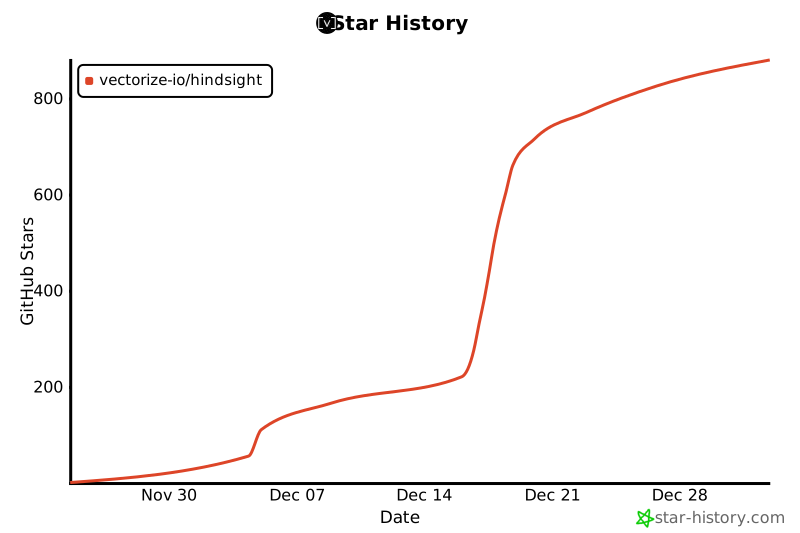](https://www.star-history.com/#vectorize-io/hindsight&type=date&legend=top-left)
|
||||
---
|
||||
|
||||
## Supported Platforms
|
||||
|
||||
| Platform | Docker | Bare Metal (pip) | Embedded DB (pg0) |
|
||||
|----------|--------|------------------|--------------------|
|
||||
| **Linux** (x86_64, ARM64) | ✅ | ✅ | ✅ |
|
||||
| **macOS** (Apple Silicon / arm64) | ✅ | ✅ | ✅ |
|
||||
| **macOS** (Intel / x86_64) | ✅ | ⚠️ | ✅ |
|
||||
| **Windows** (x86_64) | ✅ | ✅ | ✅ |
|
||||
|
||||
⚠️ Intel Macs: use `hindsight-all-slim` — see the [installation guide](https://hindsight.vectorize.io/developer/installation#supported-platforms) for details.
|
||||
|
||||
---
|
||||
|
||||
## Contributing
|
||||
|
||||
See [CONTRIBUTING.md](./CONTRIBUTING.md).
|
||||
|
||||
@@ -42,16 +42,6 @@
|
||||
},
|
||||
"workspace": {
|
||||
"members": {
|
||||
"hindsight-all-npm": {
|
||||
"packageJson": {
|
||||
"dependencies": [
|
||||
"npm:@types/node@22",
|
||||
"npm:tsup@^8.5.1",
|
||||
"npm:typescript@^5.7.0",
|
||||
"npm:vitest@^4.1.2"
|
||||
]
|
||||
}
|
||||
},
|
||||
"hindsight-clients/typescript": {
|
||||
"packageJson": {
|
||||
"dependencies": [
|
||||
@@ -68,7 +58,6 @@
|
||||
"hindsight-control-plane": {
|
||||
"packageJson": {
|
||||
"dependencies": [
|
||||
"npm:@chenglou/pretext@^0.0.3",
|
||||
"npm:@eslint/eslintrc@^3.3.3",
|
||||
"npm:@eslint/js@^9.39.2",
|
||||
"npm:@radix-ui/react-alert-dialog@^1.1.15",
|
||||
@@ -77,6 +66,7 @@
|
||||
"npm:@radix-ui/react-dropdown-menu@^2.1.16",
|
||||
"npm:@radix-ui/react-label@^2.1.8",
|
||||
"npm:@radix-ui/react-popover@^1.1.15",
|
||||
"npm:@radix-ui/react-radio-group@^1.3.8",
|
||||
"npm:@radix-ui/react-select@^2.2.6",
|
||||
"npm:@radix-ui/react-slider@^1.3.6",
|
||||
"npm:@radix-ui/react-slot@^1.2.4",
|
||||
@@ -101,12 +91,11 @@
|
||||
"npm:eslint@^9.39.1",
|
||||
"npm:[email protected]",
|
||||
"npm:next-themes@~0.4.6",
|
||||
"npm:next@^16.1.7",
|
||||
"npm:next@^16.1.6",
|
||||
"npm:postcss@^8.5.6",
|
||||
"npm:prettier@^3.7.4",
|
||||
"npm:react-chrono@^2.9.1",
|
||||
"npm:react-dom@^19.2.0",
|
||||
"npm:react-is@^19.2.4",
|
||||
"npm:react-markdown@^10.1.0",
|
||||
"npm:react18-json-view@~0.2.9",
|
||||
"npm:react@^19.2.0",
|
||||
@@ -144,26 +133,6 @@
|
||||
"npm:typescript@~5.6.2"
|
||||
]
|
||||
}
|
||||
},
|
||||
"hindsight-tools/hindsight-agent-sdk": {
|
||||
"packageJson": {
|
||||
"dependencies": [
|
||||
"npm:@vectorize-io/hindsight-client@~0.5.6",
|
||||
"npm:typescript@^5.4.0",
|
||||
"npm:vitest@^4.1.2"
|
||||
]
|
||||
}
|
||||
},
|
||||
"hindsight-tools/self-driving-agents": {
|
||||
"packageJson": {
|
||||
"dependencies": [
|
||||
"npm:@clack/prompts@^1.2.0",
|
||||
"npm:@vectorize-io/hindsight-client@~0.5.6",
|
||||
"npm:picocolors@^1.1.0",
|
||||
"npm:typescript@^5.4.0",
|
||||
"npm:vitest@^4.1.2"
|
||||
]
|
||||
}
|
||||
}
|
||||
}
|
||||
}
|
||||
|
||||
@@ -1,90 +0,0 @@
|
||||
name: hindsight
|
||||
# Docker Compose file for Hindsight with AlloyDB Omni and ScaNN
|
||||
# Uses Google's free AlloyDB Omni container image: https://hub.docker.com/r/google/alloydbomni
|
||||
#
|
||||
# Usage:
|
||||
# docker compose -f docker/docker-compose/alloydb/docker-compose.yaml up -d
|
||||
#
|
||||
# Make sure to set the required environment variables before running:
|
||||
# - HINDSIGHT_DB_PASSWORD: password for the AlloyDB Omni/PostgreSQL user
|
||||
# - Configure LLM provider variables as needed (see the hindsight service below)
|
||||
#
|
||||
# Optional environment variables with defaults:
|
||||
# - HINDSIGHT_VERSION: Hindsight application version (default: latest)
|
||||
# - HINDSIGHT_DB_VERSION: AlloyDB Omni image tag (default: 17)
|
||||
# - HINDSIGHT_DB_USER: database user (default: hindsight_user)
|
||||
# - HINDSIGHT_DB_NAME: database name (default: hindsight_db)
|
||||
|
||||
services:
|
||||
db:
|
||||
image: google/alloydbomni:${HINDSIGHT_DB_VERSION:-17}
|
||||
container_name: hindsight-db-alloydb
|
||||
restart: always
|
||||
ports:
|
||||
- "5438:5432"
|
||||
environment:
|
||||
POSTGRES_USER: ${HINDSIGHT_DB_USER:-hindsight_user}
|
||||
POSTGRES_PASSWORD: ${HINDSIGHT_DB_PASSWORD:-hindsight_password}
|
||||
POSTGRES_DB: ${HINDSIGHT_DB_NAME:-hindsight_db}
|
||||
volumes:
|
||||
- alloydb_data:/var/lib/postgresql/data
|
||||
networks:
|
||||
- hindsight-net
|
||||
|
||||
alloydb-init:
|
||||
image: google/alloydbomni:${HINDSIGHT_DB_VERSION:-17}
|
||||
depends_on:
|
||||
- db
|
||||
environment:
|
||||
- PGPASSWORD=${HINDSIGHT_DB_PASSWORD:-hindsight_password}
|
||||
command:
|
||||
- bash
|
||||
- -c
|
||||
- |
|
||||
echo 'Waiting for AlloyDB Omni to be ready...'
|
||||
until pg_isready -h hindsight-db-alloydb -p 5432 -U ${HINDSIGHT_DB_USER:-hindsight_user}; do
|
||||
echo 'AlloyDB Omni is unavailable - sleeping'
|
||||
sleep 2
|
||||
done
|
||||
echo 'AlloyDB Omni is ready - creating ${HINDSIGHT_DB_NAME:-hindsight_db} database'
|
||||
psql -h hindsight-db-alloydb -p 5432 -U ${HINDSIGHT_DB_USER:-hindsight_user} -c 'CREATE DATABASE ${HINDSIGHT_DB_NAME:-hindsight_db};' 2>/dev/null || echo 'Database already exists'
|
||||
echo 'Creating vector and alloydb_scann extensions'
|
||||
psql -h hindsight-db-alloydb -p 5432 -U ${HINDSIGHT_DB_USER:-hindsight_user} -d ${HINDSIGHT_DB_NAME:-hindsight_db} -c 'CREATE EXTENSION IF NOT EXISTS vector;'
|
||||
psql -h hindsight-db-alloydb -p 5432 -U ${HINDSIGHT_DB_USER:-hindsight_user} -d ${HINDSIGHT_DB_NAME:-hindsight_db} -c 'CREATE EXTENSION IF NOT EXISTS alloydb_scann CASCADE;'
|
||||
echo 'Database and extensions created successfully'
|
||||
restart: "no"
|
||||
networks:
|
||||
- hindsight-net
|
||||
|
||||
hindsight:
|
||||
image: ghcr.io/vectorize-io/hindsight:${HINDSIGHT_VERSION:-latest}
|
||||
container_name: hindsight-app
|
||||
ports:
|
||||
- "8888:8888"
|
||||
- "9999:9999"
|
||||
environment:
|
||||
# LLM Configuration
|
||||
HINDSIGHT_API_LLM_PROVIDER: ${HINDSIGHT_API_LLM_PROVIDER:-openai}
|
||||
HINDSIGHT_API_LLM_API_KEY: ${OPENAI_API_KEY:-your-api-key}
|
||||
|
||||
# Database Configuration
|
||||
HINDSIGHT_API_DATABASE_URL: postgresql://${HINDSIGHT_DB_USER:-hindsight_user}:${HINDSIGHT_DB_PASSWORD:-hindsight_password}@db:5432/${HINDSIGHT_DB_NAME:-hindsight_db}
|
||||
|
||||
# Vector and Text Search Extensions
|
||||
HINDSIGHT_API_VECTOR_EXTENSION: scann
|
||||
HINDSIGHT_API_TEXT_SEARCH_EXTENSION: native
|
||||
|
||||
depends_on:
|
||||
db:
|
||||
condition: service_started
|
||||
alloydb-init:
|
||||
condition: service_completed_successfully
|
||||
networks:
|
||||
- hindsight-net
|
||||
|
||||
networks:
|
||||
hindsight-net:
|
||||
driver: bridge
|
||||
|
||||
volumes:
|
||||
alloydb_data:
|
||||
@@ -1,113 +0,0 @@
|
||||
# Hindsight with Claude Code (Claude Pro/Max subscription)
|
||||
|
||||
Run Hindsight inside Docker using the `claude-code` LLM provider, backed by
|
||||
your host machine's Claude Pro or Max subscription credentials.
|
||||
|
||||
The standalone Hindsight Docker image ships `claude-agent-sdk` but does **not**
|
||||
bundle the host `claude` CLI binary or any Claude credentials. This Compose
|
||||
file bind-mounts the host's CLI install and credentials into the container so
|
||||
the `claude-code` provider works without an API key.
|
||||
|
||||
## When to use this
|
||||
|
||||
- You have an active Claude Pro or Max subscription and want to use it for
|
||||
Hindsight without paying separate Anthropic API costs.
|
||||
- You want a one-command `docker compose up` instead of a long `docker run`
|
||||
invocation with many flags.
|
||||
- You are running on **Linux/amd64** — macOS Docker Desktop and Windows host
|
||||
paths differ and are not yet covered (please open an issue if you'd like to
|
||||
contribute a verified recipe for either).
|
||||
|
||||
> **Personal-use only.** Anthropic's
|
||||
> [Agent SDK documentation](https://docs.claude.com/en/api/agent-sdk/overview)
|
||||
> states that third-party developers should not offer claude.ai login or rate
|
||||
> limits for their products. Hindsight does **not** perform any login on your
|
||||
> behalf — it uses credentials you've already authenticated via
|
||||
> `claude auth login`. In January 2026, Anthropic
|
||||
> [enforced restrictions](https://paddo.dev/blog/anthropic-walled-garden-crackdown/)
|
||||
> against tools that spoofed the Claude Code client identity; Hindsight uses
|
||||
> the official Claude Agent SDK instead.
|
||||
>
|
||||
> Do not deploy this configuration to shared environments or production. For
|
||||
> that, use the `anthropic` provider with an API key from the
|
||||
> [Anthropic Console](https://console.anthropic.com/). Usage counts against
|
||||
> your Claude Pro/Max subscription limits.
|
||||
|
||||
## Prerequisites
|
||||
|
||||
- Host has `claude` CLI installed (e.g., `npm install -g @anthropics/claude-code`)
|
||||
and `claude auth login` has been run successfully.
|
||||
- `~/.claude.json` and `~/.claude/.credentials.json` exist on the host.
|
||||
- Host `claude` CLI version is **2.1.128 or newer** — the version bundled with
|
||||
`claude-agent-sdk` 0.5.x has a protocol incompatibility in containers, so
|
||||
the recipe overrides it with the host binary.
|
||||
|
||||
## Quick start
|
||||
|
||||
```bash
|
||||
# Set your host UID/GID (defaults to 1000:1000 if unset)
|
||||
export HOST_UID=$(id -u)
|
||||
export HOST_GID=$(id -g)
|
||||
|
||||
docker compose -f docker/docker-compose/claude-code/docker-compose.yaml up -d
|
||||
```
|
||||
|
||||
- API: http://localhost:8888
|
||||
- Control Plane: http://localhost:9999
|
||||
|
||||
## Post-setup (one-time)
|
||||
|
||||
After the container starts for the first time, run these commands to fix
|
||||
permissions and symlink the host `claude` binary into `$PATH`:
|
||||
|
||||
```bash
|
||||
# Make ~/.claude writable by your UID (the CLI writes session/project state)
|
||||
docker exec --user 0:0 hindsight-claude-code chown $(id -u):$(id -g) /home/hindsight/.claude
|
||||
docker exec --user 0:0 hindsight-claude-code chmod 755 /home/hindsight/.claude
|
||||
|
||||
# Symlink the host claude binary into PATH
|
||||
docker exec --user 0:0 hindsight-claude-code \
|
||||
ln -sf /home/hindsight/.local/share/claude/versions/2.1.128 /usr/local/bin/claude
|
||||
```
|
||||
|
||||
If you set `CLAUDE_CLI_VERSION` to a version other than `2.1.128`, update the
|
||||
symlink path accordingly.
|
||||
|
||||
## Notes on the bind-mount surface (every flag is load-bearing)
|
||||
|
||||
- **Host `claude` binary required** — the image ships only `claude-agent-sdk`,
|
||||
not the CLI itself.
|
||||
- **SDK bundled-binary override** — the override of
|
||||
`claude_agent_sdk/_bundled/claude` works around a protocol issue in the
|
||||
bundled v2.1.121 binary inside containers. Once `claude-agent-sdk` ships
|
||||
with v2.1.128+ this override can be dropped. Set `CLAUDE_CLI_VERSION` to
|
||||
match your installed version.
|
||||
- **Single-file credential mounts** — credentials are mounted as individual
|
||||
`:ro` files rather than a whole-directory `:ro` mount of `~/.claude`,
|
||||
because the CLI writes session/project state at runtime and a read-only
|
||||
directory mount silently breaks it.
|
||||
- **`--user` / `user:`** — the `user: ${HOST_UID}:${HOST_GID}` pattern
|
||||
requires `chmod 755 /home/hindsight`, which is built into the image since
|
||||
v0.6.0 (see [#1481](https://github.com/vectorize-io/hindsight/issues/1481)).
|
||||
- **`~/.hindsight-docker` data directory** — the pg0 data bind mount must be
|
||||
writable by your host UID (see
|
||||
[#1483](https://github.com/vectorize-io/hindsight/issues/1483)).
|
||||
- **Verified** on `linux/amd64` against `ghcr.io/vectorize-io/hindsight:latest`
|
||||
v0.5.6+.
|
||||
|
||||
## Using a different Claude CLI version
|
||||
|
||||
If your host has a `claude` version other than 2.1.128, set
|
||||
`CLAUDE_CLI_VERSION` before starting:
|
||||
|
||||
```bash
|
||||
export CLAUDE_CLI_VERSION=2.2.0
|
||||
docker compose -f docker/docker-compose/claude-code/docker-compose.yaml up -d
|
||||
```
|
||||
|
||||
Then update the post-setup symlink to match:
|
||||
|
||||
```bash
|
||||
docker exec --user 0:0 hindsight-claude-code \
|
||||
ln -sf /home/hindsight/.local/share/claude/versions/2.2.0 /usr/local/bin/claude
|
||||
```
|
||||
@@ -1,44 +0,0 @@
|
||||
name: hindsight-claude-code
|
||||
# Run Hindsight with the claude-code LLM provider, using your host machine's
|
||||
# Claude Pro/Max subscription credentials. Linux/amd64 only for now.
|
||||
#
|
||||
# Quick start:
|
||||
# docker compose -f docker/docker-compose/claude-code/docker-compose.yaml up -d
|
||||
#
|
||||
# See README.md for prerequisites, post-setup steps, and important caveats.
|
||||
|
||||
services:
|
||||
hindsight:
|
||||
image: ghcr.io/vectorize-io/hindsight:latest
|
||||
container_name: hindsight-claude-code
|
||||
user: "${HOST_UID:-1000}:${HOST_GID:-1000}"
|
||||
ports:
|
||||
- "127.0.0.1:8888:8888"
|
||||
- "127.0.0.1:9999:9999"
|
||||
environment:
|
||||
HOME: /home/hindsight
|
||||
USER: hindsight
|
||||
LOGNAME: hindsight
|
||||
PATH: /usr/local/bin:/usr/bin:/bin:/app/api/.venv/bin
|
||||
HINDSIGHT_API_LLM_PROVIDER: claude-code
|
||||
volumes:
|
||||
# ── Persistent data ────────────────────────────────────────────
|
||||
# Writable pg0 data directory. Must be writable by HOST_UID.
|
||||
- ${HOME:-.}/.hindsight-docker:/home/hindsight/.pg0
|
||||
|
||||
# ── Claude credentials (read-only, single-file mounts) ────────
|
||||
# A whole-directory :ro mount of ~/.claude silently breaks the
|
||||
# CLI, which writes session/project state at runtime — so we
|
||||
# mount only the two credential files.
|
||||
- ${HOME}/.claude/.credentials.json:/home/hindsight/.claude/.credentials.json:ro
|
||||
- ${HOME}/.claude.json:/home/hindsight/.claude.json:ro
|
||||
|
||||
# ── Claude CLI install (read-only) ─────────────────────────────
|
||||
- ${HOME}/.local/share/claude:/home/hindsight/.local/share/claude:ro
|
||||
|
||||
# ── SDK bundled-binary override ────────────────────────────────
|
||||
# The claude-agent-sdk 0.5.x image bundles v2.1.121 which has a
|
||||
# protocol incompatibility in containers. Override it with the
|
||||
# host's v2.1.128+ binary. Drop this mount once claude-agent-sdk
|
||||
# ships with v2.1.128+.
|
||||
- ${HOME}/.local/share/claude/versions/${CLAUDE_CLI_VERSION:-2.1.128}:/app/api/.venv/lib/python3.11/site-packages/claude_agent_sdk/_bundled/claude:ro
|
||||
@@ -1,34 +0,0 @@
|
||||
# Example: custom Hindsight image with non-default local models baked in.
|
||||
#
|
||||
# Use this pattern in production when you run a non-default embedder or
|
||||
# reranker. Baking models into the image removes the runtime dependency on
|
||||
# HuggingFace and lets the container registry handle caching per node, so
|
||||
# you don't need a model-cache PVC.
|
||||
#
|
||||
# Built on top of the slim image so only the deps and models you actually
|
||||
# use end up in the final image.
|
||||
FROM ghcr.io/vectorize-io/hindsight:latest-slim
|
||||
|
||||
# Install the local-ml deps required to load sentence-transformers /
|
||||
# cross-encoder models at runtime. Pinned ranges mirror hindsight-api-slim's
|
||||
# `local-ml` extra in hindsight-api-slim/pyproject.toml. Use `uv pip
|
||||
# install` against the image's venv explicitly: the slim image's venv was
|
||||
# created by `uv sync` and does not ship its own `pip`, so a bare
|
||||
# `pip install` would fall back to user site-packages and not be visible
|
||||
# to the runtime python.
|
||||
RUN uv pip install --python /app/api/.venv/bin/python --no-cache \
|
||||
'sentence-transformers>=3.3.0' \
|
||||
'transformers>=4.53.0' \
|
||||
'torch>=2.6.0'
|
||||
|
||||
# Pre-download the models you want to use. Replace these with your own.
|
||||
# The defaults bundled in the full image are BAAI/bge-small-en-v1.5 and
|
||||
# cross-encoder/ms-marco-MiniLM-L-6-v2; here we pick multilingual variants
|
||||
# as a concrete non-default example.
|
||||
ARG EMBEDDER=sentence-transformers/paraphrase-multilingual-MiniLM-L12-v2
|
||||
ARG RERANKER=cross-encoder/mmarco-mMiniLMv2-L12-H384-v1
|
||||
ENV HF_HUB_DOWNLOAD_TIMEOUT=600
|
||||
RUN python -c "\
|
||||
from sentence_transformers import SentenceTransformer, CrossEncoder; \
|
||||
SentenceTransformer('${EMBEDDER}'); \
|
||||
CrossEncoder('${RERANKER}')"
|
||||
@@ -1,81 +0,0 @@
|
||||
# Hindsight with Custom Local Models
|
||||
|
||||
Example Docker Compose setup that builds a Hindsight image with **non-default
|
||||
local embedder and reranker models baked in at build time**.
|
||||
|
||||
This is the recommended pattern for production when you use a non-default
|
||||
local model: the container registry caches model layers per node, pod
|
||||
startup is deterministic, and you don't need a model-cache PVC (or any
|
||||
runtime dependency on HuggingFace).
|
||||
|
||||
## When to use this
|
||||
|
||||
- You override `HINDSIGHT_API_EMBEDDINGS_LOCAL_MODEL` or
|
||||
`HINDSIGHT_API_RERANKER_LOCAL_MODEL` to a non-default model.
|
||||
- You want pod startup to be deterministic and offline-capable.
|
||||
- You'd otherwise reach for a Helm `modelCache` PVC just to avoid
|
||||
re-downloading models.
|
||||
|
||||
If you're using the **default** local models, the published full image
|
||||
(`ghcr.io/vectorize-io/hindsight:latest`) already bakes them in — you don't
|
||||
need this example.
|
||||
|
||||
If you're using **external** providers (TEI, OpenAI, Cohere, ...) for
|
||||
embeddings and reranking, use the slim image directly — no models are
|
||||
needed in the image.
|
||||
|
||||
## Quick start
|
||||
|
||||
```bash
|
||||
export OPENAI_API_KEY=sk-xxx
|
||||
|
||||
docker compose -f docker/docker-compose/custom-models/docker-compose.yaml up --build
|
||||
```
|
||||
|
||||
- API: http://localhost:8888
|
||||
- Control Plane: http://localhost:9999
|
||||
|
||||
## Using your own models
|
||||
|
||||
Override the build args to bake different models:
|
||||
|
||||
```bash
|
||||
docker compose -f docker/docker-compose/custom-models/docker-compose.yaml build \
|
||||
--build-arg EMBEDDER=your-org/your-embedder \
|
||||
--build-arg RERANKER=your-org/your-reranker
|
||||
```
|
||||
|
||||
Then update the matching `HINDSIGHT_API_EMBEDDINGS_LOCAL_MODEL` and
|
||||
`HINDSIGHT_API_RERANKER_LOCAL_MODEL` values in `docker-compose.yaml` so the
|
||||
runtime points at the same model IDs.
|
||||
|
||||
## Verifying the models are baked in
|
||||
|
||||
`docker-compose.yaml` sets `HF_HUB_OFFLINE=1` and `TRANSFORMERS_OFFLINE=1`
|
||||
so that any attempt to download a model at runtime fails loudly instead of
|
||||
silently re-downloading. If the container starts and serves recall queries
|
||||
with these set, the models are correctly baked in.
|
||||
|
||||
You can also inspect the image directly:
|
||||
|
||||
```bash
|
||||
docker run --rm --entrypoint sh hindsight-custom-models-hindsight \
|
||||
-c 'ls ~/.cache/huggingface/hub/'
|
||||
```
|
||||
|
||||
## Why not a model-cache PVC?
|
||||
|
||||
The Helm chart exposes an optional `api.persistence.modelCache` PVC for
|
||||
caching downloaded models across pod restarts. Compared to baking models
|
||||
into the image:
|
||||
|
||||
- A PVC adds storage cost — one PVC per worker replica with
|
||||
`volumeClaimTemplates`.
|
||||
- `ReadWriteOnce` (the default) pins pods to a node.
|
||||
- The PVC needs lifecycle management on `helm uninstall` / `helm upgrade`
|
||||
— without `helm.sh/resource-policy: keep` it is deleted on uninstall;
|
||||
with it, storage keeps billing forever until manually cleaned up.
|
||||
- Pod startup still depends on HuggingFace being reachable on first run.
|
||||
|
||||
Image layers, by contrast, are pulled once per node and cached for free by
|
||||
the container runtime, with no orphaned-storage cleanup story.
|
||||
@@ -1,44 +0,0 @@
|
||||
name: hindsight-custom-models
|
||||
# Example: run a custom Hindsight image with non-default local models baked
|
||||
# in at build time, so pod startup does not depend on HuggingFace at runtime.
|
||||
#
|
||||
# Quick start:
|
||||
# export OPENAI_API_KEY=sk-xxx
|
||||
# docker compose -f docker/docker-compose/custom-models/docker-compose.yaml up --build
|
||||
#
|
||||
# Required environment variables:
|
||||
# - OPENAI_API_KEY (or configure another LLM provider via HINDSIGHT_API_LLM_*)
|
||||
|
||||
services:
|
||||
hindsight:
|
||||
build:
|
||||
context: .
|
||||
dockerfile: Dockerfile
|
||||
# Override at build time to bake different models:
|
||||
# docker compose build --build-arg EMBEDDER=your-org/your-embedder
|
||||
args:
|
||||
EMBEDDER: sentence-transformers/paraphrase-multilingual-MiniLM-L12-v2
|
||||
RERANKER: cross-encoder/mmarco-mMiniLMv2-L12-H384-v1
|
||||
container_name: hindsight-custom-models
|
||||
ports:
|
||||
- "8888:8888"
|
||||
- "9999:9999"
|
||||
environment:
|
||||
HINDSIGHT_API_LLM_PROVIDER: ${HINDSIGHT_API_LLM_PROVIDER:-openai}
|
||||
HINDSIGHT_API_LLM_API_KEY: ${OPENAI_API_KEY:-your-api-key}
|
||||
|
||||
# Point Hindsight at the models baked into the image above.
|
||||
HINDSIGHT_API_EMBEDDINGS_PROVIDER: local
|
||||
HINDSIGHT_API_EMBEDDINGS_LOCAL_MODEL: sentence-transformers/paraphrase-multilingual-MiniLM-L12-v2
|
||||
HINDSIGHT_API_RERANKER_PROVIDER: local
|
||||
HINDSIGHT_API_RERANKER_LOCAL_MODEL: cross-encoder/mmarco-mMiniLMv2-L12-H384-v1
|
||||
|
||||
# Fail fast if a model is missing from the image instead of silently
|
||||
# falling back to a HuggingFace download at runtime.
|
||||
HF_HUB_OFFLINE: "1"
|
||||
TRANSFORMERS_OFFLINE: "1"
|
||||
volumes:
|
||||
- pg_data:/home/hindsight/.pg0
|
||||
|
||||
volumes:
|
||||
pg_data:
|
||||
@@ -1,103 +0,0 @@
|
||||
# Hindsight with a local llama.cpp server sidecar
|
||||
|
||||
Example Docker Compose setup that runs Hindsight against a **local
|
||||
llama.cpp server**, fully offline, with no external API key required.
|
||||
|
||||
## Architecture
|
||||
|
||||
```
|
||||
┌────────────┐ HTTP /v1/chat/completions ┌──────────────────────────────┐
|
||||
│ hindsight │ ──────────────────────────▶ │ llama.cpp server (sidecar) │
|
||||
│ (API + CP) │ │ ghcr.io/ggml-org/llama.cpp │
|
||||
└────────────┘ └──────────────────────────────┘
|
||||
```
|
||||
|
||||
`llama.cpp` runs as its own container and exposes an OpenAI-compatible
|
||||
HTTP API. Hindsight talks to it via the standard `openai` LLM provider
|
||||
with `HINDSIGHT_API_LLM_BASE_URL` pointed at the sidecar.
|
||||
|
||||
This pattern follows
|
||||
[*Hosting llama-server with Docker* (ServiceStack)](https://servicestack.net/posts/hosting-llama-server).
|
||||
|
||||
### Why a sidecar and not the in-process `llamacpp` provider?
|
||||
|
||||
Hindsight does ship an in-process `llamacpp` provider that spawns
|
||||
`llama-cpp-python`, but the **published `ghcr.io/vectorize-io/hindsight`
|
||||
image deliberately omits `llama-cpp-python`** to keep the image small and
|
||||
avoid bundling native inference libraries that most users don't need.
|
||||
Trying to set `HINDSIGHT_API_LLM_PROVIDER=llamacpp` against the published
|
||||
image fails with `ModuleNotFoundError: No module named 'llama_cpp'`.
|
||||
|
||||
The sidecar approach side-steps that entirely: the official llama.cpp
|
||||
image is used as-is for inference, Hindsight is used as-is for memory.
|
||||
Clean separation, no derived images.
|
||||
|
||||
## Quick start
|
||||
|
||||
```bash
|
||||
docker compose -f docker/docker-compose/local-llm/docker-compose.yaml up
|
||||
```
|
||||
|
||||
- API: http://localhost:8888
|
||||
- Control Plane: http://localhost:9999
|
||||
|
||||
**First boot downloads ~3.5 GB** (Gemma 4 E2B Q4_K_M GGUF) into the
|
||||
`llama_models` named volume. Subsequent boots reuse it.
|
||||
|
||||
Hindsight only starts after llama.cpp's `/health` endpoint reports
|
||||
healthy, so the API will appear "stuck" for a few minutes on the first
|
||||
run while the model downloads.
|
||||
|
||||
## Using a different model
|
||||
|
||||
Override the HuggingFace repo / file in `docker-compose.yaml`:
|
||||
|
||||
```yaml
|
||||
environment:
|
||||
LLAMA_ARG_HF_REPO: bartowski/Qwen2.5-7B-Instruct-GGUF
|
||||
LLAMA_ARG_HF_FILE: Qwen2.5-7B-Instruct-Q4_K_M.gguf
|
||||
```
|
||||
|
||||
Also update `HINDSIGHT_API_LLM_MODEL` on the `hindsight` service to a
|
||||
matching alias (the value is sent to llama-server as the OpenAI `model`
|
||||
field — llama-server is lenient about this but it shows up in logs).
|
||||
|
||||
## GPU acceleration
|
||||
|
||||
The default compose file targets CPU because not everyone has a GPU. On
|
||||
CPU, Gemma 4 E2B runs at ~2-3 tokens/sec — fine for a smoke test, but the
|
||||
retain pipeline (which makes several multi-hundred-token LLM calls per
|
||||
memory) will time out against Hindsight's default LLM timeout. **For any
|
||||
real use, run on a GPU.**
|
||||
|
||||
### NVIDIA
|
||||
|
||||
1. Switch the `llama` service image from `:server` to `:server-cuda`.
|
||||
2. Uncomment the `LLAMA_ARG_N_GPU_LAYERS: "999"` env var (offload all
|
||||
layers to GPU).
|
||||
3. Uncomment the `deploy.resources.reservations.devices` block.
|
||||
4. Install the [NVIDIA Container Toolkit](https://docs.nvidia.com/datacenter/cloud-native/container-toolkit/latest/install-guide.html)
|
||||
on the host.
|
||||
|
||||
The compose file has all four spots marked with inline comments.
|
||||
|
||||
### Apple Silicon / ROCm / Vulkan
|
||||
|
||||
The official `ghcr.io/ggml-org/llama.cpp` image only ships CPU and CUDA
|
||||
variants. For Metal (Apple Silicon), ROCm (AMD), or Vulkan backends,
|
||||
build llama.cpp yourself with the appropriate flags and reference the
|
||||
image you build instead. Docker Desktop on macOS cannot pass through the
|
||||
host GPU to a Linux container in any case — for Apple Silicon, run
|
||||
llama-server directly on the host and only put Hindsight in Docker.
|
||||
|
||||
## Caveats
|
||||
|
||||
- llama.cpp's HTTP API is OpenAI-compatible but not 100% feature-parity.
|
||||
Function/tool calling support depends on the chat template baked into
|
||||
the GGUF; some retain/reflect flows may behave differently than against
|
||||
a hosted OpenAI model.
|
||||
- Small GGUFs (~3 B params) are useful for smoke testing but will
|
||||
underperform a hosted frontier model on retain quality. Use a larger
|
||||
GGUF (7-13 B params) for production-quality memory.
|
||||
- The `llama_models` named volume persists the GGUF across `docker
|
||||
compose down`/`up` so the model is downloaded once, not every restart.
|
||||
@@ -1,74 +0,0 @@
|
||||
name: hindsight-local-llm
|
||||
# Example: run Hindsight against a local llama.cpp server sidecar — fully
|
||||
# offline, no external API key needed.
|
||||
#
|
||||
# Pattern follows https://servicestack.net/posts/hosting-llama-server :
|
||||
# llama.cpp runs as its own container exposing an OpenAI-compatible HTTP
|
||||
# API, and Hindsight talks to it via the `openai` LLM provider with a
|
||||
# custom `base_url`. This means we can use the published Hindsight image
|
||||
# unchanged — no derived Dockerfile, no `llama-cpp-python` install on top.
|
||||
#
|
||||
# Quick start:
|
||||
# docker compose -f docker/docker-compose/local-llm/docker-compose.yaml up
|
||||
#
|
||||
# First boot downloads the default Gemma 4 E2B GGUF (~3.5 GB) into the
|
||||
# `llama_models` volume; subsequent boots reuse it.
|
||||
|
||||
services:
|
||||
llama:
|
||||
image: ghcr.io/ggml-org/llama.cpp:server
|
||||
container_name: hindsight-local-llm-llama
|
||||
environment:
|
||||
LLAMA_ARG_HOST: 0.0.0.0
|
||||
LLAMA_ARG_PORT: "8080"
|
||||
# Auto-download a small GGUF from HuggingFace on first start.
|
||||
# Override these to use a different model.
|
||||
LLAMA_ARG_HF_REPO: bartowski/google_gemma-4-E2B-it-GGUF
|
||||
LLAMA_ARG_HF_FILE: google_gemma-4-E2B-it-Q4_K_M.gguf
|
||||
LLAMA_ARG_CTX_SIZE: "8192"
|
||||
# Uncomment for NVIDIA GPU (and switch image to :server-cuda):
|
||||
# LLAMA_ARG_N_GPU_LAYERS: "999"
|
||||
volumes:
|
||||
# llama-server stores HuggingFace downloads under ~/.cache/huggingface
|
||||
# (not ~/.cache/llama.cpp), so mount the named volume there to avoid
|
||||
# re-downloading the GGUF on every recreate.
|
||||
- llama_models:/root/.cache/huggingface
|
||||
healthcheck:
|
||||
test: ["CMD-SHELL", "curl -fsS http://localhost:8080/health || exit 1"]
|
||||
interval: 10s
|
||||
timeout: 5s
|
||||
retries: 60
|
||||
start_period: 30s
|
||||
# For NVIDIA GPU acceleration, swap the image above to
|
||||
# `ghcr.io/ggml-org/llama.cpp:server-cuda` and uncomment:
|
||||
# deploy:
|
||||
# resources:
|
||||
# reservations:
|
||||
# devices:
|
||||
# - driver: nvidia
|
||||
# count: all
|
||||
# capabilities: [gpu]
|
||||
|
||||
hindsight:
|
||||
image: ghcr.io/vectorize-io/hindsight:latest
|
||||
container_name: hindsight-local-llm
|
||||
depends_on:
|
||||
llama:
|
||||
condition: service_healthy
|
||||
ports:
|
||||
- "8888:8888"
|
||||
- "9999:9999"
|
||||
environment:
|
||||
# llama-server is OpenAI-compatible, so use the `openai` provider and
|
||||
# point base_url at the sidecar. The API key is unused by llama-server
|
||||
# but Hindsight requires the env var to be set.
|
||||
HINDSIGHT_API_LLM_PROVIDER: openai
|
||||
HINDSIGHT_API_LLM_BASE_URL: http://llama:8080/v1
|
||||
HINDSIGHT_API_LLM_API_KEY: not-needed
|
||||
HINDSIGHT_API_LLM_MODEL: gemma-4-e2b-it
|
||||
volumes:
|
||||
- pg_data:/home/hindsight/.pg0
|
||||
|
||||
volumes:
|
||||
pg_data:
|
||||
llama_models:
|
||||
@@ -51,8 +51,6 @@ services:
|
||||
|
||||
# Control Plane config
|
||||
HINDSIGHT_CP_DATAPLANE_API_URL: http://localhost:8888
|
||||
# Optional: Require a shared access key for Control Plane UI access
|
||||
# HINDSIGHT_CP_ACCESS_KEY: your-secret-key
|
||||
volumes:
|
||||
# Persist embedded pg0 database
|
||||
- hindsight_data:/app/data
|
||||
|
||||
@@ -1,7 +0,0 @@
|
||||
# PostgreSQL with pgvector and ParadeDB pg_search extensions.
|
||||
#
|
||||
# The official ParadeDB image ships PostgreSQL with pg_search and pgvector
|
||||
# already installed, so no build steps are required. We pin to the PG17
|
||||
# variant for parity with the other Hindsight docker-compose examples
|
||||
# (vchord, pg_textsearch).
|
||||
FROM paradedb/paradedb:latest-pg17
|
||||
@@ -1,96 +0,0 @@
|
||||
name: hindsight
|
||||
# Docker Compose file for Hindsight with PostgreSQL and ParadeDB pg_search.
|
||||
#
|
||||
# pg_search is the only BM25 backend supported by Hindsight that works with
|
||||
# Citus, so this is the recommended setup for horizontally scaled deployments.
|
||||
#
|
||||
# Usage:
|
||||
# docker compose -f docker/docker-compose/pg_search/docker-compose.yaml up -d
|
||||
#
|
||||
# Required environment variables:
|
||||
# - HINDSIGHT_DB_PASSWORD: Password for the PostgreSQL user
|
||||
# - Configure LLM provider variables as needed (see the hindsight service)
|
||||
#
|
||||
# Optional environment variables with defaults:
|
||||
# - HINDSIGHT_VERSION: Hindsight application version (default: latest)
|
||||
# - HINDSIGHT_DB_USER: PostgreSQL user (default: hindsight_user)
|
||||
# - HINDSIGHT_DB_NAME: PostgreSQL database name (default: hindsight_db)
|
||||
# - HINDSIGHT_API_TEXT_SEARCH_EXTENSION_PG_SEARCH_TOKENIZER: ParadeDB pg_search
|
||||
# tokenizer for new BM25 indexes (default: empty, uses ParadeDB default)
|
||||
|
||||
services:
|
||||
db:
|
||||
# Use ParadeDB image which bundles pgvector + pg_search
|
||||
build:
|
||||
context: .
|
||||
dockerfile: Dockerfile
|
||||
container_name: hindsight-db
|
||||
restart: always
|
||||
ports:
|
||||
- "5437:5432"
|
||||
environment:
|
||||
POSTGRES_USER: ${HINDSIGHT_DB_USER:-hindsight_user}
|
||||
POSTGRES_PASSWORD: ${HINDSIGHT_DB_PASSWORD:-hindsight_password}
|
||||
POSTGRES_DB: ${HINDSIGHT_DB_NAME:-hindsight_db}
|
||||
volumes:
|
||||
- pg_data:/var/lib/postgresql/data
|
||||
networks:
|
||||
- hindsight-net
|
||||
|
||||
pg-search-init:
|
||||
build:
|
||||
context: .
|
||||
dockerfile: Dockerfile
|
||||
depends_on:
|
||||
- db
|
||||
environment:
|
||||
- PGPASSWORD=${HINDSIGHT_DB_PASSWORD:-hindsight_password}
|
||||
command: >
|
||||
bash -c "
|
||||
echo 'Waiting for PostgreSQL to be ready...';
|
||||
until pg_isready -h hindsight-db -p 5432 -U hindsight_user; do
|
||||
echo 'PostgreSQL is unavailable - sleeping';
|
||||
sleep 2;
|
||||
done;
|
||||
echo 'PostgreSQL is ready - creating hindsight_db database';
|
||||
psql -h hindsight-db -p 5432 -U hindsight_user -c 'CREATE DATABASE hindsight_db;' 2>/dev/null || echo 'Database already exists';
|
||||
echo 'Creating extensions in hindsight_db database';
|
||||
psql -h hindsight-db -p 5432 -U hindsight_user -d hindsight_db -c 'CREATE EXTENSION IF NOT EXISTS vector CASCADE;';
|
||||
psql -h hindsight-db -p 5432 -U hindsight_user -d hindsight_db -c 'CREATE EXTENSION IF NOT EXISTS pg_search CASCADE;';
|
||||
echo 'Database and extensions created successfully';
|
||||
"
|
||||
restart: "no"
|
||||
networks:
|
||||
- hindsight-net
|
||||
|
||||
hindsight:
|
||||
image: ghcr.io/vectorize-io/hindsight:${HINDSIGHT_VERSION:-latest}
|
||||
container_name: hindsight-app
|
||||
ports:
|
||||
- "8888:8888"
|
||||
- "9999:9999"
|
||||
environment:
|
||||
# LLM Configuration
|
||||
HINDSIGHT_API_LLM_PROVIDER: ${HINDSIGHT_API_LLM_PROVIDER:-openai}
|
||||
HINDSIGHT_API_LLM_API_KEY: ${OPENAI_API_KEY:-your-api-key}
|
||||
|
||||
# Database Configuration
|
||||
HINDSIGHT_API_DATABASE_URL: postgresql://${HINDSIGHT_DB_USER:-hindsight_user}:${HINDSIGHT_DB_PASSWORD:-hindsight_password}@db:5432/${HINDSIGHT_DB_NAME:-hindsight_db}
|
||||
|
||||
# Vector and Text Search Extensions
|
||||
HINDSIGHT_API_VECTOR_EXTENSION: pgvector
|
||||
HINDSIGHT_API_TEXT_SEARCH_EXTENSION: pg_search
|
||||
HINDSIGHT_API_TEXT_SEARCH_EXTENSION_PG_SEARCH_TOKENIZER: ${HINDSIGHT_API_TEXT_SEARCH_EXTENSION_PG_SEARCH_TOKENIZER:-}
|
||||
|
||||
depends_on:
|
||||
- db
|
||||
networks:
|
||||
- hindsight-net
|
||||
|
||||
|
||||
networks:
|
||||
hindsight-net:
|
||||
driver: bridge
|
||||
|
||||
volumes:
|
||||
pg_data:
|
||||
@@ -1,23 +0,0 @@
|
||||
# PostgreSQL with pgvector and pgroonga extensions.
|
||||
#
|
||||
# pgroonga is a multilingual full-text search extension built on Groonga.
|
||||
# It works out of the box for CJK (Chinese, Japanese, Korean) and other
|
||||
# non-whitespace-segmented languages via the TokenBigram tokenizer.
|
||||
FROM groonga/pgroonga:latest-debian-pg17
|
||||
|
||||
# Install pgvector on top of the pgroonga base image (which already provides
|
||||
# pgroonga and the Groonga library).
|
||||
RUN apt-get update && apt-get install -y --no-install-recommends \
|
||||
build-essential \
|
||||
git \
|
||||
postgresql-server-dev-17 \
|
||||
&& rm -rf /var/lib/apt/lists/*
|
||||
|
||||
RUN cd /tmp && \
|
||||
git clone --branch v0.8.0 https://github.com/pgvector/pgvector.git && \
|
||||
cd pgvector && \
|
||||
make && \
|
||||
make install
|
||||
|
||||
RUN rm -rf /tmp/pgvector && \
|
||||
apt-get purge -y --auto-remove build-essential git postgresql-server-dev-17
|
||||
@@ -1,91 +0,0 @@
|
||||
name: hindsight
|
||||
# Docker Compose file for Hindsight with PostgreSQL and pgroonga
|
||||
#
|
||||
# pgroonga provides multilingual BM25 indexing that works out of the box for
|
||||
# CJK (Chinese, Japanese, Korean) and other non-whitespace-segmented languages.
|
||||
# Use this recipe if your bank content is not English/European.
|
||||
#
|
||||
# docker compose -f docker/docker-compose/pgroonga/docker-compose.yaml down && \
|
||||
# sleep 2 && \
|
||||
# docker compose -f docker/docker-compose/pgroonga/docker-compose.yaml up -d
|
||||
#
|
||||
# Optional environment variables with defaults:
|
||||
# - HINDSIGHT_VERSION: Hindsight application version (default: latest)
|
||||
# - HINDSIGHT_DB_USER: PostgreSQL user (default: hindsight_user)
|
||||
# - HINDSIGHT_DB_NAME: PostgreSQL database name (default: hindsight_db)
|
||||
# - HINDSIGHT_DB_PASSWORD: PostgreSQL password (default: hindsight_password)
|
||||
|
||||
services:
|
||||
db:
|
||||
build:
|
||||
context: .
|
||||
dockerfile: Dockerfile
|
||||
container_name: hindsight-db
|
||||
restart: always
|
||||
ports:
|
||||
- "5439:5432"
|
||||
environment:
|
||||
POSTGRES_USER: ${HINDSIGHT_DB_USER:-hindsight_user}
|
||||
POSTGRES_PASSWORD: ${HINDSIGHT_DB_PASSWORD:-hindsight_password}
|
||||
POSTGRES_DB: ${HINDSIGHT_DB_NAME:-hindsight_db}
|
||||
volumes:
|
||||
- pg_data:/var/lib/postgresql/data
|
||||
networks:
|
||||
- hindsight-net
|
||||
|
||||
pgroonga-init:
|
||||
build:
|
||||
context: .
|
||||
dockerfile: Dockerfile
|
||||
depends_on:
|
||||
- db
|
||||
environment:
|
||||
- PGPASSWORD=${HINDSIGHT_DB_PASSWORD:-hindsight_password}
|
||||
command: >
|
||||
bash -c "
|
||||
echo 'Waiting for PostgreSQL to be ready...';
|
||||
until pg_isready -h hindsight-db -p 5432 -U hindsight_user; do
|
||||
echo 'PostgreSQL is unavailable - sleeping';
|
||||
sleep 2;
|
||||
done;
|
||||
echo 'PostgreSQL is ready - creating hindsight_db database';
|
||||
psql -h hindsight-db -p 5432 -U hindsight_user -c 'CREATE DATABASE hindsight_db;' 2>/dev/null || echo 'Database already exists';
|
||||
echo 'Creating extensions in hindsight_db database';
|
||||
psql -h hindsight-db -p 5432 -U hindsight_user -d hindsight_db -c 'CREATE EXTENSION IF NOT EXISTS vector CASCADE;';
|
||||
psql -h hindsight-db -p 5432 -U hindsight_user -d hindsight_db -c 'CREATE EXTENSION IF NOT EXISTS pgroonga CASCADE;';
|
||||
echo 'Database and extensions created successfully';
|
||||
"
|
||||
restart: "no"
|
||||
networks:
|
||||
- hindsight-net
|
||||
|
||||
hindsight:
|
||||
image: ghcr.io/vectorize-io/hindsight:${HINDSIGHT_VERSION:-latest}
|
||||
container_name: hindsight-app
|
||||
ports:
|
||||
- "8888:8888"
|
||||
- "9999:9999"
|
||||
environment:
|
||||
# LLM Configuration
|
||||
HINDSIGHT_API_LLM_PROVIDER: ${HINDSIGHT_API_LLM_PROVIDER:-openai}
|
||||
HINDSIGHT_API_LLM_API_KEY: ${OPENAI_API_KEY:-your-api-key}
|
||||
|
||||
# Database Configuration
|
||||
HINDSIGHT_API_DATABASE_URL: postgresql://${HINDSIGHT_DB_USER:-hindsight_user}:${HINDSIGHT_DB_PASSWORD:-hindsight_password}@db:5432/${HINDSIGHT_DB_NAME:-hindsight_db}
|
||||
|
||||
# Vector and Text Search Extensions
|
||||
HINDSIGHT_API_VECTOR_EXTENSION: pgvector
|
||||
HINDSIGHT_API_TEXT_SEARCH_EXTENSION: pgroonga
|
||||
|
||||
depends_on:
|
||||
- db
|
||||
networks:
|
||||
- hindsight-net
|
||||
|
||||
|
||||
networks:
|
||||
hindsight-net:
|
||||
driver: bridge
|
||||
|
||||
volumes:
|
||||
pg_data:
|
||||
@@ -1,6 +1,6 @@
|
||||
name: hindsight
|
||||
# Docker Compose file for Hindsight with PostgreSQL and vectorchord
|
||||
# docker compose -f docker/docker-compose/vchord/docker-compose.yaml down && sleep 2 && docker compose -f docker/docker-compose/vchord/docker-compose.yaml up -d
|
||||
# docker compose -f docker/docker-compose/docker-compose.yaml down && sleep 2 && docker compose -f docker/docker-compose/docker-compose.yaml up -d
|
||||
# Make sure to set the required environment variables before running:
|
||||
# - HINDSIGHT_DB_PASSWORD: Password for the PostgreSQL user
|
||||
# - Configure LLM provider variables as needed (see below in the hindsight service)
|
||||
|
||||
@@ -50,8 +50,6 @@ WORKDIR /app/api
|
||||
# Sync dependencies using appropriate extras based on INCLUDE_LOCAL_MODELS
|
||||
# local-ml: torch, sentence-transformers, transformers, einops, flashrank, mlx (optional)
|
||||
# embedded-db: pg0-embedded (always included for embedded PostgreSQL support)
|
||||
# ONNX Runtime embeddings are intentionally not bundled into the official
|
||||
# standalone image; install the local-onnx extra in custom images when needed.
|
||||
RUN if [ "$INCLUDE_LOCAL_MODELS" = "true" ]; then \
|
||||
uv sync --extra local-ml --extra embedded-db; \
|
||||
else \
|
||||
@@ -174,10 +172,6 @@ USER hindsight
|
||||
# "Permission denied" error when mounting a fresh root-owned volume.
|
||||
RUN mkdir -p /home/hindsight/.pg0
|
||||
|
||||
# Make /home/hindsight traversable when running with --user UID:GID overrides
|
||||
# (default 0700 blocks traversal by non-owner UIDs needed for bind-mount ownership matching)
|
||||
RUN chmod 755 /home/hindsight
|
||||
|
||||
ENV PATH="/app/api/.venv/bin:${PATH}"
|
||||
|
||||
# Pre-download tiktoken encoding (ALWAYS - required for token counting even in air-gapped envs)
|
||||
@@ -334,10 +328,6 @@ USER hindsight
|
||||
# "Permission denied" error when mounting a fresh root-owned volume.
|
||||
RUN mkdir -p /home/hindsight/.pg0
|
||||
|
||||
# Make /home/hindsight traversable when running with --user UID:GID overrides
|
||||
# (default 0700 blocks traversal by non-owner UIDs needed for bind-mount ownership matching)
|
||||
RUN chmod 755 /home/hindsight
|
||||
|
||||
ENV PATH="/app/api/.venv/bin:${PATH}"
|
||||
|
||||
# Pre-download tiktoken encoding (ALWAYS - required for token counting even in air-gapped envs)
|
||||
|
||||
@@ -1,99 +1,6 @@
|
||||
#!/bin/bash
|
||||
set -e
|
||||
|
||||
# =============================================================================
|
||||
# Embedded pg0 data integrity check (#675)
|
||||
#
|
||||
# When using embedded pg0, check if the data directory has existing PostgreSQL
|
||||
# data before starting. If the directory exists but appears empty/corrupt
|
||||
# (e.g., missing PG_VERSION file), log a warning. This helps diagnose data
|
||||
# loss scenarios where a container restart caused the data directory to be
|
||||
# wiped despite a volume mount being present.
|
||||
# =============================================================================
|
||||
pg0_has_pg_version() {
|
||||
local pg0_data_dir="$1"
|
||||
|
||||
# pg0 has used more than one on-disk layout. Newer standalone images keep
|
||||
# PostgreSQL data under instances/<name>/data, while older volumes may have
|
||||
# placed PG_VERSION at or one level below the mount.
|
||||
[ -f "$pg0_data_dir/PG_VERSION" ] && return 0
|
||||
compgen -G "$pg0_data_dir"/*/PG_VERSION > /dev/null 2>&1 && return 0
|
||||
compgen -G "$pg0_data_dir"/instances/*/data/PG_VERSION > /dev/null 2>&1 && return 0
|
||||
|
||||
return 1
|
||||
}
|
||||
|
||||
check_pg0_data_integrity() {
|
||||
local pg0_data_dir="$1"
|
||||
|
||||
if [ ! -d "$pg0_data_dir" ]; then
|
||||
return 0
|
||||
fi
|
||||
|
||||
# Look for actual PostgreSQL data directories (pg0 creates subdirs per instance)
|
||||
if pg0_has_pg_version "$pg0_data_dir"; then
|
||||
echo "✅ Existing pg0 data directory detected at $pg0_data_dir"
|
||||
elif [ "$(ls -A "$pg0_data_dir" 2>/dev/null)" ]; then
|
||||
echo "⚠️ WARNING: pg0 data directory exists at $pg0_data_dir but no PG_VERSION found."
|
||||
echo " This may indicate data corruption or an incomplete previous shutdown."
|
||||
echo " If you see all migrations running from scratch after this, your data may have been lost."
|
||||
echo " See: https://github.com/vectorize-io/hindsight/issues/675"
|
||||
fi
|
||||
|
||||
return 0
|
||||
}
|
||||
|
||||
# =============================================================================
|
||||
# Embedded pg0 writability pre-check (#1483)
|
||||
#
|
||||
# The container runs as the unprivileged `hindsight` user (UID 1000). When the
|
||||
# pg0 data directory is a host bind mount (e.g. `-v $HOME/dir:/home/hindsight/.pg0`)
|
||||
# that is not owned by UID 1000 — the default on macOS Docker Desktop and most
|
||||
# non-1000 Linux hosts — pg0 fails with the opaque "Permission denied (os error
|
||||
# 13)". We cannot chown it ourselves without root (and the image is deliberately
|
||||
# rootless), so we surface an actionable message up front instead.
|
||||
#
|
||||
# Docker *named* volumes are seeded with the image directory's ownership (UID
|
||||
# 1000) on first use, so they avoid this entirely — hence the named-volume
|
||||
# recommendation below and in the README.
|
||||
# =============================================================================
|
||||
check_pg0_writable() {
|
||||
local pg0_data_dir="$1"
|
||||
|
||||
# Only relevant for embedded pg0; an external database doesn't use this dir.
|
||||
if [ -n "${HINDSIGHT_API_DATABASE_URL:-}" ]; then
|
||||
return 0
|
||||
fi
|
||||
|
||||
mkdir -p "$pg0_data_dir" 2>/dev/null || true
|
||||
if touch "$pg0_data_dir/.hindsight-write-test" 2>/dev/null; then
|
||||
rm -f "$pg0_data_dir/.hindsight-write-test" 2>/dev/null || true
|
||||
return 0
|
||||
fi
|
||||
|
||||
echo "❌ The embedded database directory $pg0_data_dir is not writable by this container (UID $(id -u))."
|
||||
echo ""
|
||||
echo " A host directory was bind-mounted but is not owned by the container user (UID 1000)."
|
||||
echo " Hindsight runs rootless and cannot fix this for you. Choose one:"
|
||||
echo ""
|
||||
echo " • Recommended — use a Docker named volume (auto-owned by the container):"
|
||||
echo " -v hindsight-data:/home/hindsight/.pg0"
|
||||
echo ""
|
||||
echo " • Or keep the host path and run as your host user, chowning it to match:"
|
||||
echo " sudo chown -R \$(id -u):\$(id -g) <host-directory>"
|
||||
echo " docker run --user \$(id -u):\$(id -g) -e HOME=/home/hindsight ..."
|
||||
echo ""
|
||||
echo " See https://github.com/vectorize-io/hindsight/issues/1483"
|
||||
return 1
|
||||
}
|
||||
|
||||
if [ "${HINDSIGHT_START_ALL_SOURCE_ONLY:-false}" = "true" ]; then
|
||||
return 0 2>/dev/null || exit 0
|
||||
fi
|
||||
|
||||
check_pg0_data_integrity "${HOME}/.pg0"
|
||||
check_pg0_writable "${HOME}/.pg0" || exit 1
|
||||
|
||||
# Service flags (default to true if not set)
|
||||
ENABLE_API="${HINDSIGHT_ENABLE_API:-true}"
|
||||
ENABLE_CP="${HINDSIGHT_ENABLE_CP:-true}"
|
||||
@@ -164,70 +71,13 @@ if [ "${HINDSIGHT_WAIT_FOR_DEPS:-false}" = "true" ]; then
|
||||
done
|
||||
fi
|
||||
|
||||
# =============================================================================
|
||||
# Graceful shutdown handler (#675)
|
||||
#
|
||||
# Docker sends SIGTERM on `docker stop`/`docker restart`. Without a trap, child
|
||||
# processes (hindsight-api + pg0, control-plane) are killed abruptly. For the
|
||||
# embedded pg0 database this can cause data loss when the data directory is on
|
||||
# a Docker volume that gets remounted after restart.
|
||||
#
|
||||
# The trap forwards SIGTERM to all tracked child PIDs so that:
|
||||
# - hindsight-api receives the signal and can run its shutdown hooks
|
||||
# - pg0 gets a clean PostgreSQL shutdown (checkpoint + WAL flush)
|
||||
# - The control-plane Node.js process exits cleanly
|
||||
# =============================================================================
|
||||
# Guard against concurrent cleanup (e.g., child crash + SIGTERM arriving together)
|
||||
SHUTTING_DOWN=false
|
||||
|
||||
cleanup() {
|
||||
if $SHUTTING_DOWN; then return; fi
|
||||
SHUTTING_DOWN=true
|
||||
|
||||
echo ""
|
||||
echo "🛑 Received shutdown signal, stopping services gracefully..."
|
||||
for pid in "${PIDS[@]}"; do
|
||||
if kill -0 "$pid" 2>/dev/null; then
|
||||
kill -TERM "$pid" 2>/dev/null
|
||||
fi
|
||||
done
|
||||
# Give processes time to shut down cleanly (pg0 needs to flush WAL).
|
||||
# NOTE: Docker's default stop_grace_period is 10s. If you use the default,
|
||||
# either set stop_grace_period: 30s in your compose file / docker stop -t 30,
|
||||
# or Docker will SIGKILL the container before this timeout expires.
|
||||
local timeout=30
|
||||
for ((i=1; i<=timeout; i++)); do
|
||||
local all_stopped=true
|
||||
for pid in "${PIDS[@]}"; do
|
||||
if kill -0 "$pid" 2>/dev/null; then
|
||||
all_stopped=false
|
||||
break
|
||||
fi
|
||||
done
|
||||
if $all_stopped; then
|
||||
echo "✅ All services stopped cleanly"
|
||||
exit 0
|
||||
fi
|
||||
sleep 1
|
||||
done
|
||||
# Force kill if still running after timeout
|
||||
echo "⚠️ Timeout reached, forcing shutdown..."
|
||||
for pid in "${PIDS[@]}"; do
|
||||
if kill -0 "$pid" 2>/dev/null; then
|
||||
kill -9 "$pid" 2>/dev/null
|
||||
fi
|
||||
done
|
||||
exit 1
|
||||
}
|
||||
trap cleanup SIGTERM SIGINT
|
||||
|
||||
# Track PIDs for wait
|
||||
PIDS=()
|
||||
|
||||
# Start API if enabled
|
||||
if [ "$ENABLE_API" = "true" ]; then
|
||||
cd /app/api
|
||||
API_HEALTH_URL="${HINDSIGHT_API_HEALTH_URL:-http://localhost:${HINDSIGHT_API_PORT:-8888}/health}"
|
||||
API_HEALTH_URL="${HINDSIGHT_API_HEALTH_URL:-http://localhost:8888/health}"
|
||||
API_STARTUP_WAIT_SECONDS="${HINDSIGHT_API_STARTUP_WAIT_SECONDS:-300}"
|
||||
|
||||
# Run API directly - Python's PYTHONUNBUFFERED=1 handles output buffering
|
||||
@@ -288,21 +138,8 @@ if [ ${#PIDS[@]} -eq 0 ]; then
|
||||
exit 1
|
||||
fi
|
||||
|
||||
# Wait for any process to exit (use wait -n with trap-safe loop)
|
||||
while true; do
|
||||
# wait -n returns when any child exits; it also returns on signal delivery
|
||||
# (the trap handler will run and exit, so this loop is just for robustness).
|
||||
# `&& true` prevents `set -e` from killing the script when wait -n returns
|
||||
# non-zero (child exited with error or no backgrounded children remain).
|
||||
wait -n && true
|
||||
# Check if any tracked PID has exited
|
||||
for pid in "${PIDS[@]}"; do
|
||||
if ! kill -0 "$pid" 2>/dev/null; then
|
||||
wait "$pid" 2>/dev/null
|
||||
exit_code=$?
|
||||
echo "⚠️ Service (PID $pid) exited with code $exit_code"
|
||||
# Trigger cleanup for remaining services
|
||||
cleanup
|
||||
fi
|
||||
done
|
||||
done
|
||||
# Wait for any process to exit
|
||||
wait -n
|
||||
|
||||
# Exit with status of first exited process
|
||||
exit $?
|
||||
|
||||
@@ -1,121 +0,0 @@
|
||||
#!/bin/bash
|
||||
set -euo pipefail
|
||||
|
||||
SCRIPT_DIR="$(cd "$(dirname "${BASH_SOURCE[0]}")" && pwd)"
|
||||
|
||||
HINDSIGHT_START_ALL_SOURCE_ONLY=true
|
||||
source "$SCRIPT_DIR/start-all.sh"
|
||||
unset HINDSIGHT_START_ALL_SOURCE_ONLY
|
||||
|
||||
TMP_DIR="$(mktemp -d)"
|
||||
trap 'chmod -R u+rwx "$TMP_DIR" 2>/dev/null || true; rm -rf "$TMP_DIR"' EXIT
|
||||
|
||||
assert_contains() {
|
||||
local output="$1"
|
||||
local expected="$2"
|
||||
|
||||
if [[ "$output" != *"$expected"* ]]; then
|
||||
echo "Expected output to contain: $expected"
|
||||
echo "Actual output:"
|
||||
echo "$output"
|
||||
exit 1
|
||||
fi
|
||||
}
|
||||
|
||||
assert_not_contains() {
|
||||
local output="$1"
|
||||
local unexpected="$2"
|
||||
|
||||
if [[ "$output" == *"$unexpected"* ]]; then
|
||||
echo "Expected output not to contain: $unexpected"
|
||||
echo "Actual output:"
|
||||
echo "$output"
|
||||
exit 1
|
||||
fi
|
||||
}
|
||||
|
||||
assert_empty() {
|
||||
local output="$1"
|
||||
|
||||
if [ -n "$output" ]; then
|
||||
echo "Expected no output, got:"
|
||||
echo "$output"
|
||||
exit 1
|
||||
fi
|
||||
}
|
||||
|
||||
mkdir -p "$TMP_DIR/empty"
|
||||
assert_empty "$(check_pg0_data_integrity "$TMP_DIR/empty")"
|
||||
|
||||
mkdir -p "$TMP_DIR/direct"
|
||||
touch "$TMP_DIR/direct/PG_VERSION"
|
||||
direct_output="$(check_pg0_data_integrity "$TMP_DIR/direct")"
|
||||
assert_contains "$direct_output" "Existing pg0 data directory detected"
|
||||
assert_not_contains "$direct_output" "WARNING"
|
||||
|
||||
mkdir -p "$TMP_DIR/legacy/instance"
|
||||
touch "$TMP_DIR/legacy/instance/PG_VERSION"
|
||||
legacy_output="$(check_pg0_data_integrity "$TMP_DIR/legacy")"
|
||||
assert_contains "$legacy_output" "Existing pg0 data directory detected"
|
||||
assert_not_contains "$legacy_output" "WARNING"
|
||||
|
||||
mkdir -p "$TMP_DIR/nested/instances/hindsight/data"
|
||||
touch "$TMP_DIR/nested/instances/hindsight/data/PG_VERSION"
|
||||
nested_output="$(check_pg0_data_integrity "$TMP_DIR/nested")"
|
||||
assert_contains "$nested_output" "Existing pg0 data directory detected"
|
||||
assert_not_contains "$nested_output" "WARNING"
|
||||
|
||||
mkdir -p "$TMP_DIR/nonempty/instances/hindsight"
|
||||
touch "$TMP_DIR/nonempty/instances/hindsight/instance.json"
|
||||
nonempty_output="$(check_pg0_data_integrity "$TMP_DIR/nonempty")"
|
||||
assert_contains "$nonempty_output" "WARNING: pg0 data directory exists"
|
||||
|
||||
echo "start-all pg0 integrity checks passed"
|
||||
|
||||
# =============================================================================
|
||||
# check_pg0_writable (#1483)
|
||||
# These rely on filesystem permissions, which root bypasses; skip under root.
|
||||
# =============================================================================
|
||||
if [ "$(id -u)" != "0" ]; then
|
||||
# Writable directory: returns 0, prints nothing, leaves no artifact behind.
|
||||
mkdir -p "$TMP_DIR/writable"
|
||||
writable_output="$(check_pg0_writable "$TMP_DIR/writable")"
|
||||
assert_empty "$writable_output"
|
||||
if [ -e "$TMP_DIR/writable/.hindsight-write-test" ]; then
|
||||
echo "check_pg0_writable left its write-test file behind"
|
||||
exit 1
|
||||
fi
|
||||
|
||||
# Non-writable directory: returns 1 with actionable guidance.
|
||||
mkdir -p "$TMP_DIR/readonly"
|
||||
chmod 000 "$TMP_DIR/readonly"
|
||||
set +e
|
||||
readonly_output="$(check_pg0_writable "$TMP_DIR/readonly" 2>&1)"
|
||||
readonly_rc=$?
|
||||
set -e
|
||||
chmod 755 "$TMP_DIR/readonly"
|
||||
if [ "$readonly_rc" -eq 0 ]; then
|
||||
echo "check_pg0_writable should fail on a non-writable directory"
|
||||
exit 1
|
||||
fi
|
||||
assert_contains "$readonly_output" "not writable"
|
||||
assert_contains "$readonly_output" "hindsight-data:/home/hindsight/.pg0"
|
||||
assert_contains "$readonly_output" "--user"
|
||||
|
||||
# External database configured: skip the check regardless of dir perms.
|
||||
mkdir -p "$TMP_DIR/extdb"
|
||||
chmod 000 "$TMP_DIR/extdb"
|
||||
set +e
|
||||
HINDSIGHT_API_DATABASE_URL="postgres://x" check_pg0_writable "$TMP_DIR/extdb" >/dev/null 2>&1
|
||||
extdb_rc=$?
|
||||
set -e
|
||||
chmod 755 "$TMP_DIR/extdb"
|
||||
if [ "$extdb_rc" -ne 0 ]; then
|
||||
echo "check_pg0_writable should skip when an external database is configured"
|
||||
exit 1
|
||||
fi
|
||||
|
||||
echo "start-all pg0 writability checks passed"
|
||||
else
|
||||
echo "⚠️ Running as root; skipping pg0 writability checks (permissions are bypassed)."
|
||||
fi
|
||||
@@ -0,0 +1,6 @@
|
||||
dependencies:
|
||||
- name: postgresql
|
||||
repository: https://charts.bitnami.com/bitnami
|
||||
version: 15.5.38
|
||||
digest: sha256:f67c7612736803ece8a669f8ca6b0555f3b78557bc0ecb732aa2e43f0df7750d
|
||||
generated: "2025-12-10T17:20:57.058794+01:00"
|
||||
@@ -2,8 +2,8 @@ apiVersion: v2
|
||||
name: hindsight
|
||||
description: Hindsight helm chart
|
||||
type: application
|
||||
version: 0.8.4
|
||||
appVersion: "0.8.4"
|
||||
version: 0.4.19
|
||||
appVersion: "0.4.19"
|
||||
keywords:
|
||||
- ai
|
||||
- memory
|
||||
|
||||
@@ -66,13 +66,13 @@ helm install hindsight ./helm/hindsight -n hindsight --create-namespace -f value
|
||||
|
||||
| Parameter | Description | Default |
|
||||
|-----------|-------------|---------|
|
||||
| `version` | Default image tag for all components | Chart `appVersion` |
|
||||
| `version` | Default image tag for all components | `0.1.0` |
|
||||
| `api.enabled` | Enable the API component | `true` |
|
||||
| `api.image.repository` | API image repository | `ghcr.io/vectorize-io/hindsight-api` |
|
||||
| `api.image.repository` | API image repository | `hindsight/api` |
|
||||
| `api.image.tag` | API image tag (defaults to `version`) | - |
|
||||
| `api.service.port` | API service port | `8888` |
|
||||
| `controlPlane.enabled` | Enable the control plane | `true` |
|
||||
| `controlPlane.image.repository` | Control plane image repository | `ghcr.io/vectorize-io/hindsight-control-plane` |
|
||||
| `controlPlane.image.repository` | Control plane image repository | `hindsight/control-plane` |
|
||||
| `controlPlane.image.tag` | Control plane image tag (defaults to `version`) | - |
|
||||
| `controlPlane.service.port` | Control plane service port | `3000` |
|
||||
| `postgresql.enabled` | Deploy PostgreSQL as subchart | `true` |
|
||||
|
||||
@@ -95,27 +95,6 @@ spec:
|
||||
{{- toYaml .Values.api.readinessProbe | nindent 10 }}
|
||||
resources:
|
||||
{{- toYaml .Values.api.resources | nindent 10 }}
|
||||
{{- if or .Values.api.persistence.modelCache.enabled .Values.api.extraVolumeMounts }}
|
||||
volumeMounts:
|
||||
{{- if .Values.api.persistence.modelCache.enabled }}
|
||||
- name: model-cache
|
||||
mountPath: /home/hindsight/.cache
|
||||
{{- end }}
|
||||
{{- with .Values.api.extraVolumeMounts }}
|
||||
{{- toYaml . | nindent 8 }}
|
||||
{{- end }}
|
||||
{{- end }}
|
||||
{{- if or .Values.api.persistence.modelCache.enabled .Values.api.extraVolumes }}
|
||||
volumes:
|
||||
{{- if .Values.api.persistence.modelCache.enabled }}
|
||||
- name: model-cache
|
||||
persistentVolumeClaim:
|
||||
claimName: {{ include "hindsight.fullname" . }}-api-model-cache
|
||||
{{- end }}
|
||||
{{- with .Values.api.extraVolumes }}
|
||||
{{- toYaml . | nindent 6 }}
|
||||
{{- end }}
|
||||
{{- end }}
|
||||
{{- with .Values.nodeSelector }}
|
||||
nodeSelector:
|
||||
{{- toYaml . | nindent 8 }}
|
||||
|
||||
@@ -1,21 +0,0 @@
|
||||
{{- if and .Values.api.enabled .Values.api.persistence.modelCache.enabled }}
|
||||
apiVersion: v1
|
||||
kind: PersistentVolumeClaim
|
||||
metadata:
|
||||
name: {{ include "hindsight.fullname" . }}-api-model-cache
|
||||
labels:
|
||||
{{- include "hindsight.api.labels" . | nindent 4 }}
|
||||
{{- with .Values.api.persistence.modelCache.annotations }}
|
||||
annotations:
|
||||
{{- toYaml . | nindent 4 }}
|
||||
{{- end }}
|
||||
spec:
|
||||
accessModes:
|
||||
{{- toYaml .Values.api.persistence.modelCache.accessModes | nindent 4 }}
|
||||
{{- if .Values.api.persistence.modelCache.storageClass }}
|
||||
storageClassName: {{ .Values.api.persistence.modelCache.storageClass }}
|
||||
{{- end }}
|
||||
resources:
|
||||
requests:
|
||||
storage: {{ .Values.api.persistence.modelCache.size }}
|
||||
{{- end }}
|
||||
@@ -95,16 +95,6 @@ spec:
|
||||
{{- toYaml .Values.worker.readinessProbe | nindent 10 }}
|
||||
resources:
|
||||
{{- toYaml .Values.worker.resources | nindent 10 }}
|
||||
{{- if or .Values.worker.persistence.modelCache.enabled .Values.worker.extraVolumeMounts }}
|
||||
volumeMounts:
|
||||
{{- if .Values.worker.persistence.modelCache.enabled }}
|
||||
- name: model-cache
|
||||
mountPath: /home/hindsight/.cache
|
||||
{{- end }}
|
||||
{{- with .Values.worker.extraVolumeMounts }}
|
||||
{{- toYaml . | nindent 8 }}
|
||||
{{- end }}
|
||||
{{- end }}
|
||||
{{- with .Values.nodeSelector }}
|
||||
nodeSelector:
|
||||
{{- toYaml . | nindent 8 }}
|
||||
@@ -117,26 +107,4 @@ spec:
|
||||
tolerations:
|
||||
{{- toYaml . | nindent 8 }}
|
||||
{{- end }}
|
||||
{{- with .Values.worker.extraVolumes }}
|
||||
volumes:
|
||||
{{- toYaml . | nindent 6 }}
|
||||
{{- end }}
|
||||
{{- if .Values.worker.persistence.modelCache.enabled }}
|
||||
volumeClaimTemplates:
|
||||
- metadata:
|
||||
name: model-cache
|
||||
{{- with .Values.worker.persistence.modelCache.annotations }}
|
||||
annotations:
|
||||
{{- toYaml . | nindent 8 }}
|
||||
{{- end }}
|
||||
spec:
|
||||
accessModes:
|
||||
{{- toYaml .Values.worker.persistence.modelCache.accessModes | nindent 8 }}
|
||||
{{- if .Values.worker.persistence.modelCache.storageClass }}
|
||||
storageClassName: {{ .Values.worker.persistence.modelCache.storageClass }}
|
||||
{{- end }}
|
||||
resources:
|
||||
requests:
|
||||
storage: {{ .Values.worker.persistence.modelCache.size }}
|
||||
{{- end }}
|
||||
{{- end }}
|
||||
|
||||
@@ -13,6 +13,9 @@
|
||||
# - Any other env vars you want to inject
|
||||
# existingSecret: "my-hindsight-secret"
|
||||
|
||||
# Global settings
|
||||
replicaCount: 1
|
||||
|
||||
# Image settings for api
|
||||
api:
|
||||
enabled: true
|
||||
@@ -64,39 +67,6 @@ api:
|
||||
# Pod affinity/anti-affinity (overrides global affinity for this component)
|
||||
# affinity: {}
|
||||
|
||||
# Persistent volume for local model cache (reranker, embeddings)
|
||||
# Models are downloaded to /home/hindsight/.cache on first use.
|
||||
# Without persistence, models are re-downloaded on every pod restart.
|
||||
#
|
||||
# For production, prefer baking models into a custom image instead of
|
||||
# enabling this PVC: image layers are pulled once per node and cached
|
||||
# for free, while a PVC adds storage cost, pins pods to a node
|
||||
# (ReadWriteOnce), and needs lifecycle management on uninstall/upgrade.
|
||||
# See docs: developer/installation#bundling-custom-models-in-a-custom-image
|
||||
persistence:
|
||||
modelCache:
|
||||
enabled: false
|
||||
size: 5Gi
|
||||
storageClass: ""
|
||||
accessModes:
|
||||
- ReadWriteOnce
|
||||
annotations: {}
|
||||
|
||||
# Extra volume mounts for the api container
|
||||
# e.g.
|
||||
# extraVolumeMounts:
|
||||
# - name: my-volume
|
||||
# mountPath: /mnt/my-volume
|
||||
extraVolumeMounts: []
|
||||
|
||||
# Extra volumes for the api pod
|
||||
# e.g.
|
||||
# extraVolumes:
|
||||
# - name: my-volume
|
||||
# configMap:
|
||||
# name: my-configmap
|
||||
extraVolumes: []
|
||||
|
||||
# Environment variables
|
||||
env:
|
||||
#HINDSIGHT_API_LLM_PROVIDER: "groq"
|
||||
@@ -170,35 +140,6 @@ worker:
|
||||
# Pod affinity/anti-affinity (overrides global affinity for this component)
|
||||
# affinity: {}
|
||||
|
||||
# Persistent volume for local model cache (reranker, embeddings)
|
||||
# Uses volumeClaimTemplates since worker is a StatefulSet — one PVC per
|
||||
# replica. For production, prefer baking models into a custom image; see
|
||||
# api.persistence.modelCache above and docs:
|
||||
# developer/installation#bundling-custom-models-in-a-custom-image
|
||||
persistence:
|
||||
modelCache:
|
||||
enabled: false
|
||||
size: 5Gi
|
||||
storageClass: ""
|
||||
accessModes:
|
||||
- ReadWriteOnce
|
||||
annotations: {}
|
||||
|
||||
# Extra volume mounts for the worker container
|
||||
# e.g.
|
||||
# extraVolumeMounts:
|
||||
# - name: my-volume
|
||||
# mountPath: /mnt/my-volume
|
||||
extraVolumeMounts: []
|
||||
|
||||
# Extra volumes for the worker pod
|
||||
# e.g.
|
||||
# extraVolumes:
|
||||
# - name: my-volume
|
||||
# configMap:
|
||||
# name: my-configmap
|
||||
extraVolumes: []
|
||||
|
||||
# Secret environment variables (inherited from api.secrets if not specified)
|
||||
secrets: {}
|
||||
|
||||
|
||||
@@ -1,4 +0,0 @@
|
||||
node_modules
|
||||
dist
|
||||
*.tgz
|
||||
.DS_Store
|
||||
@@ -1,80 +0,0 @@
|
||||
# @vectorize-io/hindsight-all
|
||||
|
||||
Node.js equivalent of the Python [`hindsight-all`](https://pypi.org/project/hindsight-all/) package — programmatic lifecycle manager for a local Hindsight daemon. Use this when you want to embed Hindsight in a Node application without hand-rolling subprocess management.
|
||||
|
||||
This package deliberately does **not** ship an HTTP client. Once the daemon is running, talk to it with [`@vectorize-io/hindsight-client`](https://www.npmjs.com/package/@vectorize-io/hindsight-client) against `server.getBaseUrl()`. The two packages compose — one owns the daemon process, the other owns the HTTP API surface.
|
||||
|
||||
## Requirements
|
||||
|
||||
- **Node.js >= 22** — uses global `fetch` and `AbortSignal.timeout`.
|
||||
- **`uv` / `uvx`** on `PATH` — used to download and run the underlying `hindsight-embed` daemon on first use. Install via <https://docs.astral.sh/uv/>.
|
||||
|
||||
## Install
|
||||
|
||||
```bash
|
||||
npm install @vectorize-io/hindsight-all @vectorize-io/hindsight-client
|
||||
```
|
||||
|
||||
## Example
|
||||
|
||||
```ts
|
||||
import { HindsightServer, consoleLogger } from "@vectorize-io/hindsight-all";
|
||||
import { HindsightClient } from "@vectorize-io/hindsight-client";
|
||||
|
||||
const server = new HindsightServer({
|
||||
profile: "my-app",
|
||||
port: 9077,
|
||||
env: {
|
||||
HINDSIGHT_API_LLM_PROVIDER: "anthropic",
|
||||
HINDSIGHT_API_LLM_API_KEY: process.env.ANTHROPIC_API_KEY,
|
||||
HINDSIGHT_API_LLM_MODEL: "claude-sonnet-4-20250514",
|
||||
HINDSIGHT_EMBED_DAEMON_IDLE_TIMEOUT: "0",
|
||||
},
|
||||
logger: consoleLogger,
|
||||
});
|
||||
|
||||
await server.start();
|
||||
|
||||
const client = new HindsightClient({ baseUrl: server.getBaseUrl() });
|
||||
|
||||
await client.retain("user-123", "User prefers dark mode and concise answers.", {
|
||||
documentId: "pref-2026-04-01",
|
||||
});
|
||||
|
||||
const recall = await client.recall("user-123", "what are the user preferences?");
|
||||
console.log(recall.results);
|
||||
|
||||
await server.stop();
|
||||
```
|
||||
|
||||
For a remote Hindsight API, skip `HindsightServer` entirely and just point `HindsightClient` at the remote URL.
|
||||
|
||||
## Open config — forward-compatible with new daemon flags
|
||||
|
||||
`HindsightServerOptions` is designed so every new environment variable or CLI flag in the underlying Hindsight daemon can be used without waiting for a wrapper release:
|
||||
|
||||
- **`env`** accepts an arbitrary `Record<string, string>`. Every entry is exported into the daemon process and written into the profile config via `--env KEY=VALUE`.
|
||||
- **`extraProfileCreateArgs`** / **`extraDaemonStartArgs`** append raw args to the respective commands.
|
||||
|
||||
## Development against a local checkout
|
||||
|
||||
If you're hacking on the Python `hindsight-embed` package in the same monorepo, point the server at the local path — it'll use `uv run --directory <path>` instead of `uvx`:
|
||||
|
||||
```ts
|
||||
new HindsightServer({
|
||||
embedPackagePath: "/path/to/hindsight-embed",
|
||||
// ...
|
||||
});
|
||||
```
|
||||
|
||||
## API surface
|
||||
|
||||
- `HindsightServer` — daemon lifecycle (`start`, `stop`, `checkHealth`, `getBaseUrl`, `getProfile`).
|
||||
- `Logger` interface plus `silentLogger` (default) and `consoleLogger` helpers.
|
||||
- `getEmbedCommand(opts)` — low-level helper that returns the `[cmd, ...args]` tuple used to invoke the underlying Python CLI.
|
||||
|
||||
For memory operations (retain, recall, reflect, bank management, stats) use [`@vectorize-io/hindsight-client`](https://www.npmjs.com/package/@vectorize-io/hindsight-client).
|
||||
|
||||
## License
|
||||
|
||||
MIT
|
||||
@@ -1,57 +0,0 @@
|
||||
{
|
||||
"name": "@vectorize-io/hindsight-all",
|
||||
"version": "0.8.4",
|
||||
"description": "Node.js programmatic lifecycle manager for Hindsight — embeds a local hindsight daemon in a Node application. Pair with @vectorize-io/hindsight-client for memory operations.",
|
||||
"main": "dist/index.js",
|
||||
"types": "dist/index.d.ts",
|
||||
"type": "module",
|
||||
"exports": {
|
||||
".": {
|
||||
"types": "./dist/index.d.ts",
|
||||
"import": "./dist/index.js"
|
||||
}
|
||||
},
|
||||
"keywords": [
|
||||
"hindsight",
|
||||
"hindsight-all",
|
||||
"memory",
|
||||
"ai",
|
||||
"agent",
|
||||
"long-term-memory",
|
||||
"llm",
|
||||
"embedded-server"
|
||||
],
|
||||
"author": "Vectorize <[email protected]>",
|
||||
"license": "MIT",
|
||||
"repository": {
|
||||
"type": "git",
|
||||
"url": "https://github.com/vectorize-io/hindsight.git",
|
||||
"directory": "hindsight-all-npm"
|
||||
},
|
||||
"files": [
|
||||
"dist",
|
||||
"README.md"
|
||||
],
|
||||
"scripts": {
|
||||
"build": "tsup",
|
||||
"dev": "tsup --watch",
|
||||
"clean": "rm -rf dist",
|
||||
"test": "vitest run src",
|
||||
"test:watch": "vitest src",
|
||||
"prepublishOnly": "npm run clean && npm run build"
|
||||
},
|
||||
"devDependencies": {
|
||||
"@types/node": "^22.0.0",
|
||||
"tsup": "^8.5.1",
|
||||
"typescript": "^5.7.0",
|
||||
"vitest": "^4.1.2"
|
||||
},
|
||||
"engines": {
|
||||
"node": ">=22"
|
||||
},
|
||||
"overrides": {
|
||||
"rollup": "^4.59.0",
|
||||
"picomatch": ">=2.3.2 <3.0.0 || >=4.0.4",
|
||||
"vite": ">=8.0.5"
|
||||
}
|
||||
}
|
||||
@@ -1,36 +0,0 @@
|
||||
import { describe, it, expect } from "vitest";
|
||||
import { getEmbedCommand } from "./command.js";
|
||||
|
||||
describe("getEmbedCommand", () => {
|
||||
it("defaults to uvx hindsight-embed@latest", () => {
|
||||
expect(getEmbedCommand()).toEqual(["uvx", "hindsight-embed@latest"]);
|
||||
});
|
||||
|
||||
it("honours an explicit version", () => {
|
||||
expect(getEmbedCommand({ embedVersion: "0.5.0" })).toEqual(["uvx", "[email protected]"]);
|
||||
});
|
||||
|
||||
it("treats an empty version as latest", () => {
|
||||
expect(getEmbedCommand({ embedVersion: "" })).toEqual(["uvx", "hindsight-embed@latest"]);
|
||||
});
|
||||
|
||||
it("uses uv run --directory when a local path is given", () => {
|
||||
expect(getEmbedCommand({ embedPackagePath: "/abs/path" })).toEqual([
|
||||
"uv",
|
||||
"run",
|
||||
"--directory",
|
||||
"/abs/path",
|
||||
"hindsight-embed",
|
||||
]);
|
||||
});
|
||||
|
||||
it("local path takes precedence over version", () => {
|
||||
expect(getEmbedCommand({ embedPackagePath: "/abs/path", embedVersion: "0.5.0" })).toEqual([
|
||||
"uv",
|
||||
"run",
|
||||
"--directory",
|
||||
"/abs/path",
|
||||
"hindsight-embed",
|
||||
]);
|
||||
});
|
||||
});
|
||||
@@ -1,25 +0,0 @@
|
||||
/**
|
||||
* Resolve the command that invokes the `hindsight-embed` Python CLI.
|
||||
*
|
||||
* - If `embedPackagePath` is set, runs the package from a local checkout via
|
||||
* `uv run --directory <path> hindsight-embed`. Used for in-repo development.
|
||||
* - Otherwise runs it via `uvx hindsight-embed@<version>` so no global install
|
||||
* is required.
|
||||
*
|
||||
* Returns the argv as `[command, ...baseArgs]` suitable for `spawn()` /
|
||||
* `execFile()` (never shell-interpolated).
|
||||
*/
|
||||
export interface EmbedCommandOptions {
|
||||
/** Version spec passed to uvx (e.g. "latest", "0.5.0"). Default: "latest". */
|
||||
embedVersion?: string;
|
||||
/** Local checkout path. When set, overrides `embedVersion` and uses `uv run`. */
|
||||
embedPackagePath?: string;
|
||||
}
|
||||
|
||||
export function getEmbedCommand(opts: EmbedCommandOptions = {}): string[] {
|
||||
if (opts.embedPackagePath) {
|
||||
return ["uv", "run", "--directory", opts.embedPackagePath, "hindsight-embed"];
|
||||
}
|
||||
const version = opts.embedVersion && opts.embedVersion.length > 0 ? opts.embedVersion : "latest";
|
||||
return ["uvx", `hindsight-embed@${version}`];
|
||||
}
|
||||
@@ -1,7 +0,0 @@
|
||||
export { HindsightServer } from "./server.js";
|
||||
export { getEmbedCommand } from "./command.js";
|
||||
export { silentLogger, consoleLogger } from "./logger.js";
|
||||
|
||||
export type { Logger } from "./logger.js";
|
||||
export type { EmbedCommandOptions } from "./command.js";
|
||||
export type { HindsightServerOptions } from "./types.js";
|
||||
@@ -1,29 +0,0 @@
|
||||
/**
|
||||
* Pluggable logger interface.
|
||||
*
|
||||
* This package does not own any logging infrastructure — consumers inject
|
||||
* whatever they want (console, pino, openclaw's logger, a no-op). The default
|
||||
* is silent so embedding this package never adds noise to an unrelated app.
|
||||
*/
|
||||
export interface Logger {
|
||||
debug(msg: string): void;
|
||||
info(msg: string): void;
|
||||
warn(msg: string): void;
|
||||
error(msg: string): void;
|
||||
}
|
||||
|
||||
/** Logger that drops every call. Used when no logger is passed. */
|
||||
export const silentLogger: Logger = {
|
||||
debug: () => {},
|
||||
info: () => {},
|
||||
warn: () => {},
|
||||
error: () => {},
|
||||
};
|
||||
|
||||
/** Logger that writes to the standard console. Handy for CLIs and tests. */
|
||||
export const consoleLogger: Logger = {
|
||||
debug: (msg) => console.debug(msg),
|
||||
info: (msg) => console.log(msg),
|
||||
warn: (msg) => console.warn(msg),
|
||||
error: (msg) => console.error(msg),
|
||||
};
|
||||
@@ -1,35 +0,0 @@
|
||||
import { describe, it, expect } from "vitest";
|
||||
import { HindsightServer } from "./server.js";
|
||||
|
||||
describe("HindsightServer construction", () => {
|
||||
it("defaults base URL to http://127.0.0.1:8888", () => {
|
||||
const server = new HindsightServer();
|
||||
expect(server.getBaseUrl()).toBe("http://127.0.0.1:8888");
|
||||
expect(server.getProfile()).toBe("default");
|
||||
});
|
||||
|
||||
it("honours custom profile, port, and host", () => {
|
||||
const server = new HindsightServer({ profile: "app", port: 9077, host: "0.0.0.0" });
|
||||
expect(server.getProfile()).toBe("app");
|
||||
expect(server.getBaseUrl()).toBe("http://0.0.0.0:9077");
|
||||
});
|
||||
|
||||
it("accepts open env pass-through without complaining about unknown keys", () => {
|
||||
const server = new HindsightServer({
|
||||
env: {
|
||||
HINDSIGHT_API_LLM_PROVIDER: "openai",
|
||||
HINDSIGHT_API_LLM_MODEL: "gpt-4o-mini",
|
||||
// A field that does not exist today — should still be accepted
|
||||
HINDSIGHT_FUTURE_FLAG: "enabled",
|
||||
},
|
||||
});
|
||||
expect(server).toBeInstanceOf(HindsightServer);
|
||||
});
|
||||
|
||||
it("exposes checkHealth that returns false when no daemon is running", async () => {
|
||||
// Random high port that nothing is listening on.
|
||||
const server = new HindsightServer({ port: 1, readyTimeoutMs: 100 });
|
||||
const healthy = await server.checkHealth();
|
||||
expect(healthy).toBe(false);
|
||||
});
|
||||
});
|
||||
@@ -1,322 +0,0 @@
|
||||
import { spawn } from "child_process";
|
||||
import { getEmbedCommand } from "./command.js";
|
||||
import { silentLogger } from "./logger.js";
|
||||
import type { Logger } from "./logger.js";
|
||||
import type { HindsightServerOptions } from "./types.js";
|
||||
|
||||
const DEFAULT_PORT = 8888;
|
||||
const DEFAULT_HOST = "127.0.0.1";
|
||||
const DEFAULT_PROFILE = "default";
|
||||
const DEFAULT_READY_TIMEOUT_MS = 30_000;
|
||||
const DEFAULT_READY_POLL_INTERVAL_MS = 1_000;
|
||||
|
||||
/**
|
||||
* Manages the lifecycle of a local Hindsight daemon from a Node.js process.
|
||||
*
|
||||
* On {@link start}, this class:
|
||||
* 1. Resolves the `hindsight-embed` command (via `uvx` or a local `uv run`).
|
||||
* 2. Runs `profile create <name> --merge --port <port> [--env K=V ...]`
|
||||
* with every entry in {@link HindsightServerOptions.env} forwarded as
|
||||
* an `--env` flag.
|
||||
* 3. Runs `daemon --profile <name> start` and waits for the start command
|
||||
* to exit.
|
||||
* 4. Polls `http://host:port/health` until it returns `200` or the
|
||||
* `readyTimeoutMs` budget is exhausted.
|
||||
*
|
||||
* On {@link stop}, it runs `daemon --profile <name> stop` and returns once
|
||||
* the command exits (or after a short grace period).
|
||||
*
|
||||
* This is the Node.js equivalent of the Python `hindsight-all` package's
|
||||
* `HindsightServer`: a thin programmatic lifecycle wrapper around the
|
||||
* Hindsight daemon. It does NOT ship an HTTP client — once `start()`
|
||||
* resolves, use `@vectorize-io/hindsight-client` against `getBaseUrl()` for
|
||||
* retain / recall / reflect.
|
||||
*
|
||||
* The class is deliberately transparent about the daemon: new CLI flags or
|
||||
* environment variables never require a code change here — callers can pass
|
||||
* them via `env`, `extraProfileCreateArgs`, or `extraDaemonStartArgs`.
|
||||
*/
|
||||
export class HindsightServer {
|
||||
private readonly profile: string;
|
||||
private readonly port: number;
|
||||
private readonly host: string;
|
||||
private readonly baseUrl: string;
|
||||
private readonly embedVersion: string | undefined;
|
||||
private readonly embedPackagePath: string | undefined;
|
||||
private readonly userEnv: Record<string, string | undefined>;
|
||||
private readonly extraProfileCreateArgs: string[];
|
||||
private readonly extraDaemonStartArgs: string[];
|
||||
private readonly platformCpuWorkaround: boolean;
|
||||
private readonly readyTimeoutMs: number;
|
||||
private readonly readyPollIntervalMs: number;
|
||||
private readonly logger: Logger;
|
||||
|
||||
constructor(opts: HindsightServerOptions = {}) {
|
||||
this.profile = opts.profile ?? DEFAULT_PROFILE;
|
||||
this.port = opts.port ?? DEFAULT_PORT;
|
||||
this.host = opts.host ?? DEFAULT_HOST;
|
||||
this.baseUrl = `http://${this.host}:${this.port}`;
|
||||
this.embedVersion = opts.embedVersion;
|
||||
this.embedPackagePath = opts.embedPackagePath;
|
||||
this.userEnv = opts.env ?? {};
|
||||
this.extraProfileCreateArgs = opts.extraProfileCreateArgs ?? [];
|
||||
this.extraDaemonStartArgs = opts.extraDaemonStartArgs ?? [];
|
||||
this.platformCpuWorkaround = opts.platformCpuWorkaround ?? process.platform === "darwin";
|
||||
this.readyTimeoutMs = opts.readyTimeoutMs ?? DEFAULT_READY_TIMEOUT_MS;
|
||||
this.readyPollIntervalMs = opts.readyPollIntervalMs ?? DEFAULT_READY_POLL_INTERVAL_MS;
|
||||
this.logger = opts.logger ?? silentLogger;
|
||||
}
|
||||
|
||||
/** The base URL the daemon listens on (`http://host:port`). */
|
||||
getBaseUrl(): string {
|
||||
return this.baseUrl;
|
||||
}
|
||||
|
||||
/** The profile name this server operates on. */
|
||||
getProfile(): string {
|
||||
return this.profile;
|
||||
}
|
||||
|
||||
/**
|
||||
* Ensure the daemon is configured and running. Idempotent — the underlying
|
||||
* `profile create --merge` and `daemon start` commands tolerate re-runs.
|
||||
*/
|
||||
async start(): Promise<void> {
|
||||
this.logger.info(`[hindsight] starting daemon for profile "${this.profile}"`);
|
||||
|
||||
const env = this.buildEnv();
|
||||
await this.configureProfile(env);
|
||||
await this.startDaemon(env);
|
||||
await this.waitForReady();
|
||||
|
||||
this.logger.info(`[hindsight] daemon ready at ${this.baseUrl}`);
|
||||
}
|
||||
|
||||
/** Stop the daemon. Never throws — logs and resolves even on failure. */
|
||||
async stop(): Promise<void> {
|
||||
this.logger.info(`[hindsight] stopping daemon for profile "${this.profile}"`);
|
||||
|
||||
const [cmd, ...baseArgs] = getEmbedCommand({
|
||||
embedVersion: this.embedVersion,
|
||||
embedPackagePath: this.embedPackagePath,
|
||||
});
|
||||
const args = [...baseArgs, "daemon", "--profile", this.profile, "stop"];
|
||||
|
||||
const child = spawn(cmd, args, { stdio: "pipe" });
|
||||
this.pipeOutput(child, "daemon.stop");
|
||||
|
||||
await new Promise<void>((resolve) => {
|
||||
const timeout = setTimeout(() => {
|
||||
this.logger.warn(`[hindsight] daemon stop timed out after 5s`);
|
||||
resolve();
|
||||
}, 5_000);
|
||||
child.on("exit", () => {
|
||||
clearTimeout(timeout);
|
||||
this.logger.info(`[hindsight] daemon stopped`);
|
||||
resolve();
|
||||
});
|
||||
child.on("error", (err) => {
|
||||
clearTimeout(timeout);
|
||||
this.logger.warn(`[hindsight] error stopping daemon: ${err.message}`);
|
||||
resolve();
|
||||
});
|
||||
});
|
||||
}
|
||||
|
||||
/** Probe `/health` once with a short timeout. */
|
||||
async checkHealth(): Promise<boolean> {
|
||||
try {
|
||||
const res = await fetch(`${this.baseUrl}/health`, {
|
||||
signal: AbortSignal.timeout(2_000),
|
||||
});
|
||||
return res.ok;
|
||||
} catch {
|
||||
return false;
|
||||
}
|
||||
}
|
||||
|
||||
// -------------------------------------------------------------------------
|
||||
// Internal
|
||||
// -------------------------------------------------------------------------
|
||||
|
||||
/**
|
||||
* Merge the process env, the caller-supplied `env`, and (on macOS) the
|
||||
* embeddings CPU workaround. Caller-supplied values always win over the
|
||||
* workaround; undefined values are dropped.
|
||||
*/
|
||||
private buildEnv(): NodeJS.ProcessEnv {
|
||||
const merged: NodeJS.ProcessEnv = { ...process.env };
|
||||
|
||||
if (this.platformCpuWorkaround && process.platform === "darwin") {
|
||||
merged["HINDSIGHT_API_EMBEDDINGS_LOCAL_FORCE_CPU"] = "1";
|
||||
merged["HINDSIGHT_API_RERANKER_LOCAL_FORCE_CPU"] = "1";
|
||||
}
|
||||
|
||||
for (const [key, value] of Object.entries(this.userEnv)) {
|
||||
if (value !== undefined) {
|
||||
merged[key] = value;
|
||||
}
|
||||
}
|
||||
|
||||
return merged;
|
||||
}
|
||||
|
||||
/**
|
||||
* Run `profile create <name> --merge --port <port> [--env K=V ...]`.
|
||||
* Every entry in the merged env that was passed via {@link userEnv} (or
|
||||
* auto-applied by the CPU workaround) is forwarded as `--env`.
|
||||
*/
|
||||
private async configureProfile(env: NodeJS.ProcessEnv): Promise<void> {
|
||||
this.logger.info(`[hindsight] configuring profile "${this.profile}"`);
|
||||
|
||||
const [cmd, ...baseArgs] = getEmbedCommand({
|
||||
embedVersion: this.embedVersion,
|
||||
embedPackagePath: this.embedPackagePath,
|
||||
});
|
||||
const createArgs = [
|
||||
...baseArgs,
|
||||
"profile",
|
||||
"create",
|
||||
this.profile,
|
||||
"--merge",
|
||||
"--port",
|
||||
String(this.port),
|
||||
];
|
||||
|
||||
// Forward every env var that the caller intended for the daemon as --env.
|
||||
// We only forward keys the caller explicitly set (userEnv) plus the CPU
|
||||
// workaround values — not the entire process.env, to avoid leaking random
|
||||
// host state into profile config.
|
||||
const envForProfile = this.collectProfileEnv(env);
|
||||
for (const [key, value] of Object.entries(envForProfile)) {
|
||||
createArgs.push("--env", `${key}=${value}`);
|
||||
}
|
||||
|
||||
createArgs.push(...this.extraProfileCreateArgs);
|
||||
|
||||
await this.runCommand(cmd, createArgs, env, "profile.create");
|
||||
}
|
||||
|
||||
/** Collect only the env vars that should be written into the profile file. */
|
||||
private collectProfileEnv(env: NodeJS.ProcessEnv): Record<string, string> {
|
||||
const out: Record<string, string> = {};
|
||||
|
||||
// 1. User-supplied env — always forwarded.
|
||||
for (const [key, value] of Object.entries(this.userEnv)) {
|
||||
if (value !== undefined) {
|
||||
out[key] = value;
|
||||
}
|
||||
}
|
||||
|
||||
// 2. CPU workaround — only if auto-applied and not already overridden.
|
||||
if (this.platformCpuWorkaround && process.platform === "darwin") {
|
||||
const cpuKeys = [
|
||||
"HINDSIGHT_API_EMBEDDINGS_LOCAL_FORCE_CPU",
|
||||
"HINDSIGHT_API_RERANKER_LOCAL_FORCE_CPU",
|
||||
];
|
||||
for (const key of cpuKeys) {
|
||||
if (!(key in out) && env[key] !== undefined) {
|
||||
out[key] = env[key] as string;
|
||||
}
|
||||
}
|
||||
}
|
||||
|
||||
return out;
|
||||
}
|
||||
|
||||
private async startDaemon(env: NodeJS.ProcessEnv): Promise<void> {
|
||||
const [cmd, ...baseArgs] = getEmbedCommand({
|
||||
embedVersion: this.embedVersion,
|
||||
embedPackagePath: this.embedPackagePath,
|
||||
});
|
||||
const args = [
|
||||
...baseArgs,
|
||||
"daemon",
|
||||
"--profile",
|
||||
this.profile,
|
||||
"start",
|
||||
...this.extraDaemonStartArgs,
|
||||
];
|
||||
|
||||
await this.runCommand(cmd, args, env, "daemon.start");
|
||||
}
|
||||
|
||||
/**
|
||||
* Spawn `cmd` with `args`, pipe its output through the logger, and resolve
|
||||
* once it exits with code 0. Rejects on non-zero exit or spawn error.
|
||||
*/
|
||||
private async runCommand(
|
||||
cmd: string,
|
||||
args: string[],
|
||||
env: NodeJS.ProcessEnv,
|
||||
label: string
|
||||
): Promise<void> {
|
||||
const child = spawn(cmd, args, { stdio: "pipe", env });
|
||||
let output = "";
|
||||
child.stdout?.on("data", (data: Buffer) => {
|
||||
const text = data.toString();
|
||||
output += text;
|
||||
for (const line of text.trimEnd().split("\n")) {
|
||||
if (line) this.logger.info(`[hindsight:${label}] ${line}`);
|
||||
}
|
||||
});
|
||||
child.stderr?.on("data", (data: Buffer) => {
|
||||
const text = data.toString();
|
||||
output += text;
|
||||
for (const line of text.trimEnd().split("\n")) {
|
||||
if (line) this.logger.warn(`[hindsight:${label}] ${line}`);
|
||||
}
|
||||
});
|
||||
|
||||
await new Promise<void>((resolve, reject) => {
|
||||
child.on("exit", (code) => {
|
||||
if (code === 0) {
|
||||
resolve();
|
||||
} else {
|
||||
reject(new Error(`${label} failed with code ${code}: ${output.trim()}`));
|
||||
}
|
||||
});
|
||||
child.on("error", (err) => {
|
||||
reject(new Error(`${label} failed to spawn: ${err.message}`, { cause: err }));
|
||||
});
|
||||
});
|
||||
}
|
||||
|
||||
/** Stream a spawned child's stdout/stderr through the logger without blocking. */
|
||||
private pipeOutput(child: ReturnType<typeof spawn>, label: string): void {
|
||||
child.stdout?.on("data", (data: Buffer) => {
|
||||
for (const line of data.toString().trimEnd().split("\n")) {
|
||||
if (line) this.logger.info(`[hindsight:${label}] ${line}`);
|
||||
}
|
||||
});
|
||||
child.stderr?.on("data", (data: Buffer) => {
|
||||
for (const line of data.toString().trimEnd().split("\n")) {
|
||||
if (line) this.logger.warn(`[hindsight:${label}] ${line}`);
|
||||
}
|
||||
});
|
||||
}
|
||||
|
||||
/** Poll `/health` until it succeeds or `readyTimeoutMs` elapses. */
|
||||
private async waitForReady(): Promise<void> {
|
||||
const deadline = Date.now() + this.readyTimeoutMs;
|
||||
let attempt = 0;
|
||||
while (Date.now() < deadline) {
|
||||
attempt++;
|
||||
try {
|
||||
const res = await fetch(`${this.baseUrl}/health`, {
|
||||
signal: AbortSignal.timeout(this.readyPollIntervalMs),
|
||||
});
|
||||
if (res.ok) {
|
||||
this.logger.debug(`[hindsight] health check passed (attempt ${attempt})`);
|
||||
return;
|
||||
}
|
||||
} catch {
|
||||
// expected while the daemon is still booting
|
||||
}
|
||||
await new Promise((resolve) => setTimeout(resolve, this.readyPollIntervalMs));
|
||||
}
|
||||
throw new Error(
|
||||
`Hindsight daemon did not become ready within ${this.readyTimeoutMs}ms at ${this.baseUrl}`
|
||||
);
|
||||
}
|
||||
}
|
||||
@@ -1,54 +0,0 @@
|
||||
import type { Logger } from "./logger.js";
|
||||
|
||||
/**
|
||||
* Options for {@link HindsightServer}.
|
||||
*
|
||||
* The server is intentionally thin and pass-through: anything configurable
|
||||
* on the daemon side (env vars or CLI flags) can be set here without needing
|
||||
* a new dedicated option. Use {@link env} for `HINDSIGHT_*` / `OPENAI_API_KEY` /
|
||||
* custom provider settings, and the two `extra*` arrays to append raw CLI
|
||||
* args to `profile create` or `daemon start`.
|
||||
*
|
||||
* For talking to the daemon after `start()`, use `@vectorize-io/hindsight-client`
|
||||
* against `server.getBaseUrl()`. This package does not ship its own HTTP
|
||||
* client.
|
||||
*/
|
||||
export interface HindsightServerOptions {
|
||||
/** Profile name used for `--profile <name>` on every sub-command. Default: `"default"`. */
|
||||
profile?: string;
|
||||
/** TCP port the daemon listens on. Default: `8888`. */
|
||||
port?: number;
|
||||
/** Hostname the daemon binds to (for health checks). Default: `127.0.0.1`. */
|
||||
host?: string;
|
||||
/** Version of the underlying `hindsight-embed` PyPI package to run via `uvx`. Default: `"latest"`. */
|
||||
embedVersion?: string;
|
||||
/** Local path to a `hindsight-embed` checkout — takes precedence over `embedVersion`. */
|
||||
embedPackagePath?: string;
|
||||
/**
|
||||
* Environment variables passed to the daemon process AND written into the
|
||||
* profile via repeated `--env KEY=VALUE` flags. This is the preferred way
|
||||
* to surface any `HINDSIGHT_API_*` / `HINDSIGHT_EMBED_*` setting — adding a
|
||||
* new daemon env var never requires a wrapper update.
|
||||
*
|
||||
* Values of `undefined` are dropped (so you can spread conditionally).
|
||||
*/
|
||||
env?: Record<string, string | undefined>;
|
||||
/** Extra args appended verbatim to `hindsight-embed profile create <name> --merge ...`. */
|
||||
extraProfileCreateArgs?: string[];
|
||||
/** Extra args appended verbatim to `hindsight-embed daemon --profile <name> start ...`. */
|
||||
extraDaemonStartArgs?: string[];
|
||||
/**
|
||||
* On macOS, automatically set
|
||||
* `HINDSIGHT_API_EMBEDDINGS_LOCAL_FORCE_CPU=1` and
|
||||
* `HINDSIGHT_API_RERANKER_LOCAL_FORCE_CPU=1` to avoid Metal/MPS crashes in
|
||||
* daemon mode. Default: `true` on `darwin`, ignored elsewhere. Any value set
|
||||
* explicitly in {@link env} wins over the auto-applied value.
|
||||
*/
|
||||
platformCpuWorkaround?: boolean;
|
||||
/** Max time (ms) to wait for `/health` to return 200. Default: `30_000`. */
|
||||
readyTimeoutMs?: number;
|
||||
/** Polling interval (ms) while waiting for `/health`. Default: `1_000`. */
|
||||
readyPollIntervalMs?: number;
|
||||
/** Optional pluggable logger. Default: silent. */
|
||||
logger?: Logger;
|
||||
}
|
||||
@@ -1,18 +0,0 @@
|
||||
{
|
||||
"compilerOptions": {
|
||||
"target": "ES2022",
|
||||
"module": "ES2022",
|
||||
"lib": ["ES2022"],
|
||||
"moduleResolution": "node",
|
||||
"declaration": true,
|
||||
"outDir": "./dist",
|
||||
"rootDir": "./src",
|
||||
"strict": true,
|
||||
"esModuleInterop": true,
|
||||
"skipLibCheck": true,
|
||||
"forceConsistentCasingInFileNames": true,
|
||||
"resolveJsonModule": true
|
||||
},
|
||||
"include": ["src/**/*"],
|
||||
"exclude": ["node_modules", "dist", "src/**/*.test.ts"]
|
||||
}
|
||||
@@ -1,11 +0,0 @@
|
||||
import { defineConfig } from "tsup";
|
||||
|
||||
export default defineConfig({
|
||||
entry: ["src/index.ts"],
|
||||
format: ["esm"],
|
||||
dts: true,
|
||||
outDir: "dist",
|
||||
clean: true,
|
||||
sourcemap: true,
|
||||
bundle: true,
|
||||
});
|
||||
@@ -1,8 +0,0 @@
|
||||
import { defineConfig } from "vitest/config";
|
||||
|
||||
export default defineConfig({
|
||||
test: {
|
||||
include: ["src/**/*.test.ts"],
|
||||
environment: "node",
|
||||
},
|
||||
});
|
||||
@@ -4,12 +4,12 @@ build-backend = "setuptools.build_meta"
|
||||
|
||||
[project]
|
||||
name = "hindsight-all-slim"
|
||||
version = "0.8.4"
|
||||
version = "0.4.19"
|
||||
description = "Hindsight: Agent Memory That Works Like Human Memory - Slim All-in-One Bundle"
|
||||
readme = "README.md"
|
||||
requires-python = ">=3.11"
|
||||
dependencies = [
|
||||
"hindsight-api-slim==0.8.4",
|
||||
"hindsight-api-slim>=0.4.17",
|
||||
"hindsight-client>=0.0.7",
|
||||
"hindsight-embed>=0.1.0",
|
||||
]
|
||||
|
||||
@@ -34,6 +34,7 @@ Using context manager:
|
||||
"""
|
||||
|
||||
import logging
|
||||
import os
|
||||
import threading
|
||||
from typing import Optional
|
||||
|
||||
@@ -71,11 +72,8 @@ class HindsightEmbedded:
|
||||
llm_model: Model name to use
|
||||
llm_base_url: Optional custom base URL for LLM API
|
||||
database_url: Optional database URL override (default: profile-specific pg0)
|
||||
idle_timeout: Seconds before daemon auto-exits when idle (default: 0, disabled)
|
||||
idle_timeout: Seconds before daemon auto-exits when idle (default: 300)
|
||||
log_level: Daemon log level (default: "info")
|
||||
ui: Whether to start the control plane web UI alongside the daemon (default: False)
|
||||
ui_port: Port for the UI. Defaults to daemon_port + 10000.
|
||||
ui_hostname: Hostname to bind the UI to. Defaults to "0.0.0.0".
|
||||
"""
|
||||
|
||||
def __init__(
|
||||
@@ -86,11 +84,8 @@ class HindsightEmbedded:
|
||||
llm_model: str = "openai/gpt-oss-120b",
|
||||
llm_base_url: Optional[str] = None,
|
||||
database_url: Optional[str] = None,
|
||||
idle_timeout: int = 0,
|
||||
idle_timeout: int = 300,
|
||||
log_level: str = "info",
|
||||
ui: bool = False,
|
||||
ui_port: Optional[int] = None,
|
||||
ui_hostname: str = "0.0.0.0",
|
||||
):
|
||||
"""
|
||||
Initialize the embedded client (daemon starts on first use).
|
||||
@@ -102,11 +97,8 @@ class HindsightEmbedded:
|
||||
llm_model: Model name to use
|
||||
llm_base_url: Optional custom base URL for LLM API
|
||||
database_url: Optional database URL override
|
||||
idle_timeout: Seconds before daemon auto-exits when idle (0 = disabled)
|
||||
idle_timeout: Seconds before daemon auto-exits when idle
|
||||
log_level: Daemon log level
|
||||
ui: Whether to start the control plane web UI alongside the daemon
|
||||
ui_port: Port for the UI (defaults to daemon_port + 10000)
|
||||
ui_hostname: Hostname to bind the UI to (defaults to "0.0.0.0")
|
||||
"""
|
||||
self.profile = profile
|
||||
|
||||
@@ -125,10 +117,6 @@ class HindsightEmbedded:
|
||||
if database_url:
|
||||
self.config["HINDSIGHT_EMBED_API_DATABASE_URL"] = database_url
|
||||
|
||||
self._ui = ui
|
||||
self._ui_port = ui_port
|
||||
self._ui_hostname = ui_hostname
|
||||
|
||||
self._client: Optional[Hindsight] = None
|
||||
self._lock = threading.Lock()
|
||||
self._started = False
|
||||
@@ -142,50 +130,23 @@ class HindsightEmbedded:
|
||||
self._memories_api: Optional[MemoriesAPI] = None
|
||||
|
||||
def _ensure_started(self):
|
||||
"""Ensure daemon is running (thread-safe), restarting if crashed."""
|
||||
"""Ensure daemon is running (thread-safe)."""
|
||||
if self._started and self._client is not None:
|
||||
if self._manager.is_running(self.profile):
|
||||
return
|
||||
# Daemon crashed — reset state and fall through to restart
|
||||
logger.warning(
|
||||
"Daemon for profile '%s' is no longer responsive, restarting...",
|
||||
self.profile,
|
||||
)
|
||||
try:
|
||||
self._client.close()
|
||||
except Exception:
|
||||
logger.debug("Error closing stale client", exc_info=True)
|
||||
self._client = None
|
||||
self._started = False
|
||||
return
|
||||
|
||||
with self._lock:
|
||||
# Double-check after acquiring lock
|
||||
if self._started and self._client is not None:
|
||||
if self._manager.is_running(self.profile):
|
||||
return
|
||||
logger.warning(
|
||||
"Daemon for profile '%s' is no longer responsive (lock path), restarting...",
|
||||
self.profile,
|
||||
)
|
||||
try:
|
||||
self._client.close()
|
||||
except Exception:
|
||||
logger.debug("Error closing stale client", exc_info=True)
|
||||
self._client = None
|
||||
self._started = False
|
||||
return
|
||||
|
||||
if self._closed:
|
||||
raise RuntimeError(
|
||||
"Cannot use HindsightEmbedded after it has been closed"
|
||||
)
|
||||
raise RuntimeError("Cannot use HindsightEmbedded after it has been closed")
|
||||
|
||||
# Use embed manager interface for daemon management
|
||||
logger.info(f"Ensuring daemon is running for profile '{self.profile}'...")
|
||||
success = self._manager.ensure_running(self.config, self.profile)
|
||||
if not success:
|
||||
raise RuntimeError(
|
||||
f"Failed to start daemon for profile '{self.profile}'"
|
||||
)
|
||||
raise RuntimeError(f"Failed to start daemon for profile '{self.profile}'")
|
||||
|
||||
# Get daemon URL and create client
|
||||
daemon_url = self._manager.get_url(self.profile)
|
||||
@@ -193,15 +154,6 @@ class HindsightEmbedded:
|
||||
self._started = True
|
||||
logger.info(f"Connected to daemon at {daemon_url}")
|
||||
|
||||
# Start UI if requested
|
||||
if self._ui:
|
||||
logger.info(f"Starting UI for profile '{self.profile}'...")
|
||||
ui_started = self._manager.start_ui(
|
||||
self.profile, self._ui_port, self._ui_hostname
|
||||
)
|
||||
if not ui_started:
|
||||
logger.warning(f"Failed to start UI for profile '{self.profile}'")
|
||||
|
||||
def _cleanup(self, stop_daemon_on_close: bool = False):
|
||||
"""
|
||||
Cleanup client resources (idempotent).
|
||||
@@ -213,47 +165,20 @@ class HindsightEmbedded:
|
||||
if self._closed:
|
||||
return
|
||||
|
||||
acquired = self._lock.acquire(timeout=5.0)
|
||||
if not acquired:
|
||||
# Lock is held by another thread (e.g. _ensure_started).
|
||||
# Mark closed to prevent new operations but skip shared-state
|
||||
# teardown — the daemon's idle timeout handles the rest.
|
||||
logger.warning(
|
||||
"Cleanup lock acquisition timed out for profile '%s'; "
|
||||
"marking closed, daemon will idle-stop on its own",
|
||||
self.profile,
|
||||
)
|
||||
self._closed = True
|
||||
return
|
||||
|
||||
try:
|
||||
with self._lock:
|
||||
if self._closed:
|
||||
return
|
||||
|
||||
if self._client is not None:
|
||||
try:
|
||||
self._client.close()
|
||||
except Exception:
|
||||
logger.debug(
|
||||
"Error closing client for profile '%s'",
|
||||
self.profile,
|
||||
exc_info=True,
|
||||
)
|
||||
self._client.close()
|
||||
self._client = None
|
||||
|
||||
# Stop UI if it was started
|
||||
if self._ui and self._started:
|
||||
logger.info(f"Stopping UI for profile '{self.profile}'...")
|
||||
self._manager.stop_ui(self.profile, self._ui_port)
|
||||
|
||||
# Optionally stop daemon (daemon has idle timeout, so not required)
|
||||
if stop_daemon_on_close and self._started:
|
||||
logger.info(f"Stopping daemon for profile '{self.profile}'...")
|
||||
self._manager.stop(self.profile)
|
||||
|
||||
self._closed = True
|
||||
finally:
|
||||
self._lock.release()
|
||||
|
||||
def close(self, stop_daemon: bool = False):
|
||||
"""
|
||||
@@ -276,10 +201,23 @@ class HindsightEmbedded:
|
||||
This allows HindsightEmbedded to expose all HindsightClient methods
|
||||
without manually wrapping each one.
|
||||
"""
|
||||
# Ensure server is started (and restart if crashed) before proxying
|
||||
# Ensure server is started before proxying
|
||||
self._ensure_started()
|
||||
|
||||
return getattr(self._client, name)
|
||||
# Get the attribute from the underlying client
|
||||
attr = getattr(self._client, name)
|
||||
|
||||
# If it's a callable, wrap it to ensure server is started
|
||||
# (shouldn't be needed since _ensure_started already called, but defensive)
|
||||
if callable(attr):
|
||||
|
||||
def wrapper(*args, **kwargs):
|
||||
self._ensure_started()
|
||||
return attr(*args, **kwargs)
|
||||
|
||||
return wrapper
|
||||
|
||||
return attr
|
||||
|
||||
def __enter__(self):
|
||||
"""Context manager entry - ensures server is started."""
|
||||
@@ -404,8 +342,11 @@ class HindsightEmbedded:
|
||||
"""
|
||||
Get the underlying Hindsight client for direct access.
|
||||
|
||||
Ensures daemon is started (and restarts it if it has crashed) before
|
||||
returning the client.
|
||||
WARNING: Using this property directly means daemon restarts won't be
|
||||
handled automatically. Prefer using the API namespaces (banks, mental_models,
|
||||
directives, memories) or direct method calls on HindsightEmbedded instead.
|
||||
|
||||
Ensures daemon is started before returning the client.
|
||||
|
||||
Returns:
|
||||
Hindsight: The underlying client instance
|
||||
@@ -416,8 +357,9 @@ class HindsightEmbedded:
|
||||
|
||||
embedded = HindsightEmbedded(profile="myapp", ...)
|
||||
|
||||
# Direct access (not recommended - daemon crashes won't be handled)
|
||||
client = embedded.client
|
||||
banks = client.list_banks()
|
||||
banks = client.list_banks() # If daemon crashes, this will fail
|
||||
```
|
||||
"""
|
||||
self._ensure_started()
|
||||
@@ -431,15 +373,5 @@ class HindsightEmbedded:
|
||||
|
||||
@property
|
||||
def is_running(self) -> bool:
|
||||
"""Check if the client is initialized and the daemon is responsive."""
|
||||
return (
|
||||
self._started
|
||||
and not self._closed
|
||||
and self._client is not None
|
||||
and self._manager.is_running(self.profile)
|
||||
)
|
||||
|
||||
@property
|
||||
def ui_url(self) -> str:
|
||||
"""Get the UI URL for this profile."""
|
||||
return self._manager.get_ui_url(self.profile)
|
||||
"""Check if the client is initialized."""
|
||||
return self._started and not self._closed and self._client is not None
|
||||
|
||||
@@ -4,12 +4,12 @@ build-backend = "hatchling.build"
|
||||
|
||||
[project]
|
||||
name = "hindsight-all"
|
||||
version = "0.8.4"
|
||||
version = "0.4.19"
|
||||
description = "Hindsight: Agent Memory That Works Like Human Memory - All-in-One Bundle"
|
||||
readme = "README.md"
|
||||
requires-python = ">=3.11"
|
||||
dependencies = [
|
||||
"hindsight-api-slim[all]==0.8.4",
|
||||
"hindsight-api-slim[all]>=0.4.17",
|
||||
"hindsight-client>=0.0.7",
|
||||
"hindsight-embed>=0.1.0",
|
||||
]
|
||||
@@ -20,9 +20,6 @@ hindsight-client = { workspace = true }
|
||||
hindsight-embed = { workspace = true }
|
||||
|
||||
[project.optional-dependencies]
|
||||
local-llm = [
|
||||
"hindsight-api-slim[local-llm]==0.8.4",
|
||||
]
|
||||
test = [
|
||||
"pytest>=7.0.0",
|
||||
"pytest-asyncio>=0.21.0",
|
||||
|
||||
@@ -1,56 +0,0 @@
|
||||
"""
|
||||
Unit test for _cleanup lock timeout behavior.
|
||||
|
||||
Verifies that _cleanup completes even when the lock is held by another thread,
|
||||
instead of hanging indefinitely (fixes #952).
|
||||
"""
|
||||
|
||||
import threading
|
||||
import time
|
||||
from unittest.mock import MagicMock, patch
|
||||
|
||||
import pytest
|
||||
|
||||
|
||||
def test_cleanup_completes_when_lock_held():
|
||||
"""
|
||||
_cleanup should complete (best-effort) even when self._lock is held
|
||||
by another thread, e.g. during a long _ensure_started call.
|
||||
"""
|
||||
with patch.dict("sys.modules", {
|
||||
"hindsight_client": MagicMock(),
|
||||
"hindsight_embed": MagicMock(),
|
||||
"hindsight.api_namespaces": MagicMock(),
|
||||
}):
|
||||
from hindsight.embedded import HindsightEmbedded
|
||||
|
||||
client = HindsightEmbedded.__new__(HindsightEmbedded)
|
||||
client.profile = "test"
|
||||
client._lock = threading.Lock()
|
||||
client._closed = False
|
||||
client._client = None
|
||||
client._started = False
|
||||
client._ui = False
|
||||
|
||||
# Simulate another thread holding the lock
|
||||
client._lock.acquire()
|
||||
|
||||
cleanup_done = threading.Event()
|
||||
|
||||
def run_cleanup():
|
||||
client._cleanup()
|
||||
cleanup_done.set()
|
||||
|
||||
t = threading.Thread(target=run_cleanup)
|
||||
t.start()
|
||||
|
||||
# Cleanup should complete within the timeout (5s) + margin
|
||||
assert cleanup_done.wait(timeout=8.0), (
|
||||
"_cleanup hung instead of timing out on lock acquisition"
|
||||
)
|
||||
|
||||
# Release the lock from the simulating thread
|
||||
client._lock.release()
|
||||
t.join(timeout=1.0)
|
||||
|
||||
assert client._closed, "Client should be marked as closed after cleanup"
|
||||
@@ -15,8 +15,6 @@ import os
|
||||
import uuid
|
||||
|
||||
import pytest
|
||||
import urllib.request
|
||||
import json
|
||||
|
||||
from hindsight import HindsightEmbedded
|
||||
|
||||
@@ -25,20 +23,12 @@ from hindsight import HindsightEmbedded
|
||||
def llm_config():
|
||||
"""Get LLM configuration from environment (session-scoped)."""
|
||||
# Try both naming conventions
|
||||
provider = os.getenv("HINDSIGHT_API_LLM_PROVIDER") or os.getenv(
|
||||
"HINDSIGHT_LLM_PROVIDER", "groq"
|
||||
)
|
||||
api_key = os.getenv("HINDSIGHT_API_LLM_API_KEY") or os.getenv(
|
||||
"HINDSIGHT_LLM_API_KEY", ""
|
||||
)
|
||||
model = os.getenv("HINDSIGHT_API_LLM_MODEL") or os.getenv(
|
||||
"HINDSIGHT_LLM_MODEL", "openai/gpt-oss-120b"
|
||||
)
|
||||
provider = os.getenv("HINDSIGHT_API_LLM_PROVIDER") or os.getenv("HINDSIGHT_LLM_PROVIDER", "groq")
|
||||
api_key = os.getenv("HINDSIGHT_API_LLM_API_KEY") or os.getenv("HINDSIGHT_LLM_API_KEY", "")
|
||||
model = os.getenv("HINDSIGHT_API_LLM_MODEL") or os.getenv("HINDSIGHT_LLM_MODEL", "openai/gpt-oss-120b")
|
||||
|
||||
if not api_key:
|
||||
pytest.skip(
|
||||
"LLM API key not configured. Set HINDSIGHT_API_LLM_API_KEY or HINDSIGHT_LLM_API_KEY."
|
||||
)
|
||||
pytest.skip("LLM API key not configured. Set HINDSIGHT_API_LLM_API_KEY or HINDSIGHT_LLM_API_KEY.")
|
||||
|
||||
return {
|
||||
"llm_provider": provider,
|
||||
@@ -88,9 +78,7 @@ def test_embedded_context_manager(llm_config):
|
||||
|
||||
# Recall memory
|
||||
recall_results = client.recall(bank_id=bank_id, query="context")
|
||||
assert isinstance(recall_results.results, list), (
|
||||
"Recall should return results list"
|
||||
)
|
||||
assert isinstance(recall_results.results, list), "Recall should return results list"
|
||||
|
||||
# Server should be stopped after context exit
|
||||
# Note: We can't check client.is_running here as client is out of scope
|
||||
@@ -117,9 +105,7 @@ def test_embedded_complete_workflow(llm_config):
|
||||
# Step 1: Create a memory bank
|
||||
print(f"\n1. Creating memory bank: {bank_id}")
|
||||
bank_response = client.create_bank(
|
||||
bank_id=bank_id,
|
||||
name="Test Assistant",
|
||||
mission="Help with programming tasks",
|
||||
bank_id=bank_id, name="Test Assistant", mission="Help with programming tasks"
|
||||
)
|
||||
assert bank_response.bank_id == bank_id
|
||||
|
||||
@@ -140,9 +126,7 @@ def test_embedded_complete_workflow(llm_config):
|
||||
items=[
|
||||
{"content": "User works with pandas and numpy."},
|
||||
{"content": "User likes matplotlib for visualization."},
|
||||
{
|
||||
"content": "User is interested in machine learning with scikit-learn."
|
||||
},
|
||||
{"content": "User is interested in machine learning with scikit-learn."},
|
||||
],
|
||||
)
|
||||
assert batch_response.success
|
||||
@@ -150,9 +134,7 @@ def test_embedded_complete_workflow(llm_config):
|
||||
|
||||
# Step 4: Recall memories
|
||||
print("\n4. Recalling memories...")
|
||||
recall_response = client.recall(
|
||||
bank_id=bank_id, query="What tools does the user prefer?", max_tokens=2000
|
||||
)
|
||||
recall_response = client.recall(bank_id=bank_id, query="What tools does the user prefer?", max_tokens=2000)
|
||||
assert isinstance(recall_response.results, list)
|
||||
assert len(recall_response.results) > 0
|
||||
print(f" Found {len(recall_response.results)} relevant memories")
|
||||
@@ -170,9 +152,7 @@ def test_embedded_complete_workflow(llm_config):
|
||||
|
||||
# Verify answer mentions relevant tools
|
||||
answer_lower = reflect_response.text.lower()
|
||||
assert any(
|
||||
term in answer_lower for term in ["python", "pandas", "numpy", "data"]
|
||||
)
|
||||
assert any(term in answer_lower for term in ["python", "pandas", "numpy", "data"])
|
||||
|
||||
# Step 6: List memories
|
||||
print("\n6. Listing memories...")
|
||||
@@ -235,9 +215,7 @@ def test_embedded_method_proxying(llm_config):
|
||||
assert bank.bank_id == bank_id
|
||||
|
||||
# Test mission setting
|
||||
mission_response = client.set_mission(
|
||||
bank_id=bank_id, mission="Test mission for proxying"
|
||||
)
|
||||
mission_response = client.set_mission(bank_id=bank_id, mission="Test mission for proxying")
|
||||
assert mission_response.bank_id == bank_id
|
||||
|
||||
# Test retain
|
||||
@@ -286,9 +264,7 @@ def test_embedded_multiple_banks(llm_config):
|
||||
|
||||
# Create second bank and store data
|
||||
client.create_bank(bank_id=bank2_id, name="Bank 2")
|
||||
client.retain(
|
||||
bank_id=bank2_id, content="Bob uses JavaScript for web development"
|
||||
)
|
||||
client.retain(bank_id=bank2_id, content="Bob uses JavaScript for web development")
|
||||
|
||||
# Recall from both banks
|
||||
results1 = client.recall(bank_id=bank1_id, query="programming language")
|
||||
@@ -299,9 +275,9 @@ def test_embedded_multiple_banks(llm_config):
|
||||
|
||||
# Verify banks are isolated (each should only see their own content)
|
||||
# This is a basic check - content isolation is tested more thoroughly in other tests
|
||||
assert results1.results[0].text != results2.results[0].text or len(
|
||||
results1.results
|
||||
) != len(results2.results)
|
||||
assert results1.results[0].text != results2.results[0].text or len(results1.results) != len(
|
||||
results2.results
|
||||
)
|
||||
|
||||
finally:
|
||||
client.close()
|
||||
@@ -320,14 +296,10 @@ def test_embedded_profile_isolation(llm_config):
|
||||
|
||||
try:
|
||||
# Store data in profile1
|
||||
client1.retain(
|
||||
bank_id=bank_id, content="User likes TypeScript for frontend development"
|
||||
)
|
||||
client1.retain(bank_id=bank_id, content="User likes TypeScript for frontend development")
|
||||
|
||||
# Store different data in profile2
|
||||
client2.retain(
|
||||
bank_id=bank_id, content="User prefers Rust for systems programming"
|
||||
)
|
||||
client2.retain(bank_id=bank_id, content="User prefers Rust for systems programming")
|
||||
|
||||
# Each profile should only see its own data
|
||||
results1 = client1.recall(bank_id=bank_id, query="programming preference")
|
||||
@@ -362,81 +334,5 @@ def test_embedded_error_after_close(llm_config):
|
||||
assert not client.is_running
|
||||
|
||||
# Trying to use it after close should raise an error
|
||||
with pytest.raises(
|
||||
RuntimeError, match="Cannot use HindsightEmbedded after it has been closed"
|
||||
):
|
||||
with pytest.raises(RuntimeError, match="Cannot use HindsightEmbedded after it has been closed"):
|
||||
client.retain(bank_id=bank_id, content="This should fail")
|
||||
|
||||
|
||||
def test_embedded_ui_flag(llm_config):
|
||||
"""
|
||||
Test that ui=True starts the control plane UI alongside the daemon,
|
||||
and that the UI's health endpoint reports a connected dataplane.
|
||||
"""
|
||||
profile = f"test_ui_{uuid.uuid4().hex[:8]}"
|
||||
bank_id = f"bank_{uuid.uuid4().hex[:8]}"
|
||||
|
||||
client = HindsightEmbedded(profile=profile, log_level="info", ui=True, **llm_config)
|
||||
|
||||
try:
|
||||
# First use triggers daemon + UI startup
|
||||
result = client.retain(bank_id=bank_id, content="UI integration test content")
|
||||
assert result.success, "Retain should succeed"
|
||||
assert client.is_running, "Daemon should be running"
|
||||
|
||||
# Verify UI is reachable and reports connected dataplane
|
||||
ui_url = client.ui_url
|
||||
assert isinstance(ui_url, str) and ui_url, "ui_url should be a non-empty string"
|
||||
|
||||
health_url = f"{ui_url}/api/health"
|
||||
with urllib.request.urlopen(health_url, timeout=10) as resp:
|
||||
health = json.loads(resp.read().decode())
|
||||
|
||||
assert health["status"] == "ok", (
|
||||
f"UI health status should be 'ok', got: {health['status']}"
|
||||
)
|
||||
assert health["dataplane"]["status"] == "connected", (
|
||||
f"Dataplane should be connected, got: {health['dataplane']}"
|
||||
)
|
||||
|
||||
finally:
|
||||
client.close()
|
||||
|
||||
|
||||
def test_embedded_daemon_crash_recovery(llm_config):
|
||||
"""
|
||||
Test that HindsightEmbedded recovers when the daemon crashes.
|
||||
|
||||
Simulates a crash by stopping the daemon, then verifies
|
||||
that the next operation transparently restarts it.
|
||||
"""
|
||||
profile = f"test_crash_{uuid.uuid4().hex[:8]}"
|
||||
bank_id = f"bank_{uuid.uuid4().hex[:8]}"
|
||||
|
||||
client = HindsightEmbedded(profile=profile, log_level="info", **llm_config)
|
||||
|
||||
try:
|
||||
# Start daemon and store a memory
|
||||
result = client.retain(bank_id=bank_id, content="Before crash")
|
||||
assert result.success, "Initial retain should succeed"
|
||||
assert client.is_running, "Daemon should be running"
|
||||
|
||||
original_url = client.url
|
||||
|
||||
# Simulate daemon crash by stopping it
|
||||
client._manager.stop(client.profile)
|
||||
assert not client._manager.is_running(client.profile), (
|
||||
"Daemon should be stopped after simulated crash"
|
||||
)
|
||||
|
||||
# Next operation should transparently restart the daemon
|
||||
result2 = client.retain(bank_id=bank_id, content="After crash recovery")
|
||||
assert result2.success, "Retain after crash recovery should succeed"
|
||||
assert client.is_running, "Daemon should be running again after recovery"
|
||||
|
||||
# Verify recall still works
|
||||
recall_result = client.recall(bank_id=bank_id, query="crash")
|
||||
assert isinstance(recall_result.results, list), "Recall should return results"
|
||||
|
||||
finally:
|
||||
client.close()
|
||||
|
||||
@@ -99,7 +99,7 @@ hindsight-api
|
||||
## Docker
|
||||
|
||||
```bash
|
||||
docker run -it --name hindsight --restart unless-stopped -p 8888:8888 \
|
||||
docker run --rm -it -p 8888:8888 \
|
||||
-e HINDSIGHT_API_LLM_API_KEY=$OPENAI_API_KEY \
|
||||
-v $HOME/.hindsight-docker:/home/hindsight/.pg0 \
|
||||
ghcr.io/vectorize-io/hindsight:latest
|
||||
@@ -121,7 +121,7 @@ This runs a stdio-based MCP server that can be used directly with MCP-compatible
|
||||
- **Entity Graph** — Automatic entity extraction and relationship tracking
|
||||
- **Temporal Reasoning** — Native support for time-based queries
|
||||
- **Disposition Traits** — Configurable skepticism, literalism, and empathy influence opinion formation
|
||||
- **Three Memory Types** — World facts, experience facts (the bank's own actions), and observations
|
||||
- **Three Memory Types** — World facts, bank actions, and formed opinions with confidence scores
|
||||
|
||||
## Documentation
|
||||
|
||||
|
||||
@@ -4,13 +4,6 @@ Memory System for AI Agents.
|
||||
Temporal + Semantic Memory Architecture using PostgreSQL with pgvector.
|
||||
"""
|
||||
|
||||
# Cap native ML thread pools (OpenBLAS/OpenMP/MKL) before any import pulls in
|
||||
# numpy/torch/onnxruntime — they read these env vars only at load time. See
|
||||
# hindsight_api/_thread_limits.py for the rationale.
|
||||
from ._thread_limits import apply_default_thread_limits
|
||||
|
||||
apply_default_thread_limits()
|
||||
|
||||
from .config import HindsightConfig, get_config
|
||||
from .engine.cross_encoder import CrossEncoderModel, LocalSTCrossEncoder, RemoteTEICrossEncoder
|
||||
from .engine.embeddings import Embeddings, LocalSTEmbeddings, RemoteTEIEmbeddings
|
||||
@@ -53,4 +46,4 @@ __all__ = [
|
||||
"RemoteTEICrossEncoder",
|
||||
"LLMConfig",
|
||||
]
|
||||
__version__ = "0.8.4"
|
||||
__version__ = "0.4.19"
|
||||
|
||||
@@ -1,85 +0,0 @@
|
||||
"""Helpers for ParadeDB pg_search index configuration."""
|
||||
|
||||
from __future__ import annotations
|
||||
|
||||
import re
|
||||
from collections.abc import Sequence
|
||||
|
||||
PG_SEARCH_TOKENIZER_ENV = "HINDSIGHT_API_TEXT_SEARCH_EXTENSION_PG_SEARCH_TOKENIZER"
|
||||
|
||||
_SIMPLE_TOKENIZERS = {
|
||||
"unicode_words",
|
||||
"simple",
|
||||
"whitespace",
|
||||
"literal",
|
||||
"literal_normalized",
|
||||
"chinese_compatible",
|
||||
"icu",
|
||||
"jieba",
|
||||
"source_code",
|
||||
}
|
||||
|
||||
_TOKENIZER_ALIASES = {
|
||||
"chinese_lindera": "lindera(chinese)",
|
||||
"japanese_lindera": "lindera(japanese)",
|
||||
"korean_lindera": "lindera(korean)",
|
||||
"lindera_chinese": "lindera(chinese)",
|
||||
"lindera_japanese": "lindera(japanese)",
|
||||
"lindera_korean": "lindera(korean)",
|
||||
}
|
||||
|
||||
|
||||
def normalize_pg_search_tokenizer(value: str | None) -> str:
|
||||
"""Validate and normalize a ParadeDB pg_search tokenizer setting.
|
||||
|
||||
Returns an empty string when unset. The returned value is safe to embed after
|
||||
``pdb.`` in a CREATE INDEX expression.
|
||||
"""
|
||||
|
||||
tokenizer = (value or "").strip().lower()
|
||||
if not tokenizer:
|
||||
return ""
|
||||
|
||||
if tokenizer in _TOKENIZER_ALIASES:
|
||||
return _TOKENIZER_ALIASES[tokenizer]
|
||||
|
||||
if tokenizer in _SIMPLE_TOKENIZERS:
|
||||
return tokenizer
|
||||
|
||||
lindera_match = re.fullmatch(r"lindera\((chinese|japanese|korean)\)", tokenizer)
|
||||
if lindera_match:
|
||||
return tokenizer
|
||||
|
||||
ngram_match = re.fullmatch(r"(ngram|edge_ngram)\((\d{1,3}),\s*(\d{1,3})\)", tokenizer)
|
||||
if ngram_match:
|
||||
kind, min_gram, max_gram = ngram_match.groups()
|
||||
min_value = int(min_gram)
|
||||
max_value = int(max_gram)
|
||||
if min_value <= 0 or min_value > max_value:
|
||||
raise ValueError(
|
||||
f"Invalid {PG_SEARCH_TOKENIZER_ENV}: {value!r}. "
|
||||
"ngram and edge_ngram require positive min/max gram sizes with min <= max."
|
||||
)
|
||||
return f"{kind}({min_value},{max_value})"
|
||||
|
||||
raise ValueError(
|
||||
f"Invalid {PG_SEARCH_TOKENIZER_ENV}: {value!r}. "
|
||||
"Supported values are: unicode_words, simple, whitespace, literal, "
|
||||
"literal_normalized, chinese_compatible, icu, jieba, source_code, "
|
||||
"chinese_lindera, japanese_lindera, korean_lindera, or "
|
||||
"lindera(chinese|japanese|korean), ngram(min,max), or edge_ngram(min,max)."
|
||||
)
|
||||
|
||||
|
||||
def pg_search_bm25_columns(
|
||||
key_field: str,
|
||||
text_fields: Sequence[str],
|
||||
tokenizer: str | None,
|
||||
) -> str:
|
||||
"""Build a ParadeDB BM25 column list for CREATE INDEX."""
|
||||
|
||||
normalized = normalize_pg_search_tokenizer(tokenizer)
|
||||
if not normalized:
|
||||
return ", ".join([key_field, *text_fields])
|
||||
|
||||
return ", ".join([key_field, *(f"({field}::pdb.{normalized})" for field in text_fields)])
|
||||
@@ -1,107 +0,0 @@
|
||||
"""Process-level caps for native ML thread pools.
|
||||
|
||||
OpenBLAS, OpenMP, and MKL each spawn a worker pool sized to the host CPU count
|
||||
the first time they are loaded (numpy pulls in OpenBLAS eagerly; torch and
|
||||
onnxruntime load their pools lazily on first inference). Hindsight already
|
||||
parallelizes at the request level via thread-pool executors (embeddings on the
|
||||
default executor, the reranker on its own pool), so these native intra-op pools
|
||||
oversubscribe the CPU: on a many-core host the process accumulates 100+ native
|
||||
threads, which inflates memory and, under contention, can degrade throughput.
|
||||
|
||||
We bound each pool to ``_MAX_NATIVE_THREADS`` (or the available CPU count, if
|
||||
smaller). "Available" is the CPU budget actually granted to the process, not
|
||||
``os.cpu_count()``: in a CPU-limited container ``os.cpu_count()`` still reports
|
||||
the host's cores, so sizing pools by it oversubscribes the container's real
|
||||
quota — the exact failure mode this guards against. We therefore take the
|
||||
smallest of the CPU-affinity set, the cgroup CPU quota, and ``os.cpu_count()``.
|
||||
|
||||
Every cap is applied with ``setdefault`` so an operator who has deliberately
|
||||
tuned one of these variables keeps their value. This must run *before* numpy,
|
||||
torch, or onnxruntime are imported — those libraries read the variables only at
|
||||
load time — which is why it is invoked at the very top of
|
||||
``hindsight_api/__init__.py``, ahead of the package's other imports.
|
||||
"""
|
||||
|
||||
from __future__ import annotations
|
||||
|
||||
import os
|
||||
|
||||
# Native threading env vars, each read by the respective library at load time.
|
||||
_NATIVE_THREAD_VARS = (
|
||||
"OMP_NUM_THREADS", # OpenMP — torch, onnxruntime, some BLAS builds
|
||||
"OPENBLAS_NUM_THREADS", # OpenBLAS — numpy's default BLAS
|
||||
"MKL_NUM_THREADS", # Intel MKL — numpy/torch when MKL-backed
|
||||
"NUMEXPR_NUM_THREADS", # numexpr expression engine
|
||||
)
|
||||
|
||||
# Upper bound on intra-op threads per native pool. Bounds runaway growth on
|
||||
# many-core hosts without serialising single-request inference.
|
||||
_MAX_NATIVE_THREADS = 16
|
||||
|
||||
|
||||
def _quota_to_cpus(quota: int, period: int) -> int | None:
|
||||
"""Whole CPUs from a CFS quota/period pair, or None if unlimited."""
|
||||
if quota > 0 and period > 0:
|
||||
# Floor (never round up) so we never exceed the granted budget.
|
||||
return max(1, quota // period)
|
||||
return None
|
||||
|
||||
|
||||
def _parse_cgroup_v2_cpu_max(text: str) -> int | None:
|
||||
"""Parse cgroup v2 ``cpu.max`` ("<quota> <period>", or "max <period>")."""
|
||||
parts = text.split()
|
||||
if len(parts) >= 2 and parts[0] != "max":
|
||||
try:
|
||||
return _quota_to_cpus(int(parts[0]), int(parts[1]))
|
||||
except ValueError:
|
||||
return None
|
||||
return None
|
||||
|
||||
|
||||
def _cgroup_cpu_quota() -> int | None:
|
||||
"""Effective CPUs from the cgroup CPU quota, or None if unlimited/unknown."""
|
||||
try: # cgroup v2
|
||||
with open("/sys/fs/cgroup/cpu.max") as fh:
|
||||
return _parse_cgroup_v2_cpu_max(fh.read())
|
||||
except OSError:
|
||||
pass
|
||||
try: # cgroup v1
|
||||
with open("/sys/fs/cgroup/cpu/cpu.cfs_quota_us") as fh:
|
||||
quota = int(fh.read())
|
||||
with open("/sys/fs/cgroup/cpu/cpu.cfs_period_us") as fh:
|
||||
period = int(fh.read())
|
||||
return _quota_to_cpus(quota, period)
|
||||
except (OSError, ValueError):
|
||||
return None
|
||||
|
||||
|
||||
def _available_cpu_count() -> int:
|
||||
"""CPUs actually available to this process.
|
||||
|
||||
The smallest of the CPU-affinity set (cpuset / ``--cpuset-cpus``), the
|
||||
cgroup CPU quota (``--cpus``), and ``os.cpu_count()`` — each captures a
|
||||
different way the budget can be constrained, and the last alone overcounts
|
||||
inside a limited container.
|
||||
"""
|
||||
candidates = [os.cpu_count() or 1]
|
||||
if hasattr(os, "sched_getaffinity"):
|
||||
try:
|
||||
candidates.append(len(os.sched_getaffinity(0)))
|
||||
except OSError:
|
||||
pass
|
||||
quota = _cgroup_cpu_quota()
|
||||
if quota is not None:
|
||||
candidates.append(quota)
|
||||
return max(1, min(candidates))
|
||||
|
||||
|
||||
def default_native_thread_count() -> int:
|
||||
"""Per-pool cap: ``_MAX_NATIVE_THREADS``, or available CPUs if fewer."""
|
||||
return min(_MAX_NATIVE_THREADS, _available_cpu_count())
|
||||
|
||||
|
||||
def apply_default_thread_limits() -> None:
|
||||
"""Cap native ML thread pools unless the operator has set the var already."""
|
||||
value = str(default_native_thread_count())
|
||||
for var in _NATIVE_THREAD_VARS:
|
||||
os.environ.setdefault(var, value)
|
||||
@@ -1,225 +0,0 @@
|
||||
"""Shared PostgreSQL vector-extension dispatch helpers."""
|
||||
|
||||
from __future__ import annotations
|
||||
|
||||
import logging
|
||||
import os
|
||||
|
||||
from sqlalchemy import text
|
||||
from sqlalchemy.engine import Connection
|
||||
|
||||
logger = logging.getLogger(__name__)
|
||||
|
||||
# Extensions a user can set via HINDSIGHT_API_VECTOR_EXTENSION.
|
||||
CONFIGURABLE_EXTENSIONS = ("pgvector", "pgvectorscale", "vchord", "scann")
|
||||
|
||||
# Extensions detect_vector_extension() can return. pg_diskann is a runtime-only
|
||||
# resolution from a configured "pgvectorscale" backend on Azure (uses a different
|
||||
# WITH clause), never a value the user sets directly.
|
||||
RESOLVED_EXTENSIONS = (*CONFIGURABLE_EXTENSIONS, "pg_diskann")
|
||||
|
||||
# Backwards-compatible alias for older imports.
|
||||
VALID_EXTENSIONS = CONFIGURABLE_EXTENSIONS
|
||||
|
||||
SCANN_MIN_ROWS_FOR_AUTO_INDEX = 10_000
|
||||
|
||||
|
||||
_EXTENSION_NAMES = {
|
||||
"pgvector": "vector",
|
||||
"pgvectorscale": "vectorscale",
|
||||
"vchord": "vchord",
|
||||
"scann": "alloydb_scann",
|
||||
}
|
||||
|
||||
_INDEX_USING_CLAUSES = {
|
||||
"pgvector": "USING hnsw (embedding vector_cosine_ops)",
|
||||
"pgvectorscale": "USING diskann (embedding vector_cosine_ops) WITH (num_neighbors = 50)",
|
||||
"pg_diskann": "USING diskann (embedding vector_cosine_ops) WITH (max_neighbors = 50)",
|
||||
"vchord": "USING vchordrq (embedding vector_cosine_ops)",
|
||||
"scann": "USING scann (embedding cosine) WITH (mode = 'AUTO')",
|
||||
}
|
||||
|
||||
_INDEX_TYPE_KEYWORDS = {
|
||||
"pgvector": "hnsw",
|
||||
"pgvectorscale": "diskann",
|
||||
"pg_diskann": "diskann",
|
||||
"vchord": "vchordrq",
|
||||
"scann": "scann",
|
||||
}
|
||||
|
||||
# Per-backend ANN search-time tuning GUCs. Each entry is a tuple of
|
||||
# (guc_name, value) pairs the caller can apply with SET or SET LOCAL.
|
||||
#
|
||||
# - pgvector exposes hnsw.ef_search. The 60 / 200 pair is unchanged from the
|
||||
# pre-dispatcher code (internal benchmarks tuned around our embedding count
|
||||
# and recall floor; see the link_utils / pool init call sites for the
|
||||
# latency-vs-recall framing).
|
||||
# - vchord exposes vchordrq.probes, but its shape must match the index's
|
||||
# build.internal.lists hierarchy. VectorChord 1.1 added per-index fallback
|
||||
# parameters for this reason: a session GUC overrides every vchordrq index,
|
||||
# and a single value can be invalid for listless or mixed-layout indexes.
|
||||
# Hindsight's built-in vchord clause does not set lists, so the safe default
|
||||
# is no session-level probe override; deployments that partition vchordrq
|
||||
# indexes should attach probes to the index storage parameters instead.
|
||||
# - pgvectorscale / pg_diskann / scann do not expose an equivalent per-statement
|
||||
# knob in the engine today, so the dispatcher returns no statements for them.
|
||||
_ANN_TUNING_LOW_LATENCY: dict[str, tuple[tuple[str, str], ...]] = {
|
||||
"pgvector": (("hnsw.ef_search", "60"),),
|
||||
}
|
||||
_ANN_TUNING_HIGH_RECALL: dict[str, tuple[tuple[str, str], ...]] = {
|
||||
"pgvector": (("hnsw.ef_search", "200"),),
|
||||
}
|
||||
|
||||
_EXTENSION_INSTALL_SQL = {
|
||||
"pgvector": ("CREATE EXTENSION IF NOT EXISTS vector",),
|
||||
"pgvectorscale": (
|
||||
"CREATE EXTENSION IF NOT EXISTS vector",
|
||||
"CREATE EXTENSION IF NOT EXISTS vectorscale CASCADE",
|
||||
),
|
||||
"vchord": ("CREATE EXTENSION IF NOT EXISTS vchord CASCADE",),
|
||||
"scann": (
|
||||
"CREATE EXTENSION IF NOT EXISTS vector",
|
||||
"CREATE EXTENSION IF NOT EXISTS alloydb_scann CASCADE",
|
||||
),
|
||||
}
|
||||
|
||||
_INSTALL_HINTS = {
|
||||
"pgvector": "CREATE EXTENSION vector;",
|
||||
"pgvectorscale": "CREATE EXTENSION vector; then CREATE EXTENSION vectorscale CASCADE; (or pg_diskann on Azure)",
|
||||
"vchord": "CREATE EXTENSION vchord CASCADE;",
|
||||
"scann": "CREATE EXTENSION vector; then CREATE EXTENSION alloydb_scann CASCADE;",
|
||||
}
|
||||
|
||||
|
||||
def configured_vector_extension() -> str:
|
||||
"""Return the user-configured vector backend extension.
|
||||
|
||||
Reads ``HINDSIGHT_API_VECTOR_EXTENSION`` (default ``"pgvector"``) and
|
||||
validates it via :func:`validate_extension`. This is the single source of
|
||||
truth for runtime code that needs to dispatch behaviour by vector backend;
|
||||
callers should prefer this over reading the env var directly, so the
|
||||
default value and the lookup mechanism live in one place.
|
||||
"""
|
||||
return validate_extension(os.getenv("HINDSIGHT_API_VECTOR_EXTENSION", "pgvector"))
|
||||
|
||||
|
||||
def validate_extension(name: str) -> str:
|
||||
"""Return a normalized configurable vector extension name or raise.
|
||||
|
||||
Used at the user-facing config boundary; pg_diskann is rejected here because
|
||||
it is a detection-time alias, never a value the user sets directly.
|
||||
"""
|
||||
ext = name.lower()
|
||||
if ext not in CONFIGURABLE_EXTENSIONS:
|
||||
valid = ", ".join(CONFIGURABLE_EXTENSIONS)
|
||||
raise ValueError(f"Invalid vector_extension: {name}. Must be one of: {valid}")
|
||||
return ext
|
||||
|
||||
|
||||
def _normalize_resolved(name: str) -> str:
|
||||
"""Normalize either a user-configurable or detect-time extension name."""
|
||||
ext = name.lower()
|
||||
if ext not in RESOLVED_EXTENSIONS:
|
||||
valid = ", ".join(RESOLVED_EXTENSIONS)
|
||||
raise ValueError(f"Unknown vector extension: {name}. Must be one of: {valid}")
|
||||
return ext
|
||||
|
||||
|
||||
def pg_extension_name(ext: str) -> str:
|
||||
"""Return the PostgreSQL extension name for a configured vector backend."""
|
||||
return _EXTENSION_NAMES[validate_extension(ext)]
|
||||
|
||||
|
||||
def index_using_clause(ext: str) -> str:
|
||||
"""Return the CREATE INDEX USING clause for the vector backend."""
|
||||
return _INDEX_USING_CLAUSES[_normalize_resolved(ext)]
|
||||
|
||||
|
||||
def index_type_keyword(ext: str) -> str:
|
||||
"""Return the keyword that identifies this index type in pg_indexes.indexdef."""
|
||||
return _INDEX_TYPE_KEYWORDS[_normalize_resolved(ext)]
|
||||
|
||||
|
||||
def minimum_rows_for_index(ext: str) -> int:
|
||||
"""Return the minimum populated embedding rows before creating this index type."""
|
||||
return SCANN_MIN_ROWS_FOR_AUTO_INDEX if _normalize_resolved(ext) == "scann" else 0
|
||||
|
||||
|
||||
def should_defer_index_creation(ext: str, row_count: int) -> bool:
|
||||
"""Return True when index creation should wait for more embeddings."""
|
||||
minimum_rows = minimum_rows_for_index(ext)
|
||||
return minimum_rows > 0 and row_count < minimum_rows
|
||||
|
||||
|
||||
def ann_search_tuning_settings(ext: str, *, kind: str) -> tuple[tuple[str, str], ...]:
|
||||
"""Return per-backend (guc_name, value) pairs for ANN search-time tuning.
|
||||
|
||||
``kind`` is ``"low_latency"`` for retain-side link probing (smaller probe
|
||||
count, lower recall, lower latency) and ``"high_recall"`` for connection
|
||||
init in the pool (larger probe count, higher recall). Callers wrap each
|
||||
pair with ``SET LOCAL`` or ``SET`` themselves so the same dispatcher works
|
||||
for both transaction-scoped and session-scoped use. Returns an empty tuple
|
||||
for backends without an equivalent knob.
|
||||
"""
|
||||
if kind == "low_latency":
|
||||
table = _ANN_TUNING_LOW_LATENCY
|
||||
elif kind == "high_recall":
|
||||
table = _ANN_TUNING_HIGH_RECALL
|
||||
else:
|
||||
raise ValueError(f"Unknown ANN tuning kind: {kind!r}")
|
||||
return table.get(_normalize_resolved(ext), ())
|
||||
|
||||
|
||||
def uses_per_bank_vector_indexes(ext: str) -> bool:
|
||||
"""Return whether the backend should create per-bank partial vector indexes."""
|
||||
return _normalize_resolved(ext) != "scann"
|
||||
|
||||
|
||||
def bootstrap_extension(conn: Connection, ext: str) -> None:
|
||||
"""Install the configured vector extension and any prerequisites if possible."""
|
||||
normalized = validate_extension(ext)
|
||||
for statement in _EXTENSION_INSTALL_SQL[normalized]:
|
||||
conn.execute(text(statement))
|
||||
|
||||
|
||||
def detect_vector_extension(conn: Connection, vector_extension: str = "pgvector") -> str:
|
||||
"""Validate the configured vector extension exists and return the index backend."""
|
||||
configured_ext = validate_extension(vector_extension)
|
||||
|
||||
if configured_ext == "pgvectorscale":
|
||||
pgvector_check = conn.execute(text("SELECT 1 FROM pg_extension WHERE extname = 'vector'")).scalar()
|
||||
if not pgvector_check:
|
||||
raise RuntimeError(
|
||||
"DiskANN (pgvectorscale/pg_diskann) requires pgvector to be installed. "
|
||||
f"Install it with: {_INSTALL_HINTS['pgvectorscale']}"
|
||||
)
|
||||
|
||||
vectorscale_check = conn.execute(text("SELECT 1 FROM pg_extension WHERE extname = 'vectorscale'")).scalar()
|
||||
pg_diskann_check = conn.execute(text("SELECT 1 FROM pg_extension WHERE extname = 'pg_diskann'")).scalar()
|
||||
|
||||
if vectorscale_check:
|
||||
logger.debug("Using vector extension: pgvectorscale (DiskANN)")
|
||||
return "pgvectorscale"
|
||||
if pg_diskann_check:
|
||||
logger.debug("Using vector extension: pg_diskann (Azure DiskANN)")
|
||||
return "pg_diskann"
|
||||
|
||||
raise RuntimeError(
|
||||
"Configured vector extension 'pgvectorscale' not found. Install either:\n"
|
||||
" - pgvectorscale (open source): CREATE EXTENSION vectorscale CASCADE;\n"
|
||||
" - pg_diskann (Azure): CREATE EXTENSION pg_diskann CASCADE;"
|
||||
)
|
||||
|
||||
extension_name = pg_extension_name(configured_ext)
|
||||
extension_check = conn.execute(
|
||||
text("SELECT 1 FROM pg_extension WHERE extname = :extension_name"),
|
||||
{"extension_name": extension_name},
|
||||
).scalar()
|
||||
if not extension_check:
|
||||
raise RuntimeError(
|
||||
f"Configured vector extension '{configured_ext}' not found. "
|
||||
f"Install it with: {_INSTALL_HINTS[configured_ext]}"
|
||||
)
|
||||
|
||||
logger.debug("Using configured vector extension: %s", configured_ext)
|
||||
return configured_ext
|
||||
@@ -1,7 +1,5 @@
|
||||
"""PostgreSQL-only admin utilities (backup, restore, migration, worker management).
|
||||
|
||||
Not supported on Oracle backends. Uses asyncpg.connect() directly, binary COPY,
|
||||
TRUNCATE CASCADE, and REFRESH MATERIALIZED VIEW — all inherently PG-specific.
|
||||
"""
|
||||
Hindsight Admin CLI - backup and restore operations.
|
||||
"""
|
||||
|
||||
import asyncio
|
||||
@@ -17,12 +15,15 @@ import asyncpg
|
||||
import typer
|
||||
|
||||
from ..config import DEFAULT_DATABASE_SCHEMA, HindsightConfig
|
||||
from ..engine.memory_engine import _current_schema
|
||||
from ..engine.schema import fq_table_explicit as _fq_table
|
||||
from ..engine.transfer import export_bank
|
||||
from ..extensions import TenantExtension, load_extension
|
||||
from ..pg0 import parse_pg0_url, resolve_database_url
|
||||
|
||||
|
||||
def _fq_table(table: str, schema: str) -> str:
|
||||
"""Get fully-qualified table name with schema prefix."""
|
||||
return f"{schema}.{table}"
|
||||
|
||||
|
||||
# Setup logging
|
||||
logging.basicConfig(
|
||||
level=logging.INFO,
|
||||
@@ -32,59 +33,22 @@ logger = logging.getLogger(__name__)
|
||||
|
||||
app = typer.Typer(name="hindsight-admin", help="Hindsight administrative commands")
|
||||
|
||||
# Tables to backup/restore in foreign-key dependency order (parents first).
|
||||
# Restore COPYs in this order and TRUNCATEs in reverse, so every child must
|
||||
# appear after the tables it references.
|
||||
#
|
||||
# This must cover EVERY persistent PostgreSQL table in the schema — a missing
|
||||
# entry silently drops that table's data on restore (and, worse, restore's
|
||||
# `TRUNCATE banks CASCADE` wipes any FK-to-banks child like mental_models even
|
||||
# when it was never backed up). test_admin_backup_restore.py asserts this list
|
||||
# equals the live schema's tables, so adding a migration that creates a table
|
||||
# without adding it here fails CI. Oracle-only tables (e.g. observation_sources)
|
||||
# are intentionally absent — admin backup/restore is PostgreSQL-only.
|
||||
# Tables to backup/restore in dependency order
|
||||
# Import must happen in this order due to foreign key constraints
|
||||
BACKUP_TABLES = [
|
||||
"banks",
|
||||
"documents",
|
||||
"entities",
|
||||
"chunks",
|
||||
"memory_units",
|
||||
"invalidated_memory_units",
|
||||
"unit_entities",
|
||||
"entity_cooccurrences",
|
||||
"memory_links",
|
||||
"observation_history",
|
||||
"mental_models",
|
||||
"mental_model_history",
|
||||
"directives",
|
||||
"async_operations",
|
||||
"webhooks",
|
||||
"file_storage",
|
||||
"audit_log",
|
||||
"llm_requests",
|
||||
"graph_maintenance_queue",
|
||||
]
|
||||
|
||||
MANIFEST_VERSION = "1"
|
||||
|
||||
|
||||
async def _admin_connect(db_url: str) -> asyncpg.Connection:
|
||||
"""Open a raw asyncpg connection to an admin DB URL.
|
||||
|
||||
``resolve_database_url`` handles both plain ``postgres://`` (passthrough) and
|
||||
``pg0://`` (boots the embedded server and returns its real libpq URL), so this
|
||||
is the only step needed to connect. JSON codecs are registered so ``jsonb``
|
||||
columns decode to Python objects (used by the export row dumps).
|
||||
"""
|
||||
is_pg0, instance_name, _ = parse_pg0_url(db_url)
|
||||
if is_pg0:
|
||||
typer.echo(f"Starting embedded PostgreSQL (instance: {instance_name})...")
|
||||
conn = await asyncpg.connect(await resolve_database_url(db_url))
|
||||
for type_name in ("json", "jsonb"):
|
||||
await conn.set_type_codec(type_name, encoder=json.dumps, decoder=json.loads, schema="pg_catalog")
|
||||
return conn
|
||||
|
||||
|
||||
async def _backup(database_url: str, output_path: Path, schema: str = "public") -> dict[str, Any]:
|
||||
"""Backup all tables to a zip file using binary COPY protocol."""
|
||||
conn = await asyncpg.connect(database_url)
|
||||
@@ -256,10 +220,14 @@ async def _run_migration(
|
||||
schema: str | None = None,
|
||||
base_schema: str = DEFAULT_DATABASE_SCHEMA,
|
||||
embedding_dimension: int | None = None,
|
||||
ensure_extensions: bool = True,
|
||||
) -> list[str]:
|
||||
"""Resolve database URL and run migrations for one schema or all discovered schemas."""
|
||||
from ..migrations import run_migrations_for_schemas
|
||||
from ..migrations import (
|
||||
ensure_embedding_dimension,
|
||||
ensure_text_search_extension,
|
||||
ensure_vector_extension,
|
||||
run_migrations,
|
||||
)
|
||||
|
||||
is_pg0, instance_name, _ = parse_pg0_url(db_url)
|
||||
if is_pg0:
|
||||
@@ -280,21 +248,31 @@ async def _run_migration(
|
||||
# Preserve order while removing duplicates.
|
||||
schemas = list(dict.fromkeys(schemas))
|
||||
|
||||
# Migrate up to `migration_concurrency` schemas at once (each in its own
|
||||
# process); within a schema the work stays sequential. Run off the event
|
||||
# loop so the process pool's blocking joins don't stall it.
|
||||
await asyncio.to_thread(
|
||||
run_migrations_for_schemas,
|
||||
resolved_url,
|
||||
schemas,
|
||||
concurrency=config.migration_concurrency,
|
||||
migration_database_url=config.migration_database_url,
|
||||
embedding_dimension=embedding_dimension,
|
||||
vector_extension=config.vector_extension,
|
||||
text_search_extension=config.text_search_extension,
|
||||
pg_search_tokenizer=config.text_search_extension_pg_search_tokenizer,
|
||||
ensure_extensions=ensure_extensions,
|
||||
)
|
||||
for schema in schemas:
|
||||
run_migrations(resolved_url, schema=schema)
|
||||
|
||||
if embedding_dimension is not None:
|
||||
for schema in schemas:
|
||||
ensure_embedding_dimension(
|
||||
resolved_url,
|
||||
embedding_dimension,
|
||||
schema=schema,
|
||||
vector_extension=config.vector_extension,
|
||||
)
|
||||
|
||||
for schema in schemas:
|
||||
ensure_vector_extension(
|
||||
resolved_url,
|
||||
vector_extension=config.vector_extension,
|
||||
schema=schema,
|
||||
)
|
||||
|
||||
for schema in schemas:
|
||||
ensure_text_search_extension(
|
||||
resolved_url,
|
||||
text_search_extension=config.text_search_extension,
|
||||
schema=schema,
|
||||
)
|
||||
|
||||
return schemas
|
||||
|
||||
@@ -312,18 +290,6 @@ def run_db_migration(
|
||||
"--embedding-dimension",
|
||||
help="Expected embedding dimension to enforce after migrations. Omit to skip dimension sync.",
|
||||
),
|
||||
skip_extension_reconcile: bool = typer.Option(
|
||||
False,
|
||||
"--skip-extension-reconcile",
|
||||
help=(
|
||||
"Skip the post-migration vector / text-search index reconcile. This step only does "
|
||||
"work when the configured backend (HINDSIGHT_API_VECTOR_EXTENSION / "
|
||||
"HINDSIGHT_API_TEXT_SEARCH_EXTENSION) differs from a schema's existing indexes — a "
|
||||
"rare, operator-driven change. Skipping it makes a no-change re-migration over many "
|
||||
"tenant schemas much faster. Only use when you have NOT changed the backend; a "
|
||||
"backend change still needs a normal run to reshape the indexes."
|
||||
),
|
||||
),
|
||||
):
|
||||
"""Run database migrations to the latest version."""
|
||||
config = HindsightConfig.from_env()
|
||||
@@ -337,8 +303,6 @@ def run_db_migration(
|
||||
typer.echo(f"Running database migrations for schema: {schema}...")
|
||||
else:
|
||||
typer.echo("Running database migrations for base schema and all discovered tenant schemas...")
|
||||
if skip_extension_reconcile:
|
||||
typer.echo("Skipping post-migration extension reconcile (--skip-extension-reconcile).")
|
||||
|
||||
schemas = asyncio.run(
|
||||
_run_migration(
|
||||
@@ -346,130 +310,12 @@ def run_db_migration(
|
||||
schema=schema,
|
||||
base_schema=config.database_schema,
|
||||
embedding_dimension=embedding_dimension,
|
||||
ensure_extensions=not skip_extension_reconcile,
|
||||
)
|
||||
)
|
||||
|
||||
typer.echo(f"Database migrations completed successfully for {len(schemas)} schema(s)")
|
||||
|
||||
|
||||
async def _run_export_bank(db_url: str, bank_id: str, output: Path, schema: str, include_history: bool) -> int:
|
||||
"""Export a whole bank to a ZIP archive."""
|
||||
conn = await _admin_connect(db_url)
|
||||
try:
|
||||
# export_bank resolves table names via fq_table (the _current_schema
|
||||
# contextvar); set it so the raw connection targets the right schema.
|
||||
_current_schema.set(schema)
|
||||
data = await export_bank(conn, bank_id, include_history=include_history)
|
||||
finally:
|
||||
await conn.close()
|
||||
|
||||
output.write_bytes(data)
|
||||
return len(data)
|
||||
|
||||
|
||||
@app.command(name="export-bank")
|
||||
def export_bank_command(
|
||||
bank_id: str = typer.Option(..., "--bank", "-b", help="Bank id to export."),
|
||||
output: Path = typer.Option(..., "--output", "-o", help="Path to write the .zip archive."),
|
||||
schema: str | None = typer.Option(
|
||||
None,
|
||||
"--schema",
|
||||
"-s",
|
||||
help="Database schema the bank lives in. Defaults to the configured base schema.",
|
||||
),
|
||||
include_history: bool = typer.Option(
|
||||
False,
|
||||
"--include-history",
|
||||
help="Also export operational history (audit_log, llm_requests). Off by default.",
|
||||
),
|
||||
):
|
||||
"""Export an entire bank to a portable ZIP (no embeddings — regenerated on import).
|
||||
|
||||
Carries documents, facts, observations, bank config, mental models, directives
|
||||
and webhooks so the bank can be imported into a new instance configured with a
|
||||
different embedding model / vector / text-search backend.
|
||||
"""
|
||||
config = HindsightConfig.from_env()
|
||||
|
||||
if not config.database_url:
|
||||
typer.echo("Error: Database URL not configured.", err=True)
|
||||
typer.echo("Set HINDSIGHT_API_DATABASE_URL environment variable.", err=True)
|
||||
raise typer.Exit(1)
|
||||
|
||||
target_schema = schema or config.database_schema or DEFAULT_DATABASE_SCHEMA
|
||||
typer.echo(f"Exporting bank '{bank_id}' from schema '{target_schema}'...")
|
||||
|
||||
size = asyncio.run(_run_export_bank(config.database_url, bank_id, output, target_schema, include_history))
|
||||
|
||||
typer.echo(f"Exported bank '{bank_id}' to {output} ({size} bytes)")
|
||||
|
||||
|
||||
async def _run_import_bank(archive_path: Path, schema: str, target_bank_id: str | None, include_history: bool):
|
||||
"""Boot a MemoryEngine (for the target's embedding model) and restore a bank archive."""
|
||||
# MemoryEngine is heavy (loads embeddings); import it lazily so other admin
|
||||
# commands don't pay for it. _current_schema is imported at module top.
|
||||
from ..engine.memory_engine import MemoryEngine
|
||||
from ..models import RequestContext
|
||||
|
||||
archive_bytes = archive_path.read_bytes()
|
||||
# run_migrations=True so a fresh target instance is provisioned at this
|
||||
# instance's embedding dimension / vector / text-search backend before restore.
|
||||
engine = MemoryEngine(run_migrations=True)
|
||||
await engine.initialize()
|
||||
try:
|
||||
_current_schema.set(schema)
|
||||
context = RequestContext(internal=True, user_initiated=True)
|
||||
return await engine.import_bank_async(
|
||||
archive_bytes,
|
||||
context,
|
||||
target_bank_id=target_bank_id,
|
||||
include_history=include_history,
|
||||
)
|
||||
finally:
|
||||
await engine.close()
|
||||
|
||||
|
||||
@app.command(name="import-bank")
|
||||
def import_bank_command(
|
||||
archive: Path = typer.Option(..., "--archive", "-a", help="Path to the .zip produced by export-bank."),
|
||||
schema: str | None = typer.Option(
|
||||
None, "--schema", "-s", help="Target schema. Defaults to the configured base schema."
|
||||
),
|
||||
target_bank: str | None = typer.Option(
|
||||
None, "--target-bank", help="Override the bank id (defaults to the archive's source bank)."
|
||||
),
|
||||
include_history: bool = typer.Option(
|
||||
False, "--include-history", help="Also restore operational history if present in the archive."
|
||||
),
|
||||
):
|
||||
"""Restore a whole bank from an export-bank archive into THIS instance.
|
||||
|
||||
Re-embeds facts with this instance's configured embedding model and rebuilds
|
||||
links and indexes — the import half of a cross-instance migration. Run against
|
||||
an instance configured with the desired embedding / vector / text-search backend.
|
||||
The target bank must not already exist (import restores a whole bank, not a merge).
|
||||
"""
|
||||
config = HindsightConfig.from_env()
|
||||
if not config.database_url:
|
||||
typer.echo("Error: Database URL not configured.", err=True)
|
||||
typer.echo("Set HINDSIGHT_API_DATABASE_URL environment variable.", err=True)
|
||||
raise typer.Exit(1)
|
||||
|
||||
target_schema = schema or config.database_schema or DEFAULT_DATABASE_SCHEMA
|
||||
typer.echo(f"Importing bank archive '{archive}' into schema '{target_schema}'...")
|
||||
|
||||
result = asyncio.run(_run_import_bank(archive, target_schema, target_bank, include_history))
|
||||
|
||||
typer.echo(
|
||||
f"Imported bank '{result.bank_id}': {result.documents_imported} doc(s), "
|
||||
f"{result.facts_imported} fact(s), {result.observations_imported} observation(s), "
|
||||
f"{result.mental_models_imported} mental model(s), "
|
||||
f"{result.mental_model_history_imported} mm-history row(s), {result.directives_imported} directive(s), "
|
||||
f"{result.webhooks_imported} webhook(s), {result.history_rows_imported} history row(s)"
|
||||
)
|
||||
|
||||
|
||||
async def _decommission_worker(db_url: str, worker_id: str, schema: str = "public") -> int:
|
||||
"""Release all tasks owned by a worker, setting them back to pending status."""
|
||||
is_pg0, instance_name, _ = parse_pg0_url(db_url)
|
||||
@@ -529,140 +375,6 @@ def decommission_worker(
|
||||
typer.echo(f"No tasks found for worker '{worker_id}'")
|
||||
|
||||
|
||||
async def _decommission_all_workers(db_url: str, schema: str = "public") -> list[dict[str, Any]]:
|
||||
"""Release all processing tasks from all workers, setting them back to pending status."""
|
||||
is_pg0, instance_name, _ = parse_pg0_url(db_url)
|
||||
if is_pg0:
|
||||
typer.echo(f"Starting embedded PostgreSQL (instance: {instance_name})...")
|
||||
resolved_url = await resolve_database_url(db_url)
|
||||
|
||||
conn = await asyncpg.connect(resolved_url)
|
||||
try:
|
||||
table = _fq_table("async_operations", schema)
|
||||
rows = await conn.fetch(
|
||||
f"""
|
||||
UPDATE {table}
|
||||
SET status = 'pending', worker_id = NULL, claimed_at = NULL, updated_at = now()
|
||||
WHERE status = 'processing'
|
||||
RETURNING operation_id, worker_id, operation_type
|
||||
""",
|
||||
)
|
||||
return [dict(r) for r in rows]
|
||||
finally:
|
||||
await conn.close()
|
||||
|
||||
|
||||
@app.command(name="decommission-workers")
|
||||
def decommission_workers(
|
||||
schema: str = typer.Option("public", "--schema", "-s", help="Database schema"),
|
||||
yes: bool = typer.Option(False, "--yes", "-y", help="Skip confirmation prompt"),
|
||||
):
|
||||
"""Release all processing tasks from all workers (sets status back to pending).
|
||||
|
||||
Use this command to recover from situations where one or more workers have crashed
|
||||
or been removed without graceful shutdown. All tasks currently in 'processing' status
|
||||
will be released back to the queue regardless of which worker owns them.
|
||||
"""
|
||||
config = HindsightConfig.from_env()
|
||||
|
||||
if not config.database_url:
|
||||
typer.echo("Error: Database URL not configured.", err=True)
|
||||
typer.echo("Set HINDSIGHT_API_DATABASE_URL environment variable.", err=True)
|
||||
raise typer.Exit(1)
|
||||
|
||||
if not yes:
|
||||
typer.confirm(
|
||||
"This will release ALL processing tasks from ALL workers back to pending. Continue?",
|
||||
abort=True,
|
||||
)
|
||||
|
||||
typer.echo(f"Decommissioning all workers (schema: {schema})...")
|
||||
|
||||
released = asyncio.run(_decommission_all_workers(config.database_url, schema))
|
||||
|
||||
if released:
|
||||
# Group by worker_id for summary
|
||||
by_worker: dict[str, int] = {}
|
||||
for row in released:
|
||||
wid = row["worker_id"] or "unknown"
|
||||
by_worker[wid] = by_worker.get(wid, 0) + 1
|
||||
|
||||
typer.echo(f"Released {len(released)} task(s):")
|
||||
for wid, count in by_worker.items():
|
||||
typer.echo(f" {wid}: {count} task(s)")
|
||||
else:
|
||||
typer.echo("No processing tasks found")
|
||||
|
||||
|
||||
async def _worker_status(db_url: str, schema: str = "public") -> list[dict[str, Any]]:
|
||||
"""Get all processing tasks grouped by worker with their last update time."""
|
||||
is_pg0, instance_name, _ = parse_pg0_url(db_url)
|
||||
if is_pg0:
|
||||
typer.echo(f"Starting embedded PostgreSQL (instance: {instance_name})...")
|
||||
resolved_url = await resolve_database_url(db_url)
|
||||
|
||||
conn = await asyncpg.connect(resolved_url)
|
||||
try:
|
||||
table = _fq_table("async_operations", schema)
|
||||
rows = await conn.fetch(
|
||||
f"""
|
||||
SELECT worker_id, operation_id, operation_type, bank_id,
|
||||
claimed_at, updated_at,
|
||||
now() - claimed_at AS running_for,
|
||||
now() - updated_at AS last_update_ago
|
||||
FROM {table}
|
||||
WHERE status = 'processing'
|
||||
ORDER BY worker_id, claimed_at
|
||||
""",
|
||||
)
|
||||
return [dict(r) for r in rows]
|
||||
finally:
|
||||
await conn.close()
|
||||
|
||||
|
||||
@app.command(name="worker-status")
|
||||
def worker_status(
|
||||
schema: str = typer.Option("public", "--schema", "-s", help="Database schema"),
|
||||
):
|
||||
"""Show all currently processing tasks grouped by worker.
|
||||
|
||||
Displays each worker's active tasks with operation type, bank, how long
|
||||
the task has been running, and when it was last updated. Useful for
|
||||
identifying dead workers with orphaned tasks.
|
||||
"""
|
||||
config = HindsightConfig.from_env()
|
||||
|
||||
if not config.database_url:
|
||||
typer.echo("Error: Database URL not configured.", err=True)
|
||||
typer.echo("Set HINDSIGHT_API_DATABASE_URL environment variable.", err=True)
|
||||
raise typer.Exit(1)
|
||||
|
||||
rows = asyncio.run(_worker_status(config.database_url, schema))
|
||||
|
||||
if not rows:
|
||||
typer.echo("No processing tasks found")
|
||||
return
|
||||
|
||||
# Group by worker_id
|
||||
by_worker: dict[str, list[dict[str, Any]]] = {}
|
||||
for row in rows:
|
||||
wid = row["worker_id"] or "unknown"
|
||||
by_worker.setdefault(wid, []).append(row)
|
||||
|
||||
typer.echo(f"Processing tasks across {len(by_worker)} worker(s):\n")
|
||||
for wid, tasks in by_worker.items():
|
||||
typer.echo(f"Worker: {wid} ({len(tasks)} task(s))")
|
||||
for task in tasks:
|
||||
op_id = str(task["operation_id"])[:8]
|
||||
running_for = task["running_for"]
|
||||
last_update = task["last_update_ago"]
|
||||
typer.echo(
|
||||
f" {op_id} {task['operation_type']:<20s} bank={task['bank_id']}"
|
||||
f" running={running_for} last_update={last_update} ago"
|
||||
)
|
||||
typer.echo("")
|
||||
|
||||
|
||||
def main():
|
||||
app()
|
||||
|
||||
|
||||
@@ -1,42 +0,0 @@
|
||||
"""Dialect dispatcher for Alembic migrations.
|
||||
|
||||
Each migration file declares a ``_pg_upgrade``/``_oracle_upgrade`` (and matching
|
||||
downgrades) function and routes ``upgrade()``/``downgrade()`` through
|
||||
``run_for_dialect``. The helper inspects the live connection's dialect name and
|
||||
runs the matching function — or no-ops if the migration doesn't apply to the
|
||||
current backend.
|
||||
|
||||
Use ``None`` (or omit the kwarg) when a migration intentionally has no effect
|
||||
on a dialect; the helper treats it as a no-op.
|
||||
"""
|
||||
|
||||
from __future__ import annotations
|
||||
|
||||
from collections.abc import Callable
|
||||
|
||||
from alembic import op
|
||||
|
||||
DialectFn = Callable[[], None]
|
||||
_SUPPORTED = ("postgresql", "oracle")
|
||||
|
||||
|
||||
def run_for_dialect(
|
||||
*,
|
||||
pg: DialectFn | None = None,
|
||||
oracle: DialectFn | None = None,
|
||||
) -> None:
|
||||
"""Dispatch to the function matching the current bind's dialect.
|
||||
|
||||
Args:
|
||||
pg: Function to run when the active bind is PostgreSQL.
|
||||
oracle: Function to run when the active bind is Oracle.
|
||||
|
||||
Unrecognized dialects raise; an explicit ``None`` for the active dialect
|
||||
is a no-op (the migration deliberately does nothing here).
|
||||
"""
|
||||
name = op.get_bind().dialect.name
|
||||
if name not in _SUPPORTED:
|
||||
raise RuntimeError(f"Unsupported dialect for migration dispatch: {name!r}. Expected one of {_SUPPORTED}.")
|
||||
fn = {"postgresql": pg, "oracle": oracle}[name]
|
||||
if fn is not None:
|
||||
fn()
|
||||
@@ -1,37 +1,28 @@
|
||||
"""
|
||||
Alembic environment for Hindsight.
|
||||
|
||||
Supports two dialects:
|
||||
|
||||
* PostgreSQL (sync psycopg2 driver) — default; uses ``search_path`` for
|
||||
multi-tenant schema isolation and forces read-write transactions to work
|
||||
around Supabase's read-only-by-default sessions.
|
||||
* Oracle 23ai (``oracledb`` driver) — uses ``CURRENT_SCHEMA`` for tenant
|
||||
isolation; no equivalent of ``search_path`` or read-only session quirks.
|
||||
|
||||
Each migration file dispatches its DDL through ``alembic._dialect.run_for_dialect``
|
||||
so a single revision tree serves both backends.
|
||||
Alembic environment configuration for SQLAlchemy with pgvector.
|
||||
Uses synchronous psycopg2 driver for migrations to avoid pgbouncer issues.
|
||||
"""
|
||||
|
||||
import logging
|
||||
import os
|
||||
from pathlib import Path
|
||||
from urllib.parse import parse_qsl, urlencode, urlsplit, urlunsplit
|
||||
|
||||
from alembic import context
|
||||
from dotenv import load_dotenv
|
||||
from sqlalchemy import Connection, engine_from_config, pool
|
||||
from sqlalchemy.engine import Engine
|
||||
from sqlalchemy import engine_from_config, pool
|
||||
|
||||
from hindsight_api.db_url import is_oracle_url, to_libpq_url
|
||||
# Import your models here
|
||||
from hindsight_api.models import Base
|
||||
|
||||
|
||||
def load_env() -> None:
|
||||
"""Load environment variables from .env (skipped if already configured)."""
|
||||
# Load environment variables based on HINDSIGHT_API_DATABASE_URL env var or default to local
|
||||
def load_env():
|
||||
"""Load environment variables from .env"""
|
||||
# Check if HINDSIGHT_API_DATABASE_URL is already set (e.g., by CI/CD)
|
||||
if os.getenv("HINDSIGHT_API_DATABASE_URL"):
|
||||
return
|
||||
|
||||
# Look for .env file in the parent directory (root of the workspace)
|
||||
root_dir = Path(__file__).parent.parent.parent
|
||||
env_file = root_dir / ".env"
|
||||
|
||||
@@ -41,45 +32,30 @@ def load_env() -> None:
|
||||
|
||||
load_env()
|
||||
|
||||
# this is the Alembic Config object, which provides
|
||||
# access to the values within the .ini file in use.
|
||||
config = context.config
|
||||
|
||||
# Note: We don't call fileConfig() here to avoid overriding the application's logging configuration.
|
||||
# Alembic will use the existing logging configuration from the application.
|
||||
|
||||
# add your model's MetaData object here
|
||||
# for 'autogenerate' support
|
||||
target_metadata = Base.metadata
|
||||
|
||||
|
||||
def _normalize_oracle_url(url: str) -> str:
|
||||
"""Coerce an Oracle URL into the SQLAlchemy form the oracledb dialect expects.
|
||||
|
||||
Two issues to handle:
|
||||
|
||||
1. Force the ``oracle+oracledb`` driver — bare ``oracle://`` defaults to
|
||||
cx_Oracle.
|
||||
2. Map a path-style service to ``?service_name=...``. SQLAlchemy's oracledb
|
||||
dialect treats the URL path as a *SID* (legacy), but Oracle Free /
|
||||
Autonomous DB only register a service name. Without this rewrite we get
|
||||
``DPY-6003: SID "FREEPDB1" is not registered`` even though the listener
|
||||
is happy to accept the same name as a service.
|
||||
"""
|
||||
parts = urlsplit(url)
|
||||
if not parts.scheme.startswith("oracle"):
|
||||
return url
|
||||
|
||||
new_scheme = "oracle+oracledb" if parts.scheme == "oracle" else parts.scheme
|
||||
service = parts.path.lstrip("/")
|
||||
new_query = parts.query
|
||||
new_path = parts.path
|
||||
|
||||
# Promote /SERVICE to ?service_name=SERVICE unless the caller already
|
||||
# supplied an explicit ?sid= or ?service_name=.
|
||||
if service and "service_name=" not in new_query and "sid=" not in new_query:
|
||||
params = [(k, v) for k, v in parse_qsl(new_query, keep_blank_values=True)]
|
||||
params.append(("service_name", service))
|
||||
new_query = urlencode(params)
|
||||
new_path = ""
|
||||
|
||||
return urlunsplit((new_scheme, parts.netloc, new_path, new_query, parts.fragment))
|
||||
# other values from the config, defined by the needs of env.py,
|
||||
# can be acquired:
|
||||
# my_important_option = config.get_main_option("my_important_option")
|
||||
# ... etc.
|
||||
|
||||
|
||||
def get_database_url() -> str:
|
||||
"""Resolve the migration URL from Alembic config or env, normalizing per-dialect."""
|
||||
"""
|
||||
Get and process the database URL from config or environment.
|
||||
|
||||
Returns the URL with the correct driver (psycopg2) for migrations.
|
||||
"""
|
||||
# Get database URL from config (set programmatically) or environment
|
||||
database_url = config.get_main_option("sqlalchemy.url")
|
||||
if not database_url:
|
||||
database_url = os.getenv("HINDSIGHT_API_DATABASE_URL")
|
||||
@@ -89,18 +65,30 @@ def get_database_url() -> str:
|
||||
"Set HINDSIGHT_API_DATABASE_URL environment variable or pass database_url to run_migrations()."
|
||||
)
|
||||
|
||||
if is_oracle_url(database_url):
|
||||
database_url = _normalize_oracle_url(database_url)
|
||||
else:
|
||||
# PG: convert SQLAlchemy-style asyncpg URLs and ?ssl= params to libpq form
|
||||
# for the sync engine used during migrations.
|
||||
database_url = to_libpq_url(database_url)
|
||||
# For migrations, use psycopg2 (sync driver) to avoid pgbouncer prepared statement issues
|
||||
if database_url.startswith("postgresql+asyncpg://"):
|
||||
database_url = database_url.replace("postgresql+asyncpg://", "postgresql://", 1)
|
||||
elif database_url.startswith("postgres+asyncpg://"):
|
||||
database_url = database_url.replace("postgres+asyncpg://", "postgresql://", 1)
|
||||
|
||||
# Update config with processed URL for engine_from_config to use
|
||||
config.set_main_option("sqlalchemy.url", database_url)
|
||||
|
||||
return database_url
|
||||
|
||||
|
||||
def run_migrations_offline() -> None:
|
||||
"""Run migrations in 'offline' mode.
|
||||
|
||||
This configures the context with just a URL
|
||||
and not an Engine, though an Engine is acceptable
|
||||
here as well. By skipping the Engine creation
|
||||
we don't even need a DBAPI to be available.
|
||||
|
||||
Calls to context.execute() here emit the given string to the
|
||||
script output.
|
||||
|
||||
"""
|
||||
logging.info("running offline")
|
||||
database_url = get_database_url()
|
||||
|
||||
@@ -115,40 +103,14 @@ def run_migrations_offline() -> None:
|
||||
context.run_migrations()
|
||||
|
||||
|
||||
def _configure_pg_session(engine: Engine, connection: Connection, target_schema: str | None) -> None:
|
||||
"""PG-only: ensure the session is RW (Supabase) and bind ``search_path``."""
|
||||
def run_migrations_online() -> None:
|
||||
"""Run migrations in 'online' mode with synchronous engine."""
|
||||
from sqlalchemy import event, text
|
||||
|
||||
@event.listens_for(engine, "connect")
|
||||
def set_read_write_mode(dbapi_connection, connection_record):
|
||||
cursor = dbapi_connection.cursor()
|
||||
cursor.execute("SET SESSION CHARACTERISTICS AS TRANSACTION READ WRITE")
|
||||
if target_schema:
|
||||
cursor.execute(f'CREATE SCHEMA IF NOT EXISTS "{target_schema}"')
|
||||
cursor.execute(f'SET search_path TO "{target_schema}", public')
|
||||
cursor.close()
|
||||
get_database_url() # Process and set the database URL in config
|
||||
|
||||
connection.execute(text("SET SESSION CHARACTERISTICS AS TRANSACTION READ WRITE"))
|
||||
if target_schema:
|
||||
connection.execute(text(f'CREATE SCHEMA IF NOT EXISTS "{target_schema}"'))
|
||||
connection.execute(text(f'SET search_path TO "{target_schema}", public'))
|
||||
connection.commit()
|
||||
|
||||
|
||||
def _configure_oracle_session(connection: Connection, target_schema: str | None) -> None:
|
||||
"""Oracle: switch the session's default schema; tolerate DDL contention."""
|
||||
from sqlalchemy import text
|
||||
|
||||
# Wait up to 30s for DDL locks instead of failing immediately (ORA-00054).
|
||||
connection.execute(text("ALTER SESSION SET DDL_LOCK_TIMEOUT = 30"))
|
||||
if target_schema:
|
||||
connection.execute(text(f'ALTER SESSION SET CURRENT_SCHEMA = "{target_schema}"'))
|
||||
|
||||
|
||||
def run_migrations_online() -> None:
|
||||
database_url = get_database_url()
|
||||
# Check if we're targeting a specific schema (for multi-tenant isolation)
|
||||
target_schema = config.get_main_option("target_schema")
|
||||
is_oracle = is_oracle_url(database_url)
|
||||
|
||||
connectable = engine_from_config(
|
||||
config.get_section(config.config_ini_section, {}),
|
||||
@@ -156,19 +118,37 @@ def run_migrations_online() -> None:
|
||||
poolclass=pool.NullPool,
|
||||
)
|
||||
|
||||
with connectable.connect() as connection:
|
||||
if is_oracle:
|
||||
_configure_oracle_session(connection, target_schema)
|
||||
else:
|
||||
_configure_pg_session(connectable, connection, target_schema)
|
||||
# Add event listener to ensure connection is in read-write mode
|
||||
# This is needed for Supabase which may start connections in read-only mode
|
||||
@event.listens_for(connectable, "connect")
|
||||
def set_read_write_mode(dbapi_connection, connection_record):
|
||||
cursor = dbapi_connection.cursor()
|
||||
cursor.execute("SET SESSION CHARACTERISTICS AS TRANSACTION READ WRITE")
|
||||
# If targeting a specific schema, set search_path
|
||||
# Include public in search_path for access to shared extensions (pgvector)
|
||||
if target_schema:
|
||||
cursor.execute(f'CREATE SCHEMA IF NOT EXISTS "{target_schema}"')
|
||||
cursor.execute(f'SET search_path TO "{target_schema}", public')
|
||||
cursor.close()
|
||||
|
||||
with connectable.connect() as connection:
|
||||
# Also explicitly set read-write mode on this connection
|
||||
connection.execute(text("SET SESSION CHARACTERISTICS AS TRANSACTION READ WRITE"))
|
||||
|
||||
# If targeting a specific schema, set search_path
|
||||
# Include public in search_path for access to shared extensions (pgvector)
|
||||
if target_schema:
|
||||
connection.execute(text(f'CREATE SCHEMA IF NOT EXISTS "{target_schema}"'))
|
||||
connection.execute(text(f'SET search_path TO "{target_schema}", public'))
|
||||
|
||||
connection.commit() # Commit the SET command
|
||||
|
||||
# Configure context with version_table_schema if using a specific schema
|
||||
context_opts = {
|
||||
"connection": connection,
|
||||
"target_metadata": target_metadata,
|
||||
}
|
||||
if target_schema and not is_oracle:
|
||||
# Oracle has no equivalent of PG's per-schema version table; the
|
||||
# ``alembic_version`` table lives in CURRENT_SCHEMA implicitly.
|
||||
if target_schema:
|
||||
context_opts["version_table_schema"] = target_schema
|
||||
|
||||
context.configure(**context_opts)
|
||||
@@ -176,12 +156,7 @@ def run_migrations_online() -> None:
|
||||
with context.begin_transaction():
|
||||
context.run_migrations()
|
||||
|
||||
# Always commit. PG needs it for the explicit RW-mode SET to persist;
|
||||
# Oracle needs it because each DDL auto-commits but the trailing
|
||||
# ``UPDATE alembic_version`` is plain DML that would otherwise stay in
|
||||
# an open transaction and roll back when the connection closes —
|
||||
# producing the "schema is created but the version row is one revision
|
||||
# behind" failure mode.
|
||||
# Explicit commit to ensure changes are persisted (especially for Supabase)
|
||||
connection.commit()
|
||||
|
||||
|
||||
|
||||
@@ -11,8 +11,6 @@ from alembic import op
|
||||
import sqlalchemy as sa
|
||||
${imports if imports else ""}
|
||||
|
||||
from hindsight_api.alembic._dialect import run_for_dialect
|
||||
|
||||
# revision identifiers, used by Alembic.
|
||||
revision: str = ${repr(up_revision)}
|
||||
down_revision: Union[str, Sequence[str], None] = ${repr(down_revision)}
|
||||
@@ -20,27 +18,11 @@ branch_labels: Union[str, Sequence[str], None] = ${repr(branch_labels)}
|
||||
depends_on: Union[str, Sequence[str], None] = ${repr(depends_on)}
|
||||
|
||||
|
||||
def _pg_upgrade() -> None:
|
||||
"""PostgreSQL upgrade. Set to ``None`` below if this migration is Oracle-only."""
|
||||
def upgrade() -> None:
|
||||
"""Upgrade schema."""
|
||||
${upgrades if upgrades else "pass"}
|
||||
|
||||
|
||||
def _pg_downgrade() -> None:
|
||||
${downgrades if downgrades else "pass"}
|
||||
|
||||
|
||||
def _oracle_upgrade() -> None:
|
||||
"""Oracle upgrade. Set to ``None`` below if this migration is Postgres-only."""
|
||||
pass
|
||||
|
||||
|
||||
def _oracle_downgrade() -> None:
|
||||
pass
|
||||
|
||||
|
||||
def upgrade() -> None:
|
||||
run_for_dialect(pg=_pg_upgrade, oracle=_oracle_upgrade)
|
||||
|
||||
|
||||
def downgrade() -> None:
|
||||
run_for_dialect(pg=_pg_downgrade, oracle=_oracle_downgrade)
|
||||
"""Downgrade schema."""
|
||||
${downgrades if downgrades else "pass"}
|
||||
|
||||
-105
@@ -1,105 +0,0 @@
|
||||
"""Add a composite index on memory_links(bank_id, link_type) (PostgreSQL).
|
||||
|
||||
``bank_id`` was added to ``memory_links`` in ``c5d6e7f8a9b0`` precisely so that
|
||||
bank-scoped reads (e.g. the stats endpoint) could filter on the link table
|
||||
directly instead of joining ``memory_units`` — that JOIN took 18+ seconds on
|
||||
banks with millions of links. The column landed without an index, so every
|
||||
``bank_id = $1`` predicate still falls back to a sequential scan over the whole
|
||||
table.
|
||||
|
||||
This adds the missing btree. It is composite on ``(bank_id, link_type)`` rather
|
||||
than ``bank_id`` alone because the hot query is the stats endpoint's
|
||||
``SELECT link_type, COUNT(*) ... WHERE bank_id = $1 GROUP BY link_type``: a
|
||||
``(bank_id, link_type)`` index serves that filter, grouping and count as an
|
||||
index-only scan, never touching the heap, whereas a ``bank_id``-only index would
|
||||
still have to read every matching row to recover ``link_type``. ``link_type`` is
|
||||
low-cardinality (only ``temporal``/``semantic``/``caused_by`` are written —
|
||||
entity edges were dropped in ``e9b2c7d1f3a4``), so the trailing column adds
|
||||
little to the index size while removing the heap fetch.
|
||||
|
||||
The Oracle baseline (``o1a2b3c4d5e6``) already creates ``idx_ml_bank_id`` on
|
||||
``memory_links(bank_id)``; that single-column index already covers Oracle's
|
||||
bank-scoped filter, so the Oracle slot here is intentionally absent and only the
|
||||
PostgreSQL dialect gets the composite index.
|
||||
|
||||
``memory_links`` can hold tens of millions of rows, so the index is built
|
||||
CONCURRENTLY to avoid taking a write lock on the table. CONCURRENTLY cannot run
|
||||
inside a transaction block, so the statement runs in an ``autocommit_block()``;
|
||||
``IF NOT EXISTS`` keeps it idempotent across retries and re-migrated tenant
|
||||
schemas. A CONCURRENTLY build interrupted partway (lock conflict, disk
|
||||
pressure, signal) leaves the index behind as *invalid*; ``IF NOT EXISTS`` would
|
||||
then skip over it forever, so the upgrade first drops any invalid leftover of
|
||||
this name before (re)creating it.
|
||||
|
||||
Revision ID: 2071c7518f88
|
||||
Revises: a1d3f5b7c9e2
|
||||
Create Date: 2026-06-16
|
||||
"""
|
||||
|
||||
from collections.abc import Sequence
|
||||
|
||||
from alembic import context, op
|
||||
from sqlalchemy import text
|
||||
|
||||
from hindsight_api.alembic._dialect import run_for_dialect
|
||||
|
||||
revision: str = "2071c7518f88"
|
||||
down_revision: str | Sequence[str] | None = "a1d3f5b7c9e2"
|
||||
branch_labels: str | Sequence[str] | None = None
|
||||
depends_on: str | Sequence[str] | None = None
|
||||
|
||||
_INDEX_NAME = "idx_memory_links_bank_id_link_type"
|
||||
|
||||
|
||||
def _get_schema_prefix() -> str:
|
||||
"""Schema-qualifier for raw SQL on PG (multi-tenant search_path)."""
|
||||
schema = context.config.get_main_option("target_schema")
|
||||
return f'"{schema}".' if schema else ""
|
||||
|
||||
|
||||
def _pg_upgrade() -> None:
|
||||
bind = op.get_bind()
|
||||
# `or None` collapses an unset option and an explicit empty string into NULL
|
||||
# so the COALESCE below falls back to current_schema() in both cases.
|
||||
target_schema = context.config.get_main_option("target_schema") or None
|
||||
schema = _get_schema_prefix()
|
||||
|
||||
# CREATE INDEX CONCURRENTLY cannot run inside a transaction block; the
|
||||
# autocommit_block runs each statement outside Alembic's migration
|
||||
# transaction.
|
||||
with op.get_context().autocommit_block():
|
||||
# A CONCURRENTLY build that errored on a previous run leaves an INVALID
|
||||
# index of this name behind. `CREATE INDEX ... IF NOT EXISTS` would see
|
||||
# that relation and skip, so bank_id queries would keep seq-scanning.
|
||||
# Drop only the invalid leftover — never a healthy index — so the retry
|
||||
# actually rebuilds a usable one.
|
||||
leftover_invalid = bind.execute(
|
||||
text(
|
||||
"SELECT NOT i.indisvalid "
|
||||
"FROM pg_class c "
|
||||
"JOIN pg_index i ON c.oid = i.indexrelid "
|
||||
"JOIN pg_namespace n ON c.relnamespace = n.oid "
|
||||
"WHERE c.relname = :index_name "
|
||||
" AND n.nspname = COALESCE(:target_schema, current_schema())"
|
||||
),
|
||||
{"index_name": _INDEX_NAME, "target_schema": target_schema},
|
||||
).scalar()
|
||||
if leftover_invalid:
|
||||
op.execute(f"DROP INDEX CONCURRENTLY IF EXISTS {schema}{_INDEX_NAME}")
|
||||
|
||||
# IF NOT EXISTS keeps the create idempotent across retries and schemas.
|
||||
op.execute(f"CREATE INDEX CONCURRENTLY IF NOT EXISTS {_INDEX_NAME} ON {schema}memory_links(bank_id, link_type)")
|
||||
|
||||
|
||||
def _pg_downgrade() -> None:
|
||||
schema = _get_schema_prefix()
|
||||
with op.get_context().autocommit_block():
|
||||
op.execute(f"DROP INDEX CONCURRENTLY IF EXISTS {schema}{_INDEX_NAME}")
|
||||
|
||||
|
||||
def upgrade() -> None:
|
||||
run_for_dialect(pg=_pg_upgrade)
|
||||
|
||||
|
||||
def downgrade() -> None:
|
||||
run_for_dialect(pg=_pg_downgrade)
|
||||
-55
@@ -1,55 +0,0 @@
|
||||
"""Recreate entities trigram index on LOWER(canonical_name) for case-insensitive matching
|
||||
|
||||
The previous GIN trigram index on canonical_name was case-sensitive, causing
|
||||
"Alice" and "alice" to have different trigram sets. This recreates it on
|
||||
LOWER(canonical_name) so the % operator matches case-insensitively.
|
||||
|
||||
Revision ID: 2eee35aa3cfc
|
||||
Revises: d6e7f8a9b0c1
|
||||
Create Date: 2026-03-31
|
||||
"""
|
||||
|
||||
from collections.abc import Sequence
|
||||
|
||||
from alembic import context, op
|
||||
|
||||
from hindsight_api.alembic._dialect import run_for_dialect
|
||||
|
||||
revision: str = "2eee35aa3cfc"
|
||||
down_revision: str | Sequence[str] | None = "d6e7f8a9b0c1"
|
||||
branch_labels: str | Sequence[str] | None = None
|
||||
depends_on: str | Sequence[str] | None = None
|
||||
|
||||
|
||||
def _get_schema_prefix() -> str:
|
||||
schema = context.config.get_main_option("target_schema")
|
||||
return f'"{schema}".' if schema else ""
|
||||
|
||||
|
||||
def _pg_upgrade() -> None:
|
||||
schema = _get_schema_prefix()
|
||||
# Drop the old case-sensitive trigram index
|
||||
op.execute("DROP INDEX IF EXISTS entities_canonical_name_trgm_idx")
|
||||
# Create case-insensitive trigram index on LOWER(canonical_name)
|
||||
op.execute(
|
||||
f"CREATE INDEX IF NOT EXISTS entities_canonical_name_lower_trgm_idx "
|
||||
f"ON {schema}entities USING GIN (LOWER(canonical_name) gin_trgm_ops)"
|
||||
)
|
||||
|
||||
|
||||
def _pg_downgrade() -> None:
|
||||
op.execute("DROP INDEX IF EXISTS entities_canonical_name_lower_trgm_idx")
|
||||
schema = _get_schema_prefix()
|
||||
# Restore original case-sensitive index
|
||||
op.execute(
|
||||
f"CREATE INDEX IF NOT EXISTS entities_canonical_name_trgm_idx "
|
||||
f"ON {schema}entities USING GIN (canonical_name gin_trgm_ops)"
|
||||
)
|
||||
|
||||
|
||||
def upgrade() -> None:
|
||||
run_for_dialect(pg=_pg_upgrade)
|
||||
|
||||
|
||||
def downgrade() -> None:
|
||||
run_for_dialect(pg=_pg_downgrade)
|
||||
@@ -15,13 +15,6 @@ from pgvector.sqlalchemy import Vector
|
||||
from sqlalchemy import text
|
||||
from sqlalchemy.dialects import postgresql
|
||||
|
||||
from hindsight_api._pg_search import (
|
||||
PG_SEARCH_TOKENIZER_ENV,
|
||||
normalize_pg_search_tokenizer,
|
||||
pg_search_bm25_columns,
|
||||
)
|
||||
from hindsight_api.alembic._dialect import run_for_dialect
|
||||
|
||||
# revision identifiers, used by Alembic.
|
||||
revision: str = "5a366d414dce"
|
||||
down_revision: str | Sequence[str] | None = None
|
||||
@@ -31,79 +24,59 @@ depends_on: str | Sequence[str] | None = None
|
||||
|
||||
def _detect_vector_extension() -> str:
|
||||
"""
|
||||
Detect or validate vector extension for this immutable migration revision.
|
||||
Detect or validate vector extension: 'pgvector', 'vchord', or 'pgvectorscale'.
|
||||
Respects HINDSIGHT_API_VECTOR_EXTENSION env var if set.
|
||||
"""
|
||||
conn = op.get_bind()
|
||||
vector_extension = os.getenv("HINDSIGHT_API_VECTOR_EXTENSION", "pgvector").lower()
|
||||
|
||||
# Validate configured extension is installed
|
||||
if vector_extension == "pgvectorscale":
|
||||
# pgvectorscale/DiskANN requires pgvector
|
||||
pgvector_check = conn.execute(text("SELECT 1 FROM pg_extension WHERE extname = 'vector'")).scalar()
|
||||
if not pgvector_check:
|
||||
raise RuntimeError(
|
||||
"DiskANN requires pgvector. Install with: CREATE EXTENSION vector; then vectorscale or pg_diskann CASCADE;"
|
||||
)
|
||||
# Check for either vectorscale (open source) or pg_diskann (Azure)
|
||||
vectorscale_check = conn.execute(text("SELECT 1 FROM pg_extension WHERE extname = 'vectorscale'")).scalar()
|
||||
pg_diskann_check = conn.execute(text("SELECT 1 FROM pg_extension WHERE extname = 'pg_diskann'")).scalar()
|
||||
|
||||
if vectorscale_check:
|
||||
return "pgvectorscale"
|
||||
if pg_diskann_check:
|
||||
elif pg_diskann_check:
|
||||
return "pg_diskann"
|
||||
raise RuntimeError(
|
||||
"Configured vector extension 'pgvectorscale' not found. Install either:\n"
|
||||
" - pgvectorscale: CREATE EXTENSION vectorscale CASCADE;\n"
|
||||
" - pg_diskann (Azure): CREATE EXTENSION pg_diskann CASCADE;"
|
||||
)
|
||||
if vector_extension == "vchord":
|
||||
else:
|
||||
raise RuntimeError(
|
||||
"Configured vector extension 'pgvectorscale' not found. Install either:\n"
|
||||
" - pgvectorscale: CREATE EXTENSION vectorscale CASCADE;\n"
|
||||
" - pg_diskann (Azure): CREATE EXTENSION pg_diskann CASCADE;"
|
||||
)
|
||||
elif vector_extension == "vchord":
|
||||
vchord_check = conn.execute(text("SELECT 1 FROM pg_extension WHERE extname = 'vchord'")).scalar()
|
||||
if not vchord_check:
|
||||
raise RuntimeError(
|
||||
"Configured vector extension 'vchord' not found. Install it with: CREATE EXTENSION vchord CASCADE;"
|
||||
)
|
||||
return "vchord"
|
||||
if vector_extension == "scann":
|
||||
scann_check = conn.execute(text("SELECT 1 FROM pg_extension WHERE extname = 'alloydb_scann'")).scalar()
|
||||
if not scann_check:
|
||||
raise RuntimeError(
|
||||
"Configured vector extension 'scann' not found. Install it with: CREATE EXTENSION alloydb_scann CASCADE;"
|
||||
)
|
||||
return "scann"
|
||||
if vector_extension == "pgvector":
|
||||
elif vector_extension == "pgvector":
|
||||
pgvector_check = conn.execute(text("SELECT 1 FROM pg_extension WHERE extname = 'vector'")).scalar()
|
||||
if not pgvector_check:
|
||||
raise RuntimeError(
|
||||
"Configured vector extension 'pgvector' not found. Install it with: CREATE EXTENSION vector;"
|
||||
)
|
||||
return "pgvector"
|
||||
raise ValueError(
|
||||
"Invalid HINDSIGHT_API_VECTOR_EXTENSION: "
|
||||
f"{vector_extension}. Must be 'pgvector', 'vchord', 'pgvectorscale', or 'scann'"
|
||||
)
|
||||
|
||||
|
||||
def _vector_index_using_clause(ext: str) -> str:
|
||||
if ext == "pgvectorscale":
|
||||
return "USING diskann (embedding vector_cosine_ops) WITH (num_neighbors = 50)"
|
||||
if ext == "pg_diskann":
|
||||
return "USING diskann (embedding vector_cosine_ops) WITH (max_neighbors = 50)"
|
||||
if ext == "vchord":
|
||||
return "USING vchordrq (embedding vector_cosine_ops)"
|
||||
if ext == "scann":
|
||||
return "USING scann (embedding cosine) WITH (mode = 'AUTO')"
|
||||
return "USING hnsw (embedding vector_cosine_ops)"
|
||||
else:
|
||||
raise ValueError(
|
||||
f"Invalid HINDSIGHT_API_VECTOR_EXTENSION: {vector_extension}. Must be 'pgvector', 'vchord', or 'pgvectorscale'"
|
||||
)
|
||||
|
||||
|
||||
def _detect_text_search_extension() -> str:
|
||||
"""
|
||||
Detect or validate text search extension: 'native', 'vchord', 'pg_textsearch',
|
||||
'pgroonga', or 'pg_search'. Respects HINDSIGHT_API_TEXT_SEARCH_EXTENSION env var.
|
||||
Detect or validate text search extension: 'native', 'vchord', or 'pg_textsearch'.
|
||||
Respects HINDSIGHT_API_TEXT_SEARCH_EXTENSION env var.
|
||||
Creates the extension if needed.
|
||||
|
||||
pgroonga is treated as native here so the initial schema still creates valid
|
||||
tsvector columns. ensure_text_search_extension() at startup converts the
|
||||
schema to pgroonga structures (drops the tsvector column, builds a pgroonga
|
||||
index on the base text column).
|
||||
"""
|
||||
text_search_extension = os.getenv("HINDSIGHT_API_TEXT_SEARCH_EXTENSION", "native").lower()
|
||||
|
||||
@@ -131,36 +104,15 @@ def _detect_text_search_extension() -> str:
|
||||
# Extension truly doesn't exist - re-raise the error
|
||||
raise
|
||||
return "pg_textsearch"
|
||||
elif text_search_extension == "pg_search":
|
||||
# ParadeDB pg_search — true BM25 over base columns, Citus-compatible.
|
||||
try:
|
||||
op.execute("CREATE EXTENSION IF NOT EXISTS pg_search CASCADE")
|
||||
except Exception:
|
||||
# Extension might already exist or user lacks permissions - verify it exists
|
||||
conn = op.get_bind()
|
||||
result = conn.execute(text("SELECT 1 FROM pg_extension WHERE extname = 'pg_search'")).fetchone()
|
||||
if not result:
|
||||
# Extension truly doesn't exist - re-raise the error
|
||||
raise
|
||||
return "pg_search"
|
||||
elif text_search_extension == "native":
|
||||
return "native"
|
||||
elif text_search_extension == "pgroonga":
|
||||
# ensure_text_search_extension() at runtime converts to pgroonga.
|
||||
# Treat as native here so the initial schema still creates valid columns.
|
||||
return "native"
|
||||
else:
|
||||
raise ValueError(
|
||||
f"Invalid HINDSIGHT_API_TEXT_SEARCH_EXTENSION: {text_search_extension}. "
|
||||
"Must be 'native', 'vchord', 'pg_textsearch', 'pgroonga', or 'pg_search'"
|
||||
f"Invalid HINDSIGHT_API_TEXT_SEARCH_EXTENSION: {text_search_extension}. Must be 'native', 'vchord', or 'pg_textsearch'"
|
||||
)
|
||||
|
||||
|
||||
def _pg_search_tokenizer() -> str:
|
||||
return normalize_pg_search_tokenizer(os.getenv(PG_SEARCH_TOKENIZER_ENV))
|
||||
|
||||
|
||||
def _pg_upgrade() -> None:
|
||||
def upgrade() -> None:
|
||||
"""Upgrade schema - create all tables from scratch."""
|
||||
|
||||
# Note: pgvector extension is installed globally BEFORE migrations run
|
||||
@@ -315,9 +267,8 @@ def _pg_upgrade() -> None:
|
||||
ALTER TABLE memory_units
|
||||
ADD COLUMN search_vector bm25_catalog.bm25vector
|
||||
""")
|
||||
elif text_search_ext in ("pg_textsearch", "pg_search"):
|
||||
# Timescale pg_textsearch / ParadeDB pg_search: dummy TEXT column for
|
||||
# consistency (indexes operate on base columns directly).
|
||||
elif text_search_ext == "pg_textsearch":
|
||||
# Timescale pg_textsearch: dummy TEXT column for consistency (indexes operate on base columns directly)
|
||||
op.execute("""
|
||||
ALTER TABLE memory_units
|
||||
ADD COLUMN search_vector TEXT
|
||||
@@ -360,11 +311,36 @@ def _pg_upgrade() -> None:
|
||||
)
|
||||
# Create vector index - conditional based on available extension
|
||||
vector_ext = _detect_vector_extension()
|
||||
if vector_ext != "scann":
|
||||
op.execute(f"""
|
||||
|
||||
if vector_ext == "pgvectorscale":
|
||||
# Use DiskANN index for pgvectorscale (disk-based, scalable)
|
||||
op.execute("""
|
||||
CREATE INDEX idx_memory_units_embedding ON memory_units
|
||||
{_vector_index_using_clause(vector_ext)}
|
||||
USING diskann (embedding vector_cosine_ops)
|
||||
WITH (num_neighbors = 50)
|
||||
""")
|
||||
elif vector_ext == "pg_diskann":
|
||||
# Use DiskANN index for pg_diskann (Azure)
|
||||
op.execute("""
|
||||
CREATE INDEX idx_memory_units_embedding ON memory_units
|
||||
USING diskann (embedding vector_cosine_ops)
|
||||
WITH (max_neighbors = 50)
|
||||
""")
|
||||
elif vector_ext == "vchord":
|
||||
# Use vchordrq index for vchord (supports high-dimensional embeddings)
|
||||
op.execute("""
|
||||
CREATE INDEX idx_memory_units_embedding ON memory_units
|
||||
USING vchordrq (embedding vector_l2_ops)
|
||||
""")
|
||||
else: # pgvector
|
||||
# Use HNSW index for pgvector
|
||||
op.create_index(
|
||||
"idx_memory_units_embedding",
|
||||
"memory_units",
|
||||
["embedding"],
|
||||
postgresql_using="hnsw",
|
||||
postgresql_ops={"embedding": "vector_cosine_ops"},
|
||||
)
|
||||
|
||||
# Create full-text search index on search_vector
|
||||
# Index type depends on text search backend
|
||||
@@ -382,17 +358,6 @@ def _pg_upgrade() -> None:
|
||||
USING bm25(text)
|
||||
WITH (text_config='english')
|
||||
""")
|
||||
elif text_search_ext == "pg_search":
|
||||
# ParadeDB pg_search BM25 index on (id, text, context). The key_field
|
||||
# reloption is required and must match the table's primary key column.
|
||||
bm25_cols = pg_search_bm25_columns("id", ("text", "context"), _pg_search_tokenizer())
|
||||
op.execute(
|
||||
"""
|
||||
CREATE INDEX idx_memory_units_text_search ON memory_units
|
||||
USING bm25 ({bm25_cols})
|
||||
WITH (key_field='id')
|
||||
""".format(bm25_cols=bm25_cols)
|
||||
)
|
||||
else: # native
|
||||
# Native PostgreSQL GIN index
|
||||
op.execute("""
|
||||
@@ -498,7 +463,7 @@ def _pg_upgrade() -> None:
|
||||
op.create_index("idx_unit_entities_entity", "unit_entities", ["entity_id"])
|
||||
|
||||
|
||||
def _pg_downgrade() -> None:
|
||||
def downgrade() -> None:
|
||||
"""Downgrade schema - drop all tables."""
|
||||
|
||||
# Drop tables in reverse dependency order
|
||||
@@ -558,11 +523,3 @@ def _pg_downgrade() -> None:
|
||||
# Drop extensions (optional - comment out if you want to keep them)
|
||||
# op.execute('DROP EXTENSION IF EXISTS vector')
|
||||
# op.execute('DROP EXTENSION IF EXISTS "uuid-ossp"')
|
||||
|
||||
|
||||
def upgrade() -> None:
|
||||
run_for_dialect(pg=_pg_upgrade)
|
||||
|
||||
|
||||
def downgrade() -> None:
|
||||
run_for_dialect(pg=_pg_downgrade)
|
||||
|
||||
-117
@@ -1,117 +0,0 @@
|
||||
"""Repair mental_models.subtype on databases stuck at m3rg3h3ad5f6
|
||||
|
||||
Three production deployments reported `column "subtype" of relation
|
||||
"mental_models" does not exist` on `create_mental_model` even after their
|
||||
container reported `Database migrations completed successfully` and
|
||||
`alembic_version` advanced to `m3rg3h3ad5f6` (see issue #1553, #1553#1
|
||||
confirmations from @4Lienau and @khanhduyvt0101).
|
||||
|
||||
Both `h3c4d5e6f7g8_mental_models_v4` and `d5y6z7a8b9c0_backfill_mental_models_subtype`
|
||||
were meant to ensure `subtype` exists, but on databases that came through the
|
||||
`reflections -> mental_models` rename chain *and* whose alembic_version
|
||||
advanced past `d5y6z7a8b9c0` along an alternate path during the divergent-heads
|
||||
reorganization, neither column-add actually fired. The result is a head-tagged
|
||||
database with a v3-shaped `mental_models` table missing six columns:
|
||||
``subtype``, ``description``, ``entity_id``, ``observations``, ``links``,
|
||||
``last_updated``.
|
||||
|
||||
This migration sits at the current head (`m3rg3h3ad5f6`) so every affected
|
||||
deployment will pick it up on next container start. It mirrors the column-add
|
||||
block from `d5y6z7a8b9c0_backfill_mental_models_subtype` using
|
||||
``ADD COLUMN IF NOT EXISTS`` so it is a no-op on databases where the columns
|
||||
are already present.
|
||||
|
||||
Revision ID: 86f7a033d372
|
||||
Revises: m3rg3h3ad5f6
|
||||
Create Date: 2026-05-14
|
||||
"""
|
||||
|
||||
from collections.abc import Sequence
|
||||
|
||||
from alembic import context, op
|
||||
|
||||
from hindsight_api.alembic._dialect import run_for_dialect
|
||||
|
||||
revision: str = "86f7a033d372"
|
||||
down_revision: str | Sequence[str] | None = "m3rg3h3ad5f6"
|
||||
branch_labels: str | Sequence[str] | None = None
|
||||
depends_on: str | Sequence[str] | None = None
|
||||
|
||||
|
||||
def _pg_schema_prefix() -> str:
|
||||
"""Schema-qualifier for raw SQL on PG (multi-tenant search_path)."""
|
||||
schema = context.config.get_main_option("target_schema")
|
||||
return f'"{schema}".' if schema else ""
|
||||
|
||||
|
||||
def _pg_upgrade() -> None:
|
||||
"""Idempotently ensure mental_models has the v4 column set.
|
||||
|
||||
Safe to re-apply on databases that already received the columns via
|
||||
`h3c4d5e6f7g8_mental_models_v4` or `d5y6z7a8b9c0_backfill_mental_models_subtype` —
|
||||
every column-add uses ``IF NOT EXISTS`` and the constraint is recreated
|
||||
from scratch with the canonical v4 allowlist.
|
||||
"""
|
||||
schema = _pg_schema_prefix()
|
||||
bare_schema = schema.strip(".").strip('"') if schema else ""
|
||||
schema_clause = f"AND table_schema = '{bare_schema}'" if bare_schema else ""
|
||||
|
||||
# Wrapped in a DO block so the existence check skips databases that
|
||||
# predate the reflections -> mental_models rename chain (no table to
|
||||
# repair). On those, every ALTER below would error.
|
||||
op.execute(
|
||||
f"""
|
||||
DO $$
|
||||
BEGIN
|
||||
IF EXISTS (
|
||||
SELECT 1 FROM information_schema.tables
|
||||
WHERE table_name = 'mental_models'
|
||||
{schema_clause}
|
||||
) THEN
|
||||
-- Add the six v4 columns idempotently.
|
||||
ALTER TABLE {schema}mental_models
|
||||
ADD COLUMN IF NOT EXISTS subtype VARCHAR(32) NOT NULL DEFAULT 'structural';
|
||||
ALTER TABLE {schema}mental_models
|
||||
ADD COLUMN IF NOT EXISTS description TEXT NOT NULL DEFAULT '';
|
||||
ALTER TABLE {schema}mental_models
|
||||
ADD COLUMN IF NOT EXISTS entity_id UUID;
|
||||
ALTER TABLE {schema}mental_models
|
||||
ADD COLUMN IF NOT EXISTS observations JSONB DEFAULT '{{"observations": []}}'::jsonb;
|
||||
ALTER TABLE {schema}mental_models
|
||||
ADD COLUMN IF NOT EXISTS links VARCHAR[];
|
||||
ALTER TABLE {schema}mental_models
|
||||
ADD COLUMN IF NOT EXISTS last_updated TIMESTAMP WITH TIME ZONE;
|
||||
|
||||
-- Recreate the CHECK constraint with the canonical v4 allowlist.
|
||||
-- Existing rows with subtype = 'directive' (possible on databases
|
||||
-- that ran the o0j1k2l3m4n5 directive-only path) are rewritten to
|
||||
-- 'structural' first so the constraint add succeeds.
|
||||
UPDATE {schema}mental_models SET subtype = 'structural' WHERE subtype = 'directive';
|
||||
|
||||
ALTER TABLE {schema}mental_models DROP CONSTRAINT IF EXISTS ck_mental_models_subtype;
|
||||
ALTER TABLE {schema}mental_models
|
||||
ADD CONSTRAINT ck_mental_models_subtype
|
||||
CHECK (subtype IN ('structural', 'emergent', 'pinned', 'learned'));
|
||||
|
||||
CREATE INDEX IF NOT EXISTS idx_mental_models_subtype
|
||||
ON {schema}mental_models(bank_id, subtype);
|
||||
END IF;
|
||||
END$$;
|
||||
"""
|
||||
)
|
||||
|
||||
|
||||
def _pg_downgrade() -> None:
|
||||
"""No-op: dropping these columns would corrupt v4 application code."""
|
||||
pass
|
||||
|
||||
|
||||
def upgrade() -> None:
|
||||
# PG-only: Oracle's baseline (o1a2b3c4d5e6) creates mental_models with its
|
||||
# own subtype shape (chk_mm_subtype IN ('directive', 'pinned')) and a
|
||||
# different table topology, so this PG-shaped repair does not apply.
|
||||
run_for_dialect(pg=_pg_upgrade)
|
||||
|
||||
|
||||
def downgrade() -> None:
|
||||
run_for_dialect(pg=_pg_downgrade)
|
||||
-50
@@ -1,50 +0,0 @@
|
||||
"""Merge divergent migration heads for v0.5.3
|
||||
|
||||
v0.5.3 shipped with two migration heads that were never unified:
|
||||
|
||||
* ``c4x5y6z7a8b9`` — delta-refresh chain
|
||||
(``add_last_refreshed_source_query`` ->
|
||||
``add_structured_content_to_mental_models`` ->
|
||||
``backsweep_orphan_observations_v2``)
|
||||
|
||||
* ``h3i4j5k6l7m8`` — per-bank vector indexes / audit log chain
|
||||
(the ``merge_heads_and_add_unit_entities_index`` subtree)
|
||||
|
||||
Both fork from ``z1u2v3w4x5y6``. Upgrades from v0.5.2 still succeed — the
|
||||
walker applies the three c4x5 revisions and leaves the database stamped at
|
||||
both heads — but the result is a split DAG: ``alembic upgrade head``
|
||||
(singular) is ambiguous, and any future migration has to pick one head as
|
||||
its parent, orphaning the other.
|
||||
|
||||
This revision linearises the DAG into a single head. It has no schema
|
||||
effect.
|
||||
|
||||
Revision ID: 8c6fa6f7230b
|
||||
Revises: c4x5y6z7a8b9, h3i4j5k6l7m8
|
||||
Create Date: 2026-04-18
|
||||
"""
|
||||
|
||||
from collections.abc import Sequence
|
||||
|
||||
from hindsight_api.alembic._dialect import run_for_dialect
|
||||
|
||||
revision: str = "8c6fa6f7230b"
|
||||
down_revision: str | Sequence[str] | None = ("c4x5y6z7a8b9", "h3i4j5k6l7m8")
|
||||
branch_labels: str | Sequence[str] | None = None
|
||||
depends_on: str | Sequence[str] | None = None
|
||||
|
||||
|
||||
def _pg_upgrade() -> None:
|
||||
pass
|
||||
|
||||
|
||||
def _pg_downgrade() -> None:
|
||||
pass
|
||||
|
||||
|
||||
def upgrade() -> None:
|
||||
run_for_dialect(pg=_pg_upgrade)
|
||||
|
||||
|
||||
def downgrade() -> None:
|
||||
run_for_dialect(pg=_pg_downgrade)
|
||||
-128
@@ -1,128 +0,0 @@
|
||||
"""Make memory_links.from_unit_id and memory_links.to_unit_id FKs deferrable.
|
||||
|
||||
Revision ID: 9f8e7d6c5b4a
|
||||
Revises: o1a2b3c4d5e6
|
||||
Create Date: 2026-05-03
|
||||
|
||||
Background
|
||||
----------
|
||||
Concurrent retain (which INSERTs into ``memory_links``) and any code path
|
||||
that DELETEs a row whose deletion cascades into ``memory_links`` (e.g.
|
||||
delta-retain superseding chunks, which CASCADEs chunks → memory_units →
|
||||
memory_links) can deadlock under sustained single-tenant write load.
|
||||
|
||||
The deadlock cycle:
|
||||
|
||||
* Tx A: ``DELETE FROM chunks WHERE chunk_id = ANY(...)``
|
||||
→ CASCADE acquires row locks on memory_units, then on memory_links rows
|
||||
where ``to_unit_id`` matches the deleted units.
|
||||
* Tx B: ``INSERT INTO memory_links (...)`` referencing one of the same
|
||||
memory_units rows.
|
||||
→ The immediate FK check takes ``FOR KEY SHARE`` on those memory_units
|
||||
rows.
|
||||
|
||||
The two transactions take row locks on the same memory_units rows in
|
||||
opposite orders depending on which side started first. PostgreSQL detects
|
||||
the cycle and aborts one transaction; the loser is killed mid-batch, the
|
||||
winner continues. Workers then retry, but under sustained write load the
|
||||
pattern repeats.
|
||||
|
||||
Fix
|
||||
---
|
||||
Make both ``memory_links → memory_units`` FKs (``from_unit_id`` and
|
||||
``to_unit_id``) ``DEFERRABLE INITIALLY DEFERRED``. This pushes the FK
|
||||
check from INSERT time to COMMIT time:
|
||||
|
||||
* INSERT no longer takes ``FOR KEY SHARE`` on the memory_units row → no
|
||||
contention with the cascading DELETE's row lock.
|
||||
* At COMMIT the engine validates referential integrity in one shot. If a
|
||||
cascade-DELETE has since removed the referenced unit, the INSERT
|
||||
transaction commits OR fails with a clean FK violation (sqlstate
|
||||
23503) instead of a deadlock (sqlstate 40P01).
|
||||
|
||||
The ``WHERE EXISTS`` filter already in ``_bulk_insert_links`` continues to
|
||||
filter out the typical "stale unit_id" case at INSERT time; the deferred
|
||||
FK is only the backstop for the narrow race window between the EXISTS
|
||||
probe and COMMIT. ``ON DELETE CASCADE`` semantics are unchanged — only
|
||||
the *timing* of the constraint check moves.
|
||||
|
||||
The ``entity_id`` FK on ``memory_links`` is not changed; entities are not
|
||||
involved in the observed deadlock cycle and leaving the constraint
|
||||
immediate keeps the error message specific when an entity row is missing.
|
||||
"""
|
||||
|
||||
from collections.abc import Sequence
|
||||
|
||||
from alembic import context, op
|
||||
|
||||
from hindsight_api.alembic._dialect import run_for_dialect
|
||||
|
||||
revision: str = "9f8e7d6c5b4a"
|
||||
down_revision: str | Sequence[str] | None = "o1a2b3c4d5e6"
|
||||
branch_labels: str | Sequence[str] | None = None
|
||||
depends_on: str | Sequence[str] | None = None
|
||||
|
||||
|
||||
def _get_schema_prefix() -> str:
|
||||
"""Schema-qualifier for raw SQL on PG (multi-tenant search_path)."""
|
||||
schema = context.config.get_main_option("target_schema")
|
||||
return f'"{schema}".' if schema else ""
|
||||
|
||||
|
||||
# The two FK constraints installed by the initial schema migration
|
||||
# (5a366d414dce_initial_schema), mapped to the column they constrain.
|
||||
# They reference memory_units(id) with ON DELETE CASCADE — that
|
||||
# semantics is preserved; only the deferral attribute changes.
|
||||
_FK_COLUMNS: dict[str, str] = {
|
||||
"fk_memory_links_from_unit_id_memory_units": "from_unit_id",
|
||||
"fk_memory_links_to_unit_id_memory_units": "to_unit_id",
|
||||
}
|
||||
|
||||
|
||||
def _pg_upgrade() -> None:
|
||||
schema = _get_schema_prefix()
|
||||
# PostgreSQL doesn't allow altering the deferrability of an existing
|
||||
# constraint with ALTER CONSTRAINT — the constraint must be dropped
|
||||
# and recreated. DROP IF EXISTS makes the migration safe to re-run
|
||||
# on schemas where the constraint was already recreated.
|
||||
for fk_name, column in _FK_COLUMNS.items():
|
||||
op.execute(f"ALTER TABLE {schema}memory_links DROP CONSTRAINT IF EXISTS {fk_name}")
|
||||
op.execute(
|
||||
f"""
|
||||
ALTER TABLE {schema}memory_links
|
||||
ADD CONSTRAINT {fk_name}
|
||||
FOREIGN KEY ({column})
|
||||
REFERENCES {schema}memory_units (id)
|
||||
ON DELETE CASCADE
|
||||
DEFERRABLE INITIALLY DEFERRED
|
||||
"""
|
||||
)
|
||||
|
||||
|
||||
def _pg_downgrade() -> None:
|
||||
schema = _get_schema_prefix()
|
||||
# Revert to the default (NOT DEFERRABLE) form so a downgrade actually
|
||||
# restores the prior schema state, even though that re-introduces the
|
||||
# deadlock window.
|
||||
for fk_name, column in _FK_COLUMNS.items():
|
||||
op.execute(f"ALTER TABLE {schema}memory_links DROP CONSTRAINT IF EXISTS {fk_name}")
|
||||
op.execute(
|
||||
f"""
|
||||
ALTER TABLE {schema}memory_links
|
||||
ADD CONSTRAINT {fk_name}
|
||||
FOREIGN KEY ({column})
|
||||
REFERENCES {schema}memory_units (id)
|
||||
ON DELETE CASCADE
|
||||
"""
|
||||
)
|
||||
|
||||
|
||||
def upgrade() -> None:
|
||||
# PG-only: Oracle's deferrable-FK semantics differ and the deadlock
|
||||
# cycle was only observed on PostgreSQL. Oracle slot intentionally
|
||||
# absent → no-op there.
|
||||
run_for_dialect(pg=_pg_upgrade)
|
||||
|
||||
|
||||
def downgrade() -> None:
|
||||
run_for_dialect(pg=_pg_downgrade)
|
||||
+2
-12
@@ -15,8 +15,6 @@ from collections.abc import Sequence
|
||||
|
||||
from alembic import context, op
|
||||
|
||||
from hindsight_api.alembic._dialect import run_for_dialect
|
||||
|
||||
revision: str = "a1b2c3d4e5f6"
|
||||
down_revision: str | Sequence[str] | None = "y0t1u2v3w4x5"
|
||||
branch_labels: str | Sequence[str] | None = None
|
||||
@@ -29,7 +27,7 @@ def _get_schema_prefix() -> str:
|
||||
return f'"{schema}".' if schema else ""
|
||||
|
||||
|
||||
def _pg_upgrade() -> None:
|
||||
def upgrade() -> None:
|
||||
"""Create file_storage table for BYTEA storage."""
|
||||
schema = _get_schema_prefix()
|
||||
|
||||
@@ -54,7 +52,7 @@ def _pg_upgrade() -> None:
|
||||
)
|
||||
|
||||
|
||||
def _pg_downgrade() -> None:
|
||||
def downgrade() -> None:
|
||||
"""Remove file_storage table and related columns."""
|
||||
schema = _get_schema_prefix()
|
||||
|
||||
@@ -70,11 +68,3 @@ def _pg_downgrade() -> None:
|
||||
|
||||
# Drop file_storage table
|
||||
op.execute(f"DROP TABLE IF EXISTS {schema}file_storage")
|
||||
|
||||
|
||||
def upgrade() -> None:
|
||||
run_for_dialect(pg=_pg_upgrade)
|
||||
|
||||
|
||||
def downgrade() -> None:
|
||||
run_for_dialect(pg=_pg_downgrade)
|
||||
|
||||
-85
@@ -1,85 +0,0 @@
|
||||
"""Repair: widen the remaining live ``bank_id`` columns from VARCHAR(64) to TEXT on PostgreSQL.
|
||||
|
||||
Follow-up to ``c3e5a7b9d1f4`` (issue #2106), which widened the two *history*
|
||||
tables (``observation_history``, ``mental_model_history``) to ``TEXT`` after the
|
||||
narrow ``VARCHAR(64)`` declaration bricked startup. The same VARCHAR(64) / TEXT
|
||||
inconsistency still affects the live tables that store a user-supplied
|
||||
``bank_id``:
|
||||
|
||||
* ``directives`` -- created VARCHAR(64) in ``p1k2l3m4n5o6``
|
||||
* ``mental_models`` -- VARCHAR(64) (origin ``pinned_reflections`` in
|
||||
``n9i0j1k2l3m4``; recreated in ``h3c4d5e6f7g8``)
|
||||
|
||||
``mental_model_versions`` is intentionally *not* widened here: it is created in
|
||||
``j5e6f7g8h9i0`` but dropped (``DROP TABLE ... CASCADE``) in ``o0j1k2l3m4n5`` and
|
||||
never recreated on the upgrade path, so it does not exist at head. Issuing
|
||||
``ALTER TABLE mental_model_versions ...`` would raise ``UndefinedTable`` and --
|
||||
because migrations run inside the lifespan-startup transaction -- roll the whole
|
||||
migration back, bricking the API. (It is unrelated to the live
|
||||
``mental_model_history`` table widened by ``c3e5a7b9d1f4``.)
|
||||
|
||||
``banks.bank_id`` is ``TEXT`` (unbounded), so a deployment can create a bank
|
||||
whose id exceeds 64 chars -- the 78-char hierarchical org-unit shape reported in
|
||||
issue #2106 -- and the bank insert succeeds. The next write that propagates that
|
||||
id (``create_directive``, ``create_mental_model`` / consolidation, or
|
||||
mental-model versioning) then aborts with::
|
||||
|
||||
psycopg2.errors.StringDataRightTruncation: value too long for type
|
||||
character varying(64)
|
||||
|
||||
i.e. a 500 on core write endpoints, instead of the startup brick that
|
||||
``c3e5a7b9d1f4`` already repaired.
|
||||
|
||||
``ALTER COLUMN ... TYPE TEXT`` is a no-op on a column that is already ``TEXT``,
|
||||
so every upgrade path converges on ``TEXT``. These tables are per-tenant (they
|
||||
live in each tenant schema, not ``public``), so this runs for every migrated
|
||||
schema via the search-path-aware prefix -- the same mechanism as
|
||||
``c3e5a7b9d1f4``.
|
||||
|
||||
PostgreSQL only: these tables are created by PostgreSQL-only migrations
|
||||
(``run_for_dialect(pg=...)``); on Oracle they are absent or already
|
||||
``VARCHAR2(256)`` (consistent, never truncates), so the Oracle slot is
|
||||
intentionally absent -- mirroring ``c3e5a7b9d1f4``.
|
||||
|
||||
Revision ID: a1d3f5b7c9e2
|
||||
Revises: c3e5a7b9d1f4
|
||||
Create Date: 2026-06-13
|
||||
"""
|
||||
|
||||
from collections.abc import Sequence
|
||||
|
||||
from alembic import context, op
|
||||
|
||||
from hindsight_api.alembic._dialect import run_for_dialect
|
||||
|
||||
revision: str = "a1d3f5b7c9e2"
|
||||
down_revision: str | Sequence[str] | None = "c3e5a7b9d1f4"
|
||||
branch_labels: str | Sequence[str] | None = None
|
||||
depends_on: str | Sequence[str] | None = None
|
||||
|
||||
|
||||
def _get_schema_prefix() -> str:
|
||||
"""Schema-qualifier for raw SQL on PG (multi-tenant search_path)."""
|
||||
schema = context.config.get_main_option("target_schema")
|
||||
return f'"{schema}".' if schema else ""
|
||||
|
||||
|
||||
def _pg_upgrade() -> None:
|
||||
schema = _get_schema_prefix()
|
||||
op.execute(f"ALTER TABLE {schema}directives ALTER COLUMN bank_id TYPE TEXT")
|
||||
op.execute(f"ALTER TABLE {schema}mental_models ALTER COLUMN bank_id TYPE TEXT")
|
||||
|
||||
|
||||
def _pg_downgrade() -> None:
|
||||
# No-op: narrowing back to VARCHAR(64) could truncate real data and would
|
||||
# re-introduce the bug this migration repairs. The column types are owned by
|
||||
# the migrations that created the tables.
|
||||
pass
|
||||
|
||||
|
||||
def upgrade() -> None:
|
||||
run_for_dialect(pg=_pg_upgrade)
|
||||
|
||||
|
||||
def downgrade() -> None:
|
||||
run_for_dialect(pg=_pg_downgrade)
|
||||
+2
-41
@@ -7,7 +7,6 @@ the stored fact text.
|
||||
- vchord: text_signals included in tokenize() at insert time
|
||||
- native: search_vector GENERATED column regenerated to include text_signals
|
||||
- pg_textsearch: no change (index only supports a single base column)
|
||||
- pg_search: BM25 index dropped and recreated to include text_signals
|
||||
|
||||
Revision ID: a2b3c4d5e6f7
|
||||
Revises: z1u2v3w4x5y6
|
||||
@@ -19,13 +18,6 @@ from collections.abc import Sequence
|
||||
|
||||
from alembic import context, op
|
||||
|
||||
from hindsight_api._pg_search import (
|
||||
PG_SEARCH_TOKENIZER_ENV,
|
||||
normalize_pg_search_tokenizer,
|
||||
pg_search_bm25_columns,
|
||||
)
|
||||
from hindsight_api.alembic._dialect import run_for_dialect
|
||||
|
||||
revision: str = "a2b3c4d5e6f7"
|
||||
down_revision: str | Sequence[str] | None = "aa2b3c4d5e6f"
|
||||
branch_labels: str | Sequence[str] | None = None
|
||||
@@ -41,11 +33,7 @@ def _detect_text_search_extension() -> str:
|
||||
return os.getenv("HINDSIGHT_API_TEXT_SEARCH_EXTENSION", "native").lower()
|
||||
|
||||
|
||||
def _pg_search_tokenizer() -> str:
|
||||
return normalize_pg_search_tokenizer(os.getenv(PG_SEARCH_TOKENIZER_ENV))
|
||||
|
||||
|
||||
def _pg_upgrade() -> None:
|
||||
def upgrade() -> None:
|
||||
schema = _get_schema_prefix()
|
||||
table = f"{schema}memory_units"
|
||||
text_search_ext = _detect_text_search_extension()
|
||||
@@ -72,22 +60,12 @@ def _pg_upgrade() -> None:
|
||||
CREATE INDEX IF NOT EXISTS idx_memory_units_text_search
|
||||
ON {table} USING gin(search_vector)
|
||||
""")
|
||||
elif text_search_ext == "pg_search":
|
||||
# ParadeDB pg_search: drop the existing BM25 index and recreate it
|
||||
# to include text_signals alongside text and context.
|
||||
bm25_cols = pg_search_bm25_columns("id", ("text", "context", "text_signals"), _pg_search_tokenizer())
|
||||
op.execute(f"DROP INDEX IF EXISTS {schema}idx_memory_units_text_search")
|
||||
op.execute(f"""
|
||||
CREATE INDEX idx_memory_units_text_search ON {table}
|
||||
USING bm25 ({bm25_cols})
|
||||
WITH (key_field='id')
|
||||
""")
|
||||
|
||||
# vchord: tokenize() call in fact_storage.py is updated to include text_signals at insert time
|
||||
# pg_textsearch: no change — index operates on the base `text` column only
|
||||
|
||||
|
||||
def _pg_downgrade() -> None:
|
||||
def downgrade() -> None:
|
||||
schema = _get_schema_prefix()
|
||||
table = f"{schema}memory_units"
|
||||
text_search_ext = _detect_text_search_extension()
|
||||
@@ -106,22 +84,5 @@ def _pg_downgrade() -> None:
|
||||
CREATE INDEX idx_memory_units_text_search
|
||||
ON {table} USING gin(search_vector)
|
||||
""")
|
||||
elif text_search_ext == "pg_search":
|
||||
# Restore the original (id, text, context) BM25 index without text_signals.
|
||||
bm25_cols = pg_search_bm25_columns("id", ("text", "context"), _pg_search_tokenizer())
|
||||
op.execute(f"DROP INDEX IF EXISTS {schema}idx_memory_units_text_search")
|
||||
op.execute(f"""
|
||||
CREATE INDEX idx_memory_units_text_search ON {table}
|
||||
USING bm25 ({bm25_cols})
|
||||
WITH (key_field='id')
|
||||
""")
|
||||
|
||||
op.execute(f"ALTER TABLE {table} DROP COLUMN IF EXISTS text_signals")
|
||||
|
||||
|
||||
def upgrade() -> None:
|
||||
run_for_dialect(pg=_pg_upgrade)
|
||||
|
||||
|
||||
def downgrade() -> None:
|
||||
run_for_dialect(pg=_pg_downgrade)
|
||||
|
||||
+13
-23
@@ -24,8 +24,6 @@ from collections.abc import Sequence
|
||||
|
||||
from alembic import context, op
|
||||
|
||||
from hindsight_api.alembic._dialect import run_for_dialect
|
||||
|
||||
revision: str = "a2b3c4d5e6f8"
|
||||
down_revision: str | Sequence[str] | None = "f7g8h9i0j1k2"
|
||||
branch_labels: str | Sequence[str] | None = None
|
||||
@@ -37,28 +35,20 @@ def _get_schema_prefix() -> str:
|
||||
return f'"{schema}".' if schema else ""
|
||||
|
||||
|
||||
def _pg_upgrade() -> None:
|
||||
schema = _get_schema_prefix()
|
||||
|
||||
# CREATE INDEX CONCURRENTLY cannot run inside a transaction block; an
|
||||
# autocommit_block runs it outside Alembic's migration transaction.
|
||||
with op.get_context().autocommit_block():
|
||||
op.execute(
|
||||
f"CREATE INDEX CONCURRENTLY IF NOT EXISTS idx_memory_units_source_memory_ids "
|
||||
f"ON {schema}memory_units USING GIN (source_memory_ids) "
|
||||
f"WHERE source_memory_ids IS NOT NULL"
|
||||
)
|
||||
|
||||
|
||||
def _pg_downgrade() -> None:
|
||||
schema = _get_schema_prefix()
|
||||
with op.get_context().autocommit_block():
|
||||
op.execute(f"DROP INDEX CONCURRENTLY IF EXISTS {schema}idx_memory_units_source_memory_ids")
|
||||
|
||||
|
||||
def upgrade() -> None:
|
||||
run_for_dialect(pg=_pg_upgrade)
|
||||
schema = _get_schema_prefix()
|
||||
|
||||
# CREATE INDEX CONCURRENTLY cannot run inside a transaction block.
|
||||
# Commit the current Alembic transaction first.
|
||||
op.execute("COMMIT")
|
||||
op.execute(
|
||||
f"CREATE INDEX CONCURRENTLY IF NOT EXISTS idx_memory_units_source_memory_ids "
|
||||
f"ON {schema}memory_units USING GIN (source_memory_ids) "
|
||||
f"WHERE source_memory_ids IS NOT NULL"
|
||||
)
|
||||
|
||||
|
||||
def downgrade() -> None:
|
||||
run_for_dialect(pg=_pg_downgrade)
|
||||
schema = _get_schema_prefix()
|
||||
op.execute("COMMIT")
|
||||
op.execute(f"DROP INDEX CONCURRENTLY IF EXISTS {schema}idx_memory_units_source_memory_ids")
|
||||
|
||||
-48
@@ -1,48 +0,0 @@
|
||||
"""Add last_refreshed_source_query column to mental_models
|
||||
|
||||
Revision ID: a2v3w4x5y6z7
|
||||
Revises: z1u2v3w4x5y6
|
||||
Create Date: 2026-04-15
|
||||
|
||||
Tracks the source_query that was used during the most recent refresh.
|
||||
Used by delta-mode refresh to detect when the query has changed: if it has,
|
||||
delta mode falls back to a full regeneration because the surgical-edit
|
||||
assumption (same topic, new facts) no longer holds.
|
||||
"""
|
||||
|
||||
from collections.abc import Sequence
|
||||
|
||||
from alembic import context, op
|
||||
|
||||
from hindsight_api.alembic._dialect import run_for_dialect
|
||||
|
||||
revision: str = "a2v3w4x5y6z7"
|
||||
down_revision: str | Sequence[str] | None = "z1u2v3w4x5y6"
|
||||
branch_labels: str | Sequence[str] | None = None
|
||||
depends_on: str | Sequence[str] | None = None
|
||||
|
||||
|
||||
def _get_schema_prefix() -> str:
|
||||
schema = context.config.get_main_option("target_schema")
|
||||
return f'"{schema}".' if schema else ""
|
||||
|
||||
|
||||
def _pg_upgrade() -> None:
|
||||
schema = _get_schema_prefix()
|
||||
op.execute(f"""
|
||||
ALTER TABLE {schema}mental_models
|
||||
ADD COLUMN IF NOT EXISTS last_refreshed_source_query TEXT
|
||||
""")
|
||||
|
||||
|
||||
def _pg_downgrade() -> None:
|
||||
schema = _get_schema_prefix()
|
||||
op.execute(f"ALTER TABLE {schema}mental_models DROP COLUMN IF EXISTS last_refreshed_source_query")
|
||||
|
||||
|
||||
def upgrade() -> None:
|
||||
run_for_dialect(pg=_pg_upgrade)
|
||||
|
||||
|
||||
def downgrade() -> None:
|
||||
run_for_dialect(pg=_pg_downgrade)
|
||||
+2
-12
@@ -13,8 +13,6 @@ from collections.abc import Sequence
|
||||
|
||||
from alembic import context, op
|
||||
|
||||
from hindsight_api.alembic._dialect import run_for_dialect
|
||||
|
||||
revision: str = "a3b4c5d6e7f8"
|
||||
down_revision: str | Sequence[str] | None = "g7h8i9j0k1l2"
|
||||
branch_labels: str | Sequence[str] | None = None
|
||||
@@ -27,7 +25,7 @@ def _get_schema_prefix() -> str:
|
||||
return f'"{schema}".' if schema else ""
|
||||
|
||||
|
||||
def _pg_upgrade() -> None:
|
||||
def upgrade() -> None:
|
||||
schema = _get_schema_prefix()
|
||||
|
||||
op.execute(
|
||||
@@ -47,16 +45,8 @@ def _pg_upgrade() -> None:
|
||||
)
|
||||
|
||||
|
||||
def _pg_downgrade() -> None:
|
||||
def downgrade() -> None:
|
||||
schema = _get_schema_prefix()
|
||||
|
||||
op.execute(f"DROP INDEX IF EXISTS {schema}idx_memory_units_consolidation_failed")
|
||||
op.execute(f"ALTER TABLE {schema}memory_units DROP COLUMN IF EXISTS consolidation_failed_at")
|
||||
|
||||
|
||||
def upgrade() -> None:
|
||||
run_for_dialect(pg=_pg_upgrade)
|
||||
|
||||
|
||||
def downgrade() -> None:
|
||||
run_for_dialect(pg=_pg_downgrade)
|
||||
|
||||
-161
@@ -1,161 +0,0 @@
|
||||
"""Fix per-bank vector indexes to match configured extension
|
||||
|
||||
Revision ID: a4b5c6d7e8f9
|
||||
Revises: 2eee35aa3cfc
|
||||
Create Date: 2026-04-01
|
||||
|
||||
Migration d5e6f7a8b9c0 hardcoded HNSW when creating per-bank partial vector
|
||||
indexes, ignoring HINDSIGHT_API_VECTOR_EXTENSION. Banks that existed when that
|
||||
migration ran got HNSW indexes even when pgvectorscale (DiskANN) or vchord
|
||||
was configured.
|
||||
|
||||
This migration detects the mismatch and recreates the affected indexes with
|
||||
the correct type. Skipped entirely when the configured extension is pgvector
|
||||
(the default) or scann. ScaNN uses global vector indexes because empty or tiny
|
||||
per-bank indexes cannot be built safely on AlloyDB.
|
||||
"""
|
||||
|
||||
import os
|
||||
from collections.abc import Sequence
|
||||
|
||||
from alembic import context, op
|
||||
from sqlalchemy import text
|
||||
|
||||
from hindsight_api.alembic._dialect import run_for_dialect
|
||||
|
||||
revision: str = "a4b5c6d7e8f9"
|
||||
down_revision: str | Sequence[str] | None = "2eee35aa3cfc"
|
||||
branch_labels: str | Sequence[str] | None = None
|
||||
depends_on: str | Sequence[str] | None = None
|
||||
|
||||
_FACT_TYPES: dict[str, str] = {
|
||||
"world": "worl",
|
||||
"experience": "expr",
|
||||
"observation": "obsv",
|
||||
}
|
||||
|
||||
|
||||
def _get_schema_prefix() -> str:
|
||||
schema = context.config.get_main_option("target_schema")
|
||||
return f'"{schema}".' if schema else ""
|
||||
|
||||
|
||||
def _validate_extension(name: str) -> str:
|
||||
ext = name.lower()
|
||||
if ext not in {"pgvector", "pgvectorscale", "vchord", "scann"}:
|
||||
raise ValueError(
|
||||
f"Invalid HINDSIGHT_API_VECTOR_EXTENSION: {ext}. Must be 'pgvector', 'vchord', 'pgvectorscale', or 'scann'"
|
||||
)
|
||||
return ext
|
||||
|
||||
|
||||
def _index_type_keyword(ext: str) -> str:
|
||||
if ext == "pgvectorscale":
|
||||
return "diskann"
|
||||
if ext == "vchord":
|
||||
return "vchordrq"
|
||||
if ext == "scann":
|
||||
return "scann"
|
||||
return "hnsw"
|
||||
|
||||
|
||||
def _vector_index_using_clause(ext: str) -> str:
|
||||
if ext == "pgvectorscale":
|
||||
return "USING diskann (embedding vector_cosine_ops) WITH (num_neighbors = 50)"
|
||||
if ext == "vchord":
|
||||
return "USING vchordrq (embedding vector_cosine_ops)"
|
||||
if ext == "scann":
|
||||
return "USING scann (embedding cosine) WITH (mode = 'AUTO')"
|
||||
return "USING hnsw (embedding vector_cosine_ops)"
|
||||
|
||||
|
||||
def _pg_upgrade() -> None:
|
||||
ext = _validate_extension(os.getenv("HINDSIGHT_API_VECTOR_EXTENSION", "pgvector"))
|
||||
if ext in {"pgvector", "scann"}:
|
||||
return
|
||||
target = _index_type_keyword(ext)
|
||||
|
||||
bind = op.get_bind()
|
||||
schema_name = context.config.get_main_option("target_schema")
|
||||
schema = _get_schema_prefix()
|
||||
table_ref = f'"{schema_name}".memory_units' if schema_name else "memory_units"
|
||||
banks_ref = f'"{schema_name}".banks' if schema_name else "banks"
|
||||
using_clause = _vector_index_using_clause(ext)
|
||||
pg_schema = schema_name or "public"
|
||||
|
||||
rows = bind.execute(text(f"SELECT bank_id, internal_id FROM {banks_ref}")).fetchall() # noqa: S608
|
||||
for row in rows:
|
||||
bank_id = row[0]
|
||||
internal_id = str(row[1]).replace("-", "")[:16]
|
||||
escaped_bank_id = bank_id.replace("'", "''")
|
||||
for ft, ft_short in _FACT_TYPES.items():
|
||||
idx_name = f"idx_mu_emb_{ft_short}_{internal_id}"
|
||||
|
||||
# Check if this index exists and what type it is
|
||||
idx_info = bind.execute(
|
||||
text("SELECT indexdef FROM pg_indexes WHERE schemaname = :schema AND indexname = :idx"),
|
||||
{"schema": pg_schema, "idx": idx_name},
|
||||
).fetchone()
|
||||
|
||||
if idx_info is None:
|
||||
# Index doesn't exist — create it with the correct type
|
||||
bind.execute(
|
||||
text(
|
||||
f"CREATE INDEX IF NOT EXISTS {idx_name} "
|
||||
f"ON {table_ref} {using_clause} "
|
||||
f"WHERE fact_type = '{ft}' AND bank_id = '{escaped_bank_id}'"
|
||||
)
|
||||
)
|
||||
continue
|
||||
|
||||
indexdef = idx_info[0].lower()
|
||||
if target in indexdef:
|
||||
# Already the correct type
|
||||
continue
|
||||
|
||||
# Wrong type — drop and recreate
|
||||
bind.execute(text(f"DROP INDEX IF EXISTS {schema}{idx_name}"))
|
||||
bind.execute(
|
||||
text(
|
||||
f"CREATE INDEX IF NOT EXISTS {idx_name} "
|
||||
f"ON {table_ref} {using_clause} "
|
||||
f"WHERE fact_type = '{ft}' AND bank_id = '{escaped_bank_id}'"
|
||||
)
|
||||
)
|
||||
|
||||
|
||||
def _pg_downgrade() -> None:
|
||||
# Downgrade recreates indexes as HNSW (the original hardcoded behavior)
|
||||
ext = _validate_extension(os.getenv("HINDSIGHT_API_VECTOR_EXTENSION", "pgvector"))
|
||||
if ext in {"pgvector", "scann"}:
|
||||
return
|
||||
|
||||
bind = op.get_bind()
|
||||
schema_name = context.config.get_main_option("target_schema")
|
||||
schema = _get_schema_prefix()
|
||||
table_ref = f'"{schema_name}".memory_units' if schema_name else "memory_units"
|
||||
banks_ref = f'"{schema_name}".banks' if schema_name else "banks"
|
||||
|
||||
rows = bind.execute(text(f"SELECT bank_id, internal_id FROM {banks_ref}")).fetchall() # noqa: S608
|
||||
for row in rows:
|
||||
bank_id = row[0]
|
||||
internal_id = str(row[1]).replace("-", "")[:16]
|
||||
escaped_bank_id = bank_id.replace("'", "''")
|
||||
for ft, ft_short in _FACT_TYPES.items():
|
||||
idx_name = f"idx_mu_emb_{ft_short}_{internal_id}"
|
||||
bind.execute(text(f"DROP INDEX IF EXISTS {schema}{idx_name}"))
|
||||
bind.execute(
|
||||
text(
|
||||
f"CREATE INDEX IF NOT EXISTS {idx_name} "
|
||||
f"ON {table_ref} USING hnsw (embedding vector_cosine_ops) "
|
||||
f"WHERE fact_type = '{ft}' AND bank_id = '{escaped_bank_id}'"
|
||||
)
|
||||
)
|
||||
|
||||
|
||||
def upgrade() -> None:
|
||||
run_for_dialect(pg=_pg_upgrade)
|
||||
|
||||
|
||||
def downgrade() -> None:
|
||||
run_for_dialect(pg=_pg_downgrade)
|
||||
-253
@@ -1,253 +0,0 @@
|
||||
"""Move mental-model and observation history into dedicated tables.
|
||||
|
||||
Both histories were accumulated in a single JSONB/CLOB ``history`` column
|
||||
(``mental_models.history`` and ``memory_units.history``), appended to on every
|
||||
update. That design has two problems:
|
||||
|
||||
1. **Unbounded growth on observations.** The observation write path appended a
|
||||
snapshot on every update with no cap at all, so a frequently-reinforced
|
||||
observation grew its ``history`` array until it crossed Postgres's hard 256MB
|
||||
jsonb limit (SQLSTATE 54000), after which every further UPDATE failed and the
|
||||
row was stuck.
|
||||
2. **Wrong-axis cap on mental models.** The mental-model cap bounded the *number*
|
||||
of entries (50), not their *size* — a single large reflect snapshot could
|
||||
still blow the budget — and rewrote the whole array (plus TOAST) on every
|
||||
refresh, defeating HOT updates.
|
||||
|
||||
This migration creates one row per history entry in two dedicated tables, with
|
||||
an index that makes "most recent N for this item" cheap, then drops the old
|
||||
columns. The cap is now enforced at write time as a bounded DELETE of the
|
||||
oldest over-cap rows (see config ``*_HISTORY_MAX_ENTRIES``).
|
||||
|
||||
Revision ID: a7b8c9d0e1f2
|
||||
Revises: d3e4f5a6b7c8
|
||||
Create Date: 2026-06-05
|
||||
"""
|
||||
|
||||
from collections.abc import Sequence
|
||||
|
||||
from alembic import context, op
|
||||
|
||||
from hindsight_api.alembic._dialect import run_for_dialect
|
||||
|
||||
revision: str = "a7b8c9d0e1f2"
|
||||
down_revision: str | Sequence[str] | None = "d3e4f5a6b7c8"
|
||||
branch_labels: str | Sequence[str] | None = None
|
||||
depends_on: str | Sequence[str] | None = None
|
||||
|
||||
|
||||
def _get_schema_prefix() -> str:
|
||||
"""Schema-qualifier for raw SQL on PG (multi-tenant search_path)."""
|
||||
schema = context.config.get_main_option("target_schema")
|
||||
return f'"{schema}".' if schema else ""
|
||||
|
||||
|
||||
# ---------------------------------------------------------------------------
|
||||
# PostgreSQL
|
||||
# ---------------------------------------------------------------------------
|
||||
def _pg_upgrade() -> None:
|
||||
schema = _get_schema_prefix()
|
||||
|
||||
# Both tables share the same shape: surrogate id, FK to the parent, bank_id,
|
||||
# the snapshot payload as a single JSONB ``content`` blob, and changed_at.
|
||||
# The payload is per-row (one change per row) so it stays small — this is NOT
|
||||
# the old single-column-grows-forever design; growth is bounded by row count
|
||||
# plus the write-time cap. Folding the previous_* fields into one JSONB keeps
|
||||
# the schema dialect-simple (no array columns) and flexible.
|
||||
|
||||
# --- mental_model_history -------------------------------------------------
|
||||
# content: {"previous_content": ..., "previous_reflect_response": {...}}
|
||||
op.execute(
|
||||
f"""
|
||||
CREATE TABLE IF NOT EXISTS {schema}mental_model_history (
|
||||
id BIGINT GENERATED BY DEFAULT AS IDENTITY PRIMARY KEY,
|
||||
mental_model_id VARCHAR(64) NOT NULL,
|
||||
bank_id TEXT NOT NULL,
|
||||
content JSONB NOT NULL,
|
||||
changed_at TIMESTAMP WITH TIME ZONE NOT NULL DEFAULT now(),
|
||||
FOREIGN KEY (mental_model_id, bank_id)
|
||||
REFERENCES {schema}mental_models(id, bank_id) ON DELETE CASCADE
|
||||
)
|
||||
"""
|
||||
)
|
||||
op.execute(
|
||||
"CREATE INDEX IF NOT EXISTS idx_mm_history_model "
|
||||
f"ON {schema}mental_model_history (bank_id, mental_model_id, changed_at DESC, id DESC)"
|
||||
)
|
||||
|
||||
# --- observation_history --------------------------------------------------
|
||||
# content: {"previous_text", "previous_tags", "previous_occurred_start",
|
||||
# "previous_occurred_end", "previous_mentioned_at", "new_source_memory_ids"}
|
||||
op.execute(
|
||||
f"""
|
||||
CREATE TABLE IF NOT EXISTS {schema}observation_history (
|
||||
id BIGINT GENERATED BY DEFAULT AS IDENTITY PRIMARY KEY,
|
||||
observation_id UUID NOT NULL,
|
||||
bank_id TEXT NOT NULL,
|
||||
content JSONB NOT NULL,
|
||||
changed_at TIMESTAMP WITH TIME ZONE NOT NULL DEFAULT now(),
|
||||
FOREIGN KEY (observation_id)
|
||||
REFERENCES {schema}memory_units(id) ON DELETE CASCADE
|
||||
)
|
||||
"""
|
||||
)
|
||||
op.execute(
|
||||
"CREATE INDEX IF NOT EXISTS idx_observation_history_obs "
|
||||
f"ON {schema}observation_history (observation_id, changed_at DESC, id DESC)"
|
||||
)
|
||||
|
||||
# --- backfill mental models ----------------------------------------------
|
||||
# Explode each row's history array into rows, preserving chronological order
|
||||
# via WITH ORDINALITY so the IDENTITY id tie-breaks oldest->newest correctly.
|
||||
# changed_at is promoted to its own column; the rest of the element becomes
|
||||
# ``content`` (the ``- 'changed_at'`` strips the now-redundant key).
|
||||
op.execute(
|
||||
f"""
|
||||
INSERT INTO {schema}mental_model_history (mental_model_id, bank_id, content, changed_at)
|
||||
SELECT mm.id, mm.bank_id,
|
||||
e - 'changed_at',
|
||||
COALESCE(NULLIF(e->>'changed_at', '')::timestamptz, now())
|
||||
FROM {schema}mental_models mm
|
||||
CROSS JOIN LATERAL jsonb_array_elements(mm.history) WITH ORDINALITY a(e, ord)
|
||||
WHERE mm.history IS NOT NULL
|
||||
AND jsonb_typeof(mm.history) = 'array'
|
||||
AND jsonb_array_length(mm.history) > 0
|
||||
ORDER BY mm.id, mm.bank_id, ord
|
||||
"""
|
||||
)
|
||||
|
||||
# --- backfill observations -----------------------------------------------
|
||||
op.execute(
|
||||
f"""
|
||||
INSERT INTO {schema}observation_history (observation_id, bank_id, content, changed_at)
|
||||
SELECT mu.id, mu.bank_id,
|
||||
e - 'changed_at',
|
||||
COALESCE(NULLIF(e->>'changed_at', '')::timestamptz, now())
|
||||
FROM {schema}memory_units mu
|
||||
CROSS JOIN LATERAL jsonb_array_elements(mu.history) WITH ORDINALITY a(e, ord)
|
||||
WHERE mu.fact_type = 'observation'
|
||||
AND mu.history IS NOT NULL
|
||||
AND jsonb_typeof(mu.history) = 'array'
|
||||
AND jsonb_array_length(mu.history) > 0
|
||||
ORDER BY mu.id, ord
|
||||
"""
|
||||
)
|
||||
|
||||
# --- drop the legacy columns ---------------------------------------------
|
||||
op.execute(f"ALTER TABLE {schema}mental_models DROP COLUMN IF EXISTS history")
|
||||
op.execute(f"ALTER TABLE {schema}memory_units DROP COLUMN IF EXISTS history")
|
||||
|
||||
|
||||
def _pg_downgrade() -> None:
|
||||
schema = _get_schema_prefix()
|
||||
|
||||
# Re-add the columns (empty — historical content is not reconstructed back
|
||||
# into the array form; the dedicated tables are dropped below).
|
||||
op.execute(f"ALTER TABLE {schema}mental_models ADD COLUMN IF NOT EXISTS history JSONB DEFAULT '[]'::jsonb")
|
||||
op.execute(f"ALTER TABLE {schema}memory_units ADD COLUMN IF NOT EXISTS history JSONB DEFAULT '[]'::jsonb")
|
||||
|
||||
op.execute(f"DROP INDEX IF EXISTS {schema}idx_observation_history_obs")
|
||||
op.execute(f"DROP TABLE IF EXISTS {schema}observation_history")
|
||||
op.execute(f"DROP INDEX IF EXISTS {schema}idx_mm_history_model")
|
||||
op.execute(f"DROP TABLE IF EXISTS {schema}mental_model_history")
|
||||
|
||||
|
||||
# ---------------------------------------------------------------------------
|
||||
# Oracle 23ai
|
||||
# ---------------------------------------------------------------------------
|
||||
def _oracle_upgrade() -> None:
|
||||
# Same single-JSONB shape as PG: ``content`` holds the snapshot payload as a
|
||||
# CLOB IS JSON. The legacy per-element JSON object (minus changed_at, promoted
|
||||
# to its own column) is carried through verbatim on backfill — the array
|
||||
# columns the previous design needed are gone.
|
||||
op.execute(
|
||||
"""
|
||||
CREATE TABLE IF NOT EXISTS mental_model_history (
|
||||
id NUMBER GENERATED BY DEFAULT AS IDENTITY,
|
||||
mental_model_id VARCHAR2(256) NOT NULL,
|
||||
bank_id VARCHAR2(256) NOT NULL,
|
||||
content CLOB NOT NULL
|
||||
CONSTRAINT mmh_content_json CHECK (content IS JSON),
|
||||
changed_at TIMESTAMP WITH TIME ZONE DEFAULT SYSTIMESTAMP NOT NULL,
|
||||
CONSTRAINT pk_mental_model_history PRIMARY KEY (id),
|
||||
CONSTRAINT fk_mmh_model FOREIGN KEY (mental_model_id, bank_id)
|
||||
REFERENCES mental_models(id, bank_id) ON DELETE CASCADE
|
||||
)
|
||||
"""
|
||||
)
|
||||
op.execute(
|
||||
"CREATE INDEX idx_mm_history_model ON mental_model_history (bank_id, mental_model_id, changed_at DESC, id DESC)"
|
||||
)
|
||||
|
||||
op.execute(
|
||||
"""
|
||||
CREATE TABLE IF NOT EXISTS observation_history (
|
||||
id NUMBER GENERATED BY DEFAULT AS IDENTITY,
|
||||
observation_id RAW(16) NOT NULL,
|
||||
bank_id VARCHAR2(256) NOT NULL,
|
||||
content CLOB NOT NULL
|
||||
CONSTRAINT oh_content_json CHECK (content IS JSON),
|
||||
changed_at TIMESTAMP WITH TIME ZONE DEFAULT SYSTIMESTAMP NOT NULL,
|
||||
CONSTRAINT pk_observation_history PRIMARY KEY (id),
|
||||
CONSTRAINT fk_oh_obs FOREIGN KEY (observation_id)
|
||||
REFERENCES memory_units(id) ON DELETE CASCADE
|
||||
)
|
||||
"""
|
||||
)
|
||||
op.execute(
|
||||
"CREATE INDEX idx_observation_history_obs ON observation_history (observation_id, changed_at DESC, id DESC)"
|
||||
)
|
||||
|
||||
bind = op.get_bind()
|
||||
|
||||
# Backfill via JSON_TABLE. ``content`` is the whole element (FORMAT JSON PATH
|
||||
# '$'); changed_at is also promoted to its own column. Backfilled content may
|
||||
# therefore still carry a redundant changed_at key, which the read path
|
||||
# ignores in favour of the column — harmless, and avoids JSON surgery here.
|
||||
bind.exec_driver_sql(
|
||||
"""
|
||||
INSERT INTO mental_model_history (mental_model_id, bank_id, content, changed_at)
|
||||
SELECT mm.id, mm.bank_id, jt.content, NVL(jt.changed_at, SYSTIMESTAMP)
|
||||
FROM mental_models mm,
|
||||
JSON_TABLE(mm.history, '$[*]' COLUMNS (
|
||||
seq FOR ORDINALITY,
|
||||
content CLOB FORMAT JSON PATH '$',
|
||||
changed_at TIMESTAMP WITH TIME ZONE PATH '$.changed_at'
|
||||
)) jt
|
||||
WHERE mm.history IS NOT NULL
|
||||
ORDER BY mm.id, mm.bank_id, jt.seq
|
||||
"""
|
||||
)
|
||||
|
||||
bind.exec_driver_sql(
|
||||
"""
|
||||
INSERT INTO observation_history (observation_id, bank_id, content, changed_at)
|
||||
SELECT mu.id, mu.bank_id, jt.content, NVL(jt.changed_at, SYSTIMESTAMP)
|
||||
FROM memory_units mu,
|
||||
JSON_TABLE(mu.history, '$[*]' COLUMNS (
|
||||
seq FOR ORDINALITY,
|
||||
content CLOB FORMAT JSON PATH '$',
|
||||
changed_at TIMESTAMP WITH TIME ZONE PATH '$.changed_at'
|
||||
)) jt
|
||||
WHERE mu.fact_type = 'observation' AND mu.history IS NOT NULL
|
||||
ORDER BY mu.id, jt.seq
|
||||
"""
|
||||
)
|
||||
|
||||
op.execute("ALTER TABLE mental_models DROP COLUMN history")
|
||||
op.execute("ALTER TABLE memory_units DROP COLUMN history")
|
||||
|
||||
|
||||
def _oracle_downgrade() -> None:
|
||||
op.execute("ALTER TABLE mental_models ADD history CLOB DEFAULT '[]' NOT NULL")
|
||||
op.execute("ALTER TABLE memory_units ADD history CLOB DEFAULT '[]'")
|
||||
op.execute("DROP TABLE observation_history CASCADE CONSTRAINTS")
|
||||
op.execute("DROP TABLE mental_model_history CASCADE CONSTRAINTS")
|
||||
|
||||
|
||||
def upgrade() -> None:
|
||||
run_for_dialect(pg=_pg_upgrade, oracle=_oracle_upgrade)
|
||||
|
||||
|
||||
def downgrade() -> None:
|
||||
run_for_dialect(pg=_pg_downgrade, oracle=_oracle_downgrade)
|
||||
+2
-12
@@ -12,8 +12,6 @@ from collections.abc import Sequence
|
||||
|
||||
from alembic import context, op
|
||||
|
||||
from hindsight_api.alembic._dialect import run_for_dialect
|
||||
|
||||
revision: str = "aa2b3c4d5e6f"
|
||||
down_revision: str | Sequence[str] | None = "z1u2v3w4x5y6"
|
||||
branch_labels: str | Sequence[str] | None = None
|
||||
@@ -26,21 +24,13 @@ def _get_schema_prefix() -> str:
|
||||
return f'"{schema}".' if schema else ""
|
||||
|
||||
|
||||
def _pg_upgrade() -> None:
|
||||
def upgrade() -> None:
|
||||
schema = _get_schema_prefix()
|
||||
op.execute(f"ALTER TABLE {schema}memory_units ALTER COLUMN event_date DROP NOT NULL")
|
||||
|
||||
|
||||
def _pg_downgrade() -> None:
|
||||
def downgrade() -> None:
|
||||
schema = _get_schema_prefix()
|
||||
# Backfill NULLs with now() before restoring the NOT NULL constraint
|
||||
op.execute(f"UPDATE {schema}memory_units SET event_date = now() WHERE event_date IS NULL")
|
||||
op.execute(f"ALTER TABLE {schema}memory_units ALTER COLUMN event_date SET NOT NULL")
|
||||
|
||||
|
||||
def upgrade() -> None:
|
||||
run_for_dialect(pg=_pg_upgrade)
|
||||
|
||||
|
||||
def downgrade() -> None:
|
||||
run_for_dialect(pg=_pg_downgrade)
|
||||
|
||||
-156
@@ -1,156 +0,0 @@
|
||||
"""Repair: install maintenance routines on the ``public`` / base-schema run.
|
||||
|
||||
The original maintenance-routines migration (``e5f6a7b8c9d0``) only created the
|
||||
shared ``public.banks_needing_consolidation()`` and
|
||||
``public.schemas_with_expired_rows(...)`` routines when the run had *no*
|
||||
``target_schema`` at all. But the single-tenant runtime always migrates an
|
||||
explicit schema — which defaults to ``public`` — so on every default
|
||||
PostgreSQL deployment the migration was stamped as applied while the functions
|
||||
were never created. Background maintenance then logs::
|
||||
|
||||
Retention sweep failed for llm_requests: function public.schemas_with_expired_rows(...) does not exist
|
||||
Consolidation reconcile discovery failed: function public.banks_needing_consolidation() does not exist
|
||||
|
||||
See https://github.com/vectorize-io/hindsight/issues/2056.
|
||||
|
||||
Because ``e5f6a7b8c9d0`` is already stamped on affected ``0.8.0`` databases,
|
||||
editing it would not re-run it there. This forward migration re-installs the
|
||||
functions idempotently (``CREATE OR REPLACE``) on the run that targets the
|
||||
shared ``public`` schema (base run with no ``target_schema``, or an explicit
|
||||
``target_schema=public``), self-healing already-upgraded deployments and
|
||||
covering fresh upgrades from earlier versions.
|
||||
|
||||
Per-tenant runs against a non-``public`` schema still skip it: re-issuing
|
||||
``CREATE OR REPLACE FUNCTION public....`` from each concurrent tenant migration
|
||||
aborts with ``tuple concurrently updated`` on the ``pg_proc`` catalog row, and
|
||||
the base/public run has already created the functions for every tenant to use.
|
||||
Runs that target ``public`` are serialized by the per-schema migration advisory
|
||||
lock, so only one wins the create.
|
||||
|
||||
PostgreSQL only — the worker poller and these tables are not wired for Oracle,
|
||||
so the Oracle slot is intentionally absent (mirrors ``e5f6a7b8c9d0``).
|
||||
|
||||
Revision ID: b2d4f6a8c1e3
|
||||
Revises: e5f6a7b8c9d0
|
||||
Create Date: 2026-06-08
|
||||
"""
|
||||
|
||||
from collections.abc import Sequence
|
||||
|
||||
from alembic import context, op
|
||||
|
||||
from hindsight_api.alembic._dialect import run_for_dialect
|
||||
|
||||
revision: str = "b2d4f6a8c1e3"
|
||||
down_revision: str | Sequence[str] | None = "e5f6a7b8c9d0"
|
||||
branch_labels: str | Sequence[str] | None = None
|
||||
depends_on: str | Sequence[str] | None = None
|
||||
|
||||
|
||||
def _should_install_public_routines(target_schema: str | None) -> bool:
|
||||
"""True for the run that must (re)create the shared ``public.*`` routines.
|
||||
|
||||
The routines physically live in ``public`` (hard-coded ``public.`` qualifier
|
||||
in the SQL below), so they must be installed exactly once — on the base run
|
||||
(no ``target_schema``) or on the run that explicitly targets ``public``. A
|
||||
run against any other tenant schema skips it to avoid concurrent
|
||||
``CREATE OR REPLACE`` on the same ``pg_proc`` row.
|
||||
"""
|
||||
return not target_schema or target_schema == "public"
|
||||
|
||||
|
||||
def _pg_upgrade() -> None:
|
||||
if not _should_install_public_routines(context.config.get_main_option("target_schema")):
|
||||
return
|
||||
# Banks with eligible-but-unscheduled facts and no in-flight consolidation.
|
||||
# Auto-consolidation is filtered here only at the bank level (cheap prune);
|
||||
# the full hierarchical resolution (global -> tenant -> bank, plus
|
||||
# enable_observations) is done by the caller for the small returned set.
|
||||
op.execute(
|
||||
"""
|
||||
CREATE OR REPLACE FUNCTION public.banks_needing_consolidation()
|
||||
RETURNS TABLE(schema_name text, bank_id text)
|
||||
LANGUAGE plpgsql STABLE
|
||||
AS $fn$
|
||||
DECLARE
|
||||
sch text;
|
||||
BEGIN
|
||||
FOR sch IN
|
||||
SELECT n.nspname
|
||||
FROM pg_class c
|
||||
JOIN pg_namespace n ON n.oid = c.relnamespace
|
||||
WHERE c.relname = 'memory_units' AND c.relkind = 'r'
|
||||
LOOP
|
||||
RETURN QUERY EXECUTE format($q$
|
||||
SELECT %1$L::text, m.bank_id
|
||||
FROM %1$I.memory_units m
|
||||
JOIN %1$I.banks b ON b.bank_id = m.bank_id
|
||||
WHERE m.consolidated_at IS NULL
|
||||
AND m.consolidation_failed_at IS NULL
|
||||
AND m.fact_type IN ('experience', 'world')
|
||||
AND COALESCE(b.config -> 'enable_auto_consolidation', 'true'::jsonb) <> 'false'::jsonb
|
||||
AND NOT EXISTS (
|
||||
SELECT 1 FROM %1$I.async_operations o
|
||||
WHERE o.bank_id = m.bank_id
|
||||
AND o.operation_type = 'consolidation'
|
||||
AND o.status IN ('pending', 'processing')
|
||||
)
|
||||
GROUP BY m.bank_id
|
||||
$q$, sch);
|
||||
END LOOP;
|
||||
END;
|
||||
$fn$;
|
||||
"""
|
||||
)
|
||||
|
||||
# Schemas holding at least one row of p_table older than p_days. p_ts_col is
|
||||
# the timestamp column to compare. Returns nothing when p_days <= 0
|
||||
# (retention disabled).
|
||||
op.execute(
|
||||
"""
|
||||
CREATE OR REPLACE FUNCTION public.schemas_with_expired_rows(
|
||||
p_table text, p_ts_col text, p_days int
|
||||
)
|
||||
RETURNS SETOF text
|
||||
LANGUAGE plpgsql STABLE
|
||||
AS $fn$
|
||||
DECLARE
|
||||
sch text;
|
||||
has_expired boolean;
|
||||
BEGIN
|
||||
IF p_days IS NULL OR p_days <= 0 THEN
|
||||
RETURN;
|
||||
END IF;
|
||||
FOR sch IN
|
||||
SELECT n.nspname
|
||||
FROM pg_class c
|
||||
JOIN pg_namespace n ON n.oid = c.relnamespace
|
||||
WHERE c.relname = p_table AND c.relkind = 'r'
|
||||
LOOP
|
||||
EXECUTE format(
|
||||
'SELECT EXISTS (SELECT 1 FROM %I.%I WHERE %I < NOW() - make_interval(days => $1))',
|
||||
sch, p_table, p_ts_col
|
||||
) INTO has_expired USING p_days;
|
||||
IF has_expired THEN
|
||||
RETURN NEXT sch;
|
||||
END IF;
|
||||
END LOOP;
|
||||
END;
|
||||
$fn$;
|
||||
"""
|
||||
)
|
||||
|
||||
|
||||
def _pg_downgrade() -> None:
|
||||
# No-op: ``e5f6a7b8c9d0`` owns the lifecycle of these functions and drops
|
||||
# them on its own downgrade. This migration only ever (re)creates them, so
|
||||
# there is nothing to undo without racing that migration's DROP.
|
||||
pass
|
||||
|
||||
|
||||
def upgrade() -> None:
|
||||
run_for_dialect(pg=_pg_upgrade)
|
||||
|
||||
|
||||
def downgrade() -> None:
|
||||
run_for_dialect(pg=_pg_downgrade)
|
||||
-42
@@ -1,42 +0,0 @@
|
||||
"""add content_hash to chunks table for delta retain
|
||||
|
||||
Revision ID: b3c4d5e6f7a8
|
||||
Revises: a3b4c5d6e7f8
|
||||
Create Date: 2026-03-25
|
||||
"""
|
||||
|
||||
from collections.abc import Sequence
|
||||
|
||||
from alembic import context, op
|
||||
|
||||
from hindsight_api.alembic._dialect import run_for_dialect
|
||||
|
||||
revision: str = "b3c4d5e6f7a8"
|
||||
down_revision: str | Sequence[str] | None = "a3b4c5d6e7f8"
|
||||
branch_labels: str | Sequence[str] | None = None
|
||||
depends_on: str | Sequence[str] | None = None
|
||||
|
||||
|
||||
def _get_schema_prefix() -> str:
|
||||
"""Get schema prefix for table names (required for multi-tenant support)."""
|
||||
schema = context.config.get_main_option("target_schema")
|
||||
return f'"{schema}".' if schema else ""
|
||||
|
||||
|
||||
def _pg_upgrade() -> None:
|
||||
schema = _get_schema_prefix()
|
||||
# Add content_hash column to chunks table for delta comparison
|
||||
op.execute(f"ALTER TABLE {schema}chunks ADD COLUMN IF NOT EXISTS content_hash TEXT")
|
||||
|
||||
|
||||
def _pg_downgrade() -> None:
|
||||
schema = _get_schema_prefix()
|
||||
op.execute(f"ALTER TABLE {schema}chunks DROP COLUMN IF EXISTS content_hash")
|
||||
|
||||
|
||||
def upgrade() -> None:
|
||||
run_for_dialect(pg=_pg_upgrade)
|
||||
|
||||
|
||||
def downgrade() -> None:
|
||||
run_for_dialect(pg=_pg_downgrade)
|
||||
+29
-37
@@ -22,8 +22,6 @@ from collections.abc import Sequence
|
||||
|
||||
from alembic import context, op
|
||||
|
||||
from hindsight_api.alembic._dialect import run_for_dialect
|
||||
|
||||
revision: str = "b3c4d5e6f7g8"
|
||||
down_revision: str | Sequence[str] | None = "c1a2b3d4e5f6"
|
||||
branch_labels: str | Sequence[str] | None = None
|
||||
@@ -35,42 +33,36 @@ def _get_schema_prefix() -> str:
|
||||
return f'"{schema}".' if schema else ""
|
||||
|
||||
|
||||
def _pg_upgrade() -> None:
|
||||
schema = _get_schema_prefix()
|
||||
# CREATE INDEX CONCURRENTLY cannot run inside a transaction block; an
|
||||
# autocommit_block runs each statement outside Alembic's migration transaction.
|
||||
with op.get_context().autocommit_block():
|
||||
# Partial index on occurred_start (covers "occurred_start BETWEEN $4 AND $5")
|
||||
op.execute(
|
||||
f"CREATE INDEX CONCURRENTLY IF NOT EXISTS idx_memory_units_bank_occurred_start "
|
||||
f"ON {schema}memory_units(bank_id, fact_type, occurred_start) "
|
||||
f"WHERE occurred_start IS NOT NULL"
|
||||
)
|
||||
# Partial index on occurred_end (covers "occurred_end BETWEEN $4 AND $5")
|
||||
op.execute(
|
||||
f"CREATE INDEX CONCURRENTLY IF NOT EXISTS idx_memory_units_bank_occurred_end "
|
||||
f"ON {schema}memory_units(bank_id, fact_type, occurred_end) "
|
||||
f"WHERE occurred_end IS NOT NULL"
|
||||
)
|
||||
# Partial index on mentioned_at (covers "mentioned_at BETWEEN $4 AND $5")
|
||||
op.execute(
|
||||
f"CREATE INDEX CONCURRENTLY IF NOT EXISTS idx_memory_units_bank_mentioned_at "
|
||||
f"ON {schema}memory_units(bank_id, fact_type, mentioned_at) "
|
||||
f"WHERE mentioned_at IS NOT NULL"
|
||||
)
|
||||
|
||||
|
||||
def _pg_downgrade() -> None:
|
||||
schema = _get_schema_prefix()
|
||||
with op.get_context().autocommit_block():
|
||||
op.execute(f"DROP INDEX CONCURRENTLY IF EXISTS {schema}idx_memory_units_bank_mentioned_at")
|
||||
op.execute(f"DROP INDEX CONCURRENTLY IF EXISTS {schema}idx_memory_units_bank_occurred_end")
|
||||
op.execute(f"DROP INDEX CONCURRENTLY IF EXISTS {schema}idx_memory_units_bank_occurred_start")
|
||||
|
||||
|
||||
def upgrade() -> None:
|
||||
run_for_dialect(pg=_pg_upgrade)
|
||||
schema = _get_schema_prefix()
|
||||
# Partial index on occurred_start (covers "occurred_start BETWEEN $4 AND $5")
|
||||
op.execute("COMMIT")
|
||||
op.execute(
|
||||
f"CREATE INDEX CONCURRENTLY IF NOT EXISTS idx_memory_units_bank_occurred_start "
|
||||
f"ON {schema}memory_units(bank_id, fact_type, occurred_start) "
|
||||
f"WHERE occurred_start IS NOT NULL"
|
||||
)
|
||||
# Partial index on occurred_end (covers "occurred_end BETWEEN $4 AND $5")
|
||||
op.execute("COMMIT")
|
||||
op.execute(
|
||||
f"CREATE INDEX CONCURRENTLY IF NOT EXISTS idx_memory_units_bank_occurred_end "
|
||||
f"ON {schema}memory_units(bank_id, fact_type, occurred_end) "
|
||||
f"WHERE occurred_end IS NOT NULL"
|
||||
)
|
||||
# Partial index on mentioned_at (covers "mentioned_at BETWEEN $4 AND $5")
|
||||
op.execute("COMMIT")
|
||||
op.execute(
|
||||
f"CREATE INDEX CONCURRENTLY IF NOT EXISTS idx_memory_units_bank_mentioned_at "
|
||||
f"ON {schema}memory_units(bank_id, fact_type, mentioned_at) "
|
||||
f"WHERE mentioned_at IS NOT NULL"
|
||||
)
|
||||
|
||||
|
||||
def downgrade() -> None:
|
||||
run_for_dialect(pg=_pg_downgrade)
|
||||
schema = _get_schema_prefix()
|
||||
op.execute("COMMIT")
|
||||
op.execute(f"DROP INDEX CONCURRENTLY IF EXISTS {schema}idx_memory_units_bank_mentioned_at")
|
||||
op.execute("COMMIT")
|
||||
op.execute(f"DROP INDEX CONCURRENTLY IF EXISTS {schema}idx_memory_units_bank_occurred_end")
|
||||
op.execute("COMMIT")
|
||||
op.execute(f"DROP INDEX CONCURRENTLY IF EXISTS {schema}idx_memory_units_bank_occurred_start")
|
||||
|
||||
-54
@@ -1,54 +0,0 @@
|
||||
"""Add structured_content JSONB column to mental_models
|
||||
|
||||
Revision ID: b3w4x5y6z7a8
|
||||
Revises: a2v3w4x5y6z7
|
||||
Create Date: 2026-04-16
|
||||
|
||||
Stores the structured representation of a mental model document (sections,
|
||||
blocks). The plain ``content`` column remains the rendered markdown shown to
|
||||
users. ``structured_content`` is the source of truth for delta-mode refreshes:
|
||||
each refresh applies a list of typed operations to the structured doc, then
|
||||
re-renders to markdown — so unchanged sections come through byte-identical
|
||||
without an LLM round-trip.
|
||||
|
||||
Nullable: existing markdown-only mental models continue to work in full mode;
|
||||
the column is populated lazily the first time a model is refreshed in delta
|
||||
mode.
|
||||
"""
|
||||
|
||||
from collections.abc import Sequence
|
||||
|
||||
from alembic import context, op
|
||||
|
||||
from hindsight_api.alembic._dialect import run_for_dialect
|
||||
|
||||
revision: str = "b3w4x5y6z7a8"
|
||||
down_revision: str | Sequence[str] | None = "a2v3w4x5y6z7"
|
||||
branch_labels: str | Sequence[str] | None = None
|
||||
depends_on: str | Sequence[str] | None = None
|
||||
|
||||
|
||||
def _get_schema_prefix() -> str:
|
||||
schema = context.config.get_main_option("target_schema")
|
||||
return f'"{schema}".' if schema else ""
|
||||
|
||||
|
||||
def _pg_upgrade() -> None:
|
||||
schema = _get_schema_prefix()
|
||||
op.execute(f"""
|
||||
ALTER TABLE {schema}mental_models
|
||||
ADD COLUMN IF NOT EXISTS structured_content JSONB
|
||||
""")
|
||||
|
||||
|
||||
def _pg_downgrade() -> None:
|
||||
schema = _get_schema_prefix()
|
||||
op.execute(f"ALTER TABLE {schema}mental_models DROP COLUMN IF EXISTS structured_content")
|
||||
|
||||
|
||||
def upgrade() -> None:
|
||||
run_for_dialect(pg=_pg_upgrade)
|
||||
|
||||
|
||||
def downgrade() -> None:
|
||||
run_for_dialect(pg=_pg_downgrade)
|
||||
+2
-12
@@ -14,8 +14,6 @@ from collections.abc import Sequence
|
||||
|
||||
from alembic import context, op
|
||||
|
||||
from hindsight_api.alembic._dialect import run_for_dialect
|
||||
|
||||
revision: str = "b4c5d6e7f8a9"
|
||||
down_revision: str | Sequence[str] | None = "a2b3c4d5e6f7"
|
||||
branch_labels: str | Sequence[str] | None = None
|
||||
@@ -27,18 +25,10 @@ def _get_schema_prefix() -> str:
|
||||
return f'"{schema}".' if schema else ""
|
||||
|
||||
|
||||
def _pg_upgrade() -> None:
|
||||
def upgrade() -> None:
|
||||
schema = _get_schema_prefix()
|
||||
op.execute(f"ALTER TABLE {schema}memory_units ADD COLUMN IF NOT EXISTS observation_scopes JSONB")
|
||||
|
||||
|
||||
def _pg_downgrade() -> None:
|
||||
pass # intentionally no-op — safe to leave the column in place
|
||||
|
||||
|
||||
def upgrade() -> None:
|
||||
run_for_dialect(pg=_pg_upgrade)
|
||||
|
||||
|
||||
def downgrade() -> None:
|
||||
run_for_dialect(pg=_pg_downgrade)
|
||||
pass # intentionally no-op — safe to leave the column in place
|
||||
|
||||
-61
@@ -1,61 +0,0 @@
|
||||
"""Add bank_stats_cache table for distributed get_bank_stats caching
|
||||
|
||||
Revision ID: b57a7c9e0d13
|
||||
Revises: c3f7a1b9d2e4
|
||||
Create Date: 2026-07-01
|
||||
|
||||
get_bank_stats aggregates over memory_links / unit_entities — a multi-second scan
|
||||
on banks with millions of rows. The result was cached per-process (in-memory), so
|
||||
every API worker recomputed it once per TTL and the first caller after expiry
|
||||
stalled. This table backs a shared, cross-process TTL cache: one worker's compute
|
||||
is written here and served to all the others.
|
||||
|
||||
PostgreSQL only. Oracle keeps the in-process cache (the runtime picks the backing
|
||||
store by dialect), so the Oracle upgrade slot is intentionally absent.
|
||||
"""
|
||||
|
||||
from collections.abc import Sequence
|
||||
|
||||
from alembic import context, op
|
||||
|
||||
from hindsight_api.alembic._dialect import run_for_dialect
|
||||
|
||||
revision: str = "b57a7c9e0d13"
|
||||
down_revision: str | Sequence[str] | None = "c3f7a1b9d2e4"
|
||||
branch_labels: str | Sequence[str] | None = None
|
||||
depends_on: str | Sequence[str] | None = None
|
||||
|
||||
|
||||
def _get_schema_prefix() -> str:
|
||||
"""Schema-qualifier for raw SQL on PG (multi-tenant search_path)."""
|
||||
schema = context.config.get_main_option("target_schema")
|
||||
return f'"{schema}".' if schema else ""
|
||||
|
||||
|
||||
def _pg_upgrade() -> None:
|
||||
schema = _get_schema_prefix()
|
||||
# One row per bank: payload is the full get_bank_stats result, computed_at
|
||||
# drives logical TTL expiry. Rows are overwritten in place (ON CONFLICT), so
|
||||
# the table never grows beyond the number of banks and needs no purge job.
|
||||
op.execute(
|
||||
f"""
|
||||
CREATE TABLE IF NOT EXISTS {schema}bank_stats_cache (
|
||||
bank_id TEXT PRIMARY KEY,
|
||||
payload JSONB NOT NULL,
|
||||
computed_at TIMESTAMPTZ NOT NULL DEFAULT now()
|
||||
)
|
||||
"""
|
||||
)
|
||||
|
||||
|
||||
def _pg_downgrade() -> None:
|
||||
schema = _get_schema_prefix()
|
||||
op.execute(f"DROP TABLE IF EXISTS {schema}bank_stats_cache")
|
||||
|
||||
|
||||
def upgrade() -> None:
|
||||
run_for_dialect(pg=_pg_upgrade) # oracle slot intentionally absent → no-op
|
||||
|
||||
|
||||
def downgrade() -> None:
|
||||
run_for_dialect(pg=_pg_downgrade)
|
||||
-106
@@ -1,106 +0,0 @@
|
||||
"""Add graph_maintenance_queue table
|
||||
|
||||
Queue of memory_units whose outgoing temporal/semantic links lost a
|
||||
neighbour to a delete. Drained by the async graph_maintenance worker,
|
||||
which tops the unit's links back up using the same probes retain runs.
|
||||
|
||||
The queue only targets the link-recompute pass. The worker also runs
|
||||
bank-wide sweeps (orphan-entity prune, stale-cooccurrence prune) on each
|
||||
invocation; those don't need per-target queueing.
|
||||
|
||||
Revision ID: b5a4c3e2f1d8
|
||||
Revises: e9b2c7d1f3a4
|
||||
Create Date: 2026-05-27
|
||||
"""
|
||||
|
||||
from collections.abc import Sequence
|
||||
|
||||
from alembic import context, op
|
||||
|
||||
from hindsight_api.alembic._dialect import run_for_dialect
|
||||
|
||||
revision: str = "b5a4c3e2f1d8"
|
||||
down_revision: str | Sequence[str] | None = "e9b2c7d1f3a4"
|
||||
branch_labels: str | Sequence[str] | None = None
|
||||
depends_on: str | Sequence[str] | None = None
|
||||
|
||||
|
||||
def _pg_schema_prefix() -> str:
|
||||
schema = context.config.get_main_option("target_schema")
|
||||
return f'"{schema}".' if schema else ""
|
||||
|
||||
|
||||
def _pg_upgrade() -> None:
|
||||
schema = _pg_schema_prefix()
|
||||
# Composite PK gives us natural ON CONFLICT DO NOTHING dedup when the same
|
||||
# unit is enqueued from overlapping deletes. No FK to memory_units: if the
|
||||
# unit is deleted between enqueue and drain, the worker observes it's gone
|
||||
# and skips — a cascade would erase the work order, but that work has
|
||||
# already been satisfied (no surviving row to maintain).
|
||||
op.execute(
|
||||
f"""
|
||||
CREATE TABLE IF NOT EXISTS {schema}graph_maintenance_queue (
|
||||
bank_id TEXT NOT NULL,
|
||||
unit_id UUID NOT NULL,
|
||||
enqueued_at TIMESTAMPTZ NOT NULL DEFAULT now(),
|
||||
PRIMARY KEY (bank_id, unit_id)
|
||||
)
|
||||
"""
|
||||
)
|
||||
op.execute(
|
||||
f"""
|
||||
CREATE INDEX IF NOT EXISTS idx_graph_maintenance_queue_bank_enqueued
|
||||
ON {schema}graph_maintenance_queue (bank_id, enqueued_at)
|
||||
"""
|
||||
)
|
||||
|
||||
|
||||
def _pg_downgrade() -> None:
|
||||
schema = _pg_schema_prefix()
|
||||
op.execute(f"DROP INDEX IF EXISTS {schema}idx_graph_maintenance_queue_bank_enqueued")
|
||||
op.execute(f"DROP TABLE IF EXISTS {schema}graph_maintenance_queue")
|
||||
|
||||
|
||||
def _oracle_execute_ignoring_955(sql: str) -> None:
|
||||
"""Run a CREATE statement and swallow ORA-00955 (object already exists).
|
||||
|
||||
Mirrors the helper in the Oracle baseline migration so reruns stay safe
|
||||
on a database where the table was created by an earlier partial run.
|
||||
"""
|
||||
block = (
|
||||
"BEGIN "
|
||||
"EXECUTE IMMEDIATE :stmt; "
|
||||
"EXCEPTION WHEN OTHERS THEN "
|
||||
"IF SQLCODE = -955 THEN NULL; ELSE RAISE; END IF; "
|
||||
"END;"
|
||||
)
|
||||
op.get_bind().exec_driver_sql(block, {"stmt": sql.strip()})
|
||||
|
||||
|
||||
def _oracle_upgrade() -> None:
|
||||
_oracle_execute_ignoring_955(
|
||||
"""
|
||||
CREATE TABLE graph_maintenance_queue (
|
||||
bank_id VARCHAR2(256) NOT NULL,
|
||||
unit_id RAW(16) NOT NULL,
|
||||
enqueued_at TIMESTAMP WITH TIME ZONE DEFAULT SYSTIMESTAMP NOT NULL,
|
||||
CONSTRAINT pk_graph_maintenance_queue PRIMARY KEY (bank_id, unit_id)
|
||||
)
|
||||
"""
|
||||
)
|
||||
_oracle_execute_ignoring_955(
|
||||
"CREATE INDEX idx_graph_maintenance_queue_bank_enqueued ON graph_maintenance_queue (bank_id, enqueued_at)"
|
||||
)
|
||||
|
||||
|
||||
def _oracle_downgrade() -> None:
|
||||
op.execute("DROP INDEX idx_graph_maintenance_queue_bank_enqueued")
|
||||
op.execute("DROP TABLE graph_maintenance_queue")
|
||||
|
||||
|
||||
def upgrade() -> None:
|
||||
run_for_dialect(pg=_pg_upgrade, oracle=_oracle_upgrade)
|
||||
|
||||
|
||||
def downgrade() -> None:
|
||||
run_for_dialect(pg=_pg_downgrade, oracle=_oracle_downgrade)
|
||||
-91
@@ -1,91 +0,0 @@
|
||||
"""Backfill entity_cooccurrences.last_cooccurred from memory_units event time
|
||||
|
||||
Revision ID: b5d4e3f2a1c9
|
||||
Revises: o1a2b3c4d5e6
|
||||
Create Date: 2026-04-24
|
||||
|
||||
The writer path in `entity_resolver.link_units_to_entities_batch` historically
|
||||
stamped `entity_cooccurrences.last_cooccurred` with `datetime.now(UTC)` at
|
||||
flush time, ignoring the source memory unit's event date. For normal online
|
||||
retains that's fine (now ≈ event time), but for any corpus that was
|
||||
backfilled in a single session — migrating from another memory system, for
|
||||
example — every co-occurrence collapsed to the import moment, which hid the
|
||||
underlying knowledge timeline from the dashboard's entity graph recency heat
|
||||
and from any downstream consumer of the column.
|
||||
|
||||
The writer is fixed in the same change set to propagate the unit's event_date;
|
||||
this migration repairs historical rows by reading the true event time off
|
||||
`unit_entities × memory_units` (falling back to `created_at` when
|
||||
`mentioned_at` / `occurred_start` are NULL, so rows never regress).
|
||||
|
||||
Oracle slot is intentionally absent: the Oracle baseline (`o1a2b3c4d5e6`)
|
||||
landed days before this fix, so any Oracle deployment runs the corrected
|
||||
writer against an effectively empty `entity_cooccurrences` — there is no
|
||||
historical residue on Oracle to repair. PG-only matches the asymmetry of
|
||||
the data, not negligence.
|
||||
"""
|
||||
|
||||
from collections.abc import Sequence
|
||||
|
||||
from alembic import context, op
|
||||
|
||||
from hindsight_api.alembic._dialect import run_for_dialect
|
||||
|
||||
revision: str = "b5d4e3f2a1c9"
|
||||
down_revision: str | Sequence[str] | None = "o1a2b3c4d5e6"
|
||||
branch_labels: str | Sequence[str] | None = None
|
||||
depends_on: str | Sequence[str] | None = None
|
||||
|
||||
|
||||
def _get_schema_prefix() -> str:
|
||||
"""Get schema prefix for table names (required for multi-tenant support)."""
|
||||
schema = context.config.get_main_option("target_schema")
|
||||
return f'"{schema}".' if schema else ""
|
||||
|
||||
|
||||
def _pg_upgrade() -> None:
|
||||
schema = _get_schema_prefix()
|
||||
# Recompute last_cooccurred from the true event time per entity pair.
|
||||
# COALESCE picks the first non-null of mentioned_at / occurred_start /
|
||||
# created_at so banks without event-time metadata still see a sane value
|
||||
# (equivalent to the pre-fix behaviour) instead of NULL.
|
||||
#
|
||||
# The self-join on `unit_entities` is O(k²) per memory_unit in the number
|
||||
# of distinct entities mentioned (k). For typical units k is small (single
|
||||
# digits), but a bank with units containing hundreds of entities and tens
|
||||
# of millions of co-occurrence rows may want to run this off-hours — the
|
||||
# whole UPDATE is one statement, so it locks every targeted ec row for
|
||||
# the duration. The migration is one-time; subsequent online writes
|
||||
# already carry event time via the writer fix.
|
||||
op.execute(
|
||||
f"""
|
||||
UPDATE {schema}entity_cooccurrences ec
|
||||
SET last_cooccurred = sub.event_time
|
||||
FROM (
|
||||
SELECT
|
||||
LEAST(ue1.entity_id, ue2.entity_id) AS e1,
|
||||
GREATEST(ue1.entity_id, ue2.entity_id) AS e2,
|
||||
MAX(COALESCE(mu.mentioned_at, mu.occurred_start, mu.created_at)) AS event_time
|
||||
FROM {schema}memory_units mu
|
||||
JOIN {schema}unit_entities ue1 ON ue1.unit_id = mu.id
|
||||
JOIN {schema}unit_entities ue2 ON ue2.unit_id = mu.id AND ue1.entity_id <> ue2.entity_id
|
||||
GROUP BY 1, 2
|
||||
) sub
|
||||
WHERE ec.entity_id_1 = sub.e1 AND ec.entity_id_2 = sub.e2
|
||||
"""
|
||||
)
|
||||
|
||||
|
||||
def _pg_downgrade() -> None:
|
||||
# No-op: the previous column value was `now()` at the time of write and
|
||||
# isn't recoverable. Rolling back the code is sufficient — new writes will
|
||||
# revert to the old behaviour for subsequent retains.
|
||||
pass
|
||||
|
||||
|
||||
def upgrade() -> None:
|
||||
run_for_dialect(pg=_pg_upgrade) # oracle slot intentionally absent — see header
|
||||
|
||||
|
||||
def downgrade() -> None:
|
||||
run_for_dialect(pg=_pg_downgrade)
|
||||
@@ -12,8 +12,6 @@ import sqlalchemy as sa
|
||||
from alembic import op
|
||||
from sqlalchemy.dialects import postgresql
|
||||
|
||||
from hindsight_api.alembic._dialect import run_for_dialect
|
||||
|
||||
# revision identifiers, used by Alembic.
|
||||
revision: str = "b7c4d8e9f1a2"
|
||||
down_revision: str | Sequence[str] | None = "5a366d414dce"
|
||||
@@ -21,7 +19,7 @@ branch_labels: str | Sequence[str] | None = None
|
||||
depends_on: str | Sequence[str] | None = None
|
||||
|
||||
|
||||
def _pg_upgrade() -> None:
|
||||
def upgrade() -> None:
|
||||
"""Add chunks table and link memory_units to chunks."""
|
||||
|
||||
# Create chunks table with single text PK (bank_id_document_id_chunk_index)
|
||||
@@ -58,7 +56,7 @@ def _pg_upgrade() -> None:
|
||||
op.create_index("idx_memory_units_chunk_id", "memory_units", ["chunk_id"])
|
||||
|
||||
|
||||
def _pg_downgrade() -> None:
|
||||
def downgrade() -> None:
|
||||
"""Remove chunks table and chunk_id from memory_units."""
|
||||
|
||||
# Drop index and foreign key from memory_units
|
||||
@@ -70,11 +68,3 @@ def _pg_downgrade() -> None:
|
||||
op.drop_index("idx_chunks_bank_id", table_name="chunks")
|
||||
op.drop_index("idx_chunks_document_id", table_name="chunks")
|
||||
op.drop_table("chunks")
|
||||
|
||||
|
||||
def upgrade() -> None:
|
||||
run_for_dialect(pg=_pg_upgrade)
|
||||
|
||||
|
||||
def downgrade() -> None:
|
||||
run_for_dialect(pg=_pg_downgrade)
|
||||
|
||||
-152
@@ -1,152 +0,0 @@
|
||||
"""Re-create vchord vector indexes with vector_cosine_ops
|
||||
|
||||
Revision ID: b8c9d0e1f2a3
|
||||
Revises: 86f7a033d372
|
||||
Create Date: 2026-05-20
|
||||
|
||||
vchordrq operator classes are bound 1:1 to operators in PostgreSQL:
|
||||
vector_l2_ops only matches ``<->``, while every Hindsight ANN query uses
|
||||
``<=>`` (cosine distance). The previous vchord mapping used vector_l2_ops,
|
||||
so vchord deployments could never use the index — every ANN query fell
|
||||
back to a sequential scan with per-row cosine computation.
|
||||
|
||||
This migration finds any vchordrq index built with vector_l2_ops in the
|
||||
target schema and re-creates it with vector_cosine_ops, using
|
||||
``CREATE INDEX CONCURRENTLY`` so it can run online. It is a no-op when:
|
||||
|
||||
* the configured vector extension is not vchord, or
|
||||
* no matching indexes exist (already on cosine ops).
|
||||
|
||||
Only PostgreSQL is affected; the Oracle 23ai dialect uses its own native
|
||||
vector index and does not depend on this mapping.
|
||||
"""
|
||||
|
||||
from __future__ import annotations
|
||||
|
||||
import re
|
||||
from collections.abc import Sequence
|
||||
|
||||
from alembic import context, op
|
||||
from sqlalchemy import text
|
||||
|
||||
from hindsight_api._vector_index import configured_vector_extension
|
||||
from hindsight_api.alembic._dialect import run_for_dialect
|
||||
|
||||
revision: str = "b8c9d0e1f2a3"
|
||||
down_revision: str | Sequence[str] | None = "86f7a033d372"
|
||||
branch_labels: str | Sequence[str] | None = None
|
||||
depends_on: str | Sequence[str] | None = None
|
||||
|
||||
|
||||
def _pg_schema_prefix() -> str:
|
||||
"""Schema-qualifier for raw SQL on PG (multi-tenant search_path)."""
|
||||
schema = context.config.get_main_option("target_schema")
|
||||
return f'"{schema}".' if schema else ""
|
||||
|
||||
|
||||
def _rebuild_vchordrq_indexes(old_ops: str, new_ops: str) -> None:
|
||||
"""Rebuild vchordrq indexes using ``old_ops`` so they use ``new_ops``.
|
||||
|
||||
Each index is rebuilt with CREATE INDEX CONCURRENTLY under a fresh name,
|
||||
then the old index is dropped and the new one renamed to take its place.
|
||||
Must be called inside an ``autocommit_block()`` because CONCURRENTLY
|
||||
cannot run inside a transaction.
|
||||
"""
|
||||
bind = op.get_bind()
|
||||
# `or None` collapses both unset and explicit empty-string Alembic options
|
||||
# into NULL so the COALESCE below falls back to current_schema() in either
|
||||
# case. Without it, an empty-string option would filter on `schemaname = ''`
|
||||
# and skip every real schema.
|
||||
target_schema = context.config.get_main_option("target_schema") or None
|
||||
prefix = _pg_schema_prefix()
|
||||
|
||||
rows = bind.execute(
|
||||
text(
|
||||
"SELECT indexname, indexdef FROM pg_indexes "
|
||||
"WHERE schemaname = COALESCE(:target_schema, current_schema()) "
|
||||
"AND indexdef ILIKE '%vchordrq%' "
|
||||
"AND indexdef ILIKE :ops_like"
|
||||
),
|
||||
{"target_schema": target_schema, "ops_like": f"%{old_ops}%"},
|
||||
).fetchall()
|
||||
|
||||
for idx_name, indexdef in rows:
|
||||
# pg_get_indexdef() emits the canonical form `CREATE INDEX <name> ON …`,
|
||||
# so <name> is the first textual occurrence — both substitutions below
|
||||
# rely on that.
|
||||
new_def = indexdef.replace(old_ops, new_ops, 1)
|
||||
temp_name = f"{idx_name}__opclass_swap"
|
||||
new_def = new_def.replace(idx_name, temp_name, 1)
|
||||
new_def = re.sub(
|
||||
r"^CREATE\s+INDEX\b",
|
||||
"CREATE INDEX CONCURRENTLY IF NOT EXISTS",
|
||||
new_def,
|
||||
count=1,
|
||||
)
|
||||
|
||||
# CREATE INDEX CONCURRENTLY can leave the partial index as INVALID if a
|
||||
# previous run errored (disk pressure, lock conflict, signal). Without
|
||||
# this drop the CONCURRENTLY IF NOT EXISTS below would skip creation,
|
||||
# then we'd drop the original and rename the broken index into its
|
||||
# place — silently restoring the seq-scan bug this migration fixes.
|
||||
op.execute(f'DROP INDEX IF EXISTS {prefix}"{temp_name}"')
|
||||
op.execute(new_def)
|
||||
|
||||
# Even on a clean run CONCURRENTLY can finish with indisvalid = false
|
||||
# (e.g. constraint violation during the second build scan). Refuse to
|
||||
# promote in that case so we never alias an INVALID index over a working
|
||||
# one.
|
||||
is_valid = bind.execute(
|
||||
text(
|
||||
"SELECT i.indisvalid "
|
||||
"FROM pg_class c "
|
||||
"JOIN pg_index i ON c.oid = i.indexrelid "
|
||||
"JOIN pg_namespace n ON c.relnamespace = n.oid "
|
||||
"WHERE c.relname = :name "
|
||||
" AND n.nspname = COALESCE(:target_schema, current_schema())"
|
||||
),
|
||||
{"name": temp_name, "target_schema": target_schema},
|
||||
).scalar()
|
||||
if not is_valid:
|
||||
raise RuntimeError(
|
||||
f"vchordrq index rebuild produced an INVALID index ({temp_name}); "
|
||||
"drop it manually and re-run the migration."
|
||||
)
|
||||
|
||||
# DROP + RENAME atomically. A crash between the two would leave
|
||||
# `temp_name` as a valid orphan and the canonical name missing —
|
||||
# next run's `pg_indexes` filter (looking for vector_l2_ops) wouldn't
|
||||
# find anything to recover from, so the index would stay gone. PG
|
||||
# runs the DO block in its own server-side transaction, so either
|
||||
# both succeed or both roll back.
|
||||
op.execute(
|
||||
f"""
|
||||
DO $$
|
||||
BEGIN
|
||||
DROP INDEX IF EXISTS {prefix}"{idx_name}";
|
||||
ALTER INDEX {prefix}"{temp_name}" RENAME TO "{idx_name}";
|
||||
END $$;
|
||||
"""
|
||||
)
|
||||
|
||||
|
||||
def _pg_upgrade() -> None:
|
||||
if configured_vector_extension() != "vchord":
|
||||
return
|
||||
with op.get_context().autocommit_block():
|
||||
_rebuild_vchordrq_indexes("vector_l2_ops", "vector_cosine_ops")
|
||||
|
||||
|
||||
def _pg_downgrade() -> None:
|
||||
if configured_vector_extension() != "vchord":
|
||||
return
|
||||
with op.get_context().autocommit_block():
|
||||
_rebuild_vchordrq_indexes("vector_cosine_ops", "vector_l2_ops")
|
||||
|
||||
|
||||
def upgrade() -> None:
|
||||
run_for_dialect(pg=_pg_upgrade)
|
||||
|
||||
|
||||
def downgrade() -> None:
|
||||
run_for_dialect(pg=_pg_downgrade)
|
||||
+12
-36
@@ -11,11 +11,8 @@ block; see migrations.py for how this is handled safely.
|
||||
|
||||
from collections.abc import Sequence
|
||||
|
||||
import sqlalchemy as sa
|
||||
from alembic import context, op
|
||||
|
||||
from hindsight_api.alembic._dialect import run_for_dialect
|
||||
|
||||
revision: str = "c1a2b3d4e5f6"
|
||||
down_revision: str | Sequence[str] | None = "b4c5d6e7f8a9"
|
||||
branch_labels: str | Sequence[str] | None = None
|
||||
@@ -27,44 +24,23 @@ def _get_schema_prefix() -> str:
|
||||
return f'"{schema}".' if schema else ""
|
||||
|
||||
|
||||
def _pg_upgrade() -> None:
|
||||
# pg_trgm ships with most PostgreSQL installations as a contrib module.
|
||||
def upgrade() -> None:
|
||||
# pg_trgm ships with every standard PostgreSQL installation as a contrib module.
|
||||
# It enables fast similarity lookups via GIN indexes, used for entity name matching.
|
||||
# On managed services (e.g. Azure Flexible Server), the extension may not be
|
||||
# available or may require manual enablement. We gracefully skip the index
|
||||
# creation if the extension cannot be loaded — the entity resolver will
|
||||
# auto-detect and fall back to the "full" lookup strategy at runtime. See #626.
|
||||
conn = op.get_bind()
|
||||
try:
|
||||
conn.execute(sa.text("CREATE EXTENSION IF NOT EXISTS pg_trgm"))
|
||||
except Exception:
|
||||
# Extension not available (managed Postgres, insufficient privileges, etc.)
|
||||
# Roll back the failed statement and skip index creation.
|
||||
conn.execute(sa.text("ROLLBACK"))
|
||||
conn.execute(sa.text("BEGIN"))
|
||||
return
|
||||
op.execute("CREATE EXTENSION IF NOT EXISTS pg_trgm")
|
||||
|
||||
schema = _get_schema_prefix()
|
||||
# GIN index on canonical_name enables sub-millisecond trigram similarity queries
|
||||
# (% operator, similarity()) instead of full-table scans across all bank entities.
|
||||
# CREATE INDEX CONCURRENTLY cannot run inside a transaction block.
|
||||
with op.get_context().autocommit_block():
|
||||
op.execute(
|
||||
f"CREATE INDEX CONCURRENTLY IF NOT EXISTS entities_canonical_name_trgm_idx "
|
||||
f"ON {schema}entities USING GIN (canonical_name gin_trgm_ops)"
|
||||
)
|
||||
|
||||
|
||||
def _pg_downgrade() -> None:
|
||||
schema = _get_schema_prefix()
|
||||
with op.get_context().autocommit_block():
|
||||
op.execute(f"DROP INDEX CONCURRENTLY IF EXISTS {schema}entities_canonical_name_trgm_idx")
|
||||
# Note: not dropping pg_trgm extension as other indexes may depend on it
|
||||
|
||||
|
||||
def upgrade() -> None:
|
||||
run_for_dialect(pg=_pg_upgrade)
|
||||
op.execute("COMMIT")
|
||||
op.execute(
|
||||
f"CREATE INDEX CONCURRENTLY IF NOT EXISTS entities_canonical_name_trgm_idx "
|
||||
f"ON {schema}entities USING GIN (canonical_name gin_trgm_ops)"
|
||||
)
|
||||
|
||||
|
||||
def downgrade() -> None:
|
||||
run_for_dialect(pg=_pg_downgrade)
|
||||
schema = _get_schema_prefix()
|
||||
op.execute("COMMIT")
|
||||
op.execute(f"DROP INDEX CONCURRENTLY IF EXISTS {schema}entities_canonical_name_trgm_idx")
|
||||
# Note: not dropping pg_trgm extension as other indexes may depend on it
|
||||
|
||||
-45
@@ -1,45 +0,0 @@
|
||||
"""Merge graph_maintenance_queue and vchord_cosine_opclass heads.
|
||||
|
||||
Revision ID: c1d2e3f4a5b6
|
||||
Revises: b5a4c3e2f1d8, b8c9d0e1f2a3
|
||||
Create Date: 2026-05-29
|
||||
|
||||
PRs #1668 (vchord cosine opclass) and #1772 (async link recompute) both
|
||||
branched off the same parent and were merged onto main without rebasing,
|
||||
leaving two parallel Alembic heads. This is a structural merge revision
|
||||
with no schema changes — its only job is to unify the DAG so
|
||||
``alembic upgrade head`` is unambiguous again.
|
||||
"""
|
||||
|
||||
from collections.abc import Sequence
|
||||
|
||||
from hindsight_api.alembic._dialect import run_for_dialect
|
||||
|
||||
revision: str = "c1d2e3f4a5b6"
|
||||
down_revision: str | Sequence[str] | None = ("b5a4c3e2f1d8", "b8c9d0e1f2a3")
|
||||
branch_labels: str | Sequence[str] | None = None
|
||||
depends_on: str | Sequence[str] | None = None
|
||||
|
||||
|
||||
def _pg_upgrade() -> None:
|
||||
pass
|
||||
|
||||
|
||||
def _pg_downgrade() -> None:
|
||||
pass
|
||||
|
||||
|
||||
def _oracle_upgrade() -> None:
|
||||
pass
|
||||
|
||||
|
||||
def _oracle_downgrade() -> None:
|
||||
pass
|
||||
|
||||
|
||||
def upgrade() -> None:
|
||||
run_for_dialect(pg=_pg_upgrade, oracle=_oracle_upgrade)
|
||||
|
||||
|
||||
def downgrade() -> None:
|
||||
run_for_dialect(pg=_pg_downgrade, oracle=_oracle_downgrade)
|
||||
@@ -1,71 +0,0 @@
|
||||
"""Add audit_log table for feature usage tracking.
|
||||
|
||||
Merge migration that combines the two existing heads (a3b4c5d6e7f8 + c8e5f2a3b4d1).
|
||||
|
||||
Stores raw request/response as JSONB for expandability without future migrations.
|
||||
The metadata JSONB column allows adding arbitrary fields in the future.
|
||||
|
||||
Revision ID: c2d3e4f5g6h7
|
||||
Revises: a3b4c5d6e7f8, c8e5f2a3b4d1
|
||||
Create Date: 2026-03-26
|
||||
"""
|
||||
|
||||
from collections.abc import Sequence
|
||||
|
||||
from alembic import context, op
|
||||
|
||||
from hindsight_api.alembic._dialect import run_for_dialect
|
||||
|
||||
revision: str = "c2d3e4f5g6h7"
|
||||
down_revision: str | Sequence[str] | None = ("a3b4c5d6e7f8", "c8e5f2a3b4d1")
|
||||
branch_labels: str | Sequence[str] | None = None
|
||||
depends_on: str | Sequence[str] | None = None
|
||||
|
||||
|
||||
def _get_schema_prefix() -> str:
|
||||
"""Get schema prefix for table names (required for multi-tenant support)."""
|
||||
schema = context.config.get_main_option("target_schema")
|
||||
return f'"{schema}".' if schema else ""
|
||||
|
||||
|
||||
def _pg_upgrade() -> None:
|
||||
schema = _get_schema_prefix()
|
||||
|
||||
op.execute(
|
||||
f"""
|
||||
CREATE TABLE IF NOT EXISTS {schema}audit_log (
|
||||
id UUID PRIMARY KEY DEFAULT gen_random_uuid(),
|
||||
action TEXT NOT NULL,
|
||||
transport TEXT NOT NULL,
|
||||
bank_id TEXT,
|
||||
started_at TIMESTAMPTZ NOT NULL DEFAULT NOW(),
|
||||
ended_at TIMESTAMPTZ,
|
||||
request JSONB,
|
||||
response JSONB,
|
||||
metadata JSONB DEFAULT '{{}}'::jsonb
|
||||
)
|
||||
"""
|
||||
)
|
||||
|
||||
op.execute(
|
||||
f"CREATE INDEX IF NOT EXISTS idx_audit_log_action_started ON {schema}audit_log (action, started_at DESC)"
|
||||
)
|
||||
op.execute(f"CREATE INDEX IF NOT EXISTS idx_audit_log_bank_started ON {schema}audit_log (bank_id, started_at DESC)")
|
||||
op.execute(f"CREATE INDEX IF NOT EXISTS idx_audit_log_started ON {schema}audit_log (started_at DESC)")
|
||||
|
||||
|
||||
def _pg_downgrade() -> None:
|
||||
schema = _get_schema_prefix()
|
||||
|
||||
op.execute(f"DROP INDEX IF EXISTS {schema}idx_audit_log_started")
|
||||
op.execute(f"DROP INDEX IF EXISTS {schema}idx_audit_log_bank_started")
|
||||
op.execute(f"DROP INDEX IF EXISTS {schema}idx_audit_log_action_started")
|
||||
op.execute(f"DROP TABLE IF EXISTS {schema}audit_log")
|
||||
|
||||
|
||||
def upgrade() -> None:
|
||||
run_for_dialect(pg=_pg_upgrade)
|
||||
|
||||
|
||||
def downgrade() -> None:
|
||||
run_for_dialect(pg=_pg_downgrade)
|
||||
+2
-12
@@ -9,8 +9,6 @@ from collections.abc import Sequence
|
||||
|
||||
from alembic import context, op
|
||||
|
||||
from hindsight_api.alembic._dialect import run_for_dialect
|
||||
|
||||
revision: str = "c3d4e5f6g7h8"
|
||||
down_revision: str | Sequence[str] | None = ("a2b3c4d5e6f7", "a2b3c4d5e6f8")
|
||||
branch_labels: str | Sequence[str] | None = None
|
||||
@@ -22,19 +20,11 @@ def _get_schema_prefix() -> str:
|
||||
return f'"{schema}".' if schema else ""
|
||||
|
||||
|
||||
def _pg_upgrade() -> None:
|
||||
def upgrade() -> None:
|
||||
schema = _get_schema_prefix()
|
||||
op.execute(f"ALTER TABLE {schema}mental_models ADD COLUMN IF NOT EXISTS history JSONB DEFAULT '[]'::jsonb")
|
||||
|
||||
|
||||
def _pg_downgrade() -> None:
|
||||
def downgrade() -> None:
|
||||
schema = _get_schema_prefix()
|
||||
op.execute(f"ALTER TABLE {schema}mental_models DROP COLUMN IF EXISTS history")
|
||||
|
||||
|
||||
def upgrade() -> None:
|
||||
run_for_dialect(pg=_pg_upgrade)
|
||||
|
||||
|
||||
def downgrade() -> None:
|
||||
run_for_dialect(pg=_pg_downgrade)
|
||||
|
||||
Some files were not shown because too many files have changed in this diff Show More
Reference in New Issue
Block a user